广告
加载中

七夕浪漫消费升温:淘宝闪购鲜花订单较上月环比增长30倍,近七成订单来自三四线城市

龚作仁 2026-08-19 14:12
龚作仁 2026/08/19 14:12

邦小白快读

EN
全文速览

今年七夕浪漫消费呈现全民化、多元化新特征,普通消费者可以从中了解当下节日礼赠的新趋势,掌握更便捷的买礼方式。

1. 节日属性已经发生改变,七夕不再是年轻情侣专属,已经演变为涵盖情侣、家庭、自我悦己的全民情感消费节点,中年、银发、单身群体都加入消费热潮,31-45岁中年人群买花订单增速超过Z世代,近七成买花用户是首次下单。

2. 礼赠习惯升级,从单一购买红玫瑰转变为组合礼赠,本土化的鲜花+中式糕点+美妆成为新潮流,相邻城市跨城异地送花需求旺盛,即时零售可以实现半小时配送到家。

3. 淘宝闪购推出AI送花功能,可语音匹配周边花店花束,简化买花流程,买花送礼更加省心。

今年七夕消费数据透露出多个值得关注的新消费趋势,可供品牌商调整产品和渠道策略参考。

1. 市场增量趋势:七夕已经成为全民情感消费节点,除年轻情侣外,中年群体、下沉市场用户的礼赠需求被大规模激活,三四线城市贡献了近七成鲜花总订单,鲜花销量同比增长124%,远超一线城市的79%,美妆饰品整体增速也远超一线,下沉市场已经成为新的核心增长点。

2. 产品研发方向:消费者不再满足单一礼物,偏好组合式礼赠,且更青睐本土化国潮风格,中式糕点订单增速远超西式糕点,新中式风格花束、IP联名款更受用户欢迎,品牌可针对性开发对应产品。

3. 渠道布局启示:即时零售渠道能大规模获取新客,七夕鲜花单日新客量是日常的25倍,品牌商可加码即时零售渠道布局,覆盖更多新用户。

本次七夕消费数据透露出即时零售赛道节日礼赠场景的多个新机会,可供卖家参考调整经营策略。

1. 用户增长机会:鲜花品类七夕新客占比达65%至70%,大量平时不买花的中年、下沉市场用户被激活,31-45岁中年群体订单增速已经超过Z世代,在全民消费趋势下,拓展全年龄段客群能获得更多增长。

2. 增量市场机会:下沉市场三四线城市的浪漫消费增速在多个核心维度超越一二线,多个三四线城市鲜花订单增速超过100%,已经成为七夕浪漫消费的新增长极,卖家可重点挖掘下沉市场的需求。

3. 经营调整方向:消费者普遍偏好鲜花+美妆/蛋糕/中式糕点的组合礼赠,开展搭配销售能有效提升客单价,同时可推出新中式等特色风格商品,适配当下消费者的审美需求。

本次七夕消费的新趋势,对生产端工厂调整产品方向、拓展业务空间带来不少启示。

1. 产品生产设计需求变化:消费者不再满足传统红玫瑰、西式礼赠的固定搭配,越来越偏好多元化、本土化国潮风格的产品,新中式花束、中式糕点、IP联名款产品更受市场欢迎,工厂可针对性开发对应风格的产品,适配新的消费需求。

2. 新商业机会:下沉市场三四线城市需求全面爆发,鲜花、美妆、食品等多个品类的消费增速都超越一线城市,工厂可针对性为下沉市场开发高性价比的适配产品,挖掘下沉市场的增长空间。

3. 数字化转型启示:即时零售已经成为节日消费的核心渠道,能够激活大量原本沉睡的新客,工厂可主动对接即时零售平台,依托平台的数字化能力触达更多新用户,开发适配即时消费场景的产品,抓住节日消费红利。

从本次七夕消费数据可以看出即时零售节日礼赠赛道的发展新趋势,服务商可从中挖掘业务机会,优化自身服务。

1. 行业发展趋势:即时零售已经深度渗透节日礼赠场景,不仅覆盖一二线城市,还全面激活了下沉三四线市场,七夕鲜花消费的主战场已经从一线城市向三四线城市花店转移,整个赛道还有非常大的增长空间。

2. 市场痛点:消费者存在简化买花决策、便捷收货的需求,三四线城市原有买好花不便的痛点已经被即时零售解决,中小下沉市场商家也有获客、履约能力升级的需求。

3. 服务优化方向:AI技术能够有效优化用户决策流程,AI送花通过语音匹配花束简化购买流程受到用户认可,服务商可加大AI在消费决策、商品匹配领域的技术投入,同时针对下沉市场商家推出即时零售相关的运营、履约服务,抓住下沉增长机会。

本次淘宝闪购七夕大促的实践,给平台商优化节日运营、拓展业务带来不少可借鉴的经验。

1. 需求总结:消费者需要更丰富的商品选择、更便捷的购买配送体验,线下商家需要平台提供流量支持,帮助激活下沉市场和新客群体,这是当下平台在节日消费场景中的核心需求。

2. 可复制的有效运营做法:活动端提前布局节日场景,联合商家推出新中式、IP联名款等多元风格商品,满足用户多元化审美需求;功能端推出AI送花功能,简化用户决策购买流程,提升购物体验;渠道端下沉激活三四线城市商家,依托即时配送解决下沉市场买好花难的问题,释放消费活力。

3. 风险规避方向:节日消费已经呈现全民化、下沉化、组合化趋势,平台后续要规避只聚焦年轻群体、一二线市场的布局偏差,围绕新趋势调整招商和运营方向。

本次淘宝闪购公布的七夕消费数据,反映出即时零售赋能节日消费的产业新动向,对研究零售行业发展有较高的参考价值。

1. 零售产业新动向:即时零售已经重构了节日消费场景,打破了浪漫消费的地理边界,激活了原本未被充分满足的下沉市场、非年轻群体的消费需求,目前近七成七夕鲜花订单来自三四线城市,中年群体订单增速超过Z世代,大量新用户被激活,说明即时零售还有巨大的下沉增量空间。

2. 商业模式新变化:节日礼赠的商业模式已经从单一商品售卖转向场景化体验打造,即时零售的即时配送能力支撑了组合礼赠的新消费趋势,催生了一站式浪漫消费的新体验,也推动七夕从单一情侣节日转向全民情感消费节点。

3. 后续研究方向:可进一步研究即时零售对下沉市场消费潜力的释放作用,以及AI技术在零售场景中的落地效果,探索即时零售未来的增长边界。

返回默认
声明:快读内容全程由AI生成,请注意甄别信息。如您发现问题,请发送邮件至 run@ebrun.com 。

我是 品牌商 卖家 工厂 服务商 平台商 研究者 帮我再读一遍。

Quick Summary

This year's Qixi Festival romantic consumption has shown new characteristics of mass participation and diversification. Ordinary consumers can learn about the latest trends in holiday gifting and discover more convenient flower purchasing methods.

1. The holiday's positioning has transformed: Qixi is no longer exclusive to young couples, but has evolved into a mass emotional consumption occasion covering couples, families and self-gifting. Middle-aged, silver-haired and single consumers have all joined the spending boom, with flower order growth among 31-45-year-old middle-aged consumers outpacing that of Gen Z, and nearly 70% of flower buyers placing their first ever flower order this Qixi.

2. Gifting habits have upgraded: Consumers have shifted from buying only red roses to bundled gift sets. Localized combinations of flowers + traditional Chinese pastries + cosmetics have become a new trend. Demand for cross-city flower delivery to recipients in neighboring cities is also strong, and instant retail enables door-to-door delivery within 30 minutes.

3. Taobao Flash Sale has launched an AI-powered flower ordering feature that matches users with bouquets from nearby local florers via voice command, simplifying the purchasing process and making flower gifting much more hassle-free.

This year's Qixi consumption data reveals several noteworthy new consumer trends that brands can use to adjust their product and channel strategies.

1. Market growth trend: Qixi has become a mass emotional consumption occasion. Beyond young couples, gifting demand among middle-aged consumers and users in lower-tier markets has been activated on a large scale. Third- and fourth-tier cities contributed nearly 70% of total Qixi flower orders, with flower sales growing 124% year-over-year, far outpacing the 79% growth recorded in first-tier cities. Growth in beauty and accessories also far outperformed first-tier markets, making lower-tier markets the new core growth driver.

2. Product development direction: Consumers are no longer satisfied with single-item gifts, and prefer bundled gift sets with localized Chinese-style aesthetics. Order growth for traditional Chinese pastries far outpaced that of Western pastries, and new Chinese-style bouquets and IP-collaborated products are particularly popular with consumers. Brands can develop targeted products aligned with these preferences.

3. Channel layout insights: The instant retail channel acquires massive volumes of new customers, with daily new customer volumes for flowers on Qixi reaching 25 times the normal daily level. Brands should increase their布局 in instant retail channels to reach more new users.

This year's Qixi consumption data reveals multiple new opportunities for holiday gifting in the instant retail track, which sellers can reference to adjust their operating strategies.

1. User growth opportunities: New customers accounted for 65% to 70% of all Qixi flower orders. A large number of middle-aged consumers and lower-tier market users who do not normally buy flowers have been activated, and order growth among the 31-45 age group has already outpaced that of Gen Z. Against the backdrop of mass Qixi consumption, expanding to cover all age groups will unlock more growth.

2. Incremental market opportunities: Growth in romantic consumption in third- and fourth-tier lower-tier markets outpaces first- and second-tier cities across multiple core metrics, with flower order growth exceeding 100% in many third- and fourth-tier cities. These markets have become the new growth pole for Qixi romantic consumption, and sellers should prioritize tapping into demand here.

3. Operational adjustment direction: Consumers generally prefer bundled gift sets combining flowers with cosmetics, cakes or traditional Chinese pastries. Offering bundled products can effectively boost average order value. Sellers can also launch featured products such as new Chinese-style designs to match consumers' current aesthetic preferences.

The new Qixi consumption trends offer valuable insights for manufacturing plants to adjust product directions and expand business space.

1. Changing product design demand: Consumers are no longer satisfied with the traditional combination of red roses and Western-style gifts, and increasingly prefer diversified, localized Chinese-style products. New Chinese-style bouquets, traditional Chinese pastries, and IP-collaborated products are more popular in the market. Factories can develop targeted products in these styles to match new consumer demand.

2. New business opportunities: Demand in third- and fourth-tier lower-tier markets has boomed across categories, with consumption growth for flowers, beauty, food and other categories all outpacing first-tier cities. Factories can develop targeted, cost-effective products tailored for lower-tier markets to tap into this growth potential.

3. Digital transformation insights: Instant retail has become the core channel for holiday consumption and can activate a large number of previously dormant new customers. Factories can proactively partner with instant retail platforms to reach more new users through the platforms' digital capabilities, and develop products adapted to instant consumption scenarios to capture holiday consumption dividends.

This year's Qixi consumption data reveals new development trends for the holiday gifting segment in the instant retail industry, where service providers can tap into new business opportunities and optimize their services.

1. Industry development trend: Instant retail has deeply penetrated the holiday gifting scene. It has not only covered first- and second-tier cities, but also fully activated demand in lower-tier third- and fourth-tier markets. The main battlefield for Qixi flower consumption has shifted from first-tier cities to florists in third- and fourth-tier cities, and the entire track still has substantial room for growth.

2. Existing market pain points: Consumers demand simplified purchasing decisions and convenient delivery. Instant retail has solved the long-standing pain point of limited access to high-quality flowers in third- and fourth-tier cities, while small and medium-sized merchants in lower-tier markets also have demand for improved customer acquisition and fulfillment capabilities.

3. Service optimization direction: AI technology can effectively optimize the user decision-making process. The AI-powered flower ordering feature, which simplifies purchasing through voice-based bouquet matching, has been well received by users. Service providers can increase technological investment in AI for consumer decision-making and product matching, and launch targeted operation and fulfillment services for instant retail for lower-tier merchants to capture growth opportunities in these markets.

The Taobao Flash Sale Qixi promotion offers valuable lessons for marketplace platforms to optimize holiday operations and expand business.

1. Core demand summary: Consumers want richer product selection and a more convenient purchasing and delivery experience, while offline merchants need platforms to provide traffic support to help activate lower-tier markets and new customer groups. These are the core demands platforms need to address for holiday consumption scenarios today.

2. Replicable effective operational practices: On the activity side, lay out holiday themes in advance and cooperate with merchants to launch diversified products such as new Chinese-style designs and IP-collaborated collections to meet consumers' diverse aesthetic needs; on the functional side, launch AI-powered flower ordering to simplify user decision-making and purchasing, improving the shopping experience; on the channel side, activate merchants in third- and fourth-tier lower-tier markets, and leverage instant delivery to solve the difficulty of accessing high-quality flowers in these markets to unlock consumer demand.

3. Risk mitigation direction: Holiday consumption has now shown trends of mass participation, lower-tier expansion and bundled gifting. Going forward, platforms should avoid the strategic mistake of focusing only on young consumers and first- and second-tier markets, and adjust merchant recruitment and operational strategies around these new trends.

The Qixi consumption data released by Taobao Flash Sale reflects new industrial trends of instant retail empowering holiday consumption, and offers high reference value for research on retail industry development.

1. New retail industry trends: Instant retail has restructured holiday consumption scenarios, broken the geographic boundaries of romantic consumption, and activated previously underserved demand in lower-tier markets and among non-young consumer groups. Currently, nearly 70% of Qixi flower orders come from third- and fourth-tier cities, order growth among middle-aged consumers outpaces that of Gen Z, and a massive number of new users have been activated, indicating that instant retail still has huge incremental growth space in lower-tier markets.

2. New changes in business models: The holiday gifting business model has shifted from selling single products to building scenario-based experiences. The on-demand delivery capability of instant retail supports the new consumer trend of bundled gifting, enables a new one-stop romantic consumption experience, and has driven Qixi's transformation from a couples-only holiday to a mass emotional consumption occasion.

3. Future research directions: Further research can explore the role of instant retail in unlocking consumption potential in lower-tier markets, as well as the practical impact of AI applications in retail scenarios, to map out the future growth boundaries of instant retail.

Disclaimer: The "Quick Summary" content is entirely generated by AI. Please exercise discretion when interpreting the information. For issues or corrections, please email run@ebrun.com .

I am a Brand Seller Factory Service Provider Marketplace Seller Researcher Read it again.

七夕临近,礼赠需求集中爆发,带动即时零售消费热度持续攀升。淘宝闪购数据显示,8月以来,"七夕礼物""七夕花束"等词条搜索量持续攀升,鲜花、美妆、蛋糕巧克力等礼赠品类订单全面升温。其中,鲜花订单较上月环比增长30倍,身体护理、彩妆、香水、面部护理、饰品、巧克力、蛋糕、糖果零食等品类同比也有较大增幅。今年七夕的消费已不止"一束花",而是鲜花带头、多品类同步爆发。

近七成用户七夕节首次下单,中年人群“爱的表达”成为主流

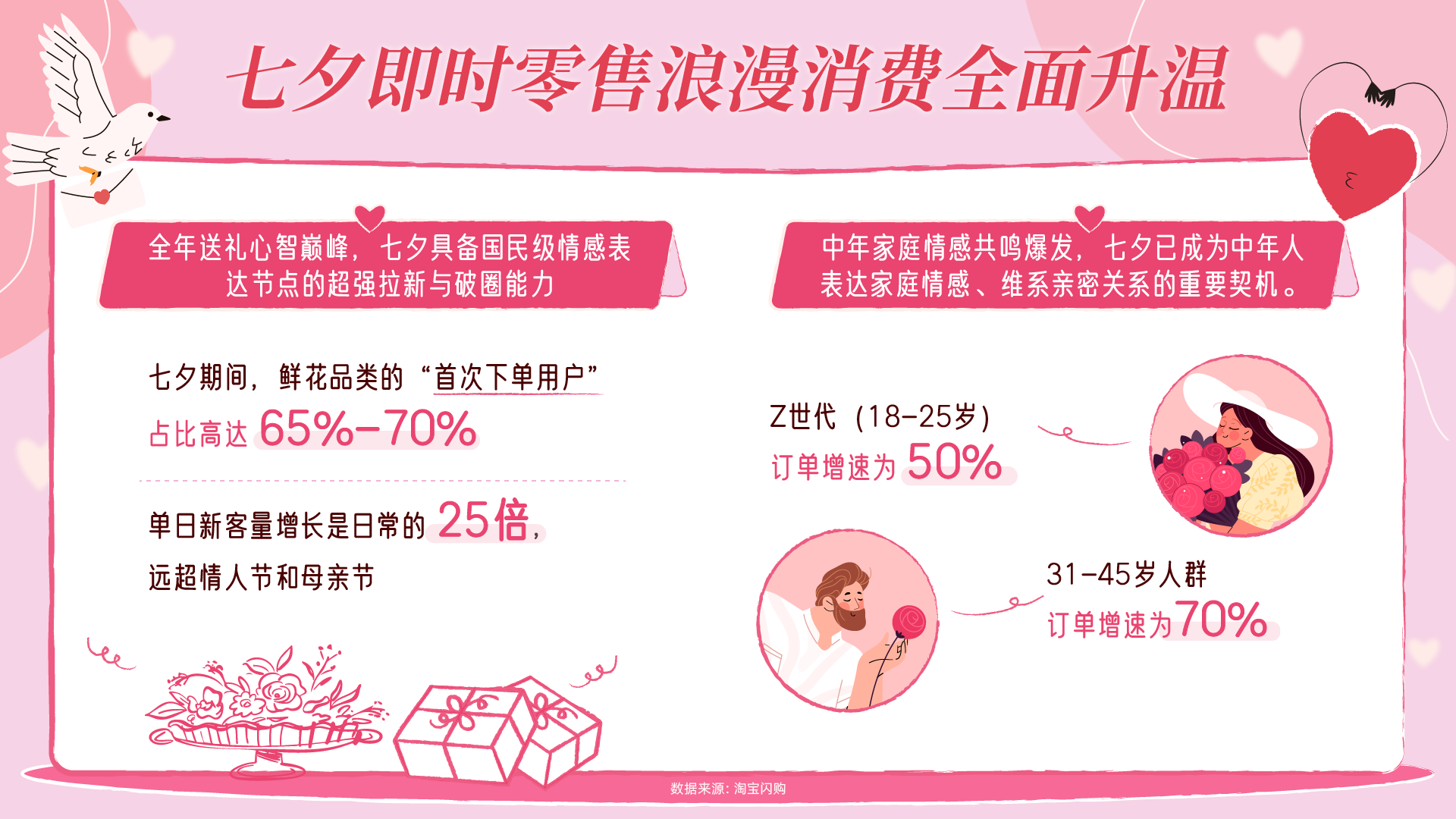
淘宝闪购数据显示,七夕期间,鲜花品类的“首次下单用户”占比高达65%至70%,单日新客量增长是日常的25倍,远超情人节和母亲节。大量平时不买花的人群,在七夕的刚性场景下被第一次激活。

在新增的鲜花消费群体中,中年用户的购买意愿显著增强,其中,31至45岁人群鲜花购买订单增长超七成,这一用户群体的订单增速已经显著超越了传统被认为是“买花主力”Z世代群体。

据淘宝闪购透露,近一周以来,“送老婆/送妻子/送爱人”以及“送妈妈/送长辈”关键词搜索量均持续上涨:七夕不仅仅是年轻情侣的节日,也成为中年夫妻或有娃家庭带着孩子一起为另一半制造惊喜的最佳节点。此外,也有不少单身群体用“给自己买一束花”的方式宠爱自己,50岁以上的银发族同样加入了七夕消费的热潮。七夕已经逐步褪去单一的“情人节”标签,逐步演变为一个涵盖情侣、家庭乃至自我悦己的全民情感消费节点。

“结婚十二年了,七夕从来没正经送过花。今年孩子提醒我说‘爸你也给妈买束花呗’,我在淘宝闪购上选了一束国风款的“荷塘悦色”荷花莲蓬蝴蝶兰的花束,搭配丝芙兰的节日礼盒,骑手半小时送到家。”一位来自安徽的用户笑着说。“老婆收到花和礼物很惊喜,看着她开心的样子我也觉得很有成就感。”

七夕礼赠消费清单加速焕新,“鲜花+美妆/蛋糕”组合消费成新趋势

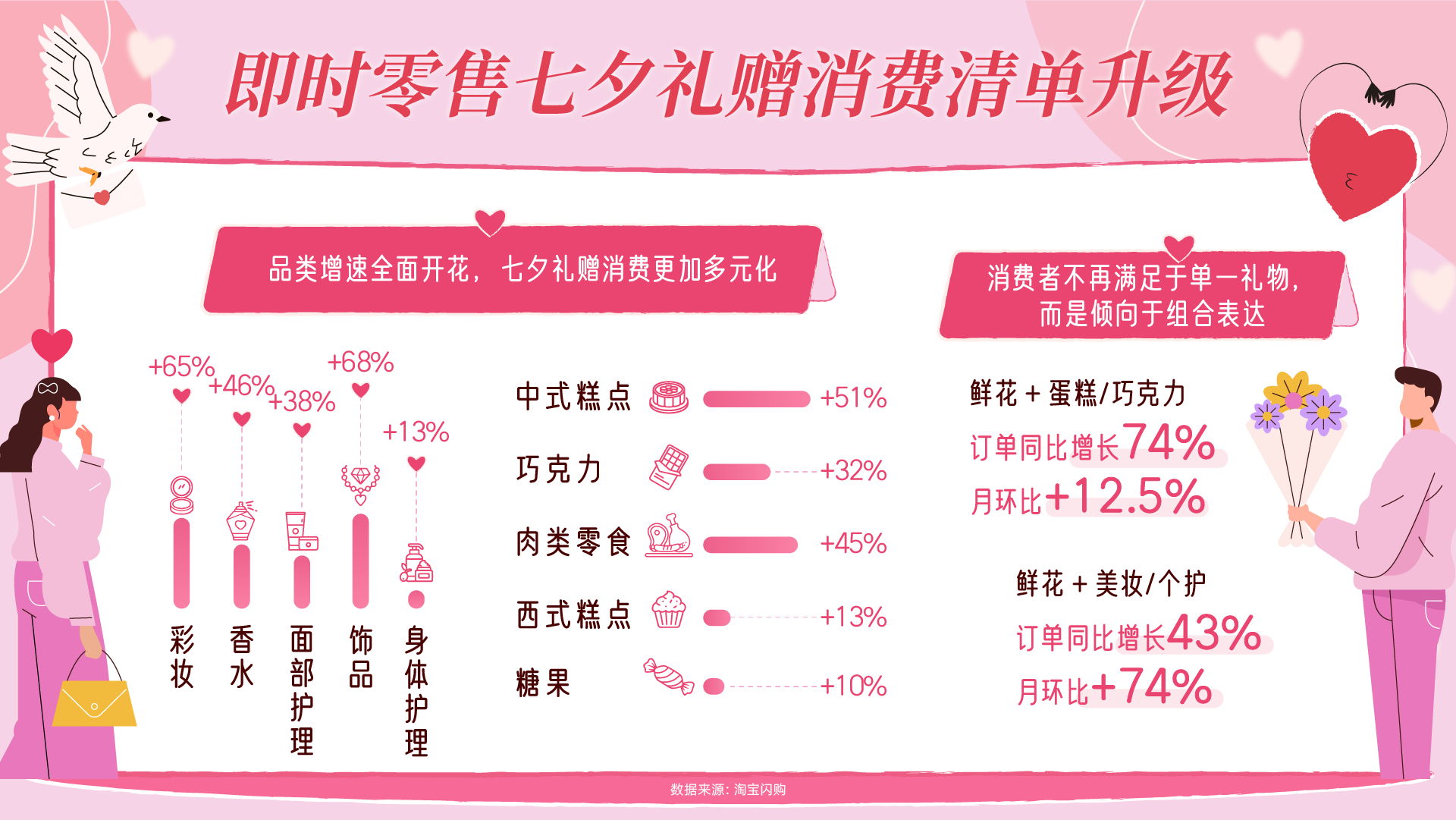
如果说以往的七夕是“红玫瑰+巧克力”的标配,那么今年则是一场“多元情感组合”的表达升级。淘宝闪购数据显示,消费者的购买清单正在被全面焕新,美妆个护、蛋糕、巧克力等品类正在同步爆发。细分来看,彩妆订单量同比增长65%,香水增长46%,面部护理品增长38%,饰品增长68%,巧克力增长32%,肉类零食增长45%。大量消费者正在从“闭眼买花”升级为“做功课选礼物”。

有趣的是,七夕作为“中国情人节”,礼赠清单也正在从“红玫瑰+巧克力”的西式模板,转向“鲜花+中式糕点+美妆”的本土化组合,成为当下国潮崛起与传统文化认同在节日消费场景中的生动投射。在礼赠清单上,中式糕点订单量同比增长51%,远超西式糕点。淘宝闪购数据显示,“鲜花+蛋糕/巧克力”的连带订单同比增长74%,“鲜花+美妆/个护”的连带订单绝对量同比增长43%。消费者不再满足于单一礼物,而是在构建一整个由即时零售便利性带来的新节日体验。

与此同时,异地恋群体的“跨城传情”需求也在持续释放——在七夕鲜花订单的城市流向中,深圳与东莞、广州与佛山、上海与苏州、杭州与绍兴等相邻城市之间的异地送花订单尤为活跃,即时零售正在打破浪漫消费的地理边界。“以前七夕就是买束花来送爱人,今年我提前一周就在淘宝闪购上选了一套兰蔻护肤礼盒和一束厄瓜多尔玫瑰,一起送到家。”一位深圳消费者表示,“半小时全到齐了,这种‘一站式浪漫’的感觉太好了。”

下沉市场浪漫指数全面“反超”,三四线七夕消费增速超越一二线城市

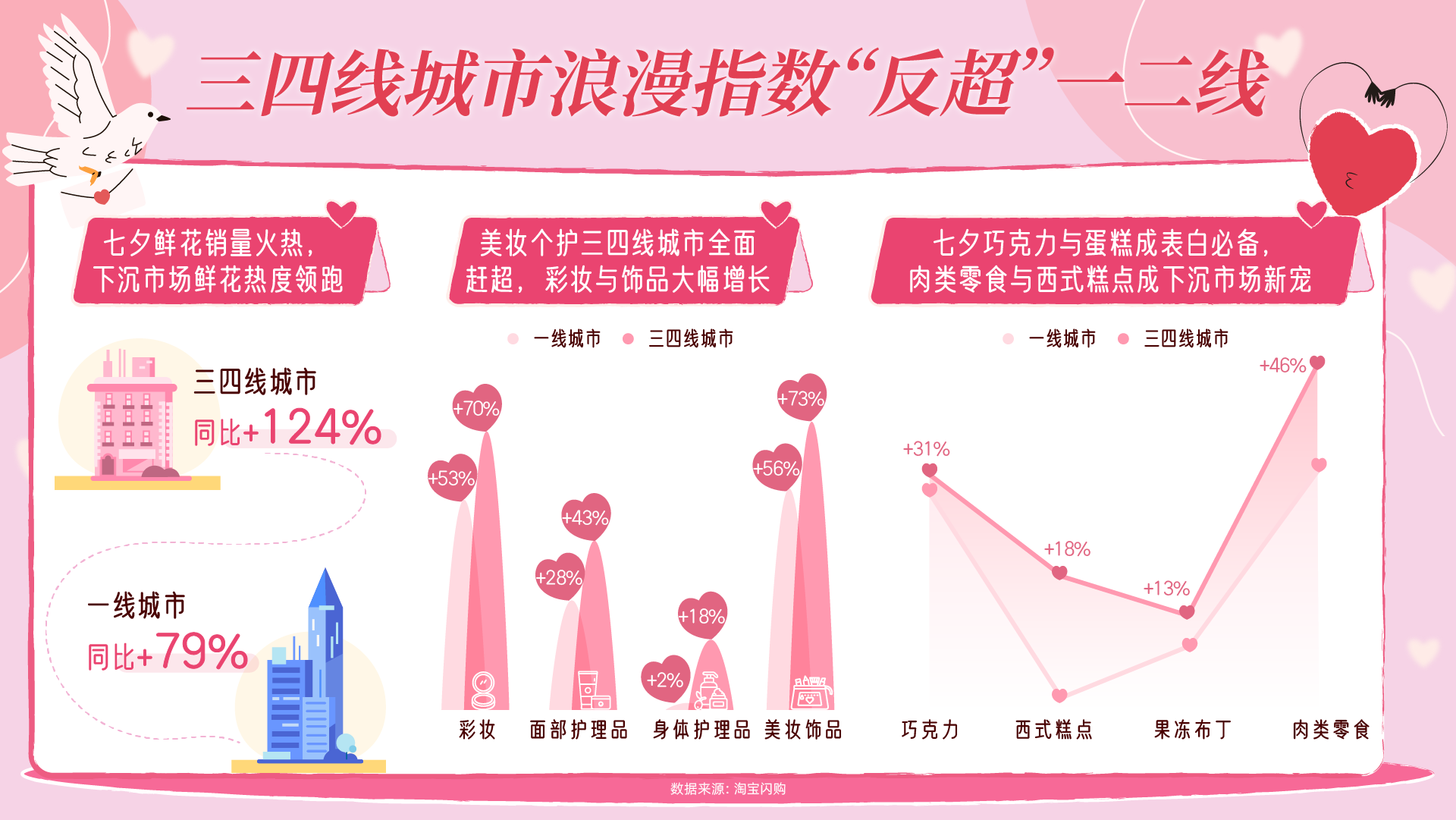
在地域维度上,三四线城市的浪漫消费增速在多个核心维度上超越了一二线城市。淘宝闪购数据显示,三四线城市七夕鲜花销量同比增长124%,而一线城市同比增长为79%;此外,三四线城市贡献了鲜花总订单的近七成,成为七夕鲜花消费的绝对主力。

在美妆个护品类上,下沉市场的追赶势头同样迅猛。三四线城市美妆饰品整体增速达73%,彩妆品类增幅达到70%,远超一线。在食品品类上,巧克力、肉类零食、西式糕点等多个品类的消费也都超越了一线城市。

从城市排名来看,杭州与上海分别位列一线城市七夕鲜花订单量前两位,同比增幅分别达到65%和47%。但增速最快的城市并非一线,其中,苏州以鲜花订单增长158%领跑全国,舟山、秦皇岛、日照为代表的沿海三四线城市鲜花订单增速均超过100%,而郴州、孝感、宜宾等内陆三四线城市鲜花订单增速显著超越同区域的一二线城市。节日期间,三四线城市鲜花销售火热,正在成为七夕浪漫消费的新增长极。

不同城市的消费偏好也展现出鲜明的地域化特征。沿海城市如舟山、秦皇岛、日照等地消费者对海鲜礼盒与鲜花的组合消费尤为突出;内陆城市如郴州、孝感,“鲜花+蛋糕”组合订单增速居全国前列;宜宾、玉林作为西南内陆城市,即时零售让当地消费者也能享受半小时到家的鲜花浪漫,七夕鲜花增速远超成都、南宁等省会城市。

淘宝闪购表示,七夕鲜花消费的“主战场”近年正在从一线城市的社区CBD向更多城市的花店转移,三四线城市的消费活力正在被全面激发。“以前在老家过七夕,想买束好花得开车去市中心,现在打开淘宝闪购,半小时就送到了,花的状态比自己去花店挑的还好。”一位六安的消费者表示。

“今年七夕的消费数据,直观体现出即时零售在节日礼赠场景中的重要价值,也让我们看到了礼赠消费市场巨大的消费潜力。”淘宝闪购七夕活动相关负责人表示,为满足当下消费者更多元的审美需求,平台除推出多款经典玫瑰花束外,也联合众多商家推出涵盖新中式、民国风、神秘优雅风等明星、IP联动款花束。他表示,“今年七夕,淘宝闪购还推出了AI送花功能,可语音对话匹配周边花店风格花束,简化鲜花决策与购买流程,让用户买花送礼更省心。”

注:文/龚作仁,文章来源:Laborer,本文为作者独立观点,不代表亿邦动力立场。

文章来源:Laborer

广告
微信
朋友圈

FAQ回顾

七夕鲜花消费市场呈现哪些新趋势?

今年七夕淘宝闪购鲜花订单较上月环比增长30倍,31至45岁中年用户订单增长超七成,增速超过Z世代;近七成订单来自三四线城市,同比增长124%,远超一线城市79%的增速,同时“鲜花+美妆/蛋糕”组合消费成为新趋势。

三四线城市七夕礼赠消费有什么特征?

三四线城市是今年七夕鲜花消费的绝对主力,贡献近七成总订单,鲜花销量同比增长124%,美妆饰品整体增速达73%,彩妆增幅70%,均远超一线城市。不同地域还有鲜明偏好,沿海城市偏好海鲜礼盒+鲜花,内陆城市偏好鲜花+蛋糕组合。

现在七夕消费者的礼赠选择有什么变化?

今年七夕礼赠已从“红玫瑰+巧克力”的西式标配,转向“鲜花+中式糕点+美妆”的本土化组合,彩妆、香水、中式糕点等品类均有30%以上的同比增幅,“鲜花+蛋糕/巧克力”连带订单同比增长74%,消费者更偏好多品类组合的一站式浪漫消费。

淘宝闪购针对七夕消费推出了哪些服务?

淘宝闪购除推出经典玫瑰花束外,还联合商家推出新中式、民国风等多风格明星、IP联动款花束,同时上线AI送花功能,可通过语音对话匹配周边花店的适配花束,简化决策购买流程,商品可实现半小时配送上门。

这么好看,分享一下?

朋友圈 分享

APP内打开

赞 +1
+1
微信好友 朋友圈 新浪微博 QQ空间
关闭
收藏成功
发送
/140 0