广告
加载中

SHEIN招股书披露:年活跃用户2.73亿 过去三年净收入复合增长率14.2%

亿邦动力 2026-07-26 22:19
亿邦动力 2026/07/26 22:19

邦小白快读

EN
全文速览

本文整理了SHEIN通过港交所聆讯后披露的招股书核心干货信息,主要内容如下

1.核心经营数据:2025年SHEIN年活跃顾客达2.73亿,2023-2025年复合年增长率约21.2%;全年营收418.47亿美元,三年复合增长率约14.2%,净利润20.64亿美元,毛利率提升至67.9%,现金流保持正向充裕,总订单量达10.78亿单,年人均下单频次稳定在3.8-3.9次。

2.核心经营模式:SHEIN首创大规模自动化小单快返模式,每个新SKU首批仅生产100-200件测款,验证销量后5天内即可补单,平衡了选品多样性、上新速度和库存效率,能稳定提供高性价比产品。

3.业务现状:目前拥有超200万个服装款式,日均新增约4700个新款,还拓展了配饰、美妆、家居等品类,在全球时尚市场市占率排第三。

SHEIN招股书披露的经营信息与发展路径,对品牌商有多维度的参考价值,核心干货如下

1.消费趋势与用户特征:当前全球时尚用户对产品多样性、上新速度要求提升,同时对价格敏感度较高,SHEIN年活跃用户规模达到2.73亿,年下单频次稳定在近4次,说明该模式精准匹配当下主流消费需求。

2.产品与供应链参考:SHEIN首创大规模小单快返模式,通过小单测款、快速补单大幅降低库存风险,依托智能化供应链控制成本,2025年毛利率达到67.9%,可通过成本让渡实现高性价比,解决了行业长期的三难困境。

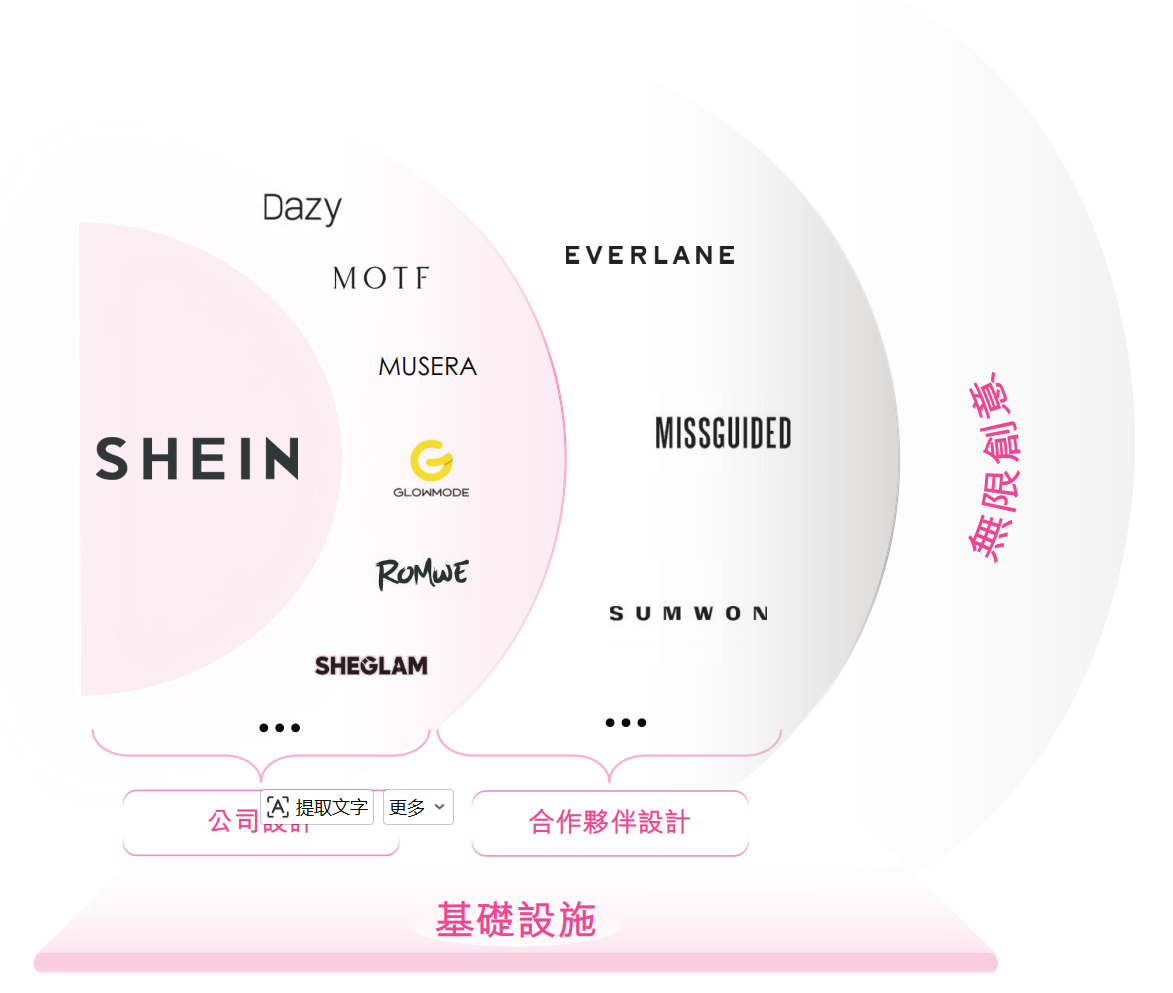
3.品牌扩张路径参考:SHEIN从单一旗舰品牌逐步拓展多品牌组合,覆盖不同价位、风格与品类,同时推出SHEIN Xcelerator计划开放基础设施,合作品牌与设计师实现共赢,目前已经拿到全球时尚市占第三的位置,扩张路径可借鉴。

SHEIN招股书披露的信息,给卖家带来了明确的机会提示与可参考经验,核心干货如下

1.赛道增长机会:2025年全球线上时尚市场规模已经达到6060亿美元,整体市场空间充足,SHEIN活跃用户2023-2025年复合增速达到21.2%,2025年同比增速更是达到47%,说明快时尚跨境赛道仍有较高的增长空间,新卖家仍有入局机会。

2.可学习的经营经验:SHEIN的大规模自动化小单快返模式,有效平衡了上新速度、选品广度和库存风险,依托智能化供应链控制成本,这个模式经过头部验证,中小卖家可结合自身情况参考适配。

3.合作与风险提示:SHEIN开放了Xcelerator合作计划,可依托其基础设施赋能卖家增长,符合要求的卖家可以对接合作;同时需要注意,SHEIN净利率从2024年的8.7%回落至2025年的4.9%,行业竞争加剧下利润空间收窄,卖家需要做好成本控制。

SHEIN披露的核心模式对生产工厂来说,指明了新的需求方向与商业机会,核心干货如下

1.生产端需求变化:SHEIN主打的大规模小单快返模式,要求供应商具备小批量生产、快速响应补单的能力,每个新SKU首批仅生产100-200件,测款通过后5天内就要补单,能够适配这种柔性生产需求的工厂,会获得更多稳定订单。

2.数字化转型启示:大规模做小单快返同时维持成本优势,依赖端到端的智能化供应链提升产能利用率,因此工厂推进数字化、智能化升级,提升响应效率和产能利用率,才能适配头部品牌的最新需求,提升自身竞争力。

3.市场规模机会:SHEIN目前拥有超200万个服装款式,日均新增4700个新款,年订单量超过10亿单,整体生产需求规模极大,完成柔性化转型适配模式的工厂,可以获得长期稳定的合作空间。

从SHEIN招股书内容可以看出快时尚行业的新趋势,也给服务商指明了方向,核心干货如下

1.行业发展新趋势:当前快时尚行业已经从传统的大批量规模化生产,转向大规模小单快返的新模式,整个行业都在向数字化、柔性化、高效率方向转型,对应的服务需求大幅增长。

2.客户核心痛点:快时尚行业长期存在产品多样性、上新速度、库存管理效率三者难以平衡的痛点,此前小单快返模式难以规模化,无法兼顾规模和成本效率,很多品牌和工厂都没有找到落地方案。

3.解决方案开发方向:目前头部品牌已经验证了端到端智能化供应链支撑大规模小单快返的可行性,服务商可以围绕柔性生产改造、供应链智能化管理、小单快返链路优化等方向开发解决方案,满足品牌方和生产端的共性需求,开拓新的市场空间。

SHEIN作为兼具品牌与平台属性的玩家,其披露的信息对平台运营发展有较多参考,核心干货如下

1.平台商家核心需求:入驻品牌与卖家非常需要完善的基础设施赋能,包括供应链能力、流量运营能力,帮助自身控制库存成本、实现盈利增长,SHEIN的Xcelerator计划正是通过开放自身基础设施满足这类需求,值得平台参考。

2.平台运营可借鉴做法:SHEIN通过打造高参与度的线上社区提升用户粘性,年用户下单频次长期稳定在3.8-4次,复购表现优秀;同时坚持高频上新,日均新增近4700款新款,持续拉动用户访问活跃度,这套用户运营方法可提升平台留存。

3.风险规避方向:当前快时尚行业营收增长的同时,头部玩家净利率已经出现明显下滑,平台需要帮助入驻商家优化成本控制、提升库存管理效率,避免行业利润下滑带来的商家流失问题,同时要帮助商家降低库存浪费,提升整体行业效率。

SHEIN本次披露的招股书,为快时尚产业研究提供了最新的一手资料,核心研究相关干货如下

1.产业发展新动向:当前全球时尚产业线上化趋势明显,2025年全球线上时尚市场规模已经达到6060亿美元,SHEIN活跃用户2023-2025年复合增速达到21.2%,远高于营收复合增速,说明线上快时尚仍处于快速渗透阶段,整体仍在增长。

2.商业模式创新:SHEIN首创大规模自动化小单快返模式,解决了快时尚行业长期存在的产品多样性、上新速度、库存效率难以平衡的三难困境,通过端到端智能化供应链实现小单快返的规模化落地,兼顾了成本效率与用户体验,是快时尚行业重要的商业模式创新。

3.产业新问题:SHEIN营收连年增长,但净利率从2024年的8.7%回落至2025年的4.9%,反映出全球快时尚行业竞争加剧,头部玩家也面临利润空间收窄的新问题,这一行业新变化值得深入研究。

返回默认

声明:快读内容全程由AI生成,请注意甄别信息。如您发现问题,请发送邮件至 run@ebrun.com 。

我是 品牌商 卖家 工厂 服务商 平台商 研究者 帮我再读一遍。

Quick Summary

This article distills key insights from SHEIN’s prospectus disclosed following its approval by the Hong Kong Stock Exchange hearing, with core takeaways as follows:

1. Core operating metrics: In 2025, SHEIN reported 273 million annual active customers, representing a 21.2% compound annual growth rate (CAGR) from 2023 to 2025. Full-year revenue hit $41.847 billion, with a 14.2% three-year CAGR; net profit reached $2.064 billion, gross margin expanded to 67.9%, operating cash flow remained positive and ample, total orders hit 1.078 billion, and the average annual order frequency per customer held steady between 3.8 and 3.9.

2. Core operating model: SHEIN pioneered the large-scale automated "small-batch quick replenishment" model. For each new SKU, it only produces an initial batch of 100 to 200 units for market testing, and can restock best-selling styles within 5 days after demand validation. This model balances product variety, new product launch speed and inventory efficiency, enabling the company to consistently deliver cost-competitive products.

3. Current business status: SHEIN currently offers over 2 million apparel styles, adds approximately 4,700 new styles on average daily, has expanded into categories including accessories, beauty and home goods, and ranks third in global fashion market share.

The operating data and growth trajectory disclosed in SHEIN’s prospectus offer multi-dimensional insights for brand owners, with key takeaways as follows:

1. Consumer trends and user characteristics: Global fashion consumers today increasingly demand greater product variety and faster new product launches, while remaining highly price-sensitive. SHEIN’s 273 million annual active users and stable annual order frequency of nearly 4 orders per user demonstrate that its model accurately aligns with current mainstream consumer demand.

2. Product and supply chain references: SHEIN’s pioneering large-scale small-batch quick replenishment model drastically reduces inventory risk through initial small-batch testing and rapid restocking, and controls costs via intelligent supply chain management. The model delivered a 67.9% gross margin in 2025, enabling high cost-performance via cost pass-through, and solves the long-standing triple dilemma facing the industry.

3. Brand expansion references: SHEIN gradually built out a multi-brand portfolio from its single flagship brand, covering different price points, styles and categories. It also launched the SHEIN Xcelerator program to open its underlying infrastructure, enabling win-win collaboration with partner brands and designers. This expansion path is replicable, and has already helped SHEIN secure the third position in global fashion market share.

Information disclosed in SHEIN’s prospectus provides clear opportunity signals and actionable lessons for sellers, with core takeaways as follows:

1. Category growth opportunities: The global online fashion market reached $606 billion in 2025, indicating ample overall market space. SHEIN’s annual active users grew at a 21.2% CAGR from 2023 to 2025, and hit 47% year-over-year growth in 2025, showing that the cross-border fast fashion track still offers strong growth potential, and new sellers still have room to enter the market.

2. Actionable operating lessons: SHEIN’s large-scale automated small-batch quick replenishment model effectively balances new launch speed, product variety and inventory risk, and controls costs via an intelligent supply chain. This model has been validated by a leading industry player, and small and medium-sized sellers can adapt it to their own circumstances.

3. Collaboration and risk reminders: SHEIN has opened its Xcelerator partnership program, which enables sellers to leverage its infrastructure to drive growth, and eligible sellers can pursue collaboration opportunities. However, sellers should note that SHEIN’s net margin fell from 8.7% in 2024 to 4.9% in 2025, reflecting shrinking profit margins amid intensifying industry competition, so rigorous cost control is critical.

SHEIN’s core business model points to new demand shifts and commercial opportunities for manufacturing factories, with key takeaways as follows:

1. Shifting demand on the production side: SHEIN’s core large-scale small-batch quick replenishment model requires suppliers to deliver small-batch production and rapid response for restocks. Each new SKU only has an initial production run of 100 to 200 units, and restocks must be completed within 5 days of passing demand testing. Factories capable of meeting this flexible production demand will gain access to more consistent orders.

2. Insights for digital transformation: Running large-scale small-batch quick replenishment while maintaining cost advantages relies on end-to-end intelligent supply chains to improve capacity utilization. As such, factories need to advance digital and intelligent upgrades to boost response efficiency and capacity utilization, so they can meet the latest requirements of leading brands and improve their own competitiveness.

3. Large-scale market opportunities: SHEIN currently offers over 2 million apparel styles, adds 4,700 new styles daily, and processes over 1 billion orders annually, representing extremely large overall production demand. Factories that complete flexible transformation to align with SHEIN’s model can secure long-term, stable collaboration opportunities.

SHEIN’s prospectus reveals new trends in the fast fashion industry and points out clear strategic directions for service providers, with core takeaways as follows:

1. New industry development trends: The fast fashion industry has shifted from traditional large-batch mass production to a new large-scale small-batch quick replenishment model. The entire sector is moving toward digitalization, flexibility and higher efficiency, leading to substantial growth in demand for corresponding supporting services.

2. Core pain points for clients: The fast fashion industry has long struggled to balance product variety, new launch speed and inventory management efficiency. Previously, the small-batch quick replenishment model could not be scaled to achieve both volume and cost efficiency, leaving many brands and factories without a viable implementation path.

3. Directions for solution development: A leading brand has now validated that end-to-end intelligent supply chains can support large-scale small-batch quick replenishment. Service providers can develop solutions focused on flexible production transformation, intelligent supply chain management, and small-batch quick replenishment workflow optimization to meet the shared needs of brands and manufacturers, and open up new market opportunities.

As a player with both brand and marketplace attributes, SHEIN’s disclosures offer valuable references for platform operation and growth, with core takeaways as follows:

1. Core needs of platform merchants: Onboarded brands and sellers have strong demand for enabling infrastructure, including supply chain capabilities and traffic operation expertise, to help them control inventory costs and achieve profitable growth. SHEIN’s Xcelerator program meets this demand by opening up its internal infrastructure, a model that offers a useful reference for platforms.

2. Replicable platform operation practices: SHEIN boosts user retention by building a highly engaged online community, which has supported a long-term stable annual order frequency of 3.8 to 4 orders per user, indicating excellent repeat purchase performance. It also maintains a high cadence of new product launches, adding nearly 4,700 new styles daily to drive consistent user engagement. This user operation approach effectively improves platform retention.

3. Risk mitigation directions: Amid revenue growth across the fast fashion industry, leading players have already seen notable net margin declines. Platforms need to help onboarded merchants optimize cost control and improve inventory management efficiency to avoid merchant churn driven by industry-wide profit compression, while helping merchants reduce inventory waste to lift overall industry efficiency.

SHEIN’s newly disclosed prospectus provides up-to-date primary data for fast fashion industry research, with key research-relevant takeaways as follows:

1. New industry development trends: The global fashion industry is clearly shifting online, with the global online fashion market reaching $606 billion in 2025. SHEIN’s annual active users grew at a 21.2% CAGR from 2023 to 2025, far outpacing its revenue CAGR, indicating that online fast fashion is still in a phase of rapid penetration and overall growth.

2. Business model innovation: SHEIN pioneered the large-scale automated small-batch quick replenishment model, which solves the long-standing triple dilemma of balancing product variety, launch speed and inventory efficiency that has troubled the fast fashion industry. It delivers scalable small-batch quick replenishment via an end-to-end intelligent supply chain, achieving both cost efficiency and strong user experience, representing a significant business model innovation for the fast fashion industry.

3. New industry issues: While SHEIN has delivered consecutive annual revenue growth, its net margin fell from 8.7% in 2024 to 4.9% in 2025. This reflects intensifying competition across the global fast fashion industry, and even leading players now face the challenge of shrinking profit margins. This new industry shift warrants further in-depth research.

Disclaimer: The "Quick Summary" content is entirely generated by AI. Please exercise discretion when interpreting the information. For issues or corrections, please email run@ebrun.com .

I am a Brand Seller Factory Service Provider Marketplace Seller Researcher Read it again.

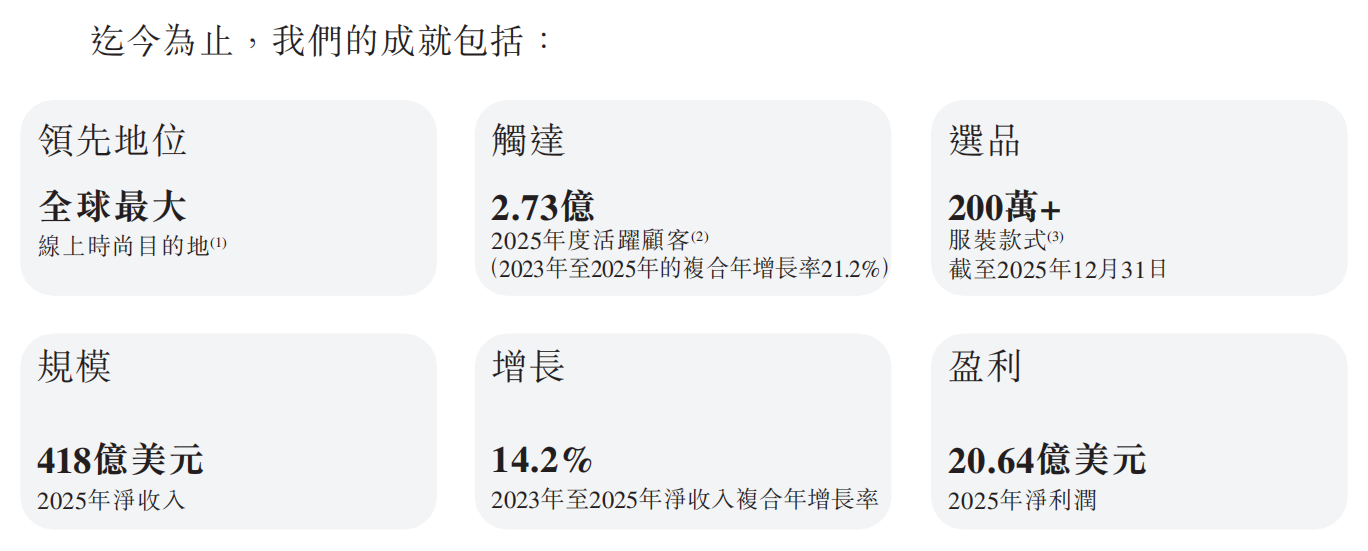
【亿邦原创】希音国际控股有限公司(以下简称“SHEIN”)日前通过港交所聆讯,并于7月26日披露通过聆讯后的资料集。资料显示,2025年,SHEIN活跃顾客数达到2.73亿(2023年-2025年复合年增长率约21.2%),营业收入为418.47亿美元(2023年-2025年复合增长率约14.2%),净利润达到20.64亿美元。

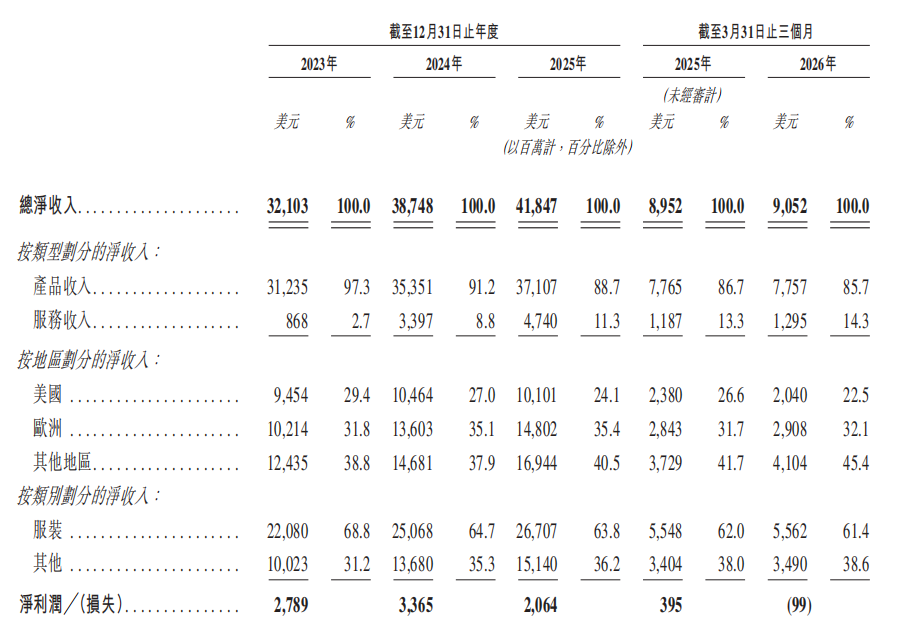
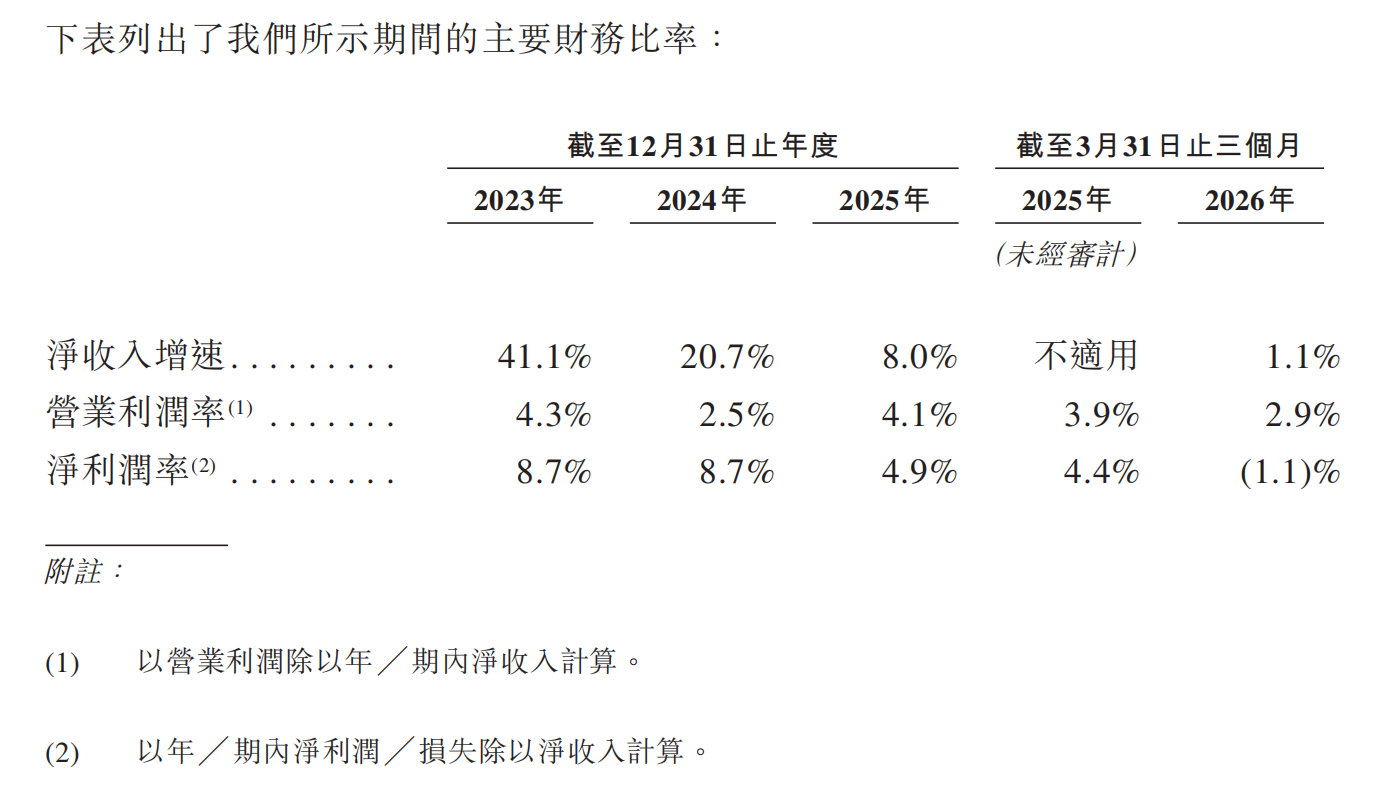
具体来看,营收与利润层面,2023-2025的三个财年,SHEIN营业收入分别为321.03亿美元、387.48亿美元、418.47亿美元,呈连年增长态势;净利润分别为27.89亿美元、33.65亿美元、20.64亿美元;毛利率由60.2% 升至67.9%;净利率从2024年约8.7%回落至2025年约4.9%。

现金流与资产端,截至披露日,SHEIN持有现金及受限现金合计50.31亿美元,2025年经营活动产生的现金流净额为28.38亿美元,继续保持正向且数额可观。

用户与订单层面,招股书显示,SHEIN活跃顾客数从2024年末的1.86亿增至2025年末的2.73亿,同比增长约47%;总订单量从7.15亿单增至10.78亿单,同比增长约50.8%。按招股书披露口径,2025年人均下单频次稳定在3.8-3.9次/年。

招股书中指出,SHEIN首创了自有的运营模式“大规模自动化小单快返”(LATR),是解决行业长期存在的三难困境的终极方案——这一模式使其能够在产品选择多样性、设计上新速度与存货管理效率之间实现最佳平衡。在LATR模式下,每个新SKU首批仅生产100-200件用于市场测试,验证销售后5天内启动补单,极大地压缩库存风险与反应链路。

“小单快返并不新颖,但要大规模实施小单快返策略的同时达到成本效益,是极具挑战性的。利用自身最大限度提高效率及产能利用率的端到端智能化供应链,我们以前所未有的规模将小单快返应用于大量的产品。LATR从结构上最大限度地降低了生产成本并使SHEIN的库存保持在低水平,同时减少了浪费,让我们可以将节省的费用传递给顾客。这正是我们能够为客户提供广泛且不断更新的时尚选择,同时具备高性价比的方式。”SHEIN在照顾书中解释道。

据悉,公司以旗舰品牌SHEIN开启发展之路,随后逐步拓展自己的品牌组合,将业务覆盖至覆盖更多价位、独特风格和更广泛的产品类别。同时,公司还通过SHEIN Xcelerator计划与众多品牌及设计师建立了紧密的合作伙伴关系,并以自己的基础设施赋能其实现盈利增长。


据悉,截至2026年3月31日,SHEIN的产品选择包含超过200万个服装款式,通过第一方模式,SHEIN的顾客在今年第一季度平均每天发现约4700个新服装款式。除服装外,SHEIN还在产品组合中增加了新产品种类,现提供包括鞋类、配饰、美妆、家居和生活方式等在内的多样产品。

同时,SHEIN在全球范围内建立了一个高参与度且充满活力的线上社区。根据招股书披露的信息,SHEIN的活跃顾客数从2023年的约1.86亿增加到2025年的约2.73亿,复合年增长率约21.2%;从截至2025年3月31日止十二个月的约2.41亿增加至截至2026年3月31日止十二个月的约2.81亿。截至2023年、2024年及2025年12月31日止年度以及截至2025年及2026年3月31日止十二个月,SHEIN年度顾客下单频次分别维持大致稳定于3.8次、4.0次、4.0次以及3.9次。

在行业地位方面,根据招股书引用的灼识行业咨询报告,2025年全球时尚市场规模约1.7万亿美元,其中线上时尚约6060亿美元,SHEIN在全球时尚市场中的市占率约为1.9%,排名第三,仅次于耐克(3.0%)与Inditex(2.5%)。

文章来源:亿邦动力

广告
微信
朋友圈

FAQ回顾

SHEIN2025年的活跃用户和营收情况如何?

2025年SHEIN活跃顾客数达2.73亿,2023-2025年复合年增长率约21.2%;2025年营业收入为418.47亿美元,2023-2025年复合增长率约14.2%,净利润达20.64亿美元,毛利率升至67.9%。

SHEIN的LATR运营模式有什么优势?

LATR即大规模自动化小单快返模式,是SHEIN首创的自有运营模式。该模式下新SKU首批仅生产100-200件测试,验证销售后5天内可补单,能在产品多样性、上新速度与存货管理效率间实现最佳平衡,降低库存风险与生产成本。

SHEIN在全球时尚市场的市占率排名怎么样?

根据灼识行业咨询报告数据,2025年全球时尚市场规模约1.7万亿美元,SHEIN在全球时尚市场中市占率约为1.9%,排名第三,仅次于市占率3.0%的耐克和市占率2.5%的Inditex。

SHEIN目前覆盖的产品品类有哪些?

SHEIN核心品类为服装,截至2026年3月31日拥有超200万个服装款式,2026年第一季度平均每天上新约4700个新服装款式,此外还覆盖鞋类、配饰、美妆、家居、生活方式等多元品类。

这么好看,分享一下?

朋友圈 分享

APP内打开

赞 +1
+1
微信好友 朋友圈 新浪微博 QQ空间
关闭
收藏成功
发送
/140 0