广告
加载中

七鲜小厨专供菜上线十足便利店,炒菜机器人开启线下零售新商机

龚作仁 2026-07-02 10:53
龚作仁 2026/07/02 10:53

邦小白快读

EN
全文速览

本文介绍了七鲜小厨和十足便利店合作推出的全新就餐选择,能给日常有便捷就餐需求的消费者提供新方案。

1. 目前该服务首店落地杭州余杭区天时科创园店,主打现点现炒、即提即走,完美适配周边上班族和居民快节奏的就餐需求,不用排队等外卖、不用绕路去餐馆,下楼进便利店就能买到现烧热餐。

2. 产品性价比突出,一份现炒正餐仅十几元,远低于周边餐馆的单人餐价格,智能炒菜机器人几分钟就能出餐,拿到手依旧热气腾腾,比外卖口感更好、更有锅气。

3. 食品安全有保障,品牌主打新鲜现炒不隔夜,核心食材均选用中粮福临门非转基因大豆油、十月稻田东北大米、正大肉禽等知名品牌,食材公开可溯源,解决了日常就餐不知道吃什么的痛点。

本次七鲜小厨和十足便利店的跨界合作,是品牌融合发展的成功实践,能给各类消费品牌提供多方面参考。

1. 消费趋势层面,当前上班族群体存在对便捷、高性价比、安全透明现餐的需求,原有外卖存在高峰期配送慢、口感差的问题,传统餐馆存在排队久、单价高的问题,市场有明确空白,品牌可针对该需求做场景化布局。

2. 渠道建设层面,七鲜小厨依托成熟供应链接入线下便利店渠道,借助便利店成熟的门店网络和原有客流优势,精准触达目标客群,实现低成本快速拓市。

3. 产品运营层面,主打新鲜现炒不隔夜,公开核心食材做溯源,解决消费者对餐饮卫生的顾虑,定价走亲民日常路线,还能带动合作渠道的其他商品销量,实现品牌与渠道的双赢。

本次合作给线下零售、餐饮类卖家提供了新的增长思路和可复制的实操参考,挖掘了现有场景的新增量。

1. 机会层面,线下便利店原有商品结构以零食、速食为主,缺少热餐这个刚需引流品类,切入现炒鲜食赛道可以打造差异化竞争优势,精准满足周边上班族的就餐需求,还能带动门店整体客流提升,拉动其他商品的销量增长,提升门店整体营收。

2. 模式层面,该模式采用品牌方供应预加工净菜+门店用智能炒菜机器人现炒的模式,不需要雇佣专业厨师,操作门槛低,人力成本低,出餐速度快,还能保证菜品口感稳定,解决了传统现炒餐饮的多个痛点。

3. 可学习点,要主打食材透明化,做公开溯源,打消消费者对食品安全的顾虑,定价走亲民路线,匹配消费者日常就餐的价格预期,和理念契合的不同品类品牌合作,能快速实现优势互补起量。

本次“线下零售+鲜食现炒”的创新业态,给食品生产加工工厂带来了新的商业机会和发展启示。

1. 市场需求层面,该模式需要提前完成净菜的清洗、切割、分装等预加工环节,对标准化、规模化的预加工净菜有长期稳定的批量需求,符合产能优势的工厂可以布局B端净菜供应业务,对接七鲜小厨这类餐饮品牌,获得新增量。

2. 产品设计层面,需要适配便利店单份现炒的需求,做独立小包装标准化处理,方便门店开袋即可下锅,同时要围绕牛肉炒饭、炒米粉这类大众热门刚需菜品开发产品,匹配市场需求。

3. 发展启示层面,工厂要跟进餐饮零售融合的行业趋势,推进自身标准化生产体系建设,提前搭建好食材溯源管理体系,匹配品牌方和渠道方的要求,抓住传统线下零售业态升级带来的新订单机会。

本次创新业态的落地,给餐饮零售相关服务商指明了新的行业发展方向,暴露了明确的市场需求。

1. 行业发展趋势层面,当前传统线下零售正在向融合餐饮的方向升级,越来越多的便利店会加入鲜食现炒品类,整个市场对现炒餐饮配套的设备、供应链、技术服务的需求会持续增长,赛道空间广阔。

2. 客户痛点层面,传统便利店想要做现炒餐饮,面临缺专业厨师、人力成本高、出餐速度慢的问题,原有模式无法保证菜品口感,同时消费者对餐饮卫生透明度有很高要求,这些都需要服务商提供对应解决方案。

3. 市场机会层面,智能炒菜机器人已经验证了可行性,设备服务商可以针对便利店门店面积小的特点优化产品,供应链服务商可以对接品牌需求,提供标准化净菜冷链配送服务,食材溯源技术服务商也能获得更多To B的市场订单。

本次合作为线下零售平台的业态升级提供了可复制的实践经验,对平台运营和发展都有参考价值。

1. 市场需求层面,线下传统零售平台普遍面临客流增长乏力、商品结构单一、复购率低的问题,需要扩充刚需品类吸引客流,而消费者对社区、园区周边的便捷现烧热餐也有明确需求,该模式精准匹配了双方需求。

2. 运营管理层面,平台可以引入成熟餐饮品牌的专供鲜食品类,依托品牌已经搭建好的成熟供应链和标准化运营体系,降低自身做餐饮的运营门槛和成本,只需要安排门店工作人员简单操作即可出餐,还能通过场景互补带动门店整体营收提升。

3. 发展方向层面,平台可以复制该模式,优先在写字楼、产业园区这类上班族密集的门店铺开,同时要选择理念契合的品牌合作,把控食材品质,规避客流下滑的风险,实现自身业态升级。

本次合作是民生餐饮与传统零售融合创新的典型案例,反映了产业发展的新动向,对零售和餐饮行业研究有较高的参考价值。

1. 商业模式创新层面,该案例打造了“线下零售+鲜食+现炒餐饮”的创新业态,是餐饮品牌与线下零售渠道跨界合作的新尝试,依托双方的优势互补,实现了消费者、餐饮品牌、零售渠道的多方共赢,验证了模式的可行性。

2. 产业新动向层面,当前餐饮行业正在向场景下沉方向发展,依托线下零售现成的网点覆盖,能降低餐饮品牌的拓店成本,快速触达目标客群,同时也解决了传统线下零售缺乏刚需引流品类、客流增长乏力的问题,是双向赋能的合作模式。

3. 该模式精准回应了消费者对便捷、高性价比、安全透明餐饮的需求,解决了当前行业存在的多个痛点,为传统零售业态升级提供了新方向,后续可进一步研究该模式的全国复制性和长期发展潜力。

返回默认
声明:快读内容全程由AI生成,请注意甄别信息。如您发现问题,请发送邮件至 run@ebrun.com 。

我是 品牌商 卖家 工厂 服务商 平台商 研究者 帮我再读一遍。

Quick Summary

This article introduces a new dining option launched via a partnership between 7Fresh Kitchen and Shizu Convenience Store, which provides a new solution for consumers seeking convenient daily meals.

1. The service has launched its first location at Shizu's Tianshi Kechuangyuan store in Yuhang District, Hangzhou, featuring made-to-order freshly cooked meals for quick pickup. It perfectly fits the fast-paced dining needs of surrounding office workers and residents: customers don't need to wait for delayed delivery or travel to sit-down restaurants, they can just stop by the convenience store downstairs for a hot, freshly-cooked meal.

2. The offering delivers strong value for money: a full freshly-cooked meal costs just around 10 to 20 yuan ($1.40-$2.80), far lower than the price of a single-portion meal at nearby restaurants. AI-powered cooking robots can prepare a meal in minutes, and it stays hot when picked up, with better texture and more wok flavor than delivered takeout.

3. The partnership guarantees food safety: the brand emphasizes fresh cooking with no leftover ingredients held overnight, and core ingredients are sourced from well-known brands including COFCO Fulinmen non-GMO soybean oil, Shiyuedaoti Northeast rice, and CP Group poultry. All ingredients are openly traceable, solving the common daily dilemma of "not knowing what to eat for lunch/dinner".

This cross-sector collaboration between 7Fresh Kitchen and Shizu Convenience Store is a successful example of integrated brand development, offering multiple insights for consumer brands.

1. From a consumer trend perspective, office workers today have unmet demand for convenient, cost-effective, and safe transparent freshly prepared meals. Existing food delivery suffers from slow peak-hour delivery and poor texture, while traditional restaurants have long wait times and high price points, creating a clear market gap. Brands can pursue scenario-focused positioning to target this demand.

2. In terms of channel development, 7Fresh Kitchen leverages its mature supply chain to access offline convenience store channels, tapping into the latter's established store network and existing foot traffic to reach its target audience accurately and expand market share quickly at low cost.

3. On product operations, the offering centers on fresh daily cooking with no leftovers and open ingredient traceability to address consumer concerns over food hygiene. Its accessible pricing strategy also drives higher sales of other products at partner stores, creating a win-win outcome for both the brand and the channel.

This collaboration offers offline retail and food sellers new growth ideas and a replicable actionable framework to unlock new revenue in existing locations.

1. In terms of opportunity, most offline convenience stores currently carry mostly snacks and ready-to-eat processed foods, lacking hot meals—a high-demand category that drives foot traffic. Entering the freshly cooked fresh food segment lets sellers build a differentiated competitive advantage, meet the dining needs of nearby office workers, boost overall store foot traffic, lift sales of other products, and increase total store revenue.

2. For the business model, this model relies on pre-processed clean ingredients supplied by the brand, with on-site fresh cooking done by smart cooking robots at the store. It eliminates the need to hire professional chefs, keeping operational barriers and labor costs low, while enabling fast order fulfillment and consistent dish quality, solving multiple pain points of traditional fresh-cooked food operations.

3. Key takeaways include prioritizing transparent and traceable ingredients to ease consumer food safety concerns, adopting accessible pricing that matches consumers' budget for daily meals, and partnering with brands from complementary categories that share similar values to achieve fast growth via complementary strengths.

This innovative "offline retail + fresh-cooked food" format brings new business opportunities and development insights for food processing manufacturers.

1. From a market demand perspective, this model requires pre-processing such as cleaning, cutting, and packaging of clean ingredients in advance, creating long-term stable bulk demand for standardized, large-volume pre-processed clean vegetables and proteins. Manufacturers with existing production capacity can expand into B2B pre-processed ingredient supply and partner with brands like 7Fresh Kitchen to unlock new growth.

2. In product design, manufacturers need to develop single-serve standardized packaging tailored to convenience stores' in-store fresh cooking needs, so stores can simply open the package and cook directly. They should also focus on developing popular high-demand items such as beef fried rice and fried rice noodles to match market needs.

3. As a key development insight, manufacturers need to keep up with the industry trend of food and retail integration, advance the construction of standardized production systems, and build out ingredient traceability management systems in advance to meet the requirements of brands and channels, so as to capture new order opportunities brought by the upgrade of traditional offline retail.

The launch of this innovative format points to new industry development directions and clear unmet market demand for food and retail-related service providers.

1. From an industry trend perspective, traditional offline retail is currently upgrading toward integrated food offerings, and more convenience stores will add fresh-cooked food categories. This will drive sustained growth in demand for supporting equipment, supply chains, and technical services for fresh-cooked food operations, creating large market opportunities.

2. In terms of customer pain points, traditional convenience stores looking to add fresh-cooked food face multiple challenges: lack of access to professional chefs, high labor costs, slow order fulfillment, and inconsistent dish quality from traditional models. Consumers also demand high transparency around food hygiene, all of which require targeted solutions from service providers.

3. For market opportunities, smart cooking robots have already proven commercially viable. Equipment providers can optimize their products to fit the limited space of convenience stores; supply chain service providers can partner with brands to offer cold chain delivery of standardized pre-processed ingredients; and ingredient traceability technology providers will also gain more B2B market orders.

This collaboration offers replicable practical experience for business model upgrading of offline retail platforms, with valuable insights for platform operation and development.

1. From a market demand perspective, traditional offline retail platforms generally face stagnant foot traffic growth, limited product assortment, and low repeat purchase rates. They need to add high-demand categories to attract more customers, while consumers have clear demand for convenient fresh-cooked hot meals near residential areas and business parks. This model perfectly matches the needs of both sides.

2. In operation management, platforms can introduce exclusive fresh food categories from established food brands, leveraging the brands' mature supply chains and standardized operational systems to lower the operational barriers and costs of adding food services. Store staff only need to complete simple operations to prepare meals, and the complementary scenario drives higher overall store revenue.

3. For future development directions, platforms can replicate this model, rolling it out first to stores located in office buildings and industrial parks with high concentrations of office workers. They should also partner with aligned brands, strictly control ingredient quality, mitigate the risk of declining foot traffic, and achieve their own business model upgrade.

This collaboration is a representative case of innovative integration between daily dining and traditional retail, reflecting new industry dynamics and offering high reference value for retail and food industry research.

1. In terms of business model innovation, this case created an innovative "offline retail + fresh food + fresh-cooked dining" format, representing a new experiment in cross-sector collaboration between food brands and offline retail channels. Leveraging complementary strengths from both sides, it delivered a multi-win outcome for consumers, food brands and retail channels, and validated the model's commercial viability.

2. For emerging industry trends, the food sector today is increasingly expanding into closer-to-consumer scenarios. Leveraging existing offline retail store networks cuts expansion costs for food brands and lets them reach target customers quickly, while solving the problem of stagnant foot traffic and lack of high-demand traffic-driving categories for traditional offline retail, making it a mutually enabling collaboration model.

3. This model accurately responds to consumer demand for convenient, cost-effective, safe and transparent dining, solves multiple existing pain points in the industry, and offers a new direction for the upgrading of traditional retail formats. Further research can be done on the model's replicability across China and its long-term growth potential.

Disclaimer: The "Quick Summary" content is entirely generated by AI. Please exercise discretion when interpreting the information. For issues or corrections, please email run@ebrun.com .

I am a Brand Seller Factory Service Provider Marketplace Seller Researcher Read it again.

每天中午,在杭州天时科创园上班的张丽最头疼的就是“今天吃什么”。周围的餐厅已经吃腻了,中午休息时间短,经常去楼下十足便利店买饭团或者便当。而从上个月开始,她的午餐有了新的选择——楼下十足便利店有了现炒的七鲜小厨专供菜,下楼点完就能取,好吃,价格很实惠。

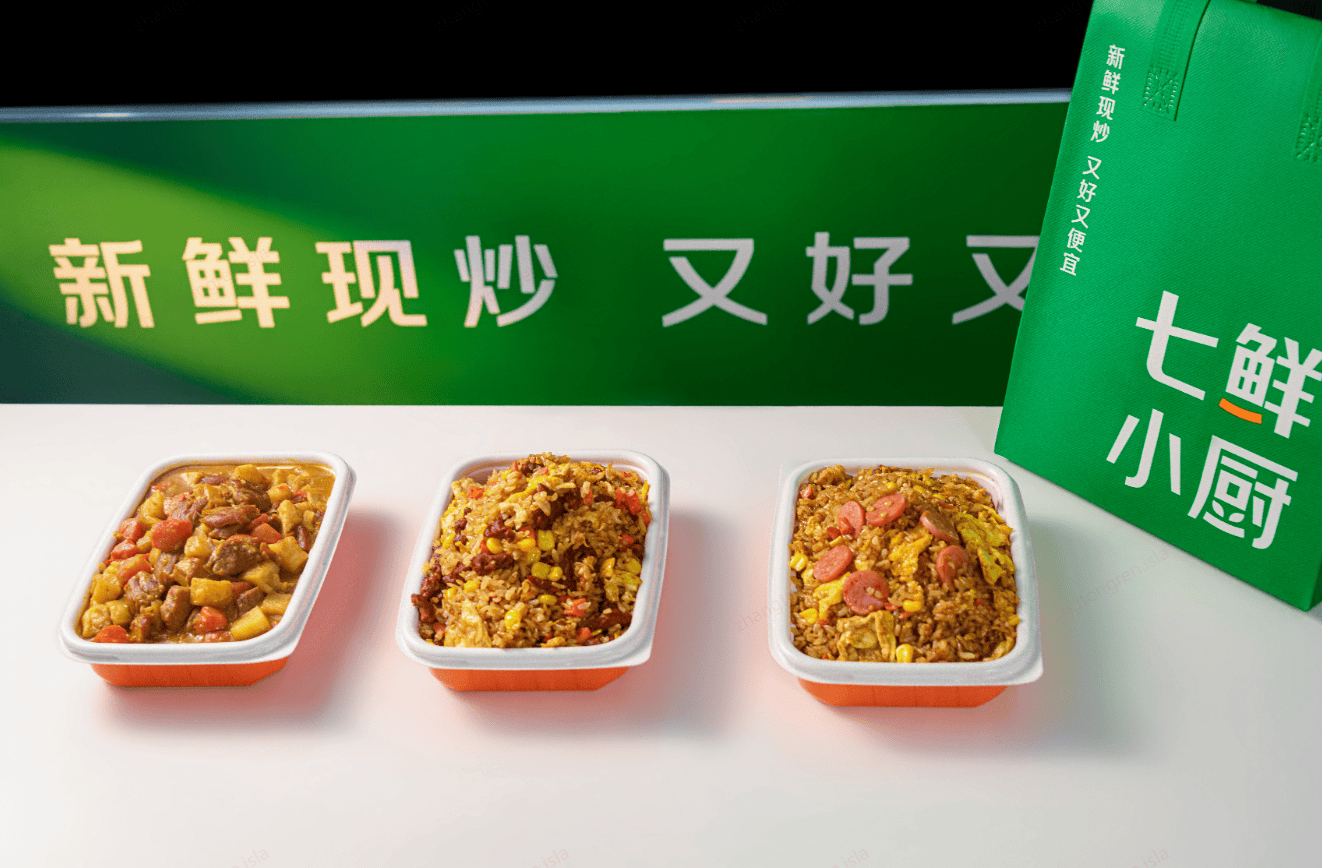
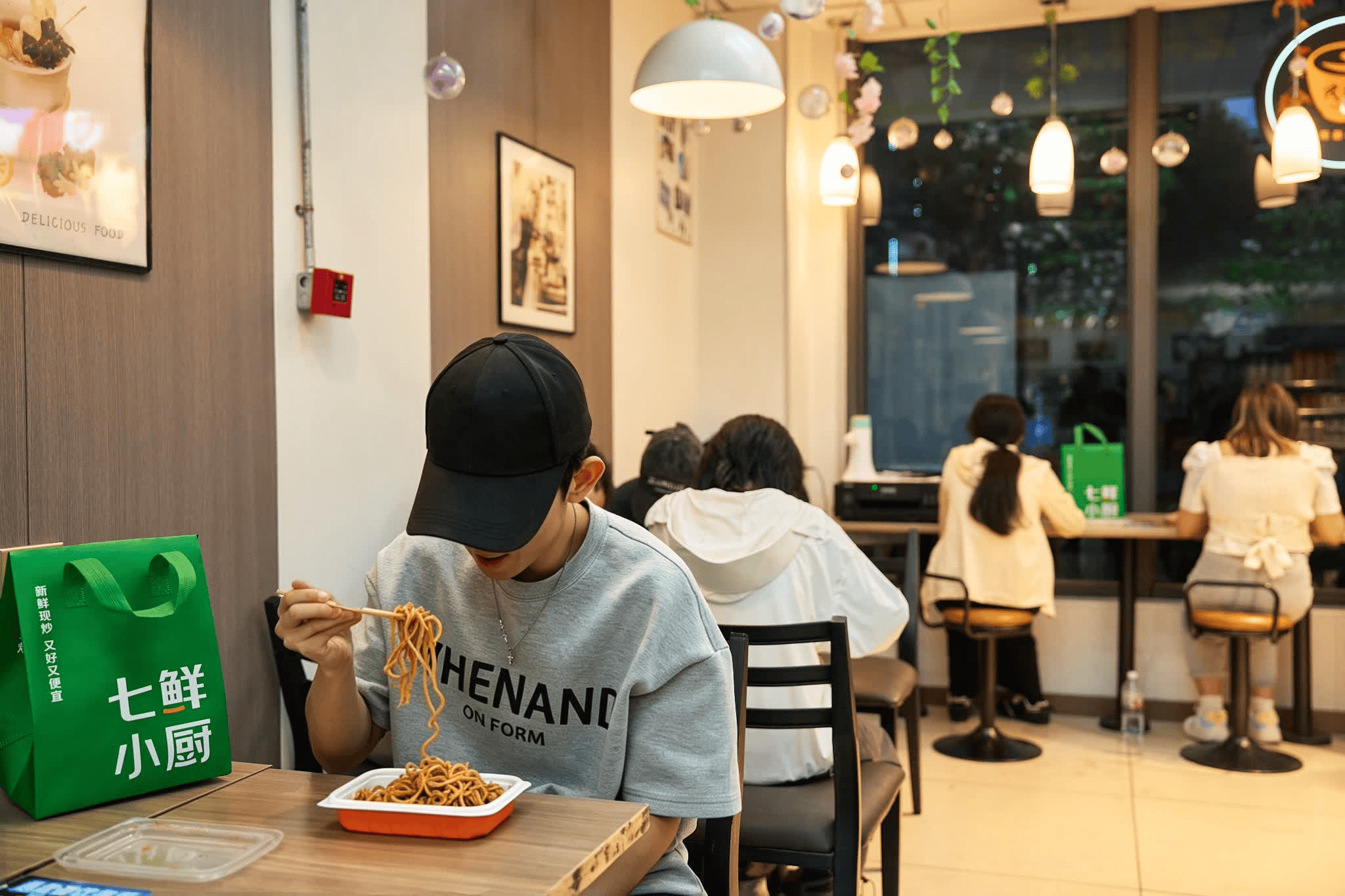
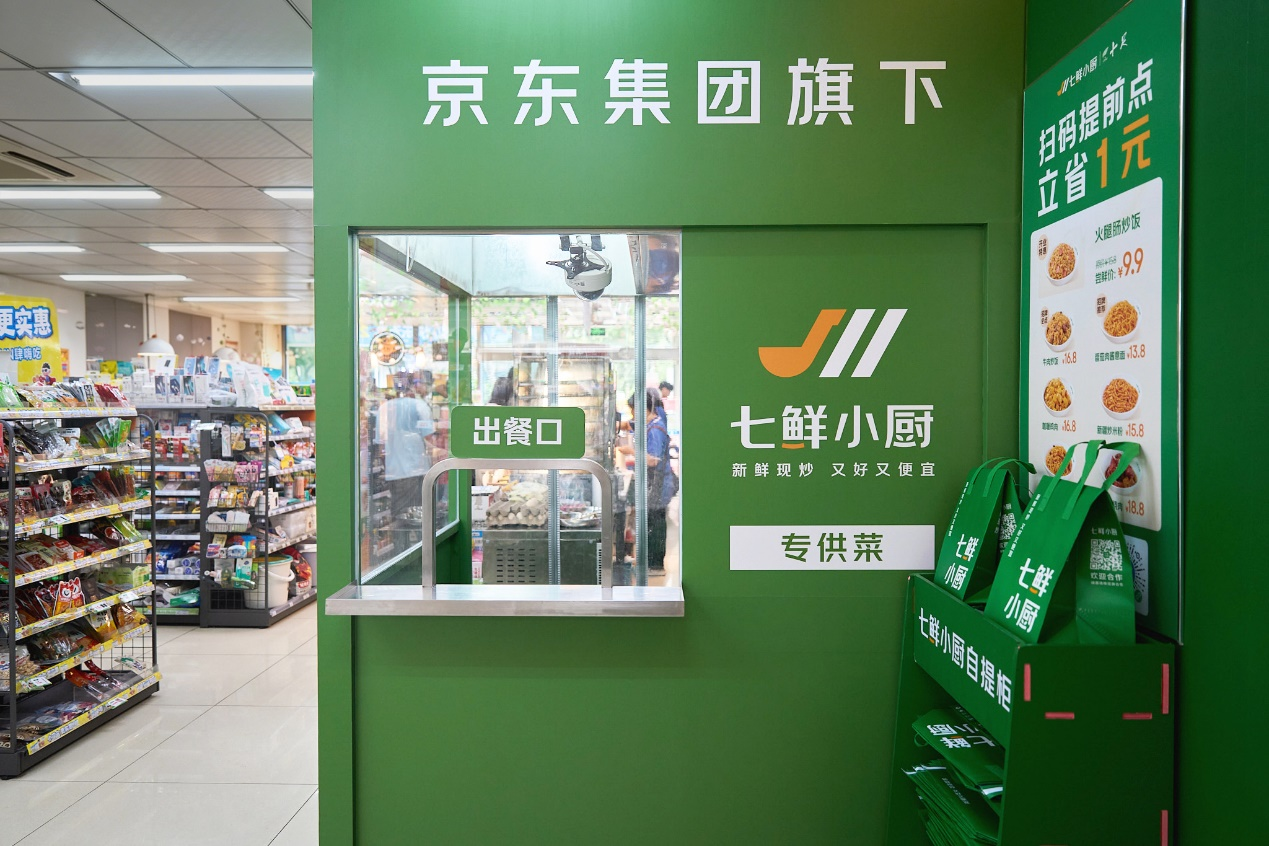
近期十足便利店引进七鲜小厨专供菜,首店落地杭州余杭区天时科创园店。七鲜小厨专供菜主打现点现炒、即提即走的便捷模式,能够为传统线下便利店等扩充餐食品类、丰富便利店用餐场景。首家十足便利店引进后,上线现炒餐品涵盖牛肉炒饭、新疆炒米粉、豆泡红烧肉、咖喱鸡肉、多款意面等,依托便利店便民的场景优势,精准适配附近居民及楼上楼下上班族快节奏的就餐需求:不用绕路去餐馆,不用等外卖,推开便利店的门,即可下单带走一盒现炒的热餐。

七鲜小厨专供菜由便利店工作人员使用七鲜小厨智能炒菜机器人现场炒制,单道餐品几分钟即可出锅。从出锅到消费者取餐、用餐的时间能大幅压缩,菜品保持刚出炉的状态——这一点,是外卖难以做到的。对便利店来说,现炒餐品的加入让原本以零食、饮料、速食为主的商品结构多了一个“刚需”品类,也让这个原本以“快”为标签的业态多了一层“热”的温度——热菜、热饭、热锅气。

“外卖高峰期配送慢,等四五十分钟是常态,到手饭菜软塌塌的,完全没有现炒的锅气。周边餐馆不仅要排队,随便一份单人餐就要三四十块,天天吃成本也非常高。”在园区上班的小陈也是门店常客,对比过后他对七鲜小厨十分认可,“这里十几块就能吃到现炒正餐,下单几分钟就能取餐,热气十足、口感新鲜,不管是速度、味道还是价格,都完胜外卖和周边小餐馆。”

七鲜小厨专供菜成为了周围上班族的午晚餐优选,也给便利店的运营带来了新机会。十足便利店的工作人员介绍,专供菜上线后,中午和傍晚时段来店里顾客明显增多。“有些人本来就是进来买瓶水的,闻到炒饭的香味就顺便带一份;也有人是专门来买饭的,取完顺手又买了杯饮料或者零食。”他说,“门店的客流比之前多了,连带的其他单品销量也在上涨。”

作为京东2025年7月推出的品质餐饮品牌,七鲜小厨依托成熟供应链和标准化运营体系,已覆盖北上广深、天津、杭州、苏州等多个重点城市。主打“新鲜现炒不隔夜”,大牌食材全公示,核心食材选用中粮福临门非转基因大豆油、十月稻田东北一级大米、正大集团肉禽等知名品牌。净菜由工厂完成清洗切割,冷链配送至门店,开袋即可下锅炒制。供应链公开和食材溯源的做法,让消费者能够清楚知道吃进嘴里的是什么——这和此前餐饮行业频发的“后厨黑箱”“幽灵外卖”问题形成了鲜明对比。

十足便利店一直致力于解决年轻人健康的“一日三餐”,而这一使命与七鲜小厨“新鲜现炒不隔夜”的理念不谋而合,七鲜小厨专供菜上线十足便利店,是针对便利店快捷就餐场景的精准创新,也是双方理念共识转化为行动共振的生动实践。便利店的现炒烟火气,既有效赋能传统线下便利店业态升级,增添门店经营活力,也精准解决了市民部分就餐难题,实现消费者、便利店的多方共赢。未来,七鲜小厨将持续迭代供应链、优化菜品矩阵,稳步推广“线下零售+鲜食+现炒餐饮”创新业态,持续完善城市便民生活圈,为民生餐饮与传统零售门店的融合创新注入动能。

注:文/龚作仁,文章来源:Laborer,本文为作者独立观点,不代表亿邦动力立场。

文章来源:Laborer

广告
微信
朋友圈

FAQ回顾

七鲜小厨是什么品牌?

七鲜小厨是京东2025年7月推出的品质餐饮品牌,依托成熟供应链和标准化运营体系,主打“新鲜现炒不隔夜”,核心食材选用中粮、十月稻田、正大等知名品牌产品,目前已覆盖北上广深、杭州、苏州等多个重点城市。

便利店引入七鲜小厨专供菜有哪些好处?

便利店引入七鲜小厨专供菜可扩充餐食品类、丰富用餐场景,新增现炒刚需餐品品类,能有效吸引到店客流,带动饮料、零食等其他单品销量提升,助力传统线下便利店业态升级,增添门店经营活力。

七鲜小厨专供菜相比外卖和餐馆有什么优势?

七鲜小厨专供菜由智能炒菜机器人现场炒制,单道餐品几分钟即可出锅,无需等外卖或餐馆排队,十几元即可吃到热气新鲜的现炒正餐,食材可溯源,在速度、口感、性价比方面均优于外卖和周边餐馆。

七鲜小厨未来的发展方向是什么?

七鲜小厨未来将持续迭代供应链、优化菜品矩阵,稳步推广“线下零售+鲜食+现炒餐饮”创新业态,持续完善城市便民生活圈,为民生餐饮与传统零售门店的融合创新注入动能。

这么好看,分享一下?

朋友圈 分享

APP内打开

赞 +1
+1
微信好友 朋友圈 新浪微博 QQ空间
关闭
收藏成功
发送
/140 0