广告
加载中

从灵宇宙“小方机”看AI终端的具身交互新路

亿邦动力 2026-06-08 14:36
亿邦动力 2026/06/08 14:36

邦小白快读

EN
全文速览

本文核心分享了灵宇宙创始人顾嘉唯推出随身AI终端“小方机”,探索AI具身交互新路径的相关干货,核心信息如下:

1. 小方机的核心能力与技术路线:它可实现近乎无延迟的纯语音对话,还能通过摄像头实时识别物理场景,可根据不同对话对象瞬间适配语气用词,背后采用设备端轻量化意图推理模型加云端大模型协同的方案,靠端侧预判实现极致响应速度。

2. 纠正了行业对具身智能的普遍误解:很多人将具身智能狭隘等同于人形机器人,实际上只要能和物理世界、人的感官产生真实联结,就是合格的具身交互,顾嘉唯团队早在2012年就做出过模拟不同材质触觉的触摸屏,印证了这一观点。

3. 小方机依托积累的海量多模态场景数据,可实现静态物体属性识别、激活虚拟玩偶、生成空间导览等多种功能,探索了人与机器共生的新方式。

本文为布局AI终端领域的品牌商提供了产品研发、赛道方向、消费趋势等多方面的干货参考,核心内容如下:

1. 消费趋势层面:当前用户对AI交互的需求已经从屏幕内的固定交互,转向能和物理世界、个人感官联结的自然交互,行业焦点已经从有形的产品界面转向无形的交互体验,情感化的人机联结成为新的消费需求方向。

2. 产品研发层面:可借鉴灵宇宙的技术路线,采用端侧轻量化模型搭配云端大模型的端云协同方案,通过端侧预判实现极致响应速度,满足实时识别物理场景的用户需求,技术落地难度比全大模型端侧方案更低。

3. 赛道布局层面:不必一味跟风扎堆人形机器人赛道,从小型便携AI终端切入探索具身交互,属于竞争较小的细分蓝海,依托过往多模态数据积累打磨场景能力,有机会抢占新赛道的先发优势。

本文给布局AI终端赛道的卖家提供了新的市场机会和方向参考,核心干货如下:

1. 市场机会层面:当前AI交互赛道仍有明显创新空白,传统以屏幕为核心的交互已经成为红海,能够联结物理世界和用户感官的具身交互便携AI终端是新的增长方向,符合用户对自然、流畅AI交互的需求,市场认可度潜力大。

2. 切入方向启示:不必局限于人形机器人这类重资产、高门槛的项目,从小巧便携、满足日常随身使用需求的轻量化AI终端切入,门槛更低,研发和落地周期更短,更容易快速推向市场获得反馈。

3. 技术与运营参考:端云结合的技术方案已经被验证可行,卖家可以依托相关成熟方案快速推出产品,同时未来用户更看重人与产品的情感联结,打磨产品体验时要侧重情感属性的打造。

本文给布局AI硬件赛道的工厂提供了产品方向、商业机会等多方面的参考干货,核心内容如下:

1. 产品生产设计需求层面:当前AI终端的市场需求不再局限于传统带大尺寸屏幕的智能设备,用户开始需要能够实现具身交互的小型便携AI终端,产品设计核心要从做屏幕界面转向支撑多模态交互的硬件设计,满足语音采集、摄像头实时识别的需求,小体积便携化是重要的产品方向。

2. 商业机会层面:当前具身交互赛道被狭隘绑定为人形机器人,大量工厂挤入人形机器人赛道竞争,赛道拥挤研发成本高,而轻量化随身AI终端赛道竞争较少,属于新的蓝海市场,工厂可以切入这个细分赛道抢占先机。

3. 转型启示:工厂可以结合自身的硬件生产能力,对接创新AI品牌的代工或研发需求,围绕新交互形态打磨硬件生产能力,开拓新的业务增长空间,依托自身生产积累推进数字化升级,适配AI硬件的新需求。

本文给AI相关领域的服务商提供了行业发展趋势、客户痛点和解决方案方向的干货参考,核心内容如下:

1. 行业发展趋势层面:AI交互已经从屏幕内的软件交互走向和物理世界结合的具身交互,行业对多模态AI能力、端云协同模型的需求会持续增长,未来交互设计的底层支撑会拓展到人类学、社会学、心理学领域,跨领域相关服务会迎来新的市场需求。

2. 客户核心痛点:当前AI终端企业想要实现实时物理场景识别和无延迟交互,纯云端方案响应速度达不到要求,纯端侧方案模型能力不足成本高,这是行业普遍存在的痛点。

3. 解决方案方向:服务商可以打磨端侧轻量化意图推理模型加云端大模型协同的技术服务方案,帮助AI终端企业通过端侧预判实现极致响应速度,满足具身交互的技术需求,同时可以布局跨学科的交互设计咨询服务,匹配企业对情感化交互设计的新需求。

本文给AI相关的硬件平台、科技孵化平台等平台商,提供了招商方向、赛道风向等干货参考,核心内容如下:

1. 行业需求层面:AI终端行业已经出现了新的发展方向,从业者不再只聚焦于人形机器人等热门赛道,开始探索轻量化随身AI终端的具身交互新路径,平台需要调整自身服务方向,匹配这类创新项目的发展需求。

2. 招商布局方向:可以重点挖掘布局具身交互轻量化终端的创新项目,这类项目依托端云协同的成熟技术路线,落地难度比人形机器人更低,产品验证速度更快,属于有增长潜力的新赛道项目,提前布局可以丰富平台的项目储备,抢占新赛道红利。

3. 风向规避提示:当前行业对具身智能存在普遍认知误区,大量项目扎堆进入人形机器人赛道,导致赛道拥挤、研发内卷,平台要引导创业者打破认知误区,鼓励多元化的具身智能创新方向,避免平台项目同质化竞争,降低整体投资风险。

本文给AI交互、具身智能领域的研究者提供了产业新动向、新认知等方面的研究参考干货,核心内容如下:

1. 产业落地新动向:当前产业界已经开始跳出人形机器人的固定框架,探索全新的具身交互落地路径,以随身便携终端为载体,实现AI和物理世界、人类感官的联结,这是具身智能落地消费市场的新方向,相比人形机器人更贴近日常需求,落地速度更快,具备较高的研究价值。

2. 领域新观点输出:本文提出了对具身智能的新定义,纠正了过往将具身智能狭隘等同于机器人形态的认知,明确具身交互的核心是和物理世界、人类感官产生真实联结,不一定必须是人形形态,为领域研究提供了新的思路。

3. 学科发展新方向:未来人机交互学科的研究核心会从界面设计转向抹平人与机器的交互感,研究人与机器的新共生关系,底层支撑也从纯技术拓展到人类学、社会学、心理学等跨学科领域,为研究者指明了新的研究方向。

返回默认
声明:快读内容全程由AI生成,请注意甄别信息。如您发现问题,请发送邮件至 run@ebrun.com 。

我是 品牌商 卖家 工厂 服务商 平台商 研究者 帮我再读一遍。

Quick Summary

This article shares key insights from Lingyuzhou founder Gu Jiawei on his new portable AI terminal "Xiaofangji", which explores a new path for embodied AI interaction:

1. Core capabilities and technical approach: Xiaofangji delivers nearly lag-free pure voice conversations, real-time physical scene recognition via its camera, and instant tone and wording adaptation for different conversation partners. It leverages a hybrid architecture combining a lightweight on-device intent inference model and cloud-based large models, with on-device prediction enabling ultra-fast response times.

2. Correcting a common industry misunderstanding of embodied intelligence: Many narrowly equate embodied intelligence with humanoid robots. In fact, any system that forms real connections with the physical world and human senses qualifies as embodied interaction. Gu's team demonstrated this principle as early as 2012, when they built a touchscreen capable of simulating tactile sensations from different materials.

3. Leveraging massive accumulated multimodal scene data, Xiaofangji supports multiple functions including static object attribute recognition, interactive virtual doll activation, and spatial navigation generation, exploring a new mode of human-machine coexistence.

This article offers actionable insights on product R&D, market positioning and consumer trends for brands looking to enter the AI terminal space:

1. Consumer trend: User demand for AI interaction has shifted from fixed on-screen interaction to natural interaction connected to the physical world and personal senses. Industry focus has moved away from tangible product interfaces to intangible interaction experiences, with emotional human-machine connection emerging as a new core consumer demand.

2. Product R&D reference: Brands can adopt the Lingyuzhou's end-cloud collaborative technical approach, which combines lightweight on-device models with cloud large models. On-device prediction delivers ultra-fast response to meet demand for real-time physical scene recognition, while offering lower technical implementation difficulty than fully on-device large model solutions.

3. Market positioning guidance: There is no need to crowd into the saturated humanoid robot track. Entering embodied interaction via small, portable AI terminals creates access to a relatively underserved blue ocean niche. Brands that build out scenario capabilities based on accumulated multimodal data have strong potential to capture first-mover advantage in this new track.

This article provides new market opportunity and positioning insights for sellers entering the AI terminal track:

1. Market opportunity: There remains significant unmet innovation demand in the AI interaction space. Traditional screen-centric interaction is already a red ocean, while portable AI terminals with embodied interaction capabilities that connect the physical world and user senses represent a new growth direction aligned with user demand for natural, fluid AI interaction, with strong latent market potential.

2. Entry strategy: Sellers do not need to pursue high-capital, high-barrier projects such as humanoid robots. Starting with a small, portable lightweight AI terminal for daily on-the-go use offers lower barriers, shorter R&D and launch cycles, and faster time-to-market to collect user feedback.

3. Technology and operation guidance: The hybrid end-cloud technical approach has been validated as viable, allowing sellers to launch products quickly based on this mature framework. Going forward, users will increasingly value emotional connections with their products, so sellers should prioritize building emotional attributes when refining product experiences.

This article offers product direction and business opportunity insights for factories looking to enter the AI hardware track:

1. Product design and manufacturing requirements: Current market demand for AI terminals is no longer limited to traditional large-screen smart devices. Users are now seeking small, portable AI terminals with embodied interaction capabilities. Product design should shift from prioritizing screen interfaces to building hardware that supports multimodal interaction, meeting the requirements for voice collection and real-time camera recognition. Small form-factor and portability are key product directions.

2. Business opportunity: The embodied interaction track is currently incorrectly narrowly tied to humanoid robots, leading to a flood of factories crowding into this space, resulting in intense competition and high R&D costs. By contrast, the lightweight portable AI terminal track has limited competition and represents a new blue ocean market, where factories can capture first-mover advantage by entering this niche.

3. Transformation guidance: Factories can leverage their existing hardware manufacturing capabilities to partner with innovative AI brands for OEM or co-development projects. They can build out manufacturing expertise for new interaction forms to open up new revenue growth, and use their manufacturing experience to advance digital upgrading to adapt to the new requirements of AI hardware.

This article provides insights on industry trends, client pain points and solution directions for AI-focused service providers:

1. Industry trend: AI interaction has evolved from on-screen software interaction to embodied interaction integrated with the physical world. Demand for multimodal AI capabilities and end-cloud collaborative models will continue to grow. In the future, the underlying support for interaction design will expand into anthropology, sociology and psychology, opening up new market demand for cross-disciplinary related services.

2. Core client pain point: For AI terminal companies looking to achieve real-time physical scene recognition and lag-free interaction, pure cloud solutions cannot meet response speed requirements, while pure on-device solutions suffer from insufficient model capability and high costs — this is a widespread industry pain point.

3. Solution direction: Service providers can develop technical service offerings centered on the hybrid architecture of lightweight on-device intent inference models paired with cloud large models, helping AI terminal companies achieve ultra-fast response via on-device prediction to meet the technical requirements of embodied interaction. Providers can also build out cross-disciplinary interaction design consulting services to match enterprises' new demand for emotional interaction design.

This article provides investment and sourcing direction insights for AI hardware platforms and tech incubation platforms:

1. Industry demand: A new development direction has emerged in the AI terminal industry. Practitioners are no longer only focusing on hot tracks such as humanoid robots, and have begun exploring new embodied interaction paths via lightweight portable AI terminals. Platforms need to adjust their service strategies to match the development needs of these innovative projects.

2. Sourcing and investment direction: Platforms should prioritize sourcing innovative projects focused on lightweight embodied interaction terminals. These projects follow the mature end-cloud collaborative technical route, with lower implementation difficulty and faster product validation than humanoid robot projects, making them high-growth new-track projects. Early布局 allows platforms to enrich their project pipeline and capture first-mover dividends in the new track.

3. Risk mitigation guidance: The industry widely misunderstands embodied intelligence, leading to a flood of projects crowding into the humanoid robot track, which results in intense competition and R&D involution. Platforms should guide founders to break this cognitive bias, encourage diverse innovation directions for embodied intelligence, avoid homogeneous competition among platform projects, and reduce overall investment risk.

This article provides insights on new industry trends and new perspectives for researchers in AI interaction and embodied intelligence:

1. New industry implementation trends: The industry has begun moving beyond the fixed frame of humanoid robots to explore entirely new implementation paths for embodied interaction. Using portable terminals as a carrier to connect AI with the physical world and human senses represents a new direction for bringing embodied intelligence to the consumer market. Compared to humanoid robots, this approach is more aligned with daily demand, enables faster implementation, and offers high research value.

2. New domain perspectives: This article puts forward a revised definition of embodied intelligence, correcting the long-held narrow view that equates embodied intelligence exclusively with the humanoid robot form. It clarifies that the core of embodied interaction is forming real connections with the physical world and human senses, which does not require a humanoid form, offering new thinking for domain research.

3. New disciplinary development direction: Going forward, the core research focus of human-computer interaction will shift from interface design to eliminating the perceived separation between humans and machines, and exploring new symbiotic relationships between humans and machines. Its underlying support will also expand from pure technology to cross-disciplinary areas including anthropology, sociology and psychology, pointing to new research directions for scholars.

Disclaimer: The "Quick Summary" content is entirely generated by AI. Please exercise discretion when interpreting the information. For issues or corrections, please email run@ebrun.com .

I am a Brand Seller Factory Service Provider Marketplace Seller Researcher Read it again.

在与马蹄社CEO刘宸的交流中,灵宇宙创始人顾嘉唯拿出一款名为“小方机”的随身AI终端,并向对方抛出了一个出人意料的问题:“你看过电影《Her》吗?”在那部描绘人与AI建立亲密关系的经典科幻片中,主角使用的硬件恰好也是一个可别在胸前的便携设备。这并非巧合,顾嘉唯借鉴的正是那种“AI通过随身终端理解现实世界”的交互形态,并由此引出了他对“具身交互”的独特定义。

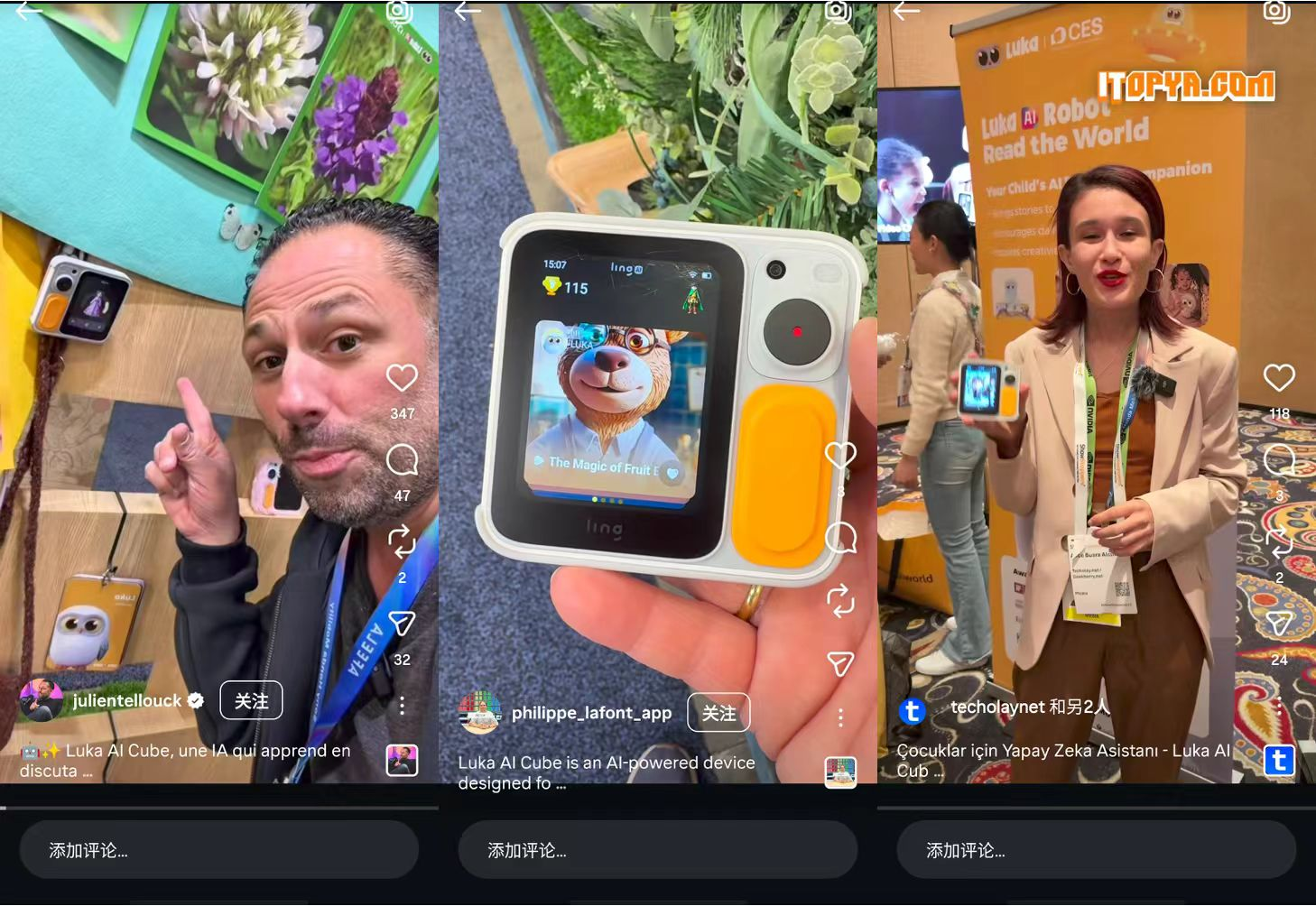
顾嘉唯现场展示了小方机的核心能力:它不仅能进行近乎无延迟的纯语音对话,更能通过摄像头实时看懂物理场景。当AI识别一张复杂的杂志封面时,能准确描述出画面上不同机器人的行为和位置;当用户切换对话对象和语言难度时,AI的语气和用词也能瞬间适配。顾嘉唯强调:“这种实时看懂物理场景的能力,纯音频做不到。”其背后是设备端轻量化意图推理模型与云端大模型的协同,通过端侧预判,实现了极致的响应速度。

由此,他进一步阐释了对“具身智能”的深刻理解。顾嘉唯认为,行业将具身智能狭隘地等同于“人形机器人”是一种误解。他在微软亚洲研究院的研究方向正是“实物与具身交互”,其核心命题是让交互走出屏幕,直接与真实的物理空间和人的感官产生联结。他举例,早在2012年,其团队就做出过能模拟丝绸、皮革等不同材质触觉的触摸屏。因此,他提出:“具身交互不一定非得长着两条腿在地上跑,只要它能与物理世界和人的感官发生真实的联结,它就是具身。”

小方机正是这一理念的产物。依托Luka卢卡时代积累的海量多模态场景数据,灵宇宙在物理世界的稳定控制和多模态理解上形成了深厚积累。从拍摄静态照片理解物体属性,到将泡泡玛特玩偶瞬间“变活”,再到接入无人机画面生成空间导览,这些能力展示了其系统在场景推理与生成上的实力。

顾嘉唯正在通过小方机这样的产品,尝试寻找一种全新的人与机器共生的方式。他摒弃了传统交互设计中以屏幕和界面为核心的做法,转向研究人与产品之间的情感联结。当行业的焦点从有形的界面转向无形的交互体验,人类学、社会学与心理学正成为新的底层支撑。这或许预示着,未来的人机交互学科,其使命将是把人与机器间的“交互感”彻底抹平,转而研究人与“人”的新关系。(马蹄社原创/2026年6月)

文章来源:亿邦动力

广告
微信
朋友圈

这么好看,分享一下?

朋友圈 分享

APP内打开

+1
+1
微信好友 朋友圈 新浪微博 QQ空间
关闭
收藏成功
发送
/140 0