广告
加载中

TikTok Shop东南亚公布AIGC三大“内容禁区”:歪曲宣传、效果伪造、故事编造

王昱 2026-02-12 05:50
王昱 2026/02/12 05:50

邦小白快读

EN
全文速览

TikTok Shop东南亚发布最新AIGC内容创作准则,划定三大禁区以防止虚假内容误导消费者,帮助用户识别合规操作。

1.不得歪曲产品信息:AI生成内容必须与实际商品详情一致,包括颜色、尺寸、材质等具体属性,添加不存在的功能属违规;例如视频展示三件T恤但详情页仅一件,或标注“意大利制造”实则“中国制造”。

2.不得伪造使用效果:禁止使用AI工具在健康美容产品中伪造“前后效果”,避免涉及治愈、消除或预防敏感状况的表述(如治疗痤疮、X天内见效);建议用第一人称分享真实体验,而非夸大效果。

3.不得编造故事促进销售:AI内容禁止虚构悲情故事或不适场景(如血腥画面或危险行为),以博取同情诱导购买;平台强调内容需真实,避免引发消费者反感。

惩治规则基于创作者健康评级(CHR)分层治理:首次违规警告;重复违规扣分并处罚(如内容移除、功能限制);严重违规可导致账号冻结或法律诉讼,处罚逐步升级且部分不接受申诉。

平台新规对品牌营销和产品研发提出更高要求,强调内容真实性和用户信任建设,以应对消费趋势变化。

1.品牌营销需合规:禁止AIGC歪曲商品信息或伪造效果,影响渠道推广;例如宣传羊绒材质实际为聚酯纤维属违规,品牌应确保视频与实物一致以避免处罚。

2.产品研发启示:新规针对健康美容类产品敏感点,如禁止AI伪造“使用后效果”,推动品牌研发真实功效产品;消费趋势显示用户偏好透明信息,品牌需强化产品描述准确性。

3.用户行为观察:平台禁止编造故事诱导消费,反映用户对虚假内容反感;品牌可借第一人称分享真实体验提升互动,但避免冒用他人口吻,以维护品牌信誉。

政策解读揭示增长市场风险与机会,卖家需关注合规操作以避免处罚,并抓住内容质量提升带来的机遇。

1.政策细节:三大AIGC禁区明确禁止歪曲信息、伪造效果和编造故事;例如伪造使用效果涉及敏感表述(如“治疗皱纹”)或时间范围(如“立即见效”)属违规,卖家应严格自查内容。

2.风险提示:违反规则触发分层处罚(基于CHR),首次警告后重复违规可扣分、冻结佣金或账号注销;机会提示在于合规内容可提升推荐率,避免低质内容打击。

3.事件应对措施:卖家可学习真实分享案例(如第一人称体验),并关注平台新一轮治理(如打击非原创视频),以规避风险并利用新规提升销售转化。

新规强调产品真实性和设计准确性,为工厂提供商业机会和数字化启示,推动生产与电商融合。

1.产品生产需求:AI内容必须与实际商品一致(如材质、功能),工厂需确保产品详情页信息精准;例如宣传带拉链卫衣但实物无拉链属违规,启示工厂加强品控。

2.商业机会:合规要求可转化为优势,工厂可开发真实产品特性以匹配AIGC推广;平台治理趋势(如2025年视频量突破1亿)显示电商需求增长,工厂可拓展数字化渠道。

3.推进数字化启示:新规鼓励使用AI提升创意而非误导,工厂可学习平台分层治理模式,优化生产流程以应对内容合规挑战。

行业发展趋势指向内容合规和新技术应用,服务商可针对客户痛点提供解决方案,助力客户适应平台规则。

1.行业趋势:TikTok Shop强化AIGC治理,显示内容质量成为焦点;新技术如AI工具使用受限,服务商需引导客户合规应用(如仅用于创意表达)。

2.客户痛点:商家面临伪造效果或编造故事的风险,痛点包括处罚风险(如CHR扣分导致功能限制);服务商可提供审核工具或培训方案。

3.解决方案:基于平台“三大黄金法则”,服务商可开发内容合规指南(如避免敏感表述),并借鉴分层治理模式设计风险管理服务。

平台最新做法聚焦内容治理和运营管理,解决商业需求问题,并规避风向风险以提升生态质量。

1.平台需求与问题:快速增长带来内容合规挑战(如2025年视频量突破1亿),新规针对AIGC禁区解决误导问题;平台通过分层治理(CHR模式)管理招商风险。

2.最新做法:发布“三大黄金法则”明确禁区细节(如禁止伪造效果),并实施打击措施(如取消推荐低质内容);运营管理包括处罚升级(从警告到法律诉讼)。

3.风向规避:平台强调多次违规处罚不接受申诉,规避虚假内容风险;招商策略可吸引合规商家,提升整体内容质量以稳定生态。

产业新动向揭示内容治理收紧和新问题,研究者可分析政策建议和商业模式启示。

1.产业动向:TikTok Shop东南亚强化AIGC监管,显示2025年后内容质量成为治理重点;新问题包括AI工具滥用(如伪造效果)引发消费者信任危机。

2.政策法规建议:平台分层治理模式(CHR)提供启示,研究者可建议类似法规(如分级处罚);规则细节(如禁止编造故事)反映对伦理问题的关注。

3.商业模式启示:新规推动真实内容生态(如允许第一人称分享),研究者可探讨其对电商模式的影响(如提升用户忠诚度),并分析背景(视频增长)以预测未来趋势。

返回默认
声明:快读内容全程由AI生成,请注意甄别信息。如您发现问题,请发送邮件至 run@ebrun.com 。

我是 品牌商 卖家 工厂 服务商 平台商 研究者 帮我再读一遍。

Quick Summary

TikTok Shop Southeast Asia has released new AIGC content creation guidelines, establishing three key prohibitions to prevent misleading consumers with false content and help users identify compliant practices.

1. Do not misrepresent product information: AI-generated content must accurately reflect actual product details, including specific attributes like color, size, and material; adding non-existent features is prohibited. For example, showing three T-shirts in a video when only one is listed, or claiming "Made in Italy" for a product actually made in China.

2. Do not fabricate usage results: Using AI tools to create fake "before-and-after" effects for health/beauty products is banned, along with claims about curing, eliminating, or preventing sensitive conditions (e.g., treating acne, promising results within X days). Recommendations advise sharing genuine first-person experiences instead of exaggerating effects.

3. Do not invent stories to drive sales: AI content must not fabricate sob stories or inappropriate scenarios (e.g., graphic imagery or dangerous acts) to elicit sympathy and induce purchases. The platform emphasizes authenticity to avoid consumer backlash.

Penalties are tiered based on the Creator Health Rating (CHR): first-time offenders receive warnings; repeat violations lead to point deductions and sanctions (e.g., content removal, feature restrictions); severe breaches may result in account suspension or legal action, with penalties escalating and some being non-appealable.

The new platform rules impose higher standards for brand marketing and product development, emphasizing content authenticity and user trust-building to adapt to shifting consumer trends.

1. Marketing compliance is critical: AIGC must not distort product information or fabricate results, which could impact channel promotion. For instance, marketing an item as cashmere when it is polyester violates rules; brands must ensure video content aligns with physical products to avoid penalties.

2. Implications for product R&D: The guidelines target sensitive areas in health/beauty products, such as banning AI-generated "after-use" effects, pushing brands to develop items with verifiable efficacy. Consumer trends show a preference for transparent information, necessitating accurate product descriptions.

3. User behavior insights: The prohibition on invented stories reflects user aversion to deceptive content. Brands can leverage first-person testimonials to enhance engagement but should avoid impersonating others to maintain credibility.

Policy analysis highlights both risks and opportunities in growth markets, urging sellers to prioritize compliance to avoid penalties while capitalizing on improved content quality.

1. Policy specifics: The three AIGC prohibitions clearly ban misrepresentation, fabricated results, and invented narratives. Examples include false claims about sensitive outcomes (e.g., "treating wrinkles") or timelines (e.g., "instant results"), requiring strict self-audits.

2. Risk and opportunity: Violations trigger tiered penalties (based on CHR), with repeat offenses leading to point deductions, frozen commissions, or account termination. Compliant content, however, can boost recommendation rates and avoid demotion.

3. Actionable steps: Sellers should study authentic sharing cases (e.g., first-person experiences) and monitor platform crackdowns (e.g., on non-original videos) to mitigate risks and leverage new rules for sales conversion.

The guidelines stress product authenticity and design accuracy, offering factories commercial opportunities and digitalization insights to align production with e-commerce.

1. Production requirements: AI content must match actual goods (e.g., materials, functions), necessitating precise product detail pages. For example, promoting a hoodie with a zipper that lacks one violates rules, underscoring the need for quality control.

2. Business opportunities: Compliance can be a competitive edge; factories can develop genuine product features to support AIGC promotions. Platform trends (e.g., video volume surpassing 100 million by 2025) indicate growing e-commerce demand, encouraging digital channel expansion.

3. Digitalization insights: The rules encourage using AI for creativity, not deception. Factories can adopt tiered governance models to optimize processes and address content compliance challenges.

Industry trends point toward content compliance and regulated tech adoption, enabling service providers to address client pain points and facilitate rule adaptation.

1. Trend analysis: TikTok Shop’s strengthened AIGC governance highlights content quality as a priority. Restricted AI tool usage (e.g., for creative expression only) requires guiding clients toward compliant applications.

2. Client pain points: Businesses face risks like fabricated results or stories, with penalties (e.g., CHR deductions leading to feature limits) being key concerns. Service providers can offer audit tools or training programs.

3. Solutions: Leveraging the "Three Golden Rules," providers can develop compliance guides (e.g., avoiding sensitive claims) and design risk management services inspired by tiered governance models.

The platform’s latest measures focus on content governance and operational management to address commercial needs while mitigating risks and enhancing ecosystem quality.

1. Platform challenges: Rapid growth (e.g., video volume exceeding 100 million by 2025) fuels content compliance issues. The new rules target AIGC misuse to reduce misinformation, with tiered governance (CHR) managing merchant risks.

2. Operational strategies: The "Three Golden Rules" detail prohibitions (e.g., no fabricated effects) and enforcement actions (e.g., demoting low-quality content). Management includes escalating penalties (from warnings to lawsuits).

3. Risk mitigation: Non-appealable penalties for repeat violations deter fake content. Merchant acquisition strategies can attract compliant sellers, boosting overall content quality for ecosystem stability.

Industry shifts reveal tightened content governance and emerging issues, offering insights for policy recommendations and business model analysis.

1. Industry dynamics: TikTok Shop Southeast Asia’s stricter AIGC oversight signals a post-2025 focus on content quality. New problems include AI tool misuse (e.g., fake effects) eroding consumer trust.

2. Policy implications: The tiered governance model (CHR) suggests parallels for regulatory frameworks (e.g., graded penalties). Rule details (e.g., banning invented stories) reflect ethical considerations.

3. Business model insights: Guidelines promoting authentic content (e.g., first-person sharing) may influence e-commerce models (e.g., enhancing user loyalty). Analyzing context (e.g., video growth) helps forecast future trends.

Disclaimer: The "Quick Summary" content is entirely generated by AI. Please exercise discretion when interpreting the information. For issues or corrections, please email run@ebrun.com .

I am a Brand Seller Factory Service Provider Marketplace Seller Researcher Read it again.

【亿邦原创】2月12日消息,TikTok Shop东南亚近日正式发布了最新的AIGC内容创作准则,明确划定“三大使用禁区”,禁止借助人工智能歪曲商品信息、伪造使用效果或编造悲情故事以诱导消费。此举显示出平台在内容治理方面的进一步收紧。

据了解,2025年,TikTok Shop东南亚站点带货视频量已突破1亿,内容质量和合规问题逐渐成为平台的重点治理对象。官方强调,虽然AIGC允许在平台上使用,但所有内容必须遵守《TikTok Shop内容政策》和《TikTok社区准则》,仅能用于提升创意表达或帮助用户理解商品,而不得误导消费者。

为此,TikTok Shop东南亚提出“AIGC三大黄金法则”。

其一,AI内容不得歪曲产品信息。

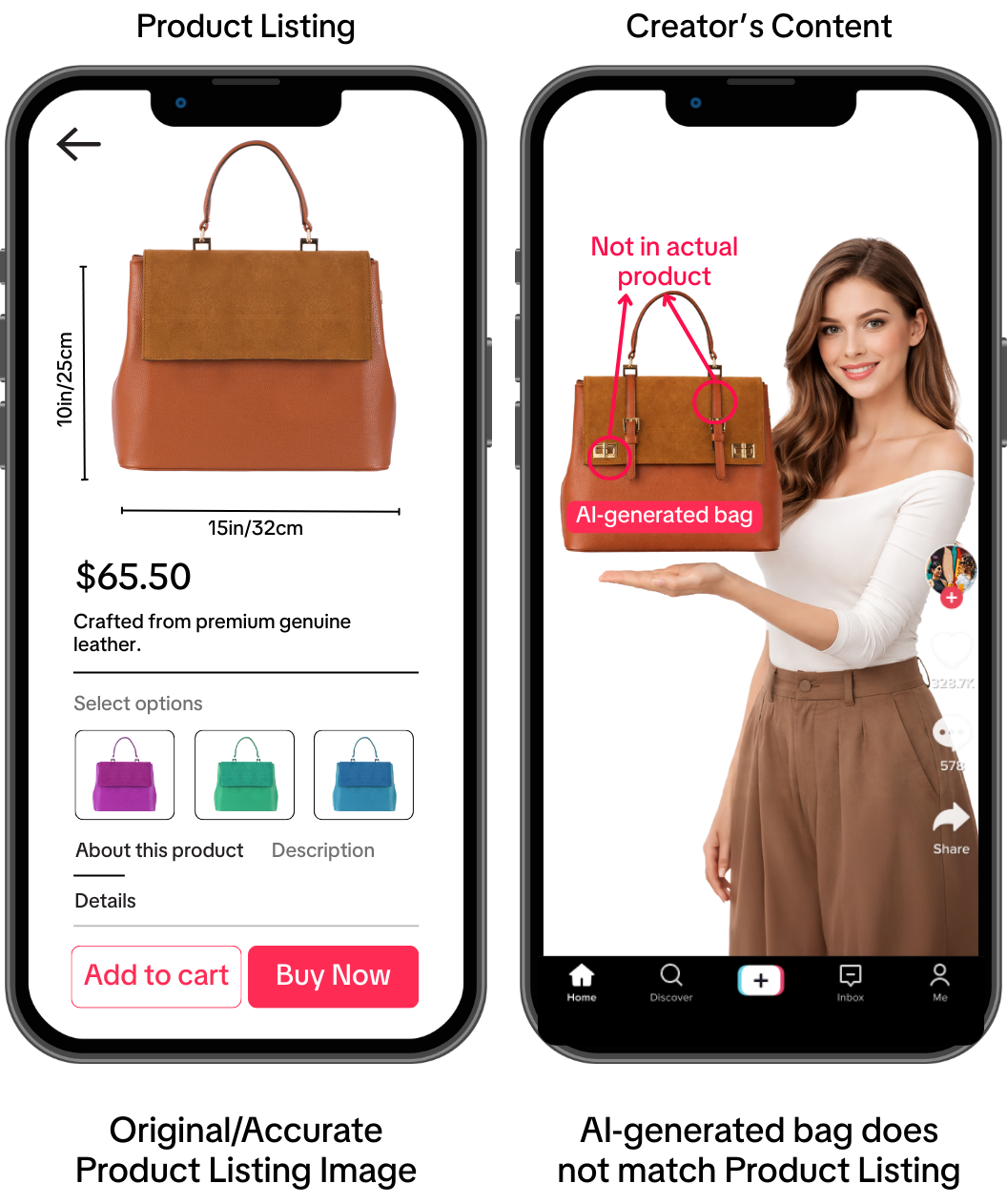
AI生成的产品视觉内容必须与实际商品及商品详情页信息一致,例如颜色、尺寸、材质、功能、设计、形状和重量等,且不得添加实际不存在的功能或特性。具体而言,只要视频展示的商品与实际在售商品不符,即属违规行为。

例如,视频中展示三件T恤,但详情页仅列一件;宣传带拉链的卫衣,但实物无拉链;标注“意大利制造”,实物为“中国制造”;宣称羊绒材质,实际为聚酯纤维等,均违反平台规定。

其二,不得伪造使用效果。

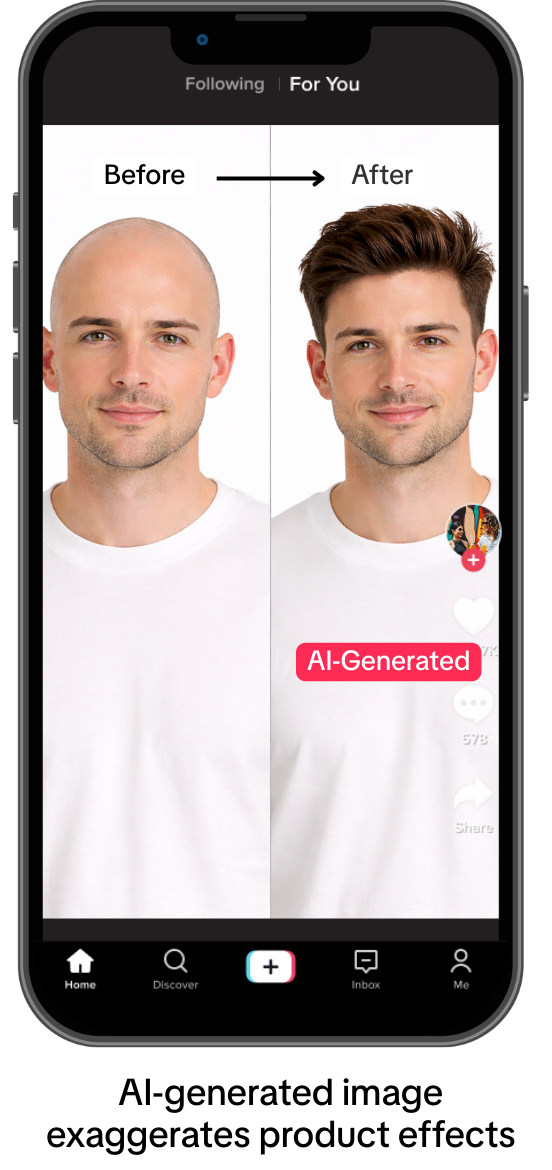
商家不得使用AI、滤镜或编辑工具,在真实人物或AI虚拟形象上伪造“使用后效果”——尤其在健康与美容类产品中更为敏感。

TikTok Shop官方指出,凡涉及“某产品能在特定时间内治疗、消除或预防人体敏感状况的效果”,都可能被认定为“效果伪造”。

具体而言,在AI生成内容中,有三大核心要素值得特别规避:涉及治愈、消除或预防效果的表述(如消除、治疗、治疗、杀死、避免、擦掉、停止等);

涉及敏感身体状况的展示(如痤疮、皱纹、美白、脱发、秃头、妊娠纹、橘皮组织等);

暗示特定时间范围(如立即、X天内、一次使用等)。此外,在视频画面上,平台也禁止商家使用AI工具来夸大或伪造产品效果,并应避免在AI生成角色上展示“前后效果”。

平台建议,非长期效果的产品可使用遮盖、修容、校色等词汇进行描述,并允许创作者以第一人称分享真实使用体验,但不得冒用他人口吻从事宣传。

其三,不得编造故事促进销售。

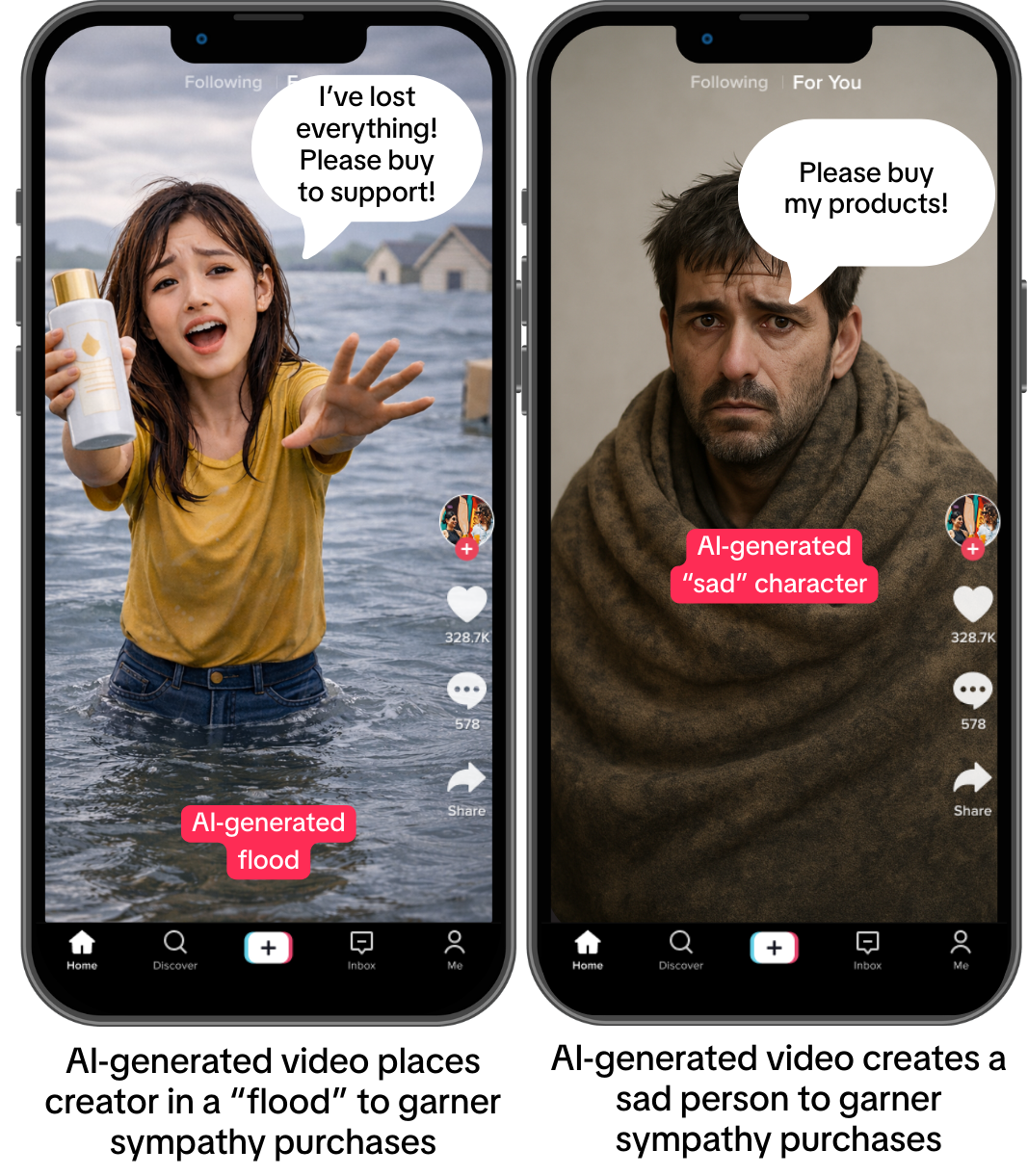
平台禁止通过AI角色或场景虚构悲情故事、危机事件或可能引起受众不适的内容来促进销售。

例如,血液、排泄物、清理下水道等令人反感的视觉内容;挤痘、去黑头、掏耳或抽血等引发不适的身体护理特写;以吸引互动为目的的危险行为;通过博取同情或制造罪恶感诱导购买,包括使用AI角色激发同情、虚构冲突、洪水等危机事件。

据悉,在惩治规则上,目前TikTok Shop东南亚采取的是基于创作者健康评级(CHR)的“分层治理”模式。

当商家内容违反TikTok Shop内容政策时,根据其违规性质与次数,将被划分为三个等级:

首次警告(不影响CHR分数);

重复违规,可能导致CHR扣分;

触发“里程碑式处罚”的严重违规行为。

处罚措施包括内容移除、功能限制、提现暂停、视频或直播权限封禁、商品橱窗冻结、佣金扣除、账号限制或注销,严重情况下甚至可能诉诸法律诉讼、告官举报。官方特别强调,多次违规后,惩罚措施将逐步升级,部分严重违规行为不接受任何申诉。

据了解,过去一年间,TikTok Shop东南亚不断强化内容治理体系,以应对平台快速增长带来的内容质量与合规挑战。

除了本次AIGC内容监管新规的发布之外,自从2025年9月中旬起,TikTok Shop东南亚就展开了新一轮针对非原创和低质内容的严厉打击,将拼接他人视频、简单模仿或重复无场景的视频纳入违规范畴,并明确对这类内容执行取消推荐、冻结佣金等处罚措施,以提升整体内容生态质量。


亿邦持续追踪报道该情报,如想了解更多与本文相关信息,请扫码关注作者微信。

文章来源:亿邦动力

广告
微信
朋友圈

FAQ回顾

TikTok Shop东南亚AIGC内容三大禁区具体指什么?

三大禁区包括:禁止使用AI歪曲商品信息(如颜色、功能不符),禁止伪造产品使用效果(如健康美容产品的疗效宣称),禁止编造悲情故事或危机事件诱导消费。

违反TikTok Shop AIGC准则会面临哪些处罚?

处罚基于创作者健康评级(CHR)分层治理,包括内容移除、功能限制、提现暂停、账号封禁等。多次违规将升级处罚,严重者可能面临法律诉讼。

AIGC在TikTok Shop东南亚的允许用途是什么?

AIGC仅允许用于提升创意表达或帮助用户理解商品,且必须遵守《TikTok Shop内容政策》和《TikTok社区准则》,不得误导消费者。

这么好看,分享一下?

朋友圈 分享

APP内打开

赞 +1
+1
微信好友 朋友圈 新浪微博 QQ空间
关闭
收藏成功
发送
/140 0