广告
加载中

被智元收购的上纬新材 宣布独立做具身智能了

李佳晅 2025-11-11 17:26
李佳晅 2025/11/11 17:26

邦小白快读

EN
全文速览

上纬新材收购和业务扩展引发市场热烈反应

1. 收购后股价从7.78元飙升至130.20元,市值增长1650%至525亿元,体现投资价值突变。

2. 发布人形机器人预告海报当天股价涨停,市场对AI新业务积极反馈,直接推动公司关注度提升。

独立开展具身智能业务的具体动向

1. 上纬新材通过公众号暗示推出身高1.88米的全尺寸人形机器人,表示业务独立于智元机器人,证券部门确认无协作信息。

2. 公司未剥离原有新材料业务,业务正常运转,通过公告强调自主创新方向。

业绩表现和CEO变更关键信息

1. 2025年上半年营收7.84亿元同比增长12.50%,但净利润2990.04万元下降32.91%,归因原材料价格上涨;三季度业绩反弹,营收4.96亿元增23.73%,利润3064.73万元增49.66%。

2. 智元以21亿元取得63.62%控股权,实控人变更为智元CEO邓泰华,公司股权结构调整带来新机遇。

品牌新方向和产品研发的干货信息

1. 上纬新材预告人形机器人产品,细节如1.88米高度,暗示全尺寸设计,代表从新材料到智能产品的研发转型,迎合AI消费趋势。

2. 品牌营销通过公众号发布海报引发市场兴奋,股价上涨验证品牌价值提升,展示品牌韧性和创新力。

品牌渠道建设和用户行为观察

1. 公司选择独立运营具身智能而非联合,强调品牌自主性,公众号地址策略性设在智元所在地,可能为渠道布局铺垫。

2. 用户行为体现在股价反应和投资者信心,如预告后涨停,反映市场对智能品牌的信任增强趋势,有助于理解消费偏好。

定价和竞争启示

1. 原有业务受材料成本影响净利润下滑,新业务转向或缓解价格竞争压力,产品研发创新可能重新定位品牌定价策略。

市场增长和机会提示关键点

1. 收购后股价飞升1650%,市值达525亿元,显示AI领域巨大增长潜力;三季度营收4.96亿元增23.73%,利润3064.73万元增49.66%,提示卖家跟进智能产品市场。

2. 发布人形机器人预告,事件带来正面影响,为卖家提供新兴消费需求变化案例,如用户对高科技产品的兴趣。

最新商业模式和合作方式启示

1. 上纬新材独立开展具身智能业务,非联合智元,展示轻资产合作模式;公司收购后CEO变更,提供学习点,卖家可借鉴战略合作形式。

2. 智元否认借壳上市,提供风险提示,如避免关联风险;股份改制动作提示机会,卖家需关注股权结构调整带来的合作政策。

扶持政策和事件应对

1. 原有业务下滑受原材料涨价影响,可学习应对措施如业务转型至新领域;公司无剥离信息,暗示稳定经营策略。

产品生产和设计需求干货

1. 上纬新材从新材料生产转向具身智能机器人,设计需求体现在全尺寸人形产品预告,高度1.88米细节,可能涉及生产设备转型需求。

2. 原有材料业务受成本影响,新业务机会突出智能化生产,启示工厂更新产品设计以适应新技术趋势。

商业机会和推进数字化启示

1. 收购后股价和营收增长,显示进入AI领域的巨大商业机会;公司业绩反弹提示数字化趋势下的机遇,工厂可探索智能制造合作。

2. 机器人业务独立开展,推进电商和数字化启示,如公众号发布策略示范数字营销,工厂需升级生产流程以匹配创新技术。

电商和风险提示

1. 公司业务正常开展,无剥离旧业信息,提供稳定过渡启示;原材料涨价导致原业务下滑,风险提示工厂成本管理重要性。

新技术和行业发展趋势

1. 具身智能技术重点体现在人形机器人预告,强调1.88米高度细节,代表AI前沿技术发展;行业趋势显示材料企业转向机器人领域,服务商可关注产业升级动向。

2. 收购后公司市值暴涨525亿元,营收增长,反映技术服务需求增长,趋势指向新机会市场如智能设备解决方案。

客户痛点和解决方案启示

1. 上纬新材原有业务受原材料涨价影响净利润下滑,痛点突出成本控制难题;解决方案通过收购转型智能业务,提供示范案例,服务商可开发高效缓解方案。

2. 智元声明独立运营,未联合,涉及技术合作痛点;股份改制动作启示解决方案,如资本整合支持创新。

风险管理和服务需求

1. 风险提示包括业务下滑影响盈利,服务商需提供风险规避工具;CEO变更和业务扩展,显示管理服务需求。

平台最新做法和运营管理

1. 智元关联公司改制为股份有限公司,名称变更体现平台动作,往往为上市铺路,提供运营管理学习点;实控人变更为邓泰华,显示领导层调整策略。

2. 上纬新材公众号发布人形机器人预告,股价反应显示平台营销做法,如利用新媒体渠道招商和运营。

平台需求和风向规避

1. 商业需求体现为收购后公司增长需平台支持;智元否认借壳上市,明确无借壳计划36个月内,提供风规避指引,避免法律风险。

2. 风险提示包括原材料涨价导致业务波动,平台招商需关注稳定需求;最新合作方式如独立运营模式,启示平台运营策略。

股权结构和政策启示

1. 智元21亿元取得63.62%控股权,股权结构变化影响平台管理;公司收购正常进行,政策合规体现在公告和股份交割。

产业新动向和新问题分析

1. 新材料公司转向具身智能机器人业务,产业动向明显;发布1.88米高度人形机器人预告,代表新兴领域问题如技术融合挑战。

2. 原业务受原材料涨价下滑,新问题凸显转型困难;收购后股价飙升1650%,反映商业模式变革需求。

政策法规建议和商业模式启示

1. 智元否认借壳上市,提供法规建议案例如防风险政策;股份改制动作启示上市前法规准备,研究者可分析合规策略。

2. 商业模式关键点为独立运营新业务,非联合;CEO变更和数据增长(如营收12.79亿元前三季度增16.60%)启示并购模型有效性。

产业发展和政策影响

1. 公司业绩波动(净利润降32.91%)突出政策影响原材料成本;研究者可推演产业政策建议,如支持创新转型。

返回默认

声明:快读内容全程由AI生成,请注意甄别信息。如您发现问题,请发送邮件至 run@ebrun.com 。

我是 品牌商 卖家 工厂 服务商 平台商 研究者 帮我再读一遍。

Quick Summary

Shangwei New Materials' acquisition and business expansion triggered strong market reactions.

1. Post-acquisition, its stock price surged from 7.78 yuan to 130.20 yuan, with market capitalization growing 1650% to 52.5 billion yuan, indicating a dramatic shift in investment value.

2. The stock hit its daily limit-up after the company released a teaser poster for a humanoid robot, reflecting positive market feedback on its new AI venture and boosting investor attention.

Specific developments in its independent embodied AI business

1. Shangwei New Materials hinted via its official social media account the launch of a full-size, 1.88-meter-tall humanoid robot, clarifying the business operates independently from Zhiyuan Robot, with its securities department confirming no collaboration.

2. The company has not divested its core new materials business, which continues normal operations, while public announcements emphasize a focus on independent innovation.

Key performance metrics and CEO change

1. H1 2025 revenue reached 784 million yuan, up 12.50% YoY, but net profit fell 32.91% to 29.9004 million yuan due to rising raw material costs; Q3 performance rebounded with revenue of 496 million yuan (up 23.73% YoY) and profit of 30.6473 million yuan (up 49.66% YoY).

2. Zhiyuan acquired a 63.62% controlling stake for 2.1 billion yuan, making its CEO Deng Taihua the actual controller, with equity restructuring opening new strategic opportunities.

Tangible insights on new strategic direction and product R&D

1. Shangwei New Materials teased a humanoid robot product with specific details like its 1.88-meter height, signaling a full-size design and a strategic pivot from new materials to intelligent products, aligning with AI consumer trends.

2. Brand marketing via a social media poster generated market excitement, with stock gains validating enhanced brand value and demonstrating resilience and innovation capacity.

Observations on channel strategy and user behavior

1. The company chose independent operation for its embodied AI business, underscoring brand autonomy; strategically locating its social media account near Zhiyuan's base may hint at future channel partnerships.

2. User behavior is reflected in stock price reactions and investor confidence, such as the limit-up post-announcement, indicating growing market trust in smart brands and shifting consumer preferences.

Pricing and competitive implications

1. Legacy business profitability was squeezed by material costs, but the shift to new ventures may alleviate price competition pressures, with product innovation potentially repositioning brand pricing strategies.

Key market growth signals and opportunity alerts

1. A 1650% stock surge post-acquisition to a 52.5-billion-yuan market cap highlights massive growth potential in AI; Q3 revenue of 496 million yuan (up 23.73% YoY) and profit of 30.6473 million yuan (up 49.66% YoY) suggest sellers should monitor smart product markets.

2. The humanoid robot teaser generated positive momentum, offering a case study on emerging consumer demand for high-tech products.

Latest business models and partnership insights

1. Shangwei's independent embodied AI venture, separate from Zhiyuan, demonstrates a capital-light partnership approach; post-acquisition CEO changes provide strategic lessons for sellers on collaboration frameworks.

2. Zhiyuan's denial of a backdoor listing offers risk mitigation insights, such as avoiding association risks; equity restructuring actions signal potential partnership policy shifts.

Support policies and crisis response takeaways

1. Legacy business declines due to raw material costs highlight the need for diversification; the company's stable operations without divestment suggest prudent transition strategies.

Actionable insights on production and design requirements

1. Shangwei's pivot from new materials to embodied AI robots, with a 1.88-meter humanoid product teaser, implies potential retooling needs for production equipment and design upgrades.

2. Legacy material business challenges from cost pressures underscore opportunities in smart manufacturing, urging factories to adapt product designs for tech trends.

Commercial opportunities and digitalization drivers

1. Post-acquisition stock and revenue growth reveal vast AI sector opportunities; the Q3 rebound highlights digitalization-driven prospects, suggesting factories explore smart manufacturing partnerships.

2. Independent robot operations and digital marketing via social media demonstrate e-commerce integration, necessitating production流程 upgrades for tech innovation.

E-commerce and risk management notes

1. Continued operations without divestment indicate stable transitions; raw material-driven profit declines emphasize the importance of cost control.

Emerging technologies and industry trend analysis

1. The embodied AI focus, exemplified by the 1.88-meter humanoid robot, represents cutting-edge AI development; the materials firm's pivot to robotics signals industry upgrading trends for service providers to monitor.

2. A 52.5-billion-yuan market cap surge and revenue growth reflect rising demand for technical services, pointing to new markets like smart device solutions.

Client pain points and solution inspirations

1. Legacy business profit declines due to material costs highlight cost control challenges; the acquisition-led pivot to AI offers a case study for service providers to develop efficiency solutions.

2. Zhiyuan's independent operation stance reveals collaboration complexities; equity restructuring insights suggest capital integration can support innovation.

Risk management and service demand shifts

1. Profitability risks from business volatility necessitate risk mitigation tools; CEO changes and expansion indicate growing management service needs.

Latest platform strategies and operational management

1. Zhiyuan's affiliate restructuring into a joint-stock company, with a name change, often precedes IPO plans, offering operational insights; the controller shift to Deng Taihua reflects leadership realignment tactics.

2. Shangwei's social media teaser and stock response demonstrate platform marketing tactics, such as using digital channels for merchant recruitment and operations.

Platform requirements and risk avoidance guidance

1. Post-acquisition growth demands platform support; Zhiyuan's 36-month denial of backdoor listing provides compliance guidance to avoid legal risks.

2. Risks like raw material-driven volatility highlight the need for stable merchant partnerships; independent operation models inform platform strategy.

Equity structure and policy implications

1. Zhiyuan's 63.62% control via a 2.1-billion-yuan investment impacts platform governance; the acquisition's smooth progress reflects regulatory compliance in announcements and share transfers.

Industry shifts and emerging challenges

1. A new materials firm's pivot to embodied AI robotics signifies a clear industry trend; the 1.88-meter humanoid robot teaser raises research questions on technological integration hurdles.

2. Legacy business declines from material costs highlight transformation difficulties; the 1650% stock surge reflects urgent needs for business model innovation.

Policy recommendations and business model insights

1. Zhiyuan's backdoor listing denial offers regulatory case studies for risk prevention; equity restructuring actions illustrate pre-IPO compliance strategies for researchers to analyze.

2. Key business model aspects include independent operation of new ventures; CEO changes and data growth (e.g., 1.279 billion yuan revenue in first three quarters, up 16.60% YoY) validate M&A effectiveness.

Industry development and policy impacts

1. Profit volatility (net profit down 32.91%) underscores policy influences on material costs; researchers can derive recommendations for innovation-supportive policies.

Disclaimer: The "Quick Summary" content is entirely generated by AI. Please exercise discretion when interpreting the information. For issues or corrections, please email run@ebrun.com .

I am a Brand Seller Factory Service Provider Marketplace Seller Researcher Read it again.

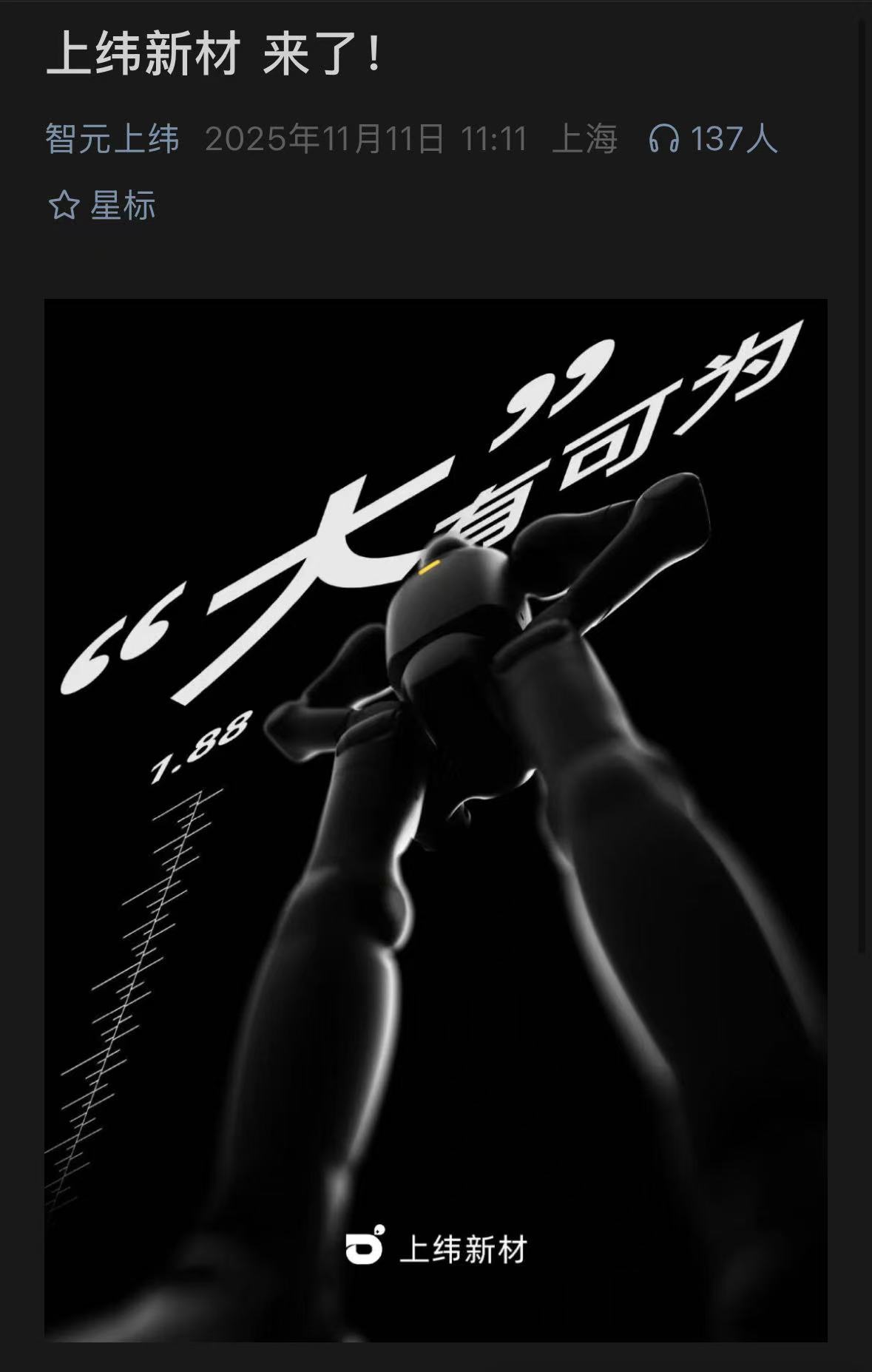
【亿邦原创】11月11日,上纬新材通过旗下公众号“智元上纬”发布人形机器人产品预告海报,其中一张明确标注“身高1.88米”,暗示将推出全尺寸人形机器人产品。上纬新材股价当日午后直线拉升涨停,收盘价130.20元/股,市值达525亿元。

“智元上纬”公众号注册主体虽然是上纬新材,但地址并非上纬新材公司所在地松江,而是智元机器人所在的浦东。智元机器人方面表示,上纬新材是独立开展具身智能业务,并非联合智元开展。

上纬新材证券部工作人员回应,证券部门目前还没有收到有关智元与上纬协作的信息,目前公司业务都在正常开展,没有剥离原有业务的信息,也不掌握负责开展机器人业务部门的信息。

此前,上纬新材于2020年在科创板上市,公司从事新材料的研发、生产与销售,主营业务涵盖环保高性能耐腐蚀材料、风电叶片用材料、新型复合材料以及循环经济材料等领域。财报显示,2025年上半年,上纬新材营业总收入7.84亿元,同比增长了12.50%,净利润为2990.04万元,大幅下降了32.91%,主要原因系原材料价格上涨,导致公司主营业务业绩下滑,进而影响盈利水平。

上纬新材在2025年7月被智元机器人通过旗下平台智元恒岳收购,收购消息释出后,上纬新材的股价、市值、营收都开始飞升。

收购前,上纬新材停牌股价为7.78元/股,市值约30亿元,至11月11日收盘价130.20元/股,市值增长约1650%。上纬新材三季报显示,第三季度营收为4.96亿元,同比增长23.73%;净利润为3064.73万元,同比增长49.66%。前三季度营收为12.79亿元,同比增长16.60%;净利润为6054.77万元,同比下降6.92%。

智元机器人多次发声否认借壳上市传言,明确未来36个月内无借壳计划。11月7日,上纬新材公告称已完成股份交割,最终智元以21亿元取得63.62%控股权,实控人变更为智元CEO邓泰华。

11月10日,智元机器人关联公司智元创新(上海)科技有限公司发生工商变更。其中,企业名称正式变更为智元创新(上海)科技股份有限公司,改制为股份有限公司。而股份制改革,往往被认为是上市前的重要动作。

亿邦持续追踪报道该情报,如想了解更多与本文相关信息,请扫码关注作者微信。

文章来源:亿邦动力

广告
微信
朋友圈

FAQ回顾

上纬新材与智元机器人是什么关系?

智元机器人于2025年7月通过旗下平台收购上纬新材,以21亿元取得63.62%控股权,实控人变更为智元CEO邓泰华。但上纬新材是独立开展具身智能业务,并非联合智元开展。

上纬新材发布了什么具身智能产品?

上纬新材于11月11日通过公众号发布人形机器人产品预告海报,其中一张明确标注“身高1.88米”,暗示将推出全尺寸人形机器人产品。

被收购后上纬新材的股价和业绩有何变化?

收购后上纬新材股价从停牌价7.78元/股涨至130.20元/股,市值增长约1650%。2025年第三季度营收4.96亿元,同比增长23.73%;净利润3064.73万元,同比增长49.66%。

这么好看,分享一下?

朋友圈 分享

APP内打开

+1
+1
微信好友 朋友圈 新浪微博 QQ空间
关闭
收藏成功
发送
/140 0