广告
加载中

时的科技完成B+轮战略融资|产业融资快报

李佳晅 2025-03-27 11:15
李佳晅 2025/03/27 11:15

邦小白快读

EN
全文速览

时的科技完成B+轮战略融资,累计金额1亿美元,产品E20 eVTOL具有高安全性和低成本特点。

1. 融资历程包括种子轮到B+轮,投资方涉及地方政府和资本机构,如上海大零号湾创投和紫峰资本,这是上海市低空经济行动方案后的首个国资直投项目。

2. 产品E20 eVTOL应用于低空旅游和城际出行场景,未来将输出到中东及东南亚地区,市场前景广阔。

3. 商业化运营需政府合作解决基础设施和空域管理问题,推动从试点到规模应用。

时的科技研发的eVTOL代表绿色交通趋势,产品设计和应用场景反映消费需求变化。

1. 产品研发聚焦高安全可靠性、高运营效率、低制造成本和低运营成本,符合可持续消费趋势。

2. 品牌渠道建设可通过合作进入低空旅游和城际出行市场,输出中国高端制造标准到“一带一路”国家。

3. 用户行为观察显示,eVTOL噪声低、无污染,比传统直升机更受欢迎,品牌可借此拓展新兴领域。

上海低空经济政策带来增长市场机会,时的科技融资事件提供合作和风险提示。

1. 政策解读显示上海市行动方案支持eVTOL发展,首个国资直投项目降低风险,带来扶持政策如基础设施合作。

2. 消费需求变化在低空旅游和城际出行领域,机会提示包括投资eVTOL或参与产业链,可学习点如地方政府与主机厂深度合作模式。

3. 事件应对措施涉及空域管理和运营风险,最新商业模式是“空中出租车”运营,需规避风向如规模化应用挑战。

eVTOL制造带动核心零部件产业链发展,提供产品生产和商业机会。

1. 产品生产和设计需求包括电机、电控、飞控系统和复合材料,时的科技产品E20强调低制造成本和高效率。

2. 商业机会在供应链中,如为eVTOL提供零部件,推进数字化启示通过技术合作提升制造能力。

3. 电商启示来自低空经济规模化应用,工厂可参与地方政府支持的产业链发展,加快从试点到生产。

低空经济行业发展趋势凸显新技术和客户痛点,解决方案需政府合作。

1. 行业发展趋势是eVTOL市场快速增长,新技术如倾转旋翼设计,比传统直升机更绿色可持续。

2. 客户痛点包括空域管理不足和基础设施缺失,商业化运营面临挑战如“空中出租车”实施。

3. 解决方案是地方政府与主机厂深度合作,推动适航标准制定和运行管理,服务商可提供技术或运营支持。

eVTOL商业化对运营平台有明确需求,平台商需关注招商和风险管理。

1. 商业对平台的需求包括“空中出租车”运营平台,需解决空域协调和基础设施问题。

2. 平台的最新做法涉及地方政府合作招商,如投资eVTOL项目,平台运营管理需规避风向如规模化应用风险。

3. 机会提示在低空旅游和城际出行场景,平台可学习时的科技合作模式,推动标准制定。

时的科技案例揭示产业新动向和政策启示,商业模式涉及多方合作。

1. 产业新动向是低空经济兴起,上海政策推动首个国资直投eVTOL项目,带动产业链发展。

2. 新问题包括商业化挑战如空域管理和适航标准制定,政策法规建议来自行动方案启示。

3. 商业模式是地方政府、产业投资者及行业伙伴合作,推动关键技术研发和场景应用,研究者可分析从试点到规模化的路径。

返回默认

声明:快读内容全程由AI生成,请注意甄别信息。如您发现问题,请发送邮件至 run@ebrun.com 。

我是 品牌商 卖家 工厂 服务商 平台商 研究者 帮我再读一遍。

Quick Summary

Shi Tech has completed its Series B+ strategic funding round, bringing total financing to $100 million. Its E20 eVTOL aircraft features high safety and low-cost advantages.

1. The funding journey spans from seed to B+ rounds, with investors including local government and capital institutions like Shanghai Dalinghao Bay Venture Capital and Zifeng Capital. This marks the first direct state investment in Shanghai following the city's low-altitude economy action plan.

2. The E20 eVTOL targets low-altitude tourism and intercity travel markets, with future expansion planned to Middle Eastern and Southeast Asian regions, indicating broad market prospects.

3. Commercial operations require government collaboration to address infrastructure and airspace management challenges, facilitating the transition from pilot projects to scaled applications.

Shi Tech's eVTOL development represents the green transportation trend, with product design and application scenarios reflecting shifting consumer demands.

1. R&D focuses on high safety/reliability, operational efficiency, and low manufacturing/operating costs, aligning with sustainable consumption trends.

2. Brand channel development can leverage partnerships to enter low-altitude tourism and intercity travel markets, exporting China's high-end manufacturing standards to Belt and Road countries.

3. User behavior observations show eVTOL's low noise and zero-emission advantages over traditional helicopters, creating opportunities for brands to expand into emerging sectors.

Shanghai's low-altitude economy policies create growth market opportunities, with Shi Tech's funding round offering partnership insights and risk considerations.

1. Policy analysis indicates Shanghai's action plan supports eVTOL development, with the first state investment reducing risks and bringing supportive measures like infrastructure cooperation.

2. Changing consumer demand in low-altitude tourism and intercity travel presents opportunities including eVTOL investment or supply chain participation, with key learnings from local government-manufacturer collaboration models.

3. Risk management measures involve airspace control and operational challenges, with the latest "air taxi" business model requiring caution regarding scaling obstacles.

eVTOL manufacturing drives core component supply chain development, creating production and business opportunities.

1. Production and design requirements include motors, electronic controls, flight control systems, and composite materials, with Shi Tech's E20 emphasizing low manufacturing costs and high efficiency.

2. Business opportunities exist in the supply chain, such as providing components for eVTOLs, while digital transformation insights suggest technical partnerships to enhance manufacturing capabilities.

3. E-commerce implications stem from low-altitude economy scaling, enabling factories to participate in government-supported industrial chain development and accelerate pilot-to-production transitions.

Low-altitude economy trends highlight new technologies and customer pain points, requiring government-collaborative solutions.

1. Industry trends show rapid eVTOL market growth, with tilt-rotor technology offering greener alternatives to traditional helicopters.

2. Customer pain points include inadequate airspace management and missing infrastructure, challenging "air taxi" commercialization.

3. Solutions involve deep local government-manufacturer cooperation to establish airworthiness standards and operational management, where service providers can offer technical or operational support.

eVTOL commercialization creates clear demands for operational platforms, requiring focus on merchant recruitment and risk management.

1. Business needs include "air taxi" operational platforms requiring airspace coordination and infrastructure solutions.

2. Latest practices involve local government partnership in investment attraction, such as funding eVTOL projects, while platform operations must mitigate scaling risks.

3. Opportunities exist in low-altitude tourism and intercity travel scenarios, where platforms can adopt Shi Tech's collaboration model to promote standard setting.

Shi Tech's case reveals industry trends and policy implications, featuring multi-stakeholder business models.

1. New industry dynamics include low-altitude economy emergence, with Shanghai's policy driving the first state-funded eVTOL project to stimulate industrial chain development.

2. Emerging challenges involve commercialization obstacles like airspace management and airworthiness standards, with policy recommendations derived from action plan insights.

3. The business model combines local governments, industrial investors, and partners to advance key technology R&D and scenario applications, offering researchers pathways to analyze pilot-to-scale transitions.

Disclaimer: The "Quick Summary" content is entirely generated by AI. Please exercise discretion when interpreting the information. For issues or corrections, please email run@ebrun.com .

I am a Brand Seller Factory Service Provider Marketplace Seller Researcher Read it again.

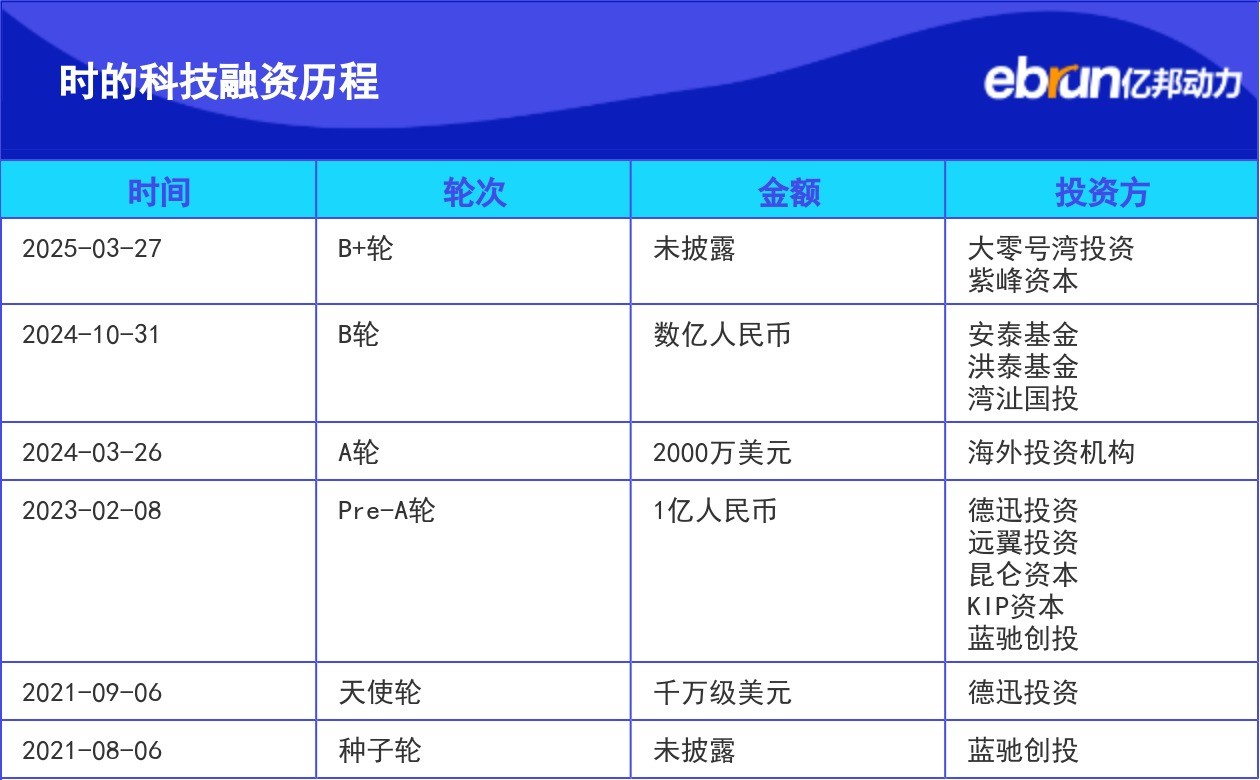
【亿邦原创】3月27日,时的科技宣布完成上海大零号湾创投和紫峰资本联合投资的B+轮战略融资。本轮投资系上海市去年提出《上海市低空经济产业高质量发展行动方案(2024-2027年)》以来的首个地方政府国资直投的eVTOL整机项目。投资方为上海大零号湾创投和紫峰资本联合投资,包括此轮时的科技已完成6轮融资,累计金额1亿美元。

时的科技融资历程
时间 轮次 金额 投资方
2025-03-27 B+轮 未披露

大零号湾投资

紫峰资本

2024-10-31 B轮 数亿人民币

安泰基金

洪泰基金

湾沚国投

2024-03-26 A轮 2000万美元 海外投资机构
2023-02-08 Pre-A轮 1亿人民币

德迅投资

远翼投资

昆仑资本

KIP资本

蓝驰创投

2021-09-06 天使轮 千万级美元 德迅投资
2021-08-06 种子轮 未披露

蓝驰创投

时的科技成立于2021年,是国内一家研发载人倾转旋翼eVTOL的科技公司,公司产品E20 eVTOL具备高安全可靠性、高运营效率、低制造成本和低运营成本等特点,未来将广泛应用于低空旅游、城际出行等多个场景。公司立足中国,并将中国的高端制造产品和标准输出到中东及东南亚等“一带一路”国家地区。

eVTOL全称为electric Vertical Take-off and Landing,即电动垂直起降飞行器。相比于传统的直升机,载人eVTOL纯电驱动无污染、噪声更低、更加绿色可持续,是一种更符合未来城市空中交通系统的产品形态。倾转构型eVTOL是目前能源方式下,具备较高商业价值的低空飞行器。

eVTOL行业的商业化运营离不开地方政府的支持和助力,无论是基础设施建设、空域管理,还是未来“空中出租车”的运营,均需要地方国资与主机厂深度合作。在eVTOL方向,时的科技在地方国资支持下持续壮大,并带动电机、电控、飞控系统、复合材料等核心零部件的产业链发展,加快从试点到规模化应用。

时的科技方面表示,公司已制定明确的上市规划,将继续携手地方政府、产业投资者及行业伙伴,打造低空示范引领区,带动关键技术研发与场景应用,推进适航及运行标准制定,推动低空经济产业链安全健康发展。

文章来源:亿邦动力

广告
微信
朋友圈

这么好看,分享一下?

朋友圈 分享

APP内打开

+1
+1
微信好友 朋友圈 新浪微博 QQ空间
关闭
收藏成功
发送
/140 0