广告
加载中

裁员、利润下降后 丝芙兰CEO亲自负责大中华区业务

张从容 2025-03-19 14:29
张从容 2025/03/19 14:29

邦小白快读

EN
全文速览

总:丝芙兰近期面临市场挑战,首席执行官亲自负责大中华区业务,并实施精简策略以保障未来增长。

1. 2024年下半年裁员10%,精简总部职位不足员工总数的3%,旨在应对市场环境挑战,确保可持续增长能力。

2. LVMH集团2024年总营收846.83亿欧元同比下降1.7%,净利润25.5亿欧元降17%,亚洲市场(除日本)营收占比28%居首但有机营收降11%,欧洲、美国和中国地区受消费需求下降影响最大。

3. 丝芙兰在精选零售部门业绩表现突出,收入和利润实现两位数增长,部门收入182.62亿欧元同比增2.11%有机增6%,但部门经营利润13.85亿欧元降0.43%,营业利润率从7.8%降至7.6%。

总:消费需求下降成为主要市场趋势,丝芙兰的战略调整提供品牌优化启示。

1. 品牌营销需关注区域消费变化,欧洲、美国和中国需求显著下降,亚洲市场虽占比28%但有机营收降11%,提示品牌强化本地化策略。

2. 品牌渠道建设可借鉴精简组织做法,裁员10%作为应对市场挑战措施,确保长期增长,启示优化运营效率。

3. 产品研发和用户行为方面,丝芙兰两位数增长显示在挑战中仍有潜力,品牌应监测消费趋势以调整产品线。

总:丝芙兰的市场应对措施和业绩表现为卖家提供风险管理和机会提示。

1. 政策解读:裁员10%精简总部,应对消费需求下降风险,不足员工3%的调整可作为学习点,提升自身效率。

2. 增长市场机会:丝芙兰两位数收入和利润增长,表明在精选零售领域有潜力,卖家可探索类似商业模式。

3. 事件应对措施:CEO亲自负责大中华区,丁霞直接汇报,高层变动强化战略响应,提示卖家关注合作方式以应对区域挑战。

总:市场挑战下丝芙兰的成本优化提供生产和电商启示。

1. 产品生产需求:消费需求下降影响欧美中地区,可能缩减产品需求,工厂需调整生产计划和设计以适应市场波动。

2. 商业机会:丝芙兰两位数增长显示零售领域潜力,工厂可探索合作机会,如为美妆品牌供应高效产品。

3. 推进数字化启示:精简组织策略启示工厂优化生产结构,提升效率,类似电商化操作可降低成本。

总:美妆零售行业消费需求下降趋势凸显服务痛点,丝芙兰案例提供解决方案方向。

1. 行业发展趋势:欧洲、美国和中国需求普遍下滑,服务商需开发数据工具监测市场动态。

2. 客户痛点:丝芙兰裁员和利润下降揭示效率问题,服务商可提供组织优化或数字化解决方案。

3. 新技术启示:聚焦亚洲市场占比高但营收降,服务商应关注区域化服务以应对风险。

总:丝芙兰管理调整启示平台在运营和风险管理上的优化。

1. 平台招商和运营管理:CEO亲自负责大中华区业务,强化区域响应,平台可借鉴此模式提升管理效率。

2. 风险规避:消费需求下降导致利润下滑,提示平台调整风向策略,如优化商家支持政策。

3. 平台最新做法启示:精简组织不足3%职位的措施,可作为平台招商时的效率标准。

总:丝芙兰和LVMH的财务变动揭示产业新动向和商业模式问题。

1. 产业新动向:高层CEO直接负责区域业务,配合裁员精简,作为战略调整应对消费需求下降新问题。

2. 政策法规启示:亚洲市场营收占比28%但降11%,区域差异要求政策支持本地化发展。

3. 商业模式研究:丝芙兰两位数增长与精选部门利润微降的矛盾,可探索效率优化和可持续模式。

返回默认
声明:快读内容全程由AI生成,请注意甄别信息。如您发现问题,请发送邮件至 run@ebrun.com 。

我是 品牌商 卖家 工厂 服务商 平台商 研究者 帮我再读一遍。

Quick Summary

Summary: Sephora is facing market challenges, with its CEO taking direct responsibility for Greater China operations and implementing streamlining strategies to ensure future growth.

1. The company will cut 10% of its workforce in the second half of 2024, with headquarters reductions accounting for less than 3% of total employees—a move to address market challenges and sustain growth capacity.

2. LVMH reported total 2024 revenue of €84.683 billion, down 1.7% year-on-year, with net profit falling 17% to €2.55 billion. Asia (excluding Japan) contributed 28% of revenue but saw an 11% organic decline, while Europe, the U.S., and China were most affected by weakened consumer demand.

3. Sephora performed strongly within LVMH’s Selective Retailing division, achieving double-digit growth in revenue and profit. The division’s revenue rose 2.11% to €18.262 billion (6% organic growth), but operating profit dipped 0.43% to €1.385 billion, with the margin falling from 7.8% to 7.6%.

Summary: Declining consumer demand has become a key market trend, and Sephora’s strategic adjustments offer insights for brand optimization.

1. Brands should monitor regional consumption shifts—demand has dropped notably in Europe, the U.S., and China. While Asia accounts for 28% of revenue, its 11% organic decline signals a need for stronger localization strategies.

2. Sephora’s 10% workforce reduction demonstrates how streamlining can address market pressures and ensure long-term growth, highlighting the importance of operational efficiency in channel management.

3. Sephora’s double-digit growth amid challenges indicates potential in selective retail, suggesting brands should track consumer behavior to adjust product lines accordingly.

Summary: Sephora’s market responses and performance offer risk management insights and opportunity cues for sellers.

1. Policy Insight: A 10% workforce cut, with under 3% of roles affected at headquarters, shows how to mitigate demand-side risks—sellers can learn from such efficiency measures.

2. Growth Opportunity: Sephora’s double-digit revenue and profit growth highlight potential in selective retail, suggesting sellers explore similar business models.

3. Strategic Response: The CEO’s direct oversight of Greater China, with Ding Xia reporting to him, signals intensified regional focus—sellers should review partnership structures to navigate local challenges.

Summary: Sephora’s cost-optimization amid market pressures offers production and e-commerce insights for manufacturers.

1. Demand Shift: Falling consumption in Europe, the U.S., and China may reduce orders, requiring factories to adjust production plans and designs for volatility.

2. Collaboration Opportunity: Sephora’s double-digit growth reveals retail potential; factories could partner with beauty brands for efficient product supply.

3. Operational Efficiency: Streamlining strategies mirror e-commerce optimization—factories can refine production structures to boost efficiency and cut costs.

Summary: Declining demand in beauty retail underscores service pain points; Sephora’s case points to solution directions.

1. Market Trend: Demand drops in Europe, the U.S., and China call for data tools to monitor dynamics.

2. Client Pain Points: Sephora’s layoffs and profit dip reveal efficiency gaps—service providers can offer organizational or digital optimization solutions.

3. Regional Focus: Asia’s high revenue share but 11% decline highlights the need for localized services to mitigate risks.

Summary: Sephora’s management shifts offer lessons for platform operators in risk and operational management.

1. Merchant Management: The CEO’s direct handling of Greater China operations demonstrates enhanced regional responsiveness—platforms can adopt similar models for efficiency.

2. Risk Mitigation: Profit declines due to weak demand suggest platforms adjust risk strategies, such as optimizing seller support policies.

3. Efficiency Benchmark: Streamlining under 3% of roles sets a standard for platform merchant recruitment and operational effectiveness.

Summary: Financial shifts at Sephora and LVMH reveal industry dynamics and business model challenges.

1. Strategic Shift: The CEO’s direct regional oversight, paired with layoffs, addresses new consumption declines as a strategic response.

2. Policy Implication: Asia’s 28% revenue share but 11% drop underscores the need for policies supporting localized development amid regional disparities.

3. Business Model Analysis: Sephora’s double-digit growth versus slight profit margin contraction invites study on efficiency optimization and sustainable models.

Disclaimer: The "Quick Summary" content is entirely generated by AI. Please exercise discretion when interpreting the information. For issues or corrections, please email run@ebrun.com .

I am a Brand Seller Factory Service Provider Marketplace Seller Researcher Read it again.

【亿邦原创】日前,据外媒报道,丝芙兰现任总裁兼首席执行官Guillaume Motte,将直接负责大中华区的业务管理,大中华区总经理丁霞将直接向Motte汇报工作。2024年4月,丝芙兰任命丁霞担任大中华区总经理,当时她直接向亚洲区总裁Alia Gogi女士汇报工作。然而,Alia Gogi已于去年年底因家庭原因辞职。

2024年下半年,丝芙兰被曝在中国裁员10%。公司发言人称,为了应对充满挑战的市场环境,以确保在中国的未来增长,拥有长期可持续增长的适应能力,丝芙兰中国正在精简总部的组织结构。发言人表示,受精简的总部职位数量不到丝芙兰中国员工的3%。

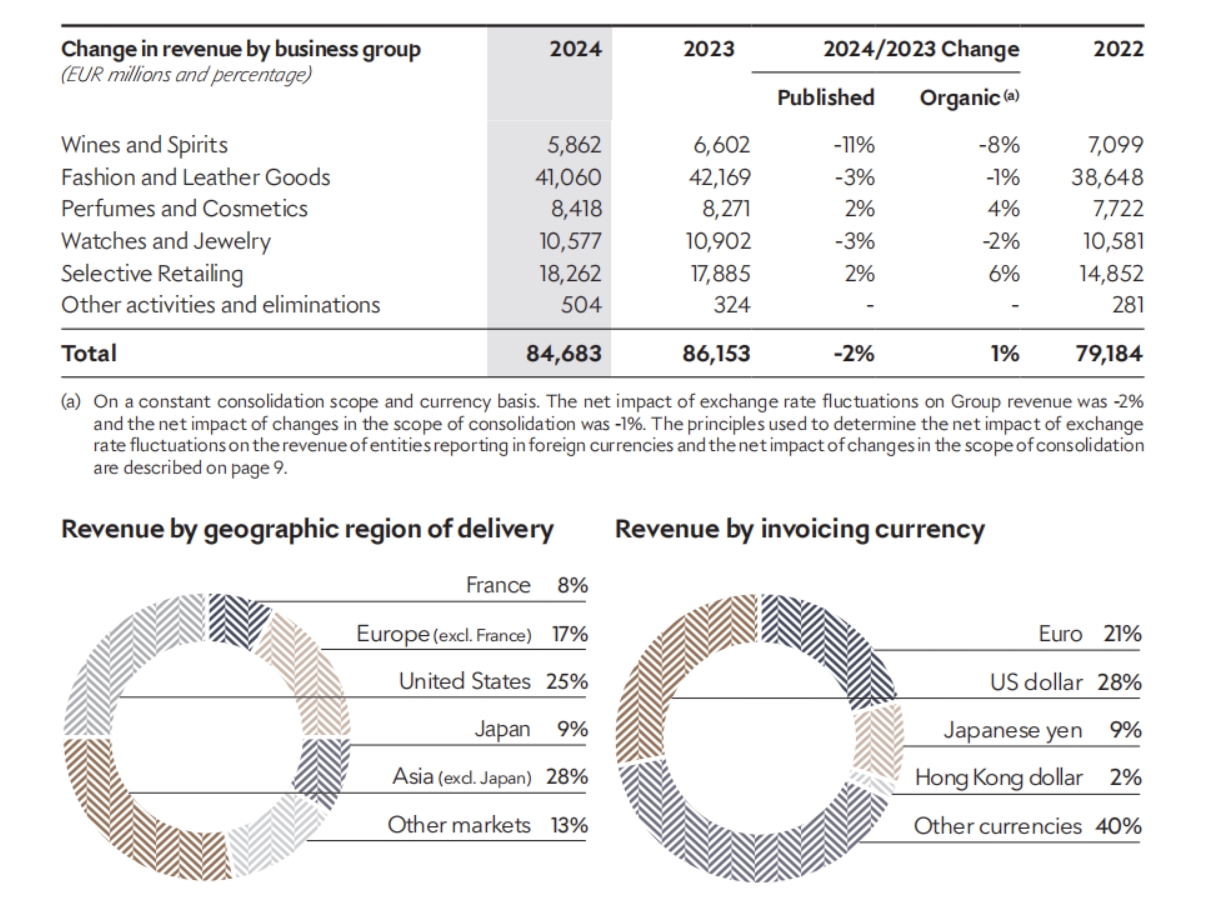
包括中国在内的亚洲市场,仍然是LVMH集团营收的主阵地。2024年,除日本外的亚洲市场的营收占集团总营收的28%,占比排名第一,但有机营收同比下降11%。财报中显示,欧洲、美国和中国是受消费者需求下降影响最大的地区。

财报显示,2024年LVMH集团总营收846.83亿欧元,同比下降1.7%,净利润25.5亿欧元,同比下降17%。涵盖丝芙兰的精选零售部门收入182.62亿欧元,相比于2023年的178.85亿欧元同比增长2.11%,有机增长6%;其中丝芙兰的业绩表现出色,收入和利润都实现了两位数的增长。

然而,2024年LVMH精选零售部门的经常性经营利润为13.85亿欧元,相比于2023年的13.91亿欧元同比下降0.43%。同时,该部门的营业利润率由2023年的7.8%下降至2024年的7.6%。

亿邦持续追踪报道该情报,如想了解更多与本文相关信息,请扫码关注作者微信。

文章来源:亿邦动力

广告
微信
朋友圈

FAQ回顾

丝芙兰大中华区业务管理结构发生了什么变化?

2024年,丝芙兰任命丁霞为大中华区总经理,原向亚洲区总裁汇报。现CEO Guillaume Motte将直接负责大中华区业务,丁霞改为直接向Motte汇报。

丝芙兰在中国市场采取了哪些调整措施?

2024年下半年,丝芙兰在中国裁员约10%,精简总部组织结构以应对市场挑战。受影响的职位数量不到中国员工总数的3%。

LVMH集团2024年在亚洲的业绩表现如何?

2024年,除日本外的亚洲市场占LVMH集团总营收28%,但有机营收同比下降11%。欧洲、美国和中国是受消费者需求下降影响最大的地区。

这么好看,分享一下?

朋友圈 分享

APP内打开

+1
+1
微信好友 朋友圈 新浪微博 QQ空间
关闭
收藏成功
发送
/140 0