广告
加载中

晨光股份2021年财报:科力普快速增长 零售大店仍未盈利

杨丽 2022-03-30 14:21
杨丽 2022/03/30 14:21

邦小白快读

EN
全文速览

本文核心梳理了晨光股份2021年财报的核心业绩信息,整体来看公司营收利润保持增长,不同业务表现差异明显。

1. 整体业绩:2021年公司总营收176亿元,同比增长34%;归母净利润15.2亿元,同比增长21%,整体毛利率略有下滑,主要受产品结构变化和服务商占比提升影响。

2. 各业务表现:传统核心业务营收88.8亿元,同比增长17%,Q4增速受去年基数、疫情、双减政策影响略有放缓;科力普办公直销营收77.7亿元,同比增长55%,净利润2.4亿元同比增长68%,增长动力来自大客户开拓和技术提效;零售大店业务(含九木杂物社)营收10.5亿元,仍未实现盈利,净亏损0.21亿元,亏损同比收窄,目前全国已有523家门店。

晨光作为国内文具头部品牌的2021年业务布局经验,对其他消费品牌有多方面参考价值。

1. 产品研发与布局:品牌采取多赛道分层布局策略,大众赛道做消费者导向的强功能爆款,精品文创赛道聚焦高端产品,通过渠道结构调整提升高端产品占比,办公赛道聚焦大型终端客户开发。

2. 新业务增长路径:办公直销赛道切入政企金融大客户,拓展MRO、营销礼品等新品类,通过技术升级提升服务响应速度,已经实现高速盈利增长;零售大店定位为品牌升级抓手,目前亏损收窄,开放加盟扩张规模。

3. 注意事项:多业务布局短期会拉低整体毛利率,需要等待规模效应释放盈利能力,传统业务容易受疫情、政策变动影响,需要提前做好对冲。

从晨光股份2021年财报可以看出文具办公赛道的变化趋势,能给各类卖家带来机会提示和风险参考。

1. 市场机会:办公直销赛道增长空间大,政企金融等B端客户需求旺盛,MRO、营销礼品等新品类还有大量新增量;精品文创、高端零售赛道受益消费升级保持高速增长,品牌开放加盟模式,卖家可以参与扩张分享红利。

2. 风险提示:传统文具业务受疫情、双减政策影响,增速已经明显放缓;线下零售大店目前仍未实现盈利,新入场卖家需要控制拓店成本,警惕疫情反复对线下客流的冲击。

3. 可参考经验:做B端业务要靠持续深耕客户+数字化升级提效来建立竞争力,分层布局多业务可以对冲单一业务的增长瓶颈,稳定企业整体营收。

晨光作为文具行业龙头的业务战略调整,给文具及配套生产工厂带来不少启示和商业机会。

1. 产品生产设计需求:当前市场呈现分层需求,大众消费端需要品牌打造强功能爆款产品,高端精品文创的需求占比持续提升,品牌端正在调整产品结构,工厂可以匹配需求调整自身的生产供给结构。

2. 商业机会:B端办公直销业务保持高速增长,除传统办公用品外,MRO、营销礼品等新品类需求增长快,工厂可以对接品牌拓展B端供货渠道;零售大店加速扩张也带来了稳定的高端文创产品订单需求。

3. 数字化启示:头部B端业务已经通过搭建数据中台、流程自动化改造提升服务效率,工厂也可以推进数字化改造,更好对接B端大客户的效率要求,提升响应速度。

从晨光2021年财报可以看出文具办公行业的发展趋势,也明确了服务商的客户痛点和发展机会。

1. 行业发展趋势:国内文具行业正从单一传统文具业务,向B端办公直销、高端文创零售多赛道延伸,整体保持稳定增长,B端业务的增速远高于传统To C业务,成为行业增长核心动力。

2. 客户核心痛点:品牌企业布局多业务后,B端大客户对仓配效率、服务响应速度要求越来越高,多业务运营也需要数字化技术服务支撑,线下加盟零售扩张需要配套的运营服务支持。

3. 解决方案方向:服务商可以针对B端办公直销业务提供专业化仓配物流服务,也可以为品牌提供数字化技术服务,帮助搭建数据中台、实现流程自动化,还可以为线下加盟零售大店提供运营配套服务,分享行业扩张红利。

晨光各业务的发展表现,给相关零售、采购平台的发展提供了方向参考,帮助平台调整策略规避风险。

1. 市场需求变化:B端政企办公采购的规模增长快,大客户对采购效率、服务响应速度要求越来越高,供应商都在推进数字化升级,平台需要适配B端采购的数字化需求,优化对接规则提升效率。

2. 招商与运营方向:高端文创零售赛道受益消费升级保持高速增长,品牌开放加盟加速扩张,平台可以针对性引入这类优质文创品牌,把握消费升级带来的流量增长。

3. 风向规避:线下零售扩张受疫情影响大,新赛道短期难以实现盈利,平台引入相关品牌时需要关注其盈利模型和抗风险能力;传统文具业务受政策影响增速放缓,平台需要及时调整品类结构,加大高增长赛道的资源倾斜。

晨光股份2021年财报透露出国内文具办公产业的最新动向与问题,为产业研究提供了真实样本。

1. 产业新动向:传统头部文具企业正在加速转型,从单一To C文具零售延伸到To B办公直销,同时布局高端文创零售新赛道,寻找第二增长曲线;To B业务增速远高于传统To C业务,已经成为头部企业增长的核心贡献来源,本次财报中科力普净利润增速达到68%。

2. 产业新问题:传统头部企业多业务转型过程中,产品结构变化会短期拉低企业整体毛利率,新布局的线下高端零售赛道仍未实现盈利,疫情反复和政策监管也对传统业务增长带来明显压力。

3. 商业模式研究价值:头部企业探索出“传统核心业务+To B直销+高端零售”三轮驱动的转型模式,To B靠数字化提效、大客户深耕实现盈利,高端零售靠加盟拓规模等待盈利释放,为传统制造零售企业转型提供了研究样本。

返回默认

声明:快读内容全程由AI生成,请注意甄别信息。如您发现问题,请发送邮件至 run@ebrun.com 。

我是 品牌商 卖家 工厂 服务商 平台商 研究者 帮我再读一遍。

Quick Summary

This article breaks down the core performance of M&G Chenguang Co., Ltd. from its 2021 financial report. Overall, the company delivered steady growth in both revenue and profit, with notable performance divergences across its business lines.

1. Overall performance: In 2021, M&G posted total revenue of 17.6 billion yuan, up 34% year-over-year (YoY). Its net profit attributable to parent shareholders hit 1.52 billion yuan, a 21% YoY increase. The overall gross margin dipped slightly, driven by shifts in product mix and a rising share of revenue from third-party service partners.

2. Segment performance: The company's core traditional stationery business generated 8.88 billion yuan in revenue, up 17% YoY, though growth slowed in Q4 due to a high base effect from the prior year, COVID-19 disruptions, and the "double reduction" education policy. Its office direct sales subsidiary Keli posted 7.77 billion yuan in revenue (up 55% YoY) and 240 million yuan in net profit (up 68% YoY), fueled by new key client acquisition and technology-driven efficiency gains. The large-format retail business, which includes the Jiushuizhashe premium lifestyle stationery chain, recorded 1.05 billion yuan in revenue, and remained unprofitable with a narrowed net loss of 21 million yuan. As of year-end, the chain operated 523 stores across China.

M&G, China's leading stationery brand, offers actionable takeaways for other consumer brands from its 2021 business expansion strategy.

1. Product R&D and portfolio strategy: M&G pursues a layered multi-track positioning strategy. For the mass market, it prioritizes consumer-centric, high-functionality hit products, while it focuses on premium offerings in the high-end cultural and creative product segment, adjusting its channel mix to increase the share of premium products. For the office segment, its core focus is developing large end clients.

2. Growth paths for new businesses: M&G entered the office direct sales track targeting government, corporate and financial institutional clients, expanding into new categories such as MRO (Maintenance, Repair & Operations) and promotional gifts, and upgraded its technology to improve service response speed. This line has already delivered rapid profitable growth. Its large-format retail chain serves as a lever for brand upgrading, with narrowing losses and an open franchise model to drive scale expansion.

3. Key considerations: Multi-business expansion will weigh on overall gross margin in the short term, and profitability will only improve once economies of scale kick in. Traditional businesses are particularly vulnerable to pandemic disruptions and policy shifts, so brands need to build in risk mitigation in advance.

M&G's 2021 financial report reveals key trends reshaping the stationery and office products industry, offering opportunity and risk insights for sellers of all types.

1. Market opportunities: The office direct sales track offers substantial room for growth, with strong unmet demand from B-end clients such as government, financial and corporate entities, and massive untapped growth in new categories including MRO and promotional gifts. The premium cultural and creative product and high-end retail segments are growing rapidly amid broader consumer upgrading, and M&G's open franchise model allows third-party sellers to participate in its expansion and share in sector growth.

2. Risk warnings: Growth of traditional stationery businesses has slowed notably due to COVID-19 disruptions and the "double reduction" education policy. Large-format offline retail locations remain unprofitable, so new entrants must tightly control store expansion costs and remain alert to pandemic-related disruptions to offline foot traffic.

3. Key takeaways: Competitiveness in B-end businesses is built through deep client relationship cultivation and digital efficiency upgrades. A diversified layered business portfolio can offset growth bottlenecks in a single line of business and stabilize overall corporate revenue.

As the industry leader, M&G's strategic business adjustments offer valuable insights and new commercial opportunities for stationery brands and supporting manufacturers.

1. Shifts in product design and production demand: The market now features clear tiered demand. For mass consumers, brands need high-functionality hit products, while demand for premium cultural and creative products continues to grow as brands adjust their product mixes. Manufacturers can adjust their production and supply structures to match this shifting demand.

2. Commercial opportunities: B-end office direct sales is growing rapidly. Beyond traditional office supplies, demand for new categories such as MRO and promotional gifts is surging, so manufacturers can partner with brands to expand B-end supply channels. The rapid expansion of large-format retail chains also generates steady, growing order demand for premium cultural and creative products.

3. Digital transformation insights: Leading B-end players have already improved service efficiency by building data middle platforms and automating core processes. Manufacturers can also advance digital transformation to meet the efficiency requirements of large B-end clients and improve response speed.

M&G's 2021 financial report clarifies growth trends in the stationery and office industry, as well as unmet client needs and growth opportunities for service providers.

1. Industry growth trends: China's stationery industry is expanding beyond a single traditional stationery business into multiple high-growth tracks including B-end office direct sales and premium cultural and creative retail. The overall industry maintains steady growth, and B-end business growth far outpaces that of traditional B2C businesses, making it the core driver of industry expansion.

2. Core client pain points: After expanding into multiple lines of business, brand clients face rising expectations for warehouse and delivery efficiency and faster service response from large B-end clients. Multi-business operations also require digital technology support, and the expansion of offline franchise retail needs supporting operational services.

3. Opportunity areas for service providers: Service providers can offer specialized warehousing and logistics services for B-end office direct sales businesses, provide digital technology services to brands to help them build data middle platforms and automate core processes, and offer supporting operational services for offline franchise retail chains to share in the benefits of industry expansion.

The performance of M&G's different business lines offers directional guidance for retail and procurement platforms to adjust their strategies and mitigate risks.

1. Shifts in market demand: B-end government and corporate procurement is growing rapidly, and large clients are demanding higher procurement efficiency and faster service response. As suppliers accelerate digital upgrades, platforms need to adapt to the digital requirements of B-end procurement and adjust interface rules to boost efficiency.

2. Sourcing and operational direction: The premium cultural and creative retail segment is growing rapidly amid consumer upgrading, and leading brands are accelerating expansion via open franchising. Platforms can prioritize onboarding high-quality cultural and creative brands to capture traffic growth from consumer upgrading.

3. Risk mitigation: Offline retail expansion is highly vulnerable to COVID-19 disruptions, and new tracks are often unprofitable in the short term. When onboarding relevant brands, platforms need to carefully vet their profitability models and risk resilience. Growth for traditional stationery businesses has slowed due to policy shifts, so platforms should adjust their category mix in a timely manner and allocate more resources to high-growth tracks.

M&G's 2021 financial report reveals the latest trends and challenges in China's domestic stationery and office industry, providing an empirical real-world case for industry research.

1. New industry trends: Leading traditional stationery companies are accelerating their transformation, expanding from pure B2C stationery retail into B2B office direct sales, while also entering the new high-growth track of premium cultural and creative retail to find a second growth curve. B2B business growth far outpaces traditional B2C growth, and has become the core contributor to growth for leading industry players. In this report, Keli's net profit grew 68% YoY, illustrating this trend.

2. New emerging industry challenges: During the multi-business transformation of traditional leading firms, shifts in product mix will temporarily weigh on overall gross margin. The newly established offline premium retail track still has not achieved profitability, and repeated COVID-19 outbreaks and regulatory policy changes have created notable headwinds for growth in traditional businesses.

3. Value for business model research: Leading players like M&G have developed a three-wheel transformation model combining "core traditional business + B2B direct sales + premium retail". B2B achieves profitability through digital efficiency gains and deep cultivation of large clients, while premium retail expands scale via franchising to unlock profitability over time. This model offers a valuable research case for transformation among traditional manufacturing and retail enterprises.

Disclaimer: The "Quick Summary" content is entirely generated by AI. Please exercise discretion when interpreting the information. For issues or corrections, please email run@ebrun.com .

I am a Brand Seller Factory Service Provider Marketplace Seller Researcher Read it again.

【亿邦原创】日前,晨光股份(603899.SH)发布的2021年年报显示,公司实现营业收入176亿元,同比增长34%;实现归母净利润15.2亿元,同比增长21%。扣非后归母净利润13.5亿元,同比增长22.38%。

从业务收入边际增长贡献看,2021年度,晨光股份的传统核心业务实现营业收入88.8亿元,同比增加约13亿元;科力普办公业务实现营业收入约77.7亿元,同比增加约27.7亿元;零售大店业务实现营业收入约10.5亿元,同比增加约4亿元,净利润约-0.21亿元。

传统核心业务收入达88.8亿元 同比增长17%

财报显示,2021年核心业务收入达88.8亿元,同比增长17%,其中,Q4单季度传统核心业务收入同比增长近5%,增速略有放缓。预计主要受上年同期基数、疫情反复及双减政策等影响。

(图源:晨光股份财报)

晨光股份称,大众产品赛道围绕“挖潜、联动、产品力”策略,以中长线可沉淀为主要方向。以消费者为中心的爆款开发思路,打造强功能产品;精品文创产品赛道,聚焦高端产品和二三线级配送中心及重点终端,通过品类阵地的方式促成伙伴及终端结构调整,提升精品文创产品在传统渠道的占比;办公产品赛道,推进晨光办公点开拓和办公完美门店开发,推动国内重点大型办公终端客户开发。

办公直销业务营收同比增长68% 

自2015年,晨光股份开始探索新业务,主要包括晨光生活馆和晨光科力普。财报显示,晨光股份办公直销业务——晨光科力普实现营业收入77.6亿元,同比增长55%,实现净利润2.4亿元,同 比增长68%。

(图源:晨光股份财报)

业务增长主要得益于公司对政府、央企、金融及其他企业等终端的持续开拓,中标客户及仓配物流提效等。

晨光股份称,晨光科力普经过近十年的发展,围绕存量客户深度挖掘,增量客户带来新的销售机会,同时拓展MRO和营销礼品等品类、新业务的机会,在办公直销市场品牌影响力进一步提升。

在客户开发上,央企客户方面入围国家能源集团、中国通用技术集团等项目;政府客户方面入围江苏省政府采购网上商城等项目;金融客户方面入围农业银行、国家开发银行等项目;

在技术平台建设上,科力普升级改造规则引擎,通过RPA机器人实现流程自动化,建立大数据系统和数据中台。进一步提升了为客户提供优质服务的快速响应能力。

从整体毛利率看,晨光股份2021年营业收入虽然整体实现了增长,但毛利率有所下降,文教办公用品制造业与销售毛利率为32.84%,相较上年减少0.47个百分点;零售业毛利率为12.74%,相较上年减少1.08个百分点。

晨光股份称,主要受公司产品结构变化和落地服务商占比等因素影响,中长期看,随着科力普业务规模逐步扩大,规模效应的发挥,盈利能力将逐步提升。

零售大店营收10.5亿 净利润约-0.21亿元

相较于快速增长的科力普,零售大店探索至今仍未盈利。

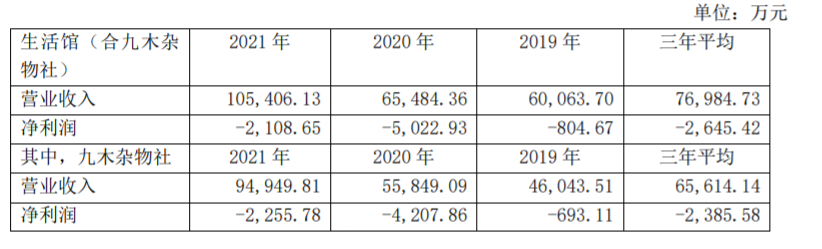
财报显示,2021年,晨光生活馆(含九木杂物社)实现营收10.54亿元,实现净利润约-0.21亿元,同比增长60.96%。其中,九木杂物社实现营业收入9.5亿元,实现净利润约-0.23亿元,同比增长70.01%。

其中,第四季度,晨光生活馆(含九木杂物社)实现营收2.80亿元,同比增长25.32%。其中,九木杂物社实现收入2.52亿元,同比增长27.42%。新零售业务收入持续高增长,主要得益于客流逐步恢复以及公司加速新开门店。

截至2021年底,晨光股份在全国拥有523家零售大店,其中晨光生活馆60家,九木杂物社463家(直营319家、加盟144家)。

对于2021年的零售大店业务,晨光股份表示,面对疫情反复干扰,零售大店业务收入取得增长,亏损显著缩小。九木杂物社落实新一轮五年战略定位,成为晨光品牌和产品升级的发力点,未来随着加盟开店不断推进,将进一步释放发展潜力。

文章来源:亿邦动力

广告
微信
朋友圈

这么好看,分享一下?

朋友圈 分享

APP内打开

赞 +1
+1
微信好友 朋友圈 新浪微博 QQ空间
关闭
收藏成功
发送
/140 0