广告
加载中

善物派×优物集:品牌社交电商如何持续增长

善物派 2019-09-28 17:55
善物派 2019/09/28 17:55

邦小白快读

EN
全文速览

本文整理了善物派联合优物集举办的社交电商闭门会核心干货,分享了可直接参考的实操要点,核心内容如下:

1.社交电商原始核心逻辑分为三点:第一步从陌生到认识建立社交关系,第二步从认识变朋友建立信任,第三步完成价值互换;需要打破固有思维,不断创造新的购物场景;要解决好获客、对接商品、满足需求三大电商突破问题,可通过制度设计低成本获取高活跃用户。

2.做好社交电商要搭建三大实操系统:做好平台与用户、用户与用户、用户与消费者三层社交关系运营;分短中长期搭建店主成长荣誉体系,持续赋能店主;做好社群结构分析,匹配对应的社群文化、管理模式和运营节奏。

本文围绕品牌社交电商可持续增长分享了大量干货,对品牌布局社交电商有较高参考价值,具体内容如下:

1.行业趋势层面:当前多重合力推动社交电商全面爆发,行业进入发展规范并举的新阶段,未来社交电商会成为零售标配,用户运营转向全生命周期价值运营,玩家聚焦成本体验效率深耕,头部玩家会进入更高维度竞争。

2.运营要点层面:提醒品牌商不能用纯卖货思维做社交电商,只有聚焦可持续增长才能长久发展;需要搭建社交、成长、推进三大运营体系,做好不同层级社交关系维护,分阶段搭建店主激励体系,做好分层社群运营。

3.可参考的成熟案例:启博软件已经为浪莎、青岛啤酒、娃哈哈等多个品牌提供社交电商裂变技术服务,有成熟的落地经验。

本文梳理了社交电商行业的最新动态和头部从业者总结的实操经验,能给做社交电商的卖家提供方向参考和实操指导,具体内容如下:

1.行业机会层面:当前市场、资本、政策等多重合力推动社交电商全面爆发,行业进入发展与规范并举的新阶段,未来社交会持续渗透零售全产业链,市场空间广阔,还有充足的增长机会。

2.增长方法层面:要抓住社交裂变本质,搭建三大运营系统:社交系统保障不同主体的关系维护,赋能店主解决C端信任问题;成长体系分短中长期搭建荣誉激励体系,持续保持裂变动力;推进系统做好社群结构分析,匹配对应的管理模式和运营节奏。

3.风险提示:提醒品牌类卖家不能用纯卖货思维做社交电商,只有聚焦可持续增长才能实现长期经营,遇到运营难题可寻求专业机构的赋能支持。

本文分享了社交电商领域的最新发展动态,给工厂布局数字化和社交电商提供了多方面启示,具体内容如下:

1.商业机会层面:当前社交电商已经进入规范发展的新阶段,社交渗透零售全产业链是未来的必然趋势,工厂切入社交电商赛道有充足的市场发展空间。

2.产品和设计层面:社交电商要求购物场景不断创新,需要工厂打破固有产品和场景思维,不要局限在原有框架中,根据社交电商用户的需求开发适配新产品,创造新消费场景,更好满足用户多元需求。

3.数字化转型启示:工厂做社交电商需要配套成熟的数字化系统,比如启博的擎天智能分佣引擎,可以实现佣金智能结算,保障分销体系各方的资金安全,稳定分销团队,工厂提前做好数字化升级能更好支撑社交电商业务发展。

本文整理了社交电商闭门会的核心要点,给服务社交电商领域的服务商提供了行业趋势和客户需求参考,具体内容如下:

1.行业发展趋势:当前社交电商全面爆发,行业进入发展与规范并举的新阶段,未来社交电商会成为零售行业的标准配置,全行业对社交电商运营和技术服务的需求会持续增长,服务商有充足的业务增长空间。

2.客户核心痛点:当前布局社交电商的品牌和卖家,普遍遇到裂变增长乏力、店主能力不足、社群管理混乱、佣金结算不稳定、用户信任流失等共性问题,同时不同品类品牌还有不同的个性化运营难题需要解决。

3.解决方案方向:服务商可以围绕社交系统、成长系统、推进系统三大体系为客户提供服务,同时配套智能分佣等数字化技术工具,帮助客户搭建完整的社交电商运营体系,助力客户实现可持续增长。

本文梳理了头部社交电商从业者的运营经验,给社交电商平台商的运营发展提供了很多参考,具体内容如下:

1.用户核心需求:用户加入平台开展分享经营,核心诉求是获得合理收益,同时需要平台给予归属感,平台需要通过载体、教育、会议等方式,维护好平台与用户的关系,增强用户粘性。

2.核心运营方法:平台需要搭建完整的三大运营体系:做好平台与用户、用户与用户、用户与消费者三层社交关系运营;分短中长期搭建店主荣誉激励体系,持续赋能店主,保持裂变增长动力;做好社群结构分析,针对塔形、伞形、网格蜂窝状不同结构,匹配对应的管理模式和运营节奏。

3.风险规避:平台需要做好底层技术建设,搭配稳定的智能分佣系统,准确计算层级佣金,保障代理商和分销商的资金安全,避免出现信任危机,同时要聚焦零售本质深耕,才能实现长期发展。

本文记录了国内头部社交电商从业者的闭门研讨内容,展现了社交电商产业的最新动向,对产业研究有较高的参考价值,具体内容如下:

1.产业新动向:社交电商是传统电商在移动社交时代的自我进化,当前在市场、资本、政策多重合力推动下全面爆发,行业进入发展与规范并举的新阶段,未来社交将持续渗透零售全产业链,社交电商会成为零售标配,头部玩家将进入更高维度的竞争。

2.商业模式梳理:从业者总结了社交电商的底层逻辑,梳理出社交、成长、推进三大核心运营系统,还将主流平台的社群结构分为塔形、伞形、网格蜂窝状三类,对应云集、环球捕手、拼多多三个代表性平台,清晰梳理了不同平台的运营结构特征。

3.行业新问题:当前大量传统品牌布局社交电商过程中,普遍遇到获客、裂变、运营、选品、对接等多类共性和个性化问题,传统卖货思维无法支撑品牌实现持续增长,行业需要成熟的数字化赋能体系帮助品牌完成转型。

返回默认

声明:快读内容全程由AI生成,请注意甄别信息。如您发现问题,请发送邮件至 run@ebrun.com 。

我是 品牌商 卖家 工厂 服务商 平台商 研究者 帮我再读一遍。

Quick Summary

This article summarizes key takeaways from a closed-door social commerce meeting co-hosted by Shanwu Pai and Youwuji, sharing actionable, practical insights. Core findings are as follows:

1. The fundamental logic of social commerce rests on three steps: first, building social connections from scratch; second, cultivating trust by turning contacts into connections; third, executing value exchange. Players need to break away from fixed mindsets, continuously create new shopping scenarios, and address three core challenges of the sector: customer acquisition, product sourcing and matching user demand. Well-designed rules can help acquire highly engaged users at low cost.

2. Successful social commerce requires building three core operational systems: managing three tiers of social relationships (platform-user, user-user, and user-consumer); building a short-, medium-, and long-term growth and honor system to continuously empower store owners; and analyzing community structures to match appropriate community culture, management models and operational rhythms.

This article shares extensive insights on sustainable growth for brand-owned social commerce, offering high-value guidance for brands looking to enter the space:

1. Industry trends: Multiple forces are driving the full-scale boom of social commerce, and the sector has entered a new phase of balanced growth and regulation. Going forward, social commerce will become a standard component of retail, user operations will shift to full-lifetime value management, players will focus on improving cost efficiency and experience, and top players will compete on increasingly higher-level dimensions.

2. Operational guidance: Brands are reminded to avoid approaching social commerce with a pure transactional mindset; only a focus on sustainable growth supports long-term success. Brands need to build three core operational systems (social, growth, and execution), manage social relationships across different tiers, roll out a phased incentive system for store owners, and implement tiered community operations.

3. Proven reference case: Qibo Software has provided social commerce fission growth technical services for multiple established brands including Langsha, Tsingtao Brewery and Wahaha, with mature, field-proven implementation experience.

This article sorts out the latest developments in the social commerce industry and practical insights from leading industry practitioners, offering directional guidance and actionable advice for social commerce sellers:

1. Industry opportunities: Market, capital and policy forces are together driving the full boom of social commerce, which has entered a new phase of balanced growth and regulation. Social interaction will continue to penetrate the entire retail value chain, creating enormous market space and abundant growth opportunities.

2. Growth strategies: Sellers should grasp the core of social fission and build three operational systems: a social system to maintain relationships between different stakeholders and empower store owners to build trust with end consumers; a growth system that builds short-, medium- and long-term honor incentives to sustain fission momentum; and an execution system that analyzes community structures to match appropriate management models and operational rhythms.

3. Risk warning: Branded sellers are reminded to avoid approaching social commerce with a pure transactional mindset. Only focusing on sustainable growth can support long-term operations, and sellers facing operational challenges can seek empowerment and support from professional institutions.

This article shares the latest developments in social commerce and offers multiple insights for factories looking to pursue digital transformation and enter social commerce:

1. Business opportunities: Social commerce has entered a new phase of regulated development, and social penetration across the entire retail value chain is an inevitable future trend. Factories entering the social commerce track face substantial room for growth.

2. Product and design requirements: Social commerce demands continuous innovation of shopping scenarios, requiring factories to break away from traditional product and scenario mindsets, instead of being constrained by existing frameworks. Factories should develop new products adapted to the needs of social commerce users, create new consumption scenarios, and better meet diverse user demand.

3. Insights on digital transformation: Social commerce operations require supporting mature digital systems. For example, Qibo's Qingtian intelligent commission engine enables automated commission settlement, guarantees the capital security of all distribution stakeholders, and stabilizes distribution teams. Completing digital upgrades in advance will better support factories' social commerce business growth.

This article summarizes core takeaways from a closed-door social commerce meeting, offering reference on industry trends and client demand for service providers operating in the social commerce space:

1. Industry development trends: Multiple forces are driving the full boom of social commerce, which has entered a new phase of balanced growth and regulation. Social commerce will become a standard component of the retail industry, and industry-wide demand for social commerce operations and technical services will continue to grow, creating substantial room for service providers to grow their business.

2. Core client pain points: Brands and sellers that have entered social commerce commonly face shared challenges including stalled fission growth, underprepared store owners, chaotic community management, unstable commission settlement, and eroding user trust. In addition, brands in different categories face unique personalized operational challenges to resolve.

3. Solution direction: Service providers can structure their offerings around three core systems (social, growth, and execution), paired with digital tools such as intelligent commission settlement, to help clients build a complete social commerce operational system and achieve sustainable growth.

This article sorts out operational insights from leading social commerce practitioners, offering abundant reference for the operation and growth of social commerce platforms:

1. Core user demand: Users join platforms to run their sharing businesses primarily to earn reasonable returns, and they also need a sense of belonging from the platform. Platforms need to leverage carriers, training, events and other tools to maintain platform-user relationships and boost user retention.

2. Core operational strategies: Platforms need to build a complete set of three operational systems: managing three tiers of social relationships (platform-user, user-user, and user-consumer); building a short-, medium-, and long-term honor and incentive system to continuously empower store owners and sustain fission growth momentum; and analyzing community structures to match appropriate management models and operational rhythms for different structures: pyramid, umbrella, and grid-honeycomb.

3. Risk mitigation: Platforms need to build solid underlying technical infrastructure, pair it with a stable intelligent commission system to accurately calculate tiered commissions, guarantee the capital security of agents and distributors, and avoid trust crises. Platforms also need to focus on the core nature of retail to achieve long-term growth.

This article documents closed-door discussions among leading Chinese social commerce practitioners, presenting the latest developments in the social commerce industry and offering high reference value for industry research:

1. New industry trends: Social commerce represents the natural evolution of traditional e-commerce in the mobile social era. It is currently experiencing full-scale growth driven by combined market, capital and policy forces, and has entered a new phase of balanced development and regulation. Going forward, social interaction will continue to penetrate the entire retail value chain, social commerce will become a standard retail component, and top industry players will enter higher-dimensional competition.

2. Business model overview: Practitioners have summarized the underlying logic of social commerce, sorting out three core operational systems: social, growth, and execution. They also categorize mainstream platform community structures into three types: pyramid, umbrella, and grid-honeycomb, corresponding to three representative platforms: Yunji, Global Hunter, and Pinduoduo, clearly mapping out the operational structural characteristics of different platform models.

3. Emerging industry challenges: A large number of traditional brands entering social commerce commonly face a range of shared and personalized challenges covering customer acquisition, fission, operations, product selection and supply chain matching. Traditional transaction-focused mindsets cannot support sustained growth for brands, and the industry needs mature digital empowerment systems to support brands through their transformation.

Disclaimer: The "Quick Summary" content is entirely generated by AI. Please exercise discretion when interpreting the information. For issues or corrections, please email run@ebrun.com .

I am a Brand Seller Factory Service Provider Marketplace Seller Researcher Read it again.

社交电商是传统电商在移动社交时代的自我扩容和自我进化,其通过社交流量商业化与电子商务社交化对零售基础要素及零售价值 链路进行革新,正在深刻改变中国电子商务的结构与生态。当前,市场、行业、资本、政策等多重合力推动中国社交电商全面爆发, 整体行业在整合与争鸣中进入发展与规范并举、开放与安全并重的新阶段。

在可预见的未来,社交对零售全产业链的渗透融合将持续深化,社交电商成为标准配置,社交关系链朝向弱社交、泛参与扩容,用 户关系运营全面转向用户生命价值运营,社交电商玩家聚焦零售本质(成本、体验、效率)阶段性调整、纵深化发力,头部玩家将 跨越赛道在更高维度开展竞争。

近日,亿邦动力旗下零售数字化社群组织善物派携手优物集创始人&CEO李宁开展了一场封闭式社交电商运营专场闭门会,认养一头牛COO陈亚光、奥普家居创新渠道中心负责人范宝光、罗莱家纺电商总监范萍萍、亿邦动力联合创始人&思路网总裁&善物派创办人刘宸、优物集创始人&CEO李宁、三棵树电商总经理李何、杰士邦新零售总经理熊伟、相宜本草社交电商负责人刘巍、马克华菲电商副总监李玉、深圳象邦实业创始人倪硕、森马电商总经理邵飞春、自然旋律品牌总监孙家温、启博软件创始人&CEO胡建军、亿健跑步机总经理潘君、杰士邦B2B负责人刘洋、认养一头牛社交电商负责人刘欢、三棵树企划中心总监程玲莉、启博软件COO高巍洁、阿么鞋业创始人肖龙、恒顺电商总经理杨振宇、巴布豆运营主管杨明、善物派·数字化进化营负责人王磊等二十余人,十五家知名品牌商齐聚一堂,闭关研究社交电商的底层逻辑和本质。

课程导师

优物集创始人&CEO李宁

李宁,浙江工商大学计算机本科,浙江工商大学项目管理硕士,十年世界500强企业中国平安工作经历,经历营销、培训等多模块成长;

2015年加盟云集,任云集培训总监,负责用户新增,用户培训,用户管理等;2017年7月开始参与达令家的创建和推动工作,2019年3月离开。

很荣幸在过往四年经历了社交电商的起步与发展,积累了完整的经历,参与见证了两家社交电商头部主体的从无到有,从小到大

参观篇

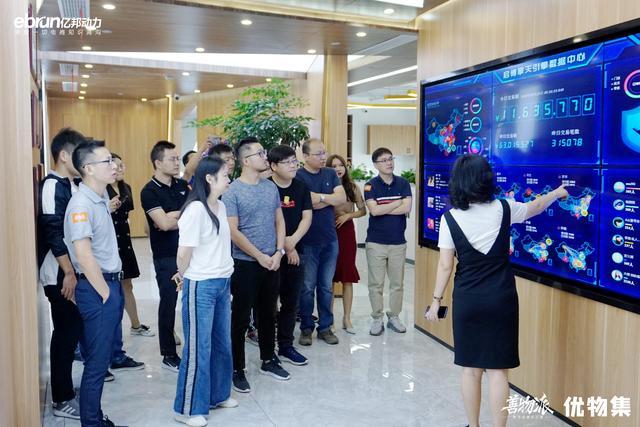
首先在这里非常感谢善物派同学启博软件创始人&CEO胡建军提供交流场地支持,上图,启博软件COO高巍洁在为善物派同学展示启博擎天引擎数据中心大屏;启博软件自主研发的擎天智能分佣引擎,通过大数据分析,链路自动跟踪,佣金级差模型,智能化结算,高并发吞吐,能准确的计算层级佣金,保障平台代理商资金安全,保证分销商佣金安全。

分享篇

善物派99%的课程为闭门研讨课程,分享研讨内容与嘉宾及同学均有保密协议约定,所以,很多内容不便对外,下文,我将整理部分基础要点分享给读者,可能恰好对你有所启发。

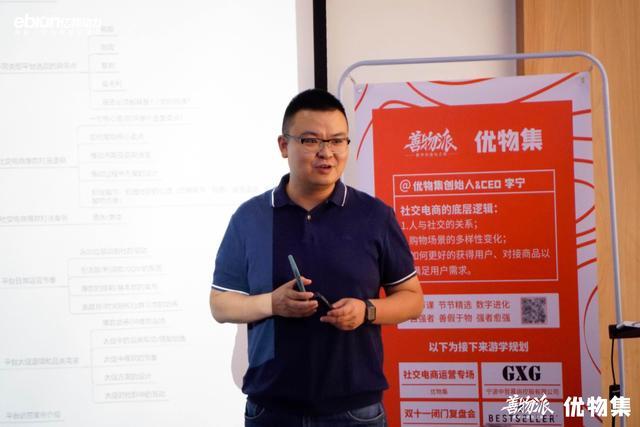
优物集创始人&CEO李宁

社交电商原始逻辑有三点:

第一、人与社交的关系

李宁认为人与人之间的关系建设方式就是社交,分为三个步骤,第一步建立关系,从陌生到认识;第二步建立信任,从认识到朋友;第三步是建立价值互换的基础。

第二、购物场景的多样性变化

购物场景的多样化是社交电商逻辑中非常重要的点,要不断创造新的场景,而创造这个场景需要的是打破,而不是固有,是完全的打破。

第三、电商发展的突破

电商发展的突破包含三个问题:如何更好地获得用户?如何更好地对接商品?如何更好地满足需求?这三个问题的解答和答案在不同时期有不同的表达。李宁表示在这一点上,他带领团队设计了一整套制度,这个制度让平台可以低成本地获得一批高活跃用户,这个低成本不是不投入,是相对0投入。

善物派&优物集

社交电商无论轻重,均有社交形态,社交电商裂变的动力主要来自于社交系统,李宁将社交电商系统总结为三大系统。

社交电商的三大系统

1、社交系统

一个电商平台面临的社交因素主要包括平台与用户的社交、用户与用户的社交、用户与消费者的社交三种形态。

在平台与用户的社交方面,是指当用户选择了一个平台,并开始分享商品和在平台上做成长的时候,平台要给予用户足够的收益。另外,平台通过自身的活动和文化建设,要让用户有归属感。平台与用户的社交关系主要通过载体、教育、会议三个因素实现。

用户与用户的社交也是社交电商非常重要的一个连接器,平台可以看到用户之间是否能共同成长,互助提升。

用户与消费者的社交方面,平台要给予店主足够解决C端的能力。因为店主在每一次分享商品的时候,消耗的是信任值,传回的是价值的变现,这个过程当中当店主能力不够强的时候,C端对其信任度会逐步下降。

2、成长系统

社交系统能够为用户带来裂变,而成长系统则是能够带来的是裂变的动力,能够带来的是裂变的动力,其核心逻辑是赋能店主。

在成长体系中,伴生的是建立荣誉体系。在短期的荣誉体系中,要建立“两个系统一个方案”,即讲师信息系统和任务系统、一个激励方案;在中期的荣誉体系中,需要搭建学习系统、辩论系统、竞赛系统;在长期的荣誉体系中,应建立长期服务奖励。

3、推进系统

推进系统在社交电商中主要依靠微信群,因此要首先要针对社群结构做分析。社群结构主要分为塔形结构、伞形结构和网格蜂窝状,代表型电商平台分别为云集、环球捕手、拼多多。其次,当有了社群用户画像后,才能够进一步确定社群文化。其中,最重要的三个基础支点是管理、营销和裂变。第三,确定社群管理的模式,将决定用户的内容、方法和节奏。第四,社群运营的节奏。

启博软件创始人&CEO胡建军

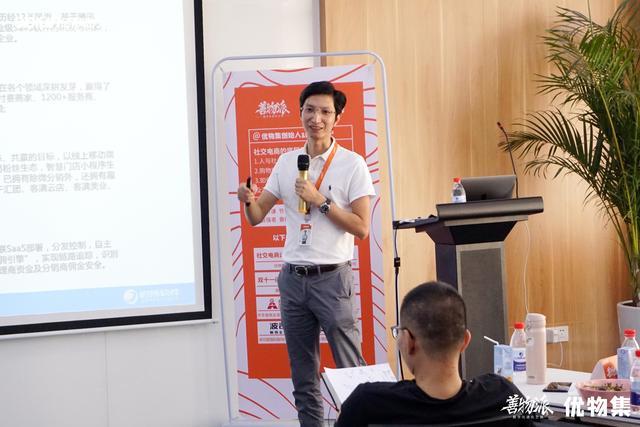
今天,中国3300万微商中,80%采用分销模式,分销模式又细分为单品分销模式、代理分销模式和门店分销模式;千百年来,分销模式一直未变,而社交电商给它提供了爆发的土壤。

启博软件创始人&CEO胡建军通过浪莎、青岛啤酒、温氏股份、哇哈哈等客户品牌社交电商裂变创新的案例,为大家从实战应用维度,展示了企业从构建流量到销量转化的业绩增长模型。

问题思考讨论

左:马克华菲电商副总监李玉

右:三棵树电商总经理李何

左:奥普家居创新渠道中心负责人范宝光

右:认养一头牛社交电商负责人刘欢

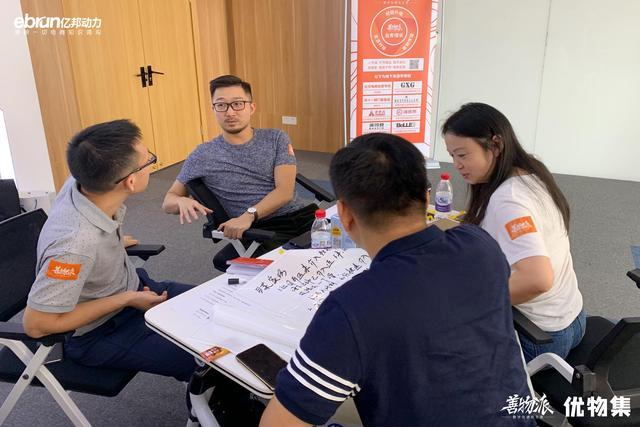
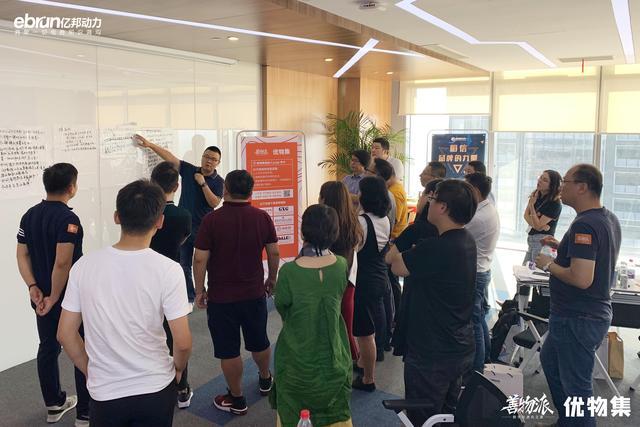
善物派同学小组交流场景

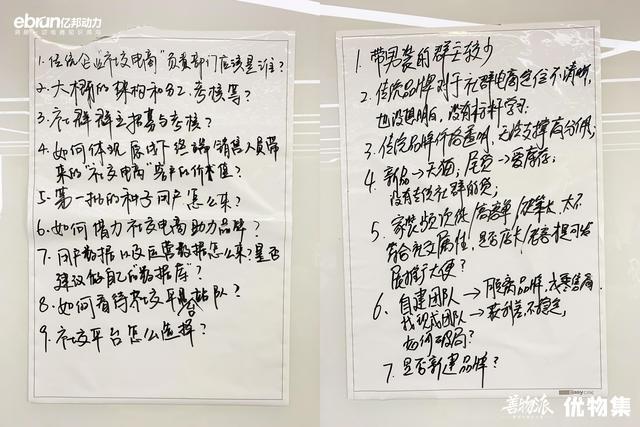
部分问题展示

社交电商运营问题展示

同学们根据自己在社交电商运营中所遇到的问题进行了梳理总结,问题满满,一对一诊脉完后,我相信今天这节课,所有同学都有了自己的答案,收获颇丰。

一对一问题诊脉

优物集创始人&CEO李宁首先从社交电商的本质、社交电商平台选品、社交电商平台运营、品牌对接社交电商平台、品牌对接平台实操五大维度集中为善物派同学拆解了各类目品牌所有可能遇到的共性问题,然后就大家提出的个性化问题一一解读答疑。

品牌商不同于贸易商,卖货思维做社交电商无法持久,实现可持续增长才是关键,更多深度问题,欢迎联系善物派·数字化进化营,加入善物派,携手可持续增长。

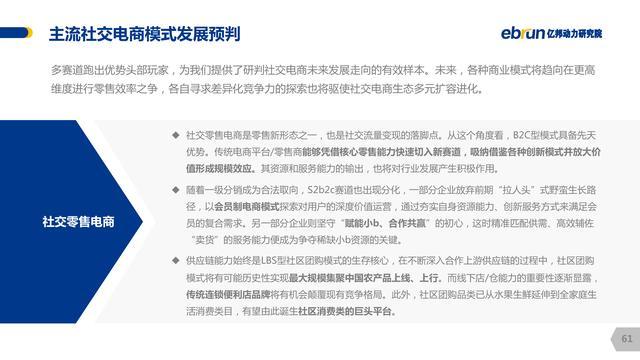
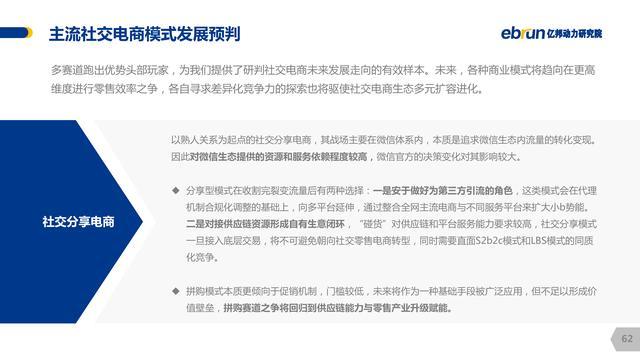
彩蛋时刻:主流社交电商模式发展预判

社交零售电商模式发展模式预判

社交分享电商模式发展模式预判

社交内容电商模式发展模式预判

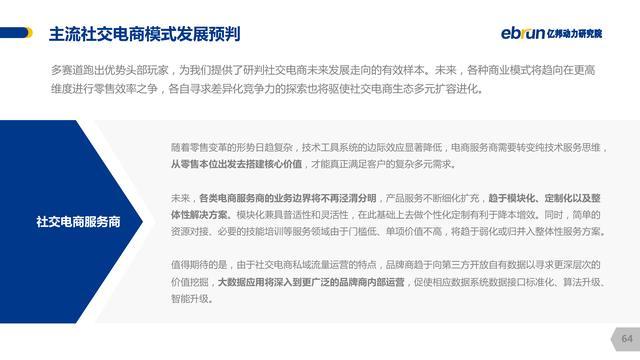
社交电商服务商模式发展预判

关于善物派:

善物派·数字化进化营,以“数字化”为主课题,精选优质实施数字化产生增长的企业,围绕会员/营销/门店/商品/店员/供应链数字化开展深度实战游学,目的帮助品牌赋能落地数字化,带动可持续增长。

文章来源:亿邦动力网

广告
微信
朋友圈

这么好看,分享一下?

朋友圈 分享

APP内打开

赞 +1
+1
微信好友 朋友圈 新浪微博 QQ空间
关闭
收藏成功
发送
/140 0