广告
加载中

巨量引擎取消代理商返点 中小企业可能20%的收入要没了

廖紫琳 2026-11-04 11:18
廖紫琳 2026/11/04 11:18

邦小白快读

EN
全文速览

政策要点

1. 巨量引擎公告称自2027年1月1日起取消代理商合作伙伴返点,改为下调刊例价、优化框架优惠,直接让利客户,降低合作成本。

2. 代理商的激励改为考核制与排名制相结合,不再按固定返点。

影响与实操

1. 过去代理商帮品牌在抖音投广告,平台给代理商约10%至20%返点,代理商可部分返还客户,明面刊例价不变。

2. 合约广告受影响更大,2026年返点可高达20%以上;竞价广告如千川投流、搜索竞价、线索广告影响相对可控。

3. 有服务商今年对千川返点对公3%、对私6.5%。

行业反应

1. 中小代理商受冲击,可能倒一批,投手岗位或调整,简单采买选号被AI取代。

2. 代理商需陪品牌增长、收服务费、为结果买单,品牌更精细化运营。

投放成本变化

1. 新政后固定返点取消,平台改为下调刊例价、优化框架优惠,直接让利客户,品牌明面价格和实际合作成本可能变化。

2. 过去返点约10%至20%,代理商可返还部分给客户;合约广告2026年返点可达20%以上,竞价广告返点少或无。

品牌营销与价格竞争

1. 品牌需重新核算合约广告和竞价广告的投放价格,关注开屏、搜索品专、商城品牌展位与千川投流等差异。

2. 代理商不能再靠返点形成价格优势,品牌选择代理要看考核排名、服务能力和结果交付,合作可能转向服务费模式。

3. 存量竞争下获客和成交成本上升,品牌需更精细化运营,平台留预算、代理商陪增长,品牌应为结果付费。

政策解读

1. 巨量引擎自2027年1月1日起取消代理商返点,改为下调刊例价、优化框架优惠直接让利客户,代理激励改考核制与排名制。

2. 过去代理商返点约10%至20%,合约广告2026年返点可超20%,竞价广告返点少或无。

机会与风险

1. 卖家可关注明面刊例价下调与框架优惠,重新谈投放成本;合约广告和竞价广告受影响不同,千川投流等竞价类相对可控。

2. 风险是中小代理商洗牌、垫款和服务能力变化,简单采买选号被AI替代,卖家需筛选能陪增长、按结果交付的服务商。

3. 机会在于合作从返点转向服务费与结果考核,卖家可要求更透明的价格、服务和效果。

可学习点

1. 不靠信息差和简单采买,转向精细化运营与为结果买单。

电商投放启示

1. 文章未直接讲工厂的生产和设计需求,但对工厂做抖音电商有启示:2027年起巨量引擎取消代理商返点,改为下调刊例价、优化框架优惠。

2. 工厂若通过代理投放,需核算合约广告与竞价广告差异,合约广告2026年返点可超20%,竞价广告如千川返点少或无。

商业机会与数字化

1. 返点取消后,简单采买选号被AI替代,工厂应选择能陪品牌增长、按结果收费的服务商,避免只靠返点。

2. 工厂做电商需更精细化运营,关注获客和成交成本上升,利用平台直接让利和框架优惠降低投放成本。

3. 代理商洗牌期,工厂可争取更透明的价格、服务费和效果考核合作。

行业趋势

1. 巨量引擎自2027年起取消代理商返点,改为下调刊例价、优化框架优惠,代理激励转为考核制与排名制。

2. 固定返点模式受冲击,尤其合约广告2026年返点可超20%;竞价广告返点少或无,影响相对可控。

客户痛点

1. 代理过去靠返点、垫款和服务获客,新政后中小代理生存压力大,简单采买选号被AI取代。

2. 品牌在存量市场面临获客和成交成本上升,需要精细化运营,不能只靠信息差。

解决方案

1. 服务商应转向陪品牌增长、收服务费、为结果买单,提升投放技术和数据能力。

2. 可参考千川返点对公3%、对私6.5%的案例,设计透明合作与考核排名机制。

平台做法

1. 巨量引擎公告自2027年1月1日起取消代理商返点,改为下调刊例价、优化框架优惠,直接让利客户,代理激励改考核制与排名制。

2. 过去平台给代理约10%至20%返点,代理可部分返客户;合约广告2026年返点可超20%,竞价广告返点少或无。

运营管理与风向

1. 平台需平衡品牌预算留存与代理生态,避免中小代理大批退出,同时用考核排名提升服务结果。

2. 平台规则从返点转向直接让利和结果付费,运营上要关注代理垫款、服务能力和投手岗位变化。

3. 招商和合作应更强调透明价格、框架优惠、考核激励,规避代理洗牌带来的交付风险。

产业新动向

1. 巨量引擎自2027年1月1日起取消代理商返点,改为下调刊例价、优化框架优惠,代理激励转为考核制与排名制。

2. 过去返点约10%至20%,合约广告2026年返点可超20%;竞价广告返点少或无,千川有对公3%、对私6.5%案例。

新问题与商业模式

1. 固定返点模式受冲击,中小代理面临生存压力,投手岗位或调整,简单采买选号被AI取代。

2. 平台在存量市场重做规则,促使代理从信息差和简单采买转向陪品牌增长、收服务费、为结果买单。

3. 研究可关注广告代理生态洗牌、品牌获客成本上升、平台与代理关系重构及考核排名激励效果。

返回默认

声明:快读内容全程由AI生成,请注意甄别信息。如您发现问题,请发送邮件至 run@ebrun.com 。

我是 品牌商 卖家 工厂 服务商 平台商 研究者 帮我再读一遍。

Quick Summary

Policy highlights

1. Ocean Engine announced that starting January 1, 2027, it will eliminate rebates for agency partners, instead lowering list prices and optimizing framework discounts to benefit clients directly and reduce cooperation costs.

2. Agency incentives will combine performance reviews and rankings rather than fixed rebates.

Impact and practice

1. In the past, when agencies helped brands advertise on Douyin, the platform gave agencies rebates of roughly 10% to 20%; agencies could pass part of this back to clients while list prices remained unchanged.

2. Contract advertising is more affected, with 2026 rebates potentially exceeding 20%; auction-based ads such as Qianchuan ad delivery, search bidding, and lead ads are relatively manageable.

3. Some service providers this year offered Qianchuan rebates of 3% for corporate accounts and 6.5% for private accounts.

Industry reaction

1. Small and midsize agencies will be hit, and some may fail; ad buyer roles may be adjusted, and simple media buying and account selection will be replaced by AI.

2. Agencies must help brands grow, charge service fees, and be accountable for results, while brands pursue more refined operations.

Advertising cost changes

1. After the new policy, fixed rebates are eliminated; the platform will lower list prices and optimize framework discounts to benefit clients directly. Brands may see changes in headline prices and actual cooperation costs.

2. Rebates used to be about 10% to 20%, and agencies could pass part back to clients; contract advertising rebates could exceed 20% in 2026, while auction-based ads have few or no rebates.

Brand marketing and price competition

1. Brands need to recalculate spending prices for contract and auction-based ads, and monitor differences across splash ads, search brand zones, mall brand placements, and Qianchuan ad delivery.

2. Agencies can no longer use rebates to create a price advantage; brands should choose agencies based on assessment rankings, service capabilities, and result delivery, and cooperation may shift toward service-fee models.

3. In stock-market competition, customer acquisition and transaction costs are rising; brands need more refined operations, should retain budget on the platform, and should pay for results while agencies support growth.

Policy interpretation

1. Starting January 1, 2027, Ocean Engine will eliminate agency rebates and instead lower list prices and optimize framework discounts to benefit clients directly; agency incentives will shift to performance reviews and rankings.

2. Agency rebates used to be about 10% to 20%; contract advertising rebates could exceed 20% in 2026, while auction-based ads have few or no rebates.

Opportunities and risks

1. Sellers can watch for lower headline list prices and framework discounts and renegotiate advertising costs; contract and auction-based ads are affected differently, and auction-based categories such as Qianchuan ad delivery are relatively manageable.

2. Risks include a shakeout among small and midsize agencies, changes in advance funding and service capabilities, and AI replacing simple media buying and account selection; sellers should select service providers that can support growth and deliver against results.

3. Opportunities lie in cooperation shifting from rebates to service fees and result-based assessment; sellers can demand more transparent pricing, services, and performance.

Takeaways

1. Move away from information gaps and simple media buying toward refined operations and paying for results.

E-commerce advertising implications

1. The article does not directly address factories' production and design needs, but it has implications for factories doing Douyin e-commerce: starting in 2027, Ocean Engine will eliminate agency rebates and instead lower list prices and optimize framework discounts.

2. If factories advertise through agencies, they need to assess differences between contract and auction-based ads; contract advertising rebates could exceed 20% in 2026, while auction-based ads such as Qianchuan have few or no rebates.

Business opportunities and digitalization

1. After rebates are eliminated, simple media buying and account selection will be replaced by AI; factories should choose service providers that can support brand growth and charge based on results, rather than relying on rebates.

2. Factories doing e-commerce need more refined operations, should watch rising customer acquisition and transaction costs, and can use direct platform discounts and framework discounts to lower advertising costs.

3. During the agency shakeout, factories can seek more transparent pricing, service fees, and performance-based cooperation.

Industry trends

1. Starting in 2027, Ocean Engine will eliminate agency rebates and instead lower list prices and optimize framework discounts; agency incentives will shift to performance reviews and rankings.

2. The fixed-rebate model is under pressure, especially contract advertising, where rebates could exceed 20% in 2026; auction-based ads have few or no rebates, so the impact is relatively manageable.

Client pain points

1. Agencies previously won clients through rebates, advance funding, and services. Under the new policy, small and midsize agencies face severe survival pressure, and AI will replace simple media buying and account selection.

2. Brands in the stock market face rising customer acquisition and transaction costs and need refined operations rather than relying on information gaps.

Solutions

1. Service providers should shift toward supporting brand growth, charging service fees, and being accountable for results, while improving ad delivery technology and data capabilities.

2. They can reference the case of Qianchuan rebates at 3% for corporate accounts and 6.5% for private accounts to design transparent cooperation and assessment-ranking mechanisms.

Platform approach

1. Ocean Engine announced that starting January 1, 2027, it will eliminate agency rebates and instead lower list prices and optimize framework discounts to benefit clients directly; agency incentives will shift to performance reviews and rankings.

2. In the past, the platform gave agencies rebates of about 10% to 20%, and agencies could pass part back to clients; contract advertising rebates could exceed 20% in 2026, while auction-based ads have few or no rebates.

Operations management and direction

1. The platform needs to balance brand budget retention with the agency ecosystem, avoid a mass exit of small and midsize agencies, and use assessment rankings to improve service results.

2. Platform rules are shifting from rebates to direct discounts and result-based payment; operations should monitor agency advance funding, service capabilities, and changes in ad buyer roles.

3. Merchant recruitment and cooperation should emphasize transparent pricing, framework discounts, and performance incentives, while mitigating delivery risks from the agency shakeout.

New industry developments

1. Starting January 1, 2027, Ocean Engine will eliminate agency rebates and instead lower list prices and optimize framework discounts; agency incentives will shift to performance reviews and rankings.

2. Rebates used to be about 10% to 20%; contract advertising rebates could exceed 20% in 2026; auction-based ads have few or no rebates, with Qianchuan cases at 3% for corporate accounts and 6.5% for private accounts.

New issues and business models

1. The fixed-rebate model is under pressure; small and midsize agencies face survival pressure, ad buyer roles may be adjusted, and AI will replace simple media buying and account selection.

2. The platform is rewriting rules in a stock market, pushing agencies away from information gaps and simple media buying toward supporting brand growth, charging service fees, and being accountable for results.

3. Research can focus on the advertising agency ecosystem shakeout, rising brand customer acquisition costs, reconstruction of platform-agency relationships, and the effects of assessment-ranking incentives.

Disclaimer: The "Quick Summary" content is entirely generated by AI. Please exercise discretion when interpreting the information. For issues or corrections, please email run@ebrun.com .

I am a Brand Seller Factory Service Provider Marketplace Seller Researcher Read it again.

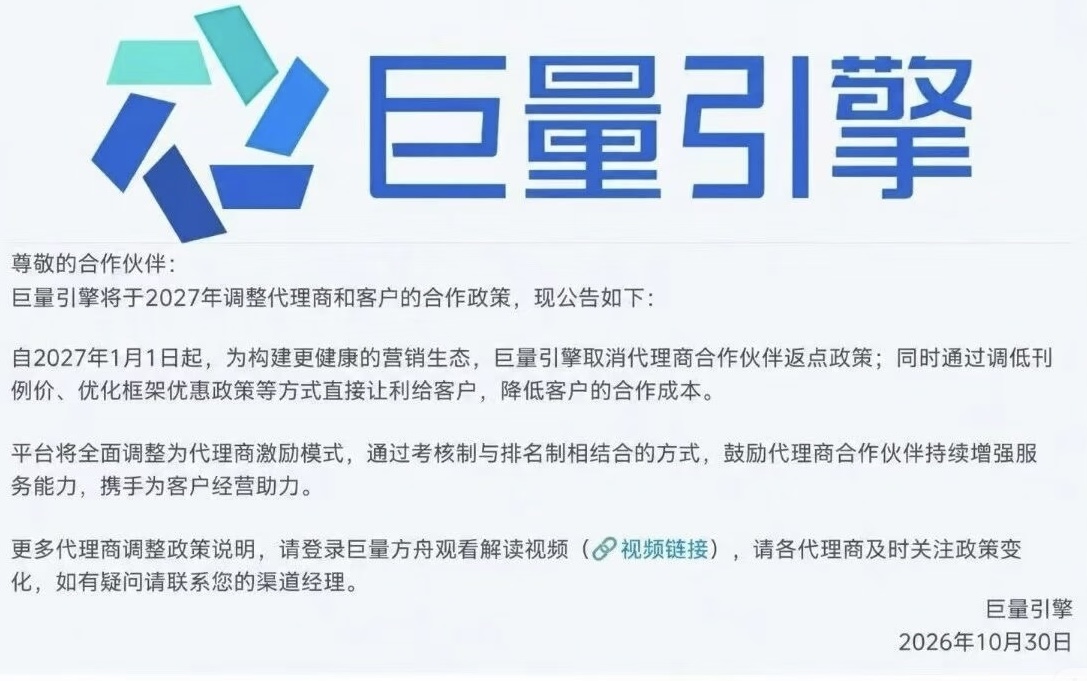
【亿邦原创】日前,巨量引擎发布一则公告:自2027年1月1日起,取消代理商合作伙伴返点政策,改为下调刊例价、优化框架优惠政策,直接让利给客户,降低客户的合作成本。而对代理商的激励,全面调整为“考核制与排名制相结合”。

新政之前,代理商帮品牌客户在抖音平台上投广告,平台给出的刊例价都是固定的,但下单后平台会给代理商一定的返点(不同代理商拿到的返点政策不同,一般在10%-20%以内),代理商可以返还给客户其中一部分返点。

相当于对商家来说,平台的广告费是有一定折扣空间在的,但明面上刊例价是不变的,代理商也可以据此形成自己的价格优势。但新政之后,固定返点费用将被取消,会根据代理商的实际表现给予一定激励,形式更为灵活。

据业内人士反馈,目前受影响更大的是合约广告(提前约定好价格、排期和交付目标的广告类型,如开屏广告、搜索品专、商城的品牌展位等),2026年的返点能高达20%以上。

而竞价广告(按出价和目标实时竞价,如千川投流、搜索竞价、线索广告等)相对影响可控,因为此前竞价广告就没有返点或较少。有服务商今年给出的政策是,巨量千川返点对公3%(返还给客户公司),对私6.5%(返还给客户公司的某个负责人)。

从表面上看,巨量引擎的这则新政,只是改变了激励方式,从固定返点到绩效考核。但实际来看,这对广告代理商的商业模式是有一定冲击的,尤其是中小广告代理商。

“哪个代理不返点给客户?还要垫款、服务。代理商以后不好混了,估计会倒一大批。”有人预测,代理商的投手职业生涯也会出现变动,“可能又要裁一波投手了,简单采买选号已经被AI取代了。”

不过,也有代理商认为:“其实取消采买的返点政策,我觉得没错,的确如果只是简单做采买,大家都没什么技术含量,平台已经把达人和数据都上架了。过去代理商靠返点吃饭,现在只能想办法陪品牌增长从中收取服务费了。”

据上述人士解释称,“增量市场怎么投都是高产比,但回不去的增量市场,越多品牌涌入同一个池子,不断推高获客成本和成交成本,品牌扛不住了就会更精细化运营。”平台为了留住品牌商预算,就会重新制作“游戏规则”,让代理商不能再靠信息差或者简单的采买而赚取高额的服务费,而是真正为品牌做好服务,为“结果”买单。

亿邦持续追踪报道该情报,如想了解更多与本文相关信息,请扫码关注作者微信。

本文首发于 亿邦动力 官方网站

文章来源:亿邦动力

广告
微信
朋友圈

FAQ回顾

巨量引擎取消代理商返点政策是什么?

自2027年1月1日起,巨量引擎取消代理商合作伙伴返点政策,改为下调刊例价、优化框架优惠,直接让利给客户,降低客户合作成本;对代理商的激励则调整为考核制与排名制相结合。此前平台按固定刊例价收费,再向代理商提供约10%至20%的返点。

巨量引擎取消返点对广告代理商有什么影响?

新政主要冲击广告代理商的商业模式,尤其中小广告代理商。过去代理商可把部分返点返还客户,形成价格优势;返点取消后,代理商需靠服务品牌增长收取服务费,简单采买选号还可能被AI取代。业内有人预测代理商将倒掉一批,投手也可能被裁。

巨量引擎取消返点后,合约广告和竞价广告哪个受影响更大?

合约广告受影响更大。业内人士反馈,合约广告如开屏广告、搜索品专、商城品牌展位等,2026年返点能高达20%以上;竞价广告如千川投流、搜索竞价、线索广告等,此前返点较少或没有返点,因此相对影响可控。

广告代理商应如何应对巨量引擎取消返点?

代理商不能再靠返点、信息差或简单采买赚取高额服务费,而应陪品牌增长并收取服务费,为品牌精细化运营和“结果”买单。平台也会按代理商实际表现给予激励,推动代理商真正做好服务,而不是只做简单采买。

巨量引擎为什么取消代理商返点?

增量市场不再,越多品牌涌入同一池子会推高获客成本和成交成本,品牌扛不住后更精细化运营。平台为留住品牌商预算重新制定规则,让代理商不能靠信息差或简单采买赚高额服务费,而要真正为品牌服务、为结果买单。

这么好看,分享一下?

朋友圈 分享

APP内打开

赞 +1
+1
微信好友 朋友圈 新浪微博 QQ空间
关闭
收藏成功
发送
/140 0