广告
加载中

新恒昌非笼养殖获Intertek认证引领国内蛋品福利养殖升级

龚作仁 2026-10-28 13:22
龚作仁 2026/10/28 13:22

邦小白快读

EN
全文速览

总1:国内非笼养鸡蛋仍处发展早期,普通消费者可把认证与溯源作为判断品质的参考。

1.国内非笼养鸡蛋含家庭散养约占10%,规模化室内非笼养仅约1%,第三方权威认证的规模化合规产能不足0.1%,均属行业估算。

2.团体标准《非笼养鸡蛋生产评价要求》于2024年1月1日起实施,首次引入动物福利理念;Intertek专项认证覆盖53.8万羽蛋鸡,年产非笼养鸡蛋1.52亿枚。

3.认证覆盖养殖环境、饲料饮水、鸡只健康管护、鸡蛋采收存储和溯源管理,并包含文件审核、现场核验及有效期内常态化复审。

总2:福利养殖概念已有本土化表达,购买时还需留意宣传规范。

1.新恒昌把动物福利五项自由转化为“五福自由”,对应食物福、环境福、卫生福、心理福、行为福。

2.部分消费者愿意为合规透明的福利养殖鸡蛋支付溢价,但部分商超标注非笼养的产品存在认证信息不完整、养殖标准不统一。

3.消费者可重点关注第三方认证标识、全链条溯源信息和常态化复审信息,避免只看非笼养概念宣传。

总1:非笼养鸡蛋契合消费升级和动物福利趋势,可作为品牌差异化与溢价方向。

1.全球已有超过2800家公司作出非笼养鸡蛋采购承诺,追踪的852项承诺平均转型率85.3%,较2023年提升10.3个百分点;美国约45.7%产蛋母鸡非笼养,欧盟非笼养鸡蛋市场占比超50%。

2.国内非笼养鸡蛋含家庭散养约占10%,规模化室内非笼养仅约1%,第三方认证合规产能不足0.1%,需求升温而合规供给偏少,部分消费者愿为合规透明福利鸡蛋支付溢价。

总2:品牌可用标准认证、本土化概念和透明化信息建设信任,但要防范标准与宣传风险。

1.团体标准已实施并引入动物福利理念,Intertek专项认证覆盖53.8万羽、年产1.52亿枚,认证含环境、饲料饮水、健康管护、采收存储、溯源及常态化复审,可作品牌背书。

2.“五福自由”把五项自由对应五福临门,降低消费者理解门槛,但属企业自主概念,尚未成为行业通用标准。

3.商超渠道存在非笼养认证信息不完整、标准不统一,品牌应重视认证标识、全链条溯源和信息公开;新恒昌为粤港澳大湾区认证菜篮子生产基地,并规划300万羽非笼养存栏,显示规模化与渠道信任建设方向。

总1:非笼养蛋品有增长市场,但政策标准仍在完善,卖家应关注合规供给缺口与认证门槛。

1.国内团体标准《非笼养鸡蛋生产评价要求》已于2024年1月1日起实施,首次引入动物福利理念,并已在多家企业试点;统一国家标准尚待建立,市场存在概念宣传不规范。

2.国内非笼养鸡蛋含家庭散养约占10%,规模化室内非笼养仅约1%,第三方权威认证的规模化合规产能不足0.1%,合规供给偏少,部分消费者愿支付溢价,存在增长机会。

3.全球已有超2800家公司作出非笼养承诺,平均转型率85.3%,欧美市场成熟,提示采购与供应链要求趋严。

总2:可学习认证企业的落地方式,同时注意成本、标准与宣传风险。

1.新恒昌取得Intertek非笼养专项认证,覆盖53.8万羽、年产1.52亿枚,认证含文件审核、现场核验和常态化复审,并推进规模化产能与信息公开。

2.风险包括改造成本高、技术门槛高、认证信息不完整、养殖标准不统一、企业自主概念未成通用标准。

3.可关注合作方式:圣迪乐投产30万羽非笼养蛋鸡产业链项目,信德农牧非笼养存栏居行业前列,五家企业2025年联合发起国内首家蛋鸡非笼养信用与技术合作协会。

总1:非笼养对生产设计和过程管理提出标准化要求,工厂可据此改造养殖与溯源体系。

1.生产端需覆盖养殖环境、饲料饮水、鸡只健康管护、鸡蛋采收存储、溯源管理等环节,并配置标准化福利设施、实施精细化养殖密度管控。

2.认证流程包含文件审核、现场核验及有效期内常态化复审,生产管理要能持续满足《非笼养鸡蛋生产评价要求》。

3.“五福自由”对应免于饥渴、不适、痛苦疾病、恐惧应激和表达天性,可作为内部养殖理念落地参考。

总2:合规产能稀缺带来商业机会,但改造成本和技术门槛是共性难题。

1.国内规模化室内非笼养仅约1%,第三方认证合规产能不足0.1%,新恒昌规划300万羽非笼养存栏,现有两个养殖场持证存栏37.7万羽和16万羽,对应年产9900万枚和5300万枚。

2.圣迪乐在四川广元投产30万羽非笼养蛋鸡产业链项目,显示产业链项目机会。

3.推进透明化可借全链条溯源、信息公开和认证复审,实现源头可管、过程可控、产品可溯,为渠道和电商信任建设提供支撑。

总1:非笼养蛋品处于早期扩张期,认证、标准化和透明化服务需求上升。

1.全球非笼养承诺超过2800家公司,平均转型率85.3%,美国约45.7%产蛋母鸡非笼养,欧盟市场占比超50%;国内规模化室内非笼养仅约1%,认证合规产能不足0.1%,产业升级空间大。

2.国内团标已实施并引入动物福利理念,第三方专项认证出现,认证覆盖环境、饲料饮水、健康管护、采收存储、溯源,并含文件审核、现场核验、常态化复审。

总2:客户痛点集中在标准理解、认证信息、成本与消费者沟通,文章呈现的解决路径可作服务方向参考。

1.痛点包括认证信息不完整、养殖标准不统一、概念宣传不规范、统一国标尚待建立、改造成本和技术门槛较高、五项自由理解门槛高。

2.解决路径包括对接团体标准和第三方认证、建立内控标准、配置标准化福利设施、搭建全链条溯源与信息公开机制。

3.新恒昌把五项自由转化为“五福自由”降低消费者理解门槛,属于企业自主概念;服务商可关注认证辅导、溯源管理和生产透明化等需求,但该概念能否复制仍需市场检验。

总1:非笼养消费升温使平台面临合规供给筛选和认证信息核验需求。

1.国内非笼养鸡蛋含家庭散养约占10%,规模化室内非笼养仅约1%,第三方认证合规产能不足0.1%,平台可选合规供给有限。

2.部分商超渠道标注非笼养的产品存在认证信息不完整、养殖标准不统一,平台招商和商品审核需重视认证与标准一致性。

3.团体标准已实施,Intertek专项认证覆盖53.8万羽、年产1.52亿枚,并含现场核验和常态化复审,可作为平台审核参考。

总2:平台运营可借透明化和溯源建设信任,同时规避概念宣传与标准风险。

1.新恒昌为粤港澳大湾区认证菜篮子生产基地,规划300万羽非笼养存栏,两个持证养殖场数据公开,显示规模化与信息公开方向。

2.平台可关注全链条溯源、生产端透明化、源头可管过程可控产品可溯等信息展示,降低消费者理解门槛。

3.风险在于统一国家标准尚待建立、企业自主“五福自由”未成通用标准、合规产能少;平台应避免仅凭概念宣传,重视认证信息和复审状态。

总1:非笼养蛋品是全球福利养殖转型的一部分,国内呈现需求升温、合规供给偏少的产业新动向。

1.全球超2800家公司作出非笼养承诺,852项承诺平均转型率85.3%,较2023年提升10.3个百分点;美国约45.7%产蛋母鸡非笼养,欧盟市场占比超50%。

2.国内非笼养鸡蛋含家庭散养约10%,规模化室内非笼养约1%,第三方认证合规产能不足0.1%,且统计口径差异、暂无官方统计。

3.团标2024年实施并引入动物福利理念,统一国家标准尚待建立,Intertek专项认证覆盖53.8万羽、年产1.52亿枚。

总2:新问题与商业模式值得研究,政策启示集中在标准统一、认证规范和透明化。

1.新问题包括认证信息不完整、养殖标准不统一、概念宣传不规范、企业自主概念未成通用标准、改造成本和技术门槛高。

2.政策法规启示包括完善统一国家标准、规范非笼养概念宣传、推动动物福利理念落地、发挥第三方认证和常态化复审作用。

3.商业模式呈现为第三方认证加内控标准、规模化产能和信息公开;新恒昌总存栏约850万羽、规划非笼养300万羽,圣迪乐投产30万羽项目,信德农牧存栏居前,五家企业发起信用与技术合作协会,显示协会合作与产业链项目并行。

返回默认
声明:快读内容全程由AI生成,请注意甄别信息。如您发现问题,请发送邮件至 run@ebrun.com 。

我是 品牌商 卖家 工厂 服务商 平台商 研究者 帮我再读一遍。

Quick Summary

Summary 1: Domestic cage-free eggs are still in an early stage of development; ordinary consumers can use certification and traceability as references for quality.

1. Cage-free eggs in China, including household free-range production, account for about 10%; large-scale indoor cage-free production accounts for only about 1%; and large-scale compliant capacity certified by authoritative third parties is less than 0.1%. All are industry estimates.

2. The group standard Production Evaluation Requirements for Cage-Free Eggs took effect on January 1, 2024, introducing the concept of animal welfare for the first time. Intertek's special certification covers 538,000 laying hens, with annual output of 152 million cage-free eggs.

3. Certification covers the breeding environment, feed and drinking water, hen health care, egg collection and storage, and traceability management, and includes document review, on-site verification, and regular re-audits within the validity period.

Summary 2: The concept of welfare-friendly farming has local expressions, but buyers should also pay attention to advertising compliance.

1. Xinhengchang translates the Five Freedoms of animal welfare into the Five-Blessings Freedoms, corresponding to food, environment, hygiene, psychological, and behavioral well-being.

2. Some consumers are willing to pay a premium for compliant and transparent welfare-friendly eggs, but some products labeled cage-free in supermarkets have incomplete certification information and inconsistent farming standards.

3. Consumers should focus on third-party certification marks, full-chain traceability information, and regular re-audit information, rather than relying only on cage-free concept marketing.

Summary 1: Cage-free eggs align with consumption upgrading and animal welfare trends and can serve as a direction for brand differentiation and premium pricing.

1. More than 2,800 companies globally have made cage-free egg procurement commitments. Among 852 tracked commitments, the average transition rate is 85.3%, up 10.3 percentage points from 2023. In the United States, about 45.7% of laying hens are cage-free; in the EU, cage-free eggs account for more than 50% of the market.

2. In China, cage-free eggs including household free-range production account for about 10%; large-scale indoor cage-free production accounts for only about 1%; and third-party-certified compliant capacity is less than 0.1%. Demand is rising while compliant supply is relatively limited, and some consumers are willing to pay a premium for compliant, transparent welfare-friendly eggs.

Summary 2: Brands can build trust through standards certification, localized concepts, and transparent information, but must guard against standards and marketing risks.

1. The group standard has been implemented and introduces animal welfare concepts. Intertek's special certification covers 538,000 hens and annual output of 152 million eggs. Certification covers the environment, feed and drinking water, health care, collection and storage, traceability, and regular re-audits, and can serve as brand endorsement.

2. The Five-Blessings Freedoms map the Five Freedoms to the traditional Five Blessings, lowering the barrier to consumer understanding, but this is a company-specific concept and has not yet become an industry-wide standard.

3. In supermarket channels, cage-free certification information is incomplete and standards are inconsistent. Brands should prioritize certification marks, full-chain traceability, and information disclosure. Xinhengchang is a certified Vegetable Basket production base in the Guangdong-Hong Kong-Macao Greater Bay Area and plans 3 million cage-free hens, indicating the direction toward scale and channel trust-building.

Summary 1: Cage-free egg products have a growing market, but policies and standards are still being improved. Sellers should monitor compliant supply gaps and certification thresholds.

1. China's group standard Production Evaluation Requirements for Cage-Free Eggs has been implemented since January 1, 2024, introducing animal welfare concepts for the first time, and has been piloted at several companies. A unified national standard remains to be established, and irregular concept marketing exists in the market.

2. Cage-free eggs in China, including household free-range production, account for about 10%; large-scale indoor cage-free production accounts for only about 1%; and large-scale compliant capacity certified by authoritative third parties is less than 0.1%. Compliant supply is relatively limited, and some consumers are willing to pay a premium, creating growth opportunities.

3. More than 2,800 companies globally have made cage-free commitments, with an average transition rate of 85.3%. Markets in Europe and the United States are mature, indicating stricter procurement and supply-chain requirements.

Summary 2: Sellers can learn from how certified companies implement standards, while noting cost, standards, and marketing risks.

1. Xinhengchang has obtained Intertek's special cage-free certification, covering 538,000 hens with annual output of 152 million eggs. Certification includes document review, on-site verification, and regular re-audits, and the company is advancing scaled capacity and information disclosure.

2. Risks include high conversion costs, high technical thresholds, incomplete certification information, inconsistent farming standards, and company-specific concepts that have not become common standards.

3. Potential cooperation models to watch: Sundaily put into operation a 300,000-hen cage-free laying hen industrial-chain project; Xinde Agriculture ranks among the industry leaders in cage-free flock size; and five companies jointly initiated China's first cage-free laying hen credit and technology cooperation association in 2025.

Summary 1: Cage-free production imposes standardized requirements on production design and process management; factories can use them to upgrade farming and traceability systems.

1. The production side needs to cover the breeding environment, feed and drinking water, hen health care, egg collection and storage, traceability management, and other links, while equipping standardized welfare facilities and implementing refined control of stocking density.

2. The certification process includes document review, on-site verification, and regular re-audits within the validity period. Production management must continuously meet the Production Evaluation Requirements for Cage-Free Eggs.

3. The Five-Blessings Freedoms correspond to freedom from hunger and thirst, discomfort, pain and disease, fear and stress, and the freedom to express natural behaviors, and can serve as an internal reference for implementing farming concepts.

Summary 2: Scarce compliant capacity creates commercial opportunities, but conversion costs and technical thresholds are common challenges.

1. Large-scale indoor cage-free production in China accounts for only about 1%, and third-party-certified compliant capacity is less than 0.1%. Xinhengchang plans 3 million cage-free hens; its two existing farms have certified flocks of 377,000 and 160,000 hens, corresponding to annual outputs of 99 million and 53 million eggs.

2. Sundaily has put into operation a 300,000-hen cage-free laying hen industrial-chain project in Guangyuan, Sichuan, indicating opportunities in industrial-chain projects.

3. Transparency can be advanced through full-chain traceability, information disclosure, and certification re-audits, enabling source management, process control, and product traceability, and supporting trust-building with channels and e-commerce.

Summary 1: Cage-free egg products are in an early expansion phase, and demand is rising for certification, standardization, and transparency services.

1. Global cage-free commitments cover more than 2,800 companies, with an average transition rate of 85.3%. In the United States, about 45.7% of laying hens are cage-free; in the EU, the market share exceeds 50%. In China, large-scale indoor cage-free production accounts for only about 1%, and certified compliant capacity is less than 0.1%, leaving substantial room for industry upgrading.

2. China's group standard has been implemented and introduces animal welfare concepts, and third-party special certification has emerged. Certification covers the environment, feed and drinking water, health care, collection and storage, and traceability, and includes document review, on-site verification, and regular re-audits.

Summary 2: Customer pain points center on standards understanding, certification information, costs, and consumer communication. The solutions presented in the article can serve as references for service directions.

1. Pain points include incomplete certification information, inconsistent farming standards, irregular concept marketing, the absence of a unified national standard, high conversion costs and technical thresholds, and a high barrier to understanding the Five Freedoms.

2. Solutions include aligning with group standards and third-party certification, establishing internal control standards, equipping standardized welfare facilities, and building full-chain traceability and information disclosure mechanisms.

3. Xinhengchang translates the Five Freedoms into the Five-Blessings Freedoms to lower the consumer understanding barrier; this is a company-specific concept. Service providers can focus on demand for certification consulting, traceability management, and production transparency, but whether the concept can be replicated still needs market testing.

Summary 1: Rising cage-free consumption is creating demand for platforms to screen compliant supply and verify certification information.

1. Cage-free eggs in China, including household free-range production, account for about 10%; large-scale indoor cage-free production accounts for only about 1%; and third-party-certified compliant capacity is less than 0.1%. Platforms therefore have limited compliant supply to choose from.

2. Some products labeled cage-free in supermarket channels have incomplete certification information and inconsistent farming standards. Platform merchant recruitment and product review need to focus on the consistency of certification and standards.

3. The group standard has been implemented. Intertek's special certification covers 538,000 hens with annual output of 152 million eggs and includes on-site verification and regular re-audits, which can serve as a reference for platform review.

Summary 2: Platform operations can build trust through transparency and traceability while avoiding concept-marketing and standards risks.

1. Xinhengchang is a certified Vegetable Basket production base in the Guangdong-Hong Kong-Macao Greater Bay Area and plans 3 million cage-free hens. Data from its two certified farms are disclosed, indicating the direction toward scale and information disclosure.

2. Platforms can focus on information display such as full-chain traceability, production-side transparency, source management, process control, and product traceability to lower the consumer understanding barrier.

3. Risks include the absence of a unified national standard, the fact that companies' own Five-Blessings Freedoms concept has not become a common standard, and limited compliant capacity. Platforms should avoid relying solely on concept marketing and should prioritize certification information and re-audit status.

Summary 1: Cage-free egg products are part of the global transition toward welfare-friendly farming, and China shows a new industry trend of rising demand and relatively limited compliant supply.

1. More than 2,800 companies globally have made cage-free commitments; among 852 tracked commitments, the average transition rate is 85.3%, up 10.3 percentage points from 2023. In the United States, about 45.7% of laying hens are cage-free; in the EU, the market share exceeds 50%.

2. In China, cage-free eggs including household free-range production account for about 10%; large-scale indoor cage-free production accounts for about 1%; and third-party-certified compliant capacity is less than 0.1%. Statistical calibers differ, and no official statistics are yet available.

3. The group standard was implemented in 2024 and introduces animal welfare concepts. A unified national standard remains to be established. Intertek's special certification covers 538,000 hens with annual output of 152 million eggs.

Summary 2: New issues and business models are worth studying, and policy implications center on standard unification, certification normalization, and transparency.

1. New issues include incomplete certification information, inconsistent farming standards, irregular concept marketing, company-specific concepts that have not become common standards, and high conversion costs and technical thresholds.

2. Policy and regulatory implications include improving a unified national standard, regulating cage-free concept marketing, promoting the implementation of animal welfare concepts, and leveraging third-party certification and regular re-audits.

3. Business models appear as third-party certification plus internal control standards, scaled capacity, and information disclosure. Xinhengchang has total flock size of about 8.5 million hens and plans 3 million cage-free hens; Sundaily has put into operation a 300,000-hen project; Xinde Agriculture ranks among the leading flock sizes; and five companies have initiated a credit and technology cooperation association, showing industry association cooperation and industrial-chain projects proceeding in parallel.

Disclaimer: The "Quick Summary" content is entirely generated by AI. Please exercise discretion when interpreting the information. For issues or corrections, please email run@ebrun.com .

I am a Brand Seller Factory Service Provider Marketplace Seller Researcher Read it again.

当前,国内蛋品消费持续升级,动物福利、绿色养殖理念逐步走进大众视野,非笼养鸡蛋成为蛋品产业转型的重要探索方向。与欧美成熟的标准化福利养殖体系相比,我国非笼养蛋品产业仍处在发展早期,面临消费需求增长、行业标准尚在完善、合规产能有限、市场认证信息不透明等现实挑战。

全球福利养殖持续推进,中外产业转型差距明显

动物福利标准化养殖是全球蛋品产业升级的重要趋势,非笼养模式被众多国际食品企业纳入供应链要求。据世界农场动物福利协会(CIWF)发布的《EggTrack 2025》报告,全球已有超过2800家公司就鸡蛋采购作出非笼养承诺;报告追踪的852项承诺中,平均非笼养转型率已达85.3%,较2023年的75%提升了10.3个百分点。其中415项承诺将2025年设为截止期限。

欧美国家非笼养养殖起步更早,产业成熟度相对更高。据美国农业部的数据,截至2025年6月,美国约45.7%的产蛋母鸡采用非笼养模式;欧盟非笼养鸡蛋市场占比已超50%,非笼养已成为当地主流养殖模式之一。

反观国内市场,产业呈现需求升温、合规供给偏少的特征。由于统计口径差异,国内非笼养占比数据存在不同版本。综合多方行业调研,中国鸡蛋总产量中非笼养鸡蛋(含家庭散养)占比约为10%,其中绝大部分来自小型散养,规模化室内非笼养仅占约1%。而通过第三方权威认证的规模化合规非笼养产能更为有限,据行业估算不足0.1%。上述数据均为行业估算,暂无官方统计。

随着品质消费兴起,国内不少消费者开始关注蛋品养殖环境与动物福利。多项消费调研显示,部分消费者愿意为合规、透明的福利养殖鸡蛋支付溢价。

赛道扩容的同时,行业标准仍在完善中。值得注意的是,国内并非完全“暂无统一标准”。中国连锁经营协会(CCFA)已于2023年发布团体标准《非笼养鸡蛋生产评价要求》(T/CCFAGS 025-2023),自2024年1月1日起实施,首次在标准中引入动物福利理念。该标准已在多家非笼养鸡蛋生产企业中试点应用。同时,亚洲研究与参与组织(ARE)发布的《北京超市可持续蛋白调查报告》指出,部分商超渠道标注“非笼养”的鸡蛋产品存在认证信息不完整、养殖标准不统一等现象。

业内人士表示,目前国内非笼养养殖的统一国家标准尚待建立,市场存在概念宣传不规范等问题,行业期待更多企业对标通行规则开展合规生产,推动行业规范化发展。

依托第三方认证,企业探索非笼养养殖落地路径

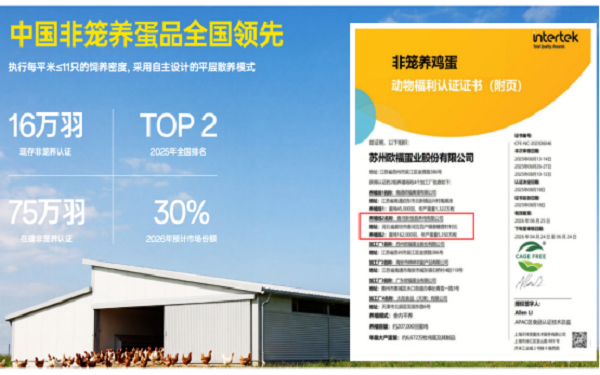
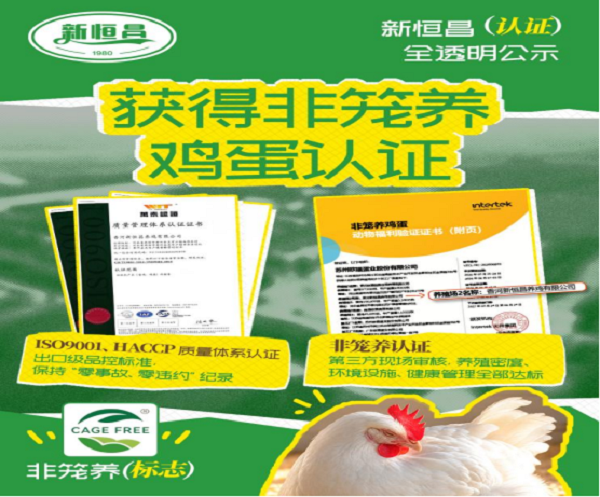
在行业标准逐步完善的背景下,第三方认证成为甄别非笼养产品合规性的重要参考。2026年6月15日香河新恒昌养鸡有限公司、香河欧福恒昌非笼养殖有限公司相关养殖基地取得Intertek非笼养鸡蛋专项认证。Intertek是参与制定《非笼养鸡蛋生产评价要求》(T/CCFAGS 025-2023)的机构之一。据认证公开信息,本次认证覆盖53.8万羽蛋鸡,对应年产非笼养鸡蛋1.52亿枚。认证参照《非笼养鸡蛋生产评价要求》,覆盖养殖环境、饲料饮水、鸡只健康管护、鸡蛋采收存储、溯源管理等环节,包含文件审核、现场核验及有效期内常态化复审。

“五福自由”:企业层面对国际福利准则的本土化尝试

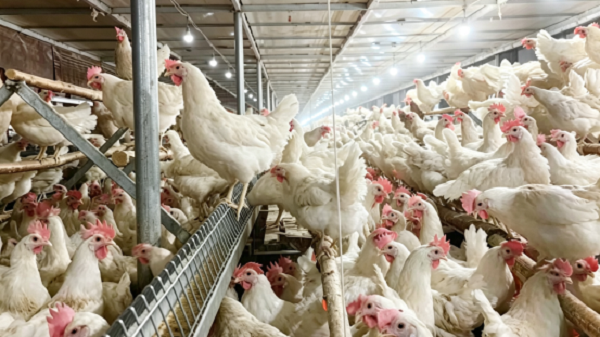
传统笼养模式之下,蛋鸡活动空间狭小,难以完成展翅、沙浴等本能行为,高密度环境也会加大疫病传播风险。而非笼养模式,核心就是还给蛋鸡应有的生存权益,让鸡在更舒展、健康的状态下生长,这也是全球蛋业转型的大趋势,欧盟、北美多国已经陆续出台政策推动淘汰传统笼养,国内也将动物福利养殖纳入畜牧行业发展试点方向,消费市场对于福利养殖鸡蛋的接受度持续走高。

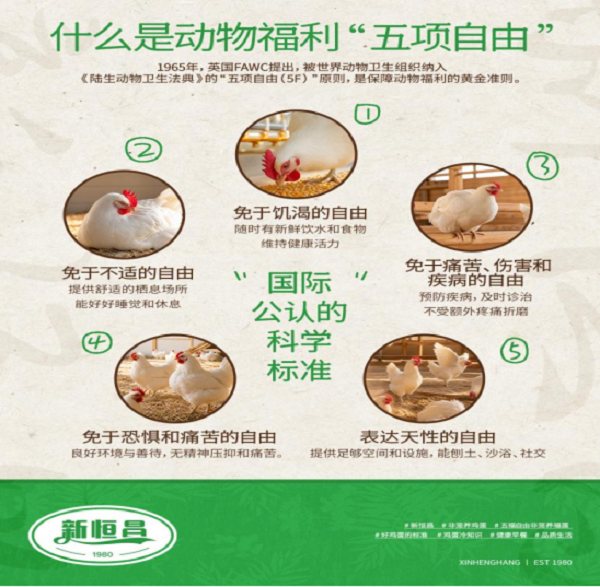
动物福利“五项自由”是国际通用养殖准则,由英国农场动物福利委员会提出,后被世界动物卫生组织纳入《陆生动物卫生法典》。这套准则专业属性较强,大众理解门槛较高。

新恒昌尝试将“五项自由”与传统民俗“五福临门”文化做对应转化,提出“五福自由”的内部养殖理念:食物福对应免于饥渴的自由、环境福对应免于不适的自由、卫生福对应免于痛苦疾病的自由、心理福对应免于恐惧应激的自由、行为福对应表达天性的自由。

行业有观点认为,这类本土化转化有助于降低消费者理解门槛。同时也有观点提出,该体系属于企业自主构建的概念,尚未被行业协会采纳作为通用标准,这套模式能否大范围复制,仍需要市场长期检验。

规模化布局与透明化探索,产业信任建设仍在路上

行业普遍认为,非笼养产业长远发展,离不开稳定的规模化产能和公开透明的生产信息。较高的改造成本、技术门槛,是国内企业布局非笼养养殖面临的共性难题。

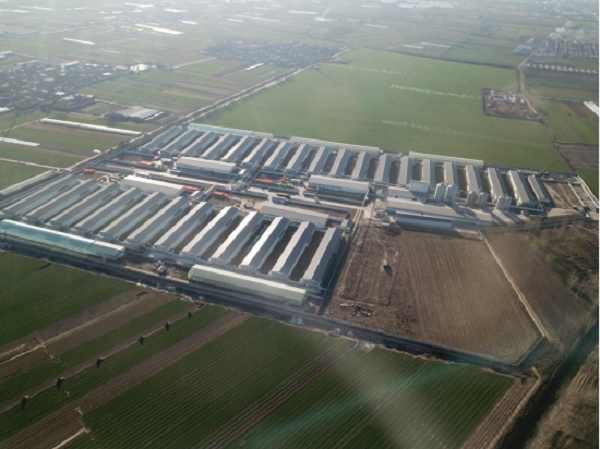
据企业公开披露,新恒昌蛋鸡总存栏约850万羽,峰值日产蛋约340吨,为粤港澳大湾区认证菜篮子生产基地。企业规划建成非笼养蛋鸡存栏300万羽规模,目前企业养殖场一:持证非笼养蛋鸡存栏377000羽,年产蛋量9900万枚;养殖场二:持证非笼养蛋鸡存栏160000羽,年产蛋量5300万枚;

国产非笼养转型仍在路上,多元实践等待市场检验

当前国内非笼养蛋品产业正处于探索阶段,不同企业正在尝试差异化落地路径。行业共识显示,国内非笼养赛道发展,不能简单照搬欧美模式,需要探索适配国内养殖场景、消费市场的本土化方案。

新恒昌在认证、内控标准、产能布局、信息公开方面的实践,为国内非笼养产业发展提供了一个企业案例。但这类企业自主实践能否转化为可广泛推广的行业方案、能否持续控制养殖成本、获得更多消费者认可,仍有待持续观察。

值得注意的是,国内非笼养领域已有其他企业展开规模化布局。例如,圣迪乐在四川广元投产30万羽非笼养蛋鸡产业链项目;信德农牧截至2025年非笼养蛋鸡存栏量位居行业前列;五家非笼养蛋生产企业于2025年联合发起成立国内首家“蛋鸡非笼养信用与技术合作协会”。国内蛋品产业正由单纯追求产量,逐步转向品质提升。伴随更多企业参与、行业标准持续完善,国产非笼养殖模式有望在不断探索中走向成熟。

“活力中国调研行·餐桌守护计划”专项调研于2026年7月正式启动,秉持“真相还原、信任构建、行业赋能、社会共治”理念,以正面调研挖掘产业示范案例,推进食品安全社会共治建设。新恒昌非笼养养殖模式,从精细化养殖密度管控、标准化福利设施配置到全链条溯源机制搭建,是本次蛋品产业调研中,生产端透明化、品质化升级的典型实践样本。

“餐桌守护计划”的终极目标,是推动食品生产源头可管、过程可控、产品可溯,让百姓每一口食物安全可证。新恒昌非笼养高品质鸡蛋以规模化、标准化的养殖探索,将动物福利养殖理念转化为可落地、可感知的餐桌品质升级,让食品安全共治从行业倡议,落地为消费者餐桌上的真实改善,也是蛋品产业参与食品安全社会共治的生动实践。(雷武 刘丹丹)

注:文/龚作仁,文章来源:Laborer,本文为作者独立观点,不代表亿邦动力立场。

文章来源:Laborer

广告
微信
朋友圈

FAQ回顾

国内非笼养鸡蛋产业发展现状如何?

全球非笼养转型加速,CIWF报告追踪的852项承诺平均转型率达85.3%;美国约45.7%产蛋母鸡非笼养,欧盟市场占比超50%。国内鸡蛋总产量中非笼养鸡蛋含家庭散养约10%,规模化室内非笼养仅约1%,经第三方认证的合规产能不足0.1%,行业标准仍在完善。

非笼养鸡蛋生产可以参照什么标准或认证?

中国连锁经营协会2023年发布团体标准《非笼养鸡蛋生产评价要求》(T/CCFAGS 025-2023),自2024年1月1日起实施,首次引入动物福利理念。Intertek是该标准制定机构之一,并依据标准开展非笼养鸡蛋专项认证,审核覆盖养殖环境、饲料饮水、健康管护、采收存储和溯源管理等环节。

新恒昌获Intertek认证的非笼养鸡蛋产能有多大?

2026年6月15日,香河新恒昌养鸡有限公司、香河欧福恒昌非笼养殖有限公司相关养殖基地取得Intertek非笼养鸡蛋专项认证,覆盖53.8万羽蛋鸡,对应年产非笼养鸡蛋1.52亿枚。企业总存栏约850万羽,规划非笼养蛋鸡存栏300万羽。

非笼养养殖与传统笼养有什么区别?

传统笼养空间狭小,蛋鸡难以完成展翅、沙浴等本能行为,高密度环境还会加大疫病传播风险。非笼养核心是还给蛋鸡应有生存权益,让鸡在更舒展、健康的状态下生长。欧盟、北美多国已出台政策推动淘汰传统笼养,国内也将动物福利养殖纳入畜牧行业发展试点方向。

企业布局非笼养鸡蛋养殖面临哪些挑战?

较高改造成本和技术门槛是共性难题。国内非笼养统一国家标准尚待建立,市场存在概念宣传不规范、认证信息不完整、养殖标准不统一等现象,规模化合规非笼养产能有限。企业还需稳定规模化产能、公开生产信息并持续控制养殖成本。

这么好看,分享一下?

朋友圈 分享

APP内打开

赞 +1
+1
微信好友 朋友圈 新浪微博 QQ空间
关闭
收藏成功
发送
/140 0