广告
加载中

尼尔森IQ揭秘:当77%的消费者为“当下情绪”买单 快消品牌如何抢占“黄金30分钟”?

龚作仁 2026-10-23 15:52
龚作仁 2026/10/23 15:52

邦小白快读

EN
全文速览

总1:即时零售正在成为日常消费新入口,几个关键数据值得关注。

1. 高达77%的大食饮消费者购物时对“愉悦自我/情绪价值”抱有期待,为“当下情绪”买单已成下单核心驱动力。

2. 快消品全渠道销售额同比微跌0.9%、线下承压,线上渠道同比增长10.5%,头部即时零售平台销售额逆势同比大增22.9%。

总2:实用干货与可借鉴案例。

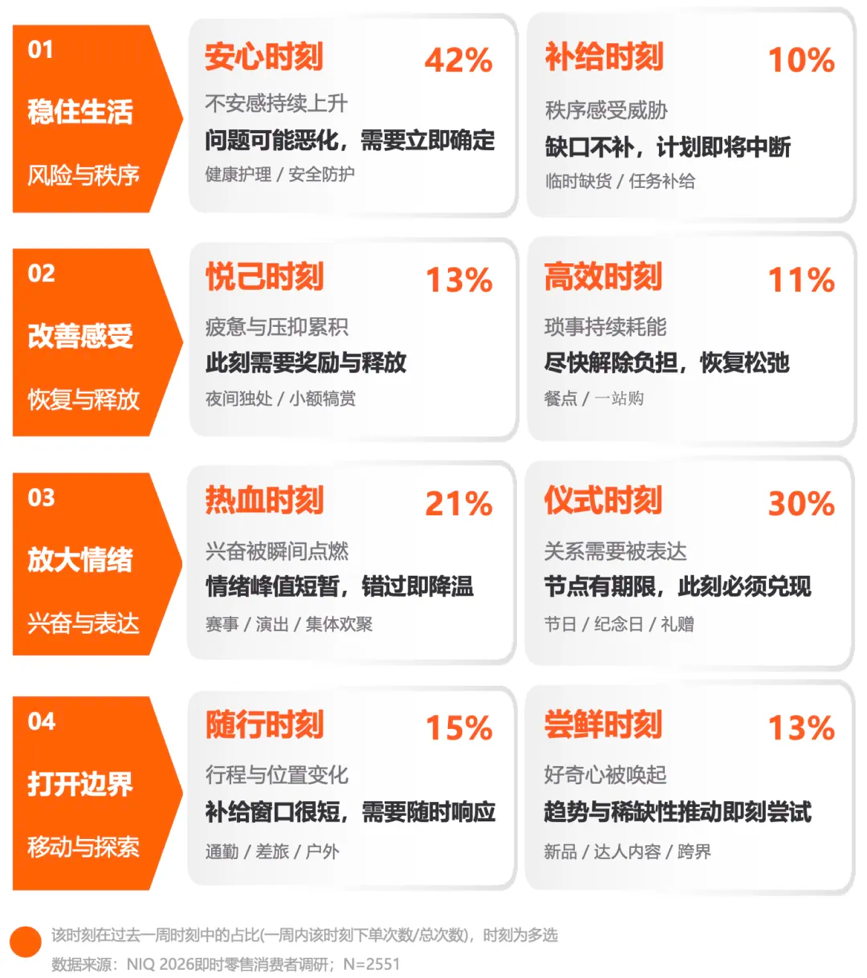
1. 八大高潜情绪入口:安心、补给、悦己、高效、热血、仪式、随行、尝鲜,品牌可在“黄金30分钟”内捕捉情绪峰值。

2. 代表案例:蒙牛早餐时刻下单用户数同比增长155%、生意大增780%;自然堂峰值日品牌GMV飙升30倍;安慕希爆发日生意增长45%;玛氏德芙七夕当日生意暴增242%。

3. 消费者心智三层路径:从“能买到”到“习惯买”再到“认准买”,品牌可用I·DO·MOMENT方法论把一次情绪消费沉淀为长期选择。

总1:消费趋势与用户行为变化。

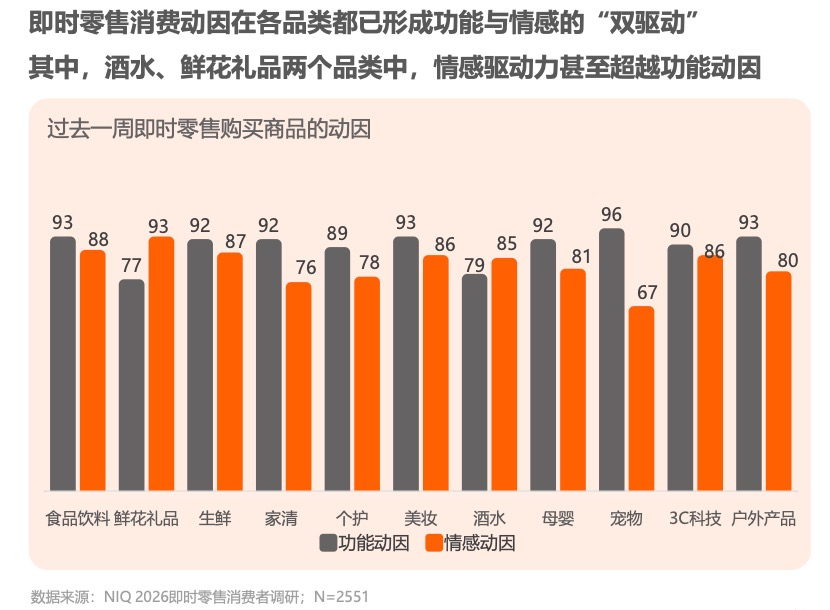
1. 77%大食饮消费者为愉悦自我/情绪价值买单;酒水情感动因96%高于功能动因92%,鲜花礼品情感动因93%高于功能动因79%。

2. 即时零售与线下Top100 SKU平均重合度仅48%,81%品类增长由非重合差异化产品驱动;高端产品销售份额24%、贡献增量55%,宠物、母婴、运动户外、生鲜、酒水溢价意愿达35%至39%。

总2:品牌营销与渠道建设打法。

1. 围绕八大时刻(安心、补给、悦己、高效、热血、仪式、随行、尝鲜)与平台共创情绪触发—供给组合—即时履约全链路方案。

2. 案例:华润雪花在淘宝闪购同比增速超160%;玛氏德芙七夕生意同比暴增242%;亿滋立秋斩获亿级曝光;自然堂GMV飙升30倍;安慕希爆发日增长45%;蒙牛早餐时刻生意大增780%。

总3:方法论与心智资产。

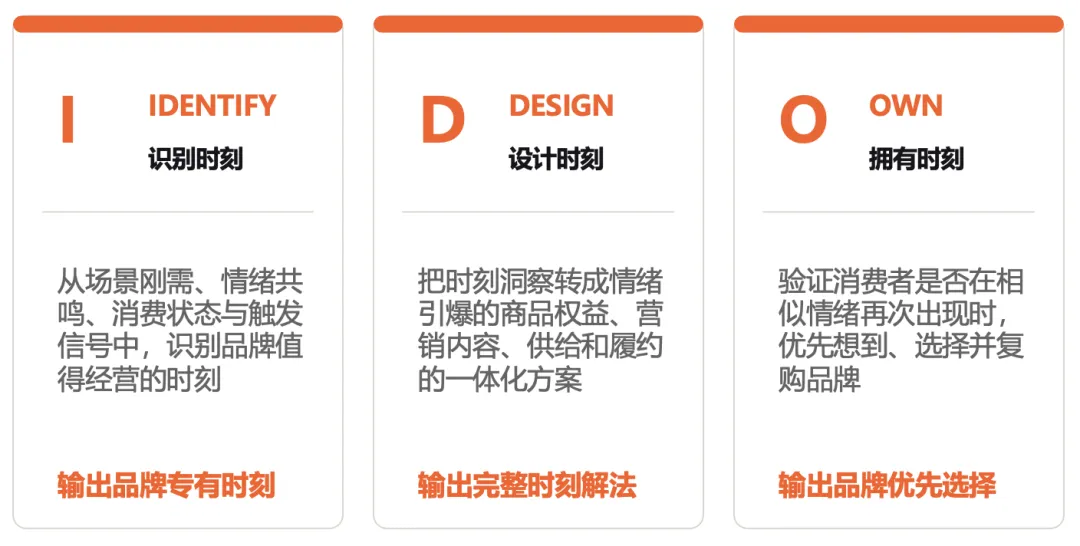
1. I·DO·MOMENT:识别、设计、拥有三步,沉淀可复用的时刻资产。

2. 心智路径从能买到、习惯买到认准买,构建穿越周期的护城河。

总1:增长市场与机会提示。

1. 线上渠道同比增长10.5%,头部即时零售平台销售额逆势大增22.9%,而快消全渠道微跌0.9%、线下承压,即时零售是战略级增长渠道。

2. 差异化机会显著:即时零售与线下Top100 SKU重合度仅48%,81%品类增长由非重合产品驱动,高端产品份额24%、贡献增量55%。

总2:消费需求变化。

1. 77%消费者为当下情绪买单,酒水、鲜花礼品情感动因已超越功能动因;宠物、母婴、运动户外、生鲜、酒水溢价意愿达35%至39%。

2. 啤酒饮酒动机转向情绪自愈、独饮小聚、深夜微醺,淘宝闪购25-40岁主流人群啤酒高客单消费占比超五成。

总3:最新商业模式、合作方式与可学习点。

1. 时刻经营模式:以“时刻”为最小需求运营单元,锁定八大情绪入口。

2. 品牌与平台共创案例可直接借鉴;风险提示:线下承压背景下不能简单复制线下货盘,需以差异化商品与即时组合创造增量。

总1:产品生产和设计需求。

1. 即时零售并非线下货盘的简单复制,与线下Top100 SKU平均重合度仅48%,工厂需围绕差异化产品进行设计与生产。

2. 高端产品销售份额达24%、贡献增量55%,需配合情绪引爆的商品组合、时刻权益与营销内容做一体化设计。

总2:商业机会。

1. 即时零售走向全品类、全场景,个人护理、酒类等高价值商品加速渗透,81%品类增长由差异化产品驱动。

2. 宠物、母婴、运动户外、生鲜、酒水等品类消费者溢价意愿达35%至39%,为高品质产品提供空间。

总3:推进数字化和电商的启示。

1. 供给要贴近需求发生的当下,将时刻洞察融入商品企划、库存布局与履约协同。

2. 打通餐饮+零售+即时履约链路(如蒙牛早餐时刻案例),配合平台全链路方案承接情绪触发的即时需求。

总1:行业发展趋势。

1. 即时零售从1.0效率竞争迈向2.0价值竞争,成为品牌进入消费者真实生活的新基础设施;线上渠道增长10.5%,头部即时零售平台销售额逆势大增22.9%。

2. 77%消费者为情绪价值买单,酒水、鲜花礼品的情感动因已超越功能动因。

总2:客户痛点。

1. 需求大量分散、稍纵即逝,品牌难以识别真正值得长期经营的增长机会。

2. 短期活动只能制造一次流量峰值,如何把爆发形成的认知沉淀到日常、转化为长期客户关系是核心难题。

总3:解决方案。

1. I·DO·MOMENT方法论:Identify识别专有时刻、Design设计一体化方案、Own以心智与生意双重验证沉淀时刻资产。

2. 八大高潜情绪入口与情绪触发—供给组合—即时履约全链路方案,附蒙牛增长780%、玛氏增长242%、自然堂增长30倍等案例佐证。

总1:商业对平台的需求和问题。

1. 品牌需要与平台共创解决方案,在消费者情绪触发的黄金30分钟内完成捕捉与兑现;平台可进一步介入需求形成上游,把“时刻”作为最小需求运营单元。

2. 即时零售不是货盘复制,SKU重合度仅48%,平台需以差异化商品、即时组合和专属供给创造新增量,避免同质化。

总2:平台最新做法与运营管理。

1. 淘宝闪购提出“橙就时刻”,围绕稳住生活、改善感受、放大情绪、打开边界四大主题,提炼安心、补给、悦己、高效、热血、仪式、随行、尝鲜八大情绪入口。

2. 分时段落地定制营销、媒介与商超餐零共振;青岛啤酒节“青啤时刻”联动五大品牌,平均峰值日GMV同比增长71%、AIPL人群资产激增1500万以上。

总3:招商与风向规避。

1. 蒙牛早餐时刻增长780%、自然堂增长30倍、安慕希增长45%等案例可作为招商范本。

2. 风向:线下承压背景下抓住情绪消费与差异化高端供给,帮助品牌沉淀时刻资产。

总1:产业新动向。

1. 即时零售从1.0效率竞争迈向2.0价值竞争,正成为品牌进入消费者真实生活的新基础设施。

2. 情绪价值成为下单核心驱动力(77%消费者为当下情绪买单);渠道数据:快消全渠道微跌0.9%、线上增长10.5%、头部即时零售平台逆势大增22.9%。

总2:新问题。

1. 如何从大量分散、稍纵即逝的需求中识别真正值得长期经营的增长机会。

2. 如何把短期流量峰值沉淀为可持续、可复用、可扩展的时刻资产,构建穿越周期的护城河。

总3:商业模式与启示。

1. 时刻经营模式:以“时刻”为最小需求运营单元,四大主题与八大情绪入口构成需求运营框架。

2. I·DO·MOMENT方法论(识别、设计、拥有)与“能买到—习惯买—认准买”三层心智路径,为成熟品牌破局与新兴品牌突围提供全景式增长指南。

返回默认
声明:快读内容全程由AI生成,请注意甄别信息。如您发现问题,请发送邮件至 run@ebrun.com 。

我是 品牌商 卖家 工厂 服务商 平台商 研究者 帮我再读一遍。

Quick Summary

Summary 1: Instant retail is becoming a new entry point for everyday consumption, and several key data points deserve attention.

1. As many as 77% of food and beverage consumers expect self-pleasure/emotional value when shopping, and paying for the emotion of the moment has become a core driver of purchase decisions.

2. Total FMCG omnichannel sales edged down 0.9% year on year amid offline pressure, while online channels grew 10.5% and sales on leading instant retail platforms rose 22.9% year on year against the trend.

Summary 2: Practical insights and transferable cases.

1. Eight high-potential emotional entry points—reassurance, replenishment, self-pleasure, efficiency, excitement, ritual, on-the-go, and novelty—allow brands to capture emotional peaks within the golden 30 minutes.

2. Representative cases: Mengniu's breakfast moment saw a 155% year-on-year increase in ordering users and a 780% surge in business; Chando's brand GMV jumped 30x on its peak day; Ambrosial's business grew 45% on its burst day; and Mars Dove's business soared 242% on Chinese Valentine's Day.

3. The three-stage consumer mindset path runs from able to buy to habitual buying to buying with confidence. Brands can use the I·DO·MOMENT methodology to turn one-off emotional purchases into long-term choices.

Summary 1: Consumption trends and shifts in user behavior.

1. 77% of food and beverage consumers pay for self-pleasure/emotional value; for alcoholic beverages, emotional motivations (96%) exceed functional motivations (92%), while for flowers and gifts emotional motivations (93%) exceed functional motivations (79%).

2. The average overlap between instant retail and offline top 100 SKUs is only 48%, and 81% of category growth is driven by non-overlapping differentiated products; premium products account for 24% of sales and 55% of incremental growth, with willingness to pay a premium at 35% to 39% in pets, maternal and baby, sports and outdoor, fresh food, and alcoholic beverages.

Summary 2: Brand marketing and channel-building approaches.

1. Around the eight moments—reassurance, replenishment, self-pleasure, efficiency, excitement, ritual, on-the-go, and novelty—co-create with platforms a full-chain solution covering emotional triggers, supply combinations, and instant fulfillment.

2. Cases: China Resources Snow Breweries grew more than 160% year on year on Taobao Flash Sale; Mars Dove's business surged 242% year on year on Chinese Valentine's Day; Mondelēz captured 100 million-level exposure at the Start of Autumn; Chando's GMV jumped 30x; Ambrosial grew 45% on its burst day; and Mengniu's breakfast moment saw a 780% business increase.

Summary 3: Methodology and mind-share assets.

1. I·DO·MOMENT: a three-step process of Identify, Design, and Own to build reusable moment assets.

2. The mindset path moves from able to buy to habitual buying to buying with confidence, building a moat that can withstand cycles.

Summary 1: Growth markets and opportunity signals.

1. Online channels grew 10.5% year on year, and sales on leading instant retail platforms rose 22.9% against the trend, while total FMCG omnichannel sales edged down 0.9% amid offline pressure; instant retail is a strategic growth channel.

2. Differentiation opportunities are significant: overlap with offline top 100 SKUs is only 48%, 81% of category growth is driven by non-overlapping products, and premium products hold a 24% share and contribute 55% of incremental growth.

Summary 2: Shifts in consumer demand.

1. 77% of consumers pay for the emotion of the moment; for alcoholic beverages and flowers and gifts, emotional motivations have surpassed functional motivations; willingness to pay a premium reaches 35% to 39% in pets, maternal and baby, sports and outdoor, fresh food, and alcoholic beverages.

2. Beer drinking motivations are shifting toward emotional self-healing, solo drinking and small gatherings, and late-night tipsiness; on Taobao Flash Sale, high-ticket beer purchases by the mainstream 25–40 age group account for more than 50%.

Summary 3: Latest business models, collaboration approaches, and lessons to learn.

1. The moment-based operating model treats the moment as the smallest unit of demand operation and targets the eight emotional entry points.

2. Brand-platform co-creation cases can be directly referenced; risk note: amid offline pressure, brands cannot simply replicate offline product assortments and must use differentiated products and instant combinations to create incremental growth.

Summary 1: Product manufacturing and design requirements.

1. Instant retail is not a simple replication of offline product assortments; average overlap with offline top 100 SKUs is only 48%, so factories need to design and produce around differentiated products.

2. Premium products account for 24% of sales and 55% of incremental growth; factories need to integrate product combinations that trigger emotions, moment-based benefits, and marketing content into a unified design.

Summary 2: Business opportunities.

1. Instant retail is expanding into all categories and scenarios, with high-value goods such as personal care and alcohol accelerating penetration; 81% of category growth is driven by differentiated products.

2. Consumers in categories such as pets, maternal and baby, sports and outdoor, fresh food, and alcoholic beverages show willingness to pay a premium of 35% to 39%, creating room for high-quality products.

Summary 3: Implications for advancing digitalization and e-commerce.

1. Supply must stay close to where demand occurs, integrating moment insights into product planning, inventory deployment, and fulfillment coordination.

2. Connect food service, retail, and instant fulfillment links (as in Mengniu's breakfast moment case) and work with platforms' full-chain solutions to capture instant demand triggered by emotions.

Summary 1: Industry trends.

1. Instant retail is moving from 1.0 efficiency competition to 2.0 value competition and becoming new infrastructure through which brands enter consumers' real lives; online channels grew 10.5%, and sales on leading instant retail platforms rose 22.9% against the trend.

2. 77% of consumers pay for emotional value, and emotional motivations have surpassed functional motivations for alcoholic beverages and flowers and gifts.

Summary 2: Client pain points.

1. Demand is highly fragmented and fleeting, making it difficult for brands to identify growth opportunities truly worth long-term operation.

2. Short-term campaigns can only create a one-time traffic peak; the core challenge is how to deposit the awareness generated by a surge into daily operations and convert it into long-term customer relationships.

Summary 3: Solutions.

1. The I·DO·MOMENT methodology: Identify proprietary moments, Design integrated solutions, and Own moment assets validated by both mind share and business results.

2. Eight high-potential emotional entry points and a full-chain solution covering emotional triggers, supply combinations, and instant fulfillment, supported by cases such as Mengniu's 780% growth, Mars's 242% growth, and Chando's 30x growth.

Summary 1: Business needs and problems for platforms.

1. Brands need to co-create solutions with platforms to capture and fulfill consumer demand within the golden 30 minutes after an emotional trigger; platforms can further move upstream in demand formation and treat the moment as the smallest unit of demand operation.

2. Instant retail is not product-assortment replication—SKU overlap is only 48%—so platforms need differentiated products, instant combinations, and exclusive supply to create new incremental growth and avoid homogenization.

Summary 2: Latest platform practices and operations management.

1. Taobao Flash Sale proposed the Chengjiu Moment initiative around four themes—stabilizing daily life, improving experiences, amplifying emotions, and expanding boundaries—and distilled eight emotional entry points: reassurance, replenishment, self-pleasure, efficiency, excitement, ritual, on-the-go, and novelty.

2. It implements time-segmented customized marketing, media, and resonance across supermarkets, food service, and retail; the Qingdao Beer Festival's Qingpi Moment linked five brands, with average peak-day GMV growing 71% year on year and AIPL audience assets surging by more than 15 million.

Summary 3: Merchant recruitment and trend avoidance.

1. Cases such as Mengniu's breakfast moment growing 780%, Chando growing 30x, and Ambrosial growing 45% can serve as recruitment templates.

2. Trend direction: amid offline pressure, seize emotional consumption and differentiated premium supply to help brands build moment assets.

Summary 1: New industry developments.

1. Instant retail is moving from 1.0 efficiency competition to 2.0 value competition and is becoming new infrastructure through which brands enter consumers' real lives.

2. Emotional value has become a core purchase driver (77% of consumers pay for the emotion of the moment); channel data: total FMCG omnichannel sales edged down 0.9%, online grew 10.5%, and leading instant retail platforms rose 22.9% against the trend.

Summary 2: New questions.

1. How to identify growth opportunities truly worth long-term operation from a large volume of fragmented and fleeting demand.

2. How to turn short-term traffic peaks into sustainable, reusable, and scalable moment assets and build a moat that can withstand cycles.

Summary 3: Business models and implications.

1. The moment-based operating model treats the moment as the smallest unit of demand operation; four themes and eight emotional entry points form a demand-operation framework.

2. The I·DO·MOMENT methodology (Identify, Design, Own) and the three-stage mindset path of able to buy—habitual buying—buying with confidence provide a panoramic growth guide for mature brands seeking breakthroughs and emerging brands seeking to stand out.

Disclaimer: The "Quick Summary" content is entirely generated by AI. Please exercise discretion when interpreting the information. For issues or corrections, please email run@ebrun.com .

I am a Brand Seller Factory Service Provider Marketplace Seller Researcher Read it again.

新兴渠道正加速抢占消费者的时间和注意力,而这两者正是当下推动商业增长的关键。尼尔森IQ最新调研显示,高达77%的大食饮消费者在购物时对“愉悦自我/情绪价值”抱有期待——为“当下情绪”买单,已从消费的附加项演变为下单的核心驱动力。

当即时零售从餐饮外卖、应急补货全面走向全品类、全场景的日常消费,品牌要寻求增长,已不能再延续传统的“卖货逻辑”,而是亟需在从产品企划到终端履约的整个生态系统中,与平台共创解决方案,在消费者情绪触发的“黄金30分钟”内完成捕捉与兑现,把每一次即时心动转化为长期选择。

近日,尼尔森IQ(NIQ)发布《2026即时零售时刻经营白皮书——橙就时刻,让增长发生在每一刻》。报告结合零售监测、消费者调研与品牌实践,指出即时零售已从1.0的效率竞争迈向2.0的价值竞争。报告系统梳理出八大优先经营时刻与“I·DO·MOMENT”方法论,为成熟品牌破局与新兴品牌借势突围提供全景式增长指南。

渠道价值跃迁,即时零售打开品牌“高价值”增长空间

报告显示,在快消品全渠道销售额同比微跌0.9%、线下承压的背景下,线上渠道同比增长10.5%,而头部即时零售平台销售额更是逆势同比大增22.9%,展现出极强的渠道韧性与增长势能。对于寻求突破的品牌尤其是新兴品牌而言,以淘宝闪购为代表高速增长的即时零售正成为抢占消费者注意力、实现弯道超车的战略级势能渠道。

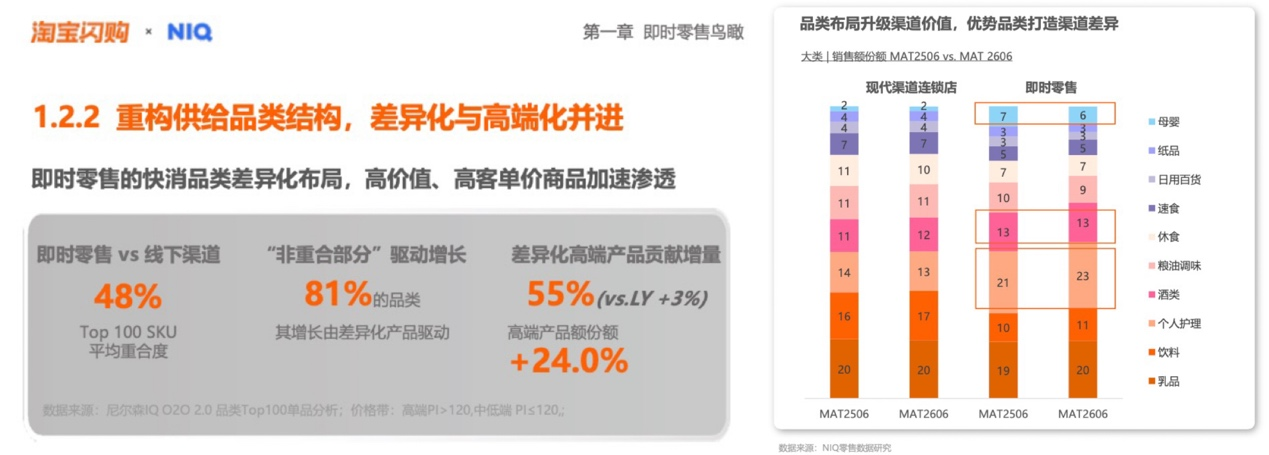
更值得关注的是,即时零售并非线下货盘的简单复制,而是重塑供给结构的生态共创阵地。尼尔森IQ研究显示,即时零售与线下渠道Top 100 SKU的平均重合度仅为48%,高达81%的品类增长由“非重合”的差异化产品驱动;同时,高端产品在即时零售的销售份额达24%,差异化高端产品贡献了增量的55%,个人护理、酒类等高价值商品加速渗透。这意味着,即时零售带来的不只是销售入口增加,更是品牌以差异化商品、即时组合和专属供给创造新增量的机会。

以啤酒行业为例,随着饮酒动机从传统商务应酬转向情绪自愈、独饮小聚与深夜微醺,即时零售正成为承载高端酒饮消费的核心阵地。比如在淘宝闪购平台,25-40岁主流消费人群中,啤酒高客单消费占比已超过五成。今年上半年华润啤酒旗下雪花啤酒在淘宝闪购跑出了超160%的同比增速,喜力、老雪、红爵等次高及以上产品销量高速增长,华润啤酒高端化战略与淘宝闪购正加速融合。

消费者的溢价意愿也印证了这一渠道的价值空间。报告发现,在宠物、母婴、运动户外、生鲜、酒水等品类中,愿意相较线下渠道支付溢价的消费者比例达到35%至39%。当平台30分钟履约成为标配,消费者愿意为“此刻就能获得”的确定性体验和高品质生活买单。然而,新的命题也随之出现:品牌如何从大量分散、稍纵即逝的需求中,识别真正值得长期经营的增长机会?

当77%的消费者为“当下情绪”买单:从经营需求到经营“时刻”

报告认为,过去的即时零售更多承接已经明确的购买需求;当供给和履约能力逐渐成熟,平台可以进一步介入需求形成的上游,在消费者状态变化、情绪起伏和生活场景切换的瞬间,发现并承接潜在需求。场景回答“为什么买”,情绪和状态回答“为什么现在买”,即时供给则让“现在就要”及时转化为行动。

尼尔森IQ调研显示,即时零售的购物动因在全品类形成“功能+情感”双驱动的同时,酒水(情感动因96%vs功能动因92%)、鲜花礼品(情感动因93%vs功能动因79%)两大品类的情感驱动力甚至已超越功能动因。

基于此,一些即时零售平台已经开始提出将“时刻”作为最小需求运营单元,围绕“稳住生活、改善感受、放大情绪、打开边界”四大主题,提炼出安心、补给、悦己、高效、热血、仪式、随行、尝鲜八大高潜情绪入口——“橙就时刻”。比如,诸多品牌已围绕“橙就时刻”与淘宝闪购共创“情绪触发—供给组合—即时履约”的全链路方案,将“黄金30分钟”内的情绪峰值转化为生意增量。

在夏日狂欢的青岛国际啤酒节期间,淘宝闪购也曾携手青岛啤酒打造“青啤时刻”,并联动伊利“优酸乳×冰工厂CP”的“冰爽时刻”及绿箭等五大品牌分时段落地定制营销,借势媒介与商超餐零共振,实现五大品牌平均峰值日GMV同比增长71%、AIPL人群资产激增1500万+。

围绕情绪节点,玛氏德芙借艺术联名与美妆跨界引爆七夕“仪式时刻”,当日生意同比暴增242%;亿滋则以“奥利奥炫迈秋天第一口甜”切入立秋节气仪式,联动明星周边与商圈大屏斩获亿级曝光与单日生意规模跃升。在拉大生活半径的“随行时刻”,自然堂聚焦夏季晒后修复,以双代言人造势爆品权益,助推峰值日品牌GMV同比飙升30倍。在兑现好奇心的“尝鲜时刻”,安慕希联动明星在便利店推出新品加赠雪糕模具,爆发日生意同比增长45%。

蒙牛与平台共建的“早餐时刻”则印证了高频日常时刻的长期价值。双方跨界联合天津早餐包子与便利店早餐组合,打通“餐饮+零售+即时履约”链路以承接匆忙早晨对“便捷、省心”的需求,实现活动期下单用户数同比增长155%,生意同比大增780%,成功将短期活动认知沉淀为固定时段的稳定复购。

从“能买到”到“认准买”,方法论沉淀可持续的品牌时刻资产

尼尔森IQ中国区董事总经理周凌卿指出:“当临时起意与情绪触动成为购买的起点,要求品牌将时刻洞察融入商品企划、库存布局与履约协同,让供给更贴近需求发生的当下。”

“橙就时刻”的目的就是帮助品牌将爆发形成的认知沉淀到日常,把稍纵即逝的需求窗口变成可持续经营的增长入口。为帮助品牌系统化地把一次“为当下情绪买单”的消费转化为长期客户关系,报告正式提出“I·DO·MOMENT”时刻经营方法论:Identify(识别),即从场景刚需、情绪共鸣、消费状态和触发信号中识别品牌值得经营的专有时刻;Design(设计),即将洞察转化为情绪引爆的商品组合、时刻权益、营销内容与履约的一体化方案;Own(拥有),以心智与生意结果双重验证,观察消费者在相似情绪与需求再次出现时,是否会优先想到、选择并复购品牌,最终沉淀为可复用、可扩展的“时刻资产(Moment Asset)”。

这也对应着消费者心智建设的三层路径:首先满足急用、急需等物理需求,让消费者“能买到”;继而通过稳定供给和情绪共鸣形成重复购买,让消费者“习惯买”;最终在相似情绪与情境再次触发时成为首选,让消费者“认准买”。

从效率竞争走向价值创造,即时零售正在成为品牌进入消费者真实生活的新基础设施。短期活动可以制造一次流量峰值,而读懂情绪、深耕高频且可重复的“时刻”,才能构建穿越周期的护城河。

注:文/龚作仁,文章来源:Laborer,本文为作者独立观点,不代表亿邦动力立场。

文章来源:Laborer

广告
微信
朋友圈

FAQ回顾

即时零售行业正在出现哪些新趋势?

即时零售正从1.0的效率竞争迈向2.0的价值竞争。尼尔森IQ调研显示,77%的大食饮消费者购物时期待愉悦自我与情绪价值;在快消品全渠道销售额同比微跌0.9%的背景下,线上渠道增长10.5%,头部即时零售平台销售额同比增长22.9%。

快消品牌如何抓住“黄金30分钟”的情绪消费机会?

品牌可围绕“橙就时刻”的安心、补给、悦己、高效、热血、仪式、随行、尝鲜八大情绪入口,与平台共创“情绪触发—供给组合—即时履约”全链路方案,在消费者情绪峰值出现后的30分钟内完成承接。青岛啤酒、玛氏德芙、蒙牛等已通过分时段营销、跨界联名和早餐场景实现生意增长。

即时零售适合哪些快消品类做高端化和差异化增长?

即时零售中的个人护理、酒类等高价值商品加速渗透,宠物、母婴、运动户外、生鲜、酒水等品类消费者溢价意愿达35%至39%。高端产品在即时零售的销售份额为24%,差异化高端产品贡献增量55%;啤酒在淘宝闪购25至40岁人群中高客单消费占比超过五成。

什么是“I·DO·MOMENT”时刻经营方法论?

“I·DO·MOMENT”是尼尔森IQ提出的时刻经营方法论,包括Identify识别值得经营的专有时刻,Design设计商品组合、时刻权益、营销内容与履约一体化方案,Own以心智与生意结果验证复购,最终沉淀可复用的“时刻资产”。它对应消费者从“能买到”到“习惯买”再到“认准买”的路径。

即时零售与线下渠道的货盘有什么差异?

即时零售并非线下货盘的简单复制。尼尔森IQ研究显示,即时零售与线下渠道Top 100 SKU的平均重合度仅为48%,81%的品类增长由非重合的差异化产品驱动;高端产品在即时零售的销售份额达24%,差异化高端产品贡献增量55%,个人护理、酒类等高价值商品加速渗透。

这么好看,分享一下?

朋友圈 分享

APP内打开

赞 +1
+1
微信好友 朋友圈 新浪微博 QQ空间
关闭
收藏成功
发送
/140 0