广告
加载中

中建材采购平台:落地智能控制塔,全域闭环管控供应链

亿邦智库 2026-10-20 10:32
亿邦智库 2026/10/20 10:32

邦小白快读

EN
全文速览

总1:文章核心是央企采购供应链数字化落地,重点在智能控制塔和全流程线上化。

1.建设路径:以ChainOS数据底座汇聚SAP、TMS、QMS、OA、SRM、WMS及外部数据,经清洗、标准治理后支撑六大应用中心。

2.实操能力:价格分析跟踪大宗原材料异动并生成报告,供应商洞察输出健康度评估,库存履约监控在低阈值或交付延迟时预警。

总2:效果与风险管控有数据可参考。

1.采购平台含电子招投标、集采平台、电子商城;AI渗透招投标八大环节二十类场景,解决效率低、人为干预多、围串标风险高、合规压力大。

2.监管覆盖七大风险场景,红黄绿三级预警,红色熔断、黄色提醒、绿色常规监控;注册供应商超9.4万家,2025年集采降本约23亿元,覆盖1000余家成员企业。

总1:文章虽以采购方视角展开,但品牌商可重点看平台渠道、价格竞争和供应商准入规则。

1.渠道:电子招投标覆盖货物、工程、服务类;集采平台规模化采购;电子商城聚焦长尾商品,提供可视化采购与全流程电子化服务,是与央企合作可关注的入口。

2.价格:价格分析实时跟踪大宗原材料波动,识别异动生成报告,为采购定价与库存策略提供支持,品牌商可理解采购方比价逻辑。

总2:供应商管理和合作生态值得关注。

1.供应商洞察整合资质、履约、财务健康度,形成全景画像和健康度报告,寻源定标、份额分配和分级管理有量化依据。

2.平台注册供应商超9.4万家,与10余家国央企资源共享合作;履约监控对交付延迟预警,品牌商需重视交付和履约表现。

总1:政策与平台规则释放机会,也给出风险提示。

1.政策:参照《企业供应链控制塔建设指南》,落实国资委AI指导意见,集团有1+N+X制度、一个平台两级集中三级管理、1254数字化转型规划。

2.机会:电子招投标、集采平台、电子商城全流程线上化;11类一级集中采购,2025年集采降本约23亿元;注册供应商超9.4万家,与10余家国央企合作,长尾商品和四大业务板块可关注。

总2:事件应对和风险提示明确。

1.AI渗透招投标八大环节二十类场景,解决效率低、人为干预多、围串标风险高、合规压力大,投标方需适应智能、可追溯流程。

2.监管覆盖计划编制、招投标、供应商、专家管理等七大风险场景,红黄绿三级预警,红色熔断、黄色说明、绿色常规监控;库存履约延迟会预警,供应中断风险需提前化解。

总1:生产连续性保障和供应链协同是核心干货。

1.库存履约监控实时追踪库存水位与到货进度,低于安全阈值或交付延迟自动预警,确保生产物资连续供应,提前识别供应中断风险。

2.供应商洞察按资质、履约、财务健康度形成画像和健康度报告,为份额分配和分级管理提供依据,工厂可据此改进交付与资质。

总2:数字化和电商启示及商业机会可参考。

1.建设上以ChainOS数据底座汇聚SAP、TMS、QMS、OA、SRM、WMS等系统数据,经清洗治理支撑六大应用中心和价格预测、供应商协同等场景。

2.采购平台含电子招投标、集采平台、电子商城,电子商城聚焦长尾商品降本提效;注册供应商超9.4万家,集采11类一级采购,工厂可关注进入央企供应体系及闲废处置等合作。

总1:行业趋势和技术方案指向明确。

1.趋势:央国企采购供应链从被动响应转向主动预测,建设智能控制塔,实现全域可视、风险管控、智能预决策三级升级;平台获EBS三星认证并挂牌采购交易中心。

2.技术:ChainOS数据底座、AI供应链分析中心、控制中心、预测中心、决策中心、知识中心、监管中心六大中心,支撑价格分析、供应商洞察、库存履约监控和AI招投标。

总2:客户痛点与解决方案可对应。

1.痛点:多源数据分散、价格波动、供应商评估单一、供应中断、招投标效率低和合规压力、风险监管难。

2.方案:数据清洗标准治理统一供给,专业模型知识库,红黄绿三级预警和规则可配置,全流程线上化与分级穿透治理;数据上覆盖1000余家成员企业、9.4万家供应商、2025年集采降本约23亿元。

总1:平台需求和最新做法清晰。

1.需求问题:多系统数据汇聚、采购成本、供应商协同、招投标合规和风险管控。

2.最新做法:智能控制塔加六大中心,电子招投标、集采平台、电子商城全流程线上化,AI渗透招投标八大环节二十类场景,监管平台覆盖七大风险场景并红黄绿预警。

总2:招商运营和风向规避可借鉴。

1.招商合作:注册供应商超9.4万家,覆盖1000余家成员企业,与10余家国央企合作,四大业务板块为招标代理、电子商城、闲废处置、商旅服务,EBS三星认证。

2.运营管理:中建材卓材科技承担建设运维与一级集采,11类一级集采,2025年降本约23亿元;制度上1+N+X、一个平台两级集中三级管理。

3.风向规避:红色熔断、黄色提醒、绿色常规监控,规则可配置,集团统筹分级管控,全流程风险追踪闭环。

总1:产业新动向和商业模式值得研究。

1.新动向:央国企建设供应链智能控制塔,参照《企业供应链控制塔建设指南》,以ChainOS数据底座汇聚多源数据,构建六大应用中心,推动被动响应转主动预测。

2.商业模式:一个平台、两级集中、三级管理,1+N+X制度,四维一体全球一体化智链生态;集采11类一级采购,2025年降本约23亿元,平台注册供应商超9.4万家。

总2:新问题与政策启示明确。

1.新问题:多源数据治理、价格波动预测、供应商综合评估、库存履约与供应中断、招投标效率低和围串标合规压力、分级精准监管。

2.政策启示:国资委AI指导意见推动AI覆盖招投标八大环节二十类场景;监管覆盖七大风险场景,红黄绿三级预警和熔断机制,规则可配置支撑分层穿透治理;1254规划指引数字化转型。

返回默认
声明:快读内容全程由AI生成,请注意甄别信息。如您发现问题,请发送邮件至 run@ebrun.com 。

我是 品牌商 卖家 工厂 服务商 平台商 研究者 帮我再读一遍。

Quick Summary

Summary 1: The article focuses on the digital implementation of central SOE procurement supply chains, with an emphasis on the intelligent control tower and end-to-end online processes.

1. Build path: The ChainOS data foundation aggregates data from SAP, TMS, QMS, OA, SRM, WMS and external sources; after cleansing and standardized governance, it supports six major application centers.

2. Operational capabilities: Price analysis tracks fluctuations in bulk raw materials and generates reports; supplier insights provide health assessments; inventory and fulfillment monitoring issues alerts at low thresholds or when delivery is delayed.

Summary 2: There are data points to reference on outcomes and risk control.

1. The procurement platform includes electronic bidding, centralized procurement, and an e-mall; AI covers eight major bidding stages and twenty scenario types, addressing low efficiency, human intervention, bid-rigging risks, and compliance pressure.

2. Supervision covers seven major risk scenarios with red/yellow/green three-level alerts: red for circuit breaker, yellow for reminders, and green for routine monitoring. Registered suppliers exceed 94,000; centralized procurement is expected to save about RMB 2.3 billion in 2025, covering more than 1,000 member enterprises.

Summary 1: Although the article is written from a buyer's perspective, brands should focus on platform channels, price competition, and supplier admission rules.

1. Channels: Electronic bidding covers goods, works, and services; the centralized procurement platform handles large-scale procurement; the e-mall focuses on long-tail goods and provides visualized procurement and end-to-end electronic services—an entry point worth watching for cooperation with central SOEs.

2. Pricing: Price analysis tracks fluctuations in bulk raw materials in real time, identifies anomalies, and generates reports to support procurement pricing and inventory strategy; brands can understand the buyer's price comparison logic.

Summary 2: Supplier management and the collaboration ecosystem deserve attention.

1. Supplier insights integrate qualifications, fulfillment, and financial health to form a panoramic profile and health report, providing a quantitative basis for sourcing and award decisions, share allocation, and tiered management.

2. The platform has more than 94,000 registered suppliers and shares resources with over 10 state-owned and central SOEs; fulfillment monitoring alerts on delivery delays, so brands need to prioritize delivery and fulfillment performance.

Summary 1: Policies and platform rules present opportunities and risk warnings.

1. Policy: Referring to the Guidelines for Building Enterprise Supply Chain Control Towers and implementing SASAC's AI guidance, the group has a 1+N+X system, a "one platform, two-level concentration, three-level management" model, and the 1254 digital transformation plan.

2. Opportunities: End-to-end online processes for electronic bidding, centralized procurement, and the e-mall; 11 categories of first-level centralized procurement; centralized procurement expected to save about RMB 2.3 billion in 2025; more than 94,000 registered suppliers and cooperation with over 10 state-owned and central SOEs; long-tail goods and four major business segments are worth watching.

Summary 2: Event response and risk warnings are clear.

1. AI covers eight major bidding stages and twenty scenario types, addressing low efficiency, human intervention, bid-rigging risks, and compliance pressure; bidders need to adapt to intelligent, traceable processes.

2. Supervision covers seven major risk scenarios—plan preparation, bidding, suppliers, expert management, etc.—with red/yellow/green three-level alerts: red for circuit breaker, yellow for explanation, and green for routine monitoring; inventory and fulfillment delays trigger alerts, and supply interruption risks need to be mitigated in advance.

Summary 1: Ensuring production continuity and supply chain collaboration are the core takeaways.

1. Inventory and fulfillment monitoring tracks inventory levels and arrival progress in real time; when below safety thresholds or delivery is delayed, it automatically alerts, helping ensure continuous supply of production materials and identify supply interruption risks early.

2. Supplier insights create profiles and health reports based on qualifications, fulfillment, and financial health, providing a basis for share allocation and tiered management; factories can use this to improve delivery and qualifications.

Summary 2: Digitalization and e-commerce implications and business opportunities are worth referencing.

1. The build uses the ChainOS data foundation to aggregate data from SAP, TMS, QMS, OA, SRM, WMS and other systems; after cleansing and governance, it supports six major application centers and scenarios such as price forecasting and supplier collaboration.

2. The procurement platform includes electronic bidding, centralized procurement, and an e-mall; the e-mall focuses on long-tail goods to reduce costs and improve efficiency; there are more than 94,000 registered suppliers, and centralized procurement covers 11 categories of first-level procurement; factories can watch for opportunities to enter central SOE supply systems and cooperation in idle/scrap disposal.

Summary 1: Industry trends and technology solutions point in a clear direction.

1. Trends: Procurement supply chains of state-owned and central SOEs are shifting from passive response to proactive forecasting by building intelligent control towers, achieving a three-level upgrade of full-domain visibility, risk control, and intelligent pre-decision; the platform has obtained EBS three-star certification and been listed as a procurement trading center.

2. Technology: The ChainOS data foundation and six centers—AI supply chain analysis, control, forecasting, decision-making, knowledge, and supervision—support price analysis, supplier insights, inventory and fulfillment monitoring, and AI bidding.

Summary 2: Client pain points and solutions can be mapped to each other.

1. Pain points: Scattered multi-source data, price volatility, one-dimensional supplier evaluation, supply interruptions, low bidding efficiency and compliance pressure, and difficult risk supervision.

2. Solutions: Data cleansing, standardized governance, and unified supply; specialized models and knowledge bases; red/yellow/green three-level alerts and configurable rules; end-to-end online processes and tiered penetrating governance; data covers more than 1,000 member enterprises and 94,000 suppliers, with centralized procurement expected to save about RMB 2.3 billion in 2025.

Summary 1: Platform requirements and latest practices are clear.

1. Requirements and issues: Aggregation of multi-system data, procurement costs, supplier collaboration, bidding compliance, and risk control.

2. Latest practices: An intelligent control tower plus six centers; end-to-end online processes for electronic bidding, centralized procurement, and the e-mall; AI covers eight major bidding stages and twenty scenario types; the supervision platform covers seven major risk scenarios with red/yellow/green alerts.

Summary 2: Merchant recruitment, operations, and risk avoidance can be referenced.

1. Merchant recruitment and cooperation: More than 94,000 registered suppliers, coverage of over 1,000 member enterprises, cooperation with more than 10 state-owned and central SOEs, and four major business segments—bidding agency, e-mall, idle/scrap disposal, and business travel services; EBS three-star certification.

2. Operations management: China National Building Material Zhuocai Technology undertakes construction, operation and maintenance, and first-level centralized procurement; 11 categories of first-level centralized procurement; expected cost savings of about RMB 2.3 billion in 2025; institutional arrangements include 1+N+X and "one platform, two-level concentration, three-level management."

3. Risk avoidance: Red circuit breaker, yellow reminder, and green routine monitoring; configurable rules; group-level coordination and tiered control; end-to-end risk tracking and closed-loop management.

Summary 1: New industry developments and business models are worth studying.

1. New developments: State-owned and central SOEs are building supply chain intelligent control towers; referring to the Guidelines for Building Enterprise Supply Chain Control Towers, they use the ChainOS data foundation to aggregate multi-source data and build six major application centers, driving a shift from passive response to proactive forecasting.

2. Business model: One platform, two-level concentration, three-level management; a 1+N+X system; a four-dimensional integrated global intelligent chain ecosystem; 11 categories of first-level centralized procurement; expected cost savings of about RMB 2.3 billion in 2025; more than 94,000 registered suppliers on the platform.

Summary 2: New issues and policy implications are clear.

1. New issues: Multi-source data governance, price volatility forecasting, comprehensive supplier evaluation, inventory fulfillment and supply interruptions, low bidding efficiency and bid-rigging compliance pressure, and tiered precise supervision.

2. Policy implications: SASAC's AI guidance promotes AI coverage across eight major bidding stages and twenty scenario types; supervision covers seven major risk scenarios, with red/yellow/green three-level alerts and a circuit-breaker mechanism; configurable rules support layered penetrating governance; the 1254 plan guides digital transformation.

Disclaimer: The "Quick Summary" content is entirely generated by AI. Please exercise discretion when interpreting the information. For issues or corrections, please email run@ebrun.com .

I am a Brand Seller Factory Service Provider Marketplace Seller Researcher Read it again.

【亿邦原创】以ChainOS数据底座为支撑,中国建材着力打造标准化供应链智能控制塔,通过多源数据的实时汇聚与统一处理,参照中国物流与采购联合会发布的《企业供应链控制塔建设指南》推进建设[1],搭建面向采购业务的专业模型与知识库,覆盖价格分析、供应商洞察、库存履约监控等核心场景,推动供应链管理由被动响应转向主动预测,实现全域可视、风险管控、智能预决策的三级升级。

从“数据底座”到“智慧大脑”

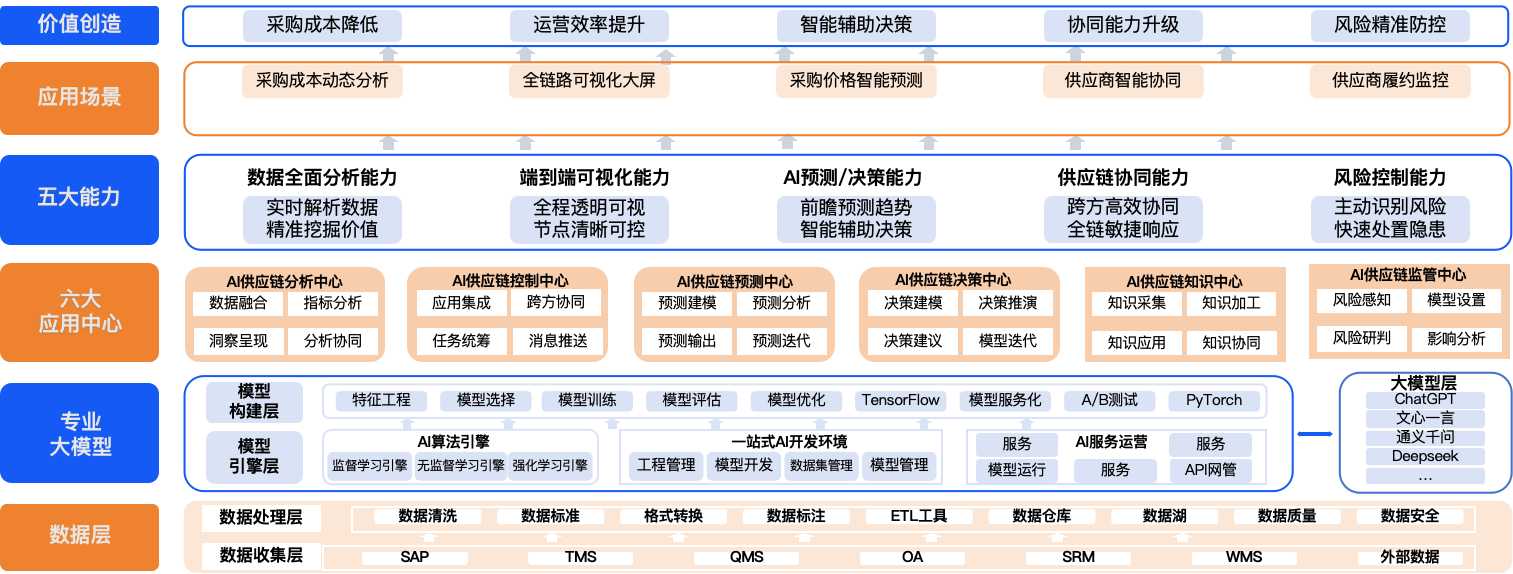
供应链智能控制塔被视为企业供应链的“智慧大脑”。中国建材在建设过程中,以ChainOS数据底座为核心支撑,通过数据清洗、标准治理与格式转换,将SAP、TMS、QMS、OA、SRM、WMS等业务系统数据与外部数据实时汇聚,完成多源数据的统一处理,为上层模型与应用提供稳定可靠的数据供给。

在建设标准层面,中国建材参照中国物流与采购联合会发布的《企业供应链控制塔建设指南》团体标准推进建设。在此基础上,中国建材结合中国巨石的业务需求,搭建专业模型与知识库,将行业经验沉淀为可复用的数字化能力。从平台架构来看,平台向上构建了AI供应链分析中心、控制中心、预测中心、决策中心、知识中心、监管中心等六大应用中心,形成从数据融合、预测建模、决策推演到风险研判的完整能力链条,进而支撑采购成本动态分析、全链路可视化大屏、采购价格智能预测、供应商智能协同、供应商履约监控等具体应用场景,最终实现采购成本降低、运营效率提升、智能辅助决策、协同能力升级、风险精准防控的价值创造。

让数据“开口说话”

智能控制塔的价值,最终体现在对采购决策的实质性赋能上。目前,中国建材智能控制塔重点打造了价格分析、供应商洞察、库存履约监控三大核心能力。

价格分析模块实时跟踪大宗原材料价格波动趋势,自动识别价格异动并生成分析报告,为采购定价与库存策略提供决策支持。以水泥、玻纤等行业的大宗原材料采购为例,价格波动直接关系生产成本,通过智能化价格监控与预测,企业可以更精准地把握采购节奏、优化库存水平,避免高位采购带来的成本压力。

供应商洞察模块整合供应商资质、履约表现、财务健康度等多维数据,构建供应商全景画像,自动输出供应商健康度评估报告。这一能力帮助采购部门从单一的价格比较,升级为对供应商综合能力的立体评估,为寻源定标、份额分配和供应商分级管理提供量化依据。

库存履约监控模块实时追踪库存水位与到货进度,当库存低于安全阈值或交付延迟时自动触发预警,确保生产物资的连续供应。通过对库存与履约的实时可视化管理,企业能够提前识别供应中断风险,把问题化解在发生之前。

三大能力模块的背后,是采购平台全流程线上化业务的支撑。中国建材集团招标采购管理平台涵盖电子招投标、集采平台、电子商城等板块:电子招投标为企业提供一站式数字化电子招采协同解决方案,实现招投标业务全流程电子化,服务范围覆盖货物类、工程类、服务类等招标业务;集采平台通过规模化采购增强成本优势,构建阳光、规范、高效的集采交易平台;电子商城聚焦长尾商品采购的降本提效,提供可视化采购与全流程电子化服务。

此外,AI技术正在深度重塑招投标全流程。按照国务院国资委关于加快中央企业人工智能高质量发展的指导意见,AI已全面渗透招投标八大环节、二十类应用场景,覆盖从需求策划、编标、投标、开标、评标、定标到监管风控的全链条,核心解决效率低、人为干预多、围串标风险高、合规压力大四大痛点,实现智能、高效、公正、可追溯的数字化采购交易体系。

七大风险监管场景全覆盖

在智能决策之外,风险监管是供应链管控的另一关键维度。中国建材同步建设采购供应链实时监管平台,覆盖计划编制、招投标过程、供应商管理、专家管理等七大核心风险场景,做到全流程无死角监管。

针对不同风险级别,平台设置红黄绿三级预警机制:绿色代表正常运营,黄色代表潜在风险需关注,红色代表重大风险需立即处置。针对不同级别预警,平台自动触发差异化处置流程——红色预警触发熔断机制,暂停相关操作;黄色预警触发提醒机制,要求相关方说明情况;绿色状态则纳入常规监控。

这种分级管控机制既保障了风险防控的有效性,又避免了对正常业务的过度干扰。监管规则的可配置性,更让风险管控从“一刀切”走向“精准施策”:在集团统筹、分级管控的思路下,各下属单位可结合自身业务特点自主配置监管规则,实现从集团到企业的分层穿透式治理,以全流程风险追踪闭环支撑业务穿透治理。

构建分级管控的“阳光采购”生态

中建材采购平台的落地,并非孤立的系统建设,而是中国建材集团采购与供应链管理体系化变革的缩影。

在制度层面,中国建材集团建立了覆盖集团全级次企业的“1+N+X”制度体系,构建“一个平台、两级集中、三级管理”的采购与供应链管控机制,并打造以“创新驱动的价值链、数字赋能的智慧链、绿色协同的生态链、全球布局的韧性链”为核心的“四维一体”全球一体化智链生态体系,实现采购过程的阳光透明和降本增效。

在运营层面,平台由中建材卓材科技(北京)有限公司(中国建材集团采购交易中心)承担建设运维与一级集采实施重任。围绕平台构建了招标代理、电子商城、闲废处置、商旅服务四大业务板块,服务覆盖集团内部1000余家成员企业,并与10余家国央企开展基于采购供应链资源共享的深入合作。平台已通过国家电子招标投标系统(EBS)三星级认证,纳入全国电子招标投标系统网络平台体系,注册供应商超9.4万家。2025年3月,公司正式挂牌“中国建材集团采购交易中心”,标志着集团采购与供应链改革进入新阶段。

秉持“数字引领材料创造”的数字化愿景与“阳光高效、降本增值”的核心使命,中建材卓材科技依托中国建材集团产业生态优势,深度融合人工智能、大数据等前沿技术,先后荣获中央企业电商平台数智化创新领先企业、中央企业最佳采购商城示范企业、2024年度全国公共采购优秀案例、2025全国机械冶金建材行业职工技术创新成果特等奖等荣誉。

集采的规模化效应正持续释放。集团加快集采平台的推广使用,构建阳光集采、永久可追溯的采购体系,开展11类一级集中采购,2025年通过集采实现降本约23亿元[2]。

从“一个平台”到“一个控制塔”,从“被动响应”到“主动预测”,中建材采购平台的升级路径,折射出中国建材集团数字化转型的深层逻辑。2023年,中国建材集团发布“1254”数字化转型规划蓝图,确立“数字引领材料创造”的数字化愿景[2]。如今,随着供应链智能控制塔、采购供应链实时监管平台等核心系统的落地,集团正加快构建覆盖全产业链的智能采购与数字供应链体系,让供应链真正成为企业高质量发展的核心竞争力。

信息来源

[1] 中国物流与采购联合会官网《团体标准〈企业供应链控制塔建设指南〉发布仪式在海口举行》:http://cflp.org.cn/lhhzq/202604/15/665522.shtml

[2]《一家央企的五年重塑与蜕变——周育先谈中国建材集团“十四五”跨越与“十五五”展望》:https://www.sinomaee.com/newsinfo/11153199.html

亿邦智库持续关注央国企数字化采购领域的最新进展,如想了解更多与本文相关信息,请扫码关注作者微信或发送邮箱。联系邮箱:zhangjing@ebrun.com

作为TO B领域年度风向标,“2026第八届亿邦产业互联网年会暨首届产业智能体大会”将于11月20日在北京召开。主题定为“AI与出海带来的模态进化”,聚焦产业智能体落地、AI供应链价值重构、数据要素与TOKEN经济、产业出海新生态等前沿议题深度思辨。大会将集结学界权威、央国企标杆、产业龙头、投资机构、服务生态伙伴,汇聚产业核心力量、拆解产业数智化转型路径、分享前沿实战经验。同期还将发布年度产业互联网报告及标杆案例,举办决策人闭门会、“千峰奖”颁奖盛典。

文章来源:亿邦动力

广告
微信
朋友圈

FAQ回顾

中国建材供应链智能控制塔是什么?

中国建材供应链智能控制塔是以ChainOS数据底座为支撑的采购供应链管理平台,汇聚SAP、TMS、QMS、OA、SRM、WMS等业务系统与外部数据,搭建专业模型与知识库,覆盖价格分析、供应商洞察、库存履约监控等场景,推动供应链管理由被动响应转向主动预测,实现全域可视、风险管控、智能预决策三级升级。

企业如何通过智能控制塔降低大宗原材料采购成本?

智能控制塔通过价格分析模块实时跟踪大宗原材料价格波动趋势,自动识别价格异动并生成分析报告,为采购定价与库存策略提供决策支持。以水泥、玻纤等行业的大宗原材料采购为例,企业可借助智能化价格监控与预测把握采购节奏、优化库存水平,避免高位采购带来的成本压力。

供应链控制塔如何管理供应商和库存履约风险?

供应商洞察模块整合供应商资质、履约表现、财务健康度等多维数据,构建供应商全景画像并自动输出健康度评估报告;库存履约监控模块实时追踪库存水位与到货进度,当库存低于安全阈值或交付延迟时自动触发预警,帮助企业提前识别供应中断风险。

中国建材采购平台如何实现采购供应链风险监管?

平台建设采购供应链实时监管平台,覆盖计划编制、招投标过程、供应商管理、专家管理等七大核心风险场景,设置红黄绿三级预警机制:绿色正常运营,黄色潜在风险需关注,红色重大风险立即处置。红色预警触发熔断暂停相关操作,黄色预警要求相关方说明情况,绿色纳入常规监控,并支持监管规则可配置。

中国建材集团集采平台取得了哪些降本成效?

中国建材集团加快集采平台推广使用,构建阳光集采、永久可追溯的采购体系,开展11类一级集中采购,2025年通过集采实现降本约23亿元。平台服务覆盖集团内部1000余家成员企业,与10余家国央企开展采购供应链资源共享合作,注册供应商超9.4万家。

这么好看,分享一下?

朋友圈 分享

APP内打开

赞 +1
+1
微信好友 朋友圈 新浪微博 QQ空间
关闭
收藏成功
发送
/140 0