广告
加载中

得力×龙芯智能办公打印技术联合实验室正式揭牌 打造国产办公自主可控新高地

龚作仁 2026-09-23 10:15
龚作仁 2026/09/23 10:15

邦小白快读

EN
全文速览

总:这次揭牌的核心信息是:国产打印机主控芯片已通过国家级安全测评,得力与龙芯正在打通从芯片到整机的全链条,未来办公设备会越来越强调国产自主可控。

1. 龙芯2P0300、2P0500两款打印机主控芯片通过中国信息安全测评中心和国家保密科技测评中心联合测评,达到Ⅱ级安全可靠等级,说明国产芯片在涉密和政企办公等高要求场景中有了更强信任基础。

2. 联合实验室成立后,将围绕打印主控芯片、办公电脑协同、针式/热敏打印、扫描设备和3D打印推进研发,意味着未来国产办公设备品类会更全,功能适配会更好。

3. 对普通企业采购者来说,选购办公设备时可以多关注是否通过安全可靠测评、是否能与国产电脑协同,而不只比较价格和基础参数。

总:对品牌商而言,这次合作的看点不只是技术新闻,更是一个品牌升级和用户信任建设的样本。

1. 品牌定位跃迁:得力以数码打印作为迈向科创的重要布局,通过芯片级合作把自身从文具文创品牌推向高端办公科技品牌,这提示品牌商可用核心技术合作重塑用户认知。

2. 信任状打造:龙芯主控芯片获得国家级安全可靠认证,让产品在宣传中有了可依赖的资质背书,尤其面向政企客户时,“安全可靠、自主可控”比单纯功能营销更有效。

3. 产品研发方向:智能办公设备需求已从单一打印功能升级为安全性、稳定性和软硬件协同适配,品牌商应在产品定义阶段就考虑芯片、整机、软件和场景的协同,而不是只做外观或价格差异。

4. 生态竞争意识:行业竞争已进入技术实力、产业协同和生态构建的综合阶段,品牌商可通过与上游核心技术企业共建实验室,把研发资源变成长期品牌壁垒。

总:对卖家和渠道商来说,这次合作释放了国产办公设备进入政企采购加速期的信号,可以从中看到选品、卖点和风险。

1. 政策与资质机会:龙芯2P0300、2P0500打印机主控芯片通过安全可靠测评,达到Ⅱ级,依托《安全可靠测评工作指南V4.0》认证,这为经销商向政府、国企等客户推销提供了明确合规依据。

2. 增长品类机会:联合实验室规划覆盖打印主控芯片、办公电脑协同、针式/热敏打印、扫描设备及3D打印,说明国产办公生态正在向更多细分品类延伸,可提前关注新品。

3. 销售打法变化:政企客户更关注安全性、稳定性、软硬件协同适配,卖家要从单纯卖打印机转向卖国产办公整体解决方案,搭配办公电脑和打印设备一起谈。

4. 风险提示:当前合作仍处于建设和产品迭代阶段,应关注实际供货能力、售后覆盖和新品成熟度,避免过度承诺交付时间和服务标准。

总:对工厂而言,这次合作说明国产办公设备制造正在从“按图代工”转向“与核心器件厂商联合研发”,生产端的价值门槛在抬高。

1. 生产与设计新要求:智能打印设备集芯片、软件算法和光、机、电、热等技术于一体,工厂要参与这类产品,必须具备整机集成、软硬件适配和快速迭代能力。

2. 产品方向:双方将围绕打印主控芯片、办公电脑协同、针式/热敏打印、扫描设备及3D打印攻关,工厂可对照这些方向调整产线和工艺布局。

3. 商业机会:龙芯主控芯片获国家级认证后,国产打印机和办公电脑的政企需求可能放量,制造质量稳定、支持国产器件适配的工厂更容易进入供应链。

4. 转型启示:得力把智能制造和规模化量产能力与龙芯底层技术结合,形成从芯片到整机的完整闭环;工厂可以借鉴这种共建研发平台的模式,提升自己在产业链中的不可替代性,而不是只拼成本和交付速度。

总:对技术服务商和解决方案商而言,文章揭示的行业变化是:智能办公已从单机维护走向国产化、生态化、安全化的综合服务。

1. 行业趋势:行业竞争焦点从单一产品转向技术实力、产业协同和生态构建,安全可靠标准不断完善,服务商面对的客户需求也会从“修打印机”变成“保障办公系统安全可靠运行”。

2. 客户痛点:政企端对设备安全性、稳定性、软硬件协同适配性要求更高,单一设备故障或芯片与整机不适配会影响整个办公流程,这为服务商提供了运维、适配和优化空间。

3. 解决方案机会:得力与龙芯打通了芯片、整机、应用全链条,服务商可以围绕国产打印设备和办公电脑提供一体化交付、安全运维和场景化部署方案,建立“技术认证+服务能力”的双重卖点。

4. 新技术方向:打印主控芯片、办公电脑协同、针式/热敏打印、扫描设备、3D打印是下一阶段重点,服务商应提前储备相关技术人才,跟上国产设备更新周期。

总:对平台商而言,联合实验室的本质是一个小型的产业协同平台;它的价值不在场地,而在把不同环节的技术资源和市场需求接到一起。

1. 平台需求判断:智能办公打印已经需要芯片、整机、软件、应用多角色协同,平台商如果只做信息撮合或渠道对接,解决不了客户对软硬件适配和安全性的深层需求。

2. 可借鉴的平台做法:龙芯提供底层处理器和软硬件技术,得力提供整机研发、制造和场景落地,双方通过联合实验室实现资源互享,形成从芯片到整机再到应用的闭环;这类“核心企业牵头共建”的模式,可用于垂直产业平台搭建。

3. 招商与运营方向:实验室覆盖打印主控芯片、办公电脑协同、针式/热敏打印、扫描设备及3D打印等领域,平台方可围绕这些赛道吸引上下游企业,组织联合适配和产品认证服务。

4. 风险规避:下一阶段竞争取决于生态构建能力,平台商应优先选择有国家级安全认证、有真实研发投入和全链条布局的合作伙伴,避免被单点概念或短期热点带偏。

总:研究者可以将此次得力与龙芯共建联合实验室作为案例,观察国产智能办公设备自主可控的产业协同机制。

1. 产业新动向:智能办公打印行业已从单一产品竞争转向技术实力、产业协同和生态构建的综合竞争,说明国产替代正从单点芯片深入到整机和应用生态。

2. 商业模式样本:双方从战略合作起步,经历了芯片适配、整机产品落地,再到共建联合实验室,形成“底层技术企业+整机品牌企业+国家级认证”的创新闭环,值得研究其长期激励和利益分配机制。

3. 政策与法规启示:主控芯片通过安全可靠测评并达到Ⅱ级,表明国家测评体系能有效牵引核心器件国产化;建议继续完善安全可靠标准,并扩大到打印机整机、办公电脑和外部设备生态。

4. 可研究的问题:传统文具企业如何通过技术合作实现向高端科创转型;实验室科研成果如何从研发端有效转化到市场端;国产自主技术生态如何在安全可控与开放兼容之间取得平衡。

返回默认
声明:快读内容全程由AI生成,请注意甄别信息。如您发现问题,请发送邮件至 run@ebrun.com 。

我是 品牌商 卖家 工厂 服务商 平台商 研究者 帮我再读一遍。

Quick Summary

Overall: The key message of this unveiling is that domestic printer main control chips have passed national-level security evaluation, and Deli and Loongson are building out the full chain from chips to finished machines. Office equipment will increasingly emphasize domestic, self-controllable technology.

1. Loongson 2P0300 and 2P0500 printer main control chips passed joint evaluation by China Information Security Testing and Evaluation Center and the National Confidentiality Science and Technology Testing Center, reaching Level II security and reliability. This means domestic chips now have a stronger trust foundation in high-requirement scenarios such as classified and government/enterprise office use.

2. After the joint laboratory is established, R&D will focus on printer main control chips, office PC coordination, dot-matrix/thermal printing, scanning equipment, and 3D printing. This means future domestic office equipment will have more complete categories and better functional adaptation.

3. For ordinary corporate buyers, when choosing office equipment, they should pay more attention to whether products have passed security and reliability evaluation and whether they can work with domestic PCs, rather than only comparing price and basic specifications.

Overall: For brand owners, this partnership is more than a technology story; it is a sample of brand upgrading and user trust building.

1. Brand positioning shift: Deli is using digital printing as a key move toward technology innovation, leveraging chip-level cooperation to transform from a stationery and cultural products brand into a high-end office technology brand. This shows that brand owners can reshape user perception through partnerships around core technology.

2. Trust credential: The Loongson main control chip's national security and reliability certification gives products a credible endorsement in marketing. Especially for government and enterprise clients, "secure, reliable, and self-controllable" is more effective than pure feature-based marketing.

3. Product R&D direction: Demand for smart office devices has shifted from single printing functions to security, stability, and hardware-software coordination. Brand owners should consider chip, machine, software, and scenario synergy at the product definition stage, rather than differentiating only through design or price.

4. Ecosystem competition awareness: Industry competition has entered a comprehensive stage that combines technology strength, industrial coordination, and ecosystem building. Brand owners can turn R&D resources into long-term brand barriers by co-building laboratories with upstream core technology companies.

Overall: For sellers and channel partners, this partnership signals that domestic office equipment is entering an accelerated period for government and enterprise procurement, offering clear implications for product selection, selling points, and risk.

1. Policy and qualification opportunity: The Loongson 2P0300 and 2P0500 printer main control chips passed security and reliability evaluation and reached Level II under the Security and Reliability Evaluation Work Guide V4.0 certification. This gives distributors a clear compliance basis for selling to government and state-owned enterprise clients.

2. Growth category opportunity: The joint laboratory plan covers printer main control chips, office PC coordination, dot-matrix/thermal printing, scanning equipment, and 3D printing. This indicates the domestic office ecosystem is expanding into more segmented categories, so sellers should watch for new products early.

3. Sales approach changes: Government and enterprise clients care more about security, stability, and hardware-software compatibility. Sellers should shift from simply selling printers to selling integrated domestic office solutions, discussing office PCs and printing equipment together.

4. Risk reminder: The partnership is still in the construction and product iteration stage. Sellers should monitor actual supply capacity, after-sales coverage, and product maturity, and avoid over-promising delivery times and service standards.

Overall: For factories, this partnership shows that domestic office equipment manufacturing is shifting from build-to-print contract manufacturing to joint R&D with core component makers; the value threshold on the production side is rising.

1. New production and design requirements: Smart printing equipment integrates chips, software algorithms, and optical, mechanical, electrical, and thermal technologies. To participate in such products, factories must have whole-machine integration, hardware-software adaptation, and rapid iteration capabilities.

2. Product direction: The two parties will tackle printer main control chips, office PC coordination, dot-matrix/thermal printing, scanning equipment, and 3D printing. Factories can adjust production lines and process layouts around these directions.

3. Business opportunity: With Loongson main control chips receiving national certification, government and enterprise demand for domestic printers and office PCs may expand. Factories with stable manufacturing quality and support for domestic component adaptation are more likely to enter the supply chain.

4. Transformation insight: Deli combines smart manufacturing and mass production capabilities with Loongson's underlying technology, forming a complete closed loop from chip to finished machine. Factories can learn from this co-built R&D platform model to increase their irreplaceability in the value chain, rather than competing only on cost and delivery speed.

Overall: For technical service providers and solution providers, the article reveals that smart office has moved from single-machine maintenance to domestic, ecosystem-oriented, and security-focused integrated service.

1. Industry trend: Competition focus is shifting from single products to technology strength, industrial coordination, and ecosystem building. As security and reliability standards continue to improve, customer demand will evolve from "repairing printers" to "ensuring office systems operate safely and reliably."

2. Customer pain points: Government and enterprise clients have higher requirements for device security, stability, and hardware-software compatibility. A single device failure or a chip-machine mismatch can disrupt the entire office workflow, giving service providers room for maintenance, adaptation, and optimization.

3. Solution opportunity: Deli and Loongson have connected the full chain of chip, machine, and application. Service providers can offer integrated delivery, secure operations, and scenario-based deployment around domestic printing equipment and office PCs, building dual selling points of technical certification plus service capability.

4. New technology directions: Printer main control chips, office PC coordination, dot-matrix/thermal printing, scanning equipment, and 3D printing are the next-stage priorities. Service providers should build relevant technical talent in advance and keep up with the domestic equipment upgrade cycle.

Overall: For platform operators, the joint laboratory is essentially a small industrial coordination platform. Its value lies not in physical space but in connecting technical resources and market demand across different links.

1. Platform demand judgment: Smart office printing already requires coordination among chips, machines, software, and applications. If platform operators only do information matching or channel connection, they cannot solve clients' deeper needs for hardware-software compatibility and security.

2. Platform model to learn: Loongson provides the underlying processors and hardware-software technology, while Deli provides whole-machine R&D, manufacturing, and scenario implementation. Through the joint laboratory, they share resources and form a closed loop from chip to machine to application. This model of core enterprises leading co-construction can be applied to vertical industry platforms.

3. Investment and operation direction: The laboratory covers printer main control chips, office PC coordination, dot-matrix/thermal printing, scanning equipment, and 3D printing. Platform operators can attract upstream and downstream companies around these tracks and organize joint adaptation and product certification services.

4. Risk avoidance: The next stage of competition depends on ecosystem-building capability. Platform operators should prioritize partners with national security certification, real R&D investment, and full-chain layout, and avoid being led astray by single-point concepts or short-term hot spots.

Overall: Researchers can use the Deli-Loongson joint laboratory as a case to observe the industrial coordination mechanism behind self-controllable domestic smart office equipment.

1. New industrial trend: The smart office printing industry has shifted from single-product competition to comprehensive competition in technology strength, industrial coordination, and ecosystem building. This shows that domestic substitution is moving from single chips into complete machines and application ecosystems.

2. Business model sample: The two parties started from strategic cooperation, went through chip adaptation and whole-machine product implementation, and then co-built a joint laboratory, forming an innovation loop of underlying technology company, whole-machine brand, and national certification. The long-term incentive and benefit-sharing mechanisms are worth studying.

3. Policy and regulatory implications: The main control chips passed security and reliability evaluation and reached Level II, showing that the national evaluation system can effectively guide the localization of core components. It is advisable to continue improving security and reliability standards and expand them to printer whole machines, office PCs, and the peripheral device ecosystem.

4. Researchable questions: How traditional stationery enterprises transform into high-end technology innovation through technical cooperation; how laboratory research results are effectively transferred from R&D to the market; and how a domestic self-controllable technology ecosystem balances security and control with openness and compatibility.

Disclaimer: The "Quick Summary" content is entirely generated by AI. Please exercise discretion when interpreting the information. For issues or corrections, please email run@ebrun.com .

I am a Brand Seller Factory Service Provider Marketplace Seller Researcher Read it again.

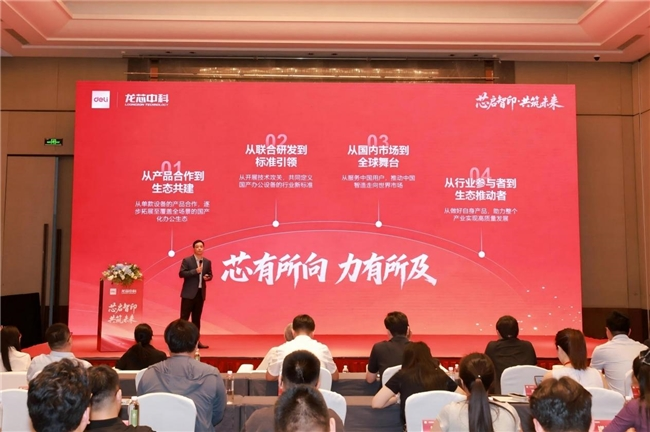
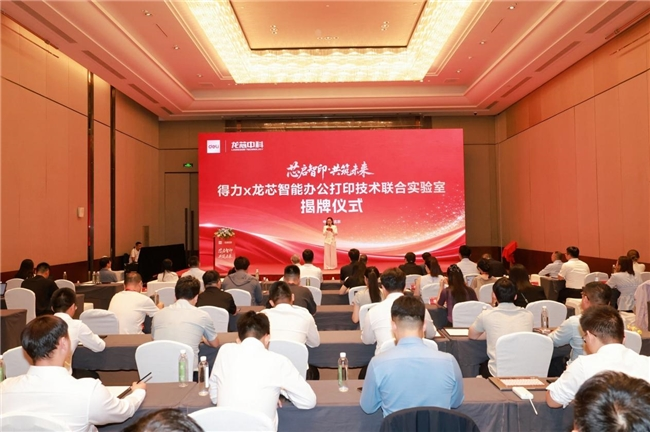
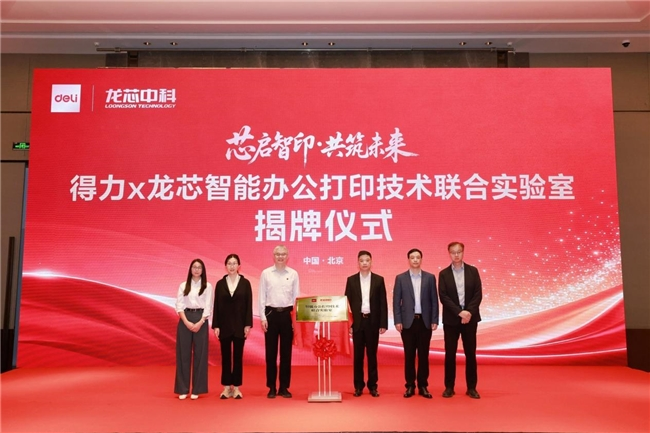
9月22日,得力集团与龙芯中科联合打造的“智能办公打印技术联合实验室”(以下简称“联合实验室”)于北京正式揭牌落地,标志着双方在智能办公打印领域的产业合作、技术协同迈入全新深度。得力集团总裁娄甫安、龙芯中科董事长胡伟武出席仪式并致辞,得力集团副总裁张磊、龙芯中科副总裁杜安利等双方领导,以及产业合作伙伴、媒体代表共同见证这一产业创新里程碑事件。

与此同时,龙芯中科的打印机主控芯片也获得国家级检测认证。9月20日,龙芯中科两款打印机主控芯片龙芯2P0300、龙芯2P0500,顺利通过中国信息安全测评中心、国家保密科技测评中心联合开展的安全可靠测评,达到Ⅱ级安全可靠等级,依托《安全可靠测评工作指南V4.0》权威认证,为双方后续深度技术研发、产品迭代落地筑牢了核心技术根基。此次联合实验室落地,叠加双方核心芯片安全测评取得的重大突破及技术优势,将全方位打通芯片研发、整机适配、场景落地的全链条创新链路,提升国产智能办公设备的核心竞争力。

全链优势互补,芯片到整机合作纵深落地

智能打印设备是集芯片、软件算法以及光、机、电、热等多项技术于一体的综合性终端产品。伴随数字化、智能化办公全面普及,政企端对办公设备的安全性、稳定性、软硬件协同适配性提出了更高标准的要求。单一环节的技术突破已无法满足行业发展需求,全链路、一体化的技术创新成为产业发展核心方向。

龙芯中科长期深耕自主处理器研发与底层软硬件技术,而得力在打印设备研发、智能制造、规模化量产、全场景办公应用落地等方面积累了深厚的产业经验与市场优势。双方技术资源互享,构建起从底层核心芯片到终端整机应用的完整创新闭环,为深度协同研发奠定了坚实基础。

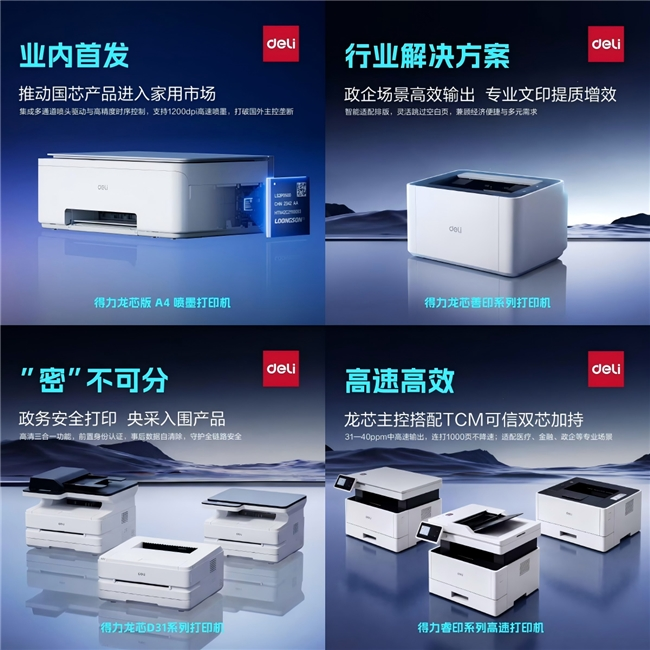
自2025年达成战略合作以来,双方合作稳步推进、持续走深。以自主打印主控芯片的应用为合作起点,成功完成多款龙芯系列打印机产品的适配与市场落地,并逐步将合作版图拓展至办公计算机等办公设备。在今年7月得力高速打印机新品发布会上,龙芯中科董事长胡伟武曾介绍,双方已基于龙芯2P0500、2P0300两款主控芯片,推进多系列打印产品研发布局,并持续开展新一代产品的研发攻关。从底层技术突破到产品应用落地,双方合作不断向产业链上下游延伸,也为联合实验室进一步开展联合研发奠定了坚实基础。

共建创新研发平台,助推产业技术迭代升级

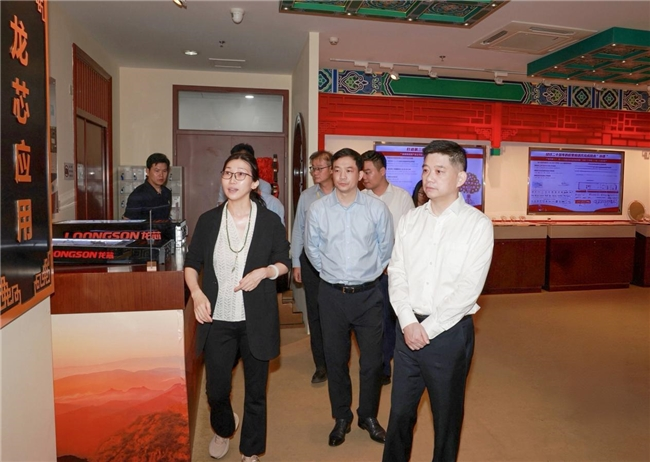
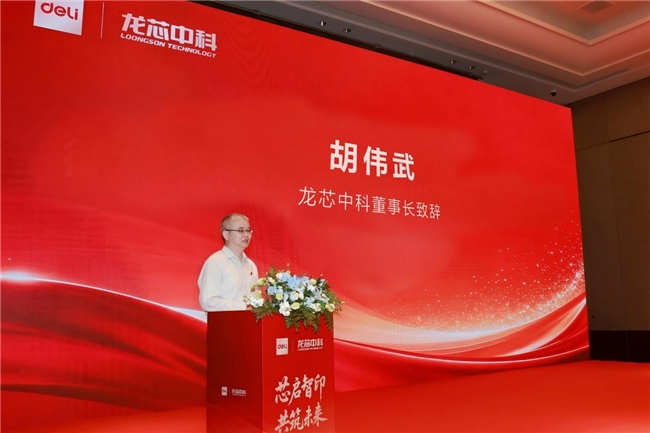
揭牌仪式前,得力一行参观龙芯展厅,深入了解龙芯自主技术体系与产业生态布局,双方热烈交流在打印设备、办公电脑等领域的合作成果。在仪式上,双方领导深度阐释了联合实验室的产业价值与发展愿景。龙芯中科董事长胡伟武表示,信息技术产业的发展,光有一颗芯片是不够的,还要有整机、有软件、有应用,最终形成完整的产业生态。得力与龙芯中科将继续携手,把智能打印做深、做透,共同探索芯片、整机与应用协同发展的技术路径。同时,面向未来应用需求提前布局,推动底层技术与整机应用深度融合。

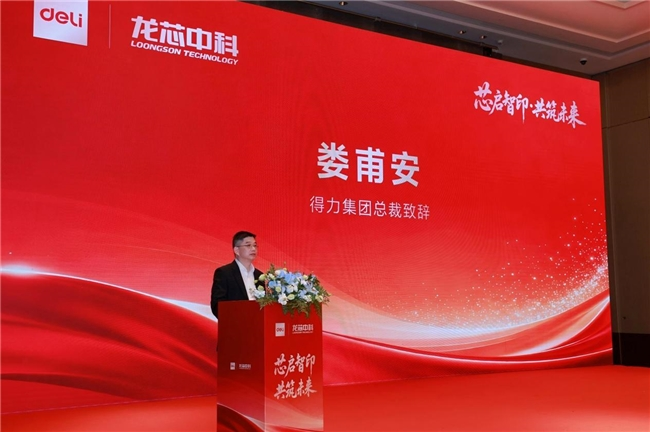
得力集团总裁娄甫安指出,数码打印是得力迈向科创、推动产业升级的重要布局。双方从芯片技术联合攻关,到软硬件深度适配,再到计算机、打印机等办公设备协同应用,合作不断走深走实。联合实验室的落地,是双方合作升级的全新起点,未来将依托这一专业化创新平台,聚焦技术研发、产品创新、成果转化,与龙芯携手把技术做深、把产品做强、把生态做实,为中国办公科技产业发展贡献力量。

随后,得力集团副总裁张磊公布了实验室后续建设规划,未来,得力与龙芯中科将以智能打印技术为核心,围绕打印主控芯片、办公电脑协同、针式/热敏打印、扫描设备及3D打印等领域开展技术攻关,持续拓展智能办公应用场景。一方面对现有产品进行技术优化升级,提升软硬件适配能力;另一方面,面向下一代产品开展前瞻研究,加速科研成果向实体产品、市场应用转化。

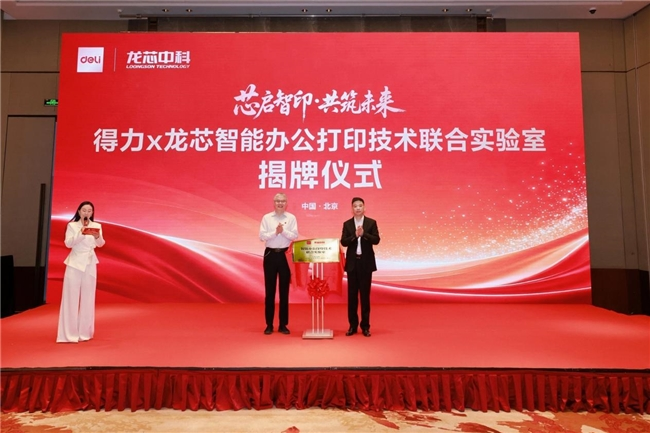
在全场见证下,由龙芯中科董事长胡伟武与得力集团总裁娄甫安共同为实验室揭牌,红绸落下、铜牌亮起的那一刻,标志着双方的合作迈入新阶段,实验室的揭牌将延续双方的技术互信,共同探索办公科技产业创新发展路径。

锚定生态化布局,构筑智能办公产业新格局

当前,智能办公打印行业已告别单一产品竞争模式,迈入技术实力、产业协同、生态构建的综合竞争新阶段。随着安全可靠标准不断完善,自主可控核心技术、产业链协同创新能力,已然成为决定行业未来发展的核心要素。联合实验室的成立,不仅是得力与龙芯中科多年合作成果的沉淀,更是双方携手布局未来办公科技赛道的战略升级,同时也是得力从传统文具文创产业向高端办公科创领域纵深突破的重要里程碑。

自2015年进入打印领域以来,得力持续布局激光、喷墨等主流打印技术,不断完善研发创新、智能制造、售后服务全链条体系。此次与龙芯中科深化合作,将芯片研发技术与得力的整机研发、制造及应用场景优势相结合,将进一步提升得力在办公科技领域的创新能力与核心竞争力。

未来,双方将以联合实验室为支点和纽带,持续整合上下游产业资源,深化跨领域、全链条技术协同创新,夯实国产办公设备安全可靠的产业基底,携手推动国内办公科技产业高质量、高水平、可持续发展。

注:文/龚作仁,文章来源:Laborer,本文为作者独立观点,不代表亿邦动力立场。

文章来源:Laborer

广告
微信
朋友圈

FAQ回顾

得力集团与龙芯中科联合成立的智能办公打印技术联合实验室主要做什么?

联合实验室于2026年9月22日在北京揭牌,将围绕打印主控芯片、办公电脑协同、针式/热敏打印、扫描设备及3D打印等领域开展技术攻关,同时推进现有产品软硬件适配优化和下一代产品前瞻研究,打通芯片研发、整机适配、场景落地全链条,提升国产智能办公设备竞争力。

龙芯2P0300和龙芯2P0500打印机主控芯片通过了什么认证?

2026年9月20日,龙芯中科的2P0300、2P0500两款打印机主控芯片通过中国信息安全测评中心、国家保密科技测评中心联合开展的安全可靠测评,达到Ⅱ级安全可靠等级,并依托《安全可靠测评工作指南V4.0》获得权威认证,为后续产品研发落地奠定基础。

国产智能办公打印行业当前呈现哪些趋势?

行业已从单一产品竞争转向技术实力、产业协同和生态构建的综合竞争。随着安全可靠标准不断完善,自主可控核心技术和产业链协同创新能力成为决定行业未来发展的核心要素,全链路、一体化的技术创新成为主流方向,政企对安全性、稳定性、软硬件协同适配性要求更高。

得力与龙芯中科在办公设备领域的合作进展如何?

双方自2025年达成战略合作,以自主打印主控芯片应用为起点,完成多款龙芯系列打印机产品的适配与市场落地,并将合作拓展至办公计算机等设备;2026年9月成立智能办公打印技术联合实验室,从底层芯片、整机适配到场景应用形成完整创新闭环。

为什么政企端需要重视办公打印设备的安全可靠?

随着数字化、智能化办公普及,政企端对办公设备的安全性、稳定性、软硬件协同适配性提出更高要求。打印设备集芯片、软件算法及光机电热等技术于一体,单一环节突破已无法满足需求,只有全链路国产自主可控和产业链协同创新,才能保障核心信息安全与稳定办公。

这么好看,分享一下?

朋友圈 分享

APP内打开

赞 +1
+1
微信好友 朋友圈 新浪微博 QQ空间
关闭
收藏成功
发送
/140 0