广告
加载中

《经营蓝宝书》9月刊:有AI新增长丨阿里妈妈发布双11十大投资趋势 预见全域经营新增量

龚作仁 2026-09-17 18:04
龚作仁 2026/09/17 18:04

邦小白快读

EN
全文速览

今年双11的消费风向与平台服务变化,能为普通消费者、小额个体经营者提供实用参考。

1. 日常消费层面,当前主流消费决策已从“功能满足”转向“感受驱动”,大众更偏好精简够用的通勤装备、松弛感居家服、便携香氛、即食草本养生品等重体验商品,参考这些方向选品可避开过度营销的非实用商品。

2. 购物效率层面,淘系千问App已带动2.5亿用户体验AI购物,平台88VIP会员突破6400万,AI可帮新品牌提升经营效率超70%,消费者可借助AI购物工具更快匹配真实需求,无需反复用关键词搜索筛选。

有小额经营需求的用户,也可参考公开趋势找准方向。

1. 本次公布的十大高增长赛道包括便携轻生活、情绪布洛芬、本草新养生等,核心围绕轻量化、情绪化、精细化、智能化四大增量引擎,小成本经营可优先从这些需求明确的领域切入。

2. 9月是双11黄金蓄水期,平台万相点睛工具可捕捉用户未明确表达的消费意图,个体经营者可参考《经营蓝宝书》的公开指引调整经营动作。

本次披露的双11消费逻辑变化、用户数据与平台工具升级,可为品牌商的营销、研发、渠道布局提供明确方向。

1. 用户行为层面,消费决策路径已从“搜索+种草”转向“种草即成交”,决策逻辑从功能满足全面转向感受驱动,传统“选词-圈人-投放”的营销模式已无法适配用户未明确表达的潜在需求,增量藏在用户自然语言流露的真实意图中。

2. 渠道增量层面,淘系生态有确定性增长红利,千问App已带动2.5亿用户形成AI购物习惯,88VIP高价值会员突破6400万,AI助力新品牌经营效率提升超70%,是双11需重点布局的核心渠道。

品牌可围绕趋势与平台工具提前抢量。

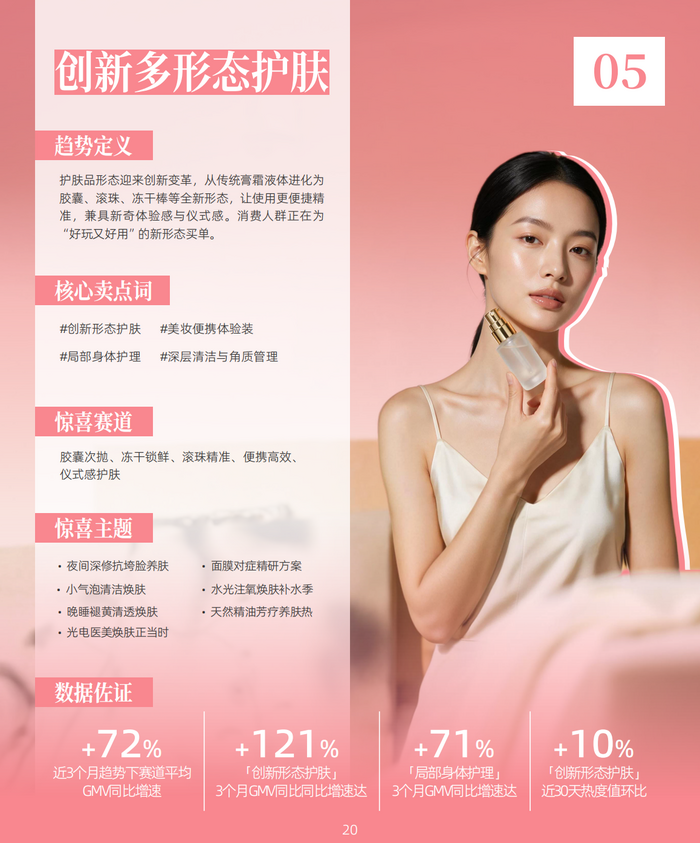
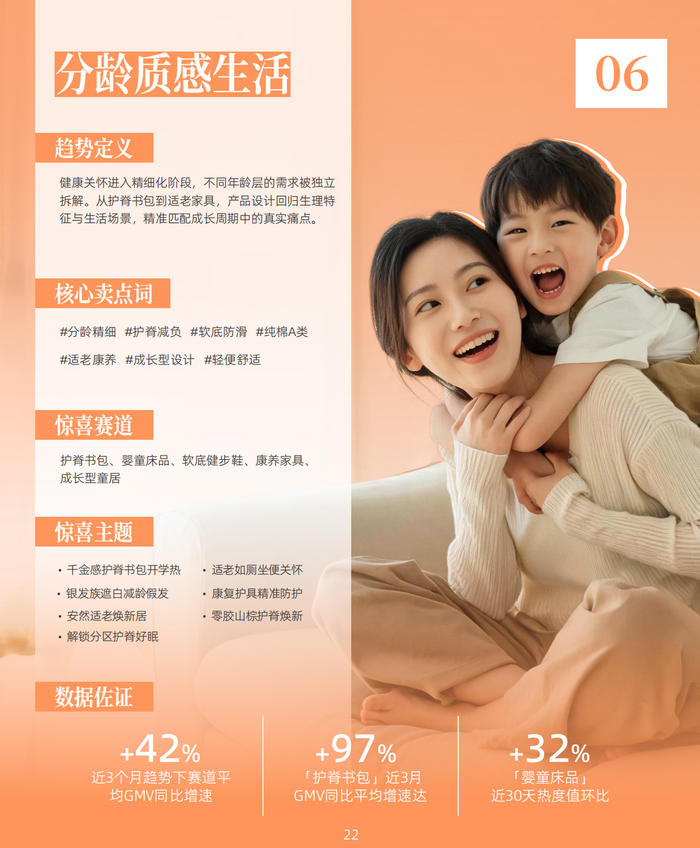
1. 产品端可围绕十大高增长赛道布局,覆盖便携轻生活、创新多形态护肤、分龄质感生活等领域,紧扣四大增量引擎,匹配用户感受型需求。

2. 营销端可借助万相点睛的AI实时意图捕获能力,联动升级后的万相台AI无界、阿里妈妈百灵等产品矩阵,从9月蓄水期开始布局全周期方案,接住用户潜在需求。

今年双11的消费变化、平台升级与赛道指引,为卖家明确了增长机会、实操方向与核心阵地。

1. 需求层面,消费决策已从功能满足转向感受驱动,决策路径缩短为“种草即成交”,传统关键词搜索的明面流量增量见顶,老旧投放模式效率明显下滑,卖家需挖掘用户未明确表达的潜在意图才能拿新增量。

2. 阵地层面,淘系生态增量空间充足,千问App带动2.5亿用户体验AI购物,88VIP会员突破6400万,AI工具可帮新品牌提升经营效率超70%,是双11布局的核心阵地。

卖家需抓住9月黄金蓄水期窗口落地动作。

1. 选品可重点布局十大高增长赛道,包括适我零束缚、情绪布洛芬、本草新养生、竞技社交派等,紧扣四大增量引擎匹配用户新需求。

2. 运营可使用全面落地大促场景的万相点睛工具,联动平台全链路产品矩阵,依托全周期作战地图实时捕获用户意图拿量,可参考《经营蓝宝书》的实操指引落地。

本次发布的双11消费趋势、用户数据与平台方向,为工厂的产品设计、产能布局、数字化转型提供清晰参考。

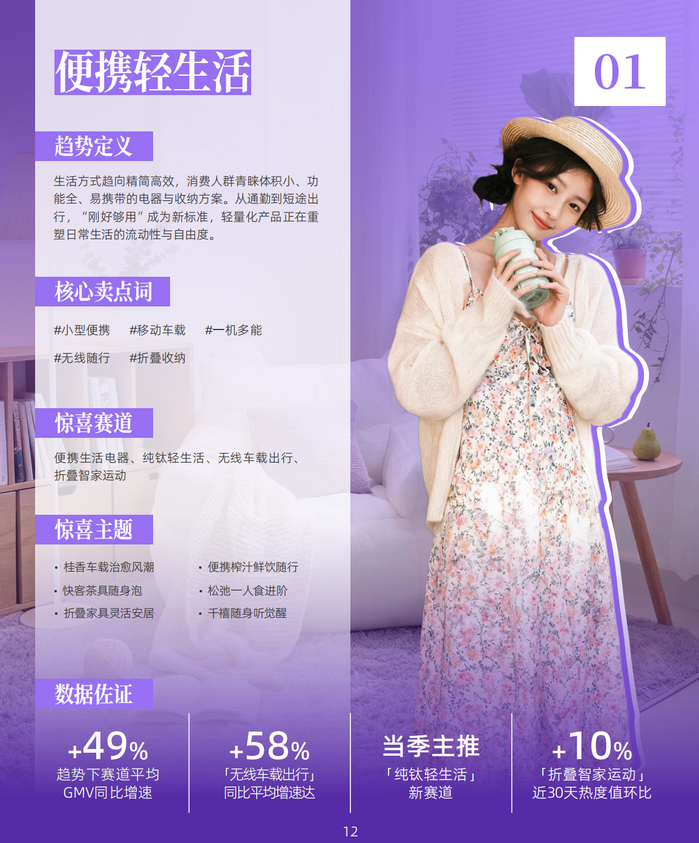
1. 产品设计层面,当前消费决策已从“功能满足”转向“感受驱动”,工厂产品开发需跳出单纯功能堆叠逻辑,围绕用户感受优化,比如通勤装备做精简轻量化设计,居家服侧重松弛体验,香氛开发便携款满足情绪疗愈,养生产品做即食草本配方。

2. 市场规模层面,淘系生态已有2.5亿AI购物用户、6400万高价值88VIP会员,消费盘体量充足,对应稳定的供应链需求。

工厂可围绕高增长赛道布局,借数字化提升效率。

1. 产能布局可重点对接十大高增长赛道的商家需求,涵盖智序空间、创新多形态护肤、绒感轻羽美学等方向,紧扣四大增量引擎提前储备产能。

2. 数字化层面可联动平台商家,依托AI工具的实时意图捕获能力预判市场需求,灵活调整生产计划,减少库存风险,共享AI经营的效率红利。

本次披露的经营变化、AI落地进展与平台升级,为服务商指明了行业趋势、客户痛点与解决方案方向。

1. 客户痛点层面,当前商家普遍面临效率下滑问题:消费者决策路径从“搜索+种草”转为“种草即成交”,决策逻辑转向感受驱动,大量增量藏在用户未明确表达的意图中,传统“选词-圈人-投放”的服务模式已无法帮商家拿增量。

2. 技术趋势层面,AI正在重构电商经营全链路,千问App已带动2.5亿用户形成AI购物习惯,AI可帮新品牌提升经营效率超70%,AI服务能力将成为服务商核心竞争力。

服务商可围绕平台工具打造服务方案,抓赛道红利。

1. 解决方案可依托阿里妈妈升级的产品矩阵设计,基于万相点睛的AI意图捕获能力,联动万相台AI无界、阿里妈妈百灵等工具,为商家提供从蓄水期到大促全周期的拿量、数据挖掘服务。

2. 可针对十大高增长赛道的商家定制专属服务方案,抓住赛道增长带来的服务需求增量。

本次阿里妈妈发布的双11经营布局,清晰展现了大促节点下的商家需求、平台运营方向与生态建设要点。

1. 用户端变化显示,淘系已有2.5亿用户通过千问App养成AI购物习惯,6400万高价值88VIP会员的消费需求更偏向感受驱动,用户对平台智能购物体验、商品匹配效率的要求持续提升。

2. 商家端痛点明确,传统关键词投放模式效率下滑,大量增量藏在用户未明确表达的意图中,商家普遍需要能精准捕获实时需求、打通全链路、提升效率的工具支持,AI工具目前可帮新品牌提效超70%,对商家吸引力极强。

平台可参考成熟玩法优化运营,保障生态健康。

1. 运营端可升级AI经营工具矩阵,强化实时意图捕获能力,打通蓄水期到大促的全周期路径,为商家提供全链路支持,将AI能力作为核心招商竞争力。

2. 招商端可围绕四大增量引擎,针对十大高增长赛道定向招商,提前引导商家跳出传统投放固化思路,避免商家因方法错配导致投入产出比过低,维护平台生态长期健康。

本次阿里妈妈发布的双11经营指南与核心数据,反映了电商产业的最新动向、待解问题与商业模式迭代方向,具备较高研究价值。

1. 消费端出现明确逻辑转向,决策从“功能满足”全面走向“感受驱动”,用户路径从“搜索+种草”缩短为“种草即成交”,大量增量存在于用户未明确表达的自然语言意图中,传统经营模式已出现效率适配问题,这是电商产业的重要新变化。

2. 技术渗透层面,AI对电商的重构已进入深水区,2026年4-6月淘系数据显示,千问App带动2.5亿用户形成AI购物习惯,88VIP会员突破6400万,AI帮新品牌提效超70%,正全面改造消费与经营全链路。

这些变化指向电商的模式迭代与结构性机会。

1. “意图驱动增长”正成为新的核心经营逻辑,以万相点睛为代表的AI工具通过实时意图捕获,帮商家从“人找货”转向匹配潜在需求,这种AI驱动的全域经营模式是电商的重要演化方向。

2. 十大高增长赛道对应的四大增量引擎,反映了消费需求的结构性变化,可为产业研究、政策制定提供现实参考。

返回默认
声明:快读内容全程由AI生成,请注意甄别信息。如您发现问题,请发送邮件至 run@ebrun.com 。

我是 品牌商 卖家 工厂 服务商 平台商 研究者 帮我再读一遍。

Quick Summary

This year’s Double 11 consumption trends and platform service updates offer practical takeaways for everyday consumers and small individual operators.

1. For daily consumption, mainstream purchase decisions have shifted from "function-first" to "experience-driven." Shoppers now favor practical, streamlined commuting gear, loungewear with a relaxed feel, portable fragrances, ready-to-eat herbal wellness products, and other experience-centric items. Following these preferences can help consumers avoid overhyped, non-essential goods.

2. For shopping efficiency, Taobao Tmall’s Qianwen app has introduced AI-powered shopping to 250 million users, while the platform’s 88VIP membership has surpassed 64 million. AI tools can improve operational efficiency for new brands by over 70%, and consumers can use these tools to match their real needs faster, instead of repeatedly sifting through keyword search results.

Users running small side businesses can also reference public trend data to identify viable directions.

1. The 10 high-growth categories announced this year include portable minimalist lifestyle products, mood-boosting "emotional comfort" items, and modern herbal wellness goods, all centered on four key growth drivers: lightweight design, emotional value, refined functionality, and smart features. Small-cost operators can prioritize these well-defined, demand-backed segments to enter the market.

2. September is the critical warm-up period for Double 11. The platform’s Wanxiang Dianjing tool can capture unstated consumer intent, and individual operators can adjust their strategies using the public guidance in the *Operation Playbook*.

The newly released Double 11 consumption logic shifts, user data, and platform tool upgrades provide clear direction for brands’ marketing, R&D, and channel strategies.

1. On user behavior, the purchase decision path has shifted from "search + seeding" to "seeding leads directly to conversion," with decision-making fully moving from function satisfaction to experience-driven. The traditional marketing model of "keyword selection - audience targeting - ad placement" can no longer capture users’ unstated latent demand; future growth lies in the real intent revealed in users’ natural language.

2. On channel growth, the Taobao Tmall ecosystem offers clear upside: the Qianwen app has built AI shopping habits among 250 million users, high-value 88VIP membership has exceeded 64 million, and AI can lift new brands’ operational efficiency by over 70%, making it a core channel to prioritize for Double 11.

Brands can leverage trends and platform tools to capture demand ahead of the event.

1. On the product side, plan offerings around the 10 high-growth categories—including portable minimalist lifestyle, innovative multi-format skincare, and age-aligned quality living—aligned with the four key growth drivers to match users’ experience-driven demand.

2. On the marketing side, use Wanxiang Dianjing’s real-time AI intent capture capability, in coordination with the upgraded product matrix including Wanxiangtai AI Boundless and Alimama Bailing, to roll out full-funnel campaigns starting from the September warm-up period, and convert latent user demand.

This year’s Double 11 consumption shifts, platform upgrades, and category guidance clearly outline growth opportunities, actionable directions, and core operational positions for sellers.

1. On the demand side, purchase decisions have shifted from function satisfaction to experience-driven, with the decision path shortened to "seeding leads directly to conversion." Visible traffic growth from traditional keyword searches has peaked, and outdated ad placement models have seen clear efficiency declines. Sellers must tap into users’ unstated latent intent to capture new growth.

2. On the operational position side, the Taobao Tmall ecosystem offers ample growth room: the Qianwen app has brought AI shopping experiences to 250 million users, 88VIP membership has exceeded 64 million, and AI tools can lift new brands’ operational efficiency by over 70%, making it the core position for Double 11 deployment.

Sellers should act during the critical September warm-up window.

1. For product selection, prioritize the 10 high-growth categories, including zero-restraint comfortable wear, mood-boosting emotional comfort items, modern herbal wellness products, and competitive social activity goods, aligned with the four key growth drivers to match new user demand.

2. For operations, deploy Wanxiang Dianjing—fully adapted for mega promotion scenarios—along with the platform’s full-link product matrix, and use the full-cycle campaign playbook to capture user intent in real time and drive traffic. Practical guidance is available in the public *Operation Playbook*.

The newly released Double 11 consumption trends, user data, and platform directions provide clear references for factories’ product design, capacity planning, and digital transformation.

1. On product design, current purchase decisions have shifted from "function satisfaction" to "experience-driven." Factories need to move beyond pure feature-stacking logic and optimize products around user experience: for example, designing streamlined, lightweight commuting gear, prioritizing relaxed comfort for loungewear, developing portable fragrance formats for emotional soothing, and formulating ready-to-eat herbal recipes for wellness products.

2. On market scale, the Taobao Tmall ecosystem already hosts 250 million AI shopping users and 64 million high-value 88VIP members, representing a large, stable consumer base and corresponding steady supply chain demand.

Factories can plan capacity around high-growth categories and improve efficiency via digitalization.

1. For capacity planning, prioritize matching merchant demand across the 10 high-growth categories, including smart home organization, innovative multi-format skincare, and soft feather-light aesthetic textiles, and reserve capacity in advance aligned with the four key growth drivers.

2. On digitalization, collaborate with platform merchants, use AI tools’ real-time intent capture capability to forecast market demand, adjust production plans flexibly to reduce inventory risk, and share in the efficiency gains delivered by AI-powered operations.

The newly disclosed operational shifts, AI adoption progress, and platform upgrades point to clear industry trends, client pain points, and solution directions for service providers.

1. On client pain points, merchants broadly face declining operational efficiency: consumer decision paths have shifted from "search + seeding" to "seeding leads directly to conversion," decision-making has turned experience-driven, and a large share of growth lies in users’ unstated intent. The traditional service model of "keyword selection - audience targeting - ad placement" can no longer help merchants capture incremental growth.

2. On technology trends, AI is restructuring the full e-commerce operation chain: the Qianwen app has built AI shopping habits among 250 million users, and AI can lift new brands’ operational efficiency by over 70%. AI service capabilities will become a core competitive differentiator for service providers.

Service providers can build solutions around platform tools to capture category growth dividends.

1. Design solutions based on Alimama’s upgraded product matrix: leverage Wanxiang Dianjing’s AI intent capture capability, integrated with tools including Wanxiangtai AI Boundless and Alimama Bailing, to provide merchants with full-cycle traffic acquisition and data mining services from the warm-up period through the final promotion.

2. Develop tailored service packages for merchants operating in the 10 high-growth categories, to capture incremental service demand driven by category expansion.

Alimama’s newly released Double 11 operation layout clearly outlines merchant demand, platform operational priorities, and key ecosystem development priorities for the mega promotion period.

1. User-side changes show that 250 million Taobao Tmall users have developed AI shopping habits via the Qianwen app, while 64 million high-value 88VIP members show more experience-driven consumption preferences, with continuously rising requirements for intelligent shopping experiences and product matching efficiency on the platform.

2. Merchant-side pain points are clear: traditional keyword placement models have declining efficiency, a large share of incremental demand lies in users’ unstated intent, and merchants broadly need tools that can accurately capture real-time demand, connect full operational links, and improve efficiency. AI tools already lift new brands’ efficiency by over 70%, making them highly attractive to merchants.

Platforms can reference mature playbooks to optimize operations and support ecosystem health.

1. On the operational side, upgrade the AI operation tool matrix, strengthen real-time intent capture capabilities, connect the full-cycle path from warm-up to promotion, provide merchants with full-link support, and position AI capabilities as a core competitive strength for merchant recruitment.

2. On the recruitment side, target merchant acquisition for the 10 high-growth categories aligned with the four key growth drivers, guide merchants early to move beyond rigid traditional placement mindsets, prevent low ROI caused by misaligned strategies, and support the long-term health of the platform ecosystem.

Alimama’s newly released Double 11 operation guide and core data reflect the latest dynamics, unresolved issues, and business model iteration directions of the e-commerce industry, carrying high research value.

1. There is a clear logical shift on the consumption side: decision-making has fully moved from "function satisfaction" to "experience-driven," user paths have shortened from "search + seeding" to "seeding leads directly to conversion," a large share of incremental demand lies in users’ unstated natural language intent, and traditional operation models have shown clear efficiency misalignment—an important new change in the e-commerce sector.

2. On technology penetration, AI’s restructuring of e-commerce has entered a deep-water phase: Taobao Tmall data for April–June 2026 shows that the Qianwen app has built AI shopping habits among 250 million users, 88VIP membership has exceeded 64 million, and AI lifts new brands’ efficiency by over 70%, comprehensively transforming the full chain of consumption and operations.

These changes point to business model iteration and structural opportunities in e-commerce.

1. "Intent-driven growth" is emerging as the new core operational logic: AI tools represented by Wanxiang Dianjing use real-time intent capture to help merchants shift from "people searching for goods" to proactively matching latent demand. This AI-powered omnichannel operation model represents a key evolutionary direction for e-commerce.

2. The four key growth drivers corresponding to the 10 high-growth categories reflect structural shifts in consumer demand, providing practical reference for industry research and policy formulation.

Disclaimer: The "Quick Summary" content is entirely generated by AI. Please exercise discretion when interpreting the information. For issues or corrections, please email run@ebrun.com .

I am a Brand Seller Factory Service Provider Marketplace Seller Researcher Read it again.

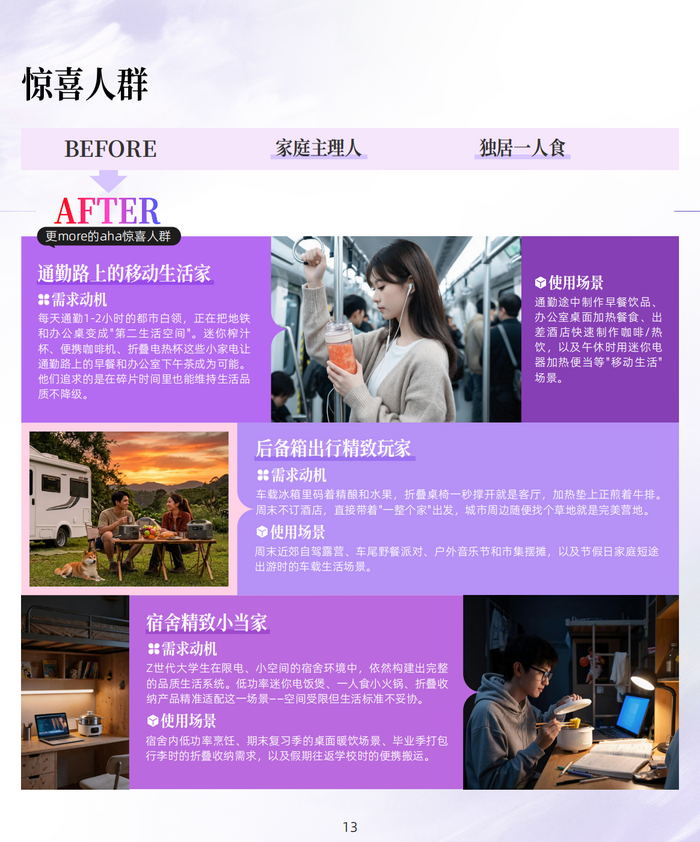
今年双11,真正的增量不在关键词搜索的明面上,而在那些消费人群自己都还没说出口的意图里。通勤装备被精简到“刚好够用”,居家服穿成身体的松弛感,香氛变成可携带的情绪疗愈,草本被泡成即时的养生方案——这些看似分散的选择,其实指向同一个信号:消费决策正从“功能满足”走向“感受驱动”。

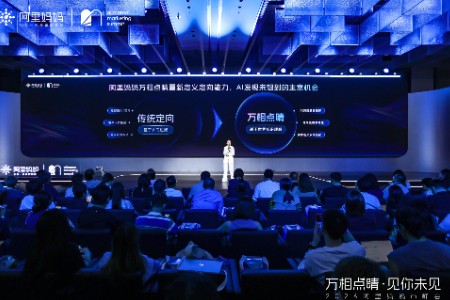
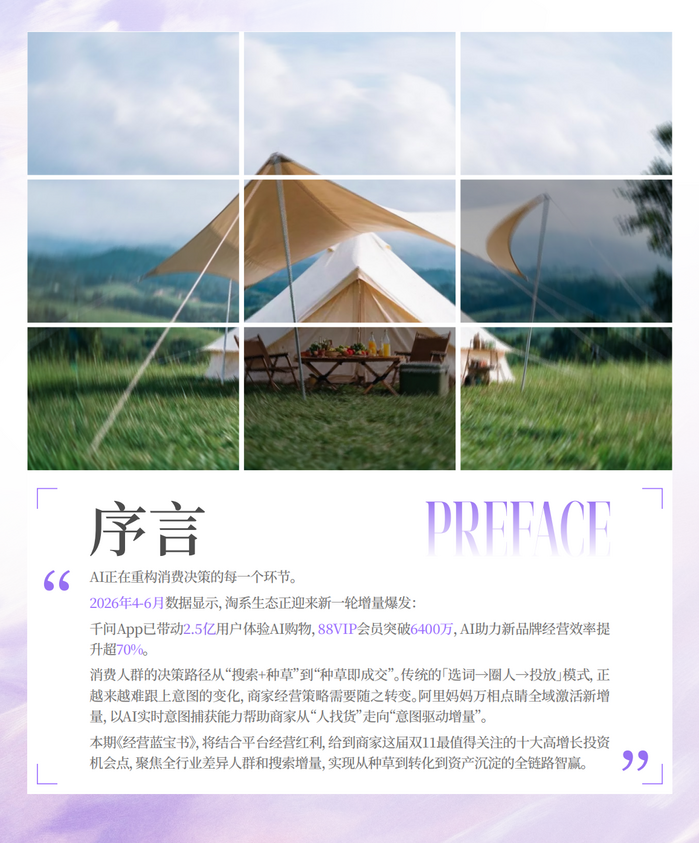
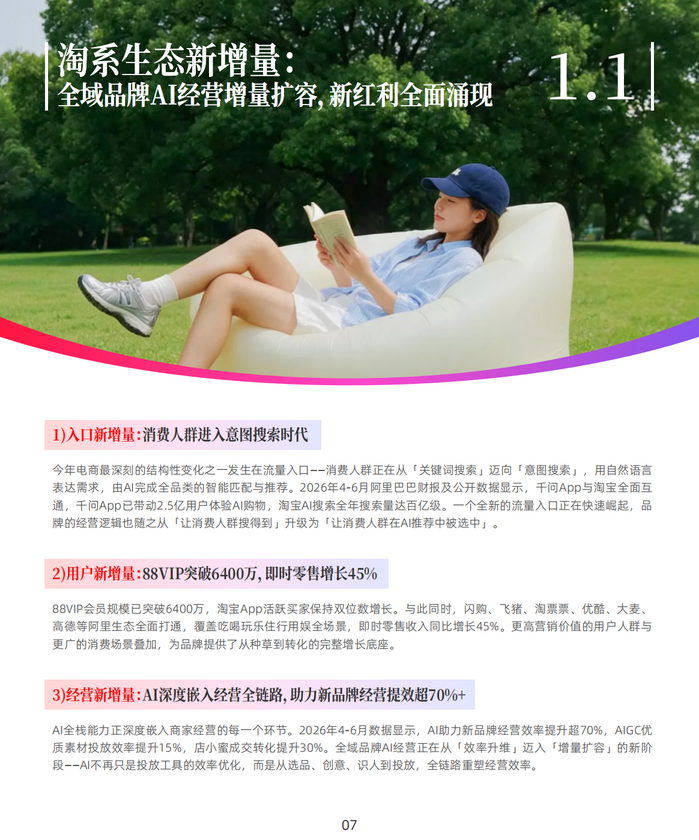
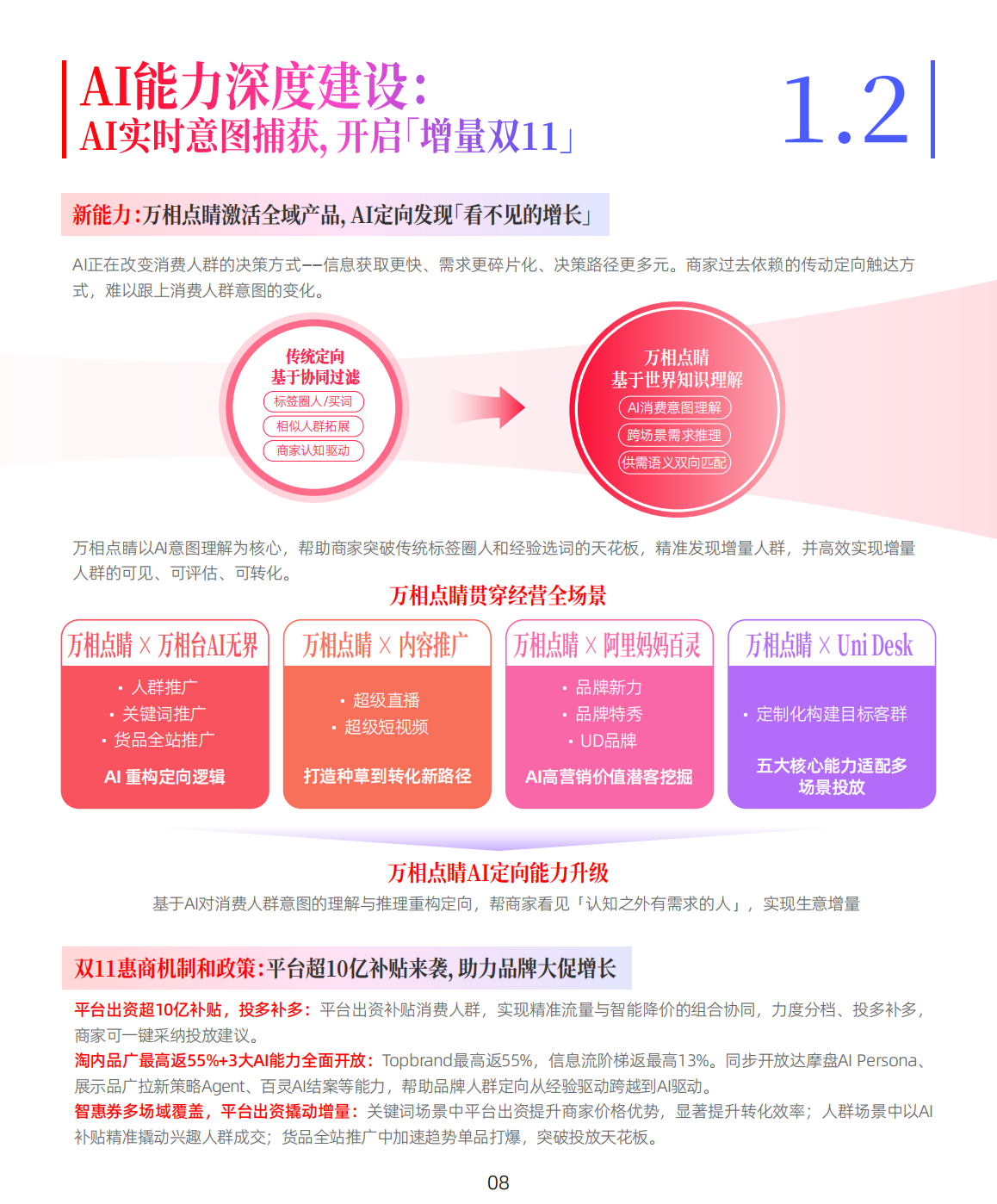
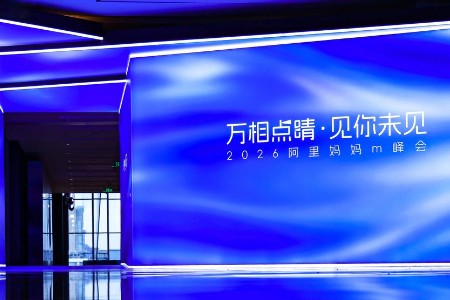
AI正在重构消费决策的每一个环节。2026年4-6月数据显示,淘系生态正迎来新一轮增量爆发:千问App已带动2.5亿用户体验AI购物,88VIP会员突破6400万,AI助力新品牌经营效率提升超70%——消费人群的决策路径,正从“搜索+种草”走向“种草即成交”,传统的“选词-圈人-投放”越来越难跟上意图的变化。当增量藏在自然语言的真实意图里,阿里妈妈「万相点睛」以AI实时意图捕获,帮商家从“人找货”走向“意图驱动增量”,让那些认知之外的需求被提前接住。

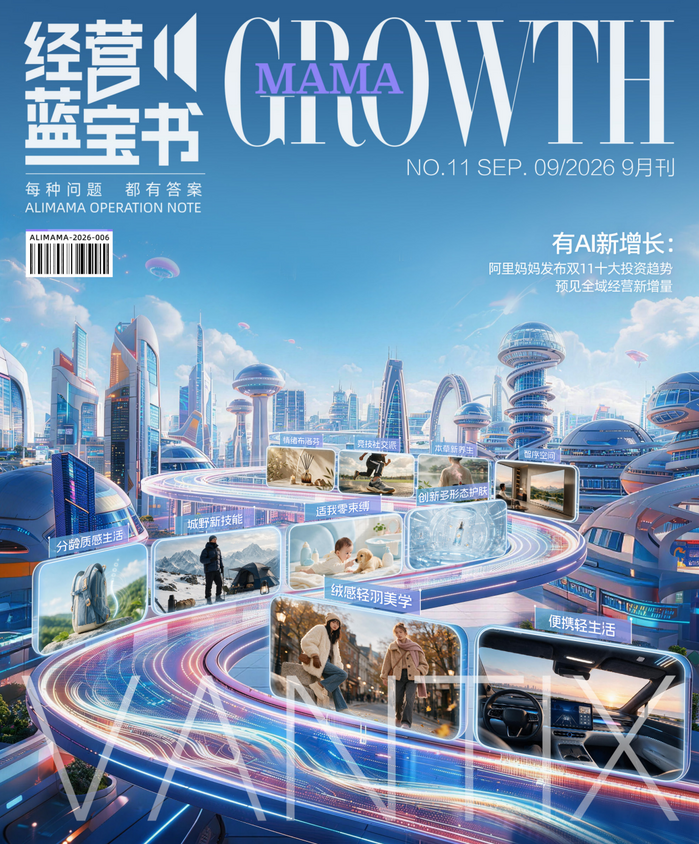
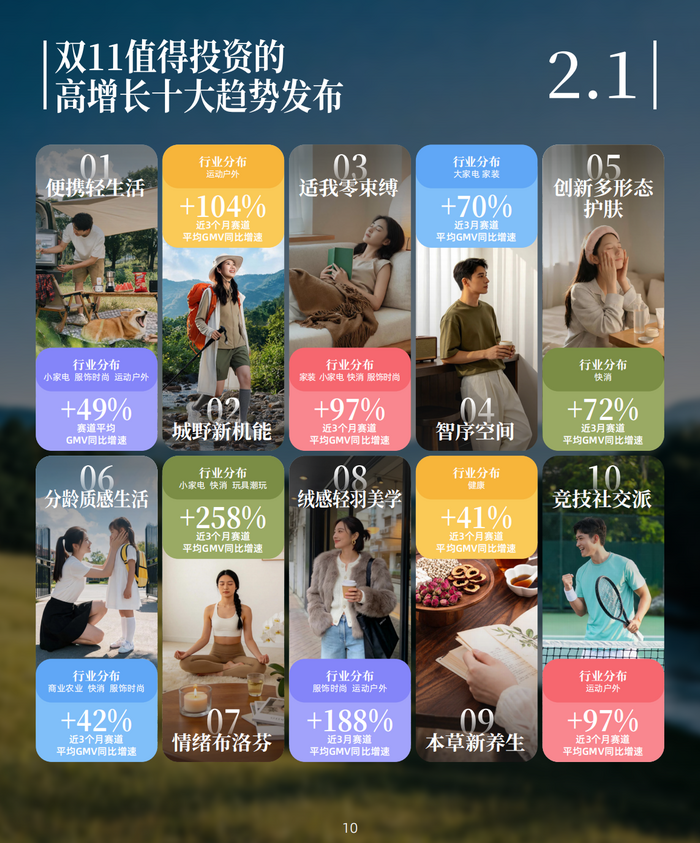
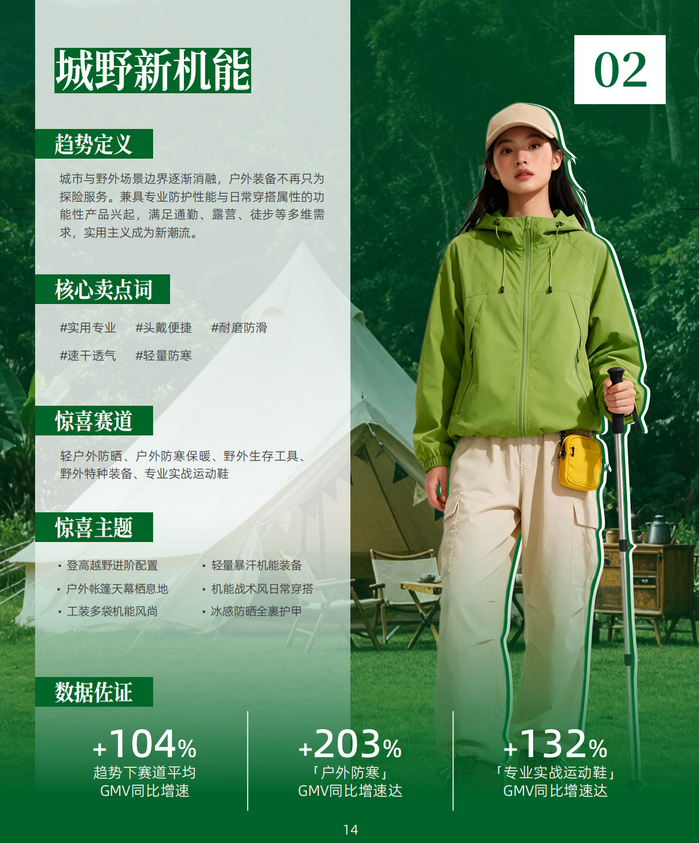
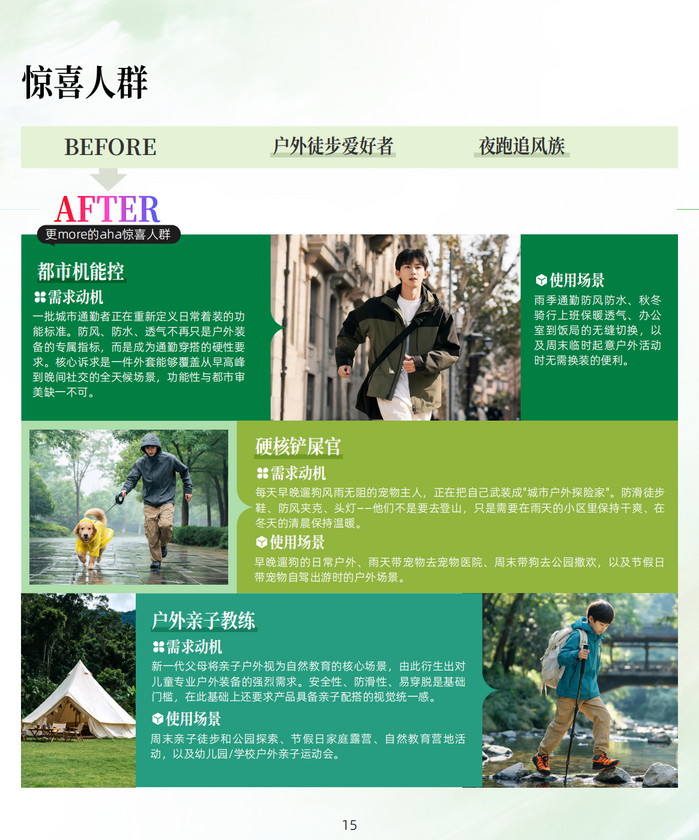
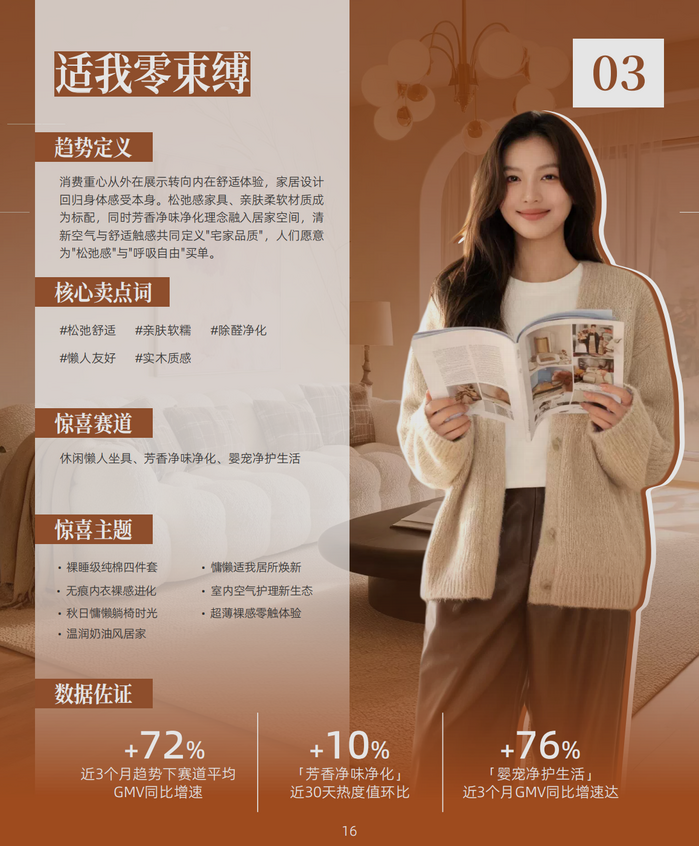
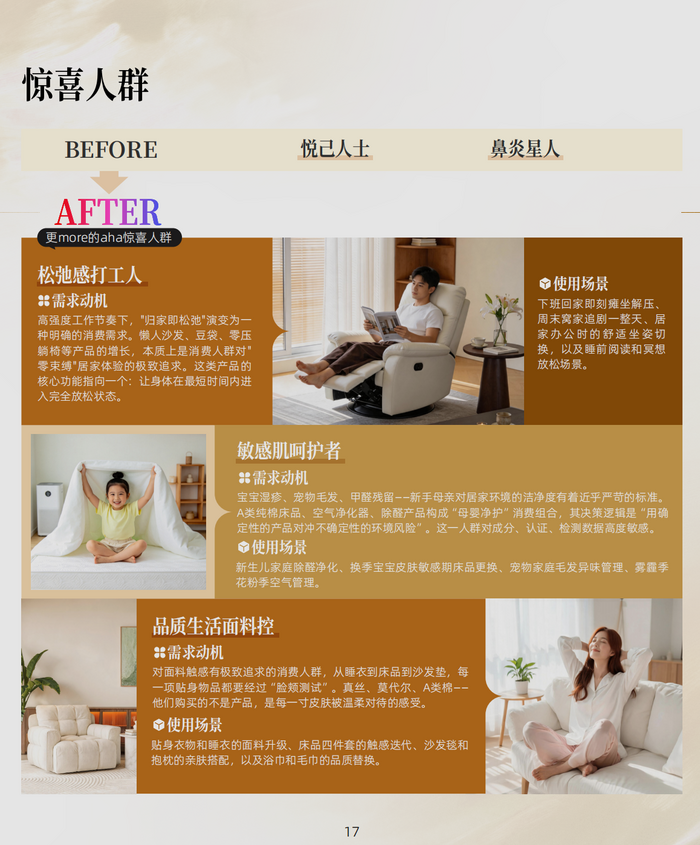
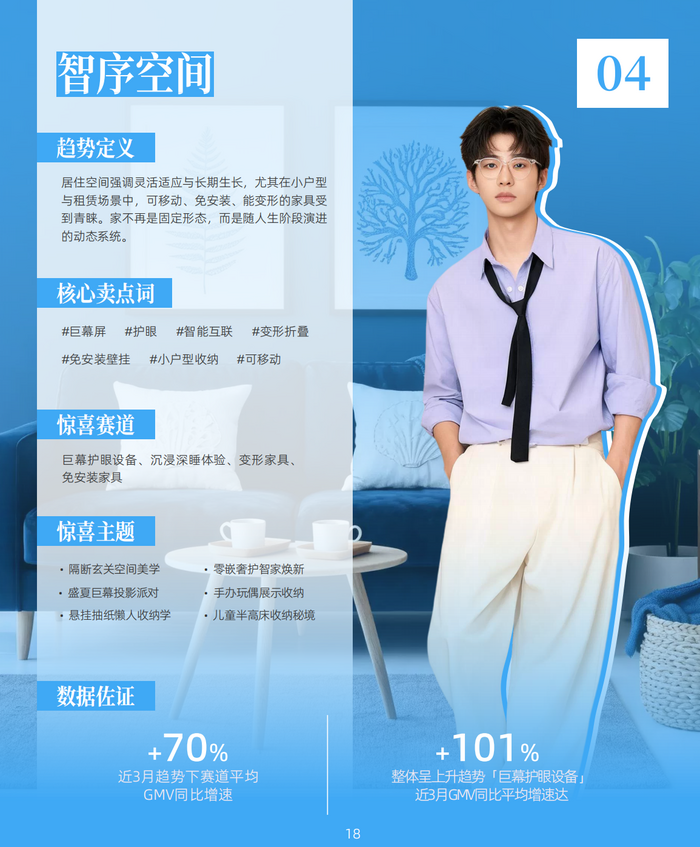
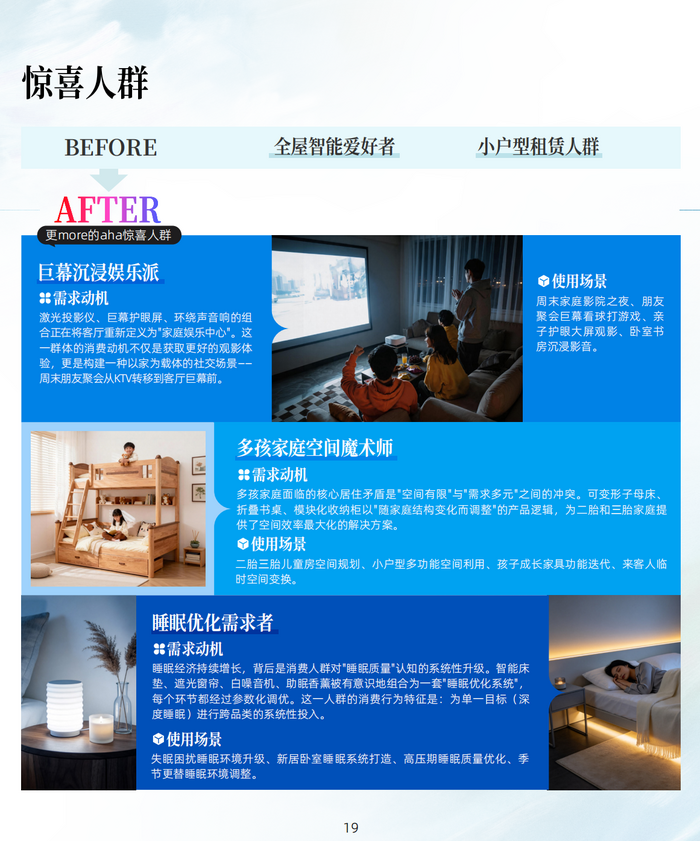
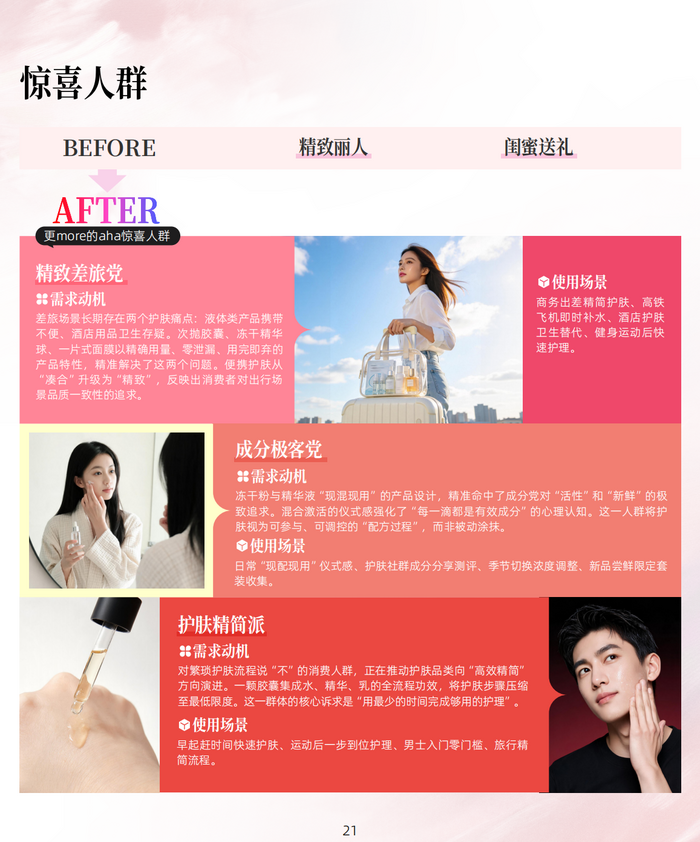
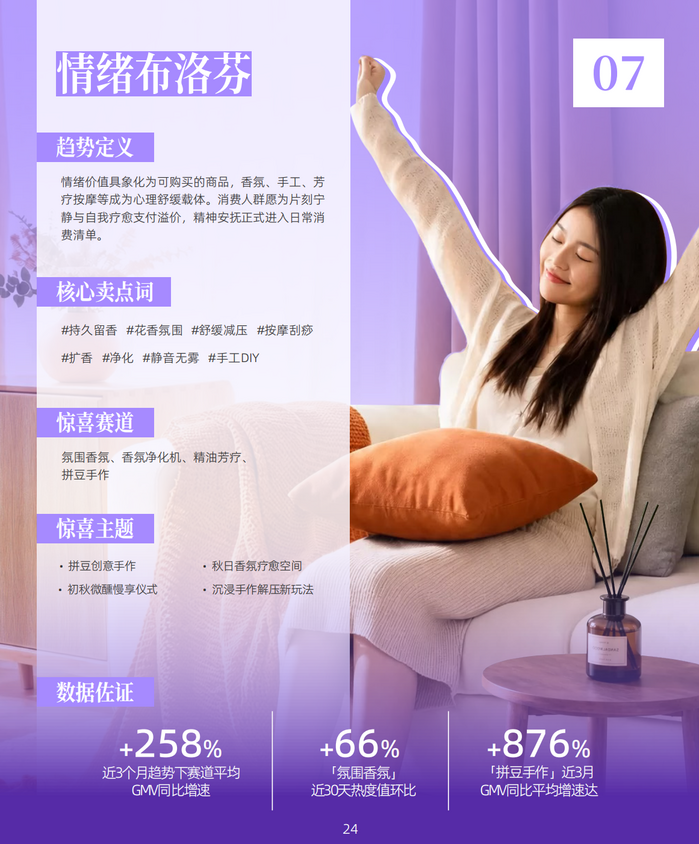
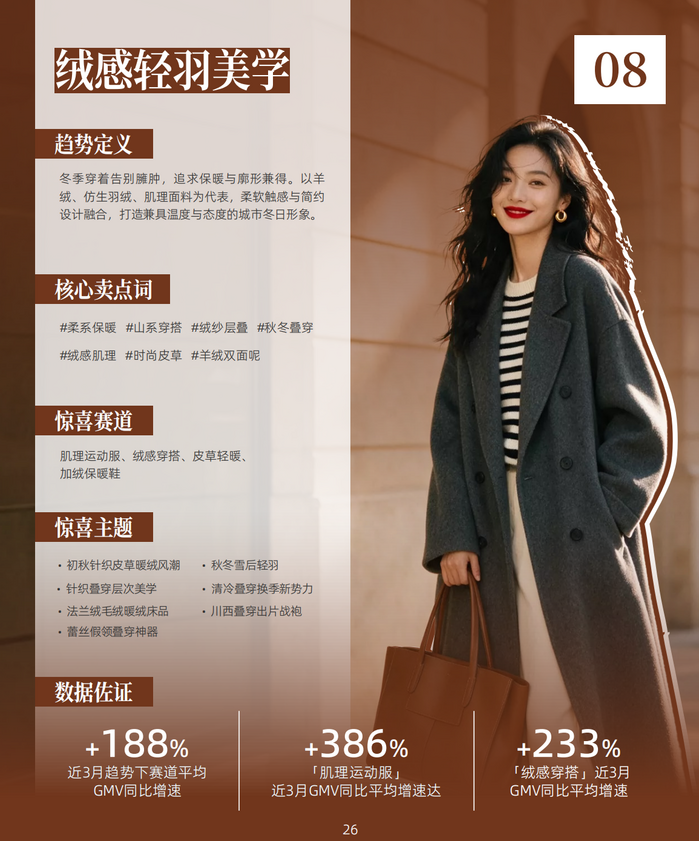
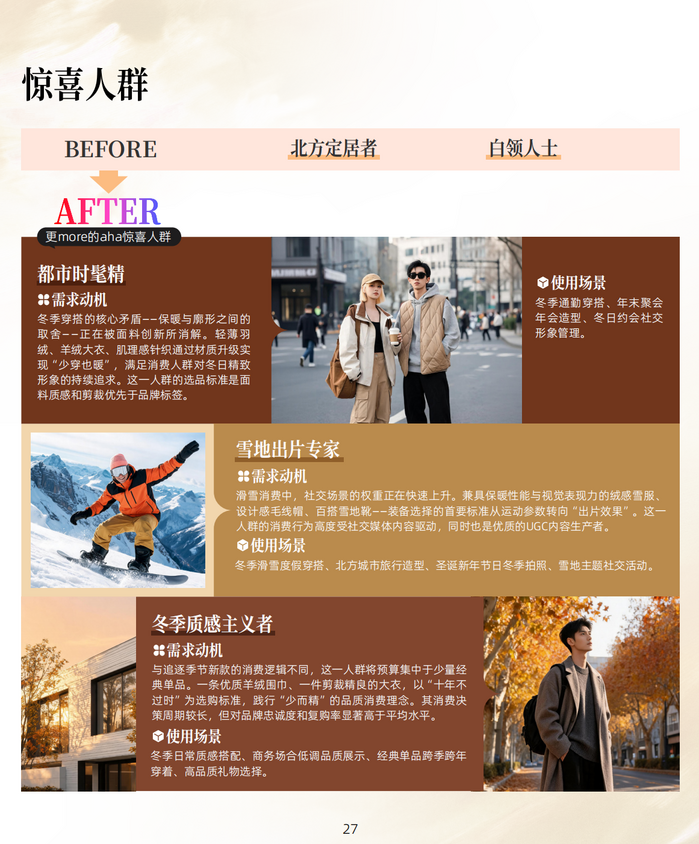
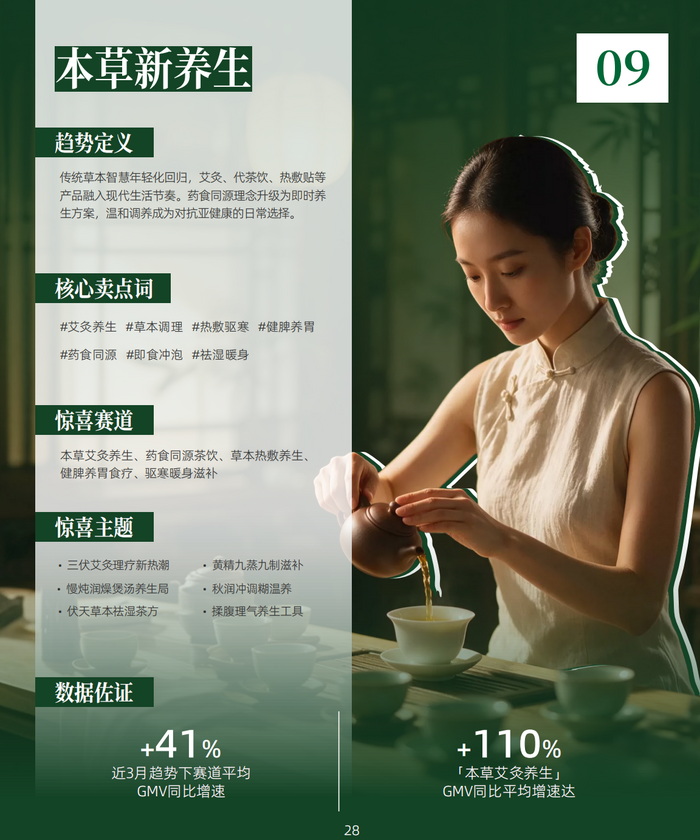
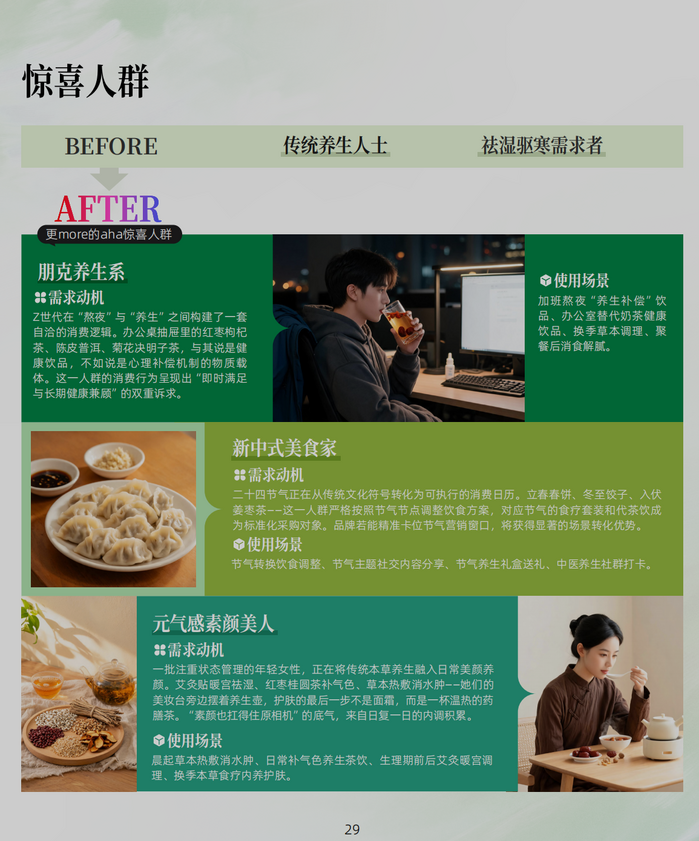
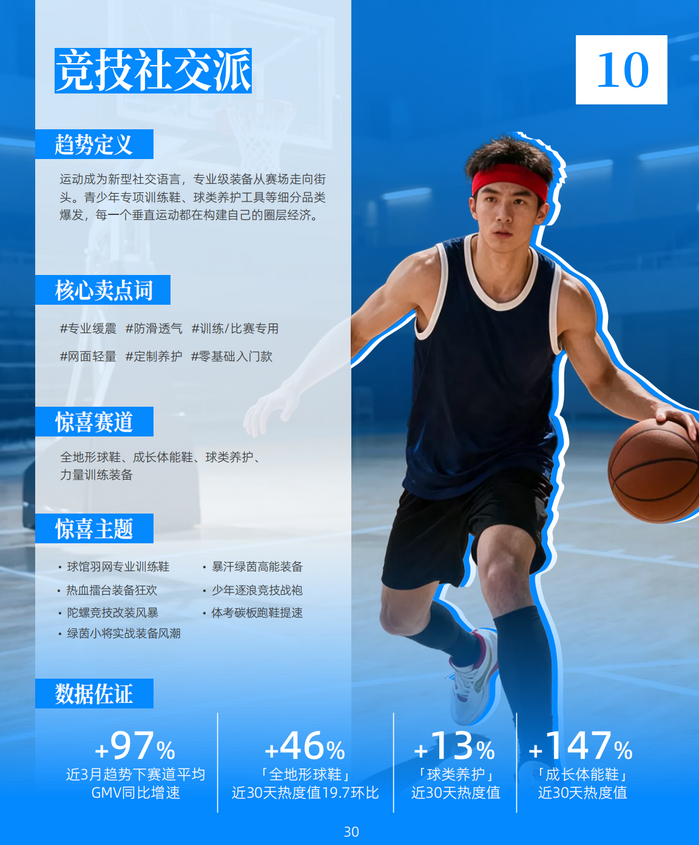
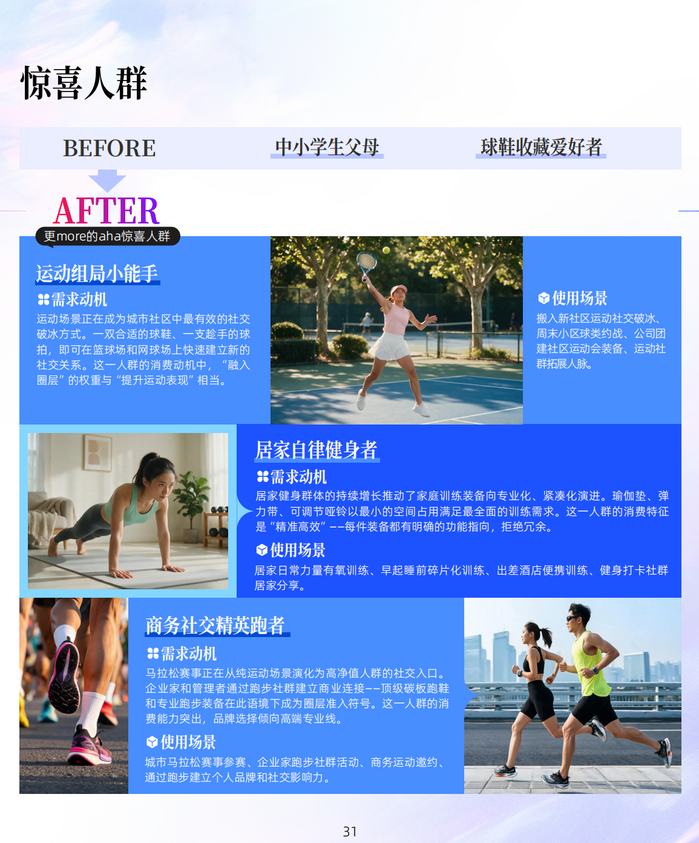
9月作为黄金蓄水期的战略窗口,基于万相点睛与品牌新力AI大数据,阿里妈妈筛选出十大高增长趋势赛道:便携轻生活、城野新机能、适我零束缚、智序空间、创新多形态护肤、分龄质感生活、情绪布洛芬、绒感轻羽美学、本草新养生、竞技社交派。它们共同揭示:消费人群的决策逻辑正从“功能满足”全面转向“感受驱动”,轻量化、情绪化、精细化、智能化成为值得关注的四大增量引擎。

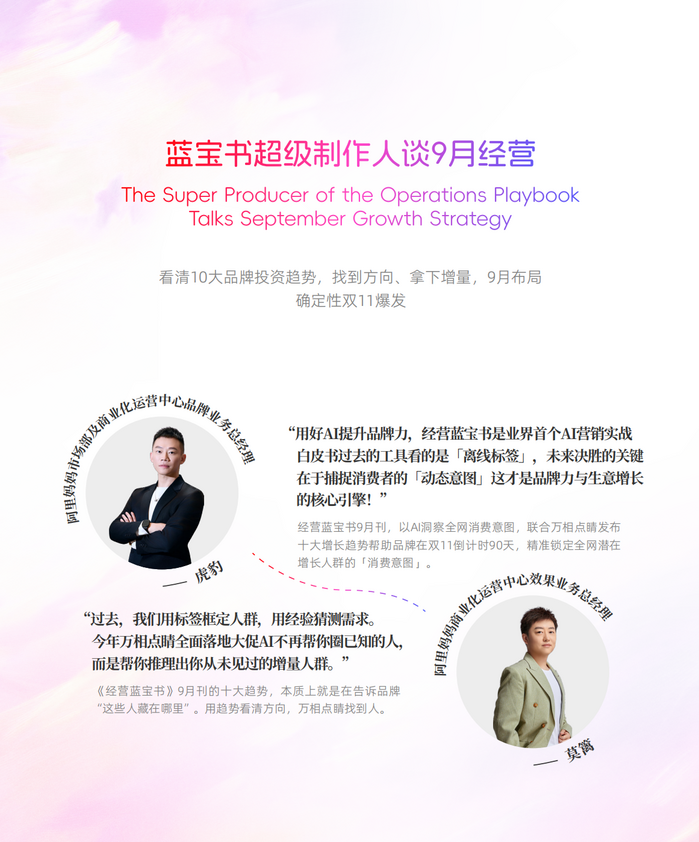
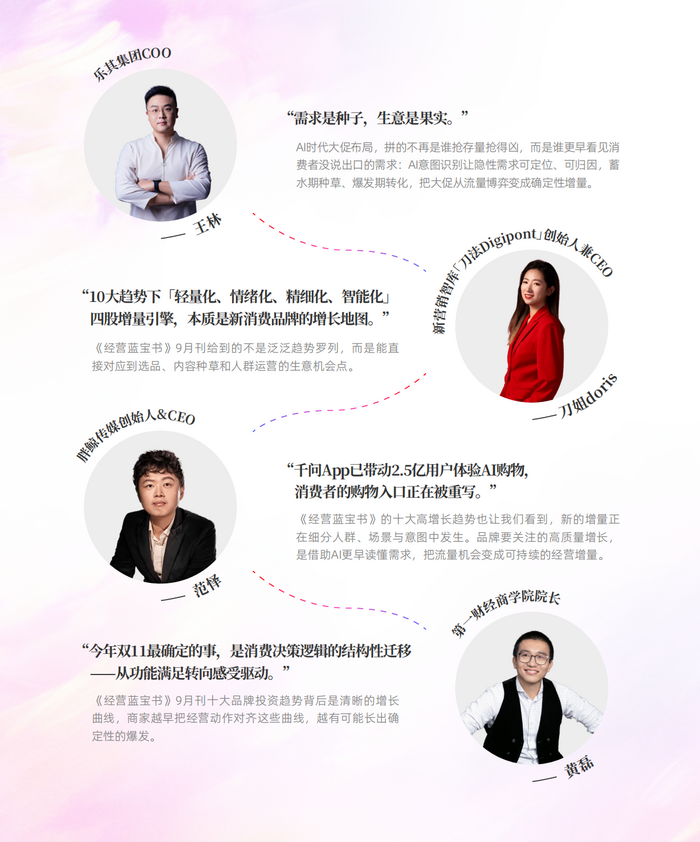
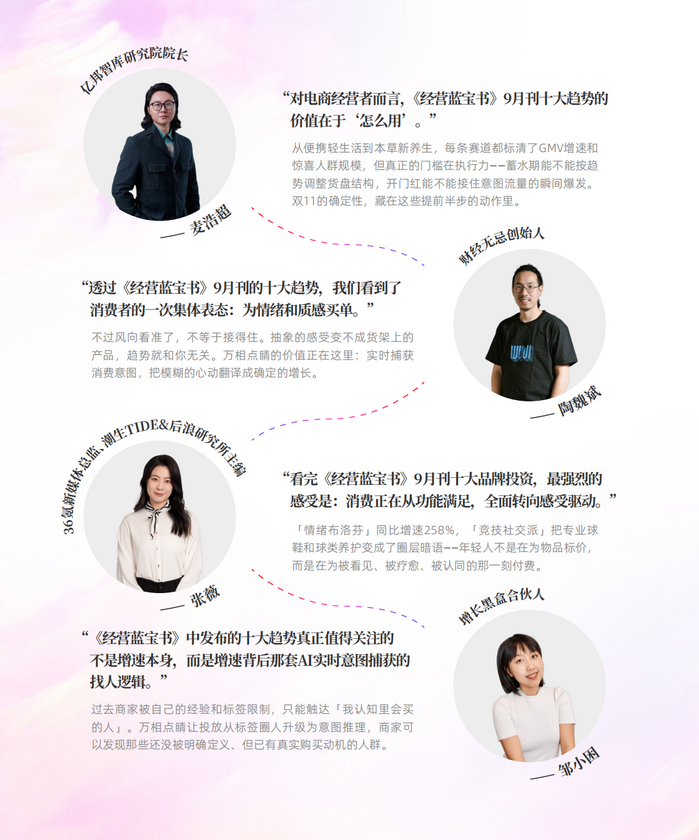
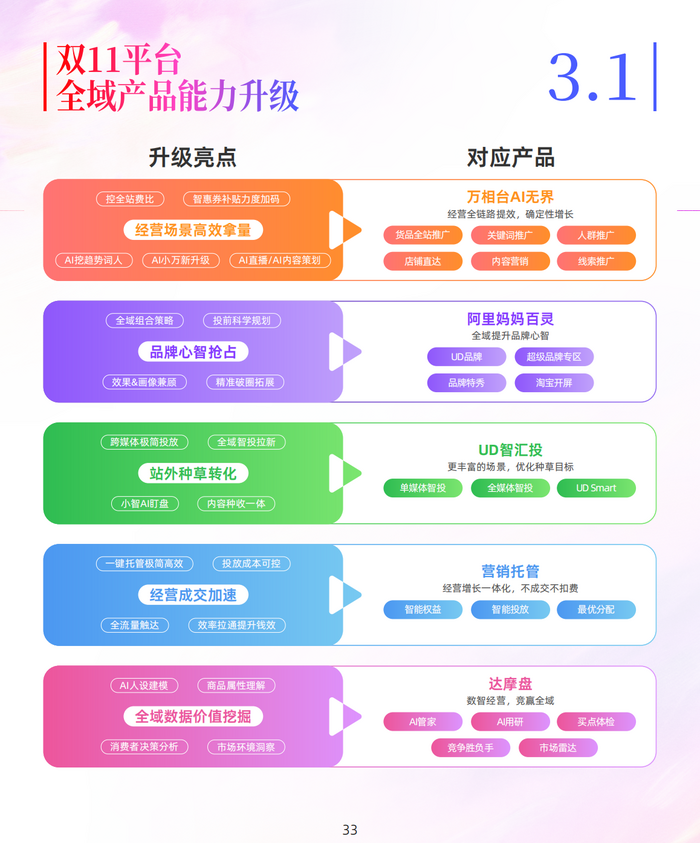
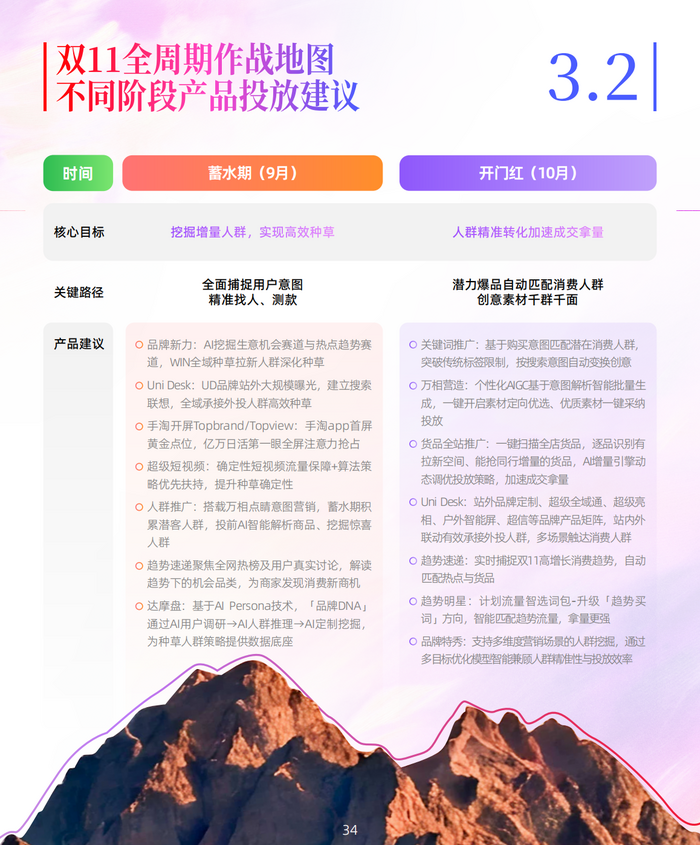
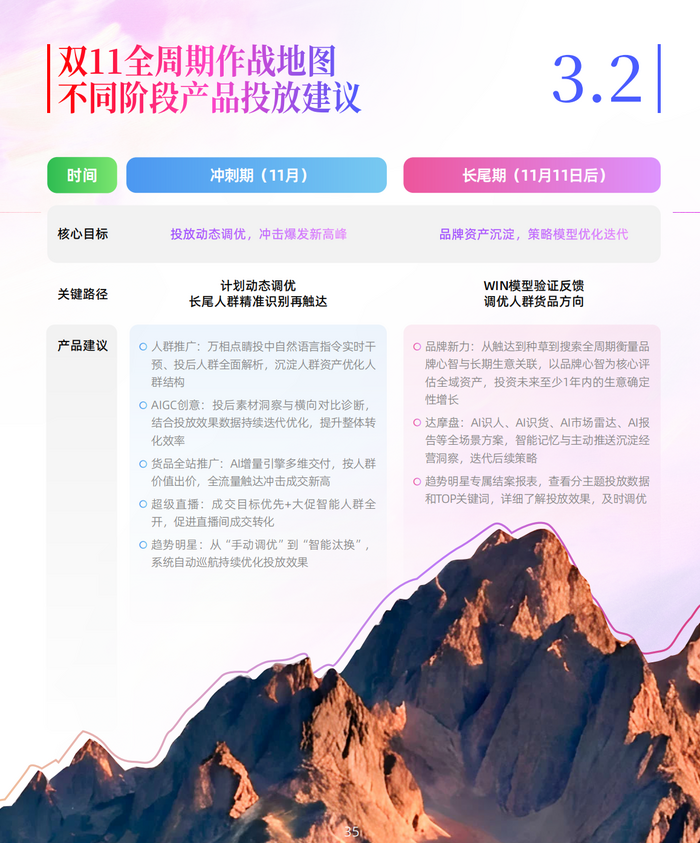
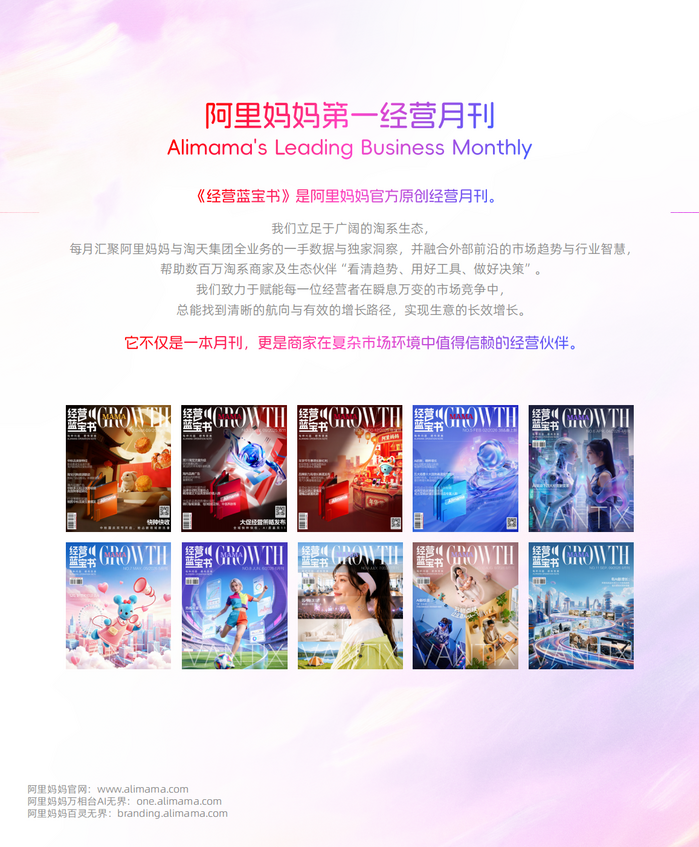
2026双11大促,阿里妈妈产品全域升级,「万相点睛」全面落地大促场景,从经营场景高效拿量到全域数据价值挖掘,覆盖万相台AI无界、阿里妈妈百灵等产品矩阵,全周期作战地图同步拉通,助力商家抢赢双11新增量。本期《经营蓝宝书》特邀十位业界大咖作为超级制作人,从平台视角、生态经营视角以及消费视角多维度领读9月的经营指南与双11投资机会点;更多趋势完整拆解与万相点睛全链路实操指引,欢迎下载阿里妈妈《经营蓝宝书》9月刊查看。

点击链接下载报告原文

注:文/龚作仁,文章来源:Laborer,本文为作者独立观点,不代表亿邦动力立场。

文章来源:Laborer

广告
微信
朋友圈

FAQ回顾

2026年双11有哪些值得商家关注的高增长消费赛道?

阿里妈妈基于万相点睛与品牌新力AI大数据,筛选出2026双11十大高增长趋势赛道,分别为便携轻生活、城野新机能、适我零束缚、智序空间、创新多形态护肤、分龄质感生活、情绪布洛芬、绒感轻羽美学、本草新养生、竞技社交派,指向轻量化、情绪化、精细化、智能化四大增量引擎。

AI工具如何帮助商家在大促中获取全域经营增量?

阿里妈妈「万相点睛」可实现AI实时意图捕获,帮助商家从"人找货"模式转向"意图驱动增量"。2026双11期间该产品全面落地大促场景,覆盖万相台AI无界、阿里妈妈百灵等产品矩阵,目前AI已助力淘系新品牌经营效率提升超70%。

当前国内消费决策逻辑发生了什么核心变化?

当前消费人群的决策逻辑正从"功能满足"全面转向"感受驱动",消费者对轻量化体验、情绪价值、精细化服务、智能化功能的需求持续提升,消费决策路径也从"搜索+种草"逐步走向"种草即成交"。

这么好看,分享一下?

朋友圈 分享

APP内打开

赞 +1
+1
微信好友 朋友圈 新浪微博 QQ空间
关闭
收藏成功
发送
/140 0