广告
加载中

WRC回顾 | 五天三项新突破 星源智跑出具身智能“加速度”

龚作仁 2026-08-25 10:50
龚作仁 2026/08/25 10:50

邦小白快读

EN
全文速览

本文总结了2026世界机器人大会上星源智在具身智能领域的三项核心突破,干货信息如下

1. 交互能力突破:星源智联合南京大学团队完成全球首次异构多本体协同实机验证,两台人形机器人摇绳、四足机器狗连续跳跃,实现不同形态机器人感知决策实时同步,打破单体智能局限,推动具身智能向多主体自主协同升级。

2. 模型技术突破:首发开源JEPA-WAM世界模型,仅0.5B参数,无需大规模预训练数据,大幅降低算力部署成本,和原有ω-EVA模型形成互补,实现世界模型从预测环境到服务机器人决策的跨越。

3. 硬件产品突破:推出N5C液冷端侧算力平台,散热能力达传统风冷3-15倍,适配工业户外复杂场景,同时缩减体积降低运维成本,完善了端侧产品矩阵。

星源智创始人提出,具身智能落地要算效果、效率、成本三笔账,端侧大脑是高阶具身智能落地的必选项。

本次星源智借世界机器人大会的品牌推广和技术布局,对具身智能领域品牌有较高参考价值,核心干货如下

1. 品牌营销方面:星源智打造异构多机跳长绳、人机乒乓球对打等可视化强的出圈演示,借助顶级行业展会的流量,快速强化自身技术领先的品牌认知,值得同类技术品牌参考。

2. 产业趋势方面:当前具身智能已经从技术概念Demo阶段转向落地验证阶段,市场和产业端越来越看重实际使用价值,品牌需要锚定真实场景的效率提升、成本下降来构建竞争力。

3. 产品布局方面:星源智完成算法、模型、硬件、场景的全维度布局,构建了从底层技术到落地场景的完整能力,符合当前具身智能“跨本体、跨场景、可落地、可量产”的发展方向,能更好获得产业端信任。

本次大会透露出具身智能领域的最新机会和发展逻辑,给相关领域卖家的经营提供参考,核心干货如下

1. 市场机会方面:当前工业场景对能替代人工的智能化机器人需求旺盛,高位登高作业、货物装卸等高危重复劳动场景,已经有成熟的落地方案,目前装卸效率已经达到和人工同速,能帮客户实现降本增效,市场空间广阔。

2. 选品经营逻辑:当前具身智能已经脱离概念竞争阶段,产业最终看效果、效率、成本三笔账,卖家选品和推广不能只拼技术概念,要重点突出产品能帮客户解决的实际问题,才能获得市场认可。

3. 合作机会:星源智已经开放开源模型,拥有覆盖不同需求的完整端侧产品矩阵,卖家可以依托现有成熟技术方案,快速切入不同细分场景,降低自身研发投入成本,更快推出落地产品。

本次大会发布的具身智能新成果,给工厂推进智能化升级、寻找商业机会带来不少启示,核心干货如下

1. 产品升级需求:当前工厂的工业作业场景,对机器人的稳定性、算力、环境适配性要求越来越高,新推出的N5C液冷端侧算力平台,解决了高阶智能带来的散热、体积、稳定性问题,适配工厂高温、多尘的复杂环境,工厂可以引入这类新硬件升级现有机器人设备。

2. 商业落地机会:具身智能已经能落地工厂的高位作业、货物装卸这类高频高危场景,可完全替代传统人工登高和多设备联动作业,目前已经完成场景验证,能帮工厂实现安全升级、效率提升和成本下降,已经有和实体企业合作落地的成品案例可参考。

3. 数字化升级启示:工厂推进机器人智能化升级,要优先落地能带来实际价值的场景,不要盲目追逐不落地的新技术概念,端侧智能化是未来的明确方向,要聚焦实际生产效率的提升。

当前具身智能产业的发展动态,给相关领域技术服务商的业务发展指明了方向,核心干货如下

1. 行业发展趋势:当前高阶具身智能已经明确了端侧大脑是落地必选项,技术方向聚焦多主体跨本体协同能力,世界模型核心价值是服务机器人决策行动,产业已经从技术研发转向规模化落地,服务商可以围绕这个方向布局业务。

2. 核心客户痛点:目前客户布局高阶具身智能,普遍面临数据算力成本过高、高算力带来的散热稳定性不足、多机器人协同能力不足的痛点,需要针对性的解决方案。

3. 可参考的解决方案:当前已经有成熟的技术路径可复用,小参数JEPA-WAM模型能降低数据算力成本,液冷散热架构解决高算力散热问题,原创异构协同框架解决多机器人跨本体配合问题,服务商可以基于这套成熟技术体系,针对不同行业客户开发定制化落地方案,拓展业务空间。

具身智能产业的发展,给机器人行业平台的运营和发展带来新的方向,核心干货如下

1. 产业对平台的需求:当前具身智能已经形成开源技术加全栈产品的生态,产业需要平台开放对接空间,链接技术方和落地场景方,推动技术成果快速转化,平台需要针对性构建开源生态对接板块,满足产业对接需求。

2. 招商运营方向:目前具身智能领域已经出现星源智这类拥有全栈技术、多个落地成果的头部企业,这类技术领先、有真实落地项目的企业是优质招商资源,引入这类企业能有效提升平台在智能机器人领域的影响力。

3. 风险规避方向:当前产业正从概念阶段转向价值落地阶段,平台要引导入驻企业锚定效果、效率、成本三个核心价值,避免过度炒作无落地的技术概念,规避产业泡沫风险,推动产业健康发展。

本次大会展现的成果和观点,呈现了具身智能领域最新的产业技术动向,对相关研究有较高参考价值,核心干货如下

1. 技术产业新动向:技术层面,多智能体交互实现了异构跨本体协同的实机验证,推动具身智能从单设备预设技能向多主体自主协同决策演进;世界模型形成了双路径互补的完整技术体系,完成了从预测世界到服务机器人决策的核心跨越;端侧算力硬件也实现技术突破,解决了高算力落地的散热体积痛点。

2. 产业核心新问题:当前产业最核心的问题是如何推动具身智能从Demo走向规模化落地,业界已经形成共识,落地需要以效果、效率、成本三个核心价值为检验标准,明确端侧大脑是高阶具身智能落地的必选项。

3. 产业发展模式:当前已经形成开源技术生态加全栈硬件产品加场景落地验证的发展模式,依托开源生态推进技术迭代,联合产业方做场景验证,是当前具身智能产业可行的发展路径。

返回默认
声明:快读内容全程由AI生成,请注意甄别信息。如您发现问题,请发送邮件至 run@ebrun.com 。

我是 品牌商 卖家 工厂 服务商 平台商 研究者 帮我再读一遍。

Quick Summary

This article summarizes three core breakthroughs Xingyuan Intelligence achieved in embodied intelligence at the 2026 World Robot Conference, as detailed below:

1. Breakthrough in interaction capability: Xingyuan Intelligence, in collaboration with a Nanjing University team, completed the world’s first real-world verification of heterogeneous multi-agent coordination. Two humanoid robots worked together to turn a jump rope while a quadruped robot dog jumped continuously, achieving real-time synchronized perception and decision-making across robots of different forms. This breakthrough breaks the limits of single-agent intelligence and advances embodied intelligence toward multi-agent autonomous collaboration.

2. Breakthrough in model technology: The company open-sourced its first JEPA-WAM world model with only 0.5B parameters, which eliminates the need for large-scale pre-training datasets and drastically reduces computing and deployment costs. Complementing the existing ω-EVA model, the new model enables a key leap for world models from merely predicting environments to powering robot decision-making.

3. Breakthrough in hardware products: Xingyuan launched the N5C liquid-cooled edge computing platform, which delivers 3 to 15 times the heat dissipation capacity of traditional air-cooled systems. The platform is adapted for complex industrial and outdoor scenarios, while also reducing size and maintenance costs to complete the company’s edge product portfolio.

Xingyuan Intelligence’s founder notes that successful embodied intelligence deployment requires accounting for three bottom lines: effectiveness, efficiency and cost, and edge-side processing chips ("edge brains") are a mandatory requirement for the deployment of high-level embodied intelligence.

Xingyuan Intelligence’s brand promotion and technology roadmap unveiled at the World Robot Conference offer valuable insights for brands in the embodied intelligence sector, as outlined below:

1. Brand marketing: Xingyuan created highly visual and viral demos including heterogeneous multi-robot rope jumping and human-robot table tennis matches. Leveraging the traffic of a top-tier industry exhibition, it quickly established brand recognition as a technology leader. This approach is a strong reference for peer technology brands.

2. Industry trends: Embodied intelligence has moved beyond the concept demonstration stage into real-world validation. The market and industry increasingly prioritize practical value, so brands must build competitive advantages by focusing on efficiency improvements and cost reduction for real-world use cases.

3. Product strategy: Xingyuan has built full-stack capabilities covering algorithms, models, hardware and use cases, completing the value chain from underlying technology to real-world deployment. This aligns with the current embodied intelligence development direction of "cross-ontology, cross-scenario, deployable and mass-producible," helping it gain greater trust from the industry.

The conference revealed the latest opportunities and development logic in embodied intelligence, offering operational guidance for sellers in related sectors. Key takeaways are as follows:

1. Market opportunities: There is strong industrial demand for intelligent robots that can replace human workers. Mature deployment solutions already exist for high-risk repetitive work scenarios such as high-altitude operation and cargo handling, where current loading and unloading efficiency matches that of human workers. These solutions help customers cut costs and boost productivity, opening up enormous market opportunities.

2. Product selection and operation logic: Embodied intelligence is no longer a competition of empty concepts. The industry ultimately measures success by effectiveness, efficiency and cost. Sellers should not rely solely on technical hype for product selection and marketing; instead, they must highlight the practical problems their products solve for customers to win market recognition.

3. Cooperation opportunities: Xingyuan has open-sourced its models and built a complete edge product portfolio covering diverse demands. Sellers can leverage these mature existing technology solutions to quickly enter different niche segments, reduce their own R&D investment, and launch deployable products faster.

The new embodied intelligence achievements released at the conference offer important insights for factories advancing intelligent upgrading and exploring business opportunities, as summarized below:

1. Product upgrading demands: Industrial operation scenarios are increasingly demanding higher robot stability, computing power and environmental adaptability. The newly launched N5C liquid-cooled edge computing platform solves the heat dissipation, size and stability challenges brought by high-level artificial intelligence, and is adapted to the complex high-temperature, dusty environments common in factories. Factories can introduce this new hardware to upgrade their existing robot fleets.

2. Commercial deployment opportunities: Embodied intelligence is already deployable for high-frequency, high-risk factory scenarios such as high-altitude operations and cargo handling, where it can fully replace traditional human high-altitude work and multi-device coordinated operation. The solution has already completed scenario validation, helping factories improve safety, boost efficiency and cut costs, with finished deployment cases at real enterprises available for reference.

3. Insights for digital upgrading: When advancing intelligent robot upgrading, factories should prioritize deployment in scenarios that deliver immediate practical value instead of blindly chasing unproven new technical concepts. Edge-side intelligence is a clear future direction, so factories should keep their focus on improving actual production efficiency.

Current industry dynamics in embodied intelligence point out clear development directions for technology service providers in this field, with key insights as follows:

1. Industry development trends: It is now clear that edge-side "brains" are mandatory for deploying high-level embodied intelligence, and technical development is focused on multi-agent cross-ontology coordination capabilities. The core value of world models now lies in powering robot decision-making and action. The industry has shifted from technology R&D to large-scale deployment, so service providers can build their business strategies around this direction.

2. Core customer pain points: Customers developing high-level embodied intelligence currently face common pain points including high data and computing costs, poor heat dissipation and stability for high-performance computing, and insufficient multi-robot coordination capabilities. There is strong demand for targeted solutions to these problems.

3. Reference solutions: Mature technical pathways are already available for reuse. The small-parameter JEPA-WAM model reduces data and computing costs; the liquid-cooled architecture solves heat dissipation challenges for high-performance computing; and the proprietary heterogeneous coordination framework enables cross-ontology cooperation between multiple robots. Service providers can build on this mature technology system to develop customized deployment solutions for clients across different industries and expand their business scope.

The development of the embodied intelligence industry points out new directions for the operation and growth of robotics industry platforms, as outlined below:

1. Industry demand for platforms: The embodied intelligence sector has already formed an ecosystem of open-source technology plus full-stack products. The industry needs platforms to provide open integration interfaces that connect technology developers with scenario partners to accelerate the translation of technical achievements into real applications. Platforms need to build dedicated open-source ecosystem integration sections to meet this industry demand.

2. Investment attraction and operation direction: The sector has already produced leading full-stack technology companies like Xingyuan Intelligence with multiple real-world deployment achievements. These technology-leading companies with proven deployed projects are high-quality investment targets. Attracting such companies can effectively boost a platform’s influence in the intelligent robotics space.

3. Risk mitigation: As the industry transitions from the concept stage to value-driven deployment, platforms should guide resident companies to anchor their development around the three core values of effectiveness, efficiency and cost. Platforms need to discourage excessive hype of unproven, non-deployable technical concepts to avoid industry bubble risks and support the healthy development of the sector.

The achievements and insights presented at the conference reveal the latest industry and technology trends in embodied intelligence, offering valuable reference for related research, as summarized below:

1. New technology and industry trends: On the technical side, multi-agent interaction has achieved real-world validation of heterogeneous cross-ontology coordination, advancing embodied intelligence from single-device pre-programmed skills to multi-agent autonomous collaborative decision-making. For world models, a complete dual-path complementary technology system has been formed, completing the core leap from predicting the world to powering robot decision-making. Edge computing hardware has also achieved technical breakthroughs, solving the heat dissipation and size challenges for high-performance computing deployment.

2. New core industry challenges: The most central question the industry currently faces is how to move embodied intelligence from demonstration to large-scale deployment. Industry consensus has emerged that deployment must be measured against the three core metrics of effectiveness, efficiency and cost, and it is now clear that edge-side brains are a mandatory requirement for high-level embodied intelligence deployment.

3. Industry development model: A development model of open-source technology ecosystem plus full-stack hardware products plus scenario-based deployment validation has taken shape. Advancing technology iteration through an open-source ecosystem and conducting scenario validation in partnership with industry players is a proven viable development pathway for the current embodied intelligence industry.

Disclaimer: The "Quick Summary" content is entirely generated by AI. Please exercise discretion when interpreting the information. For issues or corrections, please email run@ebrun.com .

I am a Brand Seller Factory Service Provider Marketplace Seller Researcher Read it again.

8月19日-23日,2026世界机器人大会(WRC)在北京举行,星源智以“具身大脑·交互世界”为主题亮相,五天时间里,从全球首创异构多机协同跳长绳,到World Model新成果JEPA-WAM、N5C液冷端侧算力平台接蹱发布,密集释放具身智能技术、产品与产业化新进展。

出圈实景演示:全球首现异构多本体协同,定义多智能体交互新高度

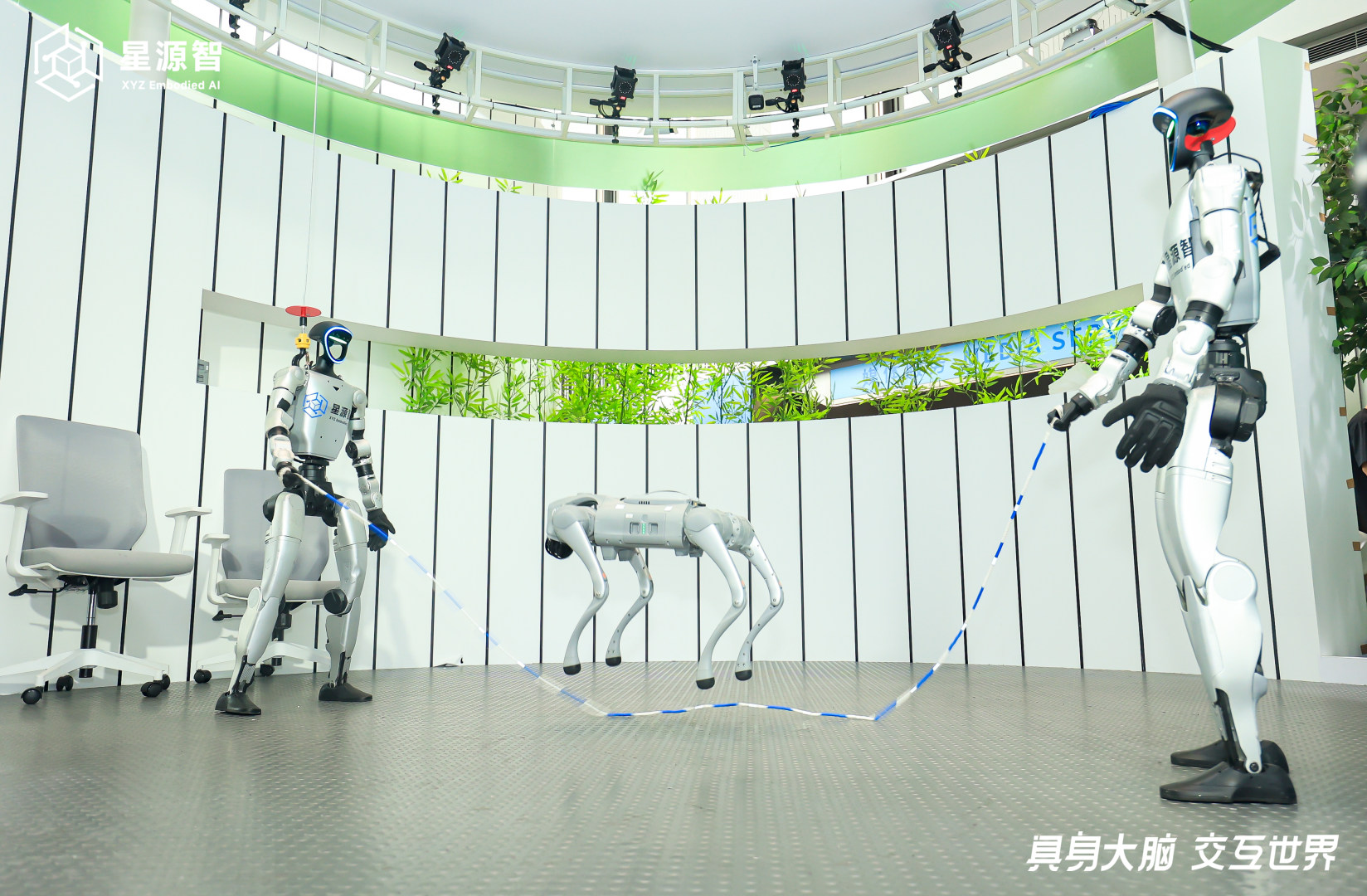
展会首日,星源智联合南京大学LAMDA团队打造的“灵机腾跃”异构多机协同跳长绳演示成为全场焦点。现场两台人形机器人精准协同摇绳,四足机器狗跟随绳索动态节奏完成连续稳定跳跃,不同形态、不同结构的机器人本体实现感知、决策、行动的实时同步闭环配合。全球首次实现人形机器人与四足机器狗跨本体协同跳长绳实机验证,刷新机器人多主体协同交互能力新标杆。

该演示依托星源智自研RoboBrain Pro具身大脑与原创异构具身协同学习框架,通过分层协同学习、闭环反馈机制实现长绳稳定操控与跨主体动作精准同步,结合多智能体强化学习技术,让不同机器人主体在持续动态交互中自主迭代协作策略。这一突破彻底打破传统机器人单体智能局限,推动具身智能从“单设备预设技能执行”向“多主体自主协同决策”的高阶形态演进。

图:会客厅·具身花园“灵机腾跃”机器人跳长绳展示现场

世界模型重磅首发:全新开源JEPA-WAM,重构机器人环境认知逻辑

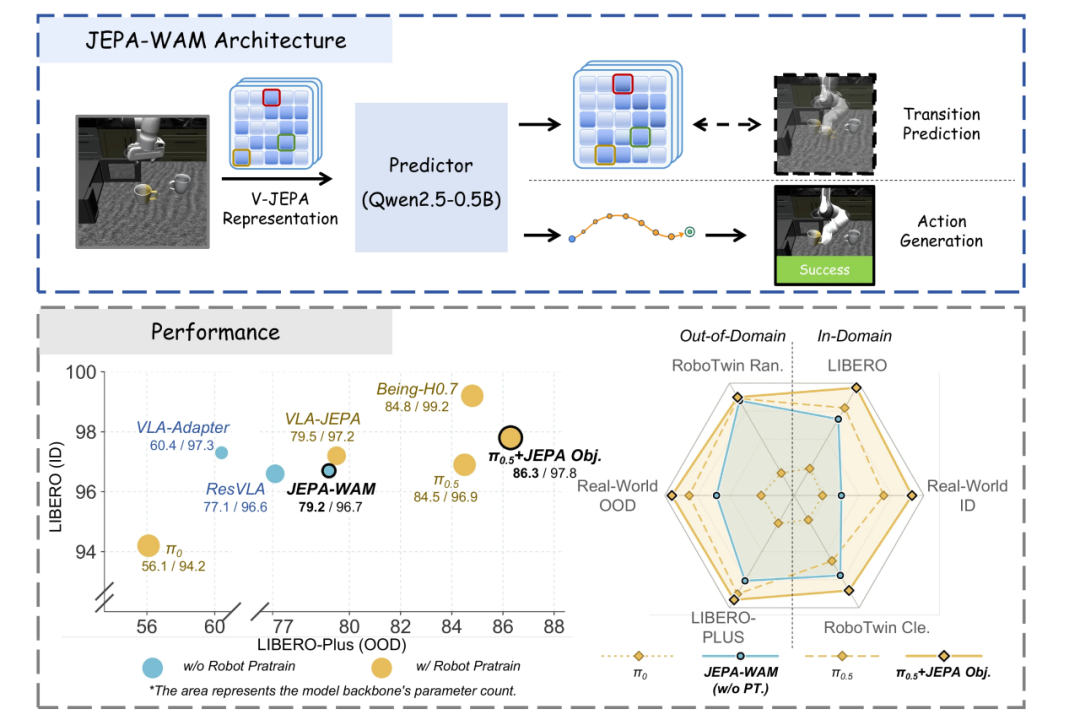
产品之外,星源智在World Model方向也继续向前推进。最新发布的JEPA-WAM学习环境时序变化规律,并通过首创Shared Predictor共享预测器架构,将世界建模与动作生成进一步打通。JEPA-WAM基座模型仅0.5B参数,无需大规模机器人预训练数据和像素级未来视频生成,在降低数据、算力和部署成本的同时,为机器人策略补充环境动态先验。

图:JEPA-WAM的概述与性能表现

从此前发布的ω-EVA具身交互世界模型,到全新JEPA-WAM模型,星源智构建起完整的世界模型技术体系:ω-EVA聚焦“预判行动后果”,通过未来状态预演优化即时动作;JEPA-WAM聚焦“理解环境变化”,以时序规律学习赋能策略迭代,双技术路径互补,真正实现世界模型从“预测世界”到“服务机器人决策行动”的核心跨越。

全新产品登场:N5C液冷端侧算力平台问世,筑牢机器人高算力端侧底座

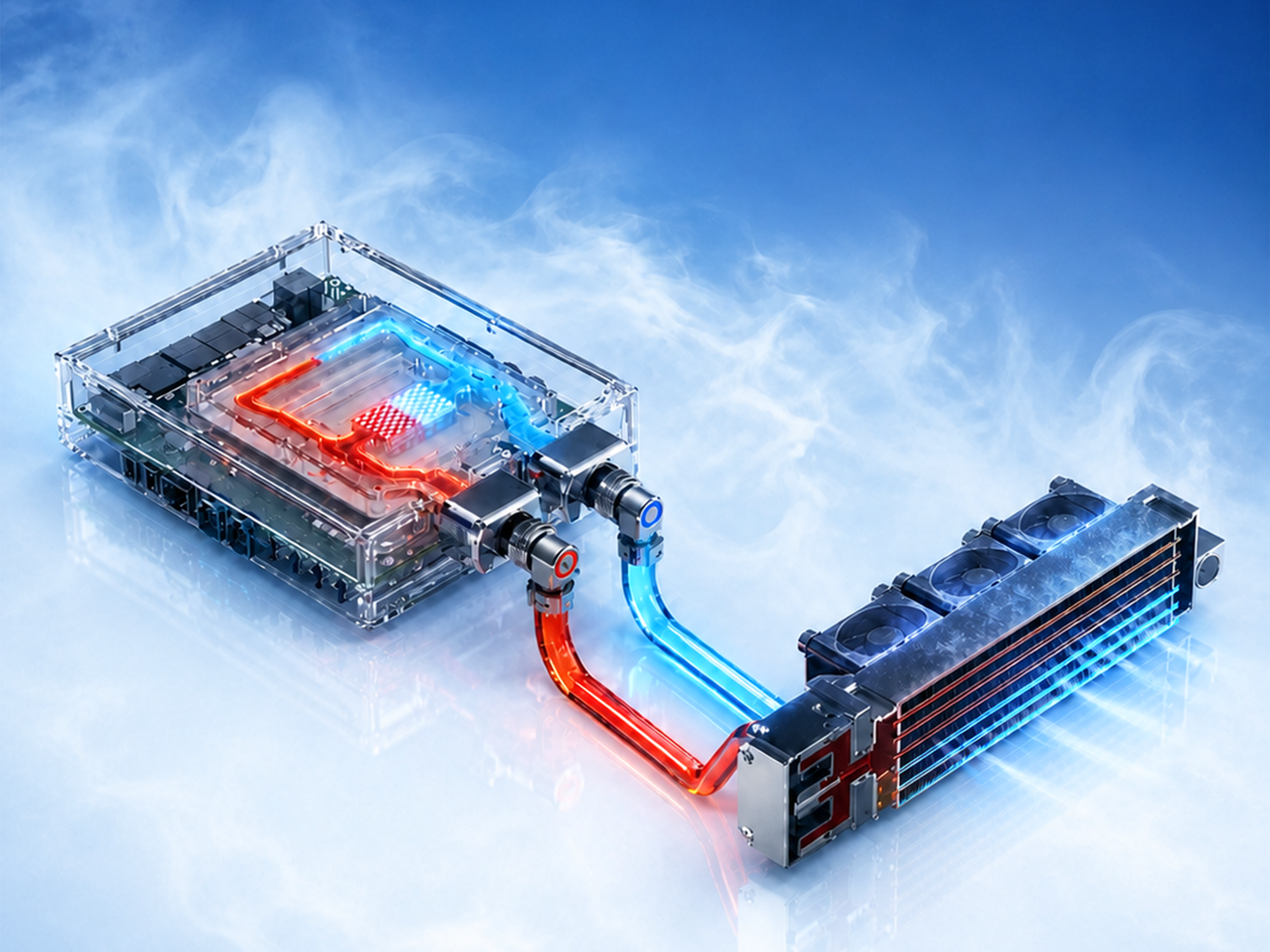
伴随算法模型的持续迭代,星源智具身大脑端侧平台矩阵也迎来新成员——N5C液冷系列正式发布。专为高功率密度机器人端侧计算打造,解决高阶具身智能算力提升带来的散热、体积、稳定性难题。

图:星源智N5C液冷端侧平台新品

该平台搭载THOR T5000高性能端侧计算核心,创新采用液冷循环散热架构,散热能力达到传统风冷的3–15倍,在70℃高温复杂环境下可稳定运行,同时具备IP56防尘防水等级,适配各类工业、户外复杂作业场景。硬件结构全面优化,机身厚度从60mm缩减至40mm,大幅节省机器人内部安装空间;同时实现低噪音、低振动运行,搭配易维护快插接口,大幅降低设备运维成本。值得一提的是,N5C搭载自研C++边缘推理框架RoboInfer,适配PI05、GR00T、Fast-WAM、JEPA-WAM。

随着N5C加入,星源智已形成T5、N5、N5C、BotPack B等端侧产品组合,进一步覆盖不同机器人形态、部署空间与散热需求,让具身智能的端侧部署拥有更多选择。

场景落地实证:端侧支撑真实任务,产业化要算清价值账

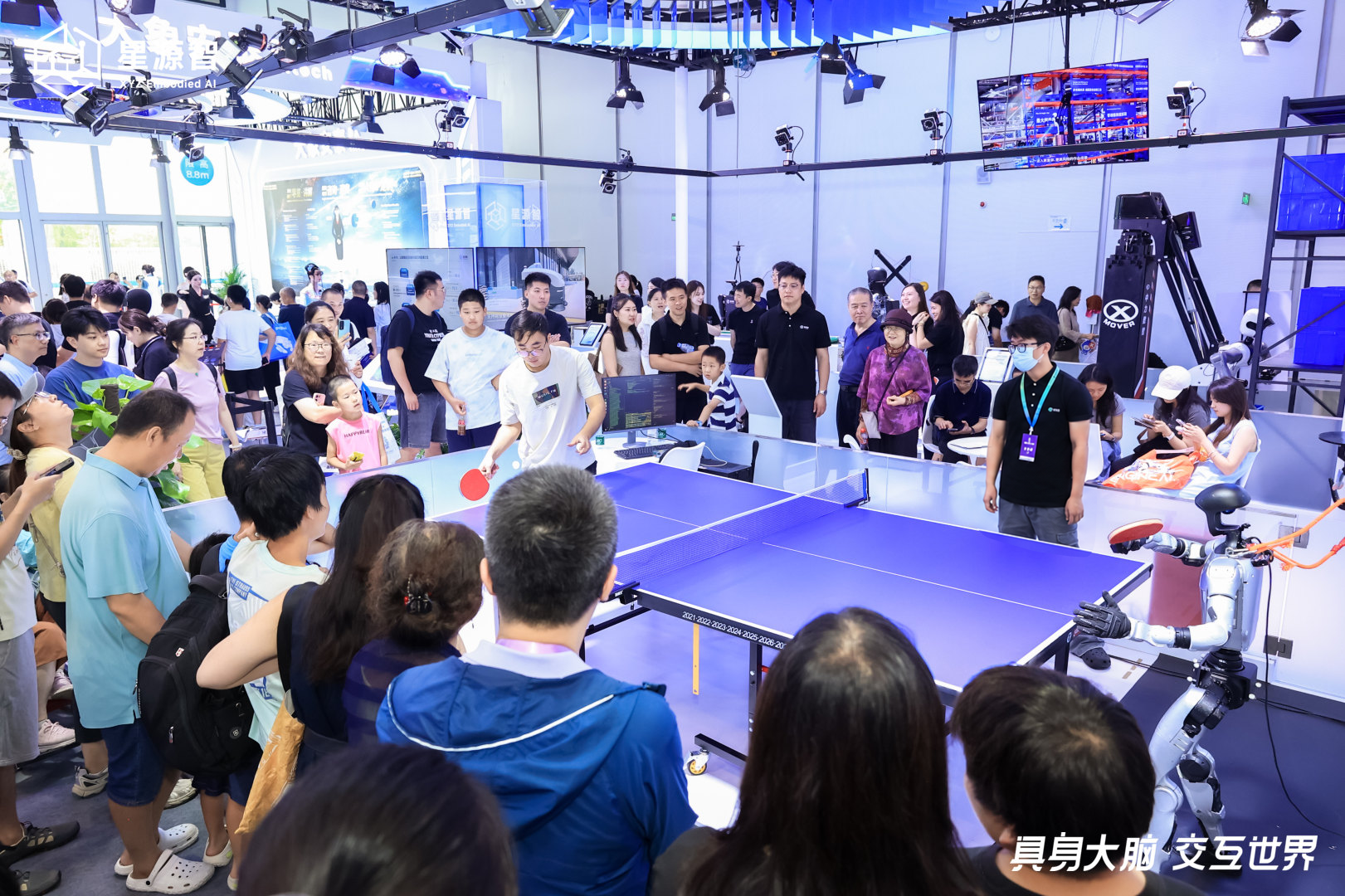
此次WRC期间,星源智集中展示具身智能在工业作业与动态交互场景中的落地进展。与中力股份联合打造的10米级高位作业机器人“擎天柱”首次公开展出,可替代传统人工登高及多设备联动作业;具身装卸解决方案已实现单车装卸90秒、双车协同装卸1分钟,与人工操作同速。搭载ω-EVA具身交互世界模型的机器人则通过人机乒乓球对打,展示世界模型进入动作决策闭环后的交互能力。

图:星源智展位“乒乓球人机对打”展示场景

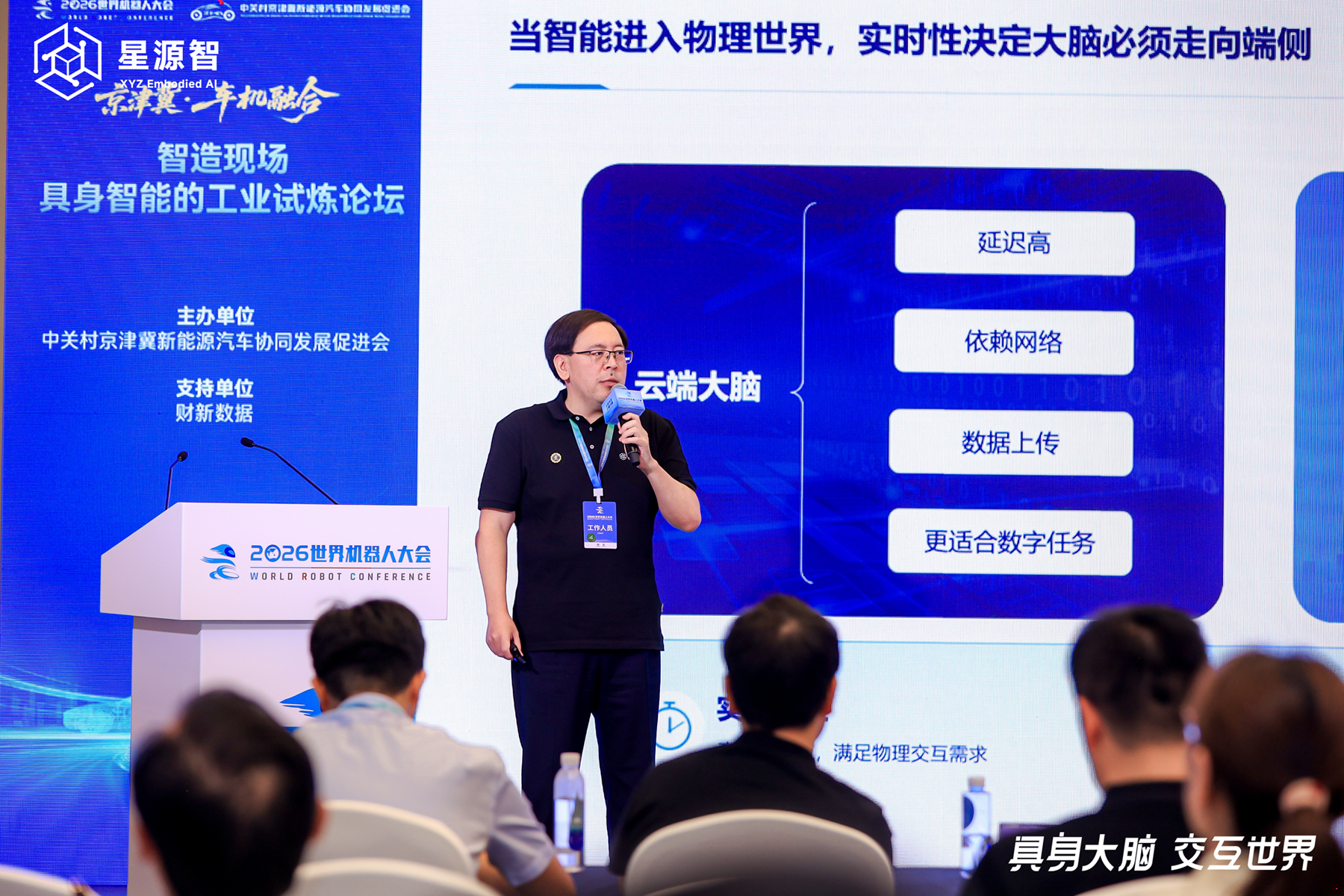
对于具身智能如何从Demo真正走向生产力,星源智创始人兼CEO刘东在WRC论坛上提出,大模型、高算力都是手段,产业最终要算的是效果、效率、成本三笔账。机器人不仅要“能干活”,更要实现安全升级、效率提升和成本下降。与此同时,刘东判断,端侧大脑将成为高阶具身智能落地的必选项。从工业连续作业到动态交互,端侧能力与产业价值正在共同决定具身智能能否真正走出Demo、进入规模化应用。

图:星源智创始人&CEO刘东出席智造现场大会

本次2026世界机器人大会,星源智以算法、模型、产品、场景的全维度创新,展现了具身智能“跨本体、跨场景、可落地、可量产”的核心优势。未来,星源智将持续深耕具身智能底层技术研发与产业落地,依托开源生态与全栈技术能力,推动世界模型、端侧具身大脑在更多真实场景落地,加速推进机器人产业智能化、规模化升级。

注:文/龚作仁,文章来源:Laborer,本文为作者独立观点,不代表亿邦动力立场。

文章来源:Laborer

广告
微信
朋友圈

FAQ回顾

N5C液冷端侧算力平台有哪些特点?

N5C液冷端侧算力平台是星源智专为高功率密度机器人端侧计算打造的产品,搭载THOR T5000高性能端侧计算核心,采用液冷循环散热架构,散热能力达传统风冷的3-15倍,70℃高温下可稳定运行,具备IP56防尘防水等级,适配各类工业、户外复杂作业场景。

具身智能从演示落地到实际生产力有什么判断标准?

具身智能从Demo走向生产力需算清效果、效率、成本三笔账,机器人不仅要能干活,还要实现安全升级、效率提升和成本下降,端侧大脑将成为高阶具身智能落地的必选项,端侧能力与产业价值共同决定规模化落地进度。

星源智的世界模型技术体系是怎样的?

星源智已构建完整的世界模型技术体系,ω-EVA具身交互世界模型聚焦预判行动后果,通过未来状态预演优化即时动作;JEPA-WAM模型聚焦理解环境变化,以时序规律学习赋能策略迭代,双技术路径互补,实现世界模型从预测到服务机器人决策的跨越。

异构多机协同跳长绳技术实现了哪些核心突破?

该技术是全球首次实现人形机器人与四足机器狗跨本体协同跳长绳实机验证,依托星源智自研RoboBrain Pro具身大脑与原创异构具身协同学习框架,打破传统机器人单体智能局限,推动具身智能向多主体自主协同决策高阶形态演进。

这么好看,分享一下?

朋友圈 分享

APP内打开

+1
+1
微信好友 朋友圈 新浪微博 QQ空间
关闭
收藏成功
发送
/140 0