





广告
加载中

WAIC 2026 润和软件以“金融+AI”全栈能力重塑全球金融数智化新范式

龚作仁 2026-07-22 14:59
龚作仁 2026/07/22 14:59

邦小白快读

EN
全文速览

本文核心围绕金融行业AI转型的行业痛点与最新解决方案展开,核心干货如下:

1. 当前金融AI转型的行业现状:生成式AI已经进入金融机构核心业务场景,但通用大模型存在明显短板,无法准确理解金融复杂业务规则,难以符合监管要求,也支撑不了跨部门跨流程协同,无法满足规模化应用需求,转型核心诉求是构建让AI理解金融的底层认知体系。

2. 最新行业成果:在WAIC 2026上,润和软件发布全维度金融行业本体体系,搭建覆盖金融全生命周期的五大标准化本体模型,作为金融AI的统一知识底座,解决了上述痛点,能够帮助金融机构低成本快速实现AI规模化落地。

作为金融科技品牌商,可从本文获取这些和自身发展相关的干货:

1. 行业趋势与客户需求变化:当前金融AI已经从比拼大模型参数、算力的阶段,转向比拼行业理解能力的阶段,客户核心需求不再是更大的模型,而是能让AI可信落地的底层知识基础设施,行业已经进入“行业AI时代”。

2. 产品研发方向参考:可参考润和软件的路线,专注沉淀行业知识,打造统一语义体系的行业本体底座,覆盖金融全业务流程,同时搭配本地化落地服务解决AI落地最后一公里问题。

3. 市场拓展机会:全球金融数字化转型带来广阔市场,可采用标准化产品加本地化适配的模式,拓展港澳跨境金融、东南亚新兴市场等海外增量空间。

作为金融AI技术服务卖家,本文整理出和业务发展相关的干货如下:

1. 市场机会与需求变化:当前金融机构普遍面临通用大模型落地难的痛点,对能支撑规模化应用的金融AI知识底座需求强烈,全球金融数字化转型带来了广阔的增量市场空间,新兴区域市场还有大量未被满足的本地化适配需求。

2. 可借鉴的最新商业模式:采用“标准化金融本体+本地化FDE服务”的双轮驱动模式,通过FDE前线部署工程师连接标准化平台和个性化场景,解决AI落地最后一公里问题,同时能实现规模化复制,大幅降低开发部署成本。

3. 风险提示:单纯比拼模型大小、算力的发展路线已经无法满足市场需求,缺少行业知识沉淀的AI产品会存在合规风险、输出不准确等问题,难以获得客户认可。

对于金融科技领域的技术产品生产工厂,本文提供这些干货内容:

1. 产品生产和设计需求:金融行业客户需要的不是单纯的通用大模型产品,而是能让AI理解金融业务、符合监管要求、支撑跨系统协同的底层知识基础设施,产品需要具备统一知识、统一规则、统一语义、统一治理四大核心能力。

2. 商业机会:当前全球金融机构都在推进AI转型,通用大模型无法满足落地需求的市场缺口很大,同时海外不同区域市场存在大量本地化适配需求,商业机会广阔。

3. 数字化升级启示:企业需要把多年积累的行业实践沉淀转化为标准化的产品体系,搭配本地化落地服务能力,才能让产品真正融入客户业务,实现规模化推广。

作为金融AI相关的技术服务商,可从本文获得这些干货内容:

1. 行业发展趋势:金融AI已经从比拼模型能力的1.0阶段,进入到构建行业知识基础设施的2.0阶段,未来行业竞争的核心不再是模型大小,而是完整AI系统的搭建能力,金融AI会从单点应用走向平台化、规模化发展。

2. 核心客户痛点:当前客户的共性痛点是通用大模型无法准确理解金融复杂业务规则,不符合监管要求,难以支撑跨部门跨流程协同,AI幻觉频发,无法支撑规模化应用,AI落地存在最后一公里的衔接问题。

3. 可参考的解决方案:可以参考润和软件的路径,搭建覆盖五大核心业务的全维度金融行业本体作为统一知识底座,搭配FDE前线部署工程师模式解决本地化适配问题,帮助客户真正实现AI落地。

作为布局金融AI领域的平台商,本文总结出这些干货内容:

1. 行业对平台的核心需求:当前市场需要平台提供统一的金融行业知识底座,支撑不同模型、不同智能体、不同业务系统之间实现知识和规则共享,减少重复开发,提升AI应用的一致性和可靠性。

2. 平台运营可参考的最新做法:打造标准化的全维度金融行业本体体系,将其作为金融AI的基础操作系统,连接各类大模型、知识图谱、业务系统和智能体,形成开放统一的行业智能架构,赋能生态伙伴。

3. 风向规避和市场拓展:要规避单纯追求大模型参数、算力的发展误区,重点补齐行业知识沉淀的短板,可依托标准化底座,针对不同区域监管要求做本地化适配,拓展海外增量市场。

对于金融科技领域的研究者,本文提供这些值得研究的干货内容:

1. 产业新动向:当前全球金融AI转型正在发生核心转向,从之前的“大模型时代”迈向“行业AI时代”,行业竞争核心从训练更大模型转向构建行业知识基础设施,行业本体已经成为金融AI新基础设施的核心组成部分。

2. 产业新问题:通用大模型落地金融生产场景后,暴露出不理解行业规则、不符合监管要求、难以支撑协同决策、AI幻觉频发等共性问题,无法满足规模化应用的需求,成为行业转型的核心卡点。

3. 新商业模式总结:本文提出的“标准化金融本体+本地化FDE服务”双轮驱动模式,解决了AI落地最后一公里的问题,实现了全球化低成本复制,为金融AI技术输出提供了新的可行路径,也为产业生态合作提供了新方向。

返回默认
声明:快读内容全程由AI生成,请注意甄别信息。如您发现问题,请发送邮件至 run@ebrun.com 。

我是 品牌商 卖家 工厂 服务商 平台商 研究者 帮我再读一遍。

Quick Summary

This article focuses on the industry pain points and latest solutions for AI transformation in the financial sector. Key takeaways are as follows:

1. Current status of financial AI transformation: Generative AI has been adopted in core business scenarios of financial institutions, but general-purpose large models have notable shortcomings. They fail to accurately understand the complex business rules of finance, meet regulatory requirements, support cross-departmental and cross-process collaboration, or satisfy the needs for large-scale application. The core demand for transformation is to build an underlying cognitive system that enables AI to understand finance.

2. Latest industry achievement: At WAIC 2026, Hand Human Resources unveiled a full-dimensional financial industry ontology system, and built five standardized ontology models covering the entire financial lifecycle. This system serves as a unified knowledge base for financial AI, addresses the aforementioned pain points, and helps financial institutions achieve large-scale AI deployment at low cost and with fast implementation.

For fintech brands, here are key insights relevant to your development:

1. Industry trends and shifting customer demands: Financial AI has moved beyond the phase of competing on large model parameters and computing power, and entered an era where industry expertise is the core competitive advantage. Customers no longer prioritize larger models, but instead demand underlying knowledge infrastructure that enables reliable AI deployment. The industry has officially entered the "Industry AI Era."

2. Reference for product R&D direction: You can follow the path taken by Hand Human Resources: focus on accumulating industry knowledge to build an industry ontology base with a unified semantic system that covers all financial business processes, and pair it with localized implementation services to solve the last-mile problem of AI deployment.

3. Market expansion opportunities: Global financial digital transformation has created a broad market. You can adopt a "standardized product + localized adaptation" model to tap into incremental overseas markets such as cross-border finance in Hong Kong and Macao, and emerging markets in Southeast Asia.

For sellers of financial AI technology services, here are key insights relevant to your business growth:

1. Market opportunities and shifting demand: Financial institutions generally face the pain point of difficult deployment of general-purpose large models, and have strong demand for financial AI knowledge bases that support large-scale applications. Global financial digital transformation has created broad incremental market space, and emerging regional markets still have a large amount of unmet demand for localized adaptation.

2. A referenceable new business model: Adopt a dual-driven model of "standardized financial ontology + localized FDE services." Frontline Deployment Engineers (FDE) connect standardized platforms with personalized scenarios to solve the last-mile problem of AI deployment, while enabling large-scale replication and significantly reducing development and deployment costs.

3. Risk warning: A development path that only competes on model size and computing power can no longer meet market demand. AI products lacking accumulated industry knowledge face compliance risks and inaccurate outputs, and will struggle to win customer recognition.

For technology product developers in the fintech space, here are key takeaways:

1. Product development and design requirements: Financial industry clients do not just need general-purpose large model products. What they really need is underlying knowledge infrastructure that allows AI to understand financial business, meet regulatory requirements, and support cross-system collaboration. Products must have four core capabilities: unified knowledge, unified rules, unified semantics, and unified governance.

2. Business opportunities: Currently, financial institutions worldwide are advancing AI transformation. There is a large market gap that general-purpose large models cannot fill, alongside massive demand for localized adaptation across different overseas regional markets, creating broad business opportunities.

3. Insights for digital upgrading: Enterprises need to convert years of accumulated industry experience into standardized product systems, and pair this with localized implementation capabilities, to make products truly integrate into clients' businesses and enable large-scale promotion.

For technology service providers related to financial AI, here are key insights from this article:

1. Industry development trends: Financial AI has evolved from the 1.0 phase of competing on model capabilities to the 2.0 phase of building industry knowledge infrastructure. Going forward, the core of industry competition will no longer be model size, but the ability to build complete AI systems. Financial AI will develop from single-point applications to platform-based, large-scale deployment.

2. Core customer pain points: The common pain point for customers today is that general-purpose large models cannot accurately understand complex financial business rules, fail to meet regulatory requirements, can barely support cross-departmental and cross-process collaboration, frequently produce AI hallucinations, cannot support large-scale application, and leave an unaddressed last-mile connectivity gap for AI deployment.

3. A referenceable solution: You can follow the path of Hand Human Resources: build a full-dimensional financial industry ontology covering five core businesses as a unified knowledge base, and pair it with a Frontline Deployment Engineer (FDE) model to address localized adaptation needs, helping clients achieve real, functional AI deployment.

For platform operators布局ing in the financial AI space, here are key takeaways from this article:

1. Core industry demand for platforms: The current market requires platforms to provide a unified financial industry knowledge base that supports knowledge and rule sharing across different models, agents, and business systems, to reduce redundant development and improve the consistency and reliability of AI applications.

2. Referenceable latest practices for platform operation: Build a standardized full-dimensional financial industry ontology system to serve as the basic operating system for financial AI, connect various large models, knowledge graphs, business systems and agents to form an open and unified industry intelligent architecture, and empower ecosystem partners.

3. Risk avoidance and market expansion: Avoid the development pitfall of blindly pursuing large model parameters and computing power, and prioritize closing the gap in accumulated industry knowledge. Leverage your standardized base to complete localized adaptation based on regional regulatory requirements, and expand incremental overseas markets.

For researchers in the fintech field, here are valuable research insights from this article:

1. New industry trends: The global financial AI transformation is undergoing a core shift, moving from the previous "Large Model Era" to the "Industry AI Era." The core of industry competition has shifted from training larger models to building industry knowledge infrastructure, and industry ontology has become a core component of the new financial AI infrastructure.

2. New industry problems: When general-purpose large models are deployed in financial production scenarios, they expose common problems: they do not understand industry rules, fail to meet regulatory requirements, can barely support collaborative decision-making, and frequently produce AI hallucinations. These issues prevent them from meeting large-scale application requirements and have become the core bottleneck for industry transformation.

3. Summary of a new business model: The dual-driven "standardized financial ontology + localized FDE service" model proposed in this article solves the last-mile problem of AI deployment, enables low-cost global replication, provides a new feasible path for financial AI technology output, and opens up a new direction for industrial ecosystem cooperation.

Disclaimer: The "Quick Summary" content is entirely generated by AI. Please exercise discretion when interpreting the information. For issues or corrections, please email run@ebrun.com .

I am a Brand Seller Factory Service Provider Marketplace Seller Researcher Read it again.

当生成式AI开始进入银行,真正的挑战已经不再是模型能力,而是行业理解能力。近两年,大模型技术快速发展,生成式AI和智能体(AI Agent)正在重塑全球金融行业。越来越多的金融机构开始探索AI在客户服务、信贷审批、风险控制、合规管理、运营管理等核心业务中的应用。

然而,当AI真正进入生产环境后,一个全球金融行业共性痛点逐渐浮现:AI能够生成内容,却未必真正理解金融。它能够回答问题,却无法准确理解银行复杂的业务规则;能够分析文本,却无法持续遵循监管要求;能够完成简单任务,却难以支撑跨系统、跨部门、跨业务流程的协同决策。对于强监管、高风险、高专业性的金融行业而言,仅依靠通用大模型,已经难以满足规模化应用的要求。金融AI转型的核心诉求,不只是更大的模型、更强的算力,而是一套能够让AI理解金融世界的底层认知体系。

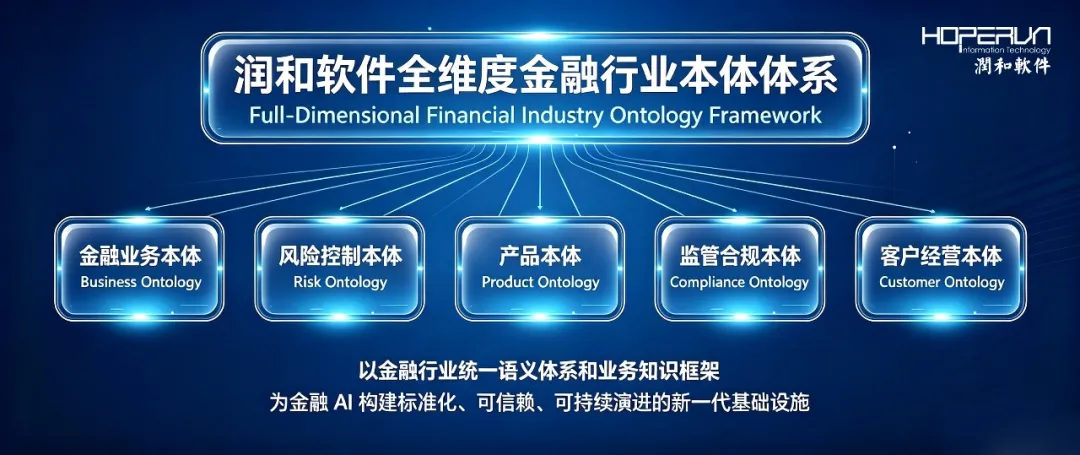
在此行业背景下,2026世界人工智能大会(WAIC 2026)期间,江苏润和软件股份有限公司(以下简称“润和软件”)正式发布全维度金融行业本体体系(Full-Dimensional Financial Industry Ontology Framework),以金融行业统一语义体系和业务知识框架,为金融AI构建标准化、可信赖、可持续演进的新一代基础设施。

从“大模型时代”迈向“行业AI时代”

过去几年,大模型不断刷新模型能力边界。但金融行业的实践表明,模型能力并不等同于行业能力。银行的日常业务运转依托数以万计的业务规则、监管制度、产品体系、客户关系以及风险控制逻辑。这些知识不仅存在于文档中,更沉淀在多年形成的业务流程、制度规范和专业经验之中。对于AI而言,如果缺少统一的行业知识框架,即使拥有强大的推理能力,也很容易出现概念混淆、逻辑偏差、监管风险,同时AI幻觉频发。

因此,金融行业正在从“训练更大的模型”,逐步走向“构建行业知识基础设施”。而行业本体(Ontology),正成为这一基础设施最重要的组成部分。

金融行业本体:让AI真正理解金融

润和软件此次发布的全维度金融行业本体体系,并不是又一个大模型,而是一套专门面向金融行业构建的统一语义体系。它为AI定义统一的金融概念、业务关系、监管规则和业务逻辑,使不同模型、不同智能体以及不同业务系统能够基于同一种“金融语言”进行理解、推理和协同。其定位相当于金融AI的操作系统(Operating System)。在这一体系之上,大模型不再只是会回答问题,而是真正具备理解银行业务、执行业务流程、遵循监管规则以及持续学习行业知识的能力。

依托十余年的金融行业实践沉淀,润和软件构建了覆盖银行核心业务的五大标准化本体模型:

金融业务本体(Business Ontology)——统一描述银行业务流程、业务对象和业务关系。

风险控制本体(Risk Ontology)——构建可推理、可计算、可持续演进的风险管理体系。

产品本体(Product Ontology)——统一金融产品定义、生命周期及业务规则。

监管合规本体(Compliance Ontology)——持续映射监管要求,实现规则数字化。

客户经营本体(Customer Ontology)——建立客户画像、行为分析及价值经营模型。

五大本体共同形成覆盖金融业务全生命周期的知识体系,为AI提供统一、标准、可信的行业认知基础。

从AI模型到AI系统

金融行业未来竞争的重点,不再是谁拥有最大的模型,而是谁能够建立完整的AI系统。润和软件认为,一个真正能够规模化运行的金融AI体系,应同时具备统一知识、统一规则、统一语义以及统一治理能力。

全维度金融行业本体体系正承担这一核心角色。它不仅能够支撑金融大模型的本地化训练和持续优化,也能够连接知识图谱、业务流程、规则引擎以及AI智能体,形成统一的行业智能架构。在这一架构下,不同业务系统之间能够共享知识,不同AI Agent能够共享规则,不同业务场景能够共享能力,大幅降低重复开发成本,提高AI应用的一致性和可靠性。金融AI因此从单点应用走向平台化、体系化和规模化发展。

将AI能力转化为业务价值

统一的行业知识体系最终要解决的是业务问题,而不是技术问题。基于全维度金融行业本体体系,润和软件帮助金融机构实现五项核心价值:

1、让AI真正理解金融

统一行业语义、业务逻辑和监管规则,使AI输出更加准确、专业和可信。

2、实现智能体规模化建设

所有AI Agent共享统一知识底座,实现快速开发、快速部署和持续复用,大幅降低建设成本。

3、推动智能风控与智能合规

通过结构化规则建模和持续推理,实现监管政策自动解析、风险自动识别以及全流程合规管理。

4、构建更加智能的客户服务体系

依托客户本体和产品本体,实现精准画像、产品匹配和个性化金融服务。

5、支持全球化金融科技部署

在统一金融本体基础上,根据不同国家和地区监管要求快速构建本地化知识体系,实现国际市场快速复制和持续演进。

FDE:连接AI技术与业务价值的最后一公里

技术创新只有真正进入业务现场,才能创造价值。为解决AI落地过程中“最后一公里”的问题,润和软件采用了FDE(Frontline Deployment Engineer,前线部署工程师)模式。FDE不仅承担技术实施工作,更承担行业知识转化、本地业务适配以及持续运营优化的重要职责。他们既理解金融业务,也理解AI技术,是连接标准化平台与个性化业务场景的重要桥梁。依托金融行业本体体系,FDE能够快速完成智能体配置、知识映射、监管适配以及业务优化,使AI真正融入银行日常运营,而不仅停留在实验室阶段。

这种“行业知识平台+本地化部署能力”的模式,使金融AI具备持续演进能力,也让规模化复制成为可能。

从中国实践走向全球金融AI

金融数字化正在成为全球趋势,而金融AI正在成为新的国际竞争力。润和软件正在将多年沉淀的中国金融科技实践,转化为可复制、可输出、可本地化部署的全球解决方案:针对港澳市场,公司围绕跨境金融和双重监管需求,构建跨区域金融知识体系;针对东南亚市场,公司结合属地监管、小语种语义和业务特点,快速建立本地化金融本体,实现AI能力的快速适配和持续运营。

通过“标准化金融本体+本地化FDE服务”的双轮驱动模式,润和软件正在帮助越来越多的金融机构,以更低成本、更高效率、更高可信度实现AI转型。

共建金融AI的新基础设施

生成式AI改变了软件,行业知识正在重新定义AI。未来金融机构竞争的不只是模型能力,而是行业知识、业务理解和持续演进能力。润和软件发布全维度金融行业本体体系,不仅是推出一项新的技术成果,更是在构建金融AI时代的新基础设施。

面向未来,润和软件将继续秉持“AI转型共建者、AI落地护航者、AI价值兑现者”的核心定位,与全球金融机构、产业伙伴和开发者共同推动金融AI从技术创新迈向产业创新,从能力展示迈向规模应用,从单点智能迈向体系智能,共同开启金融行业智能化发展的新阶段。

注:文/龚作仁,文章来源:Laborer,本文为作者独立观点,不代表亿邦动力立场。

文章来源:Laborer

广告
微信
朋友圈

FAQ回顾

金融行业AI规模化应用面临的核心痛点是什么?

金融行业具备强监管、高风险、高专业性属性,通用大模型缺乏对金融业务规则、监管要求的精准理解,易出现概念混淆、逻辑偏差、幻觉及监管风险,难以支撑跨系统跨部门的协同决策,无法满足规模化应用需求。

润和软件的全维度金融行业本体体系是什么?

它是专门面向金融行业构建的统一语义体系,相当于金融AI的操作系统,包含金融业务、风险控制、产品、监管合规、客户经营五大标准化本体模型,为AI提供统一、标准、可信的行业认知基础。

全维度金融行业本体体系能为金融机构带来哪些价值?

该体系可让AI真正理解金融,实现智能体规模化建设降本,推动智能风控与合规落地,构建更智能的客户服务体系,还可适配不同地区监管要求,支持全球化金融科技部署。

解决金融AI落地最后一公里的方案是什么?

润和软件采用FDE(前线部署工程师)模式,FDE兼具金融业务与AI技术理解能力,可快速完成智能体配置、知识映射、监管适配及业务优化,让AI真正融入银行日常运营,实现规模化复制。

这么好看,分享一下?

朋友圈 分享

APP内打开

赞 +1
+1
微信好友 朋友圈 新浪微博 QQ空间
关闭
收藏成功
发送
/140 0

