





广告
加载中

WAIC直击|当科学家和哲学家坐在一起思考人类未来……

胡镤心 2026-07-19 09:04
胡镤心 2026/07/19 09:04

邦小白快读

EN
全文速览

这篇文章整理了WAIC论坛上AI科学家与哲学学者跨界对话的核心干货,带来了AI领域发展的最新前沿信息。

1. 当前AI圈最热的底层猜想是新版“柏拉图假说”,该猜想认为性能足够优秀的AI模型,无论训练架构和数据有何区别,最终对世界的理解表征都会收敛到同一个高维“隐空间”,也就是能容纳所有事物的“万物地图”,不少研究者认为这是解决AIScaling Law瓶颈的核心方向。

2. 当前AI发展的最大瓶颈是人机交互,达不到人类那种大规模、灵活的协同合作水平,哲学领域的主体间性、具身认知等理论,正在为AI突破瓶颈提供思路。

3. 随着AI成为社会基础设施,现有概念已经无法描述新的认知,未来会诞生全新的通用概念融入大众认知。

本文反映了AI发展带来的底层认知变化,能给品牌商把握消费趋势、布局AI相关业务提供参考。

1. 发展趋势层面,AI正在重构人类理解世界的认知框架,AI成为基础设施后会诞生全新的大众认知概念,品牌商可以提前关注认知变化带来的新需求,挖掘契合新认知的情感价值、文化价值类产品的创新机会。

2. 布局方向层面,AI未来的核心突破方向是深度人机协同和具身智能,品牌商布局AI营销、AI产品时,可以优先布局能实现全链路感知交互的AI工具,优化用户体验打造差异化优势。

3. 营销机会层面,当前AI与哲学交叉带来的“文科回春”已经成为大众关注热点,品牌可以借助人文AI融合的标签打造差异化品牌认知,吸引目标用户。

本文揭示了AI领域的最新发展动向,能给布局AI相关业务的卖家提供机会和风险参考。

1. 业务机会层面,当前AI领域的核心突破方向集中在隐空间技术开发、具身智能、符合主体间性的人机协同三个领域,卖家可以围绕这三个方向选品拓业,配套具身AI的硬件、人机交互定制服务等赛道都存在早期增长机会。

2. 风险提示层面,当前AI领域跨学科对话存在严重的概念分歧,比如对具身性、信念等核心概念的定义,不同领域差异很大,卖家布局AI相关业务时,需要先理清核心概念的定义,避免因为认知偏差踩坑走弯路。

3. 长期布局提示,AI成为社会基础设施是必然趋势,会催生大量全新的大众需求,卖家可以提前卡位适配新认知的创新产品,抢占早期红利。

本文介绍了AI领域的底层发展趋势,能给工厂推进智能化转型、挖掘商业机会提供参考。

1. 产品生产研发层面,AI未来的核心突破方向是拥有从感知到执行完整闭环的具身智能,工厂可以提前布局智能化生产设备的升级研发,开发符合深度人机协同要求的生产设备,适配AI产业发展的新需求,抢占To B市场的新机会。

2. 数字化转型启示,工厂推进AI转型不能只停留在给生产环节加装技术载体,要理解人机融合认知的核心思路,结合人机协同的逻辑优化生产流程,才能真正实现智能化升级,提升生产效率。

3. 新市场机会,AI成为基础设施后会催生大量新的C端需求,工厂可以提前关注AI配套硬件、交互设备的新市场,提前布局研发抢占先机。

本文披露了AI产业发展的最新动向,能给AI相关服务商把握行业趋势、挖掘新的业务机会提供参考。

1. 行业发展趋势,当前AI已经进入与哲学交叉融合发展的新阶段,AI的底层认知框架正在重构,未来围绕隐空间技术开发、具身智能落地、人机协同方案优化,会诞生大量全新的服务需求,行业增长空间广阔。

2. 核心客户痛点,当前AI领域跨学科对话存在严重的概念分歧,不同领域对具身性、信念等核心概念的定义差异很大,企业落地AI项目时,很容易因为认知偏差走弯路,推高落地成本。

3. 业务方向参考,服务商可以推出跨学科概念梳理、AI落地认知咨询类服务,帮助企业理清落地思路,同时也可以围绕隐空间开发、人机交互优化开发相关技术服务,抓住新的市场机会。

本文反映了AI产业对平台的新需求,能给AI相关平台调整业务方向、做好运营招商提供参考。

1. 平台业务调整方向,当前AI已经进入跨学科融合发展的新阶段,行业迫切需要能对接AI科学家、哲学研究者、产业从业者的跨界交流合作平台,解决当前概念分歧、跨界合作难的痛点,平台可以新增这类跨界对接业务,满足行业需求。

2. 平台招商方向,隐空间技术、具身智能、人机交互技术是AI领域接下来的核心突破方向,符合产业发展趋势,平台可以重点引入这类赛道的企业,优化平台入驻结构,提升平台竞争力。

3. 风险规避方向,当前AI底层认知尚未成熟,平台要引导入驻企业理清核心概念,避免伪创新带来的资源浪费,同时要提前制定适配AI新发展的运营规则,应对未来可能出现的认知、伦理层面的新问题。

本文记录了WAIC论坛上AI与哲学交叉研究的最新动向,给相关领域研究者提供了清晰的研究方向参考。

1. 产业研究新动向,当前AI领域已经形成了依托新柏拉图假说的热门研究方向,该假说认为性能足够的AI模型对世界的表征最终会收敛到统一的隐空间,不少研究者认为这是解决AIScaling Law瓶颈的核心路径,此外具身智能、主体间性指导下的人机协同也是当前研究热点。

2. 待解决的新问题,现有哲学和科学的概念已经无法描述AI发展带来的新认知框架,跨学科对话存在普遍的概念分歧,急需完成概念融贯的工作,这是接下来重要的基础研究课题。

3. 新研究范式,AI与哲学交叉融合已经成为新的研究趋势,不少AI企业已经开始高薪聘请哲学家担任顾问,这种跨学科合作的研究范式,值得研究者关注跟进。

返回默认
声明:快读内容全程由AI生成,请注意甄别信息。如您发现问题,请发送邮件至 run@ebrun.com 。

我是 品牌商 卖家 工厂 服务商 平台商 研究者 帮我再读一遍。

Quick Summary

This article summarizes key takeaways from a cross-disciplinary dialogue between AI scientists and philosophers at the World Artificial Intelligence Conference (WAIC), sharing the latest frontier developments in the AI field.

1. The hottest underlying hypothesis in today's AI community is a modern "Platonic Hypothesis." It holds that sufficiently high-performing AI models, regardless of differences in training architectures and datasets, will eventually converge their world representations to the same high-dimensional "latent space" — a "map of everything" that can accommodate all entities. Many researchers regard this as the core direction for breaking through the bottleneck of AI Scaling Law.

2. The biggest bottleneck in current AI development lies in human-AI interaction: existing systems cannot achieve the large-scale, flexible collaboration that humans naturally engage in. Philosophical concepts such as intersubjectivity and embodied cognition are now providing new frameworks for AI to overcome this bottleneck.

3. As AI becomes core social infrastructure, existing concepts can no longer capture the new forms of cognition it generates. New universal concepts will eventually emerge and integrate into public understanding."

This article outlines the underlying cognitive shifts driven by AI development, offering insights for brands to identify consumer trends and plan AI-related strategies.

1. On trend direction: AI is reshaping humanity's cognitive framework for understanding the world. As AI becomes infrastructure, entirely new public cognitive concepts will emerge. Brands can proactively identify new demands driven by these shifts, and explore innovation opportunities for products that deliver emotional and cultural value aligned with the new cognition.

2. On strategic planning: The core breakthrough directions for future AI lie in deep human-AI collaboration and embodied intelligence. When investing in AI-powered marketing and products, brands should prioritize AI tools that enable end-to-end perceptual interaction to optimize user experience and build differentiated competitive advantages.

3. On marketing opportunities: The "renaissance of humanities" driven by the intersection of AI and philosophy has become a major public focus. Brands can leverage the label of humanistic-AI integration to build differentiated brand awareness and attract target consumers."

This article reveals the latest developments in the AI field, offering guidance on opportunities and risks for sellers looking to expand into AI-related businesses.

1. Business opportunities: The core breakthrough directions in current AI are concentrated in three areas: latent space technology development, embodied intelligence, and intersubjectivity-aligned human-AI collaboration. Sellers can build product portfolios and expand business around these three tracks. Early growth opportunities exist in supporting segments such as embodied AI hardware and customized human-AI interaction services.

2. Risk warning: Severe conceptual disagreements persist in cross-disciplinary AI dialogues — definitions of core concepts like embodiment and belief vary widely across fields. When entering AI-related businesses, sellers should first clarify agreed definitions of core concepts to avoid missteps caused by cognitive bias.

3. Long-term planning note: AI becoming social infrastructure is an inevitable trend that will spawn a large number of entirely new public demands. Sellers can position themselves early for innovative products adapted to new cognition to capture early-mover advantages."

This article introduces the underlying development trends of the AI industry, providing references for factories advancing intelligent transformation and identifying new business opportunities.

1. Product R&D: The core breakthrough direction for future AI is embodied intelligence, which features a complete closed loop from perception to execution. Factories can proactively invest in R&D and upgrades for intelligent production equipment, develop production tools that meet the requirements of deep human-AI collaboration to adapt to new demands from AI industry development, and capture new opportunities in the B2B market.

2. Digital transformation insights: To advance AI transformation, factories should not stop at simply adding technology modules to production lines. To truly achieve intelligent upgrading and improve production efficiency, they need to understand the core logic of integrated human-AI cognition and optimize production processes based on the principles of human-AI collaboration.

3. New market opportunities: After AI becomes social infrastructure, it will generate massive new consumer demand. Factories can proactively monitor the emerging markets for AI-compatible hardware and interaction devices, and advance R&D to get a first-mover advantage."

This article outlines the latest developments in the AI industry, helping AI-related service providers grasp industry trends and identify new business opportunities.

1. Industry trends: AI has entered a new phase of cross-disciplinary integration with philosophy, and its underlying cognitive framework is undergoing reconstruction. Going forward, massive new service demands will emerge around latent space technology development, embodied intelligence deployment, and human-AI collaboration solution optimization, opening up broad industry growth space.

2. Core client pain points: Severe conceptual disagreements persist in cross-disciplinary AI dialogues, with definitions of core concepts like embodiment and belief varying widely across fields. When enterprises implement AI projects, they often encounter costly missteps caused by cognitive bias.

3. Business direction insights: Service providers can launch cross-disciplinary concept sorting and AI implementation cognitive consulting services to help enterprises clarify implementation roadmaps. They can also develop related technical services centered on latent space development and human-AI interaction optimization to capture new market opportunities."

This article outlines the new demands AI industry development places on platforms, providing references for AI-related platforms to adjust business directions and optimize investment recruitment and operations.

1. Business adjustment: AI has entered a new phase of cross-disciplinary integration, and the industry urgently needs cross-boundary collaboration platforms that connect AI scientists, philosophy researchers and industry practitioners to resolve current pain points of conceptual disagreement and difficult cross-boundary cooperation. Platforms can add this type of cross-boundary matching business to meet industry demand.

2. Investment recruitment focus: Latent space technology, embodied intelligence and human-AI interaction technology are the core next breakthrough directions for the AI industry, aligned with long-term industry trends. Platforms can prioritize recruiting enterprises in these tracks to optimize their tenant structure and improve platform competitiveness.

3. Risk mitigation: The underlying cognition of AI is not yet mature. Platforms should guide tenant enterprises to clarify core concepts to avoid resource waste caused by pseudo-innovation, and proactively develop operating rules adapted to new AI developments to address potential future cognitive and ethical challenges."

This article records the latest developments in interdisciplinary research at the intersection of AI and philosophy from the WAIC forum, providing clear reference for research directions for scholars in related fields.

1. New industry research trends: A popular research direction rooted in the Neo-Platonic Hypothesis has emerged in the AI field. The hypothesis holds that sufficiently capable AI models will eventually converge their world representations to a unified latent space, and many researchers see this as the core path to breaking through the AI Scaling Law bottleneck. In addition, embodied intelligence and human-AI collaboration guided by intersubjectivity theory are also current research hotspots.

2. Unresolved new questions: Existing concepts from both philosophy and science can no longer describe the new cognitive framework generated by AI development, and conceptual disagreements are widespread in cross-disciplinary dialogues. Achieving conceptual coherence is an urgent foundational research priority for the coming period.

3. New research paradigm: The cross-disciplinary integration of AI and philosophy has become a new research trend. Many AI companies have begun hiring philosophers as high-salary consultants, and this collaborative cross-disciplinary research paradigm deserves attention and follow-up from researchers."

Disclaimer: The "Quick Summary" content is entirely generated by AI. Please exercise discretion when interpreting the information. For issues or corrections, please email run@ebrun.com .

I am a Brand Seller Factory Service Provider Marketplace Seller Researcher Read it again.

【亿邦原创】在WAIC论坛内,我注意到一个有趣的现象,聊AI落地的时候,亚里士多德含量贼高;聊技术原理的时候,柏拉图含量爆表了。

最近人工智能和哲学的交集有点多。先是AI公司高薪聘请哲学家当顾问,让不少人惊呼“文科回春了”;接着PalatirAI平台中引入了一个概念叫“Ontology”(本体论),让人梦回亚里士多德。

从WAIC来看,科研工作者们现在挺热衷于讨论“柏拉图假说”、人格同一性、新一代本体论;哲学工作者们则开始关注“AI的隐空间会不会成为新的形而上学”、Agent如何产生群体智能、胡塞尔的主体间性如何指导人机协同……

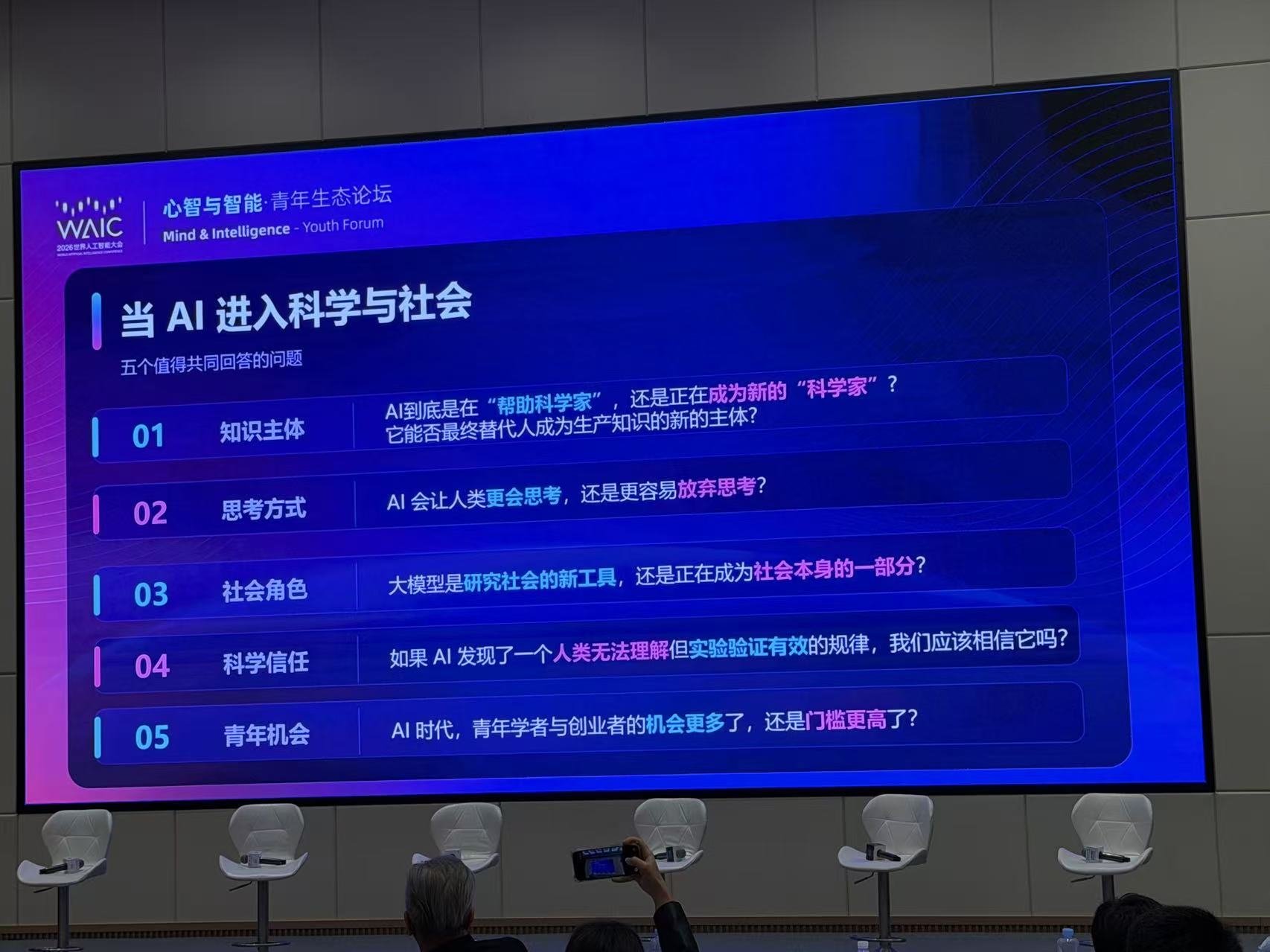
在心智与智能·青年生态论坛,我看到科学家们在讨论柏拉图,工程师们在搭本体论,哲学家们在研究隐空间,一个新时代到来,但我们还没发明出描述它的词。

1、新世界观

“柏拉图假说”是这届哲学系和AI研究员们反复挂在嘴边的概念。

它的原意很简单,存在一个完美的"理念世界",现实世界只是它不完美的影子,我们学东西其实是在"回忆"那个完美世界里的东西。

但现在AI圈说的"柏拉图假说",是2024年MIT团队提出来的一个科学猜想。它说的是:不管什么架构、什么数据训练出来的AI模型,在性能做到足够好之后,它们内部学到的那套"表征"——也就是对世界的理解方式——会越来越像,最终会收敛到同一个标准答案上去。这个标准答案存在的地方,就叫"隐空间"。它是一个高维的数学空间,AI把所有东西——文字、图片、蛋白质结构、数学符号——都塞到这个空间里,相似的东西靠得近,不相似的离得远。你可以把它理解成一个巨大的"万物地图",所有东西都能在上面找到位置。

浙江大学信息与电子工程学院博导方榯楷认为,AI建模无论面对语言、蛋白质、数学符号还是图片,本质上都是把它们映射到同一个“隐空间”,在这个空间里语义变得可加、距离变得可算。这让他开始思考一个更具哲学意味的问题:“有没有可能我们对这个世界的理解并不是基于单个object,而是存在一个通用的隐空间?”他进一步推演:万事万物——从概念到实体到所有关系——在隐空间里都有对应的概念。

香港中文大学计算机系助理教授刘圣超更是明确表示“我非常坚信柏拉图假说。”他把这个假说直接等同于AI的“第一性原理”。他引用了港大马毅教授的观点——压缩即智能,把信息全部压缩到一个隐空间上。在他看来,要解决Scaling Law的瓶颈,答案就在隐空间上做文章,而支撑这一切的底层假说,就是柏拉图假说。

华东师范大学哲学系副教授郁锋从哲学角度为这个讨论提供了一个坐标系。他认为方、刘二位提到的“柏拉图隐空间”,“是一个非常可能的新的本体论,或者新的我们怎么样来理解世界的一个基本框架”。他引用了纽约大学哲学家David Chalmers在2022年出版的《Reality+》(中译《现实+》)——Chalmers的核心论点是,我们可能都生活在不同的空间之中,我们所见的对象和性质,不过是从某个更深层次的、也可能是底层的、平行的空间中,以不同维度释放出来的投影。郁锋说:“我们站在这个维度看到的世界是这样,可能也有别的智能体站在另外的维度看到另外的世界是那样的。这完全是有可能的一种形而上学。”但他也留了一个尾巴:“现在的科学有多大的程度能够和这样一种形而上学匹配起来,这是科学家和哲学家共同要去完成的工作。”

2、新主体

哲学系和计算机系同样关注的哲学家除了柏拉图,还有胡塞尔,这源于本轮AI革命带来的交互创新。

华东师范大学哲学系教授何静指出,目前AI发展的最大瓶颈在于"交互问题"——不是信息层面的交互,而是人类意义上那种大规模、灵活、具有共同意图的合作。 人类从食物链中端走到顶端,靠的恰恰是成千上万人协同、彼此分工又彼此规范的能力,AI至今摸不到这套机制的门道。

为了说清"什么样的交互才算真正的交互",她搬出了两套哲学资源。一是唐·伊德的人与技术四重关系——具身关系(纸笔成为我计算能力的一部分)、解释关系(温度计替我感知世界)、他异关系(机器处于人与物之间的模糊地带)、背景关系(WiFi断了才知道它存在)——她用它说明,人与技术的关系远比"工具"二字复杂,很多关于世界的理解其实是人与机器混合生成的。

她在此基础上引入人类学家马拉多纳斯(音译)的"物质建构关系":人在制作陶器的过程中把自己的意图和规范"注入"物体,而物体反过来调节人的情绪、重塑人的神经结构——这是一种深度交融。二是胡塞尔的主体间性理论,包括身体性、身体间的协调以及共同的意义建构。在她看来,今天的人机交互远未达到胡塞尔意义上的"主体间性"——那才是人类式合作的真正质地。

至于怎么构建新主体和新主体间性,中间的门槛还不少。

华东师范大学哲学系副教授郁锋表示,很多做AI的科学家会来问他,人是怎么样学习出来一个人格的,这个人格能跨越长时间、保持一致性,而不是只有短暂的反应。或者说,是什么使得一个人,在不同时间点上仍然是“同一个人”?是记忆的连续、身体的连续,还是别的什么?反过来这也可以追问,AI作为一种新型智能体,它认知的本质和边界在哪里。如果一个智能体没有属于自己的、连续的“生命史”,它能否真正“理解”什么,还是只是在做模式匹配?

当然,无论是王阳明的“知行合一”还是西方哲学的传统,对这一问题的理论资源都很丰富。但郁锋没有给出定论,而是指出:这个问题之所以重要,是因为AI如果只能做瞬时推理而无法形成一种“有历史的存在”,它就永远无法真正“理解”什么。

复旦未来技术学院青年研究员马立鹏也指出,AI不能只有“悬浮的头脑”,他引用了王阳明的“知行合一”——AI能写方案、能提建议,但方案是否可行、故障到底出在哪里,它“不去做就永远不知道”。他观察到,当大模型“长出了手脚”、能够独立完成从感知到执行的闭环之后,事情才开始变得不一样。在他看来,智能不是一个孤立的计算过程,而是一个“包括大脑、身体、环境和工具的有机整体”。

复旦大学科技伦理与人类未来研究院青年副研究员朱林蕃也关注具身,但他指出了一个更棘手的问题:"具身性"这个概念,在哲学上有正经来路——来自现象学梅洛-庞蒂一脉,指的是认知离不开身体和环境,强调身体在认知中的构成性作用。但很多科学家在使用时,只是把它理解为"给AI装个物理载体",不关心身体怎么塑造认知。在对这个词的理解上,哲学家和心理学家站在差不多一个立场上,但科学家站在另一个立场上。同样的分歧还出现在"信念"上——哲学家有严格定义(必须是"有命题态度的心理状态"),科学家理解的"信念"可能只是一组参数,动物行为学家又有另一套。朱林蕃的结论是:如果没有人去做概念"融贯"的工作,跨学科对话只会越谈越乱。

3、新价值

尽管分歧不少,但哲学系和计算机系的共识也依旧在,那就是AI内部正在生成一种新的"世界模型",而描述这个世界的语言,现有的哲学概念和科学术语都不够用了。

方榯楷研究员说他读技术史的时候发现,今天我们认为理所当然的很多概念,其实都是被技术发明出来的。

比如“时间” ——各地本来各有各的时间,是火车来了,大家需要按时刻表赶车,才形成了统一的时间观念。

比如“隐私” ——照相机普及之后,人们才开始焦虑“被看见”这件事。

然后他转过头,看着在场的哲学系教授们问了一句:“当AI成为基础设施之后,我们这个时代需要发明一个什么样的新概念?”

他的问题让全场安静了下来。这也是一直以来萦绕在我们头顶的阴影:我们今天用来理解世界、理解自我、理解正义与公平的那些概念,可能不够用了。

未来会出现一种新的“东西”,它需要一个名字,而那个名字现在还不存在。就像火车出现之前,没有人需要“准时”;就像相机出现之前,没有人天天把“隐私”挂嘴边。

方榯楷期待一个真正全新的、没有被前人提出过的概念。他说:“这个概念可能是哲学的,然后会变成一个普世的人类价值观中的一部分。”

文章来源:亿邦动力

广告
微信
朋友圈

FAQ回顾

AI领域的柏拉图假说是什么?

它是2024年MIT团队提出的科学猜想,指无论采用什么架构、用什么数据训练,性能足够好的AI模型内部对世界的理解表征会逐渐趋同,最终收敛到同一个标准答案,该答案所在的高维数学空间被称为隐空间。

当前人工智能发展的最大瓶颈是什么?

当前AI发展的最大瓶颈是交互问题,并非普通信息层面的交互,而是人类社会中大规模、灵活、具备共同意图的分工合作机制,目前AI暂未掌握这类协作的核心逻辑。

人工智能要实现真正的理解需要具备什么条件?

AI若要实现真正的理解,不能仅做瞬时推理,需要形成拥有连续“生命史”的存在,还要具备具身能力,能够独立完成从感知到执行的闭环,在实践中验证自身认知。

人工智能和哲学交叉研究有什么价值?

人工智能与哲学的交叉研究可帮助厘清AI底层逻辑的哲学依据,解决跨学科对话的概念融贯问题,探索适配AI时代的全新认知框架与普世价值观。

这么好看,分享一下?

朋友圈 分享

APP内打开

+1
+1
微信好友 朋友圈 新浪微博 QQ空间
关闭
收藏成功
发送
/140 0

