





广告
加载中

AI增添产业动能 业界在沪热议工业数智化机遇

中国新闻网 2026-07-11 12:13
中国新闻网 2026/07/11 12:13

邦小白快读

EN
全文速览

本文核心信息是第一届工业用品大会在上海举办,业界共同探讨AI赋能工业数智化的发展机遇,核心干货内容如下:

1. 大会发布了《2026年中国工业用品制造与流通报告》,明确当前制造业采购体系正发生结构性变化,MRO采购仍以传统线下渠道为主,但数智化采购增速已经显著高于传统渠道。

2. 会上多个业界专家提出核心观点:AI能力提升可以放大好产品的价值,大幅提升全产业链的产能和效能,能助力供需双方精准匹配;企业供应链转型要关注运营效率、供应链韧性、ESG三个核心维度。

3. 当前工业用品行业竞争已经升级,从原来比拼SKU丰富度、价格优势,转为比拼技术能力、场景深耕、生态交付的综合竞争力,上海也出台了AI+制造的专项发展方案推进制造业智能化升级。

本文透露了工业用品领域的最新发展趋势,对品牌商布局业务有较高参考价值,核心干货整理如下:

1. 采购端趋势:当前制造业采购体系已经出现结构性变化,MRO采购虽仍以线下为主,但数智化采购的增速已经远超传统渠道,品牌商需要重视数智化采购渠道的布局,适配新的采购习惯。

2. 竞争趋势变化:行业竞争逻辑已经重构,原来比拼SKU丰富度、价格优势,现在升级为技术能力、场景深耕、生态交付的综合竞争力较量,品牌商需要调整核心竞争力的打造方向。

3. 产品研发方向:AI已经渗透研产销全环节,好产品会在AI时代被放大价值,品牌商要加大AI和自身业务的融合,借助高质量数据实现供需精准匹配,同时供应链转型要兼顾运营效率、韧性和ESG三个维度,抓住AI+新型工业化的风口。

本文披露了工业用品领域的最新动态、政策和机会,对工业用品卖家明确发展方向有指导意义,核心干货整理如下:

1. 机会提示:当前数智化采购增速显著高于传统线下渠道,AI已经渗透全产业链各个环节,给行业带来了全新的增长空间,赛道整体向数智化升级,卖家可以重点布局数智化采购相关方向。

2. 竞争方向调整:行业竞争已经从SKU丰富度、价格优势的比拼,升级为技术能力、场景深耕、生态交付的综合竞争力较量,卖家需要提前调整自身的核心竞争力布局,摆脱传统低价竞争的路径。

3. 政策利好:上海已经出台《上海市加快推动“AI+制造”发展的实施方案》,提出用三年时间在多个领域打造创新成果,在沪布局的卖家可以享受政策红利,同时可借助AI技术提升产能效能,通过数据匹配供需,抓住产业升级机遇。

本文带来了工业用品领域的最新变化,对工厂推进数字化转型、抓住新商业机会有诸多启示,核心干货整理如下:

1. 市场需求变化:当前制造业采购体系已经发生结构性变化,MRO领域数智化采购的增速远超传统线下渠道,工厂在产品生产和设计端,需要适配数智化采购的新需求,调整自身的产品供给标准。

2. 数字化转型启示:AI已经渗透研产销各个关键环节,AI能力可以有效提升工厂的产能和运营效能,工厂要加快AI和生产运营的融合,重视数据要素的价值,用数据分析支撑科学决策,供应链转型要兼顾运营效率、供应链韧性、ESG三个核心维度。

3. 商业机会:当前行业竞争已经升级到技术、场景、生态层面,工厂可以依托自身技术优势深耕细分场景,联合产业互联网平台打造交付生态,抓住AI+新型工业化的产业机遇,拓展自身的市场空间。

本文梳理了当前工业用品产业的发展趋势和客户需求,对服务工业领域的服务商明确业务方向有很大帮助,核心干货整理如下:

1. 行业发展趋势:AI已经加速渗透到工业用品研产销全环节,AI+新型工业化已经成为推动工业产业变革的核心力量,整体产业向数智化升级,数智化采购的增速远高于传统渠道,市场空间广阔。

2. 客户核心痛点:当前工业企业推进供应链转型,需要同时满足运营效率提升、供应链韧性打造、ESG合规三大要求,传统的服务模式无法支撑多维度的转型需求,多数企业缺乏AI落地、数智化转型的相关能力。

3. 业务布局方向:服务商可以聚焦AI技术工业落地、工业数据价值开发、数智化采购解决方案等方向,帮助企业实现精准供需匹配,支撑企业完成供应链三大维度的转型,同时可以抓住上海推进AI+制造带来的政策红利,拓展自身客户群体。

本文披露了工业用品领域最新的产业需求和发展方向,对工业用品平台的运营和发展有明确指导意义,核心干货整理如下:

1. 市场需求变化:当前制造业采购体系发生结构性变化,MRO采购端对数智化采购的需求增长快速,增速远超传统渠道,平台需要加快自身的数智化转型步伐,适配供需两端的数智化新需求。

2. 平台核心竞争力调整:原来行业比拼SKU丰富度和价格优势,现在转为比拼技术能力、场景深耕和生态交付,平台要调整核心竞争力打造方向,引入AI能力,依托高质量数据实现供需精准匹配,打造开放协同的产业生态。

3. 机遇与风险提示:上海已经出台AI+制造专项发展方案,未来三年会落地大量创新成果,平台可以抓住政策机遇,加大AI相关的招商和业务布局,同时要帮助入驻企业提升供应链的综合能力,规避传统竞争模式落后的风险。

本文记录了第一届工业用品大会的核心成果,发布了最新行业报告,对研究工业数智化的研究者提供了很多新的产业信息,核心干货整理如下:

1. 产业新动向:当前工业用品领域,AI已经加速渗透研产销全环节,AI+新型工业化成为推动产业变革的核心力量;制造业采购体系出现结构性变化,数智化采购增速显著高于传统线下渠道;行业竞争逻辑发生变化,从SKU、价格竞争升级为技术、场景、生态的综合竞争力较量。

2. 新的行业观点:业界明确提出,企业供应链转型要围绕运营效率、供应链韧性、ESG三个维度推进,要发挥数据要素价值实现供需精准匹配,AI可以放大好产品的价值,全面提升全产业链的产能和效能。

3. 研究新样本:上海已经出台地方层面的AI+制造发展实施方案,提出了明确的三年发展目标,为研究者研究地方产业政策落地、工业数智化新商业模式提供了最新的实践案例。

返回默认
声明:快读内容全程由AI生成,请注意甄别信息。如您发现问题,请发送邮件至 run@ebrun.com 。

我是 品牌商 卖家 工厂 服务商 平台商 研究者 帮我再读一遍。

Quick Summary

This article covers core insights from the first Industrial Supplies Conference held in Shanghai, where industry leaders explored development opportunities for AI-powered digital and intelligent transformation of the industrial sector. Key takeaways are as follows:

1. The conference launched the *2026 China Industrial Supplies Manufacturing and Distribution Report*, which confirms that a structural shift is underway in China’s manufacturing procurement system. While MRO procurement still relies heavily on traditional offline channels, the growth rate of digital intelligent procurement already significantly outpaces that of traditional channels.

2. Multiple industry experts shared core viewpoints: Improved AI capabilities amplify the value of high-quality products, significantly boost production capacity and efficiency across the entire industrial chain, and enable precise matching between supply and demand. For enterprise supply chain transformation, three core dimensions should be prioritized: operational efficiency, supply chain resilience, and ESG.

3. Competition in the industrial supplies industry has evolved. It is no longer centered on SKU breadth and price advantages, but now hinges on comprehensive competitiveness built around technological capabilities, deep scenario specialization, and ecosystem-enabled delivery. Shanghai has also launched a special development plan for "AI plus manufacturing" to accelerate intelligent upgrading of the manufacturing sector.

This article outlines the latest development trends in the industrial supplies sector, offering high-value reference for brand owners mapping out their business strategies. Key insights are as follows:

1. Procurement-side trend: A structural shift is underway in manufacturing procurement systems. While MRO procurement remains dominated by offline channels, digital intelligent procurement is growing far faster than traditional channels. Brand owners should prioritize布局 digital procurement channels and adapt to new procurement habits.

2. Shifting competition landscape: Industry competition logic has been entirely restructured. Competition is no longer centered on SKU breadth and price advantages, but has evolved into a contest of comprehensive competitiveness built on technological capabilities, deep scenario specialization, and ecosystem-enabled delivery. Brand owners need to adjust their strategies for building core competitiveness accordingly.

3. Product R&D direction: AI has penetrated all links of R&D, production and sales, and it will amplify the value of high-quality products in the AI era. Brands should accelerate the integration of AI with their core operations, leverage high-quality data to achieve precise supply-demand matching, and balance operational efficiency, resilience and ESG in supply chain transformation to capitalize on the boom of AI-enabled new industrialization.

This article discloses the latest developments, policies and opportunities in the industrial supplies sector, offering clear guidance for sellers to define their development direction. Key takeaways are as follows:

1. Opportunity alert: Digital intelligent procurement is already growing much faster than traditional offline channels, and AI has penetrated every link of the industrial chain, unlocking new room for overall industry growth as the entire sector upgrades toward digital intelligence. Sellers should prioritize布局 opportunities related to digital intelligent procurement.

2. Adjust competitive positioning: Industry competition has shifted from competing on SKU breadth and price advantages to competing on comprehensive competitiveness built on technological capabilities, deep scenario specialization and ecosystem-enabled delivery. Sellers should adjust their core competitiveness布局 in advance to move away from traditional low-price competition paths.

3. Policy tailwinds: Shanghai has released the *Implementation Plan for Accelerating the Development of "AI Plus Manufacturing" in Shanghai*, which sets a three-year goal to roll out innovative outcomes across multiple sectors. Sellers with布局 in Shanghai can access policy dividends, leverage AI technology to boost production capacity and efficiency, match supply and demand via data, and capture opportunities from industrial upgrading.

This article outlines the latest shifts in the industrial supplies sector, offering multiple insights for factories advancing digital transformation and capturing new business opportunities. Key takeaways are as follows:

1. Shifts in market demand: A structural shift is underway in manufacturing procurement systems, and growth in digital intelligent MRO procurement far outpaces that of traditional offline channels. Factories need to adapt product design and production to meet the new requirements of digital intelligent procurement, and adjust their product supply standards accordingly.

2. Insights for digital transformation: AI has penetrated all key links of R&D, production and sales, and AI capabilities can effectively boost factories’ production capacity and operational efficiency. Factories should accelerate the integration of AI into production and operations, prioritize the value of data assets, use data analysis to support evidence-based decision-making, and balance operational efficiency, supply chain resilience and ESG when advancing supply chain transformation.

3. New business opportunities: Industry competition has now shifted to the dimensions of technology, scenarios and ecosystems. Factories can leverage their own technological advantages to deepen specialization in niche scenarios, partner with industrial internet platforms to build delivery ecosystems, capture industrial opportunities from AI-enabled new industrialization, and expand their market reach.

This article sorts out current development trends and customer demands in the industrial supplies industry, helping industrial service providers clarify their business direction. Key insights are as follows:

1. Industry development trends: AI is accelerating penetration across all links of R&D, production and sales in industrial supplies. AI-enabled new industrialization has become the core driver of industrial transformation, pushing the entire sector toward digital upgrading. With digital intelligent procurement growing far faster than traditional channels, the market space for related services is substantial.

2. Core customer pain points: When advancing supply chain transformation, industrial enterprises need to meet three core requirements simultaneously: improving operational efficiency, building supply chain resilience, and achieving ESG compliance. Traditional service models cannot support multi-dimensional transformation needs, and most enterprises lack relevant capabilities for AI implementation and digital intelligent transformation.

3. Recommended business layout: Service providers can focus on directions including AI industrial implementation, industrial data value development, and digital intelligent procurement solutions. They can help enterprises achieve precise supply-demand matching and support supply chain transformation across the three core dimensions. They can also capitalize on policy dividends from Shanghai’s push for AI plus manufacturing to expand their customer base.

This article discloses the latest industry demands and development directions in the industrial supplies sector, offering clear guidance for the operation and growth of industrial supplies platforms. Key insights are as follows:

1. Shifts in market demand: A structural shift is underway in manufacturing procurement systems, and demand for digital intelligent MRO procurement is growing far faster than demand for traditional channels. Platforms need to accelerate their own digital transformation to adapt to the new digital intelligent requirements of both supply and demand sides.

2. Adjustment of platform core competitiveness: Industry competition is no longer centered on SKU breadth and price advantages, but now hinges on technological capabilities, deep scenario specialization and ecosystem-enabled delivery. Platforms should adjust their core competitiveness strategies, integrate AI capabilities, leverage high-quality data to achieve precise supply-demand matching, and build an open, collaborative industrial ecosystem.

3. Opportunity and risk alert: Shanghai has launched a special development plan for AI plus manufacturing, with a large number of innovative outcomes set to launch over the next three years. Platforms can capture this policy opportunity to expand AI-related investment and business布局, while helping onboarded merchants improve their comprehensive supply chain capabilities to avoid the risk of falling behind with outdated traditional competition models.

This article documents core outcomes from the first Industrial Supplies Conference and the launch of a new industry report, providing updated industry information for researchers focused on industrial digital intelligence. Key insights are as follows:

1. New industry trends: In the industrial supplies sector, AI is accelerating penetration across all links of R&D, production and sales, and AI-enabled new industrialization has become the core driver of industry transformation. A structural shift is underway in manufacturing procurement systems, with digital intelligent procurement growing significantly faster than traditional offline channels. Industry competition logic has also shifted, evolving from competition over SKUs and prices to competition over comprehensive competitiveness in technology, scenarios and ecosystems.

2. New industry perspectives: The industry has formally proposed that enterprise supply chain transformation should be advanced around three dimensions: operational efficiency, supply chain resilience and ESG. Stakeholders should leverage the value of data assets to achieve precise supply-demand matching, as AI can amplify the value of high-quality products and comprehensively improve production capacity and efficiency across the entire industrial chain.

3. New research case: Shanghai has released a city-level implementation plan for AI plus manufacturing development with clear three-year development goals, providing researchers with an up-to-date practical case for studying the implementation of local industrial policies and new business models for industrial digital intelligence.

Disclaimer: The "Quick Summary" content is entirely generated by AI. Please exercise discretion when interpreting the information. For issues or corrections, please email run@ebrun.com .

I am a Brand Seller Factory Service Provider Marketplace Seller Researcher Read it again.

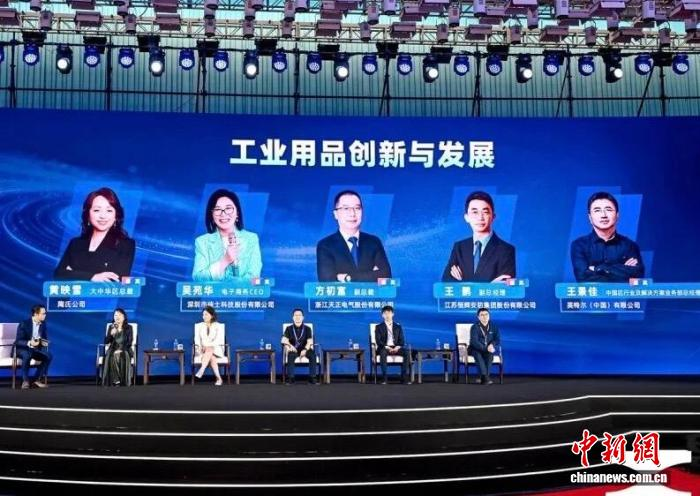
以“创新驱动 产业协同 价值跃迁”为主题的第一届工业用品大会(CISS 2026)12日在上海举办,业界人士在会上共同探讨新型工业化背景下的工业用品产业发展机遇。

6月12日,业界人士在第一届工业用品大会上热议工业用品的发展新机遇。(第一届工业用品大会主办方供图)

大会由中国机械工业联合会、中国信息协会产业互联网分会等行业组织与震坤行工业超市联合发起。

会上,《2026年中国工业用品制造与流通报告》(以下简称“《报告》”)面向行业发布。

《报告》围绕工业用品制造等内容展开研究,解读了工业用品B2B平台数智化转型等发展路径。《报告》显示,制造业采购体系正在经历结构性变化,当前MRO(用于维护、维修及运行用途的非生产性物料)采购仍以传统线下渠道为主,但数智化采购增速已显著高于传统渠道。

“好产品会在AI时代获得放大。”震坤行董事长兼CEO陈龙在主题演讲中说。他表示,AI能力的增强,会极大地提升产业链上下游各类企业的产能和效能。利用高质量数据,供需双方可以实现“双向奔赴”。

清华大学经济管理学院教授肖勇波指出,运营效率、供应链韧性、ESG构成了企业供应链转型过程中所需要的三个维度。针对供给侧和需求侧所面临的多重因素,业界要发挥数据要素的价值,通过数据分析来进行科学决策。

英特尔中国区行业及解决方案业务部总经理王景佳表示,AI技术正加速渗透工业制造、智能交通等行业。其中,在工业用品行业,过往行业比拼SKU(最小存货单位)丰富度、价格优势等,现在则升级为技术能力、场景深耕、生态交付等综合竞争力的较量。

整体上,AI正加速渗透至研、产、供、销等各个关键环节,“AI+新型工业化”的深度融合被视为推动工业变革的核心力量。上海于2025年8月对外发布《上海市加快推动“AI+制造”发展的实施方案》,希望通过三年时间的努力,进一步提升制造业智能化发展水平,在语料、模型、平台、场景等领域形成一批创新成果。

注:文/中国新闻网,文章来源:中国新闻网,本文为作者独立观点,不代表亿邦动力立场。

文章来源:中国新闻网

广告
微信
朋友圈

FAQ回顾

工业数智化转型能为工业用品产业带来什么价值?

AI能力增强可极大提升工业用品产业链上下游各类企业的产能和效能,当前工业用品数智化采购增速已显著高于传统采购渠道,AI正渗透至研、产、供、销各关键环节,“AI+新型工业化”深度融合将成为推动工业变革的核心力量。

企业供应链转型需要关注哪些核心维度?

企业供应链转型需重点关注三个核心维度,分别是运营效率、供应链韧性、ESG,业界可充分发挥数据要素的价值,通过数据分析开展科学决策,应对供给侧和需求侧面临的多重因素影响。

当前工业用品行业的核心竞争力体现在哪些方面?

当前工业用品行业已从过往比拼SKU丰富度、价格优势,升级为技术能力、场景深耕、生态交付等综合竞争力的较量,AI技术正加速渗透到行业各个关键环节。

上海推动AI+制造发展有什么相关政策?

上海于2025年8月对外发布《上海市加快推动“AI 制造”发展的实施方案》,计划用三年时间进一步提升制造业智能化发展水平,在语料、模型、平台、场景等领域形成一批创新成果。

这么好看,分享一下?

朋友圈 分享

APP内打开

赞 +1
+1
微信好友 朋友圈 新浪微博 QQ空间
关闭
收藏成功
发送
/140 0

