





广告
加载中

陈龙:AI驱动震坤行从交易平台迈向产业基础设施

龚作仁 2026-07-11 11:54
龚作仁 2026/07/11 11:54

邦小白快读

EN
全文速览

本文是震坤行董事长陈龙在第一届工业用品大会上的核心发言,梳理了AI时代工业用品供应链的发展方向,干货要点如下:

1. 当前行业面临三大时代变局:中国制造业全球化对服务配套提出更高要求,AI快速重构全产业链,消费成为经济转型核心,企业需要主动推动员工收入增长带动消费发展。

2. AI时代淘汰的是平庸企业而非小企业,产品质量和创新能力是核心竞争力,掌握AI能力的企业将会成长为产业超级公司。

3. 行业实现价值跃迁的两个创新路径:一是抓住设备智能化转型的技术创新机遇,二是基于客户数据做定制化产品,将传统串联渠道改为并联融合的新渠道模式。

头部企业震坤行已经落地了仓配网络、研发中心、工业大模型等多类布局,可供参考。

AI时代工业用品品牌的发展迎来新的规则和机遇,核心干货整理如下:

1. 品牌营销逻辑发生根本变化:如今品牌的市场能见度由AI是否认可、数据是否被AI采集决定,企业要重视数据资产建设,积极参与行业优质产品评选,放大高品质高创新产品的品牌优势。

2. 渠道建设需要转型:传统供应商-平台-客户的串联渠道已经落伍,品牌需要转变为和平台、客户并联融合的关系,共同服务客户,提升服务效率和质量。

3. 产品研发方向要调整:未来产品要基于客户需求数据做定制化开发,品牌可以依托平台的资源做联合研发,同时抓住中国制造业全球化、工业服务出海的趋势,拓展新的增长空间,核心要把产品质量和创新放在第一位,避免沦为被淘汰的平庸企业。

对于工业用品领域的卖家,本次发言明确了当前行业的变局、风险与新增机会,核心干货整理如下:

1. 当前行业整体迎来三大变革:中国制造业全球化带动配套需求升级,AI重构产业链,消费转型推动经济结构调整,AI时代淘汰的是平庸企业而非规模小的企业,不重视创新和AI布局的卖家会面临淘汰风险。

2. 新增市场机会明显:工业设备智能化转型会带动庞大的产业链需求,类似当年汽车替代马车带动全产业链发展,同时中国工业服务业出海处于风口期,有大量新的增长空间可以挖掘。

3. 实操发展方向:卖家要做好自身数据沉淀,保证数据可被AI采集,以此获得更高的市场能见度;主动转变合作模式,和客户、平台、供应商开展数据协同,做高品质高创新产品,依托行业评选放大自身优势。

对于工业用品生产工厂,本次发言点明了AI时代的产品方向、商业机会与转型启示,核心干货整理如下:

1. 产品生产与设计需求:AI时代产品质量和创新能力是核心竞争力,平庸的工厂会被市场淘汰,未来产品定义要更多依据客户需求数据做定制化开发,贴合终端客户的真实需求。

2. 可挖掘的商业机会:一方面中国制造业全球化发展,对工业用品配套服务提出更高要求,国内工业服务出海迎来时代机遇,工厂可以借机拓展海内外新市场;另一方面工业设备智能化转型带来了庞大的产业链需求,工厂可以提前布局这个新赛道,获取新增量。

3. 数字化与电商转型启示:工厂要重视自身数据能力建设,主动和下游平台、终端客户开展数据协同,还可以和震坤行这类平台合作开展联合研发,共享研发资源,降低自身研发投入门槛,提升创新效率。

对于工业服务领域的服务商,本次发言明确了行业发展趋势、客户痛点与转型解决方案,核心干货整理如下:

1. 行业发展趋势:当前工业用品供应链正从传统交易平台向产业基础设施升级,AI技术正在快速重构整个产业链,中国制造业全球化发展以及工业服务出海,都给服务商带来了巨大的增长空间,行业价值跃迁的核心是创新驱动和产业协同。

2. 行业现存核心痛点:传统的串联式渠道合作模式效率低,传统行业普遍存在信息不透明、交易不对称的问题,无法满足AI时代客户对定制化、高效率服务的需求。

3. 落地解决方案:服务商要加大AI技术的资源资金投入,搭建自身的数据能力;走产业协同路线,和客户做场景共建数据共享,和供应商做数据协同共同服务客户,和行业伙伴做标准共建,树立透明化规范化的服务理念;同时要布局线下属地化服务团队,满足AI无法替代的现场精细化服务需求。

对于工业用品领域的平台商,本次发言给出了转型方向、运营思路与实践参考,核心干货整理如下:

1. 市场对平台的新需求:AI时代要求平台从单一的交易平台,转型为支撑产业发展的基础设施,要适配中国制造业全球化对服务配套能力的更高要求,承载AI驱动的全产业链协同功能。

2. 运营管理的调整方向:要转变传统渠道逻辑,把原来供应商和平台的串联交易关系,改为并联融合的协同关系,联动全产业链伙伴共同服务客户;分别和客户做场景共建数据共享,和供应商联合开展产品研发,和行业伙伴做标准共建,摒弃传统信息不透明的模式,树立透明化规范化的运营理念。

3. 布局参考与风险规避:可以参考震坤行的路径,建设覆盖全国的仓配网络和线下交付团队,布局研发中心、专业实验室,搭建工业专属大数据体系和大模型;要抓住工业服务出海的机遇,避开不投入技术、坚持传统模式的风险。

本次发言提出了AI时代工业用品供应链领域的新动向、新问题与新商业模式,对产业研究有较高参考价值,核心内容整理如下:

1. 产业新动向:当前中国工业用品供应链正处于从交易平台向产业基础设施价值跃迁的关键阶段,AI技术正以超出预期的速度重构全产业链,中国制造业全球化带动工业服务升级,同时中国工业服务出海迎来新的时代机遇,行业整体处于变革期。

2. 行业暴露的新问题:AI应用存在资源资金门槛,中小玩家布局难度大;传统的串联渠道模式、信息不透明的交易模式已经完全不适应AI时代的发展需求;企业数据能力不足会直接降低市场能见度,被市场边缘化。

3. 提出的新商业模式与发展路径:行业要走创新驱动和产业协同的路线,创新分为技术创新押注工业设备智能化,以及产品渠道端做定制化产品、并联协同渠道;营销逻辑从获得用户信任转为获得AI认可,协同分为客户、供应商、行业伙伴三方协同,目前头部平台已经落地了相关实践,具备案例研究价值。

返回默认
声明:快读内容全程由AI生成,请注意甄别信息。如您发现问题,请发送邮件至 run@ebrun.com 。

我是 品牌商 卖家 工厂 服务商 平台商 研究者 帮我再读一遍。

Quick Summary

This article summarizes the core speech delivered by Chen Long, Chairman of ZKH Industrial Supply, at the First Industrial Goods Conference. He outlines the development direction of industrial goods supply chains in the AI era, with key takeaways as follows:

1. The industry currently faces three major paradigm shifts: China's manufacturing globalization demands higher-level supporting services; AI is rapidly reshaping the entire industrial chain; and consumption has become the core driver of economic transformation, requiring enterprises to proactively drive consumption growth by increasing employee incomes.

2. The AI era will eliminate mediocre enterprises, not small ones. Product quality and innovation capability are the core competitive advantages, and enterprises that master AI capabilities will grow into industry super leaders.

3. There are two innovation paths for the industry to achieve value upgrade: first, seize the technological innovation opportunity brought by intelligent equipment transformation; second, develop customized products based on customer data, and transform the traditional serial channel model into a new parallel integrated channel structure.

Leading player ZKH has already completed multiple key deployments including warehouse and distribution networks, R&D centers, and industrial large models, which serves as a useful reference for the industry.

The development of industrial goods brands in the AI era is entering a new phase with new rules and opportunities. Key insights for brands are as follows:

1. Brand marketing logic has undergone fundamental change: Today, a brand's market visibility depends on whether AI can recognize it and whether its data can be crawled by AI. Enterprises should prioritize the building of data assets, actively participate in high-quality industry product selection programs, and amplify the brand advantages of high-quality, highly innovative products.

2. Channel development requires transformation: The traditional serial channel structure of supplier-platform-customer is outdated. Brands need to shift to a parallel integrated relationship with platforms and customers to jointly serve end-users and improve service efficiency and quality.

3. Product R&D direction needs adjustment: Future products should be custom-developed based on customer demand data. Brands can conduct joint R&D leveraging platform resources. At the same time, they should seize the trend of China's manufacturing globalization and the outbound expansion of industrial services to tap new growth spaces. Product quality and innovation must remain the top priority to avoid becoming a mediocre enterprise eliminated by the market.

For sellers in the industrial goods space, this speech clarifies the industry's current changes, risks, and new growth opportunities. Key takeaways are as follows:

1. The industry is currently undergoing three major transformations: China's manufacturing globalization is driving upgrading of supporting service demand; AI is reshaping the entire industrial chain; and consumption transformation is restructuring the national economy. In the AI era, mediocre enterprises rather than small-scale players will be eliminated, and sellers that neglect innovation and AI deployment will face elimination risks.

2. New market opportunities are emerging clearly: The intelligent transformation of industrial equipment will drive huge demand across the industrial chain, similar to how the replacement of horse-drawn carriages by automobiles drove development of the entire automotive industry. At the same time, the outbound expansion of China's industrial services is at an inflection point, with plenty of untapped new growth space.

3. Practical development directions: Sellers should build their own data assets to ensure their data is accessible to AI, thereby gaining higher market visibility; proactively transform cooperation models to achieve data collaboration with customers, platforms, and suppliers; focus on developing high-quality, innovative products; and amplify competitive advantages through industry recognition and selection programs.

For factories producing industrial goods, this speech clarifies product directions, business opportunities, and transformation insights in the AI era. Key takeaways are as follows:

1. Product design and manufacturing requirements: In the AI era, product quality and innovation capability are core competitiveness. Mediocre factories will be eliminated by the market. Future product definition should rely more on customer demand data for customized development to better meet the actual needs of end customers.

2. Explorable business opportunities: On one hand, the globalization of China's manufacturing industry has put forward higher requirements for supporting industrial goods services, bringing historic opportunities for Chinese industrial services to go global. Factories can seize this chance to expand into new domestic and overseas markets. On the other hand, the intelligent transformation of industrial equipment brings huge industrial chain demand, and factories can deploy in this new track in advance to capture new growth.

3. Insights for digital and e-commerce transformation: Factories should prioritize building their own data capabilities, proactively carry out data collaboration with downstream platforms and end customers, and can carry out joint R&D in cooperation with platforms like ZKH to share R&D resources, lower R&D investment barriers, and improve innovation efficiency.

For service providers in the industrial service sector, this speech clarifies industry development trends, customer pain points, and transformation solutions. Key takeaways are as follows:

1. Industry development trends: The current industrial goods supply chain is upgrading from a traditional transaction platform to industrial infrastructure. AI technology is rapidly reshaping the entire industrial chain. The globalization of China's manufacturing industry and the outbound expansion of industrial services both bring huge growth space for service providers. The core of industry value upgrading is innovation-driven development and industrial collaboration.

2. Core existing pain points: The traditional serial channel cooperation model has low efficiency, and the industry generally suffers from information opacity and information asymmetry, which cannot meet customers' demand for customized, high-efficiency services in the AI era.

3. Actionable solutions: Service providers should increase investment of resources and capital in AI technology to build their own data capabilities; adopt an industrial collaboration approach: build scenarios and share data with customers, carry out data collaboration with suppliers to jointly serve end customers, and co-build industry standards with peers, while establishing a transparent and standardized service concept; in addition, deploy local offline service teams to meet the demand for on-site refined services that cannot be replaced by AI.

For platform operators in the industrial goods space, this speech provides transformation directions, operational strategies, and practical references. Key takeaways are as follows:

1. New market demands for platforms: In the AI era, platforms are required to transform from single-function transaction platforms into industrial infrastructure that supports industry development. They need to meet the higher requirements for supporting service capabilities brought by China's manufacturing globalization, and host AI-driven whole-industrial-chain collaboration functions.

2. Adjustment directions for operation and management: Platforms need to change traditional channel logic, transforming the original serial transaction relationship between suppliers and platforms into a parallel integrated collaborative relationship, and mobilize all industrial chain partners to jointly serve customers. Specifically, platforms should co-build scenarios and share data with customers, carry out joint product R&D with suppliers, and co-build industry standards with peers, abandoning the traditional opaque information model and establishing a transparent and standardized operation concept.

3. Deployment reference and risk avoidance: Platforms can refer to ZKH's path: build a nationwide warehouse and distribution network and offline delivery team, deploy R&D centers and professional laboratories, and build an industrial-specific big data system and large model. They should also seize the opportunity of outbound expansion of industrial services and avoid the risk of sticking to traditional models with no technology investment.

This speech puts forward new trends, new problems, and new business models in the industrial goods supply chain space in the AI era, which carries high reference value for industrial research. Core content is summarized as follows:

1. New industry trends: China's industrial goods supply chain is currently in a critical stage of value transition from transaction platforms to industrial infrastructure. AI technology is reshaping the entire industrial chain at a faster-than-expected pace. The globalization of China's manufacturing industry is driving industrial service upgrading, and the outbound expansion of China's industrial services is ushering in new historic opportunities, putting the entire industry in a period of profound transformation.

2. New emerging industry problems: AI application has high capital and resource barriers, making deployment difficult for small and medium-sized players. Traditional serial channel models and information-opaque transaction models are completely incompatible with development needs in the AI era. Insufficient enterprise data capability will directly reduce market visibility and lead to marginalization.

3. New business models and development paths proposed: The industry should adopt an innovation-driven and industrial collaboration route. Innovation includes two parts: technological innovation focused on intelligent industrial equipment, and customized product development and parallel collaborative channels on the product and channel side. Marketing logic has shifted from winning user trust to gaining AI recognition. Collaboration covers three parties: customers, suppliers, and industry partners. Leading industry platforms have already launched relevant practices, providing valuable cases for academic and industry research.

Disclaimer: The "Quick Summary" content is entirely generated by AI. Please exercise discretion when interpreting the information. For issues or corrections, please email run@ebrun.com .

I am a Brand Seller Factory Service Provider Marketplace Seller Researcher Read it again.

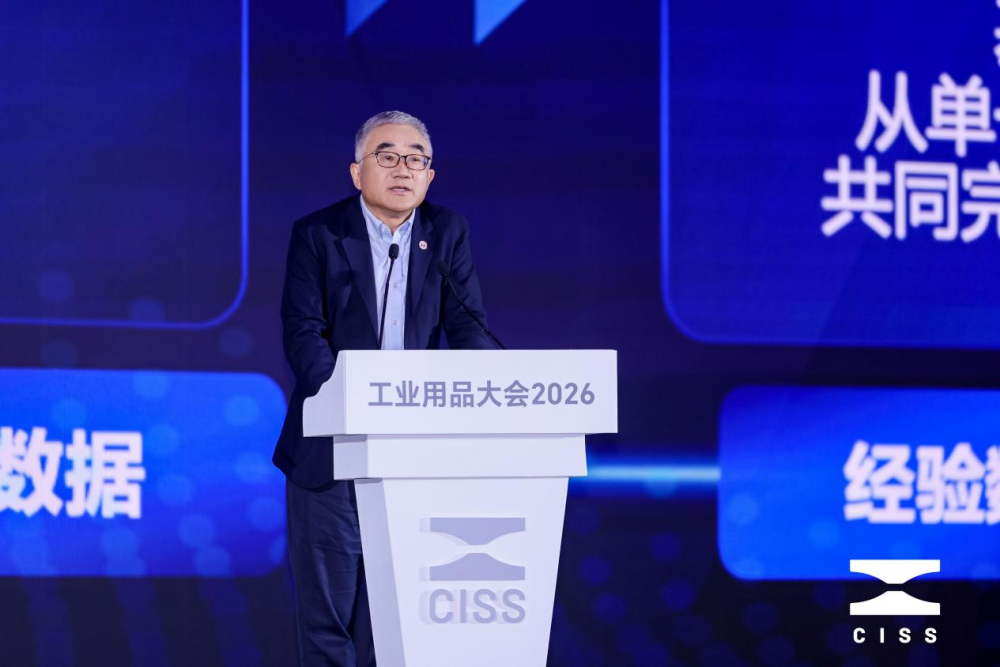
6月12日,第一届工业用品大会在上海国家会展中心举行。作为大会核心发起方与主办单位,震坤行工业超市(上海)有限公司董事长兼CEO陈龙出席大会并发表主题演讲。他指出,面对AI时代的深刻变革,工业用品供应链正处于从“交易平台”迈向“产业基础设施”的关键一跃,创新驱动与产业协同是实现价值跃迁的必由之路。

震坤行董事长兼CEO陈龙发表主题演讲

陈龙首先分析了当前行业面临的三大时代变局。一是中国制造业全球化发展,对服务业配套能力提出更高要求。二是AI技术正以超出想象的速度重构产业链。三是消费成为国家引导经济转型的核心方向,经济结构深度调整,企业应主动承担推动员工收入普遍增长的社会责任,只有全民收入提升,消费才能真正发展起来。

“在信息越来越透明的AI时代,被淘汰的不是小企业,而是平庸的企业。”陈龙在演讲中强调,产品质量与创新能力变得至关重要。AI能力的使用是有门槛的,需要资源和资金投入,未来,能够充分运用AI能力的企业,将成长为引领产业的“超级公司”。

面对这一变革,陈龙提出了两条清晰的创新路径。

一是技术创新。人类发展史本身就是不断替代劳动力、提升效率的过程,当前最大的机遇在于各类设备的智能化转型。工业机器人不一定需要人形,但必须实现智能化。这种转型将带动巨大的产业链需求,“就像卡车替代马车一样,它会带来新的岗位、创造新的需求”,正如当年汽车工业带动了庞大的产业链体系。

二是产品与渠道创新。未来产品的定义将更多依据客户需求的数据进行定制。在产品定义层面,未来将越来越依据客户需求的数据实现定制化。在渠道层面,B2B领域企业不应再是串联关系——供应商将产品卖给平台、平台再卖给客户,而必须是并联关系、融合关系,共同服务客户,“只有这样服务的效率才能更高,质量更好”。

陈龙进一步指出,AI时代的营销逻辑已发生根本性变化。过去是“人相信你”,而今天是“AI有没有相信你”。企业有没有成为AI认可的权威,数据有没有被AI采集,直接决定了自身在未来市场中的能见度。他强调,中国工业用品每年应持续开展优质产品评选,只有真正高品质、高创新的产品,才会在AI时代中被极度放大和推广。

在协同层面,陈龙提出三大协同方向。第一,与客户协同,做好场景共建和数据共享,“如果你到一个餐馆都不能清楚地说出想吃什么,餐馆怎么给你提供服务?”供应链做得好不好,客户有没有深度参与是关键。第二,与供应商协同,从提供产品升级到共同服务客户,尤其是在AI时代,数据协同至关重要,没有高质量的数据能力,就无法赢得市场的认可。第三,与行业伙伴协同,不仅要标准共建、资源共享,更要在价值观层面提升,“技术越先进,越需要我们的理念和价值观能响应时代需求”,B2B领域必须摒弃信息不透明、交易环节不对称的传统模式,以透明化、规范化、价值化的理念赋能产业长远发展。

谈及震坤行的自身实践,陈龙介绍了几个关键布局。首先,震坤行已建立覆盖全国的仓储物流网络和最后一公里交付体系,并拥有一千多名一线服务人员。他表示,现场化、精细化的工业属地服务无法被AI替代,未来公司一线服务团队将扩展至1万至2万人。其次,公司在太仓和深圳建设了创新研发中心,致力于产品测试、试制和研发,愿意与供应商伙伴共同投入资源进行联合开发。此外,震坤行已拥有多家国家级CNAS实验室,并建立了工业用品大数据生产体系和国内首个通过国家网信办备案的工业用品专属大模型“行家玲珑”。

陈龙最后强调,中国货物贸易有大量顺差,但服务贸易仍有大量逆差。中国服务业在全球化发展中有巨大机会,也迎来了服务企业大量出海的时代机遇。只有为客户创造更高价值,企业才能实现更好的发展,进而持续反哺产业进步,助力中国工业服务走向全球。

注:文/龚作仁,文章来源:中国财富网,本文为作者独立观点,不代表亿邦动力立场。

文章来源:中国财富网

广告
微信
朋友圈

FAQ回顾

AI时代工业用品供应链的转型方向是什么?

AI时代工业用品供应链正处于从"交易平台"迈向"产业基础设施"的关键阶段,转型可走两条路径:一是技术创新,推进各类设备智能化转型,创造新的产业链需求;二是产品与渠道创新,基于客户需求数据定制产品,渠道端形成多方并联融合关系,提升服务质效。

震坤行在工业用品AI领域有哪些核心布局?

震坤行已搭建覆盖全国的仓储物流网络与最后一公里交付体系,未来一线服务团队将扩至1至2万人;在太仓、深圳设创新研发中心,拥有多家国家级CNAS实验室,搭建工业用品大数据生产体系,推出国内首个获国家网信办备案的工业用品专属大模型"行家玲珑"。

AI时代B2B领域的营销逻辑发生了什么变化?

AI时代B2B领域营销逻辑从过往依赖用户信任,转向需获得AI认可,企业是否为AI认可的权威主体、数据是否被AI采集,直接决定其未来市场能见度,高品质、高创新的产品会被AI放大推广。

AI时代B2B企业产业协同有哪些方向?

AI时代B2B企业协同可从三方面推进:一是与客户协同,做好场景共建和数据共享;二是与供应商协同,从提供产品升级为共同服务客户,强化数据协同;三是与行业伙伴协同,推进标准共建、资源共享,树立透明化、规范化、价值化的发展理念。

这么好看,分享一下?

朋友圈 分享

APP内打开

赞 +1
+1
微信好友 朋友圈 新浪微博 QQ空间
关闭
收藏成功
发送
/140 0

