广告
加载中

运满满:烟台樱桃88.5%销往省外 平均运距超1000公里

亿邦动力 2026-06-08 18:00
亿邦动力 2026/06/08 18:00

邦小白快读

EN
全文速览

本文是运满满在烟台樱桃产地发布的樱桃行业运输流通数据,核心干货信息整理如下:

1. 核心产销数据:烟台是国内核心樱桃产区,樱桃发货量占全国总量的11%,相当于每10箱就有1箱来自烟台,烟台福山区全区樱桃种植面积11万亩,总产量约9万吨,有40余个品种,产业链产值超43亿元。

2. 流通运输特征:烟台樱桃88.5%销往省外,平均运输距离超1000公里,销售市场覆盖全国,主要流向一线、新一线城市,当前樱桃运输呈现冷藏化、小吨位、多频次特征,烟台樱桃冷藏运输率已达47%,发往核心批发市场通常不足10小时即可到达。

3. 产业变化:传统樱桃运输存在找车难、成本高、损耗大的问题,接入数字货运平台后,运输成本平均下降15%以上,损耗明显降低,当前运满满针对樱桃季新注册用户推出200元至500元的专项优惠。

本文披露了樱桃产业流通与消费的最新数据,对樱桃品牌商的参考干货整理如下:

1. 消费趋势与渠道机会:全国樱桃消费呈现明显的大型批发市场集散特征,头部收货区域对应多个全国性大型农批市场,烟台樱桃已经突破本地销售局限,88.5%货量销往省外,覆盖全国一线、新一线城市及多个区县市场,全国化销售布局已经成熟。

2. 供应链优化经验:原来樱桃产业普遍存在找车难、物流成本高、损耗大的问题,接入数字货运平台后,可实现数字化运力调度,运输成本平均下降15%以上,同时冷链服务更有保障,目前烟台樱桃冷藏运输率已经达到47%,能有效保障跨区域运输的产品品质。

3. 产业基础参考:烟台作为核心产区樱桃产业规模大,品种丰富,区域产业基础好,适合打造全国性樱桃品牌,拓展全国市场。

本文的樱桃流通数据对生鲜樱桃卖家的经营有诸多参考干货,整理如下:

1. 市场机会梳理:烟台樱桃全国认知度高,发货量占全国总量的11%,88.5%销往省外,平均运距超1000公里,已经形成覆盖全国多区域的成熟销售网络,一线、新一线城市是核心消费市场,多个下沉区县也有稳定收货需求,全国市场增长空间充足。

2. 物流降本方案参考:传统樱桃物流存在找车难、成本高、损耗大的痛点,接入运满满这类数字货运平台后,运输成本平均下降15%以上,损耗也明显降低,当前平台针对樱桃季新注册用户推出200元到500元不等的专项优惠,可进一步降低发货成本。

3. 物流运营经验:樱桃运输主流特征为冷藏化、小吨位、多频次,主流适配车型为4.2米冷藏车、小吨位依维柯等,发往核心批发市场通常不到10小时即可到达,能有效保障产品新鲜度。

本文关于樱桃产业流通的信息,给樱桃相关加工、配套工厂的参考干货整理如下:

1. 产品生产设计需求:当前樱桃产业已经形成全国性流通格局,核心产区烟台樱桃88.5%销往省外,平均运距超1000公里,长途跨区域运输成为常态,对保鲜、包装、配套冷链配件产品的需求大幅提升,要求产品能适配长途冷链运输的保鲜、防护需求。

2. 商业机会梳理:烟台是全国核心樱桃产区,仅福山区年产量就达到9万吨,产业链产值超43亿元,拥有40余个品种,每年樱桃季都有大量的生产、流通相关需求,相关工厂可对接产地布局业务,拓展市场空间。

3. 数字化转型启示:目前樱桃产地流通端已经普及数字化运力调度,有效降低了流通成本,工厂也可接入数字化工具降低自身物流、运营成本,借助全国性流通网络拓展自身产品的销售范围。

本文披露了樱桃生鲜运输行业的最新发展趋势与客户痛点,相关干货整理如下:

1. 行业发展趋势:樱桃跨区域流通需求快速增长,核心产区烟台樱桃88.5%销往省外,平均运距超1000公里,已经形成覆盖全国的流通网络,冷链运输需求持续提升,目前烟台樱桃冷藏运输率已经达到47%,行业运输呈现冷藏化、小吨位、多频次的新特征,小吨位冷藏车的需求大幅增长。

2. 客户核心痛点:传统樱桃运输模式下,果农、合作社、发货方普遍面临找车难、物流成本高、温控无保障、运输损耗大的问题,行业存在明确的服务升级需求。

3. 可参考的解决方案:接入数字货运平台实现数字化调度,可有效降低找车成本,整体运输成本可下降15%以上,还能保障冷链服务稳定性,降低运输损耗,针对产销旺季可推出专项优惠吸引客户,提升用户粘性。

本文介绍了数字货运平台运满满在生鲜产地的运营实践,相关干货整理如下:

1. 产地商家对平台的核心需求:生鲜樱桃产地传统流通模式下,普遍存在找车难、运费偏高、冷链运输无保障、损耗大的痛点,货主、果农、合作社迫切需要能提供稳定车源、透明定价、冷链配套服务的数字化货运调度平台。

2. 可参考的平台运营做法:运满满深入核心产地举办产地溯源活动,同步发布行业数据提升品牌影响力,针对樱桃产销旺季,给平台新注册用户推出200元到500元不等的专项优惠,吸引产地货主入驻,解决旺季集中发货需求。

3. 平台发展方向提示:樱桃运输对时效、温控要求高,以小吨位、多频次运输为主,平台需要针对性优化车货匹配规则,整合冷藏车资源适配产业需求,目前数字化运力加冷链已经成为支撑生鲜产业全国化发展的核心基础设施,布局产地服务有较大市场空间。

本文披露了生鲜农产品流通领域的最新产业动向,可供研究的干货整理如下:

1. 产业流通新动向:传统生鲜农产品已经突破本地流通的限制,核心产区烟台樱桃88.5%销往省外,平均运距超1000公里,已经形成覆盖全国的成熟销售网络,消费端依然呈现明显的全国性批发市场集散特征,大型农批市场仍是樱桃流通的核心节点。

2. 数字化对产业的改造价值:数字货运平台下沉介入生鲜产地流通后,有效解决了传统模式找车难、成本高、损耗大的痛点,数据显示可帮助产业降低运输成本15%以上,目前数字化运力调度加冷链运输已经成为支撑生鲜产业跨区域发展的核心基础设施,重塑了原有产业流通格局。

3. 值得深入研究的方向:生鲜农产品运输出现的冷藏化、小吨位、多频次新特征,数字平台下沉产地服务的商业模式,数字化对传统农业产业的改造路径,都值得进一步深入研究。

返回默认

声明:快读内容全程由AI生成,请注意甄别信息。如您发现问题,请发送邮件至 run@ebrun.com 。

我是 品牌商 卖家 工厂 服务商 平台商 研究者 帮我再读一遍。

Quick Summary

This article shares transportation and distribution data for the cherry industry released by Full Truck Alliance at the Yantai cherry producing region, with key takeaways summarized below:

1. Core production and distribution data: Yantai is a leading cherry producing region in China, accounting for 11% of the country’s total cherry shipments — one out of every 10 boxes of cherries sold in China originates from Yantai. Fushan District of Yantai alone has 110,000 mu (about 7,333 hectares) of cherry orchards, with an annual output of roughly 90,000 tons, over 40 cultivars, and a total industrial chain output value exceeding 4.3 billion yuan.

2. Distribution and transportation characteristics: 88.5% of Yantai cherries are sold to consumers outside Shandong Province, with an average transportation distance of more than 1,000 kilometers, covering markets nationwide. The majority are shipped to first-tier and new first-tier cities. Cherry transportation is increasingly shifting to cold-chain logistics with smaller shipment sizes and higher delivery frequency. Currently, 47% of Yantai cherries are transported via cold chain, and shipments to core wholesale markets arrive in under 10 hours on average.

3. Industry changes: Traditional cherry transportation suffered from difficulties sourcing trucks, high costs, and high cargo damage. After accessing digital freight platforms, average transportation costs have dropped by more than 15%, and cargo damage has fallen significantly. Full Truck Alliance is currently offering targeted discounts of 200 to 500 yuan for new users registering during cherry season.

This article discloses the latest data on cherry industry distribution and consumption, with key takeaways for cherry brands summarized below:

1. Consumer trends and channel opportunities: China’s cherry consumption is predominantly aggregated through large wholesale markets, with top receiving regions home to multiple national-level agricultural wholesale markets. Yantai cherries have outgrown reliance on local sales: 88.5% of the region’s output is sold outside the province, covering first-tier, new first-tier cities and multiple district and county markets nationwide, with a mature nationwide sales network already in place.

2. Supply chain optimization insights: The cherry industry historically struggled with difficulties sourcing trucks, high logistics costs, and high cargo damage. After integrating with digital freight platforms for data-driven capacity scheduling, average transportation costs have fallen by more than 15%, while cold chain service reliability has improved. Today, 47% of Yantai cherries are transported via cold chain, effectively preserving product quality during cross-region shipping.

3. Industrial base reference: As a core producing region, Yantai boasts a large-scale cherry industry with abundant cultivars and a solid regional industrial foundation, making it an ideal location to build a national cherry brand and expand into the nationwide market.

This article’s cherry distribution data offers valuable operational insights for fresh cherry sellers, summarized below:

1. Market opportunity overview: Yantai cherries enjoy high national recognition, accounting for 11% of China’s total cherry shipments. 88.5% of output is sold outside the province, with an average transportation distance exceeding 1,000 kilometers, and a mature nationwide sales network covering multiple regions already established. First-tier and new first-tier cities are the core consumer markets, while many lower-tier districts and counties also have stable demand, leaving ample room for nationwide market growth.

2. Logistics cost-reduction references: Traditional cherry logistics suffers from pain points including difficulty sourcing trucks, high costs, and high cargo damage. After accessing digital freight platforms like Full Truck Alliance, average transportation costs drop by more than 15%, and cargo damage falls significantly. The platform currently offers targeted discounts of 200 to 500 yuan for new users registering during cherry season, creating further opportunities to cut shipping costs.

3. Logistics operational insights: Cherry transportation is predominantly characterized by cold-chain requirements, small shipment sizes, and high frequency. The most commonly used vehicles are 4.2-meter refrigerated trucks and small-tonnage Iveco vans. Shipments to core wholesale markets typically arrive in less than 10 hours, effectively preserving product freshness.

This article’s insights on cherry industry distribution offer key takeaways for cherry processing and supporting factories, summarized below:

1. Product design and demand trends: The cherry industry has developed a nationwide distribution network, with 88.5% of output from core producing region Yantai sold outside the province and an average transportation distance exceeding 1,000 kilometers. Long-distance cross-region shipping has become the norm, driving substantial growth in demand for fresh-keeping technologies, packaging solutions, and cold-chain supporting components that can meet the fresh-keeping and protection requirements of long-distance cold-chain transportation.

2. Business opportunity overview: Yantai is a core national cherry producing region — Fushan District alone produces 90,000 tons of cherries annually, with a total industrial chain output value exceeding 4.3 billion yuan and over 40 cultivars. Every cherry season brings massive demand for production and distribution-related services. Relevant manufacturers can expand their market footprint by establishing business presence in producing regions.

3. Digital transformation insights: Distribution channels in cherry producing regions have widely adopted digital capacity scheduling to cut circulation costs. Manufacturers can also integrate digital tools to reduce their own logistics and operational costs, and leverage the nationwide distribution network to expand the sales reach of their products.

This article discloses the latest development trends and customer pain points in the fresh cherry transportation industry, with key takeaways summarized below:

1. Industry development trends: Cross-region distribution demand for cherries is growing rapidly. 88.5% of cherries from core producing region Yantai are sold outside the province, with an average transportation distance exceeding 1,000 kilometers, forming a nationwide distribution network. Demand for cold-chain transportation continues to rise, with 47% of Yantai cherries already transported via cold chain. The industry has shifted toward a new operational model of cold-chain, small-tonnage, high-frequency shipments, driving sharp growth in demand for small refrigerated trucks.

2. Core customer pain points: Under traditional cherry transportation models, farmers, cooperatives, and shippers commonly face difficulties sourcing trucks, high logistics costs, unstable temperature control, and high cargo damage, creating clear demand for industry service upgrades.

3. Actionable solution references: Integrating with digital freight platforms for data-driven scheduling effectively reduces sourcing costs, cuts overall transportation costs by more than 15%, improves cold chain service reliability, and reduces cargo damage. Providers can also launch targeted promotions for peak production and sales seasons to attract customers and boost user retention.

This article shares operational practices from digital freight platform Full Truck Alliance in fresh produce producing regions, with key takeaways summarized below:

1. Core demands from producing region merchants: Under the traditional distribution model for fresh cherries, producing regions commonly struggle with difficulties sourcing trucks, high freight costs, unreliable cold-chain services, and high cargo damage. Shippers, farmers, and cooperatives have an urgent need for digital freight scheduling platforms that can provide stable truck supply, transparent pricing, and supporting cold-chain services.

2. Reference operational practices for platforms: Full Truck Alliance deepens its presence in core producing regions by holding origin traceability events and releasing industry data to boost brand influence. During the peak cherry production and sales season, it offers targeted discounts of 200 to 500 yuan for newly registered users to attract shippers from producing regions and meet concentrated peak-season shipping demand.

3. Guidance for platform development direction: Cherry transportation has strict requirements for transit time and temperature control, and is dominated by small-tonnage, high-frequency shipments. Platforms need to optimize freight matching rules to fit these characteristics and integrate refrigerated truck resources to meet industry demand. Today, digital capacity combined with cold-chain logistics has become core infrastructure supporting the nationwide development of the fresh produce industry, creating significant market opportunities for expanding services in producing regions.

This article discloses the latest industry developments in fresh produce distribution, with key insights for researchers summarized below:

1. New trends in industrial distribution: Traditional fresh agricultural products have outgrown local distribution limits. 88.5% of cherries from core producing region Yantai are sold outside the province, with an average transportation distance exceeding 1,000 kilometers, forming a mature nationwide sales network. On the consumer side, distribution still centers on national-level wholesale markets, which remain the core nodes of cherry circulation.

2. The transformative value of digitalization for the industry: After digital freight platforms expanded into fresh produce producing regions, they have effectively resolved the pain points of the traditional model: difficulty sourcing trucks, high costs, and high cargo damage. Data shows they help the industry cut transportation costs by more than 15%. Today, digital capacity scheduling combined with cold-chain transportation has become core infrastructure supporting cross-region development of the fresh produce industry, reshaping the original industrial distribution pattern.

3. Directions for further research: The new industry characteristics of cold-chain, small-tonnage, high-frequency shipments for fresh agricultural products, the business model of digital platforms expanding into producing region services, and the transformation path of traditional agricultural industries through digitalization, all merit further in-depth research.

Disclaimer: The "Quick Summary" content is entirely generated by AI. Please exercise discretion when interpreting the information. For issues or corrections, please email run@ebrun.com .

I am a Brand Seller Factory Service Provider Marketplace Seller Researcher Read it again.

【亿邦原创】日前,数字货运平台运满满在山东烟台福山区举办“樱桃红了·产地烟台溯源行”活动,并发布《樱桃行业数观》,披露全国樱桃运输流向、运输结构等数据。

作为满帮集团旗下数字货运平台,运满满主要为货主与货车司机提供车货匹配等服务,覆盖全国干线、短途、零担运输,运输品类涵盖工农业、消费类等产品,旗下运满满冷运平台则专注开展冷链运输业务。

数据显示,过去17个月,全国樱桃发货量排名前五的省份分别为山东、辽宁、陕西、广东和四川。城市层面,全国樱桃发货TOP15城市中,山东共有烟台、潍坊、泰安、淄博、青岛和临沂6座城市上榜。

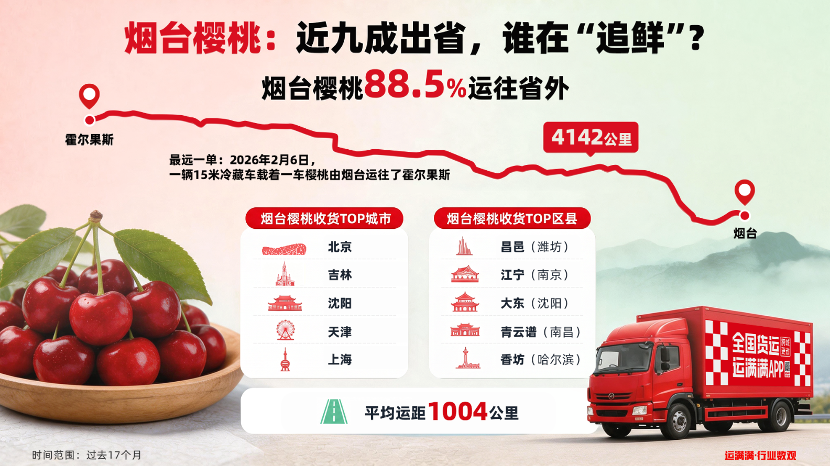
作为国内重要樱桃产区,烟台在全国樱桃流通网络中占据重要位置。运满满数据显示,烟台樱桃发货量占全国总量的11%,相当于全国每10箱樱桃中就有1箱来自烟台。同时,烟台樱桃88.5%的货量销往省外市场,平均运输距离达到1004公里。

从流向来看,北京、吉林、沈阳、天津和上海是烟台樱桃主要收货城市,以一线、新一线城市居多。区县层面,南京江宁、南昌青云谱、沈阳大东、哈尔滨香坊及潍坊昌邑等地进入烟台樱桃收货TOP区县榜单。从运输半径和流向分布来看,烟台樱桃的销售市场已不限于本地及周边地区。

在全国市场中,樱桃消费呈现明显的批发市场集散特征。数据显示,北京、保定、郑州、上海和哈尔滨位列全国樱桃收货城市前五。区县维度,高碑店、沙依巴克、中牟、大东和丰台位居收货量前列,对应首衡高碑店国际农产品交易中心、中牟万邦国际农产品批发市场、北京新发地等大型农产品集散市场。

物流时效方面,当前正值烟台福山大樱桃上市旺季。从烟台发车后,樱桃运至北京新发地、郑州万邦等主要水果批发市场通常不足10小时,运至霍尔果斯口岸约需两三天。数据显示,2026年2月,一辆15米冷藏车从烟台福山区出发,运输4100余公里抵达霍尔果斯,成为统计周期内烟台樱桃最远运输订单。

“我大部分货单都来自运满满,从装车运输到卸货、运费结算,每一步都有保障。”常年在烟台运输樱桃的司机牛师傅表示。据其介绍,樱桃运输全程采用冷藏运输,对温度控制要求较高。

运输结构方面,4.2米冷藏车、3.8米依维柯、4.2米高栏车、3.3米依维柯和3.8米冷藏车是樱桃运输的主要车型,“冷藏化、小吨位、多频次”成为行业运输特征。运满满数据显示,目前烟台樱桃冷藏运输率已达到47%。

活动现场,运满满还宣布面向平台新注册用户推出200元至500元不等的专项优惠权益,以支持樱桃季集中发货需求。

公开资料显示,烟台福山区是国内重要的大樱桃主产区,全区大樱桃种植面积约11万亩,总产量约9万吨,拥有40余个品种,产业链产值超过43亿元。近年来,随着冷链物流和数字货运平台的发展,樱桃等生鲜农产品的跨区域流通能力持续提升。

据福山区大樱桃产业协会秘书长刘丽丽介绍,过去物流成本高,找车难、损耗大,一直是果农和合作社最头疼的问题。而这两年,随着运满满等数字物流平台的接入,“找车快了,运费降了,冷链更有保障了。据统计,通过平台调度,樱桃运输成本平均下降了15%以上,损耗率明显降低。”

从货运数据来看,烟台樱桃已形成覆盖全国多个区域市场的销售网络,而冷链运输和数字化运力调度正在成为支撑樱桃产业发展的重要基础设施。

亿邦持续追踪报道该情报,如想了解更多与本文相关信息,请扫码关注作者微信。

文章来源:亿邦动力

广告
微信
朋友圈

这么好看,分享一下?

朋友圈 分享

APP内打开

赞 +1
+1
微信好友 朋友圈 新浪微博 QQ空间
关闭
收藏成功
发送
/140 0