广告
加载中

淘宝闪购以社会共治推进网络餐饮新规落地:政企数据互通、AI深度参与治理

龚作仁 2026-06-01 13:37
龚作仁 2026/06/01 13:37

邦小白快读

EN
全文速览

本文核心内容是6月1日网络餐饮新规正式实施后,淘宝闪购联合多地监管部门以社会共治方式推进新规落地的相关进展,整理核心干货信息如下:

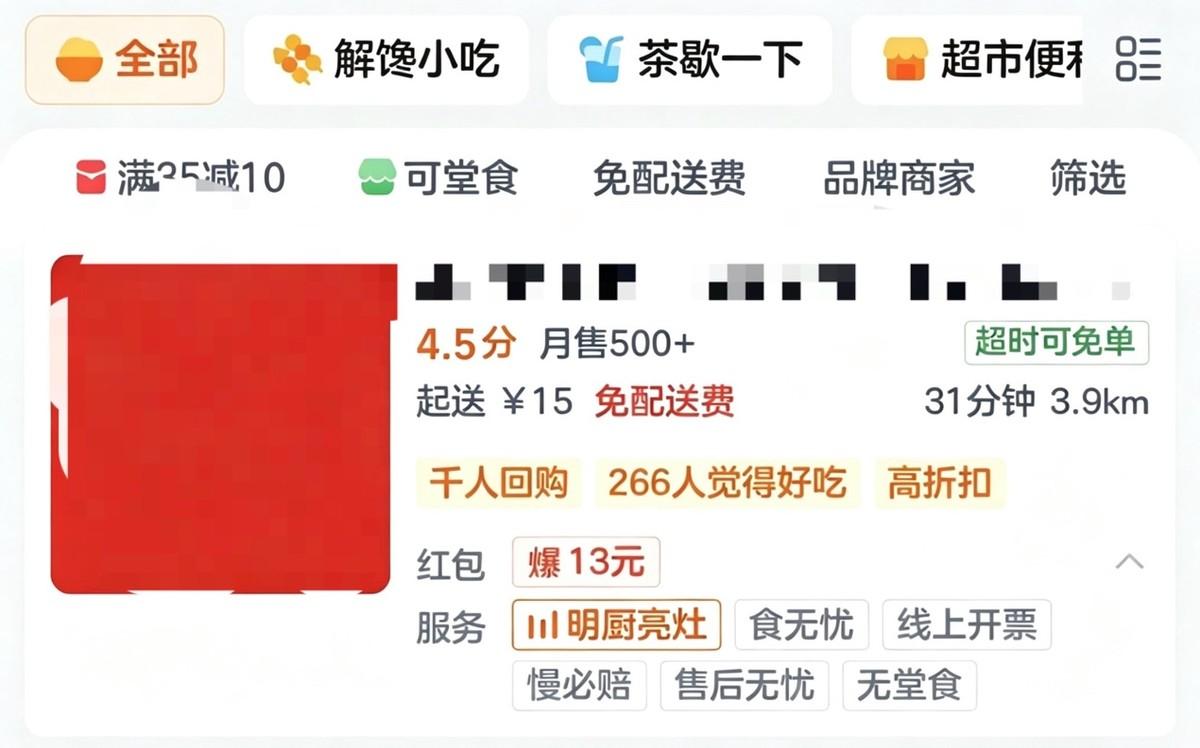
1. 平台已经完成多项合规整改推进工作,今年推动6万餐饮商户完成合规整改,2026年以来累计下线不合规商户33.2万家,目前已经和全国31个省级市场监管部门对接证照系统,完成首批“无堂食”外卖商户打标,商家可在平台商家版自行提报“无堂食”“可堂食”“明厨亮灶”等相关标签。

2. 普通消费者可以享受到更安全的外卖服务,平台建立了骑士“随手拍”违规线索移送通道,覆盖全国48城,还在30多个城市投放超1000万张食安封签,自主研发的AI大模型“白泽”也深度参与食安审核,整体食安保障能力大幅提升。

3. 如果是个体餐饮经营者,可以通过平台官方微信、商家版客户端、线上直播等渠道获取新规解读,对照要求完成自查整改,获取合规标签后可展示给消费者,提升自身信任度。

本文围绕网络餐饮新规落地,梳理了当前行业合规治理的最新动作,能给餐饮品牌商带来多方面参考,核心干货如下:

1. 合规要求已经明确落地,当前监管+平台联合共治的趋势下,不合规商户会被平台清退,品牌需要尽快按要求完成资质核验、经营信息标注等整改,淘宝闪购开放了商家端自提报标签通道,还提供多渠道宣导解读,品牌可借助平台资源完成合规改造。

2. 消费端对网络餐饮的食品安全关注度持续提升,合规标签尤其是“明厨亮灶”这类标签的展示,能帮助品牌获得消费者信任,是品牌信誉建设的重要抓手,做好合规就是品牌的核心竞争力。

3. 当前平台已经实现AI全场景核验,从人、证、地、店、品五个维度做合规审查,品牌需要主动配合平台的实名认证、地址核验、视频复核等要求,避免违规影响品牌运营和市场布局。

本文针对6月1日实施的网络餐饮新规,明确了平台层面的合规要求,给餐饮卖家梳理了应对方向、风险提示和机会,核心干货如下:

1. 新规核心要求与平台操作通道已经明确,新规对入网资质、堂食标注、食安配送等都提出明确要求,平台已经开放商家版客户端入口,支持卖家自行提报“无堂食”“可堂食”“明厨亮灶”等标签,经平台核验后即可对外展示。

2. 明确风险提示,截至2026年平台已经累计下线33.2万不合规商户,今年已经要求6万商户完成整改,卖家需要尽快对照新规要求,完成资质信息核验、出餐地址核对、经营范围梳理等自查整改,避免被清退影响经营。

3. 卖家可利用平台资源完成合规,还能获得增长机会,平台通过官方微信、商家端、线上直播等多渠道开展新规解读,卖家可免费学习相关要求,完成合规获得标签后,能获得消费者更多信任,获取更多平台流量曝光机会。

本文围绕网络餐饮新规落地后的行业治理变化,给餐饮相关生产加工工厂带来了数字化转型、业务拓展的启示,核心干货如下:

1. 行业整体合规化趋势对上游工厂提出新要求,网络餐饮已经进入监管+平台深度共治的阶段,下游餐饮品牌的食安合规要求大幅提升,对应上游供应链工厂也需要适配监管和平台的食安溯源、生产合规要求,才能获得更多稳定合作机会。

2. 数字化转型给工厂带来明确启示,当前平台已经应用AI大模型实现全流程食安核验,治理全流程都实现数字化,工厂也可推进自身生产环节的数字化改造,搭建数字化食安管理体系,提升自身合规能力,打造差异化竞争力,吸引更多客户。

3. 行业规范化出清带来新的商业机会,新规落地推动大量不合规中小商户出清,头部合规餐饮品牌的市场份额会进一步提升,对应合规经营的上游工厂也会获得更多订单增量,工厂可主动对接头部合规餐饮品牌,拓展自身业务空间。

本文介绍了网络餐饮新规落地后行业食安治理的新趋势、新技术应用,给餐饮相关服务商指明了业务方向,核心干货如下:

1. 明确行业发展新趋势,当前网络餐饮监管已经从政府单一监管,逐步转向政企数据互通、线上线下深度联防共治的社会共治模式,智慧化合规治理成为行业核心需求,市场对合规相关服务的需求会大幅增长。

2. 新技术落地情况明确,AI大模型已经深度融入网络餐饮食安治理,淘宝闪购自主研发的食安治理AI大模型“白泽”已经接入超过100个生产治理场景,AI赋能食安治理已经成为明确的技术发展方向。

3. 梳理了客户痛点和业务机会,目前大量中小餐饮商家对新规要求不熟悉,对合规流程不清晰,同时监管部门和平台也需要更多技术、运营层面的服务支持,服务商可围绕新规合规咨询、商家数字化食安改造、AI核验技术开发等方向打造解决方案,拓展自身客户群体。

本文以淘宝闪购推进网络餐饮新规落地的实践为例,给其他网络餐饮、本地生活平台提供了合规运营、治理优化的参考,核心干货如下:

1. 明确新规下平台的核心需求和方向,新规落地后,监管部门和商家都需要平台打通政企数据通道,落实入网合规审核要求,帮助商家完成合规整改,淘宝闪购主动对接全国31个省级市场监管部门的证照核验系统,和多地监管签约构建协同共治机制的做法具备参考价值。

2. 可复制的落地治理方法,淘宝闪购从人、证、地、店、品五个维度强化合规审查,结合AI大模型核验、骑士随手拍线索移送、食安封签普及、多渠道商家宣导等方式推进治理,还开放商家自提报标签入口,降低商家合规成本,这套方法可直接参考。

3. 明确风险规避方向,平台需要主动对接监管部门,落实新规要求,通过深化政企共治提升治理能力,规避合规风险,同时通过合规标签分层运营,帮助合规商家获得曝光,实现平台自身的合规化可持续发展。

本文呈现了网络餐饮新规落地后,行业治理领域的最新实践动向,为产业研究提供了新的案例和方向,核心干货如下:

1. 梳理了产业治理的最新动向,当前网络餐饮治理已经从政府单一监管转向政企协同的社会共治,并且深度结合数字化AI技术,已经形成了数据互通-风险联防-AI核验的全流程治理闭环,上海的“真人、真证、真店”可信核验、福建的省级风险联防共治都是最新的实践案例。

2. 总结了创新治理模式,淘宝闪购依托“3+1+AI”的食安治理体系,创新推出骑士“随手拍”线索移送、商家自主提报合规标签等机制,形成了平台+监管+社会力量共同参与的多元治理模式,是平台参与公共治理的新探索。

3. 给出了研究方向启示,商务部研究院专家提出治理要从事后处理转向事前和过程管理,从人工监管转向数字化智能化监管,从政府单一监管转向多方协同治理,这为后续网络餐饮治理政策完善、平台参与社会治理的商业模式研究都提供了明确方向。

返回默认

声明:快读内容全程由AI生成,请注意甄别信息。如您发现问题,请发送邮件至 run@ebrun.com 。

我是 品牌商 卖家 工厂 服务商 平台商 研究者 帮我再读一遍。

Quick Summary

This article outlines the progress of Taobao Flash Sale’s joint efforts with local regulators to implement the new national online food service regulation that took effect on June 1 through a collaborative multi-stakeholder governance model, with key takeaways as follows:

1. The platform has completed multiple compliance upgrades. It has guided 60,000 food merchants to complete compliance rectification this year, and removed 332,000 non-compliant merchants from its platform cumulatively since 2026. Taobao Flash Sale has now connected its license verification system with market regulation authorities across all 31 provincial-level regions in China, completed tagging for the first batch of "no dine-in" takeaway merchants, and allows merchants to self-report tags including "no dine-in", "dine-in available", and "open kitchen" via its merchant app.

2. Consumers will benefit from safer takeaway services. The platform has launched a "snap-and-report" channel for delivery riders to submit violation tips, which covers 48 cities across China. It has also distributed over 10 million food safety seals in more than 30 cities, and deployed its self-developed generative AI "Baize" for deep involvement in food safety review, greatly boosting overall food safety governance capacity.

3. Individual food business operators can access official interpretation of the new regulation via the platform’s official WeChat account, merchant app, and online live training sessions, conduct self-inspection and rectification against regulatory requirements, and display compliance tags to consumers to build greater trust.

This article summarizes the latest industry compliance initiatives following the implementation of the new online food service regulation, providing actionable insights for food brand owners, with key takeaways as follows:

1. Compliance requirements are now fully in effect. Under the current trend of joint governance by regulators and platforms, non-compliant merchants will be removed from platforms. Brands need to complete rectification including qualification verification and business information labeling as soon as possible. Taobao Flash Sale has opened a self-reporting channel for compliance tags and provides multi-channel regulatory interpretation, allowing brands to leverage platform resources to complete compliance upgrades.

2. Consumer attention to online food safety continues to rise. Display of compliance tags, especially high-credibility tags like "open kitchen", helps brands build consumer trust and serves as a core pillar of brand reputation building. Strong compliance is now a core competitive advantage for food brands.

3. The platform has rolled out full-scenario AI-powered compliance verification that checks operators, qualifications, locations, stores, and products across five dimensions. Brands need to proactively cooperate with requirements including real-name authentication, address verification, and video review to avoid disruptions to business operations and market expansion due to non-compliance.

This article clarifies platform-level compliance requirements for the new online food service regulation effective June 1, outlines response strategies, risk alerts and opportunities for food sellers, with key takeaways as follows:

1. Core regulatory requirements and platform operation channels are now clear. The new regulation sets clear requirements for merchant onboarding qualifications, dine-in status labeling, and food safety in delivery. The platform has opened an entry in the merchant app that allows sellers to self-report tags including "no dine-in", "dine-in available", and "open kitchen", which will be displayed publicly after platform verification.

2. Key risk alerts: as of 2026, the platform has removed 332,000 non-compliant merchants cumulatively, and has required 60,000 merchants to complete rectification this year. Sellers need to conduct self-inspection and rectification including qualification verification, pickup address confirmation, and business scope sorting as soon as possible to avoid removal and business disruption.

3. Sellers can leverage platform resources to achieve compliance and unlock growth opportunities. The platform provides free official interpretation of the new regulation via multiple channels including official WeChat, merchant app, and online live sessions. After completing compliance and obtaining tags, sellers gain greater consumer trust and access to more platform traffic exposure.

This article analyzes industry governance changes after the implementation of the new online food service regulation, sharing insights on digital transformation and business expansion for food processing factories, with key takeaways as follows:

1. The industry-wide compliance trend raises new requirements for upstream factories. Online food service has entered an era of deep co-governance between regulators and platforms, and downstream food brands now face much stricter food safety compliance requirements. Upstream supply chain factories must adapt to regulators’ and platforms’ requirements for food safety traceability and production compliance to secure more stable cooperation opportunities.

2. Digital transformation brings clear actionable insights. The platform now uses a large AI model to conduct end-to-end food safety verification, and the entire governance process is fully digitized. Factories can also advance digital transformation of their production links, build a digital food safety management system, improve compliance capacity, build differentiated competitiveness, and attract more clients.

3. Industry consolidation driven by standardization creates new business opportunities. The new regulation has pushed a large number of non-compliant small and medium-sized merchants out of the market, and leading compliant food brands will gain further market share. Compliant upstream factories will accordingly see order growth, and can proactively partner with leading compliant food brands to expand business scope.

This article introduces new trends and technology applications in industry food safety governance after the implementation of the new online food service regulation, pointing out business directions for food-related service providers, with key takeaways as follows:

1. The new industry development trend is clear: online food service regulation has gradually shifted from single-party government oversight to a multi-stakeholder co-governance model featuring government-enterprise data sharing and in-depth online-offline joint prevention. Smart compliance governance has become a core industry demand, and market demand for compliance-related services will grow substantially.

2. Technology adoption is clear: large AI models have been deeply integrated into online food safety governance. Taobao Flash Sale’s self-developed food safety AI large model "Baize" has been deployed in more than 100 production and governance scenarios, and AI-powered food safety governance is now a confirmed technology development direction.

3. Client pain points and business opportunities are outlined: a large number of small and medium-sized food merchants are unfamiliar with the new regulation and unclear on compliance processes, while regulators and platforms also need more technical and operational support. Service providers can build solutions around compliance consulting for the new regulation, merchant digital food safety transformation, and AI verification technology development to expand their client base.

Using Taobao Flash Sale’s practice to implement the new online food service regulation as a case study, this article provides references for compliance operation and governance optimization for other online food service and local life platforms, with key takeaways as follows:

1. It clarifies core demands and directions for platforms under the new regulation. After the new regulation took effect, both regulators and merchants require platforms to open up government-enterprise data channels, implement onboarding compliance checks, and help merchants complete compliance rectification. Taobao Flash Sale’s practice of proactively connecting to license verification systems of 31 provincial-level market regulation authorities and signing collaborative governance agreements with multiple local regulators offers valuable reference.

2. It provides replicable governance approaches: Taobao Flash Sale strengthens compliance review across five dimensions: operators, qualifications, locations, stores, and products. It advances governance through a combination of AI large model verification, rider tip submission, widespread adoption of food safety seals, and multi-channel merchant outreach, and also opens a self-reporting tag entry to lower merchants’ compliance costs. This full set of practices can be directly referenced by other platforms.

3. It clarifies risk mitigation directions: platforms need to proactively partner with regulators, implement new regulatory requirements, improve governance capacity through deeper government-enterprise co-governance to avoid compliance risks, and conduct tiered operations based on compliance tags to help compliant merchants gain exposure, achieving the platform’s own compliant and sustainable development.

This article presents the latest practical developments in industry governance after the implementation of the new online food service regulation, providing new cases and research directions for industrial research, with key takeaways as follows:

1. It summarizes the latest developments in industrial governance: online food service governance has shifted from single-party government oversight to government-enterprise collaborative multi-stakeholder governance, with deep integration of digital AI technology. A full governance closed loop of data sharing - risk joint prevention - AI verification has been formed, with latest practical cases including Shanghai's "real person, real license, real store" credibility verification and Fujian's provincial-level risk joint prevention and co-governance.

2. It summarizes the innovative governance model: Relying on its "3+1+AI" food safety governance system, Taobao Flash Sale has innovated mechanisms including rider "snap-and-report" tip submission and merchant self-reported compliance tags, forming a pluralistic governance model with joint participation from platforms, regulators and social forces, which is a new exploration of platforms participating in public governance.

3. It provides inspiration for future research: Experts from the Chinese Academy of International Trade and Economic Cooperation under the Ministry of Commerce point out that governance should shift from post-incident handling to pre-event and in-process management, from manual oversight to digital and intelligent oversight, and from single-party government oversight to multi-stakeholder collaborative governance. This provides clear direction for future research on improving online food service governance policies and exploring business models for platforms participating in public governance.

Disclaimer: The "Quick Summary" content is entirely generated by AI. Please exercise discretion when interpreting the information. For issues or corrections, please email run@ebrun.com .

I am a Brand Seller Factory Service Provider Marketplace Seller Researcher Read it again.

网络餐饮新规6月1日起正式实施。淘宝闪购与北京、上海、安徽、南昌、成都、盐城、泰州、汕尾等地合作,根据市场监管部门推送的名单完成了首批“无堂食”外卖商户打标。当日,平台商家版客户端内已支持商家提报“无堂食”“可堂食”“明厨亮灶”等标签,经平台核验后予以展示。淘宝闪购今年以来推动6万餐饮商户完成合规整改,与各地监管部门的食安治理政企协作也持续取得进展。

淘宝闪购已主动对接全国31个省级市场监管部门的证照核验系统,并与重庆、河北、安徽、河南、海南、云南、陕西及南京、郑州、成都、贵阳、昆明、西安、银川、苏州、金华、九江、珠海、佛山、中山等地市场监管部门签约合作,构建政企食安治理“协同共治”机制,为政企数据互通铺设了制度通道。

在此基础上,政企协作正在向纵深推进。在技术核验层面,上海市市场监管局依托电子营业执照系统率先试点“真人、真证、真店”可信核验机制,打通监管部门、平台与商户间的数据壁垒,实现资质自动核验、电子证照授权管理、合规公示证照生成等功能闭环,淘宝闪购已完成官方接口对接并进入全面测试阶段;在治理机制层面,福建省市场监管局与淘宝闪购合作落地省级网络餐饮食安风险政企联防共治机制,以“数据共享、风险共判、问题共治、结果共促”为核心,打通了从线索移送、综合研判到核查处置、反馈治理的全流程闭环。在各地监管部门的指导引领下,淘宝闪购正积极推动政企协作从数据互通迈向线上线下的深度“联防共治”。

围绕新规入网审核要求,淘宝闪购从“人、证、地、店、品”五个维度,强化食品安全合规性审查,包括:入网餐饮服务提供者及法人均需完成实名认证;以官方数据库为基准核验证照真伪;加强营业执照登记地址与实际出餐地址的一致性校验;所有新签餐饮商户实施“一镜到底”视频核验加线下实地复核;针对重点品类防范商家超范围经营等。淘宝闪购自主研发的食品安全治理AI大模型“白泽”深度参与其中,已经接入超过100个生产场景。

2026年以来,淘宝闪购总计下线不合规商户33.2万,并已要求6万餐饮商户完成整改。平台创新推出的骑士“随手拍”机制在全国48城与市场监管部门建立线索移送通道,并在30多个城市投放超1000万张食安封签,配合新规要求向商户普及餐品封口规范。

临近新规正式实施,淘宝闪购通过官方微信、商家版客户端和线上直播等多种方式开展宣导工作,围绕堂食及明厨亮灶标签展示、资质信息合规、食品安全责任、配送管理规范、新店上线流程等核心事项逐条解读,帮助商家对照新规完成自查和整改。

新规的落地,对推动网络餐饮行业高质量发展具有重要意义。商务部研究院副研究员洪勇看好人工智能在网络食品监管领域的应用,并建议推动监管部门、平台企业、技术机构和社会公众协同联动,形成一个社会共治的智慧治理体系,“过去依靠事后处理,要转为事前和过程性管理;过去依靠人工监管,要转为数字化和智能化监管;过去依靠政府监管,要转向政府、平台、商户、消费者和社会力量共同参与的协同治理。”

淘宝闪购将依托“3+1+AI”的食安治理体系,以更加积极、开放的姿态与社会各方力量共同努力,深化政企协作与社会共治,以技术创新驱动治理能力提升,切实筑牢网络餐饮食品安全防线,守护舌尖上的安全。

注:文/龚作仁,文章来源:Laborer,本文为作者独立观点,不代表亿邦动力立场。

文章来源:Laborer

广告
微信
朋友圈

这么好看,分享一下?

朋友圈 分享

APP内打开

+1
+1
微信好友 朋友圈 新浪微博 QQ空间
关闭
收藏成功
发送
/140 0