广告
加载中

拉夏贝尔回来了 从万店百亿到生态百亿 国民女装开启新纪元

龚作仁 2026-03-13 15:36
龚作仁 2026/03/13 15:36

邦小白快读

EN
全文速览

拉夏贝尔GMV重返百亿,以全新战略推动高质量发展。

1. 战略定位“全球海量设计师”:三层架构包括大师级设计师(如签约前Gucci设计师)、核心设计工作室(平衡创新与效率)、新锐设计师(通过赛制构建商业闭环),设计端开放促增长。

2. BMS+D商业模式:品牌作为引力源和信任锚(28年国民认知+亿元级投放),设计为创新引擎(年上新数万款),制造保障品质和效率(专业化分工如裤子工厂专做、快反周期5-7天),销售建立合伙体系(电商团队、线上代理、线下精选门店)实现全域触达。

3. 生态结盟:与东娱传媒、分众传媒合作启动亿元级营销投放,精准定位破局流量见顶时代。

4. 五大优势支撑:国民品牌记忆(74.5%顾客认可款式多样好看)、情绪消费契合“回忆杀”、中国供应链优势(快反效率)、中国电商能力(2025年GMV增长近30%,618抖音女装登顶)、全球设计资源(“超模裤”销量破3000万条)。

5. 未来愿景:品牌估值翻番、设计师生态成行业高地、供应链柔性制造标杆、渠道合伙范式,领跑存量时代。

拉夏贝尔的品牌营销和产品研发策略提供实操启示。

1. 品牌营销:亿元级投放启动,与分众传媒合作强调精准定位和主流人群深度击穿,应对流量见顶时代,提升品牌势能。

2. 品牌渠道建设:销售端建立合伙体系,锁定核心伙伴,经销商转深度合伙人,实现全域触达与规模放大,渠道矩阵包括电商、线上代理和线下300+家精选店。

3. 产品研发:设计驱动创新,“全球海量设计师”战略开源共创,年上新数万款满足消费者“总想买新”需求,三层架构平衡调性与效率。

4. 消费趋势和用户行为:契合反向消费浪潮,“回忆杀”情绪消费,74.5%顾客认为款式多样好看,66%认可性价比高,显示用户偏好变化。

5. 品牌资产利用:28年国民认知提供溢价空间和低成本获客能力,BMS+D模式中品牌为引力源,吸附优质资源增强供给。

拉夏贝尔转型揭示增长机会和可学习商业模式。

1. 最新商业模式BMS+D:品牌、制造、销售、设计四方联动形成正反馈循环(品牌强→资源优→销量高),提供合作方式如销售合伙体系,经销商转深度合伙人。

2. 增长市场和消费需求变化:契合情绪消费趋势(“回忆杀”),电商能力领先(抖音女装登顶,双十一第四),GMV增长近30%,显示线上机会。

3. 机会提示和合作方式:生态结盟亿元级投放,与东娱传媒、分众传媒签约,提供扶持政策;供应链专业化分工(如裤子工厂专做)带来商业机会。

4. 可学习点和事件应对:快反周期短至5-7天提升效率,设计端开放促增长、封闭保价值,应对存量时代挑战。

5. 风险提示和正面影响:依赖国民品牌资产等苛刻前提,BMS+D模式构筑护城河,避免规模风险,实现从万店到生态的升维。

拉夏贝尔的制造策略启示产品生产和电商推进。

1. 产品生产和设计需求:制造端强调品质底线和效率基石,顶级供应链+专业化分工(如裤子工厂专做裤子、毛衫工厂专做毛衫),快反周期短至5-7天,配合设计端严格封闭保价值。

2. 商业机会:参与BMS+D生态体系,作为制造方(M)获得品牌赋能,专业化分工提升效率,加入核心供应链资源沉淀。

3. 推进数字化和电商启示:电商能力增长显著(2025年GMV增近30%,618抖音登顶),显示线上渠道重要性;供应链柔性制造(快反5-7天)成未来标杆,提供数字化效率案例。

4. 设计需求响应:全球设计资源开源,制造需高效支持年上新数万款产品,平衡创新与量产需求。

行业趋势和解决方案为服务商提供关键洞察。

1. 行业发展趋势:从万店时代到生态时代转型,BMS+D模式驱动全域增长,依赖国民级品牌资产、开放设计平台、供应链资源。

2. 新技术和效率提升:供应链快反技术实现周期短至5-7天,专业化分工(如专厂专做)提升品质和响应速度。

3. 客户痛点和解决方案:流量见顶时代品牌需精准定位(分众传媒合作提供深度击穿方案),设计开源解决创新需求,供应链封闭解决价值保障痛点。

4. 案例和动态平衡:拉夏贝尔利用“开放促增长、封闭保价值”机制,五大优势(如国民记忆、电商能力)构筑护城河,提供可复制方案。

平台需求和运营管理启示清晰呈现。

1. 商业对平台需求和问题:电商平台需支持品牌增长(如抖音女装登顶,双十一第四),显示平台在GMV提升中的关键作用;流量见顶时代需精准定位解决获客问题。

2. 平台最新做法和招商:销售渠道建立合伙体系,锁定核心伙伴(电商团队、线上代理、线下门店),经销商转深度合伙人,吸引优质资源招商。

3. 运营管理和风向规避:渠道矩阵布局实现全域触达与反馈闭环,规模放大优化供给;在存量时代通过生态模式(如BMS+D)规避风险,领跑市场。

4. 平台支持案例:分众传媒合作提供主流人群深度击穿方案,亿元级投放增强平台势能,显示平台在品牌升维中的角色。

产业动向和商业模式研究提供深度分析。

1. 产业新动向和新问题:从万店规模奇迹到生态价值起点转型,国民品牌在存量时代如何领跑(如BMS+D模式解答),涉及涅槃与进化过程。

2. 商业模式:BMS+D四方联动(品牌引力源、设计创新引擎、制造效率基石、销售市场触点)形成正反馈循环,依赖三个苛刻前提(国民品牌资产、开放设计平台、供应链资源)。

3. 政策法规建议和启示:强调精准定位和供应链优势(如快反5-7天),可能启示支持柔性制造政策;生态重构案例(如亿元级投放合作)提供法规实践参考。

4. 代表案例和数据:亿邦报告指出五个结构性优势(国民记忆、情绪消费、供应链、电商能力、设计资源),GMV重返百亿、抖音登顶等数据支撑研究。

返回默认

声明:快读内容全程由AI生成,请注意甄别信息。如您发现问题,请发送邮件至 run@ebrun.com 。

我是 品牌商 卖家 工厂 服务商 平台商 研究者 帮我再读一遍。

Quick Summary

La Chapelle's GMV returns to the 10-billion-yuan mark, driven by a new strategy for high-quality development.

1. Strategic positioning as a 'Global Hub for Mass Designers': A three-tier structure includes master-level designers (e.g., former Gucci designer), core design studios (balancing innovation and efficiency), and emerging designers (building commercial loops through competitions), with an open design approach to spur growth.

2. BMS+D business model: The brand acts as a gravitational force and trust anchor (28 years of national recognition + 100-million-yuan marketing investment), design as the innovation engine (tens of thousands of new styles annually), manufacturing ensures quality and efficiency (specialized division of labor, e.g., dedicated pants factories, 5-7 day quick response cycles), and sales establish a partnership system (e-commerce teams, online agents, offline curated stores) for omnichannel reach.

3. Ecosystem alliances: Collaborations with Dongyu Media and Focus Media initiate 100-million-yuan marketing campaigns, enabling precise targeting to break through in an era of saturated traffic.

4. Five key advantages: National brand legacy (74.5% of customers recognize diverse and stylish designs), alignment with emotional consumption ('nostalgia appeal'), China's supply chain superiority (quick response efficiency), e-commerce prowess (nearly 30% GMV growth by 2025, topping Douyin's women's apparel rankings during 618), and global design resources ('Supermodel Pants' sales exceed 30 million units).

5. Future vision: Doubling brand valuation, establishing a designer ecosystem as an industry benchmark, setting flexible manufacturing standards, and pioneering channel partnership models to lead in a存量时代.

La Chapelle's brand marketing and product development strategies offer practical insights.

1. Brand marketing: Launching 100-million-yuan campaigns with Focus Media emphasizes precise targeting and deep penetration of mainstream audiences to combat traffic saturation and enhance brand momentum.

2. Channel development: A partnership-based sales system locks in core partners, transforming distributors into deep collaborators for omnichannel reach and scale amplification, including e-commerce, online agents, and 300+ curated offline stores.

3. Product R&D: Design-driven innovation through the 'Global Hub for Mass Designers' strategy enables open collaboration, with tens of thousands of new styles annually meeting consumers' 'always want something new' demand, balancing style and efficiency.

4. Consumer trends: Aligning with reverse consumption waves and 'nostalgia appeal' emotional spending; 74.5% of customers praise diverse designs, while 66% recognize high cost-performance, reflecting shifting preferences.

5. Brand equity utilization: 28 years of national recognition provides premium pricing power and low-cost customer acquisition, with the brand serving as a gravitational force in the BMS+D model to attract premium resources.

La Chapelle's transformation reveals growth opportunities and replicable business models.

1. BMS+D business model: Synergy among brand, manufacturing, sales, and design creates a positive feedback loop (strong brand → premium resources → high sales), offering partnerships like the sales collaboration system where distributors become deep partners.

2. Market growth and consumer shifts: Tapping emotional consumption trends ('nostalgia appeal') and leading e-commerce capabilities (topping Douyin's women's apparel, ranking 4th in Double 11), with nearly 30% GMV growth highlighting online opportunities.

3. Partnership opportunities: 100-million-yuan ecosystem alliances with Dongyu Media and Focus Media offer support policies; supply chain specialization (e.g., dedicated pants factories) creates business openings.

4. Learnings and adaptations: 5-7 day quick response cycles boost efficiency; open design drives growth while closed systems protect value, addressing存量时代 challenges.

5. Risk management: While reliant on stringent prerequisites like national brand equity, the BMS+D model builds moats to avoid scale risks, achieving evolution from store networks to ecosystems.

La Chapelle's manufacturing strategy offers insights for production and e-commerce advancement.

1. Production and design requirements: Manufacturing emphasizes quality baselines and efficiency foundations, with top-tier supply chains + specialized division of labor (e.g., dedicated pants/sweater factories) and 5-7 day quick response cycles, coupled with value-protecting closed design systems.

2. Business opportunities: Participating in the BMS+D ecosystem as manufacturing (M) partners gains brand empowerment; specialization improves efficiency and access to core supply chain resources.

3. Digital and e-commerce insights: Significant e-commerce growth (nearly 30% GMV increase by 2025, topping Douyin during 618) underscores online channel importance; flexible manufacturing (5-7 day response) sets future benchmarks for digital efficiency.

4. Design responsiveness: Global open design resources require efficient support for tens of thousands of new products annually, balancing innovation and mass production needs.

Industry trends and solutions provide critical insights for service providers.

1. Industry evolution: Transition from store-network era to ecosystem era, with BMS+D model driving omnichannel growth relying on national brand equity, open design platforms, and supply chain resources.

2. Technology and efficiency: Supply chain quick-response technology achieves 5-7 day cycles; specialized division of labor (e.g., dedicated factories) enhances quality and responsiveness.

3. Client pain points and solutions: In traffic-saturated eras, brands need precise targeting (Focus Media collaboration enables deep penetration); open design addresses innovation needs while closed supply chains ensure value protection.

4. Case studies and balance: La Chapelle's 'open for growth, closed for value' mechanism, supported by five advantages (e.g., national memory, e-commerce capability), builds moats and offers replicable solutions.

Platform requirements and operational management insights are clearly presented.

1. Platform demands and challenges: E-commerce platforms must support brand growth (e.g., Douyin top rankings, Double 11 performance) highlighting their critical role in GMV enhancement; precise targeting addresses customer acquisition in traffic-saturated environments.

2. Platform strategies and recruitment: Partnership-based sales channels lock in core partners (e-commerce teams, online agents, offline stores), transforming distributors into deep collaborators to attract premium resources.

3. Operations and risk mitigation: Omnichannel matrix enables full reach and feedback loops, scaling supply optimization; ecosystem models (e.g., BMS+D) mitigate risks in a存量时代 to lead markets.

4. Platform support cases: Focus Media collaboration provides deep mainstream audience penetration solutions; 100-million-yuan campaigns enhance platform momentum, demonstrating platforms' role in brand elevation.

Industry movements and business model research provide in-depth analysis.

1. Industry shifts and questions: Transition from store-network miracles to ecosystem value starting points, exploring how national brands lead in a存量时代 (e.g., BMS+D model solutions), involving涅槃与进化 processes.

2. Business model: BMS+D's four-way synergy (brand as gravity, design as innovation engine, manufacturing as efficiency foundation, sales as market touchpoints) creates positive feedback loops, relying on three stringent prerequisites (national brand equity, open design platform, supply chain resources).

3. Policy implications: Emphasis on precise targeting and supply chain advantages (e.g., 5-7 day response) may inform flexible manufacturing policies; ecosystem reconstruction cases (e.g., 100-million-yuan campaigns) offer regulatory practice references.

4. Case studies and data: EBang Report highlights five structural advantages (national memory, emotional consumption, supply chain, e-commerce capability, design resources), supported by data including GMV returning to 10-billion-yuan and Douyin top rankings.

Disclaimer: The "Quick Summary" content is entirely generated by AI. Please exercise discretion when interpreting the information. For issues or corrections, please email run@ebrun.com .

I am a Brand Seller Factory Service Provider Marketplace Seller Researcher Read it again.

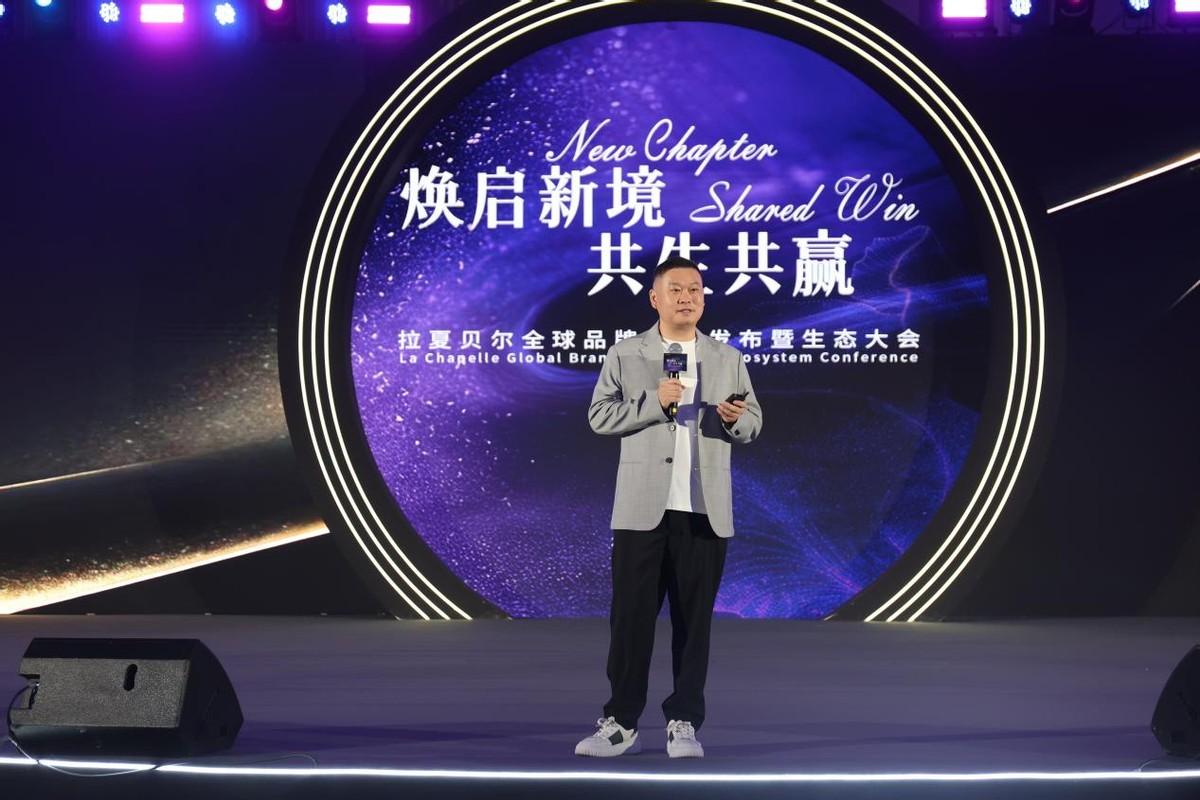
百亿新程,生态启势!拉夏贝尔在3.12全球品牌战略大会上宣告GMV重返百亿,并以全新战略布局,推动国民女装迈向更高质量发展。

“拉夏贝尔,回来了!”

回来了,而且是带着百亿规模回来的。

这是一个具有历史意义的时刻。巅峰时期,拉夏贝尔曾以近万家门店、首个“A+H”股两地上市服装品牌的身份,成为中国女装第一个百亿品牌。那是属于“万店时代”的辉煌,是线下零售黄金年代的缩影。而今天,在完成司法重整、商业模式彻底重构后,拉夏贝尔官宣2025年GMV重返百亿——这一次,是“生态时代”的百亿,是BMS+D模式驱动下的百亿,是从“品牌自己干一切”到“品牌带动大家干”的百亿。

两个百亿,相隔数年,见证了一个国民品牌的涅槃与进化。

重磅官宣:“全球海量设计师”战略定位

“它不是潮流的追逐者,它是岁月的陪伴者。”——这句贯穿全场的情怀叙事,在董事长王国良登台时达到高潮。

拉夏贝尔董事长王国良在会上演讲

最重磅的发布随即揭晓——拉夏贝尔全新战略定位“全球海量设计师”首次系统披露。云杉战略创始人孙晓黎在战略发布环节指出:“这不是一次被动的市场应对,而是一次主动的品牌升级。”

三层架构清晰呈现:

大师级设计师:引入国际奢牌设计师主导品牌调性。2025年已签约前Gucci设计师,“让高端设计从T台走向日常衣橱”。

核心设计工作室:由长期合作的设计师及成熟工作室构成,负责规模化产品输出,平衡创新与效率。

新锐设计师:涵盖高校设计人才、产业带潜力设计师等,通过赛制构建商业闭环。

“设计端极致开放,供应链端严格封闭”——孙晓黎强调,这一机制形成“开放促增长、封闭保价值”的动态平衡。

BMS+D模式:从“万店辉煌”到“全域生态”

从“万店辉煌”到“线上登顶”,从“国民记忆”到“战略领跑”。——拉夏贝尔新掌门人王国良的致辞,勾勒出转型脉络。

大会首次系统阐释创新商业模式BMS+D(Brand品牌+Manufacturer制造+Sales销售+Designer设计)。拉夏贝尔董事会秘书朱风伟解读四方联动逻辑:

品牌(B)是“引力源”和“信任锚”:28年国民认知+亿元级投放,为全链条提供溢价空间和低成本获客能力。

设计(D)是“创新引擎”:全球海量设计师开源共创,年上新数万款,满足消费者“总想买新”的需求。

制造(M)是“品质底线”和“效率基石”:顶级供应链+专业化分工(裤子工厂专做裤子、毛衫工厂专做毛衫)+严格管控,快反周期短至5—7天。

销售(S)是“市场触点”和“反馈闭环”:渠道端建立销售合伙体系,锁定核心伙伴,包括电商团队、线上代理和线下精选门店。这一矩阵布局实现了全域触达与规模放大,数百家核心代理商从经销商转变为深度合伙人。

四方形成正反馈循环:品牌越强→吸附更优质资源→供给更优、销量更高→品牌势能进一步增强。

生态结盟:亿元级投放启动

“这不是普通的合作签约,这是生态重构的里程碑!”——王国良在签约台上的宣告,将大会推向高潮。

拉夏贝尔先后与东娱传媒、分众传媒签署战略合作协议,亿元级营销投放正式启动。七位嘉宾共同启动战略发布仪式,大屏点亮战略蓝图。

分众传媒创始人江南春在主题演讲《品牌如何升维破局,赢占下一个十年》中指出:“在流量见顶的时代,品牌真正的破局之道在于精准定位与主流人群的深度击穿。”

分众传媒创始人江南春在会上演讲

亿邦报告:拉夏贝尔五个结构性优势构筑护城河

“从超模裤爆款到全域爆发,拉夏贝尔的逆袭不是偶然。”——亿邦动力董事长郑敏发布《拉夏贝尔品牌新竞争力案例研究》,指出重返百亿源于五个独一无二的结构性优势:

国民品牌记忆:74.5%的顾客认为“款式多样、好看”,66%认可“性价比高”。

情绪消费趋势:“回忆杀”完美契合反向消费浪潮。

中国供应链优势:专业化分工,快反周期短至5—7天。

中国电商能力:2025年GMV增长近30%,618登顶抖音女装榜首,“双十一”位列第四。

全球设计资源:“超模裤”系列销量突破3000万条,全国女裤销量第一。

郑敏强调,BMS+D模式依赖国民级品牌资产、开放设计平台能力、供应链资源沉淀三个苛刻前提,“这已成为拉夏贝尔的独家锋芒”。

从第一个百亿到下一个百亿

“这不是回归,这是进化;这不是重启,这是升维!”拉夏贝尔董事会秘书朱风伟说。

据大会披露,拉夏贝尔2025年GMV已重返百亿,抖音女装持续领先,线下精选店扩至300+家,裤装/毛衫品类全国领先。5年愿景包括品牌估值翻番、设计师生态成行业高地、供应链成柔性制造标杆、渠道成合伙范式。

“第一个百亿是万店时代的规模奇迹,今天的百亿是生态时代的价值起点。”朱风伟表示,“拉夏贝尔要证明,国民品牌在存量时代,依然能领跑下一个十年。”

当晚答谢晚宴,“荣耀时刻颁奖盛典”表彰生态建设中的卓越伙伴。那些在困苦时期不离不弃的老员工、新加盟的合作伙伴、三代消费者代表,与战略合作伙伴共同举杯——“重逢,是为了更好地出发。”

注:文/龚作仁,文章来源:Laborer,本文为作者独立观点,不代表亿邦动力立场。

文章来源:Laborer

广告
微信
朋友圈

FAQ回顾

拉夏贝尔BMS D商业模式的具体内容是什么?

BMS D模式是拉夏贝尔创新的品牌商业模式,包含品牌(B)、制造(M)、销售(S)和设计(D)四方联动。品牌提供溢价空间,设计年上新数万款,制造快反周期5-7天,销售建立合伙体系实现全域触达。

拉夏贝尔2025年取得了哪些关键业绩?

2025年拉夏贝尔GMV重返百亿规模,抖音女装持续领先,618登顶抖音女装榜首,双十一位列第四。线下精选店扩至300家,超模裤系列销量突破3000万条成为全国女裤销量第一。

拉夏贝尔全球海量设计师战略如何运作?

采用三层架构:大师级设计师(如前Gucci设计师)主导调性,核心设计工作室负责规模化产品,新锐设计师通过赛制构建商业闭环。设计端开放共创,供应链端严格封闭,形成开放促增长、封闭保价值的平衡机制。

这么好看,分享一下?

朋友圈 分享

APP内打开

+1
+1
微信好友 朋友圈 新浪微博 QQ空间
关闭
收藏成功
发送
/140 0