广告
加载中

欧菲斯张若鸿:长期构建的运营体系和模型是最大竞争壁垒

亿邦动力 2022-08-26 16:02
亿邦动力 2022/08/26 16:02

邦小白快读

EN
全文速览

本文是欧菲斯集团副总经理张若鸿在亿邦产业互联网大会的演讲整理,核心分享了政企数字化采购行业的发展现状与欧菲斯的核心竞争力,干货如下

1. 行业发展变化:政企采购自2014开启电商化转型,2020年疫情后行业开放度、关注度大幅提升,变化核心驱动力一是数字化工具提升产业连接效率,二是十四五数字中国国家战略的推动。

2. 头部企业竞争逻辑:欧菲斯认为政企采购行业的核心竞争壁垒是长期沉淀的行业基因与自主构建的运营体系模型,目前欧菲斯已经搭建覆盖全国的仓配网络、整合型供应链,布局办公物资、MRO、员工福利三大核心业务。

3. 当前行业地位:欧菲斯已经服务40余家央企、近300家各级政府采购客户,还参与编写多个行业标准,推动行业规范化发展。

本文为政企采购赛道相关品牌商梳理了行业发展趋势、市场机会与合作方向,干货如下

1. 行业发展趋势:政企采购数字化已经成为明确发展方向,十四五将数字化上升为国家战略后,央国企纷纷上线网上商城新型采购模式,既解决了传统采购合规与效率的矛盾,也提升了风控能力,赛道增长空间广阔。

2. 产品与市场机会:政企采购覆盖千万级SKU需求,核心包含办公物资、MRO工业品、员工福利三大场景,小b终端客户对SaaS化、标准化的赋能工具需求强烈,头部平台需要大量合规优质的品牌供应商。

3. 合作方向:品牌商可接入欧菲斯这类头部平台的SCS上游协同平台,依托其全国仓配网络和客户资源,触达各类政企大客户,还可参与行业标准搭建,提升自身品牌的合规性与行业影响力。

本文为政企采购赛道的卖家梳理了政策方向、市场机会与可借鉴的实操经验,干货如下

1. 政策与环境:当前国家将数字化作为核心发展战略,采购数字化是企业数字化转型的重要组成部分,央国企全面推行网上采购模式,赛道合规要求较高,政府、央国企、金融各领域有独立的采购法规规范。

2. 市场机会:当前行业处于高速发展阶段,仅央企就有50余家开展电商化采购,需求覆盖三大核心场景,市场空间充足,售后服务领域目前同质化严重,还有差异化竞争的机会。

3. 实操经验:赛道核心竞争壁垒是长期构建的运营体系,要以客户为中心做全链路服务,降本增效不是只降产品价格,还要帮客户在使用环节降低综合成本,中小卖家可依托头部平台的协同体系赋能,降低自身运营成本。

本文对有意进入政企采购供应链的工厂,梳理了商业机会、产品要求与数字化转型启示,干货如下

1. 商业机会:政企采购领域需求规模庞大,覆盖非生产型物资、MRO工业品、办公设备、员工福利物资等多品类,头部平台仅欧菲斯就服务40余家央企,终端客户的采购需求每年都在增长,市场空间充足。

2. 产品与服务要求:工厂供应的产品需要符合对应领域的采购合规要求,可满足客户的定制化需求,除产品交付外,还需要支持全生命周期的维保服务,通过延长产品使用周期帮客户降低综合采购成本。

3. 数字化转型启示:工厂可接入头部平台的数字化协同体系,依托系统完成供应商准入、商品管理、订单对账全流程,借助平台的仓配网络和客户资源,直接触达终端大客户,快速提升自身的合规性与交付能力。

本文为政企采购领域的相关服务商,梳理了行业趋势、客户痛点与可参考的解决方案,干货如下

1. 行业发展趋势:政企采购数字化已经进入高速发展期,在国家数字化战略的推动下,越来越多的政企机构上线数字化采购平台,赛道门槛较高但增长空间大,对第三方的数字化服务、供应链服务需求持续提升。

2. 核心客户痛点:政企采购决策链条长、客户体系复杂,SKU规模大,需要同时兼顾合规性与采购效率,小b客户自身数字化能力较弱,售后服务需要快速响应,当前行业售后服务同质化问题突出。

3. 可参考解决方案:可借鉴头部平台模式,搭建数据中台与上下游协同平台,用SaaS工具赋能产业链参与者,构建覆盖全国的仓配网络实现桌对桌交付,保留专业人工客服响应复杂需求,全链路帮客户降本增效,还可参与行业标准制定提升自身影响力。

本文为政企采购领域的平台商,分享了头部平台的运营经验、行业需求与风险规避方向,干货如下

1. 核心客户需求:政企客户对数字化采购平台的核心需求是平衡合规性与采购效率,解决传统采购计划性与灵活性的矛盾,同时提升采购风控能力,需要平台提供全品类覆盖、从售前到售后的全链路服务。

2. 运营管理经验:平台的核心竞争壁垒来自长期行业沉淀构建的运营体系与模型,需要搭建五大核心基础能力:覆盖全国的仓配网络、整合上下游的供应链体系、三大业务板块协同驱动、上下游数字化协同平台、专业售后服务团队。

3. 招商与风险规避:平台要建立严格的供应商准入筛选机制,通过数字化系统实现全链路管理,主动参与行业标准搭建,提升平台自身的合规性,规避政策与合规风险,还可通过标准化建设推进行业生态发展。

本文为政企采购、产业互联网领域的研究者,提供了行业最新动向与头部企业的商业模式参考,干货如下

1. 产业最新动向:政企采购自2014年开启电商化转型,2020年疫情后进入加速开放发展阶段,行业增长的核心驱动力一是数字化技术重构产业效率,二是十四五数字中国国家战略的政策推动,当前央国企普遍推行网上商城新模式,行业朝着标准化、生态化方向发展。

2. 头部企业商业模式:欧菲斯作为头部政企数字化采购平台,核心商业模式是依托近30年的行业沉淀,构建自有运营体系,打造仓配网络、供应链整合、三大业务驱动、上下游协同、专业服务五大基础设施,为政企客户提供全场景非生产型物资采购服务。

3. 行业核心特征:政企采购行业门槛高、合规要求强,和C端电商差异明显,更侧重全链路服务与人工交互,长期沉淀的行业认知与运营模型是核心竞争壁垒,而非短期流量获客。

返回默认

声明:快读内容全程由AI生成,请注意甄别信息。如您发现问题,请发送邮件至 run@ebrun.com 。

我是 品牌商 卖家 工厂 服务商 平台商 研究者 帮我再读一遍。

Quick Summary

This article is a curated version of a speech delivered by Zhang Ruohong, Deputy General Manager of OFS Group, at the Ebrun Industrial Internet Conference. Zhang shared insights on the current development of China's government and enterprise digital procurement industry and OFS's core competitive strengths, key takeaways as follows:

1. Industry evolution: Government and enterprise procurement began its e-commerce transformation in 2014. Following the COVID-19 pandemic in 2020, the industry has seen sharp growth in openness and public attention. Two core drivers underpin this shift: digital tools that improve industrial connectivity efficiency, and policy support from China's 14th Five-Year Plan "Digital China" national strategy.

2. Competition logic for leading players: OFS argues that the core competitive moats in the government and enterprise procurement sector are long-accumulated industry expertise and independently built operational system models. To date, OFS has built a nationwide warehousing and distribution network and an integrated supply chain, with a布局 covering three core business lines: office supplies, MRO, and employee benefits.

3. Current market position: OFS currently serves over 40 central state-owned enterprises (SOEs) and nearly 300 government clients at all administrative levels, and has participated in drafting multiple industry standards to advance standardized sector development.

This article outlines industry trends, market opportunities, and collaboration paths for brands targeting the government and enterprise procurement track, key takeaways as follows:

1. Industry trends: Digitalization of government and enterprise procurement is an undisputed, irreversible direction. After the 14th Five-Year Plan elevated digitalization to a national strategy, central SOEs and state-owned enterprises have widely rolled out the new online marketplace procurement model. This model resolves the long-standing conflict between compliance and efficiency in traditional procurement, while also improving risk control, leaving significant room for further track growth.

2. Product and market opportunities: Government and enterprise procurement covers tens of millions of SKUs, centered on three core scenarios: office supplies, MRO industrial products, and employee benefits. Small and mid-sized terminal clients have strong demand for SaaS-enabled, standardized empowerment tools, while leading platforms are actively sourcing a large volume of compliant, high-quality brand suppliers.

3. Collaboration paths: Brands can access the upstream SCS collaboration platform of leading players like OFS. Leveraging OFS's nationwide warehousing and distribution network and client base, brands can reach a wide range of large government and enterprise clients, and participate in the development of industry standards to improve their own brand compliance and industry influence.

This article summarizes policy directions, market opportunities and actionable practical experience for sellers targeting the government and enterprise procurement track, key takeaways as follows:

1. Policy and market environment: China has positioned digitalization as a core national development strategy, and procurement digitalization is a key component of corporate digital transformation. Central SOEs and state-owned enterprises are fully rolling out online procurement models. The track has strict compliance requirements, with separate procurement regulations governing government, SOE, and financial sector procurement.

2. Market opportunities: The industry is currently in a period of rapid growth. More than 50 central SOEs alone have adopted e-commerce procurement, with demand covering three core scenarios, creating ample market space. The after-sales service segment currently suffers from severe homogenization, leaving room for differentiated competition.

3. Practical insights: Core competitive moats in this track come from long-built operational systems. Players must adopt a customer-centric approach to deliver full-link services. Cost reduction and efficiency improvement do not only mean lower product prices—players must also help clients cut overall total cost of ownership during product use. Small and mid-sized sellers can leverage the empowerment of leading platforms' collaboration systems to lower their own operational costs.

This article outlines business opportunities, product requirements and digital transformation takeaways for factories looking to enter the government and enterprise procurement supply chain, key takeaways as follows:

1. Business opportunities: The government and enterprise procurement sector boasts enormous demand, covering a wide range of categories including non-production materials, MRO industrial products, office equipment, and employee benefit products. Leading platforms like OFS alone serve over 40 central SOEs, and terminal client procurement demand grows annually, creating substantial market space.

2. Product and service requirements: Products supplied by factories must meet the compliance requirements of the corresponding procurement sector, and be able to meet clients' customization demands. Beyond product delivery, factories need to support full-lifecycle maintenance services, helping clients lower overall procurement costs by extending product service life.

3. Digital transformation insights: Factories can connect to the digital collaboration system of leading platforms, to complete the full process of supplier onboarding, product management, order reconciliation and settlement through the system. Leveraging the platform's warehousing and distribution network and client resources, factories can directly reach large terminal clients and rapidly improve their own compliance and delivery capabilities.

This article summarizes industry trends, client pain points and reference solutions for service providers in the government and enterprise procurement space, key takeaways as follows:

1. Industry trends: Digital transformation of government and enterprise procurement has entered a phase of rapid growth. Driven by national digital strategy, more and more government and enterprise institutions have launched digital procurement platforms. While the track has high entry barriers, it offers large growth potential, and demand for third-party digital services and supply chain services continues to rise.

2. Core client pain points: Government and enterprise procurement has long decision chains, complex client ecosystems, and massive SKU scales. Providers need to balance compliance requirements with procurement efficiency at the same time. Small and mid-sized clients generally lack in-house digital capability, require fast response for after-sales services, and the industry currently faces widespread homogenization of after-sales services.

3. Reference solutions: Providers can learn from the business model of leading platforms: build a data middle platform and an upstream-downstream collaboration platform, empower industry participants with SaaS tools, build a nationwide warehousing and distribution network to enable "desk-to-desk" delivery, retain professional human customer service to handle complex requirements, deliver full-link cost reduction and efficiency improvement for clients, and participate in industry standard setting to boost own influence.

This article shares operational experience from leading platforms, industry demand insights and risk mitigation guidance for platform operators in the government and enterprise procurement space, key takeaways as follows:

1. Core client demands: The core demand of government and enterprise clients for digital procurement platforms is to strike a balance between compliance and procurement efficiency, resolve the conflict between planning-driven and flexible procurement that plagues traditional models, and improve procurement risk control. Clients also require platforms to provide full-category coverage and end-to-end services from pre-sales to after-sales.

2. Operational management experience: A platform's core competitive moat comes from its operational system and model built through long-term industry accumulation. Platforms need to develop five core foundational capabilities: a nationwide warehousing and distribution network, an integrated supply chain connecting upstream and downstream players, synergistic growth across three core business lines, a digital upstream-downstream collaboration platform, and a professional after-sales service team.

3. Business expansion and risk mitigation: Platforms must establish strict supplier onboarding and screening mechanisms, implement full-link management through digital systems, proactively participate in industry standard development to improve the platform's own compliance, mitigate policy and compliance risks, and advance industry ecosystem development through standardization building.

This article provides the latest industry developments and a reference for the business model of leading players for researchers focused on government and enterprise procurement and industrial internet, key takeaways as follows:

1. Latest industry developments: Government and enterprise procurement began its e-commerce transformation in 2014, and entered a phase of accelerated opening-up after the 2020 COVID-19 pandemic. Two core drivers fuel industry growth: digital technology that restructures industrial efficiency, and policy push from the "Digital China" national strategy outlined in the 14th Five-Year Plan. Today, central SOEs and state-owned enterprises have widely adopted the new online marketplace model, and the industry is developing toward standardization and ecosystem-based growth.

2. Leading player business model: As a top government and enterprise digital procurement platform, OFS's core business model is built on nearly 30 years of industry accumulation. It has built an in-house operational system and five core infrastructure pieces: a national warehousing and distribution network, supply chain integration, synergistic growth across three core business lines, upstream-downstream collaboration, and professional services, to deliver full-scenario non-production material procurement services for government and enterprise clients.

3. Core industry characteristics: The government and enterprise procurement sector has high entry barriers and strict compliance requirements, which distinguishes it sharply from consumer-facing e-commerce. The sector prioritizes full-link services and human interaction, and core competitive moats come from long-accumulated industry expertise and operational models, rather than short-term customer acquisition through traffic.

Disclaimer: The "Quick Summary" content is entirely generated by AI. Please exercise discretion when interpreting the information. For issues or corrections, please email run@ebrun.com .

I am a Brand Seller Factory Service Provider Marketplace Seller Researcher Read it again.

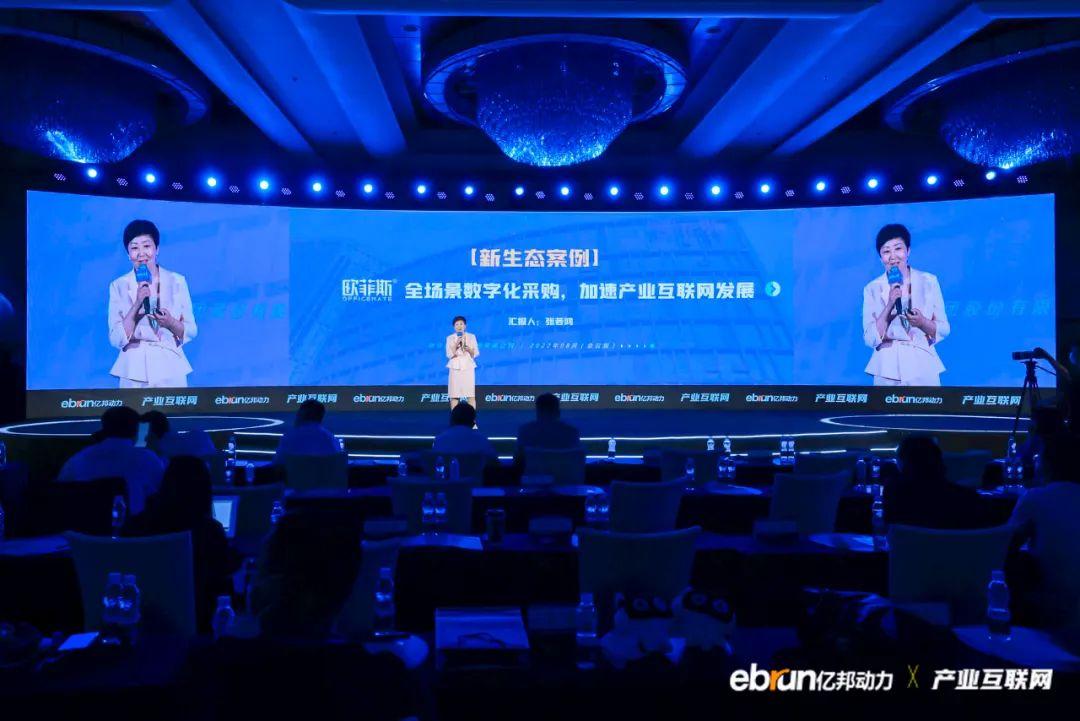
【亿邦原创】8月19日,在《看见数字化价值》亿邦产业互联网大会上,欧菲斯集团副总经理张若鸿发表了题为《全场景数字化采购,加速产业互联网发展》的演讲,她指出,政企采购是一个门槛相对较高的行业,自2014年电商化开始,目前已经历8个春秋,尤其在2020年疫情后,这个行业发生了非常大的变化,越来越开放,获得的关注度也越来越高。

图片

出现这种变化的背后,有两个主要原因,第一,科技改变世界,数字化工具的直接交互加速了产业链接和效率,打破了物理空间,让人类探索更广泛的世界。以科技为前提的价值导向,成为全世界全行业创造创新的驱动力。

第二,中国在“十四五”明确提出数字化是中国国家发展战略之一,央行作为排头兵走在数字化转型前列,采购数字化又是企业数字化转型的重要部分。

据悉,「看见数字化价值」亿邦产业互联网大会于8月18日-19日在北京举办。此次峰会是由亿邦动力组织的年度高维盛会,同期举办“千峰奖颁奖”、“可信产业金融交流”“马蹄社产业互联网IPO专题课”等专场活动。聚焦“数字化”价值,汇聚产业互联网代表性企业和一二级市场投资人,是产业互联网领域年度风向标。

以下为演讲实录,在不影响原意的基础上,由亿邦动力编辑整理。

首先,简单介绍下欧菲斯是一家什么样的公司,欧菲斯成立于1993年,是一家为央国企、金融、政府、部队、高校、军工、世界500强及企业提供非生产型物资采购服务的数字化平台。

企业采购是一个门槛相对较高的行业,自2015年开始向数字化方向,目前已经历8个春秋,尤其在2020年疫情后,这个行业发生了非常大的变化,越来越开放,获得的关注度越来越高。

出现这种变化的背后,有两个主要原因,第一,科技改变世界,数字化工具的直接交互加速了产业链接和效率,打破了人类想象的物理空间,探索更广泛的世界。

第二,“十四五”规划明确提出发展数字产业,建设数字中国是国家发展战略之一,央行作为排头兵走在数字化转型前列,采购数字化又是企业数字化转型的重要部分。

从整体看,整个产业链处在高速数字化发展过程中,比如央国企出台的网上商城新型采购模式,实际上就解决了新的采购模式和传统采购模式计划性与灵活性、合规与效率的矛盾,巩固了数字化采购供应链,也加强了采购的风控能力。

真正具备强竞争力的企业都有几大特点,首先是行业基因和时间沉淀。服务政府、企业、金融的规范各不相同,比如政府有《政府采购》法,其所有采购行为都要依据《政府采购法》组织工作,《政府采购法》颁布至今已经有20年的历史。

为什么欧菲斯能顺利进入数字化阶段,我认为,首先是基于行业沉淀。欧菲斯成立于90年代,最早做的是线下服务,直到2014年才开始向线上转移,这8年时间,我们一直与央国企的数字化转型并肩前行。

其次是运营能力,“运营”一词,十年以前是没有的,它诞生于消费互联网出现后,因为交易变得复杂了。

在政企采购板块为何会提出运营的概念?因为以前的企业采购很简单,就是采买物资保供应,但是政企采购像电商化、数字化发展后,交易已经变成了一个非常复杂的系统。

在法律法规层面,政府、央国企、金融行业都有各自独立的采购规范,在企业内部,一次采购行为,需要多部门审核,审批,当达成共识后才可以采购,所以,采购决策链条非常长,而不是像C端购物,喜欢、有预算就可以采买。企业采购要为机构、纳税人负责,同时,企业体系也非常复杂。

分享一个案例,中石油集团有150万员工,整个公司里局级单位和三级单位就有十几个,局级单位有很多不同的行业,本身就包含一个很大的产业链,我们看似在服务一个客户,实际上在服务各个行业的多个用户。

其次,从办公用品到MRO,如果要全部满足客户需求,大概需要1000多万的SKU,产品的复杂程度非常高。在这样一个复杂的系统中,运营能力非常重要。

运营能力的核心,一定是以客户为中心,遵照法律法规的指导下,将客户的服务做好,打穿打透客户周边的协同网络,才能提升客户的用户体验。而欧菲斯通过对行业的长期沉淀和认知,构建起来的运营体系和模型,就是我们的竞争壁垒。

我认为在企业采购行业里最重要的五个基础设施,第一个是仓配,因为要解决最后1公里的服务问题,实现合规、快速交付,欧菲斯在全国范围内拥有超100万㎡的仓储面积,超4000辆的配售车辆,所有2B采购,都是自有物流配送到桌的,这就是2B和2C的不同,很多2B的采购人既是采购人,同时还要做别的工作,更需要桌对桌的服务,而不是门对门的服务。

欧菲斯目前已经在常熟建成了华东中心仓,第二期会在华西的郑州、华北的长春、华南的东莞建区域中心仓,第四季度还要在华西重庆建仓。

但最终所有的底层逻辑一定是在技术驱动的数据中台,包括欧菲斯云的构建上搭建我们的云仓供应链平台和服务能力,还有售后服务维修平台。

图片

第二,在供应链整合上,欧菲斯主要做了品商通、企修通和企业购。品商通是通过上游供应商对下游供应链伙伴知识体系的服务;企业购,前面提到,我们服务的是大型央国企,但最终交付的是每一个小b的客户,谁能把各样的小b服务好,实际上才能服务好大客户。

小b跟大央企比,他的数据化能力、采购认知、组织能力相对较差,过程中我们更需要一种SaaS化、标准化的工具直接赋能,加速企业采购的规范性。

企修通,是一个设备全生命周期的维修平台,比如办公物资的设备、电脑还有我们在MRO板块的非生产型物资工业品,其实都需要维修。

2B和2C的在快速交付层面也有区别,C端的“快”就是把东西交给你就可以,B端的“快”是要快速提供服务,比如售前咨询服务、售中使用服务、售后维保服务,通过构建企修通这个平台,可以快速响应客户的售前、售中、售后的服务。

第三,是欧菲斯的三轮驱动,分别是办公物资、MRO和员工福利三大板块。欧菲斯的前身是办公伙伴,但MRO我们也一直在做,为什么办公用品作为我们的第一驱动?因为我们2014年做电商化时整个行业只有办公用品做了标准化和电商化。

任何应用一定要有场景,当时MRO也包含在办公物资里,最早的电商采购从政府开始,然后是几大央企,直到2018年时,很多制造企业才开始做采购,随着数字化能力越来越强,才将生产辅料的品类单独拆分出来,定义为mro。

也是在2018年,欧菲斯构建了工业品平台-工云通,把以前非办公物资的MRO品类转移到了工云通,服务场景更加专业。

第三个驱动是员工福利,制造企业员工规模庞大,前面提到的中石油集团有150万员工,企业每年都有福利劳保,包括工会福利,他们习惯了消费互联网的采购模式。

从以前在办公室分发到现在线上采购,线上点单、线上结算、送货在家,也得到了企业员工的认可,尤其是我们现在服务的中石油集团,每年员工的采购需求都在增长。

作为政企客户包括军工客户的核心供应商,欧菲斯为客户的第一层防火墙,需要提高上下游服务商的规范性和数字化能力。

首先,通过SCS协同平台对上游的供应商做供应商入选、商品管理、订单管理、系统对接,第一就是要把合规的优质的供应商选进来,把不好的筛出去。

其次是商品管理,通过商品的价格、库存、一品多码、详细信息、一键导入,为不同的客户提供定制化需求的产品。

第三是通过订单分类管理、订单状态实时追踪,系统自动对账对上游供应商的结算。第四是内部的ERP系统对接、渠道的对接、物流信息的回传,因为我们很多的客户是需要厂商直供的,这个过程也加速了我们整个交付的体验。

OSP协同平台主要是对下游的供应商、城市的合作伙伴通过系统管理、客户管理、商品管理、订单管理、开票管理、对账系统,为客户服务提质增效。

从市场表现来看,关于2B的售后服务,整个行业的竞争同质化越来越强,而且很多的2B企业开始在后端服务上,学习消费互联网,利用机器人客服的数字化工具来提升人效。

在一些场景是适用的。但因为人机交互在现阶段还没有办法代替人与人之间的互动交流,所以目前我们依然是用人工干预更多一些,实际上更多的售后服务是可以通过沟通解决的。

为此欧菲斯搭建了一个专业的客服团队做服务沟通;在2B行业,如果我们服务产品的方向、功能选择对了,会让客户在采购的过程当中节省很多时间,如果我们在使用过程中从设备到MRO、配件,我们告诉客户正确的使用方法的时候,实际上设备、配件使用年限就会延长,无形当中就降低了企业的采购成本。

图片

所以降本增效不是简单粗暴的把产品价格降下来,除了价格以外,同时也在产品使用运行过程中帮客户降本,及时响应客户不同场景下的需求。

目前中国有98家央企,有50多家在做电商,欧菲斯服务了40多家的央企客户,和近三百家的国家机关、省采、市采客户。

我们觉得有责任和义务把这个行业做的更标准、更生态、更快,我们也和亿邦动力联合发布了《2021数字化采购发展报告》,还有和中国物流与采购联合会合作,共同编写《公共采购办公类物资年度蓝皮书》,《国有企业网上商城供应商服务规范》,同时作为主要参编单位参与国资委商业信用中心的《《国有企业信用信息公示规范》,从服务端、标准端、产品端搭建整个的行业的标准体系。

最后,立足当下,站在今天这个数字化采购平台的始点,从数智化供应链平台到产业互联网平台,仍然是我们仰望的一片星空,所以站在今天,仍然需要继续服务好每一个客户。站在行业的视角,为产行业搭建一个有价值的平台,才是欧菲斯最终的价值。

文章来源:亿邦动力

广告
微信
朋友圈

这么好看,分享一下?

朋友圈 分享

APP内打开

赞 +1
+1
微信好友 朋友圈 新浪微博 QQ空间
关闭
收藏成功
发送
/140 0