广告
加载中

豆包个人AI助理产品“小豆”开启邀请制公测

龚作仁 2026-11-24 10:57
龚作仁 2026/11/24 10:57

邦小白快读

EN
全文速览

总1:小豆是豆包旗下个人AI助理探索产品,11月24日开启邀请制公测,公测初期名额有限,需凭邀请码体验,新用户可获得一定免费额度,邀请好友加入可再获额度;未来相关能力和体验将逐步放开,并在豆包主端推出。

1.核心能力:在问答、信息检索基础上,更侧重主动服务、基于记忆更懂用户和任务执行,用户交代事项后可在后台持续跟进、按时提醒或代为处理。

2.使用方式:经用户授权接入抖音、飞书、日历、健康等应用后,可主动汇总健康信息,提示商品降价、团购券临近到期、日程冲突并给处理建议;一句话可设定时提醒或监控任务,并在任务页修改或暂停。

总2:实用场景与限制。

1.猫粮补货:记住用户此前拆封猫粮情况,按日常用量估算余量,主动询问是否补货,确认后完成下单并设下月补货提醒。

2.其他场景:提醒并按时发送最终版资料,代打电话询问餐厅4人座位、餐费和停车费,把3个月减8公斤目标拆成每日热量记录和步数提醒。

3.限制:代打电话仅覆盖餐厅、酒店、门店等生活服务场景,不支持境外和私人电话。

总1:小豆展示了AI个人助理的产品研发方向,品牌商可据此观察用户触达与消费决策场景的变化。

1.产品研发:在问答和信息检索之外增加主动服务、记忆用户、任务执行,并接入抖音、飞书、日历、健康等应用,说明智能助理正从工具型问答转向持续服务。

2.用户行为:用户授权后,小豆可主动汇总健康信息、提示商品降价、团购券到期和日程冲突,并可一句话设置提醒或监控任务,表明用户希望减少主动操作、获得按需提醒和代办。

总2:营销、渠道和价格竞争启示。

1.消费场景:猫粮补货案例中,小豆记住拆封情况、估算余量、主动询问、确认后下单并设下月提醒,提示耗材类品牌可关注复购提醒和自动补货触点。

2.价格与促销:商品降价、团购券临近到期提醒,说明AI助理可能成为价格信息和促销到期提醒的触点;抖音等应用接入也提供渠道联动想象。

3.趋势:个人智能体从单次任务延伸到持续主动处理日常事务,Meta的Muse也在做记忆偏好和长期目标跟进,品牌商应关注这一用户入口变化。

总1:小豆公测释放的是个人智能体带来的消费需求变化和卖家机会,而非直接平台政策。

1.机会提示:小豆可主动提示商品降价、团购券临近到期,猫粮案例中能估算余量、询问补货、确认后下单并设下月提醒,卖家可关注复购提醒、补货下单和券到期唤醒等场景。

2.增长市场:产品从问答检索转向主动服务、记忆和任务执行,未来将在豆包主端推出,用户覆盖有望扩大;新用户有免费额度,邀请好友可再获额度,公测邀请制有利于控制节奏。

总2:风险与可学习点。

1.风险提示:小豆仍是探索性产品,公测初期名额有限需邀请码;代打电话仅覆盖餐厅、酒店、门店等生活服务,不支持境外和私人电话,能力边界明显。

2.可学习点:用后台持续跟进、按时提醒、代为处理和长期目标拆解提升用户黏性;经授权接入抖音、飞书、日历、健康等应用,可与现有应用形成合作。

3.事件应对:卖家可关注用户授权、提醒频次和任务执行准确性,避免过度打扰。

总1:小豆的功能设计给工厂的产品设计、生产和数字化经营带来启示。

1.产品设计需求:个人AI助理强调主动服务、记忆用户、任务执行和后台跟进,并提供任务页修改或暂停;工厂若参与智能硬件或应用生态,可关注记忆、提醒、授权接入和任务管理等功能设计。

2.生产与耗材机会:猫粮案例中,小豆记住拆封情况、按日常用量估算余量、主动询问补货,确认后下单并设下月提醒,说明耗材类、周期补货类产品存在被智能助理承接补货提醒的机会。

总2:数字化和电商启示。

1.数字化:经授权接入抖音、飞书、日历、健康等应用,显示AI助理可通过应用连接汇总信息、提示降价和券到期、处理日程冲突,工厂可思考产品使用数据与售后提醒的连接。

2.电商:商品降价、团购券到期提醒和确认后下单,提示工厂和品牌可把补货、促销到期、复购提醒纳入智能助理场景。

3.边界:代打电话仅限餐厅、酒店、门店等生活服务,不支持境外和私人电话,相关产品设计需注意场景限制。

总1:小豆代表个人智能体从单次任务走向持续主动服务,服务商可关注行业趋势和解决方案机会。

1.行业趋势:豆包推出小豆探索个人智能体,11月24日邀请制公测,未来能力逐步放开并在豆包主端推出;Meta的Muse也强调记住偏好、持续跟进长期目标,说明赛道在升温。

2.新技术能力:小豆在问答检索基础上强化主动服务、记忆用户和任务执行,可后台跟进、按时提醒或代为处理,并支持一句话设置提醒或监控任务、任务页修改暂停。

总2:客户痛点与解决方案。

1.痛点:用户容易忘记补货、团购券到期、日程冲突和资料发送,长期减重目标也难坚持。

2.解决方案:授权接入抖音、飞书、日历、健康等应用后主动汇总和提示;猫粮案例可估算余量、询问补货、确认下单并设下月提醒;还可代打电话问餐厅信息、拆解减重目标。

3.边界:代打电话仅餐厅、酒店、门店等生活服务,不支持境外和私人电话,方案设计需合规授权。

总1:豆包通过小豆探索个人智能体,平台做法体现为邀请制公测、能力渐进开放和主端承接。

1.平台最新做法:11月24日开启公测,公测初期名额有限、需邀请码;新用户有一定免费额度,邀请好友可再获额度,以激励拉新并控制体验规模。

2.能力设计:在问答、信息检索基础上增加主动服务、基于记忆懂用户和任务执行,用户交代事项后后台跟进、按时提醒或代为处理;任务页可修改或暂停。

总2:生态、运营与风向规避。

1.生态接入:经用户授权接入抖音、飞书、日历、健康等应用,可汇总健康信息、提示商品降价、团购券到期、日程冲突并给建议,体现平台间联动。

2.运营与边界:未来能力和体验逐步放开并在豆包主端推出;代打电话仅覆盖餐厅、酒店、门店等生活服务,不支持境外和私人电话,平台需关注授权、隐私和场景合规。

3.风向:个人智能体从单次任务延伸到持续主动处理日常事务,Meta的Muse是同类探索,平台可关注主端集成和用户规模扩大。

总1:小豆公测提供了个人智能体产业新动向和商业模式观察样本。

1.产业新动向:豆包在个人智能体方向推出探索性产品小豆,11月24日邀请制公测,未来逐步放开并在豆包主端推出;Meta的Muse强调记住偏好、持续跟进长期目标,说明个人助理从单次任务转向持续主动处理日常事务。

2.能力组合:在问答和信息检索基础上,强化主动服务、基于记忆懂用户和任务执行,支持后台跟进、按时提醒、代为处理、一句话任务和任务页修改暂停。

总2:新问题与政策法规启示。

1.新问题:经授权接入抖音、飞书、日历、健康等应用后,记忆和主动服务涉及用户授权、隐私边界、提醒频次和任务执行责任;猫粮补货可确认后下单,代打电话仅限生活服务且不支持境外和私人电话。

2.商业模式:邀请制公测、免费额度、邀请好友获额度、未来主端服务更多用户,可作为智能体产品冷启动和规模化的样本。

3.政策启示:产品需明确授权范围、可暂停修改任务、限制代打电话场景,为隐私保护和代理执行合规提供讨论。

返回默认

声明:快读内容全程由AI生成,请注意甄别信息。如您发现问题,请发送邮件至 run@ebrun.com 。

我是 品牌商 卖家 工厂 服务商 平台商 研究者 帮我再读一遍。

Quick Summary

Summary 1: Xiaodou is an exploratory personal AI assistant product under Doubao. It launched an invite-only public beta on November 24. Initial spots are limited and an invite code is required. New users receive a certain free quota, and inviting friends can earn additional quota. Related capabilities and experiences will gradually open up and be introduced on the Doubao main app.

1. Core capabilities: Beyond Q&A and information retrieval, it focuses more on proactive service, using memory to better understand users, and task execution. After users assign tasks, it can follow up in the background, remind them on time, or handle matters on their behalf.

2. How to use: After user authorization to connect Douyin, Feishu, calendar, health and other apps, it can proactively summarize health information, flag product price drops, expiring group-buy coupons, and schedule conflicts, and offer handling suggestions. A single sentence can set a timed reminder or monitoring task, which can be modified or paused on the task page.

Summary 2: Practical scenarios and limitations.

1. Cat food replenishment: It remembers when the user previously opened a bag of cat food, estimates remaining quantity based on daily usage, proactively asks whether to restock, completes the order after confirmation, and sets a reminder for next month's replenishment.

2. Other scenarios: It reminds the user and sends final materials on time, makes calls on the user's behalf to ask a restaurant about a table for four, meal costs, and parking fees, and breaks a three-month goal of losing 8 kg into daily calorie logging and step-count reminders.

3. Limitations: Calls made on the user's behalf cover only life-service scenarios such as restaurants, hotels, and stores; overseas and private calls are not supported.

Summary 1: Xiaodou demonstrates the product R&D direction for AI personal assistants, giving brands a way to observe changes in user touchpoints and consumer decision-making scenarios.

1. Product R&D: In addition to Q&A and information retrieval, it adds proactive service, user memory, and task execution, and connects to Douyin, Feishu, calendar, health and other apps. This shows that intelligent assistants are moving from tool-like Q&A to continuous service.

2. User behavior: After authorization, Xiaodou can proactively summarize health information, flag price drops, expiring group-buy coupons, and schedule conflicts, and set reminders or monitoring tasks with a single sentence. This indicates that users want to reduce manual actions and receive on-demand reminders and agent services.

Summary 2: Implications for marketing, channels, and price competition.

1. Consumption scenarios: In the cat food replenishment case, Xiaodou remembers the bag-opening situation, estimates remaining quantity, proactively asks, places an order after confirmation, and sets a next-month reminder. This suggests that consumables brands should watch repurchase reminders and automated replenishment touchpoints.

2. Pricing and promotions: Reminders about price drops and expiring group-buy coupons indicate that AI assistants may become touchpoints for price information and promotion-expiry alerts. Integration with apps such as Douyin also creates room for channel synergies.

3. Trend: Personal agents are extending from one-off tasks to continuous, proactive handling of daily affairs. Meta's Muse is also working on remembering preferences and following up on long-term goals. Brands should monitor this shift in user entry points.

Summary 1: Xiaodou's public beta highlights consumption-demand changes and seller opportunities created by personal agents, rather than direct platform policy.

1. Opportunity signals: Xiaodou can proactively flag product price drops and expiring group-buy coupons. In the cat food case, it can estimate remaining quantity, ask about replenishment, place an order after confirmation, and set a next-month reminder. Sellers should watch scenarios such as repurchase reminders, replenishment orders, and coupon-expiry wake-ups.

2. Growth market: The product is shifting from Q&A and retrieval to proactive service, memory, and task execution, and will launch on the Doubao main app in the future, potentially expanding user coverage. New users receive free quota, and inviting friends can earn more. The invite-only public beta helps control pacing.

Summary 2: Risks and lessons.

1. Risk alert: Xiaodou remains an exploratory product. Initial public-beta spots are limited and require an invite code. Calls on the user's behalf cover only life services such as restaurants, hotels, and stores; overseas and private calls are not supported, so capability boundaries are clear.

2. Lessons: Background follow-up, on-time reminders, agent handling, and long-term goal decomposition can improve user stickiness. Authorized integration with Douyin, Feishu, calendar, health and other apps can create cooperation with existing applications.

3. Event response: Sellers should monitor user authorization, reminder frequency, and task-execution accuracy to avoid excessive disruption.

Summary 1: Xiaodou's feature design offers lessons for factories in product design, production, and digital operations.

1. Product design requirements: The personal AI assistant emphasizes proactive service, user memory, task execution, and background follow-up, and provides a task page for modification or pausing. If factories participate in smart hardware or application ecosystems, they can focus on feature design around memory, reminders, authorized access, and task management.

2. Production and consumables opportunities: In the cat food case, Xiaodou remembers the bag-opening situation, estimates remaining quantity based on daily usage, proactively asks about replenishment, places an order after confirmation, and sets a next-month reminder. This shows that consumables and cyclical-replenishment products have opportunities to be covered by replenishment reminders from intelligent assistants.

Summary 2: Implications for digitalization and e-commerce.

1. Digitalization: Authorized integration with Douyin, Feishu, calendar, health and other apps shows that AI assistants can aggregate information, flag price drops and coupon expiry, and handle schedule conflicts through app connections. Factories can consider linking product usage data with after-sales reminders.

2. E-commerce: Price-drop alerts, group-buy coupon expiry reminders, and order placement after confirmation suggest that factories and brands can incorporate replenishment, promotion expiry, and repurchase reminders into intelligent-assistant scenarios.

3. Boundaries: Calls on the user's behalf are limited to life services such as restaurants, hotels, and stores; overseas and private calls are not supported. Related product design must account for scenario limits.

Summary 1: Xiaodou represents personal agents moving from one-off tasks to continuous proactive service. Service providers can watch industry trends and solution opportunities.

1. Industry trend: Doubao launched Xiaodou to explore personal agents, with an invite-only public beta on November 24. Capabilities will gradually open up and launch on the Doubao main app. Meta's Muse also emphasizes remembering preferences and following up on long-term goals, indicating that the sector is heating up.

2. New technology capabilities: Building on Q&A and retrieval, Xiaodou strengthens proactive service, user memory, and task execution. It can follow up in the background, remind users on time, or handle matters on their behalf, and supports one-sentence reminders or monitoring tasks plus modification and pausing on the task page.

Summary 2: Customer pain points and solutions.

1. Pain points: Users easily forget replenishment, group-buy coupon expiry, schedule conflicts, and sending materials, and long-term weight-loss goals are hard to sustain.

2. Solutions: After authorized integration with Douyin, Feishu, calendar, health and other apps, it proactively summarizes and alerts. In the cat food case, it can estimate remaining quantity, ask about replenishment, place an order after confirmation, and set a next-month reminder. It can also call restaurants on the user's behalf and break down weight-loss goals.

3. Boundaries: Calls on the user's behalf cover only life services such as restaurants, hotels, and stores; overseas and private calls are not supported. Solution design must ensure compliant authorization.

Summary 1: Doubao is exploring personal agents through Xiaodou, with a platform approach built around invite-only public beta, gradual capability opening, and main-app integration.

1. Latest platform approach: The public beta began on November 24. Initial spots are limited and an invite code is required. New users receive a certain free quota, and inviting friends can earn more, incentivizing user acquisition while controlling the scale of the experience.

2. Capability design: On top of Q&A and information retrieval, it adds proactive service, memory-based user understanding, and task execution. After users assign tasks, it follows up in the background, reminds them on time, or handles matters on their behalf. The task page allows modification or pausing.

Summary 2: Ecosystem, operations, and trend-risk considerations.

1. Ecosystem integration: With user authorization, it connects Douyin, Feishu, calendar, health and other apps; it can summarize health information, flag product price drops, group-buy coupon expiry, and schedule conflicts, and give suggestions, reflecting cross-platform linkage.

2. Operations and boundaries: Future capabilities and experiences will gradually open up and launch on the Doubao main app. Calls on the user's behalf cover only life services such as restaurants, hotels, and stores; overseas and private calls are not supported. Platforms must focus on authorization, privacy, and scenario compliance.

3. Trend: Personal agents are extending from one-off tasks to continuous proactive handling of daily affairs. Meta's Muse is a similar exploration. Platforms can watch main-app integration and user-scale expansion.

Summary 1: Xiaodou's public beta provides a new industry development and a sample for observing business models in personal agents.

1. New industry development: Doubao launched Xiaodou, an exploratory product in the personal-agent direction, with an invite-only public beta on November 24. It will gradually open up and launch on the Doubao main app. Meta's Muse emphasizes remembering preferences and following up on long-term goals, indicating that personal assistants are shifting from one-off tasks to continuous proactive handling of daily affairs.

2. Capability mix: On top of Q&A and information retrieval, it strengthens proactive service, memory-based user understanding, and task execution, supporting background follow-up, on-time reminders, agent handling, one-sentence tasks, and modification or pausing on the task page.

Summary 2: New issues and policy and regulatory implications.

1. New issues: After authorized integration with Douyin, Feishu, calendar, health and other apps, memory and proactive service involve user authorization, privacy boundaries, reminder frequency, and responsibility for task execution. Cat food replenishment can place an order after confirmation; calls on the user's behalf are limited to life services and do not support overseas or private calls.

2. Business model: Invite-only public beta, free quota, extra quota for inviting friends, and future main-app service to more users can serve as a sample for cold start and scaling of agent products.

3. Policy implications: Products need to clarify authorization scope, allow tasks to be paused or modified, and limit call-agent scenarios, providing discussion points for privacy protection and compliant agent execution.

Disclaimer: The "Quick Summary" content is entirely generated by AI. Please exercise discretion when interpreting the information. For issues or corrections, please email run@ebrun.com .

I am a Brand Seller Factory Service Provider Marketplace Seller Researcher Read it again.

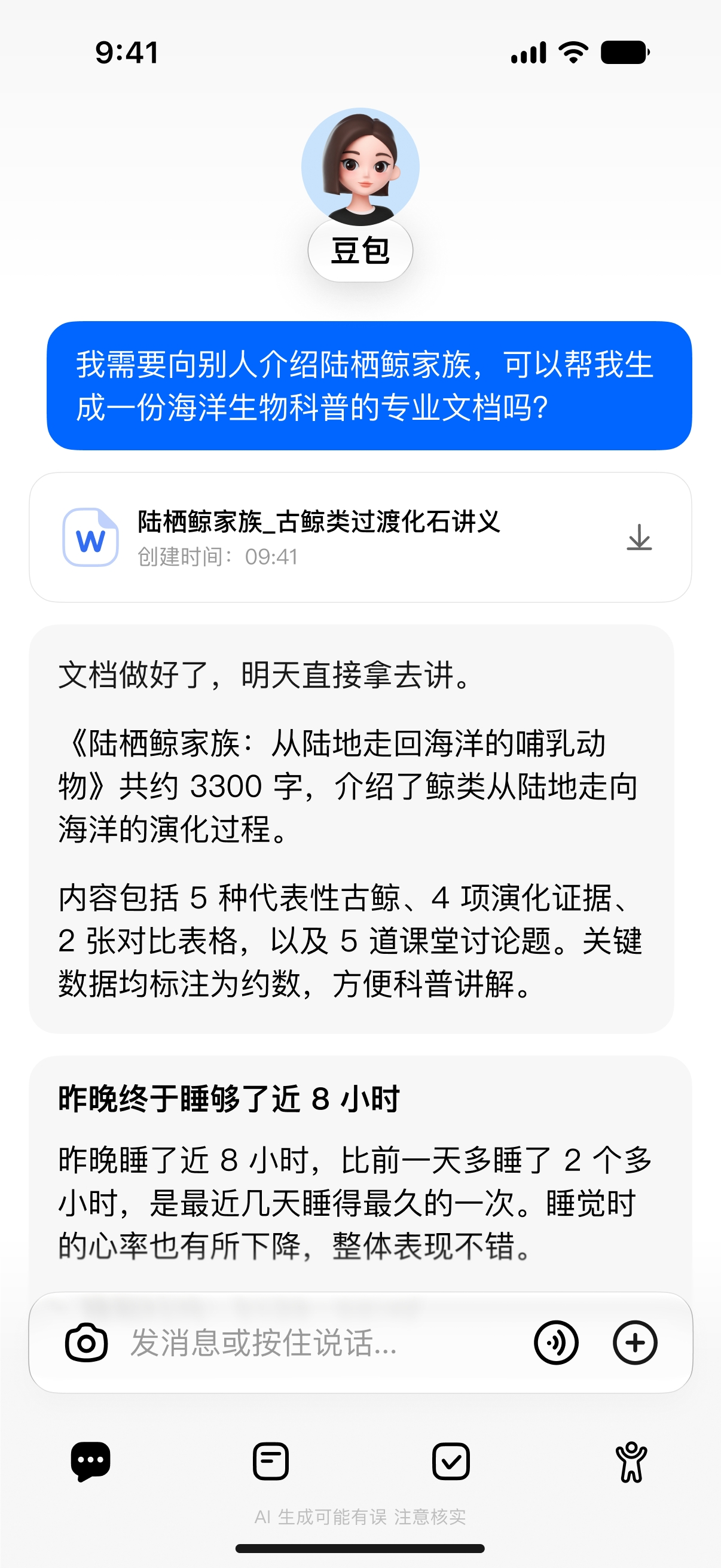
11月24日,豆包旗下个人AI助理产品“小豆”开启公测。小豆是豆包在个人智能体(Personal Agent)方向推出的一款探索性产品,目前采用邀请制开放体验。豆包方面透露,小豆的相关能力和体验未来也将逐步放开,在豆包主端推出,为更多豆包用户提供服务。

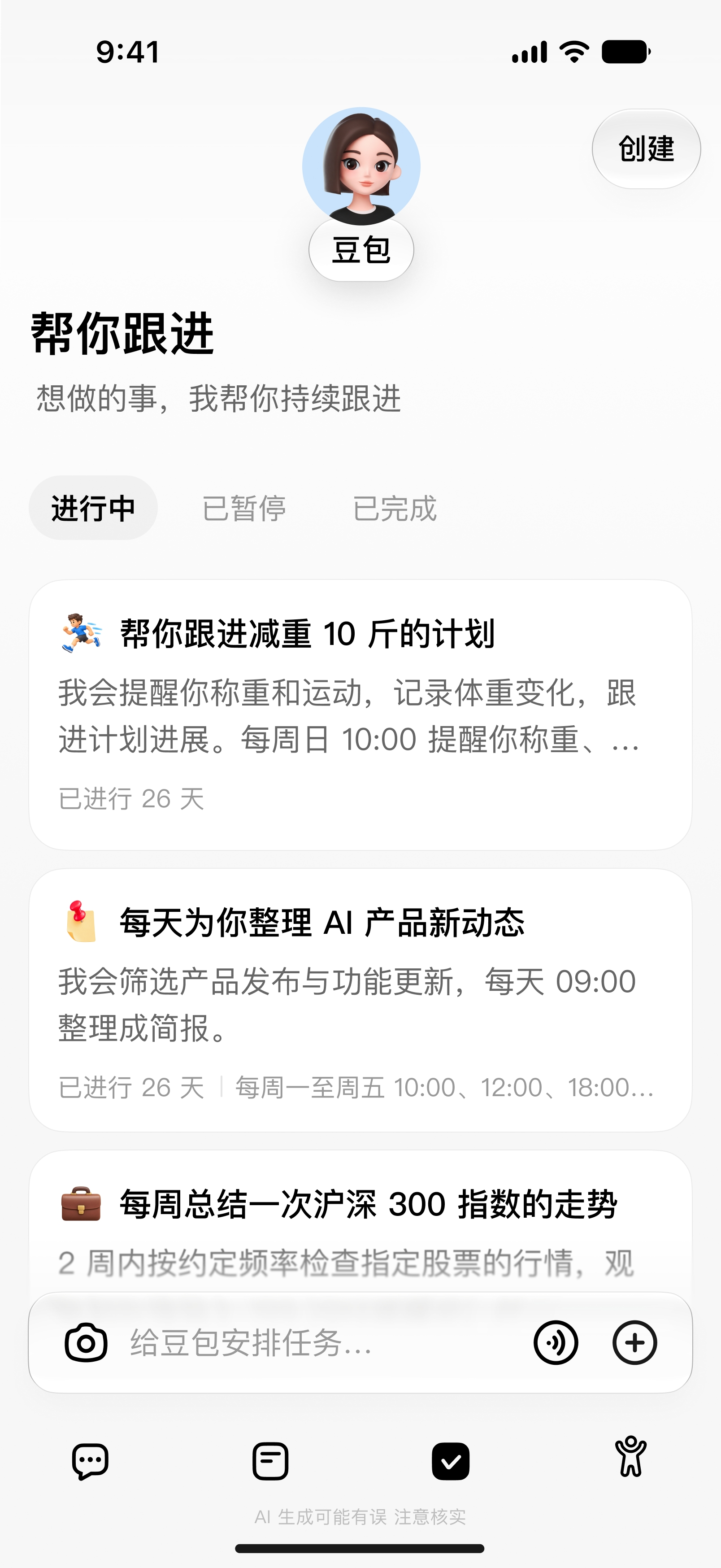
据介绍,在问答、信息检索的基础上,小豆更侧重主动服务、基于记忆更懂用户和任务执行。用户交代事项后,小豆可在后台持续跟进,按时提醒或代为处理。具体场景上,经用户授权接入抖音、飞书、日历、健康等应用后,小豆可以主动汇总健康信息,或者提示商品降价、团购券临近到期及日程冲突等,并给出处理建议。用户也可以用一句话设置定时提醒或监控任务,并在“任务”页修改或暂停。

以官方演示视频中猫粮补货为例,小豆能记住用户此前拆封猫粮的情况,根据日常用量估算余量,并主动询问是否需要补货。经用户确认后,小豆可完成下单,并设置下月的补货提醒。

视频还展示了更多任务执行的场景。如用户交代“今天4点前把最终版资料发出”后,小豆会发提醒通知,并按时发送资料;它也可以帮助用户代打电话,询问餐厅是否有4人座位,以及餐费和停车费用。对于“3个月减8公斤”等长期目标,小豆可将其拆解为每日热量记录和步数提醒。目前,小豆代打电话功能仅覆盖餐厅、酒店、门店等生活服务场景,不支持境外和私人电话。

据悉,小豆公测初期名额有限,用户需凭邀请码体验。同时,新用户可获得一定免费额度,邀请好友加入可再获额度。

AI产品在个人智能体方向的探索正从完成单次任务,延伸到持续、主动处理用户的日常事务。今年9月,Meta推出同类产品Muse,强调记住个人偏好、持续跟进长期目标,用户可通过独立应用或WhatsApp使用。

注:文/龚作仁,文章来源:Laborer,本文为作者独立观点,不代表亿邦动力立场。

文章来源:Laborer

广告
微信
朋友圈

FAQ回顾

小豆是什么产品?它属于什么方向?

小豆是豆包旗下的个人AI助理产品,也是豆包在个人智能体方向推出的探索性产品。它目前采用邀请制公测,初期名额有限,用户需凭邀请码体验;新用户可获得一定免费额度,邀请好友加入可再获额度。豆包方面透露,相关能力和体验未来将逐步放开,并在豆包主端推出,服务更多豆包用户。

小豆个人AI助理能替用户完成哪些任务?

小豆在问答、信息检索基础上,更侧重主动服务、基于记忆更懂用户和任务执行。用户授权接入抖音、飞书、日历、健康等应用后,小豆可主动汇总健康信息、提示商品降价、团购券到期和日程冲突并给出建议;支持一句话设置定时提醒或监控任务。演示中,它能估算猫粮余量并确认后下单、按时发送资料、代打生活服务电话,以及把减重目标拆成每日热量记录和步数提醒。

小豆公测如何体验?有哪些功能限制?

小豆目前采用邀请制公测,初期名额有限,用户需凭邀请码体验。新用户可获得一定免费额度,邀请好友加入可再获额度。其代打电话功能仅覆盖餐厅、酒店、门店等生活服务场景,不支持境外和私人电话。豆包方面表示,小豆的相关能力和体验未来将逐步放开,并在豆包主端推出。

个人智能体和传统AI助手有什么区别?

个人智能体更强调持续、主动处理用户日常事务。以小豆为例,它在问答和信息检索基础上,侧重主动服务、基于记忆更懂用户和任务执行;用户交代事项后,它可在后台持续跟进,按时提醒或代为处理。相比完成单次任务,个人智能体方向正延伸到持续、主动处理日常事务,Meta的Muse也强调记住偏好并持续跟进长期目标。

个人智能体赛道有哪些代表产品?

豆包旗下小豆是个人智能体方向的探索性产品,于2026年11月24日开启邀请制公测,主打主动服务、记忆和任务执行。今年9月,Meta推出同类产品Muse,强调记住个人偏好、持续跟进长期目标,用户可通过独立应用或WhatsApp使用。两者均体现了个人智能体从单次任务向持续主动服务的探索。

这么好看,分享一下?

朋友圈 分享

APP内打开

赞 +1
+1
微信好友 朋友圈 新浪微博 QQ空间
关闭
收藏成功
发送
/140 0