广告
加载中

从服务顾客拿到大结果 WorkBuddy企业微信双向奔赴 AI办公已进入next level

贾昆 2026-10-14 16:53
贾昆 2026/10/14 16:53

邦小白快读

EN
全文速览

总的来看,这篇文章的核心干货是:AI办公工具WorkBuddy与企业微信打通后,不再只是内部提效工具,而是直接服务顾客、创造业绩的武器。普通读者可以重点关注三个落地价值。

1. 员工能在聊天场景中即时调用企业知识库:当顾客在微信里问产品是否适合敏感肌、怎么搭配使用时,销售不用再层层审批找资料,直接通过WorkBuddy调取内部SOP,第一时间给出专业答复,提升顾客体验。

2. AI可以自动完成大量重复性运营工作:比如根据企业微信标签判断顾客购买意愿、识别补货周期,自动生成个性化话术和优惠券,由导购确认后发给潜客,帮助门店提高转化效率。

3. 企业可以把销冠经验沉淀成可复用的技能:过去好的销售话术只存在于个人身上,现在可以把历次项目复盘、成交文档变成WorkBuddy能持续调用的能力,所有销售遇到类似场景都能参考,让个人能力变成组织资产。

另外,文章还提到一个关键观点:消费者真正在意的不是品牌用了什么AI软件,而是产品、服务和体验是否变好。普通人也能从中获得启发,未来能被时刻理解、快速响应的服务,才是最有竞争力的服务。

总体来看,这篇文章对品牌商的核心启发是:品牌竞争已从流量和价格战转向顾客生命周期运营,而WorkBuddy与企业微信的打通,为品牌提供了一条以顾客现场为中心、用AI重构组织能力的路径。

1. 品牌营销与顾客体验:文章强调将AI放到消费第一现场,当顾客咨询产品时,销售能通过WorkBuddy即时调用知识库、生成产品对比表、预约试骑活动,这种即时、专业的响应能提升品牌信任感,让品牌从单纯卖货转向顾问型生活方式品牌。

2. 品牌渠道建设与一线赋能:WorkBuddy进入企业微信对话列表后,员工相当于拥有一个懂品牌、懂产品、懂组织架构的数字同事。品牌可以把一线门店销售、电商客服变成具备知识型销售能力的作战单元,同时通过企业版管理后台的可观测中心,实时追踪每个一线人员使用Agent的情况,决定哪里追加投入、哪里优化Prompt和模型,避免放权失控。

3. 消费趋势与用户行为观察:文章提出消费市场并非低欲望,骑行、宠物、滑雪等新生活方式品类仍有巨大空间,核心在于用专业知识凝聚高潜人群。企业微信沉淀的客户标签、对话记录和购买周期,可以被WorkBuddy分析后用于预判购买意愿、识别补货周期,帮助品牌更懂顾客需求,从而维系更长的客户生命周期、激发更多复购。

文章还提到飞鹤和某洗地机品牌案例,说明一线顾客反馈能反哺品牌定位和产品创新,品牌应鼓励全员使用AI,而不是把AI局限在IT或后台部门。

总体来看,这篇文章对卖家最大的价值在于:揭示了AI办公与企业微信打通后的新增长机会,尤其是围绕存量顾客做深度运营的实操路径。卖家可以重点关注以下几个层面的干货。

1. 政策与平台动向:文章指出企业微信目前接入企业超1400万、每日服务微信用户7.5亿,腾讯将WorkBuddy与企业微信双向打通,意味着卖家可以在企业微信生态内直接使用AI能力连接顾客。这是平台层面的重大利好,卖家应尽早关注WorkBuddy企业版的接入方式。

2. 增长市场与消费需求变化:文章认为消费低迷不等于用户低欲望,骑行、垂钓、滑雪、宠物、盲盒、文旅等新品类仍有巨大真空。卖家可以抓住这些高潜人群,通过专业知识和顾问式服务构建信任,而不是只打价格战。

3. 事件应对措施与实操方法:当顾客在企业微信中咨询产品功效或使用疑问时,销售可以借助WorkBuddy立即调用内部SOP、产品资料和培训文档,第一时间给出专业回答,降低顾客流失。另外,卖家可以把过去沉淀在企业微信里的项目资料、复盘文档、销冠经验做成可调用的Skill,让普通销售也能复制优秀成交经验。WorkBuddy还能根据企业微信标签预判购买意愿、识别补货周期,自动生成话术和优惠券,经导购确认后1V1发送给潜客,提升转化效率。

4. 风险提示与机会提示:卖家要注意,员工个人权限与Agent操作权限隔离会导致效率低下,应通过企业版统一配置Agent权限,既保证数据安全又能让AI在组织内安全流动。文章强调,离顾客越近离创收越近,不要只把AI用在行政、财务等后台部门,而要把AI交给客服、销售等一线人员,才有机会实现业绩增长。

总体来看,这篇文章对工厂的启示在于:AI办公不再只是内部管理工具,而是可以直接连接顾客、驱动产品改进和售后服务的生产力工具。工厂可以从三个层面汲取干货。

1. 产品生产与设计需求:文章提到,品牌可以从一线客服和销售与顾客的对话中,找到产品改进和品类创新的灵感。例如飞鹤就是从一线店员销售话术中提炼出“更适合中国宝宝体质”的品牌定位。工厂如果建立AI驱动的顾客反馈分析机制,就能更精准捕捉消费者对产品功能、使用痛点的真实需求,从而指导产品设计和迭代。

2. 数字化与AI办公的落地路径:WorkBuddy打通企业微信后,工厂员工可以在企业微信对话中直接调用AI完成工作,而不需要复杂的权限审批。这意味着工厂可以降低一线人员使用AI的门槛,让客服、售后、销售都能利用AI工具处理顾客咨询、生成对比表、推送优惠信息。工厂应建立统一的知识库,把产品参数、使用说明、售后SOP沉淀到WorkBuddy中,形成可持续调用的数字资产。

3. 商业机会与合作方式:文章举例说某知名洗地机品牌让客服人员用AI coding手搓APP并植入到洗地机中,实现售后全面Agent化。这说明工厂可以培养员工掌握AI工具,将客服、售后等成本中心转变为创造价值的部门。同时,文章提到企业微信上有大量客户资源和生意机会,工厂可以通过WorkBuddy的客户标签和对话记录,识别补货周期和购买意愿,主动服务老客户、推动复购。总体而言,工厂应把AI能力放到离顾客最近的地方,用顾客反馈驱动生产、用AI提升服务效率。

总体来看,这篇文章为服务商揭示了AI办公行业的新趋势:AI的价值正从企业内部效率工具,延伸到外部顾客连接和消费现场。服务商可以从中找到客户痛点、解决方案以及未来的商业机会。

1. 行业发展趋势:文章认为,市面上多数AI办公软件只服务于行政、财务、法务等内部职能,而业务一线人员远离真正的智能。WorkBuddy与企业微信的打通,代表了AI办公向“连接顾客”方向演进,未来消费竞争拼的是谁能连接更多顾客、维系更长客户生命周期、激发更多复购。这为服务商提供了一条清晰的产品方向。

2. 客户痛点:品牌商使用AI办公时,最大的痛点是员工个人权限与Agent操作权限隔离,导致一线人员想调用内部资料要跨层层审批,顾客在等待中流失。此外,企业担心数据安全,不愿让AI读取核心业务上下文;同时管理者无法洞察AI使用效果,只能凭感觉决策。

3. 解决方案:文章展示了WorkBuddy的三大解法。第一,通过企业版与企业微信打通,员工用认证企业微信登录,品牌方对Agent能看什么、能做什么做统一配置,相当于加一道防火墙,确保数据不流出企业。第二,WorkBuddy进入企业微信对话列表,成为有企业身份的数字同事,员工可直接在聊天中调用AI查找SOP、生成产品对比表、预约活动,将组织能力转化为顾客服务能力。第三,企业版管理后台提供可观测中心,实时监控会话数量、活跃用户、使用趋势和性能耗时,帮助管理者发现问题并反哺优化Prompt、模型和工具。

4. 客户价值与商业机会:服务商可以建议客户把历次项目复盘和销冠经验沉淀为可调用的Skill,实现组织能力复利;同时利用AI分析企业微信标签和购买周期,生成个性化话术和优惠券,让一线导购1V1触达潜客。这些方案能帮助客户从关系型销售转为知识型销售,从产品型品牌过渡到顾问型品牌。

总体来看,这篇文章对平台商的核心价值在于:展示了腾讯通过企业微信与WorkBuddy的深度融合,如何重新定义AI办公的价值锚点,也为平台商提供了关于生态运营、招商和风向规避的启发。

1. 平台最新做法:腾讯将WorkBuddy与企业微信双向打通,WorkBuddy进入企业微信对话列表,员工通过认证企业微信登录WorkBuddy企业版,Agent可以读取企业上下文但不会流出企业。同时,WorkBuddy生成的结果能自动回传至企业微信,进入下一环节工作流或推送给相关负责人,形成闭环。这体现了平台以顾客连接为核心、把AI能力开放给生态内商家的战略方向。

2. 商业对平台的需求与问题:品牌商需要AI不仅提升内部效率,更要直接服务外部顾客。文章指出,企业微信里不只有组织关系,还有客户关系、会员关系以及与用户相关的经营活动。商家需要平台提供安全、可控的权限体系,让Agent在企业内安全流动,同时把AI能力嵌入到商家与顾客日常沟通的企微聊天场景中。

3. 平台招商与运营管理:平台可以围绕“离顾客越近越有增长机会”这一理念,吸引消费品牌入驻。文章提到企业微信已接入超1400万企业、每日服务7.5亿微信用户,这是巨大的流量和客户资产。平台应鼓励商家把AI交给门店销售、电商客服、零售运营等一线人员,并提供统一配置后台和可观测中心,让商家实时掌握Agent使用情况、优化投入,降低商家对数据安全和失控的担忧。

4. 风向规避:文章提到员工个人权限与Agent操作权限隔离会导致组织效率低下,平台应引导商家通过企业版统一配置Agent权限,避免内部审批阻碍业务响应。同时,平台可强调“消费者主权”理念,帮助商家把组织能力聚焦到改善消费体验上,而不是只追求内部管理可视化。平台商应关注这一趋势:未来能连接更多顾客、维系更长客户生命周期、激发更多复购的平台,才可能立于不败之地。

总体来看,这篇文章提供了一个观察AI办公与消费行业融合的新视角:AI原生组织的雏形开始出现在消费第一现场,而非后台职能。研究者可以重点关注以下几个层面的产业动向和理论启示。

1. 产业新动向:文章指出,企业微信接入超1400万企业、每日服务7.5亿微信用户,腾讯将WorkBuddy与企业微信深度打通,让AI办公从企业内部协作延伸到外部顾客连接。这代表AI办公行业从“内部效率工具”向“顾客价值创造工具”的转向,是值得关注的产业趋势。

2. 新问题:文章揭示了人机权限隔离的审核机制是阻碍AI组织力形成的关键问题。员工使用AI提升了个人效率,但Agent无法触达业务上下文,导致组织整体服务顾客的能力没有提升。这提出了一个新课题:如何设计AI时代的组织权限和数据流动机制,让个体智能转化为组织智能。

3. 商业与组织理论启示:文章引用了彼得·德鲁克的“企业存在的目的是创造顾客”和克里斯坦森的JTBD理论,强调品牌应围绕顾客生命周期构建长期复利能力。文章还提出“重估一线”的观点,认为客服、售后不应被看作成本中心,而应通过AI工具变成全栈产品经理,飞鹤和洗地机品牌的案例支持了这一判断。这说明AI办公可能改变传统岗位职能划分,形成“人机协同”的新型组织形态。

4. 政策法规建议与思考:文章提出企业版通过统一配置Agent权限、设置数据防火墙,让AI可读取企业上下文但数据不流出企业。这为数据安全与AI应用之间的平衡提供了一种可行框架。研究者可以进一步探讨:在AI大规模读取企业知识库和客户数据时,如何制定行业规范,保护消费者隐私与企业数据安全,同时促进AI效率释放。

总体而言,文章的核心观点是:消费行业的竞争力正从流量获取转向顾客关系经营,而AI办公与顾客连接平台的深度融合,可能成为品牌构建护城河的重要方式,其中涉及的组织变革和商业逻辑值得深入研究。

返回默认

声明:快读内容全程由AI生成,请注意甄别信息。如您发现问题,请发送邮件至 run@ebrun.com 。

我是 品牌商 卖家 工厂 服务商 平台商 研究者 帮我再读一遍。

Quick Summary

Overall, the core takeaway of this article is that WorkBuddy, an AI-powered office tool, integrated with WeChat Work, is no longer just an internal efficiency tool but a frontline weapon for serving customers and generating revenue. General readers should focus on three practical benefits.

1. Employees can instantly access the company knowledge base within chat: when customers ask on WeChat whether a product is suitable for sensitive skin or how to use it, sales staff no longer need to go through lengthy approval processes. They can directly retrieve internal SOPs via WorkBuddy and respond professionally in real time, improving customer experience.

2. AI can automate a large amount of repetitive operational work: for example, WorkBuddy can assess purchase intent based on WeChat Work tags, identify replenishment cycles, and automatically generate personalized scripts and coupons. After a sales associate confirms, these can be sent to potential customers, improving store conversion rates.

3. Companies can turn top salespeople's experience into reusable skills: previously, effective sales scripts lived only with individuals. Now project reviews and deal-closing documents can become capabilities that WorkBuddy continuously calls on, allowing all salespeople to reference them in similar scenarios and turning individual ability into organizational assets.

In addition, the article makes a key point: what consumers really care about is not which AI software a brand uses, but whether products, service, and experience have improved. Ordinary readers can also draw inspiration from this: in the future, services that understand and respond to customers instantly will be the most competitive.

Overall, the core insight for brand owners is that brand competition has shifted from traffic and price wars to customer lifecycle management. The integration of WorkBuddy with WeChat Work provides a path for brands to reorganize capabilities around the customer-facing front line with AI.

1. Brand marketing and customer experience: the article stresses putting AI at the consumer touchpoint. When customers ask about products, sales staff can use WorkBuddy to instantaneously access knowledge bases, generate product comparison tables, and book test-ride events. Such immediate, professional responses build brand trust and help the brand evolve from a pure seller into a consultant-style lifestyle brand.

2. Channel building and frontline enablement: once WorkBuddy lives inside WeChat Work conversations, employees gain a digital colleague who understands the brand, products, and organization. Brands can turn store associates and e-commerce customer service reps into knowledge-enabled sales units. With the observability center in the enterprise admin console, management can track in real time how frontline staff are using agents, decide where to invest further, and optimize prompts and models to avoid losing control through decentralization.

3. Consumption trends and user behavior: the article argues that the consumer market is not simply low-desire. New lifestyle categories such as cycling, pets, and skiing still have huge room for growth; the key is using professional knowledge to gather high-intent customers. The customer tags, conversation records, and purchase cycles accumulated in WeChat Work can be analyzed by WorkBuddy to predict purchase intent and identify replenishment cycles, helping brands better understand customer needs, sustain longer customer lifecycles, and drive more repurchases.

The article also cites the cases of Feihe and a floor-washing machine brand, showing that frontline customer feedback can inform brand positioning and product innovation. Brands should encourage all employees to use AI, rather than confining it to IT or back-office departments.

Overall, the greatest value for sellers lies in the new growth opportunities created by integrating AI office tools with WeChat Work, especially the practical paths for deepening operations around existing customers. Sellers should focus on the following key points.

1. Policy and platform trends: the article points out that WeChat Work has connected more than 14 million enterprises and serves 750 million WeChat users daily. Tencent's bidirectional integration of WorkBuddy with WeChat Work means sellers can directly use AI capabilities to connect with customers within the WeChat Work ecosystem. This is a major platform-level opportunity, and sellers should pay early attention to how to deploy the enterprise version of WorkBuddy.

2. Growth markets and shifting consumer demand: the article argues that weak consumption does not mean low consumer desire. New categories such as cycling, fishing, skiing, pets, blind boxes, and cultural tourism still have large untapped spaces. Sellers can capture these high-intent audiences by building trust through professional knowledge and consultative service rather than competing solely on price.

3. Response measures and practical methods: when customers ask about product efficacy or usage in WeChat Work, sales staff can use WorkBuddy to immediately retrieve internal SOPs, product documents, and training materials, giving professional answers quickly and reducing customer churn. Sellers can also turn project documents, review notes, and top-sales experience accumulated in WeChat Work into reusable Skills, allowing ordinary salespeople to replicate successful deal-making. WorkBuddy can also predict purchase intent based on WeChat Work tags, identify replenishment cycles, automatically generate scripts and coupons, and, after confirmation by the sales associate, send them 1-to-1 to potential customers to improve conversion.

4. Risk and opportunity alerts: sellers should note that separating employee personal permissions from agent operation permissions can cause inefficiency. The enterprise version should be used to configure agent permissions centrally, ensuring data security while allowing AI to flow safely across the organization. The article emphasizes that the closer you are to customers, the closer you are to revenue. Do not use AI only in back-office functions such as administration and finance; deploy it to customer service, sales, and other frontline roles to drive growth.

Overall, the article shows manufacturers that AI office tools are no longer just internal management software; they are productivity tools that can connect directly to customers, drive product improvements, and support after-sales service. Manufacturers can take three levels of insight.

1. Product production and design needs: the article notes that brands can find inspiration for product improvements and category innovation in conversations between frontline customer service and sales staff and customers. Feihe, for example, distilled its brand positioning as better suited to Chinese babies' physiques from the sales scripts of frontline store staff. If manufacturers establish an AI-driven customer feedback analysis mechanism, they can more precisely capture real consumer needs around product functions and usage pain points, guiding product design and iteration.

2. Digitalization and AI office implementation: after WorkBuddy integrates with WeChat Work, factory employees can call AI directly inside WeChat Work conversations without complex permission approvals. This lowers the barrier for frontline staff to use AI, allowing customer service, after-sales, and sales teams to handle inquiries, generate comparison tables, and push promotional information. Manufacturers should build a unified knowledge base, storing product parameters, usage instructions, and after-sales SOPs in WorkBuddy as a reusable digital asset.

3. Business opportunities and collaboration: the article gives the example of a well-known floor-washing machine brand whose customer service staff used AI coding to build an app embedded in the machine, making after-sales service fully agentized. This shows that manufacturers can train employees to master AI tools and turn cost centers such as customer service and after-sales into value-creating departments. Meanwhile, because WeChat Work hosts a vast amount of customer resources and business opportunities, manufacturers can use WorkBuddy's customer tags and conversation records to identify replenishment cycles and purchase intent, proactively serve existing customers, and drive repurchases. Overall, manufacturers should place AI capabilities as close to customers as possible, using customer feedback to drive production and AI to improve service efficiency.

Overall, the article reveals a new trend in the AI office industry for service providers: AI's value is expanding from an internal efficiency tool within the enterprise to external customer connection and consumer touchpoints. Service providers can identify client pain points, solutions, and future business opportunities from this shift.

1. Industry trends: the article argues that most AI office software on the market only serves internal functions such as administration, finance, and legal affairs, leaving frontline business staff disconnected from real intelligence. The integration of WorkBuddy with WeChat Work represents the evolution of AI office tools toward customer connection. In the future, consumption competition will be about who can connect with more customers, sustain longer customer lifecycles, and drive more repurchases. This provides service providers with a clear product direction.

2. Client pain points: the biggest pain point for brands using AI office tools is the separation between employee personal permissions and agent operation permissions. Frontline staff must go through multiple levels of approval to access internal materials, and customers are lost while waiting. Enterprises also worry about data security and are reluctant to let AI read core business context. Meanwhile, managers cannot observe AI usage effectiveness and have to make decisions based on intuition.

3. Solutions: the article presents three core solutions from WorkBuddy. First, through enterprise-level integration with WeChat Work, employees log in with certified WeChat Work accounts, and the brand configures what agents can see and do, acting as a firewall to ensure data does not leave the enterprise. Second, WorkBuddy appears in the WeChat Work conversation list as a digital colleague with an enterprise identity, so employees can directly invoke AI in chat to find SOPs, generate product comparison tables, and schedule activities, turning organizational capability into customer service capability. Third, the enterprise admin console provides an observability center that monitors the number of conversations, active users, usage trends, and performance latency in real time, helping managers spot issues and feed improvements back into prompts, models, and tools.

4. Client value and business opportunities: service providers can advise clients to turn project review records and top-sales experience into reusable Skills, creating compounded organizational capability. AI can also analyze WeChat Work tags and purchase cycles to generate personalized scripts and coupons, enabling frontline sales associates to reach potential customers one-on-one. These solutions help clients move from relationship-based selling to knowledge-based selling and from product-focused brands to consultant-style brands.

Overall, the core value of this article for platform operators is that it shows how Tencent, through the deep integration of WeChat Work with WorkBuddy, is redefining the value anchor of AI office tools. It also offers platform operators lessons on ecosystem operations, merchant recruitment, and trend risk avoidance.

1. Latest platform moves: Tencent has made WorkBuddy and WeChat Work mutually integrated. WorkBuddy enters the WeChat Work conversation list, employees log into the WorkBuddy enterprise version with certified WeChat Work accounts, and agents can read enterprise context without that data leaving the company. At the same time, results generated by WorkBuddy can be automatically returned to WeChat Work, feeding into the next step of the workflow or being pushed to relevant managers, forming a closed loop. This reflects a platform strategy centered on customer connection and opening AI capabilities to merchants in the ecosystem.

2. Business needs and challenges for the platform: brands need AI not only to improve internal efficiency but also to directly serve external customers. The article points out that WeChat Work contains not just organizational relationships but also customer relationships, membership relationships, and business activities involving users. Merchants need the platform to provide a secure and controllable permission system so agents can move safely within the enterprise, while AI capabilities are embedded into the daily WeChat Work conversations between merchants and customers.

3. Merchant recruitment and operations management: the platform can use the idea that the closer to customers, the more growth opportunities to attract consumer brands. The article notes that WeChat Work has connected more than 14 million enterprises and serves 750 million WeChat users daily, representing a massive pool of traffic and customer assets. The platform should encourage merchants to give AI to frontline staff including store sales, e-commerce customer service, and retail operations, and provide centrally configured admin consoles and observability centers so merchants can monitor agent usage in real time, optimize investment, and reduce concerns about data security and loss of control.

4. Trend risk avoidance: the article notes that separating employee personal permissions from agent operation permissions can cause organizational inefficiency. Platforms should guide merchants to use the enterprise version to configure agent permissions centrally, preventing internal approvals from slowing business responses. Meanwhile, platforms can emphasize the idea of consumer sovereignty, helping merchants focus organizational capability on improving consumer experience rather than only pursuing internal management visibility. Platform operators should pay attention to this trend: platforms that can connect with more customers, sustain longer customer lifecycles, and drive more repurchases will be the ones that maintain a lasting edge.

Overall, the article offers a new perspective on the convergence of AI office tools and the consumer industry: the prototype of the AI-native organization is beginning to appear at the consumer frontline rather than in back-office functions. Researchers should pay attention to the following industry movements and theoretical implications.

1. New industry movements: the article notes that WeChat Work has connected more than 14 million enterprises and serves 750 million WeChat users daily. Tencent's deep integration of WorkBuddy with WeChat Work extends AI office tools from internal collaboration to external customer connection. This signals an industry shift from internal efficiency tools to customer value creation tools and is a trend worth tracking.

2. New questions: the article reveals that the approval mechanism created by separating human and AI agent permissions is a key obstacle to forming AI-powered organizational capability. Employees using AI improve individual efficiency, but agents cannot access business context, so the organization's overall ability to serve customers does not improve. This raises a new issue: how should organizational permissions and data-flow mechanisms be designed in the AI era to transform individual intelligence into organizational intelligence?

3. Business and organizational theory implications: the article cites Peter Drucker's idea that the purpose of a business is to create customers and Christensen's Jobs-to-be-Done theory, emphasizing that brands should build long-term compounding capabilities around the customer lifecycle. The article also proposes revaluing the frontline, arguing that customer service and after-sales should not be viewed as cost centers. Instead, with AI tools, they can become full-stack product managers. The Feihe and floor-washing machine brand cases support this judgment, suggesting that AI office tools may change traditional job boundaries and create a new human-AI collaboration organizational form.

4. Policy and regulatory suggestions: the article proposes that the enterprise version of WorkBuddy can centrally configure agent permissions and set up a data firewall, allowing AI to read enterprise context while preventing data from leaving the enterprise. This provides a viable framework for balancing data security and AI application. Researchers could further explore how to establish industry norms that protect consumer privacy and enterprise data security while allowing AI-driven efficiency when AI reads enterprise knowledge bases and customer data on a large scale.

In summary, the article's core argument is that competitiveness in the consumer industry is shifting from traffic acquisition to customer relationship management, and the deep integration of AI office tools with customer-connection platforms may become an important way for brands to build moats. The organizational changes and business logic involved deserve further study.

Disclaimer: The "Quick Summary" content is entirely generated by AI. Please exercise discretion when interpreting the information. For issues or corrections, please email run@ebrun.com .

I am a Brand Seller Factory Service Provider Marketplace Seller Researcher Read it again.

WorkBuddy与企业微信全方位融合之后,消费品牌能否把散落的顾客上下文、员工经验和内部资源,变成组织内部可复用的能力?

文丨贾昆      编辑丨史婉嘉

【亿邦原创】消费行业陷入存量搏杀已有时日。

见过的很多品牌老板都在跟我讲,在一个恒定的消费市场里,品牌比拼的,是守住一批有忠诚度的顾客。

相比于操纵流量、掀起价格战换取单次博弈的短暂胜利,如何持续稳定的服务一批忠实顾客,并围绕这些顾客的生命周期,构建产生长期复利的团队能力,才是真正的大结果。

我深以为然。

彼得·德鲁克说过:企业存在的目的是为了创造顾客。这句话放到今天依然奏效。品牌脱离了顾客,去谈组织变革,基本上都是隔靴搔痒、舍本逐末。

这也是为什么在众多AI办公产品中,我尤其关注WorkBuddy与企业微信融合的速度、广度和深度的原因。

数据显示,目前接入企业微信的企业超1400万、每日服务微信用户达7.5亿。

企业微信对很多消费品公司而言,不单单停留在企业的内部协作沟通上,更在于它还连接着外部的关键客户资源。尤其是门店销售、电商客服、零售运营这类顾客密集型的岗位或行业,每个人的企业微信上都藏有生意机会。

而WorkBuddy能否帮助品牌商家,从添加N个数字员工,到实现价值创造的惊人一跃,则取决于腾讯如何去盘活这个棋局。

我们都知道这一天会到来。也有幸在今天见证了WorkBuddy和企业微信的双向奔赴。

这一次,腾讯再次定义了AI办公的价值锚点和成功方向。

01

让AI回到品牌最关心的消费现场

企业家都深谙这句话:向内看都是成本,向外看全是机会。

但面对科技浪潮,却容易被技术迷雾蒙蔽双眼。

我曾询问过国内某个美妆品牌。他们的主理人会困惑,员工在使用AI办公之后,做方案的速度的确在变快,开会质量也变高了。只是品牌业绩丝毫未动。

甚至会出现类似明明个别员工已经在疯狂的“蹬”AI,但组织的运行机制,反而成为阻碍超级个体成长的存在。

比如,一名门店销售人员想要通过AI办公软件,去调用公司内部产品信息,却需要跨越内部层层的权限审批。

为此,他们需要大量的沟通成本,向那些没有使用AI办公、却掌控着审批权限的人员解释,为什么需要开通权限,为什么需要AI办公。而这个漫长的等待过程中,顾客已经流失。

一个看似员工都在使用AI的品牌商,却无法在市场上真正击败竞争对手。究其根本,是人机权限隔离的审核机制。即员工的个人权限与Agent的操作权限是独立配置、互不越界的。Agent虽然有机会提升个人能力,却未能更好的形成组织力,以服务好外部顾客,因而贻误了战机。

那么,WorkBuddy打通企业微信后,究竟实现了什么,能让商家决心要把AI办公的锚点重置到顾客现场?

我在这次的产品升级中找到了答案。

首先,WorkBuddy想要调用企业微信的能力完成工作,并非不需要授权。但采用的方式,是通过企业版与企业微信打通。员工使用认证过的企业微信账号登录WorkBuddy企业版后,品牌方对Agent可以看什么、能做什么、哪些环节,可以做统一配置。这样,相当于给Agent做了一道防火墙。Agent可以读取企业的上下文,但上下文不会流出企业。

因为,只有当办公AI帮助品牌方守住了私有权限和数据的底限,品牌才会放心让Agent的能力在企业内安全流动,释放智能的上限。

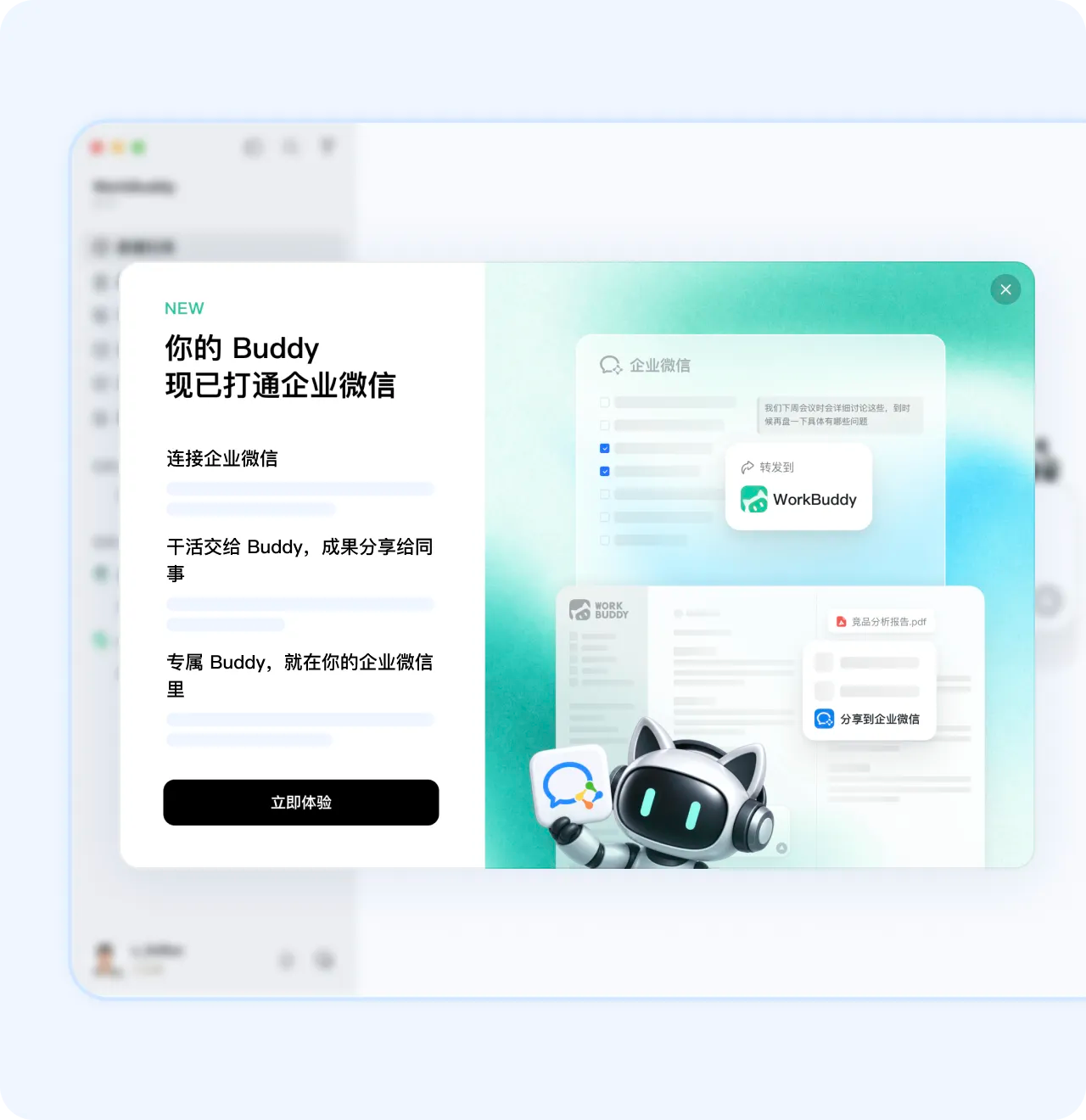
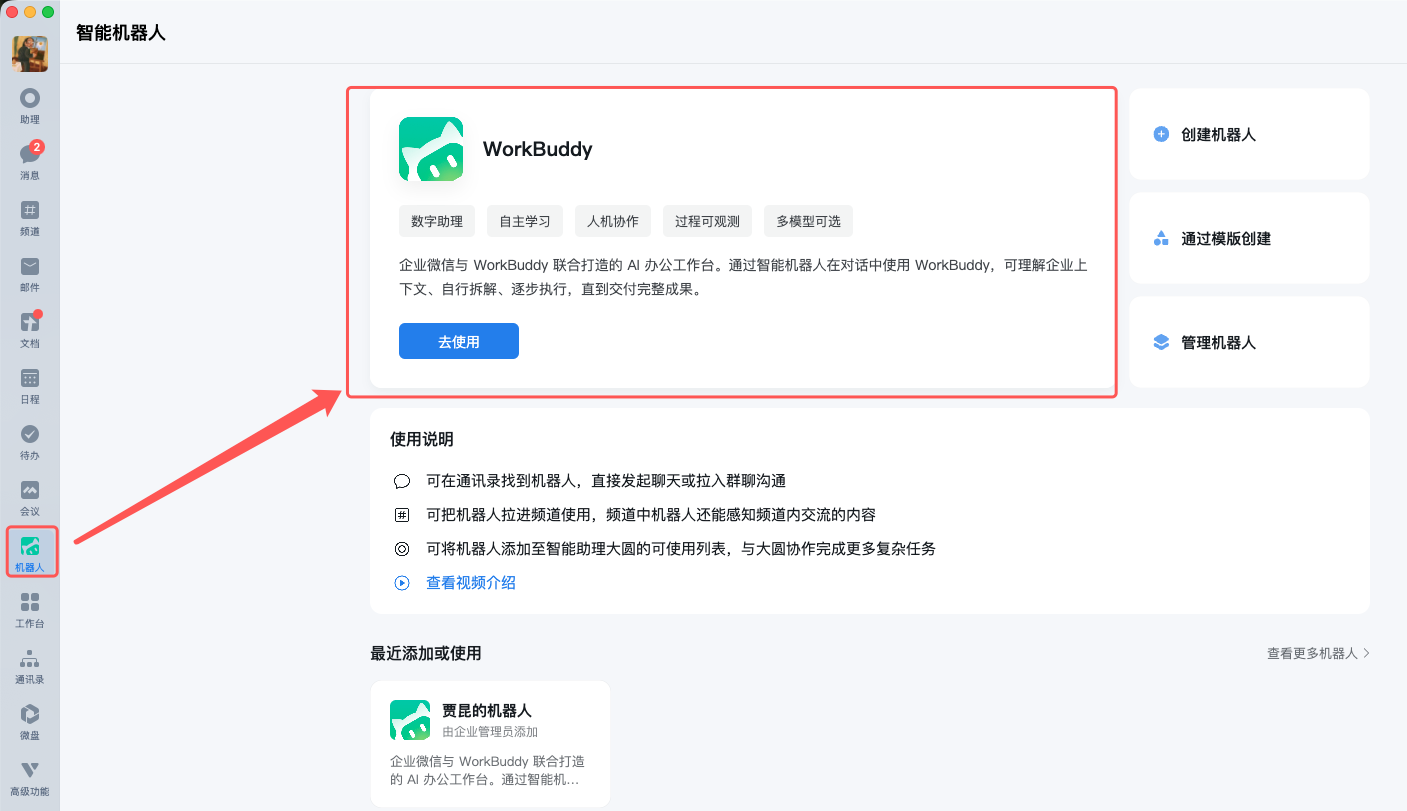
与此同时的另一大亮点,则是WorkBuddy进入了企业微信的对话列表。

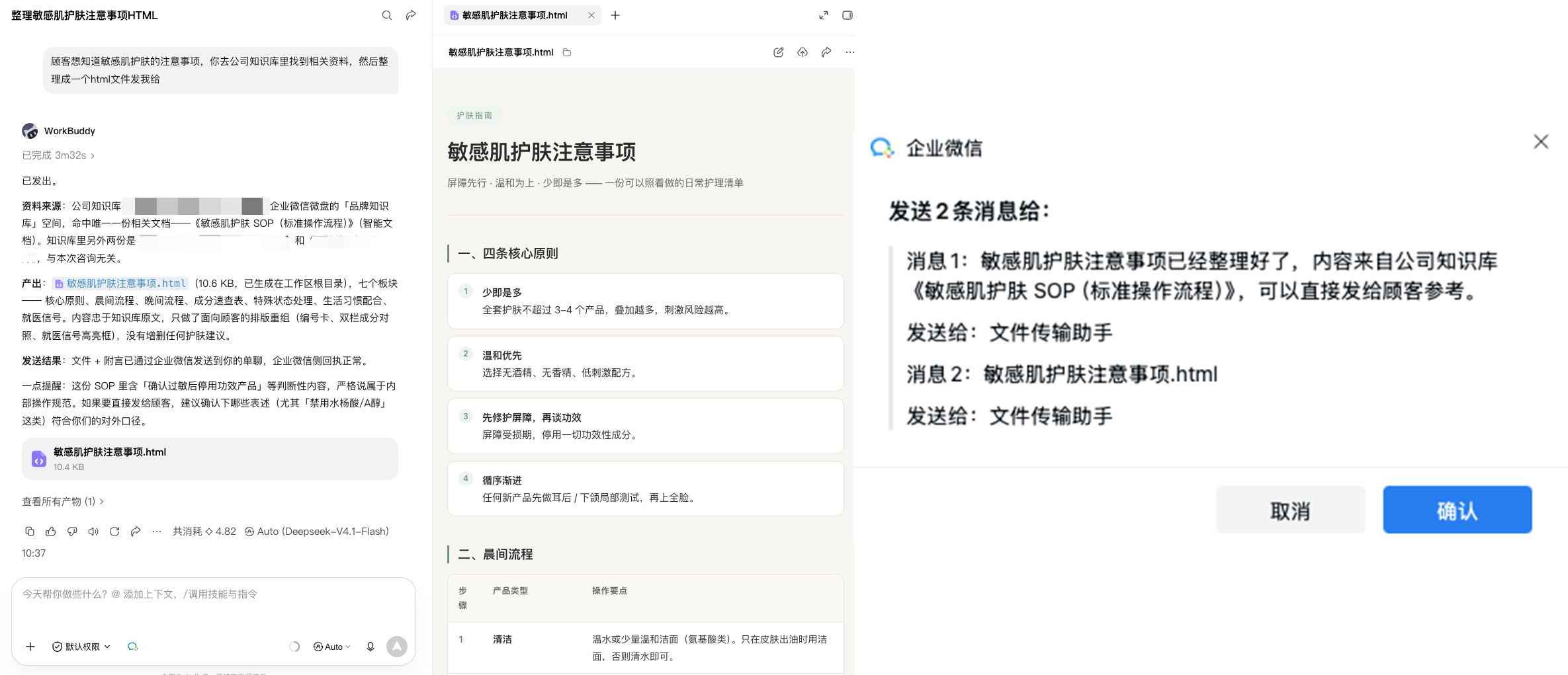
WorkBuddy进驻企业微信

打通企业微信后,WorkBuddy就像是拥有了企业身份。从员工的个人助理,正式“晋升”为企业内部的数字同事。

一个消费品公司的员工,需要理解品牌的价值观、品牌定位、产品性能,掌握公司的组织架构,以及知晓如何去调度资源达成销售转化。如今WorkBuddy也融入企业,具备了这样的素质和资格。

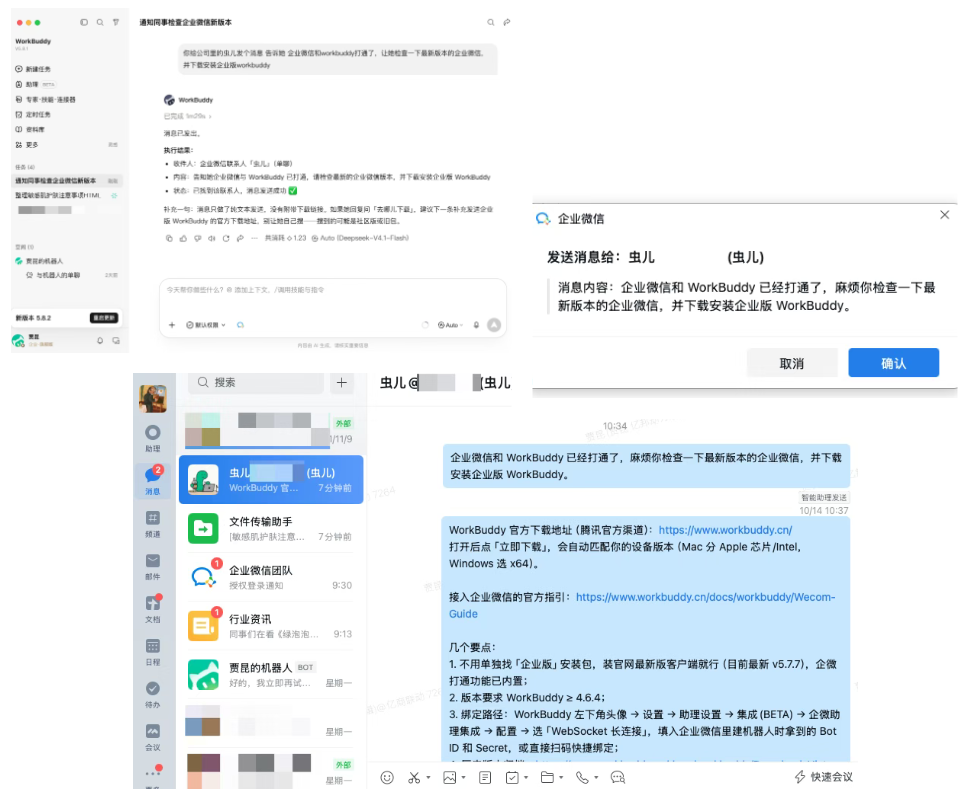
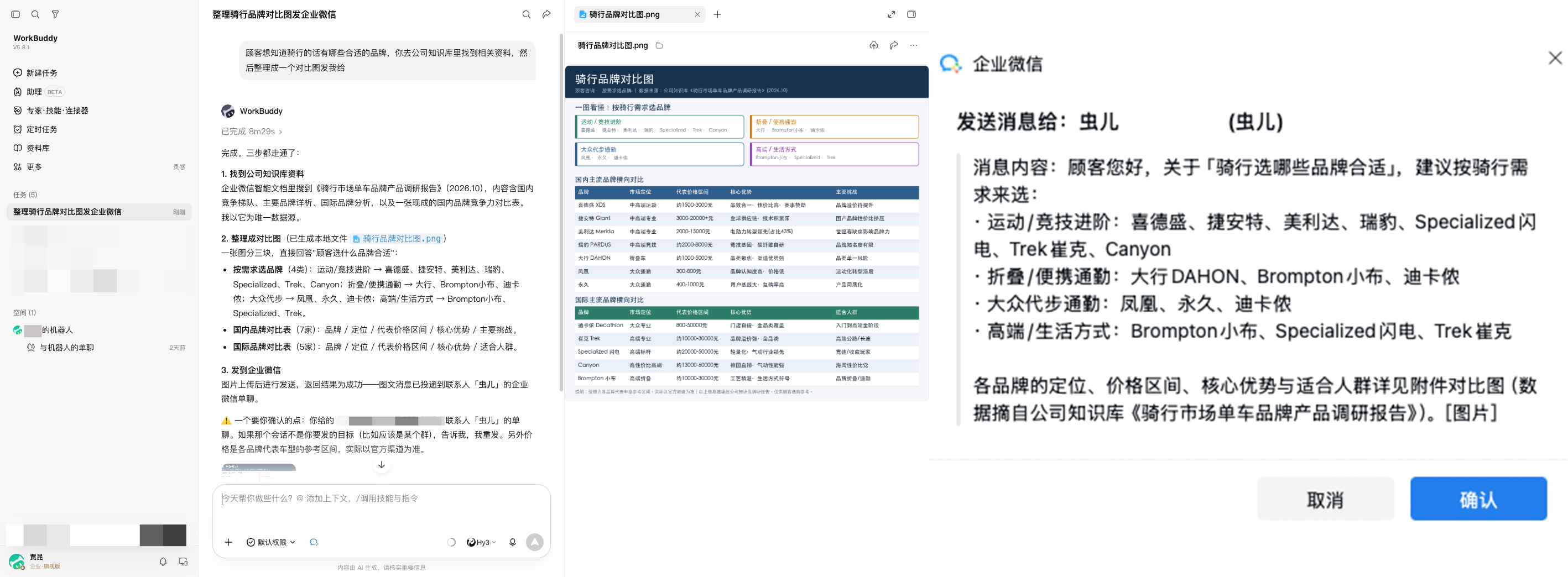
员工可以在WorkBuddy里操作企业微信

如此一来,WorkBuddy非但没有破坏企业已有的组织架构、身份体系和权限体系,还有机会在此基础上明显提升组织整体的协作能力。

故此,局部能力难以撬动组织效率提升的尴尬可能就此避免。

设想,如果顾客在企业微信中询问某款化妆品适不适合敏感肌?能不能早C晚A?销售人员不用到处求救,而是当即通过WorkBuddy,从组织内部找到那些散落在知识库、培训文档、群聊里的敏感肌SOP,第一时间给到顾客答复和建议。这样丝滑的体验,势必让消费者感受到即时满足和专业信赖。

这一套连招,将触发品牌方进一步意识到,那些消费的第一现场,或许才是AI原生组织最应该密切关注的地方。而将所有的组织能力围绕为顾客解决问题,实时响应客户的需求时,整个品牌才会利出一孔。

由此,品牌有机会从消费现场出发,牵引组织形成全盘的AI运营体系。

品牌会更关心产品口碑的改善,而不是局限于组织内部摩擦。管理者更关注利润和效益的提升,而非数据看板从PPT变成了html。甚至员工使用AI办公的目的也更加明确,将那些节省出来的时间,进一步锁定在如何改善消费体验上。

而这些潜移默化的转变,或许就源自组织将AI架构在与企业微信打通的WorkBuddy之上。

02

享受Agent复利,成为顾问型生活方式品牌

一位老板曾经跟我说过,并不能将消费低迷归咎于用户的低欲望指征。无论任何时期,消费者都有改善生活方式的意愿。

骑行、垂钓、滑雪、宠物、盲盒、文旅,众多新品类仍在不断涌现,且在国内存在的巨大真空。

然而,这些品类背后,除了强大的产品供应链能力之外,同样在于如何运用专业的知识和理念的传递,进而凝聚这些热衷新生活方式的人群,赢得这些专业顾客的信赖,甚至仰望。

于是,为高潜人群提供专业的、私属的服务,往往成为企业增长的来源。

克莱顿·克里斯坦森在JTBD(Jobs to Be Done)理论中说:相比产品有哪些功能,客户更在乎雇佣你的产品能帮他的人生获得怎样的进步?

这刚好解释了为什么知识型销售比关系型销售更接近顾客的真实需求。因为前者交付的是更加长期、稳定的信任度。

试想,如果每一个门店销售背后,都有一个掌握着品牌知识库的AI专家,他们或许就能第一时间解除消费者的疑虑,从关系型销售转为知识型销售。而品牌也借此从产品型品牌过渡到顾问型品牌。

比如,当消费者询问骑行车辆是该选“小布”还是选“大行”时,销售可以通过WorkBuddy立即调用企业微信内部的车型库生成产品对比表;并向顾客发起试骑活动,自动预约到店。

当宠物群里每天几十个人追问“幼猫软便”“狗狗掉毛”难以招架时,就可以将这些高频问题交给WorkBuddy去分析,并调用企业内部的知识库,提供一人千面的个性化建议。

而每个老板在复盘的时候,都曾经让销冠讲述成功案例。但不是每个成功案例都能嫁接到所有的销售人员身上。

而今,企业将过去沉淀在企业微信里的项目资料、复盘文档和工作经验,变成WorkBuddy能持续调用的能力。例如,在workbuddy里直接把历次项目复盘的企微文档沉淀成“销冠Skill”。一旦遇到类似场景,所有的销售就可以直接参考成交经验,实现转化。

这些消费运营场景的复杂需求,都在这次的WorkBuddy产品升级中得到了应验。

能够调用企微上下文WorkBuddy,知道组织内每个人的岗位职责、一个项目的来龙去脉,不必每次从零开始交代。

WorkBuddy既能通过企业微信帮组织处理工作流,成为组织的知识中枢,又能协助运营人员,化身顾客生活方式的好搭子。

更令人惊喜的是,这次更新,WorkBuddy还能将生成的结果自动回传至企业微信,进入下一环节工作流或推送给相关负责人。

譬如,通过转发消息记录等方式让WorkBuddy了解企业微信标签,预判对方的购买意愿,识别补货周期。随后,它可以会生成个性化话术和优惠券,并将这些素材发提供给导购,经导购确认后,再面向潜客群1V1发送。

让组织里的每个人,都有机会成为连接顾客的作战单元,而每个作战单元的能力,又都变成组织的复利。

当智能开始在工作流程中真正流转起来,企业在AI的投入才变得正向,生意的机会也就点燃了。

我想这或许才是AI原生组织的雏形,也是企业使用办公AI的意义所在。

03

重估一线,把AI交给离顾客最近的人

在商家走访和调研中,我会发现组织偏见依然难消。

很多品牌老板经常会把客服、售后部门被定义为企业的成本中心。

这类边缘化的单元,不仅企业内部话语权有限,也是过去AI变革中,人员优化的重灾区。

然而,那些践行“消费者主权”为第一性原理的品牌公司,其实非常知晓离着顾客越近,离着创收越近,离着利润越近。

比如,多年前,飞鹤就从一线店员的销售话术里,找到了“更适合中国宝宝体质”的销售秘诀,进而升级至整个品牌的slogan。

又例如,我认识的一家国内知名洗地机品牌,不仅不会把AI认定为IT团队的责任,还会鼓励全员积极使用AI办公。甚至他们的客服人员,都能用AI coding手搓APP,并植入到洗地机中,实现售后的全面Agent化。

这些消费品公司开始尝试不再按照传统岗位职能去定义员工,而将更多会驾驭AI办公的员工变成全栈产品经理。

而WorkBuddy与企业微信的深度整合,则让这些全栈产品经理,都有机会参与到消费场景的价值链上。这也意味着,人人都是更懂用户需求的运营专家,人人也都是围绕用户需求开创品类、研发新品的产品专家。

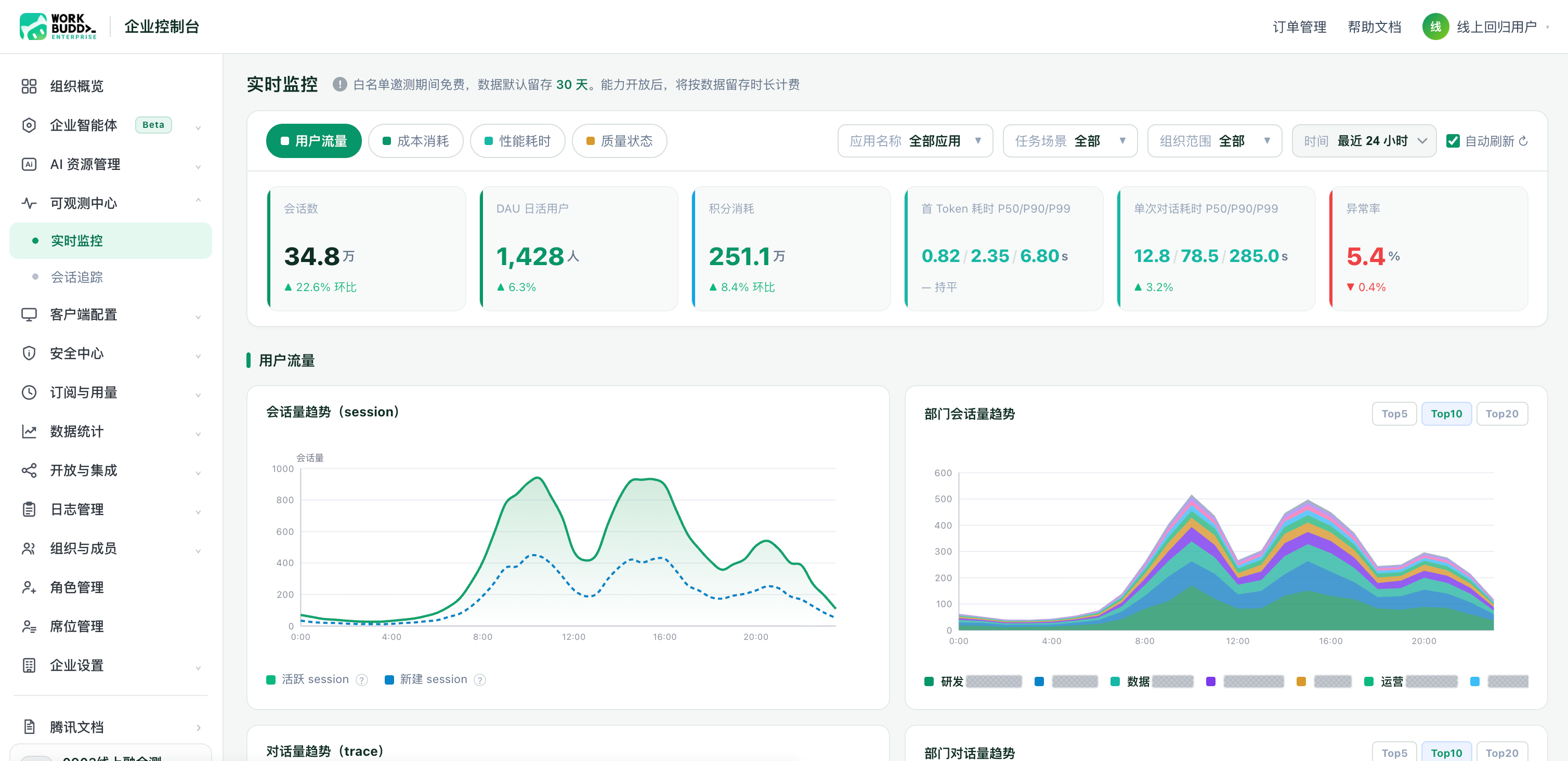
当然,放权一线,并不代表着企业的失控。WorkBuddy企业版管理后台有一个叫“可观测中心”的功能。这相当于给了品牌一个Agent管理面板。

企业不用只凭感觉判断Agent的使用情况,而是通过具体的实时观测掌握会话数量、活跃用户及使用趋势,通过性能耗时了解Agent响应情况。

这样一来,每个一线人员使用WorkBuddy的情况就一目了然。哪里需要追加投入,哪里需要成本优化,哪里需要调整Agent的Prompt、模型和工具,都能通过可观测中心实时观测、追踪、实现从发现问题到反哺优化的一轮闭环。

WorkBuddy企业版可观测中心

其实消费者从来不在意品牌用了什么样的AI办公软件。他始终关心的依然是品牌本身提供的产品、服务和体验。

因此,一个品牌用什么方式连接消费者,决定了它会就选择什么样的AI系统。

企业微信里不只有组织关系,还有客户关系、会员关系,以及一切与用户相关的经营活动。

当消费者的诉求抛到商家面前,商家如何找到内部知识,协调资源、形成决策和方案,并快速给到消费者反馈。这个企业内部的长程任务链条,比生成一份精美的文档更接近客户价值。

我想,这也是AI办公更高阶的战场。

是的,我突然意识到,WorkBuddy和企业微信的深层拉通是AI办公这场战事的转折点。

甚至有点杀死比赛的味道。

研究了这么多年消费,我必须承认,消费者主权的市场,顾客唯上。

既然企业的目的是创造顾客,那么决定企业是什么的,正是为顾客创造了怎样的体验,或是人生改观。故此,一个品牌所谓的组织能力,最终依然要瞄向客户需求,要去外部寻找消费者。品牌也必然会从由内向外的产品思维,转向由外向内的顾客意识。

这与腾讯多年来强调的一切以用户价值为依归(用户为本)的价值观不谋而合。

市面上现有的AI办公软件,最核心的功能还是指向企业内部管理。行政、财务、法务团队成为使用AI办公软件最频繁的单元,而业务一线人员却在远离真正的智能和效率。

现在看起来,似乎只有企业微信X WorkBuddy承担了连接顾客的能力。

未来消费的竞争,拼的是谁能连接更多顾客,谁能维系更长的客户生命周期,谁能激发更多的复购,谁就可能立于不败之地。

这是我认识的很多品牌老板们的共识。

WorkBuddy一端连接着企业员工,一端通过企业微信连接到顾客。这样的的双打组合,可以说是国内连接外部顾客最多的协同办公平台,与最先进的AI办公平台的大满足套餐。

这几乎给了一个以消费者为导向的品牌企业,难以拒绝的理由。

更何况,智能的复利在理解顾客层面同样会形成指数效应。当一个商家沉淀的顾客量级,AI办公就越懂顾客的需求。

我敢预言,甚至某一天,WorkBuddy+企业微信,能成为最懂顾客的personal agent也说不定。

我想,没有哪个消费者会拒绝这种被时刻呵护的感觉。

这将成为品牌最深的护城河,也是AI办公的新的奶与蜜之地。

本文首发于 亿邦动力 官方网站

文章来源:亿邦动力

广告
微信
朋友圈

FAQ回顾

WorkBuddy是什么?

WorkBuddy是一款企业级AI办公产品,与企业微信打通后,它像拥有企业身份的数字同事,能够读取企业内部知识库和上下文,辅助员工处理销售、客服等顾客服务工作,帮助企业将AI能力从内部管理延伸到外部顾客现场。

WorkBuddy和企业微信打通后能做什么?

员工可用认证的企业微信账号登录WorkBuddy企业版,统一配置Agent权限。在顾客咨询时,销售可通过WorkBuddy调用企业知识库中的SOP、产品资料,生成对比表、预约到店,还能自动生成个性化话术和优惠券,由导购确认后发送给潜客,并将结果回传至企业微信推进后续工作流。

WorkBuddy企业版如何保障企业数据和权限安全?

WorkBuddy企业版通过与企业微信打通,员工使用认证的企业微信账号登录,品牌方可以对Agent的查看和操作范围进行统一配置,相当于加了一道防火墙。Agent可以读取企业上下文,但上下文不会流出企业,在保障私有权限和数据底线的同时释放智能上限。

企业微信与WorkBuddy结合对品牌服务顾客有什么价值?

企业微信连接着超1400万企业和7.5亿微信用户,是品牌触达顾客的关键渠道。WorkBuddy与它打通后,品牌可以把组织能力聚焦到消费现场,一线员工能即时响应顾客需求,从关系型销售转为知识型销售,还能将销冠经验沉淀为Skill,实现客户服务和业绩增长的长期复利。

AI办公为什么需要连接企业微信?

大多数AI办公软件只服务企业内部管理,而企业微信中不仅包含组织关系,还有客户关系、会员关系。AI办公连接企业微信后,才能直接参与服务顾客的完整流程,帮助品牌在面对顾客需求时快速找到内部知识、协调资源、形成方案,把AI投入转化为实际生意机会。

这么好看,分享一下?

朋友圈 分享

APP内打开

赞 +1
+1
微信好友 朋友圈 新浪微博 QQ空间
关闭
收藏成功
发送
/140 0