广告
加载中

国内为什么还没有爆款个人AI助理?

张睿 2026-10-14 11:09
张睿 2026/10/14 11:09

邦小白快读

EN
全文速览

个人AI助理是能直接替你完成任务的AI工具,不只是聊天。国外已出现下载量数百万的爆款,国内也有多个产品已能用起来。

1. 它能做什么:帮你预订酒店、机票和餐厅,在线购物,回复邮件,打电话,还可以处理填表、追账单、办手续等日常行政杂事。

2. 代表性产品:国外有Muse、Instinct和Dot,国内阿里千问可以一句话点外卖、订机票酒店、买电影票、办护照签证;豆包可下单购物、订机票酒店、打车,并开始灰度测试水电燃气缴费;美团小团可协助下单、打车、订位;微信小微可自动调起美团、京东、携程等完成点奶茶、订酒店、打车任务。

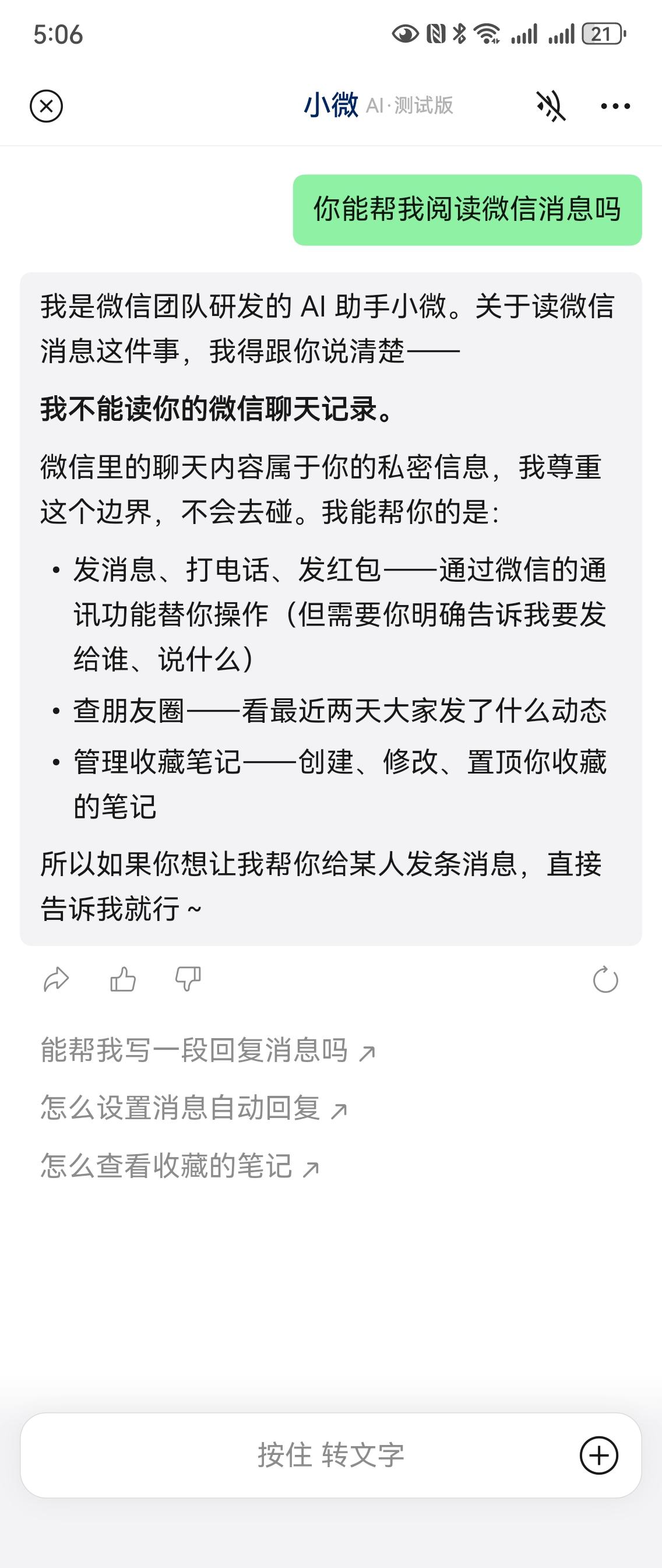
3. 使用注意:微信小微入口在微信首页左上角两个绿色小圆点,用户需要手动确认付款;AI助理不能替你阅读微信聊天记录,跨App操作可能被强制退出或触发风控;涉及付款和授权时要谨慎。

个人AI助理正在改变消费者发现和购买品牌的方式,品牌商需要关注AI代理的渠道接入、用户习惯变化和产品被推荐的逻辑。

1. 品牌渠道建设:美国AI助理能够端到端访问真实网页完成购物和预订,亚马逊选择封杀Muse,Meta联合沃尔玛、Stripe、Shopify等八家企业推动开放协议,品牌商需要决定是否向AI代理开放渠道,并参与相关标准。

2. 消费趋势和用户行为:美国用户依赖邮件、电话和短信处理日常事务,AI助理代填表、代打电话成为刚需;中国用户几乎所有生活服务都在微信内完成,微信小微可自动调起美团、京东、携程等小程序,首批接入品牌包含肯德基、得物、途虎养车等,品牌应尽早适配小程序AI生态。

3. 产品研发和营销:AI助理在推荐餐厅、酒店时要考虑相关性、适配性和规则遵循,品牌需要优化在对话中的价格、位置、取消政策等结构化信息,并注意类似千问发放25元无门槛免单卡刺激AI点外卖的营销做法。

卖家需要把AI助理看作新的交易入口,它既能带来增量流量,也带来规则和风控风险。

1. 增长市场:美国个人AI助理已能帮用户完成在线购物、旅行预订和电话订餐,Instinct累计10万用户却做到10亿美元交易流水,说明AI代理驱动的交易规模正在快速起来。

2. 机会提示:Meta联合沃尔玛、Stripe、Shopify等推动开放协议,打算让AI助理堂堂正正进入零售商网站,独立站和平台卖家可以关注这类合规通道;微信小程序AI开发模式已接入京东、美团、得物等平台,6.3万个小程序完成AI生态接入,卖家可接入小程序让小微等AI助手代下单。

3. 风险提示:亚马逊以未经授权AI代理访问为由封杀Muse,卖家需遵守平台规则避免被判定为违规流量;国内豆包手机助手操作微信、淘宝、支付宝几天内被集体拉黑,说明跨平台自动化操作很脆弱,不要依赖违规模拟。

4. 可学习点:AI助理订酒店、订餐厅时会根据价格、位置、取消政策、素食选项等条件挑选,卖家要把商品和服务的关键信息结构化、页面接口完善,方便AI代理准确理解和执行。

个人AI助理的兴起意味着订单入口从搜索和App转向AI代理,工厂需要从产品和数据层面适应这种变化。

1. 产品生产与设计需求:AI助理代客下单时会按条件筛选,比如酒店价格低于250美元、靠近Loop、可免费取消,餐厅人均不超过40美元、步行可达、素食、非连锁,工厂生产的消费类产品需要提供清晰的价格、规格、库存和履约信息,才能在AI推荐中胜出。

2. 商业机会:微信开放小程序AI开发模式,首批接入京东、美团、肯德基、得物、途虎养车等,工厂可通过这些平台被小微等AI助手推荐和代下单,相当于多了一个自动化的分销入口;阿里千问、抖音豆包也把购物、外卖、出行接入AI,工厂应关注这些生态的具体招商和接入条件。

3. 数字化和电商启示:AI助理要求端到端完成真实工作流,工厂的电商后台需要支持API或小程序方式被AI调用,并具备自动订单处理、支付确认、库存同步能力,过去的图片和详情页内容也要转变为机器可读的结构化数据。

个人AI助理从对话工具升级为自动执行任务的基础设施,服务商的机会集中在任务自动化、跨平台连接和安全合规。

1. 行业趋势:AI助理已能端到端完成真实浏览器或网页工作流,支持购物、旅行预订、回复邮件和打电话;Muse把每个用户运行在独立云端虚拟机中,关闭App后仍在后台运行,Instinct完全基于短信和电话,Dot拥有专属云端电脑浏览器并7×24小时运行,这些都是新技术方向。

2. 客户痛点:美国用户每月平均花11.8小时处理健康、福利、税务等行政事务,邮件、电话、短信是主要负担来源;中国用户的一切事务都集中在微信里,但跨App操作会被微信、淘宝、支付宝等强制退出或触发风控,AI助理无法自动处理微信聊天记录。

3. 解决方案:服务商可以开发填表、追账单、比价、预订、邮件回复等自动化模块,帮助AI助理完成具体任务;可以做小程序AI开发模式的中间件,让AI助理安全调用美团、京东、携程等平台;还可以为平台和AI公司提供开放协议、身份认证、支付确认和风控拦截方面的合规服务。

平台商正在面对AI助理带来的流量入口变化和规则挑战,如何接纳或限制AI代理将直接影响平台生态。

1. 平台的最新做法:亚马逊封杀Muse,理由是未经授权的AI代理访问违反使用条款;Meta联合沃尔玛、Stripe、Shopify等八家企业宣布制定开放协议,让AI助理合法进入零售商网站;国内腾讯开放小程序AI开发模式,微信小微可自动调起美团、京东、携程等小程序,目前微信小程序总量超800万个,6.3万个完成AI生态接入。

2. 平台的需求和问题:AI助理需要真实登录、打开网页、填写表单并调用外部应用,平台必须解决代理账号识别、验证码、风控、支付确认和用户授权等问题;同时要决定是否允许AI代理抓取商品价格、库存和预订信息。

3. 风控规避:豆包手机助手跨App操作微信、淘宝、支付宝,一周内被微信强制退出、被电商和银行App触发风控验证,最终被集体拉黑;平台商需要在保护用户隐私和防止滥用与支持创新AI服务之间建立更精细的规则,例如通过开放协议和小程序AI模式为合规代理提供通道。

个人AI助理的爆火揭示了AI从回答问题转向代替人执行任务,也带来了平台权力、用户差异和监管空白等研究课题。

1. 产业新动向:Assistant Benchmark整理了139款AI助理,其中32款通过16项任务测试打分,综合前三为Muse、Instinct和Dot;Muse发布22天下载量突破500万,Instinct在一个月内估值从25亿美元涨到100亿美元、累计10万用户和10亿美元交易流水,显示资本和用户都在追逐自主执行型AI。

2. 新问题:中美用户需求差异显著,美国人的日常行政负担高,平均每月11.8小时处理健康、福利和税务事务,因此AI助理处理邮件、电话和杂事是刚需;中国用户的微观服务被微信高度集成,跨平台AI操作被强制退出和风控封禁,说明AI代理与封闭平台的冲突是普遍问题。

3. 政策法规和商业模式启示:亚马逊封杀Muse与Meta联合零售商标定开放协议形成对照,研究者可以关注AI代理访问网站的法律边界、数据接口开放义务、用户授权和隐私保护;微信小程序AI开发模式和小微仅在小微内对话的功能设计,也为AI助理在封闭生态中生存提供了商业模式样本。

返回默认

声明:快读内容全程由AI生成,请注意甄别信息。如您发现问题,请发送邮件至 run@ebrun.com 。

我是 品牌商 卖家 工厂 服务商 平台商 研究者 帮我再读一遍。

Quick Summary

Personal AI assistants are AI tools that can directly complete tasks for you, not just chat. Overseas, several hit apps have surpassed millions of downloads, and multiple products in China are already usable.

1. What they can do: Book hotels, flights, and restaurants, shop online, reply to emails, make phone calls, and handle routine administrative chores such as filling out forms, chasing bills, and processing paperwork.

2. Representative products: Overseas examples include Muse, Instinct, and Dot. In China, Alibaba's Qianwen can order food delivery, book flights and hotels, buy movie tickets, and handle passport/visa applications with a single command; Doubao can place shopping orders, book flights/hotels, hail rides, and has begun piloting utility bill payments; Meituan's Xiaotuan helps with ordering, ride-hailing, and reservations; WeChat's Xiaowei can automatically invoke services such as Meituan, JD.com, and Ctrip to order milk tea, book hotels, or hail rides.

3. Usage notes: Xiaowei's entry point is the two small green dots in the upper-left corner of WeChat's home screen, and users must manually confirm payment. The AI assistant cannot read your WeChat chat history, and cross-app operations may be forcibly logged out or trigger risk controls. Be cautious when dealing with payments and authorizations.

Personal AI assistants are changing how consumers discover and purchase brands. Brands need to pay attention to AI-agent channel access, shifts in user habits, and the logic behind product recommendations.

1. Brand channel construction: U.S. AI assistants can access real web pages end-to-end to complete purchases and bookings. Amazon has chosen to block Muse, while Meta, along with eight companies including Walmart, Stripe, and Shopify, is pushing open protocols. Brands must decide whether to open their channels to AI agents and participate in related standards.

2. Consumer trends and user behavior: U.S. users rely on email, phone, and SMS for daily tasks, making AI-assisted form-filling and phone calls essential. In China, nearly all life services are completed within WeChat; WeChat's Xiaowei can automatically invoke mini-programs from Meituan, JD.com, Ctrip, and others, with initial brand partners including KFC, Dewu, and Tuhu. Brands should adapt to the mini-program AI ecosystem as early as possible.

3. Product development and marketing: When recommending restaurants or hotels, AI assistants must consider relevance, suitability, and rule compliance. Brands need to optimize structured information such as price, location, and cancellation policies in conversations, and pay attention to marketing tactics like Qianwen's 25-yuan no-threshold voucher that encourages AI-assisted food ordering.

Sellers should treat AI assistants as a new transaction gateway. They can bring incremental traffic, but also introduce rule and risk-control challenges.

1. Growth market: U.S. personal AI assistants already help users shop online, book travel, and order food by phone. Instinct has accumulated 100,000 users while processing US$1 billion in transaction volume, showing that AI-agent-driven transactions are scaling quickly.

2. Opportunity signals: Meta, along with a group of eight companies including Walmart, Stripe, and Shopify, is pushing open protocols to give AI assistants legitimate access to retailer websites; independent site and marketplace sellers should watch for these compliant channels. WeChat's mini-program AI development model has already integrated JD.com, Meituan, Dewu, and other platforms, with 63,000 mini-programs connected to the AI ecosystem. Sellers can integrate with mini-programs and let AI assistants like Xiaowei place orders on their behalf.

3. Risk warnings: Amazon blocked Muse on the grounds of unauthorized AI-agent access, so sellers must comply with platform rules to avoid being classified as invalid traffic. In China, Doubao's phone assistant was collectively blacklisted within a few days for operating WeChat, Taobao, and Alipay, showing that cross-platform automated operations are fragile and sellers should not rely on rule-violating simulations.

4. Takeaways: When booking hotels and restaurants, AI assistants select based on criteria such as price, location, cancellation policy, and vegetarian options. Sellers should structure key product and service information and improve page interfaces so AI agents can accurately understand and execute tasks.

The rise of personal AI assistants means order entry points are shifting from search and apps to AI agents. Factories need to adapt at both the product and data levels.

1. Product production and design requirements: AI assistants filter options when placing orders on behalf of users—for example, hotel prices below US$250, near the Loop, free cancellation; restaurants with per-person spending no more than US$40, walkable, vegetarian, non-chain. Consumer products from factories need clear pricing, specifications, inventory, and fulfillment information to win AI recommendations.

2. Business opportunities: WeChat has opened its mini-program AI development model, with initial integrations including JD.com, Meituan, KFC, Dewu, and Tuhu. Factories can be recommended and ordered from through these platforms by AI assistants like Xiaowei, effectively adding an automated distribution channel. Alibaba's Qianwen and ByteDance's Doubao have also integrated shopping, food delivery, and travel into AI. Factories should watch the specific merchant recruitment and access conditions in these ecosystems.

3. Digital and e-commerce implications: AI assistants require end-to-end execution of real workflows. Factories' e-commerce backends need to support API or mini-program invocation by AI, with automated order processing, payment confirmation, and inventory synchronization. Past image- and detail-page content also needs to be converted into machine-readable structured data.

Personal AI assistants have evolved from conversation tools into infrastructure that automatically executes tasks. For service providers, the opportunity lies in task automation, cross-platform connectivity, and security/compliance.

1. Industry trends: AI assistants can now complete real browser or web workflows end-to-end, including shopping, travel booking, email replies, and phone calls. Muse runs each user in a separate cloud virtual machine and continues operating in the background after the app is closed; Instinct is built entirely on SMS and phone calls; Dot has a dedicated cloud computer with a browser running 24/7. These represent new technological directions.

2. Customer pain points: U.S. users spend an average of 11.8 hours per month on administrative tasks related to health, benefits, and taxes, with email, phone, and SMS as the main sources of burden. In China, virtually all tasks are concentrated within WeChat, but cross-app operations can be forcibly logged out or trigger risk controls in WeChat, Taobao, Alipay, and others, and AI assistants cannot automatically process WeChat chat history.

3. Solutions: Service providers can build automation modules for form-filling, bill chasing, price comparison, booking, and email replies to help AI assistants complete specific tasks. They can also serve as middleware for mini-program AI development, enabling AI assistants to securely call platforms like Meituan, JD.com, and Ctrip. In addition, they can offer compliance services for platforms and AI companies around open protocols, identity authentication, payment confirmation, and risk-control screening.

Platform operators are facing changes in traffic entry points and rule challenges brought by AI assistants. How they embrace or restrict AI agents will directly affect the platform ecosystem.

1. Latest platform actions: Amazon blocked Muse, citing that unauthorized AI-agent access violates its terms of service. Meta, together with eight companies including Walmart, Stripe, and Shopify, announced the development of open protocols to let AI assistants enter retailer websites legitimately. In China, Tencent has opened its mini-program AI development model, and WeChat's Xiaowei can automatically invoke mini-programs from Meituan, JD.com, Ctrip, and others. WeChat now has more than 8 million mini-programs, with 63,000 connected to the AI ecosystem.

2. Platform needs and challenges: AI assistants need to log in for real, open web pages, fill out forms, and invoke external applications. Platforms must address proxy account identification, CAPTCHAs, risk controls, payment confirmation, and user authorization. They also must decide whether to allow AI agents to scrape product prices, inventory, and booking information.

3. Risk-control evasion: Doubao's phone assistant operated across WeChat, Taobao, and Alipay, and within a week was forcibly logged out by WeChat, triggered risk-control verifications in e-commerce and banking apps, and was ultimately blacklisted across platforms. Platform operators need more granular rules that balance user privacy and abuse prevention with support for innovative AI services—for example, by providing compliant channels through open protocols and mini-program AI models.

The explosion of personal AI assistants reveals a shift from AI answering questions to AI performing tasks on behalf of users. It also raises research topics around platform power, user differences, and regulatory gaps.

1. New industry developments: The Assistant Benchmark has cataloged 139 AI assistants, of which 32 were evaluated and scored across 16 task tests; the top three overall are Muse, Instinct, and Dot. Muse surpassed 5 million downloads within 22 days of launch. Instinct's valuation rose from US$2.5 billion to US$10 billion in one month, with 100,000 cumulative users and US$1 billion in transaction volume—evidence that both capital and users are pursuing autonomous, execution-oriented AI.

2. New questions: Demand differences between Chinese and American users are significant. Americans have a heavy daily administrative burden, spending an average of 11.8 hours per month on health, benefits, and tax matters, making AI assistants for email, phone calls, and chores an essential need. Chinese users' micro-services are highly integrated into WeChat, yet cross-platform AI operations face forced logouts and risk-control blocks, showing that conflicts between AI agents and closed platforms are a common problem.

3. Policy, regulatory, and business model implications: Amazon's blocking of Muse contrasts sharply with Meta aligning retailers around open protocols. Researchers can examine the legal boundaries of AI-agent access to websites, obligations for open data interfaces, user authorization, and privacy protection. WeChat's mini-program AI development model and Xiaowei's design of keeping conversations within Xiaowei also provide business model samples for how AI assistants can survive in closed ecosystems.

Disclaimer: The "Quick Summary" content is entirely generated by AI. Please exercise discretion when interpreting the information. For issues or corrections, please email run@ebrun.com .

I am a Brand Seller Factory Service Provider Marketplace Seller Researcher Read it again.

中国的Personal Agent,还是得看微信。

【亿邦原创】最近两个月,大洋彼岸的硅谷,从普通用户到创投圈,都在为个人AI助理产品(Personal Agent)疯狂。

一个名为Assistant Benchmark的网站,整理了市面上139款AI助理,并且已经对其中32个产品做了测试并打了分。

反观国内,几家大厂虽然也已在暗搓搓布局,但是目前还没有出现类似Muse的现象级爆款产品。原因何在?分析这个问题,可以从三个层面:

Personal Agent到底能干什么?

中美两国用户的需求差异

中国的Personal Agent长什么样?

Personal Agent到底能干什么?

Personal Agent,即个人AI助理,可以追溯到OpenClaw爆火的时候,其核心能力是在大模型对话之上,直接帮助用户完成任务。上半年的任务主线是编程、文案、设计等办公场景,下半年的任务主线则转移到了订机票、购物、保险等生活场景。

Assistant Benchmark 的创办者戴维·鲍兰说,整个科技圈被“这些助理到底能替我们做什么”这个问题点燃,所有人都在同一条船上,没有人真正知道答案。这就是一片狂野西部,我们都在里面玩。

Assistant Benchmark网站设计了16项任务对AI助理进行测试,这些任务代表了用户对于Personal Agent能做什么的典型需求。

这里摘录部分测试任务:

执行在线任务

可端到端完成真实浏览器或网页工作流,而非仅提供建议。如,“帮我预订下周五和周六芝加哥的酒店,价格低于250美元,靠近Loop,免费取消。”

旅行预订

查找、预订并管理航班和酒店,包括值机和改签。如,“帮我订一趟纽约到芝加哥的往返机票,周五早上出发,周日晚上回来,靠过道座位,价格不到400美元。窗口打开时帮我值机并寄出登机牌。”

推荐质量

模型给出建议选项时,需兼顾相关性、适配性与规则遵循。如,“帮我找一家明天晚上7:30可以四人用餐的餐厅,要离我酒店步行可达、适合素食者、非连锁品牌,人均消费不超过40美元。”

购买产品

查找、对比并完成(或正确筹备)采购。如,“帮我从亚马逊下单和上次买的一样的咖啡豆,两袋,寄到我家地址。”

回复电子邮件

结合恰当的上下文信息与收件人,用你的语气草拟或发送回复内容。如,“回复萨姆发来的提议周四开会的邮件,说明周四不方便,从我的日程里给出两个可选时段,语气保持我平时的风格。”

电话通话

代您拨打真实电话并向您反馈结果。如,“给餐厅打个电话,问问他们周六晚上8点能不能安排8个人的座位,还有他们有没有包间。”

根据测试结果,Assistant Benchmark对AI助理打分并排名,综合评分排名前三的分别是Muse、Instinct和Dot。排名结果与产品受到的关注度、讨论度是一致的。

Meta在9月8日发布的Muse,13天下载量达到250万,一周登顶美国iOS免费应用榜,发布仅22天下载量突破500万。

Muse可以发送邮件、预订旅行、在线购物、规划行程等。用户只需表达目标,Muse 会自行拆解任务、打开网页、填写表单并调用外部应用执行。每个用户的 Muse 都运行在独立的云端虚拟机中,用户关闭 App 后,Muse 仍能在云端持续运行并完成任务。

Instinct是初创公司Spear Street Technology的产品,在今年2月开始邀请内测,但8月底到9月底这短短一个月内,估值从25亿美元飙升至100亿美元,累计10万用户,交易流水已经达到10亿美元。

Instinct没有独立的App,用户通过短信(SMS)、iMessage、WhatsApp以及电话与AI助理交互,完成订机票、购物、规划行程等日常任务。

OpenAI 的Dot于9月29日在DevDay上发布,用户可通过 ChatGPT 桌面端、网页端和移动端与 Dot 交流,也支持 Slack、Microsoft Teams 及语音通话,每个 Dot 拥有专属的云端电脑和浏览器,能在后台7×24小时持续运行,自主推进任务。

按照Assistant Benchmark的测评,Muse的强项是购物、邮件,Instinct的强项是旅行和日程;Dot的强项是在线任务和邮件。

中美两国用户的需求差异

Assistant Benchmark 的创办者戴维·鲍兰还运营了七八个群聊,里面全是痴迷于助理的用户,加起来1200多人,鲍兰说,群中讨论最多的使用案例其实是日常行政类。

所谓的日常行政,指填表、打电话、追账单、办手续的杂活。比如,报联邦税、州税,处理退税或补缴;核对保险报销、交涉医疗账单、续保和重新认证;银行对账、信用卡争议、贷款文件、HSA报销、机票差价退款,等等。

美国人的日常行政负担是很高的。一项覆盖五国的调查发现,美国人平均每月花11.8小时处理健康、福利、护理和税务事务;韩国为4.5小时,丹麦为5.7小时。另一项统计中,美国人每年填联邦表格累计超过120亿小时,平均每人约35小时,差不多一整周的工作时间。

相对而言,中国人的日常行政负担更小一些。个税、社保由单位代扣代缴,个人所得税汇算在App上完成,医保由医院直接结算;一网通办、电子证件替代了窗口和纸质表格;水电燃气、话费、订阅都聚合在微信/支付宝里,一键缴费,不需要开十几个账户对账。

因此不难理解,美国用户对于能够处理日常行政事务的个人AI助理有更强烈的需求。

而处理各种杂事的方式,美国人依靠网页、邮件、电话、短信。尤其是邮件,相当于美国人的半个生活档案库——账单、订阅、通知、商务往来全在里面,他们每天需要阅读、回复、分类、归档。所以打通邮箱,处理未读邮件,自动回复,几乎是每个AI助理的必备功能。

邮件之外,美国商业服务业仍然大量使用电话及短信。大量小型服务商——社区餐厅、理发店、私人诊所、本地电工,没有在线预订系统,唯一的接口就是电话号码。消费者订位、预约、砍价、售后,全部靠打电话完成。而不受手机系统和应用限制的短信,渗透到身份验证、客服通知、预约确认、家人联络等方方面面。是美国人数字生活中默认的基础设施之一。这也正是初创公司 Instinct 的 AI 助理可以没有App、完全基于短信和电话运行的原因。

而中国的情况完全不同,邮件、电话、短信全部被微信取而代之,电话和短信沦落为广告、骚扰的集中地。无论是工作进度、家长群报名通知、朋友约饭、维修预约,全部在微信里。如果有一个AI助理能够帮助我们处理这些杂七杂八的信息,那只能是微信自己。而目前微信推出的“小微”并不打算为用户代劳这些事情。

再有就是经常被提到的、中美互联网环境的一个显著区别——美国各种网络服务之间可以互通,而中国几家互联网大厂建造了“围墙花园”。这种区别有好有坏,前者用户能够有更多的自由选择权,也为创新产品提供了土壤,而后者使用户在同一环境中能有更一致的体验。

事实上个人AI助理在美国也不是畅通无阻的。Meta推出的Muse被亚马逊全面封锁,理由是“未经授权的AI代理访问违反亚马逊使用条款。”13天后,Meta联合Sierra拉来沃尔玛、Stripe、Shopify等八家企业,宣布要制定一个“开放协议”,让AI助理能堂堂正正地走进零售商的大门。

在中国市场,个人AI助理去各个电商平台帮助用户购物,更是绝无可能。

中国的Personal Agent长什么样?

目前中国的公司和用户没有像美国那样,为Personal Agent疯狂着迷,还有一个很重要的原因是,那些宣传出来的功能,早已经在国内的各种AI产品中出现过,没太多新鲜的。

年初千问大规模推广“一句话点外卖”,狂撒30亿发放25元无门槛免单卡,用户在对话中说出“帮我点杯奶茶”等指令,即可通过AI完成下单和支付。

千问上线之初,主打的便是“AI办事”能力,全面接入了淘宝、支付宝、淘宝闪购、飞猪、高德等阿里生态业务之后,可以做的事情包括:购物、订机票酒店、买电影票、办护照签证,等等。

而豆包上半年也已经打通了抖音商城,无需跳转即可下单购物,随后也陆续新增了机票预订、打车、酒店预订等出行服务。最新消息是,10月初开始灰度测试水电燃气缴费功能。

而拥有更多本地生活服务资源的美团,也推出了AI助手“小团”,在用户授权下可协助完成下单、打车、订位、点外卖等本地生活服务操作。

也就是说,几家大厂都已经基于各自的生态圈,在AI产品中或多或少地融入了Personal Agent的任务执行能力,但它们都想把用户、资源、数据留在自己体系内。

试图跨平台、跨应用执行任务,字节在2026年中推出的豆包手机助手是一个激进的尝试。这是一个系统级AI助理,能替用户操作手机上的任何App:在微信回消息、在淘宝下单、在支付宝付款。结果上线不到一周:微信弹出“登录环境异常”强制退出;淘宝、支付宝、银行App集体触发风控验证;几天之内被国民级应用集体“拉黑”。

阶跃星辰在7月13日发布的大模型原生智能体手机 STEPX Neo与豆包手机思路类似,让AI拥有手机操作系统层权限,用户只需表达任务意图,智能体即可自主拆解、跨应用调度。STEPX Neo 首批生态合作伙伴包括:携程、支付宝、滴滴、美团、WPS、剪映、高德、百度、京东、微博等,但没有微信。有报道称该手机预计10月下旬正式发布。

最终,中国的Personal Agent,还是得看微信。

6月8日,微信开放“小程序AI开发模式”,首批接入的小程序有京东、美团、肯德基、滴滴、携程、同程、得物、途虎养车。目前微信生态中小程序总量已超过800万个,有6.3万个完成了AI生态接入,这一数字仍在快速增长。

6月20日,微信原生AI助手“小微”开始灰度:首页左上角两个绿色小圆点,负一屏直接是对话页,聊天框里长按任何文字都有“问小微”。AI助手小微可自动调起美团、京东、携程等,完成点奶茶、订酒店、打车等任务,用户只需手动确认付款。

因为微信小程序几乎已经取代网页、App,构成了中国用户需要的绝大多数互联网服务,所以理论上说,AI助手小微可以成为一个万能的个人AI助理。而且与Muse相比,小微会更加强大——Muse是“破门者”,我去你网站处理任务,希望你不要封掉我;微信是“包租公”,我不出去,你们进来,规矩我来定。

在社交层面,小微不能阅读微信聊天记录,不能自动回复,自然也无法像美国人使用AI助理处理邮件那样,让小微安排微信中的各项杂事。

不过,2026年9月起,微信正在测试“小微对话小微”功能——用户可以让自己的小微与好友的小微直接对话协调事务(如约饭),用户仅在授权与决策环节介入,消息不会出现在个人对话框,只在“小微”内进行。不过这种方式目前来看使用场景很有限。


本文首发于 亿邦动力 官方网站

文章来源:亿邦动力

广告
微信
朋友圈

FAQ回顾

个人AI助理(Personal Agent)是什么?能做什么?

个人AI助理是在大模型对话基础上直接帮助用户完成任务的产品,典型能力包括订机票酒店、在线购物、回复邮件、打电话、推荐餐厅、规划行程等。Meta的Muse可自行拆解任务、打开网页并填写表单,Instinct通过短信和电话处理日常事务。依据Assistant Benchmark测评,头部产品强项集中在购物、邮件、旅行和日程管理。

为什么中国还没有出现类似Muse的爆款个人AI助理?

主要因为中美用户需求和数字生态差异。美国人日常行政负担重,依赖邮件、电话和短信,因此对代理处理杂事需求强烈;中国这类事务多由微信、支付宝和一网通办解决,宣传功能在千问、豆包等产品中已出现过。此外国内大厂各自为政,跨平台执行遭集体封锁,而最可能的微信小微受社交隐私限制,不能代劳微信内事务。

微信小微是什么?能替代海外个人AI助理吗?

微信小微是微信2026年6月开始灰度测试的原生AI助手,可自动调起美团、京东、携程等小程序完成点奶茶、订酒店、打车等任务,用户需手动确认付款。理论上它能靠800万小程序成为万能个人助理,甚至比Muse更有主导权,但因不能阅读聊天记录和自动回复,目前只能覆盖有限场景,还无法完全替代海外助理。

国内有哪些个人AI助理产品?

国内个人AI助理主要有:千问接入淘宝、支付宝、飞猪、高德,支持一句话点外卖、购物、订票;豆包打通抖音商城并新增机票、打车、酒店预订及水电燃气缴费;美团推出小团,可协助下单、打车、订位;字节的豆包手机助手和阶跃星辰STEPX Neo尝试系统级跨App操作,但遭遇风控;微信小微则基于小程序生态执行任务。

这么好看,分享一下?

朋友圈 分享

APP内打开

赞 +1
+1
微信好友 朋友圈 新浪微博 QQ空间
关闭
收藏成功
发送
/140 0