广告
加载中

在DQ打工的机器人获超45亿融资 阿里巴巴、美团、腾讯、京东都投了

亿邦动力 2026-09-03 11:54
亿邦动力 2026/09/03 11:54

邦小白快读

EN
全文速览

本文核心曝光了AI机器人领域的重磅融资和首个真实商业化落地项目,核心干货信息如下:

1. 2024年成立的AI机器人公司Sharpa完成超45亿人民币融资,投后估值220亿元,投资方包括阿里巴巴、美团、腾讯、京东等知名产业资本和红杉中国等头部投资机构,公司主打通用机器人核心能力底座研发。

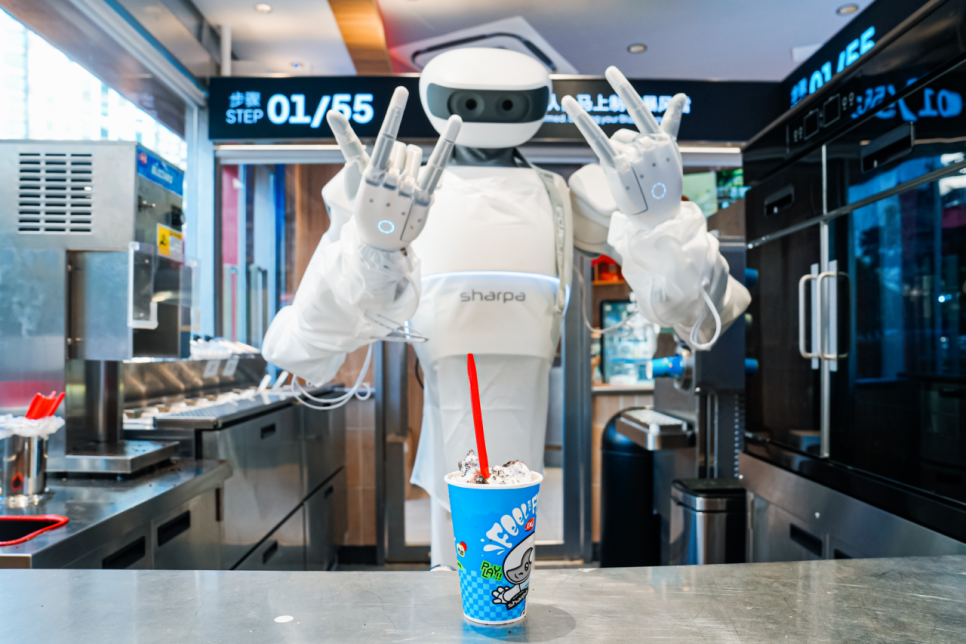
2. Sharpa与DQ联合打造全球首个零改造全自主机器人餐厅,机器人可直接使用人类现有设备,全自主完成暴风雪冰淇淋点单到交付的55步复杂流程,能做到每日12小时、全年无休稳定运营,直接服务真实顾客。

3. 本次落地解决了机器人商业化的三大难题,把行业检验标准从完成任务升级为提供完整生产力,未来技术将逐步拓展到更多餐饮、服务和家庭场景。

本次合作对各类消费品牌,尤其是连锁餐饮品牌有多维度的干货参考:

1. 营销层面,和前沿AI科技企业合作打造标杆门店,本身就是极具热度的营销事件,能够吸引客流打卡,强化品牌创新、科技的品牌标签,提升品牌关注度。

2. 运营层面,本次合作证明,标准化程度高的连锁品牌不需要改造现有门店设备、流程和标准,就能引入机器人生产力,既可以解决人力成本高、人员流动性大的痛点,还能保证产品质量稳定统一,符合连锁品牌的标准化要求。

3. 趋势层面,AI机器人落地商用已经成为现实,率先试点智能化转型的品牌可以提前占据行业优势,未来全行业都会逐步推进机器人替代部分人力,降低运营成本,拓展营业时间。

本文给线下餐饮及零售类卖家提供了智能化转型的机会参考和风险提示,干货内容如下:

1. 机会层面,AI机器人已经实现真实商业场景落地,不需要改造卖家现有设备和场景就能接入,完美解决了卖家招人难、人力成本高、营业时间受限、产品质量不稳定的核心痛点,能全年无休稳定运营。

2. 可学习点:本次Sharpa选择从标准化程度高的连锁餐饮场景切入验证商业化能力,卖家探索智能化转型也可以从标准化程度高的岗位、流程入手试点,降低转型风险。

3. 风险提示:目前该项目仅落地首个标杆门店,大规模推广后的成本、稳定性还需要持续观察,中小卖家可以先等待标杆运营数据出来后再做决策,不要盲目跟风转型。

本文给机器人相关制造工厂以及传统制造工厂的智能化转型提供了不少干货启示:

1. 产品需求层面,商用通用机器人对硬件设计提出了新需求,比如本次Sharpa的灵巧手就参照人手的尺寸、形态和自由度设计,目的是适配人类现有的工具,这类通用型硬件未来市场需求会快速增长,工厂可提前布局相关研发生产。

2. 商业机会层面,AI机器人已经突破商业化落地的核心难题,行业即将进入快速增长阶段,核心零部件、本体制造的需求会持续攀升,相关工厂可以提前对接头部AI机器人企业,抢占市场份额。

3. 转型启示:Sharpa拆分长程复杂任务、做子任务自纠错控误差的技术思路,也可以借鉴到工厂自动化生产中,提升复杂生产流程的稳定性和良品率,推进工厂数字化智能化升级。

本文给AI机器人服务商、餐饮智能化服务商披露了行业最新趋势和经落地验证的解决方案,干货内容如下:

1. 行业发展趋势:通用机器人商业化已经进入新阶段,行业检验标准从原来的演示性完成任务,转变为能够提供稳定完整的商业生产力,零改造、全自主、全年无休成为新的商业化落地标准,行业风口已经正式开启。

2. 客户核心痛点:当前行业的核心痛点已经明确,分别是机器人部署依赖定制化改造、落地成本高,AI能力不足以支撑复杂长程任务,可靠性不足无法稳定创造商业价值。

3. 经验证的解决方案参考:Sharpa的技术路径已经落地验证,拆分长程任务做子任务自纠错、引入触觉感知提升操作精度、搭建多模态世界模型支撑决策,这套方案具备可迁移性,可参考拓展到更多场景。

本文给布局AI机器人、线下智能化的平台商提供了生态建设和风险规避的参考干货,内容如下:

1. 市场需求总结:当前线下商业对AI机器人的核心需求是不需要大规模改造现有场景就能落地,能够稳定提供生产力解决人力短缺问题,平台可以围绕这类需求搭建对应生态,对接供需。

2. 招商合作机会:Sharpa作为拿到巨额融资的头部AI机器人企业,已经完成餐饮场景技术验证,未来计划拓展更多跨行业场景,平台可以对接这类已经实现真实落地的优质项目,吸引入驻丰富平台生态,提升平台影响力。

3. 风向规避提示:此前很多AI机器人项目停留在概念演示阶段,没有实际商业落地能力,平台在引入相关项目时,要重点考察项目在零改造真实场景下的长期稳定运营能力,规避概念型项目带来的风险。

本文给通用机器人产业研究者提供了最新的产业动向和范式创新信息,干货内容如下:

1. 最新产业动向:通用机器人首次成功落地真实连锁餐饮场景,机器人沿用品牌原有设备、流程、标准完成日常运营,克服了定制化依赖、长程任务能力不足、可靠性不够三大商业化难题,标志着行业进入商业化落地的新阶段。

2. 商业化范式变化:行业的商业化检验标准从原来的“完成演示任务”转变为“提供完整稳定生产力”,零改造、全自主、全年无休成为新的落地标准,打破了过去机器人落地依赖定制化改造的旧路径。

3. 研究方向启示:Sharpa从真实商业场景切入,硬件参照人手设计、数据从真实场景积累的技术商业化路径,为通用机器人的技术研发和商业化落地提供了新的研究方向,具备较高的研究价值。

返回默认
声明:快读内容全程由AI生成,请注意甄别信息。如您发现问题,请发送邮件至 run@ebrun.com 。

我是 品牌商 卖家 工厂 服务商 平台商 研究者 帮我再读一遍。

Quick Summary

This article breaks major news in the AI robotics space: a high-profile funding round and the industry’s first real-world commercially deployed project.

1. Sharpa, an AI robotics startup founded in 2024, has raised over ¥4.5 billion in funding, reaching a post-money valuation of ¥22 billion. Backers include leading industrial investors such as Alibaba, Meituan, Tencent and JD.com, as well as top-tier venture capital firm Sequoia China. The company focuses on developing a general-purpose core capability platform for robots.

2. Sharpa and DQ have jointly launched the world’s first fully autonomous robotic restaurant that requires zero modifications to existing infrastructure. The robots operate directly with human-used equipment, independently completing all 55 steps of the Blizzard ice cream process from order placement to customer delivery. They run stably 12 hours a day, 365 days a year, serving real paying customers.

3. This deployment solves three long-standing core problems holding back robot commercialization, and raises the industry validation standard from "able to complete a task" to "able to deliver full, usable productivity". The technology will gradually expand to more restaurants, service scenarios and household applications in the future.

This partnership offers multi-dimensional actionable insights for consumer brands, especially chain restaurant brands:

1. On the marketing side, partnering with a cutting-edge AI robotics company to build a flagship location is inherently a high-impact marketing event. It drives foot traffic from curious visitors, strengthens your brand’s reputation as innovative and tech-forward, and boosts overall brand visibility.

2. On the operations side, this collaboration proves that chains with high operational standardization can integrate robotic productivity without modifying existing store equipment, workflows or standards. This solves core pain points including high labor costs and high staff turnover, while ensuring consistent product quality that aligns with chain brands’ standardization requirements.

3. Looking ahead, commercial deployment of AI robots is no longer a future concept. Brands that pilot intelligent transformation early can gain a first-mover advantage. Going forward, the entire industry will gradually adopt robots to replace partial human labor, cut operating costs and extend operating hours.

This article offers insights on intelligent transformation opportunities and risk guidance for offline food and retail sellers:

1. Opportunities: AI robots are now deployed and proven in real commercial scenarios, and can be integrated without modifying sellers’ existing equipment or layouts. They perfectly address core seller pain points including hiring difficulties, high labor costs, limited operating hours and inconsistent product quality, while enabling stable year-round operation.

2. Key takeaway: Sharpa chose to validate its commercial capability starting with highly standardized chain restaurant scenarios. For sellers exploring intelligent transformation, we recommend piloting first with highly standardized roles and workflows to reduce transformation risk.

3. Risk warning: The project only operates in one flagship location so far. Cost and stability at scale still require ongoing observation. Small and medium-sized sellers should wait for proven operational data from the flagship before making decisions, and avoid rushing into transformation blindly.

This article shares key insights for robot manufacturers and traditional factories pursuing intelligent transformation:

1. Product demand: Commercial general-purpose robots bring new requirements for hardware design. For example, Sharpa’s dexterous robot hand mimics the size, shape and degrees of freedom of a human hand to work with existing human tools. Demand for this type of general-purpose hardware will grow rapidly in coming years, and factories can start R&D and production preparations now.

2. Commercial opportunities: AI robots have overcome the core barriers to commercial deployment, and the industry is about to enter a period of rapid growth. Demand for core components and robot bodies will rise steadily, and relevant manufacturers can partner early with leading AI robotics companies to capture market share.

3. Transformation insights: Sharpa’s technical approach of breaking down long complex tasks into sub-tasks with built-in error correction can also be applied to automated factory production to boost stability and yield in complex manufacturing processes, and accelerate digital and intelligent upgrade.

This article shares the latest industry trends and a deployment-proven solution for AI robotics and food service intelligence providers:

1. Industry trends: Commercialization of general-purpose robots has entered a new phase. The industry validation standard has shifted from "can complete a demonstration task" to "can deliver stable, end-to-end commercial productivity". Zero modification, full autonomy, and 24/7 stable operation are the new commercial deployment standards, and the industry inflection point has officially arrived.

2. Core customer pain points: The industry’s core challenges are now clearly defined: robot deployment relies on custom modifications that drive up costs, AI capabilities are insufficient to handle long, complex tasks, and poor reliability prevents consistent commercial value creation.

3. Validated solution reference: Sharpa’s technical path has been proven through real-world deployment: breaking down long tasks with sub-task error correction, integrating tactile sensing to improve operational precision, and building a multi-modal world model to support decision-making. This framework is transferable and can be adapted for many other scenarios.

This article offers guidance on ecosystem building and risk mitigation for platforms investing in AI robotics and offline intelligence:

1. Market demand summary: Offline businesses’ core demand for AI robots is the ability to deploy without large-scale modification to existing scenarios, and deliver stable productivity to solve labor shortages. Platforms can build ecosystems around this demand to connect supply and demand.

2. Partnership opportunities: Sharpa, a leading AI robotics company with massive backing, has completed technical validation in the restaurant space and plans to expand to more cross-industry scenarios. Platforms can onboard high-quality, already-deployed projects like Sharpa to enrich their ecosystem and boost platform influence.

3. Risk mitigation: Many earlier AI robotics projects remained at the concept demonstration stage with no real commercial deployment capability. When onboarding new robotics projects, platforms should prioritize testing a project’s ability to operate stably long-term in unmodified real-world scenarios to avoid risks from concept-only projects.

This article shares the latest industry developments and paradigm-shifting insights for general-purpose robotics industry researchers:

1. Latest industry development: For the first time, a general-purpose robot has been successfully deployed in a real chain restaurant scenario, operating with the brand’s original equipment, workflows and standards. It overcomes three core commercialization barriers: dependency on custom modifications, insufficient capability for long-horizon tasks, and poor reliability. This marks the industry’s entry into a new phase of commercial deployment.

2. Paradigm shift in commercialization: The industry’s validation standard has shifted from "can complete a demonstration task" to "can deliver full, stable productivity". Zero modification, full autonomy, and 365-day stable operation are the new deployment standards, breaking the old path that required custom modification for every robot deployment.

3. Research direction insights: Sharpa’s commercialization path—starting from real commercial scenarios, designing hardware to match human form factors, and accumulating data from real-world operations—offers a new valuable research direction for general-purpose robotics R&D and commercialization, with high research significance.

Disclaimer: The "Quick Summary" content is entirely generated by AI. Please exercise discretion when interpreting the information. For issues or corrections, please email run@ebrun.com .

I am a Brand Seller Factory Service Provider Marketplace Seller Researcher Read it again.

【亿邦原创】日前,AI机器人公司Sharpa已完成超45亿人民币融资,投后估值220亿元。投资方包括阿里巴巴、美团、腾讯、京东、传音等产业资本,以及红杉中国、启明创投、美团龙珠、光合创投等投资机构。

Sharpa成立于2024年,由禾赛科技CEO李一帆、CTO向少卿、首席科学家孙恺等联合创办,致力于打造面向真实世界的机器人大脑与全栈系统,为通用机器人走向实际应用构建核心能力底座。目前,Sharpa的产品面向机器人整机公司、科研机构和餐饮服务场景。

8月29日,由Sharpa与冰淇淋品牌Dairy Queen联合打造的全球首个“零改造、全自主、全年无休”机器人餐厅在DQ上海吴江路店正式落成。

Sharpa机器人实现行业首次在真实商业场景中完成复杂制作任务:全自主完成一杯暴风雪冰淇淋从点单、制作到交付的55步复杂连续流程,在每日10:00至22:00的营业时间长期稳定运营,全年无休,无需人工持续操控。

这也是世界范围内机器人第一次在真实餐饮门店中,沿用全球统一标准的制作设备、原料、工具和操作规范,接手连锁经营的日常工作,并完整服务真实顾客、处理真实订单。

此次合作标志着Sharpa克服了机器人商业化落地的三道难题:部署高度依赖定制化设备,AI能力不足以支撑复杂的长程工作,低可靠性无法稳定创造商业价值。Sharpa与DQ联合打造的机器人餐厅,正式推动机器人商业化的检验标准从“完成任务”迈入了“提供完整生产力”的新阶段。零改造、全自主、全年无休将成为机器人商业化落地的崭新标准,机器人行业的“暴风雪时刻”由此开启。

Sharpa联合创始人李一帆表示:“机器人商业化的关键,不是完成一次任务,而是在零改造的真实环境中,长期、全能地完成复杂工作。Sharpa选择从一家真实营业的机器人餐厅开始,验证机器人走向商业泛化与真正通用的可能。”

DQ是全球知名冰淇淋和快餐连锁品牌,“暴风雪”冰淇淋是其明星产品。其拥有高度统一的制作设备、原料、流程和质量标准,每一杯暴风雪都必须稳定达标方可交付。要进入这套成熟的全球经营体系,Sharpa机器人必须克服三道商业化难题。

第一道是零改造,检验机器人能否摆脱专用设备和定制流程,适应人类现有的商业环境。DQ门店的设备、原料、流程和标准保持不变,Sharpa机器人直接使用为人类设计的工具,融入既有空间与流程,由适配单一定制场所走向广泛存在的真实商业环境。

能够使用人类现有的设备和工具,只是第一步;下一步是全自主完成复杂制作任务,这要求机器人将任务理解、动作执行、状态判断与自我纠错连成完整链路。暴风雪从点单到交付包含55个环环相扣的步骤,任何偏差都可能影响结果。Sharpa机器人通过连续操作稳定制作符合DQ标准的产品,将能力从简单动作推进到独立应对复杂长程任务。

而当机器人具备独立作业能力,最后一道难题便是能否持续创造商业价值。Sharpa机器人需要长期稳定运行,在每日10:00至22:00的营业过程中,持续经受订单、客流变化与随机干扰的可靠性检验。零改造降低部署门槛,全自主建立独立工作能力,全年无休验证长期商业价值,三者共同推动机器人走向可持续生产力。

Sharpa从模型到本体构建的灵巧操作原生技术栈,托起三项标准的落地。55步复杂、连续超长程任务中自纠错能力、触觉感知与面向通用灵巧操作的全模态世界模型形成闭环,共同指向结果可靠性。

长程任务的难点既在于步骤多,更在于微小误差会沿任务链累积;若将55步作为完整轨迹训练,状态偏差还会衍生新的数据分支,令数据组合迅速膨胀。Sharpa将长任务拆成可规划、可验证、可恢复的子任务。每完成一个阶段,系统便评估状态并将偏差作为后续输入;结果不及预期时,通过重试或错误恢复继续推进,形成规划、执行、验证与纠错闭环。

触觉感知解决真实操作中的“最后一毫米”。Sharpa自研的分层端到端模型CraftNet引入触觉模态输入,结合Sharpa Wave灵巧手的多指操作能力,根据触觉与力反馈实时修正手指动作和力度。55个步骤中,98%有触觉直接参与:抽取纸杯需要感知摩擦与阻力,高速搅拌需要随滑动、振动和受力变化调整握力,“倒杯不洒”则要随姿态和重心变化修正抓握。

面向通用灵巧操作的全模态世界模型则负责判断任务如何继续。Sharpa机器人融合视觉、语言、触觉与力反馈,以及关节角、本体觉等自身状态,使机器人能够理解当前情况、判断执行结果并规划下一步。与System 1协同后,世界模型根据多模态信息和历史上下文预测动作后的状态,据此生成或修正后续动作。

自纠错控制长程误差,触觉闭环守住接触精度,世界模型让决策建立在真实状态之上。感知、预测、执行、验证与纠错由此贯通,为55步任务建立结果可靠性,也为迁移至更多任务和场景奠定基础。

针对商业场景,Sharpa的技术路线有着先天的可迁移能力。机器人沿用人类工具,数据源自真实世界,积累下来的能力也可以跨门店、跨任务和跨行业生长。DQ机器人餐厅是首个落点,首次革新了通用灵巧操作的落地范式,也是通往餐饮、服务业和家庭的起跑线,为未来的机器人跨场景通用能力奠定基础。

技能的迁移始于硬件层。Sharpa Wave灵巧手的尺寸、形态和自由度以人手为参照,可以沿用人类使用的杯子、柜门和勺子,在不改变环境的情况下,将相同原子动作迁移到更多DQ产品、商业厨房和家庭任务。

在硬件具备通用基础之后,数据的迁移则来自门店与日常生活的同源性。Sharpa通过第一视角人类视频、仿真和真实遥操作获取高质量数据;门店与家庭厨房共享相似的视角、工具和动作逻辑,全年无休的运营还将持续产生端到端数据,推动模型成长。

本文首发于 亿邦动力 官方网站

文章来源:亿邦动力

广告
微信
朋友圈

FAQ回顾

Sharpa是一家什么公司?

Sharpa成立于2024年,由禾赛科技CEO李一帆等核心团队联合创办,致力于打造面向真实世界的机器人大脑与全栈系统,为通用机器人落地构建核心能力底座,已完成超45亿人民币融资,投后估值220亿元。

通用机器人商业化落地需要满足哪些核心要求?

通用机器人商业化落地需满足零改造、全自主、全年无休三项标准,分别对应适配人类现有商业环境、独立完成复杂长程任务、长期稳定运营创造商业价值三个核心维度,降低部署门槛的同时保障可持续生产力。

Sharpa与DQ合作的机器人餐厅有什么行业价值?

该餐厅是全球首个沿用连锁门店原有设备、原料及操作规范的全自主机器人餐厅,首次实现机器人在真实餐饮场景自主完成55步暴风雪冰淇淋制作流程稳定运营,推动机器人商业化从“完成任务”迈入“提供完整生产力”新阶段。

Sharpa机器人能完成复杂长程任务的核心支撑是什么?

Sharpa打造了灵巧操作原生技术栈,通过长任务拆分自纠错闭环、触觉感知实时修正动作、全模态世界模型决策三大核心技术,打通感知、预测、执行、验证全链路,保障复杂长程任务的结果可靠性。

这么好看,分享一下?

朋友圈 分享

APP内打开

+1
+1
微信好友 朋友圈 新浪微博 QQ空间
关闭
收藏成功
发送
/140 0