广告
加载中

告别盲卷式经营:京东商家成长PLUS方法论 解开商家分层增长难题

郑雅 2026-07-28 16:05
郑雅 2026/07/28 16:05

邦小白快读

EN
全文速览

本文核心是京东发布了一套可落地、可复制的系统化商家增长方法——商家成长PLUS方法论,帮助不同类型商家解决增长瓶颈,摆脱盲式内卷,提供了不少可参考的实操干货。

1.该方法论将商家经营分成货盘规划、稳定日销、品牌增长、平台赋能四个递进阶段,配套八大对应打法,还针对品牌型、供给型、渠道型三类不同商家,分别匹配对应成长方案,让商家经营有明确方向。

2.文中有多个实操成功案例可参考:头部品牌护舒宝靠优化货盘和钩子品打法解决了单一爆品依赖问题,实现全品类增长;新品牌像素靠广告增长打法,开店3个月销售额破百万,5个月冲进类目TOP6,这些案例都可直接参考借鉴。

本文针对当前电商流量内卷下品牌增长难的痛点,介绍了京东推出的分层增长方法论,可为品牌的营销、渠道建设、产品运营提供实操参考。

1.针对不同类型品牌痛点给出对应方案:产业带供给型品牌,可解决普遍存在的品牌认知不足、消费需求洞察缺失、数据驱动增长难的问题,帮助品牌完成冷启动增长;成熟头部品牌,可解决货品结构失衡、流量结构不健康的进阶痛点,实现结构化升级。

2.有大量可复制的实操打法:成熟品牌可梳理拉新、主推、囤货三档货盘,用低客单爆品做钩子引流,带动全店转化;新品牌可通过广告测试选品,全域联动沉淀用户;设计师品牌可通过高频内容营销沉淀高价值用户。

3.京东提供了新的渠道增长机会,还有降本扶持政策以及自营赋能模式,可帮助品牌进一步扩大规模。

本文披露了当前电商市场的增长现状,以及京东最新的商家扶持政策和可落地的增长方法,能给不同阶段卖家提供方向参考。

1.风险提示:卖家经营要避开两个常见陷阱,一是过度依赖单一爆品,会导致抗风险能力弱,无法覆盖全场景需求;二是过度依赖站外CPS流量,会导致自身造血能力不足,不利于用户资产沉淀和长期经营。

2.可学习的实操打法:新店冷启动阶段可通过广告测款找到潜力产品,明确目标受众,再结合站外种草引流实现全域联动,快速起量;成熟卖家可优化货盘结构,用钩子品引流提升自然流量占比,优化抗风险能力;增长期卖家可通过高频内容营销沉淀认可品牌的高价值用户,还可对接京东自营合作模式扩大经营规模。

3.最新扶持政策:京东升级春晓计划,投入350亿专项资源,将返扣月销激励门槛从5000元下调至3000元,激励周期从6个月延长至12个月,上半年累计帮商家节约经营成本132亿元,新商家增长机会充足。

本文介绍的京东系统化商家增长方案,给产业带工厂商家转型电商、拓展线上渠道提供了方向、机会和实操启示。

1.产业带工厂商家大多具备强产品力,但普遍存在品牌认知不足、消费需求洞察缺失、数据驱动增长难的痛点,京东这套商家成长PLUS方法论针对这类供给型商家,给出了从冷启动到稳定增长的全链路落地方案,可直接对接使用。

2.当前工厂商家转型线上有很好的商业机会:京东平台今年新入驻商家数量同比增长超30%,平台加大了扶持力度,降本措施让更多中小工厂商家能享受到扶持,文中的像素品牌作为产业带出身的新品牌,开店5个月就做到类目TOP6,市占率11.1%,验证了该路径的可行性。

3.转型启示:工厂做电商要学会用数据驱动生产和推广,通过数据测试明确市场需要的产品,同时要注重搭建健康的货盘结构和自有流量造血能力,才能实现长期可持续增长。

本文披露了当前电商行业的发展趋势、商家核心痛点,以及成熟的系统化解决方案,能给电商服务商提供不少参考。

1.行业发展趋势:当前电商行业的竞争已经从早期的流量争夺转向了商家经营能力建设,平台和商家的关系从单向资源供给转向深度生态协同,商家越来越需要系统化、可落地、可复制的增长方案,而非零散的运营技巧,这给服务商提供了新的服务方向。

2.商家核心痛点:不同类型商家痛点差异明显,新商家和产业带商家缺品牌认知、精准流量和爆品打造能力,成熟头部品牌则存在货品结构失衡、流量结构不健康的问题,都需要完整的运营框架指导,解决分层增长的难题。

3.可参考的解决方案:可以借鉴京东的分层分类思路,按照商家经营的货盘规划、稳定日销、品牌增长、平台赋能四个阶段,匹配对应打法,同时针对不同类型商家给出个性化方案,帮助商家建立长期健康经营的能力,摆脱内卷。

本文介绍了京东最新的商家运营服务和生态建设模式,可为平台商优化招商、运营管理,规避发展风险提供参考。

1.当前商家对平台的核心需求已经转变,不再满足于单向的资源供给,更需要平台提供系统化、可落地的增长方法,解决不同发展阶段的个性化痛点,帮助商家实现可持续增长,摆脱内卷式经营。

2.京东的最新做法可借鉴:推出分层分类的商家成长PLUS方法论,针对不同阶段、不同类型商家匹配对应可落地的增长打法;同时扩大商家培训团队规模4倍,通过线上课程、直播、线下培训给商家做长期陪跑;升级春晓计划投入350亿资源,通过下调返扣门槛、延长激励周期帮助商家降本,吸引新商家入驻。

3.运营方向启示:平台要引导商家建立长期健康经营的认知,帮助商家规避过度依赖单一爆品、过度依赖站外流量的风险,引导商家搭建健康货盘,重视自然流量造血,通过深度生态协同实现平台和商家的共同增长,该模式已经验证有效,京东上半年新商家入驻同比增长超30%,超5000个新商家年销售额破百万。

本文披露了当前电商行业发展的新动向、新问题,总结了平台与商家协同的新商业模式,对产业研究有较高参考价值。

1.当前行业存在的新问题:流量竞争愈发激烈,商家普遍面临增长变缓的困境,不同类型商家的痛点差异明显,过去依赖经验摸索、零散运营技巧的增长方式已经无法满足需求,平台和商家的传统关系亟待升级。

2.产业发展新动向:电商行业的竞争已经从流量争夺转向经营能力建设,平台输出系统化、可复制的经营方法论,成为平台新的核心竞争力,平台与商家的关系正从单向资源供给,迈向深度共成长的生态协同新阶段。

3.新商业模式样本:京东推出的商家成长PLUS方法论,构建了分层增长的生态模式,按商家类型和经营阶段匹配对应打法,结合长期培训陪跑、降本扶持政策,帮助商家建立持续增长的能力,形成平台与商家彼此成就的正向循环,为电商平台生态建设提供了新的研究样本。

返回默认

声明:快读内容全程由AI生成,请注意甄别信息。如您发现问题,请发送邮件至 run@ebrun.com 。

我是 品牌商 卖家 工厂 服务商 平台商 研究者 帮我再读一遍。

Quick Summary

This article centers on JD.com’s newly launched actionable, replicable systematic growth framework for merchants—the Merchant Growth PLUS methodology. It is designed to help merchants of different types break through growth bottlenecks and move beyond blind competition, offering a wealth of practical, actionable insights.

1. The methodology divides merchant operations into four progressive stages: assortment planning, steady daily sales, brand growth, and platform empowerment, paired with eight corresponding operational strategies. It also delivers customized growth roadmaps for three merchant categories—brand-focused, supply-focused, and channel-focused—giving merchants clear operational direction.

2. It shares multiple proven success cases for reference: Leading feminine care brand Whisper solved its over-reliance on a single hit product and achieved full-category growth through assortment optimization and the "hook product" strategy; new brand Pixel generated over 1 million yuan in sales within three months of launching its store and climbed to the top 6 of its category in five months using ad-driven growth tactics. Both cases offer direct, actionable takeaways.

Against the backdrop of intensifying traffic competition and stagnant brand growth in e-commerce, this article introduces JD.com’s tiered growth methodology, which provides practical references for brands’ marketing, channel development, and product operations.

1. It delivers targeted solutions for pain points facing different types of brands: For supply-focused brands from industrial clusters, it addresses common challenges including low brand awareness, insufficient consumer insight, and difficulties with data-driven growth to support successful cold start growth. For mature leading brands, it solves advanced pain points such as unbalanced product mix and unhealthy traffic structure to enable structural upgrading.

2. It provides a range of replicable practical tactics: Mature brands can structure their assortment into three tiers—acquisition, core bestsellers, and stock-up products, using low-price hit products as hooks to drive traffic and boost overall store conversion. New brands can identify winning products through ad testing and build user equity via cross-channel integration. Designer brands can cultivate high-value users through frequent content marketing.

3. JD.com also offers brands new channel growth opportunities, cost-reduction support policies, and self-operated empowerment models to help brands further scale their business.

This article outlines the current growth landscape of the e-commerce market, as well as JD.com’s latest merchant support policies and actionable growth strategies, offering directional guidance for sellers at all development stages.

1. Risk warnings: Sellers should avoid two common pitfalls. First, over-reliance on a single hit product leaves businesses with low risk resilience and unable to cover full-scenario consumer demand. Second, over-reliance on external CPS traffic erodes brands’ independent user acquisition capabilities, harming user asset accumulation and long-term operations.

2. Actionable tactics to adopt: For new stores in the cold start phase, sellers can identify high-potential products via ad testing, define target audiences, and drive rapid growth through cross-channel synergy combining external content seeding and in-platform traffic. For mature sellers, optimizing assortment structure and using hook products to boost organic traffic share improves overall risk resilience. For growing sellers, frequent content marketing helps cultivate high-value users who identify with the brand, and partnering with JD’s self-operated model can further scale operations.

3. Latest support policies: JD has upgraded its Chunxiao Program, allocating 35 billion yuan in dedicated resources. It lowered the monthly sales threshold for rebate incentives from 5,000 yuan to 3,000 yuan, and extended the incentive period from 6 months to 12 months. In the first half of the year, the program helped merchants cut operating costs by 13.2 billion yuan, creating abundant growth opportunities for new merchants.

The systematic merchant growth solution introduced in this article provides direction, opportunities, and practical insights for industrial cluster factories looking to transition to e-commerce and expand online channels.

1. Most industrial cluster factories boast strong product development capabilities, but commonly face pain points including low brand awareness, insufficient consumer demand insight, and difficulties with data-driven growth. JD’s Merchant Growth PLUS methodology delivers a full-stack end-to-end solution from cold start to steady growth tailored for this type of supply-focused merchant, which can be adopted directly.

2. There are strong current opportunities for factories transitioning online: The number of new merchants joining JD grew more than 30% year-over-year this year, as the platform has ramped up support measures. Cost-reduction policies have made support accessible to more small and medium-sized factories. The case of Pixel, a new brand originating from an industrial cluster, which reached top 6 in its category 5 months after launch with 11.1% market share, validates the feasibility of this growth path.

3. Key takeaways for transition: To achieve long-term sustainable growth, factories need to adopt data-driven production and marketing, use data testing to clarify market demand, and prioritize building a healthy assortment structure and independent organic traffic acquisition capabilities.

This article outlines current e-commerce industry trends, merchants’ core pain points, and a mature, systematic growth solution, offering valuable insights for e-commerce service providers.

1. Industry trends: E-commerce competition has shifted from early-stage traffic争夺 to building merchants’ operational capabilities. The relationship between platforms and merchants has evolved from one-way resource provision to in-depth ecosystem collaboration. Merchants increasingly need systematic, actionable, replicable growth frameworks rather than scattered operational tips, which opens up new service directions for providers.

2. Core merchant pain points: Pain points vary significantly across merchant types. New merchants and industrial cluster-based merchants lack brand awareness,精准流量, and hit product development capabilities, while mature leading brands struggle with unbalanced product portfolios and unhealthy traffic structures. All require comprehensive operational frameworks to solve tiered growth challenges.

3. Reference solution: Service providers can adopt JD’s tiered, categorized approach. Align tactics with the four stages of merchant operation—assortment planning, steady daily sales, brand growth, and platform empowerment, and deliver customized solutions for different merchant types. This approach helps merchants build capabilities for long-term healthy operations and escape competition-driven内卷.

This article introduces JD.com’s latest merchant operation services and ecosystem development model, offering references for platforms to optimize merchant recruitment, operation management, and risk mitigation.

1. Merchants’ core demands from platforms have evolved: They no longer settle for one-way resource provision, and instead increasingly need platforms to deliver systematic, actionable growth methodologies that address personalized pain points at different development stages, helping them achieve sustainable growth and escape内卷-driven operations.

2. JD’s latest approach offers strong replicable insights: It launched the tiered, categorized Merchant Growth PLUS methodology, which matches actionable growth tactics to merchants at different stages and of different types. It also expanded its merchant training team fourfold, providing long-term hands-on support via online courses, live streams, and offline training. It upgraded the Chunxiao Program with 35 billion yuan in dedicated resources, cutting merchant costs by lowering rebate thresholds and extending incentive periods to attract new merchants.

3. Operational insights: Platforms should guide merchants to build a mindset focused on long-term healthy operation, help them avoid the risks of over-reliance on single hit products and over-reliance on external traffic, and support them to build a healthy assortment structure and prioritize independent organic traffic growth. Through in-depth ecosystem collaboration, platforms and merchants can achieve mutual growth. This model has been proven effective: JD saw a more than 30% year-over-year increase in new merchant registrations in the first half of this year, with over 5,000 new merchants surpassing 1 million yuan in annual sales.

This article outlines new trends and emerging problems in the current e-commerce industry, and summarizes a new business model for platform-merchant collaboration, offering high reference value for industry research.

1. Emerging industry problems: As traffic competition intensifies, most merchants face slowing growth, with pain points varying significantly across merchant types. Traditional growth methods relying on trial-and-error experience and scattered operational tactics can no longer meet current needs, and the traditional platform-merchant relationship is in urgent need of upgrade.

2. New industry trends: E-commerce competition has shifted from traffic争夺 to building operational capabilities. Providing systematic, replicable operational methodologies has become a new core competitiveness for platforms. The platform-merchant relationship is evolving from one-way resource provision to a new stage of in-depth ecosystem collaboration focused on mutual growth.

3. A new sample business model: JD.com’s Merchant Growth PLUS methodology establishes an ecosystem model of tiered growth, matching corresponding tactics to merchants by type and operational stage. Combined with long-term training support and cost-reduction policies, it helps merchants build sustainable growth capabilities and forms a positive cycle of mutual success between platforms and merchants, providing a new research sample for e-commerce platform ecosystem development.

Disclaimer: The "Quick Summary" content is entirely generated by AI. Please exercise discretion when interpreting the information. For issues or corrections, please email run@ebrun.com .

I am a Brand Seller Factory Service Provider Marketplace Seller Researcher Read it again.

商家在京东的增长之法已明晰

文丨郑雅      编辑丨石磊

【亿邦原创】不是每一家品牌,在电商平台开店后的增长曲线都一样。

有的品牌上线数月便快速打开市场,有的却始终难以突破增长瓶颈。今年入驻京东的家居地毯品牌像素,就是前者的代表。开店3个月内,店铺销售额便快速突破百万元,实现了从新店冷启动到稳定增长的跨越。

这样的增长并非偶然。其背后,是京东最新发布的“商家成长PLUS方法论”。这是京东首次将多年沉淀的平台运营能力与行业经营经验,系统梳理为一套面向商家的实战成长体系。

相比过去依赖经验摸索或零散技巧,这套方法论更强调系统性、可落地和可复制,帮助商家把增长变成一套能够学习、能够实践的方法。

就像京东零售平台生态相关负责人所说,这套方法论不仅为商家提供了从方式打法到应用工具的完整支撑,也标志着平台与商家的关系,正从单向的资源供给,迈向深度共成长的生态协同新阶段。

01

商家增长越来越难,京东给出一套经营方法

在流量竞争愈发激烈的当下,商家们面临的共同问题是增长变缓。而在这一问题背后,不同类型的商家,所要解决的经营痛点又不尽相同。

像素品牌项目总监李旺龙向亿邦动力指出,产业带商家虽具备强产品力,但普遍面临品牌价值认知不足、消费需求洞察缺失及数据驱动增长困难等痛点。对此,商家需重点解决三大核心问题:建立品牌认知、获取精准流量以及打造爆品能力。

而对于已经建立了品牌认知和消费者心智的头部品牌护舒宝来说,店铺运营过程中不同环节的结构化升级是当下关注的重点。护舒宝京东官方旗舰店电商负责人焦远哲复盘道,货品结构失衡风险与流量结构不健康是店铺此前存在的问题。

他向亿邦动力指出,该店铺早期存在两大隐患:

· 一是过度依赖液体卫生巾单一爆品,其他品线增长乏力,导致抗风险能力弱且无法覆盖全场景需求;

· 二是流量过度依赖CPS站外渠道,自身造血能力不足,不利于生意的长期可持续性与用户资产沉淀。

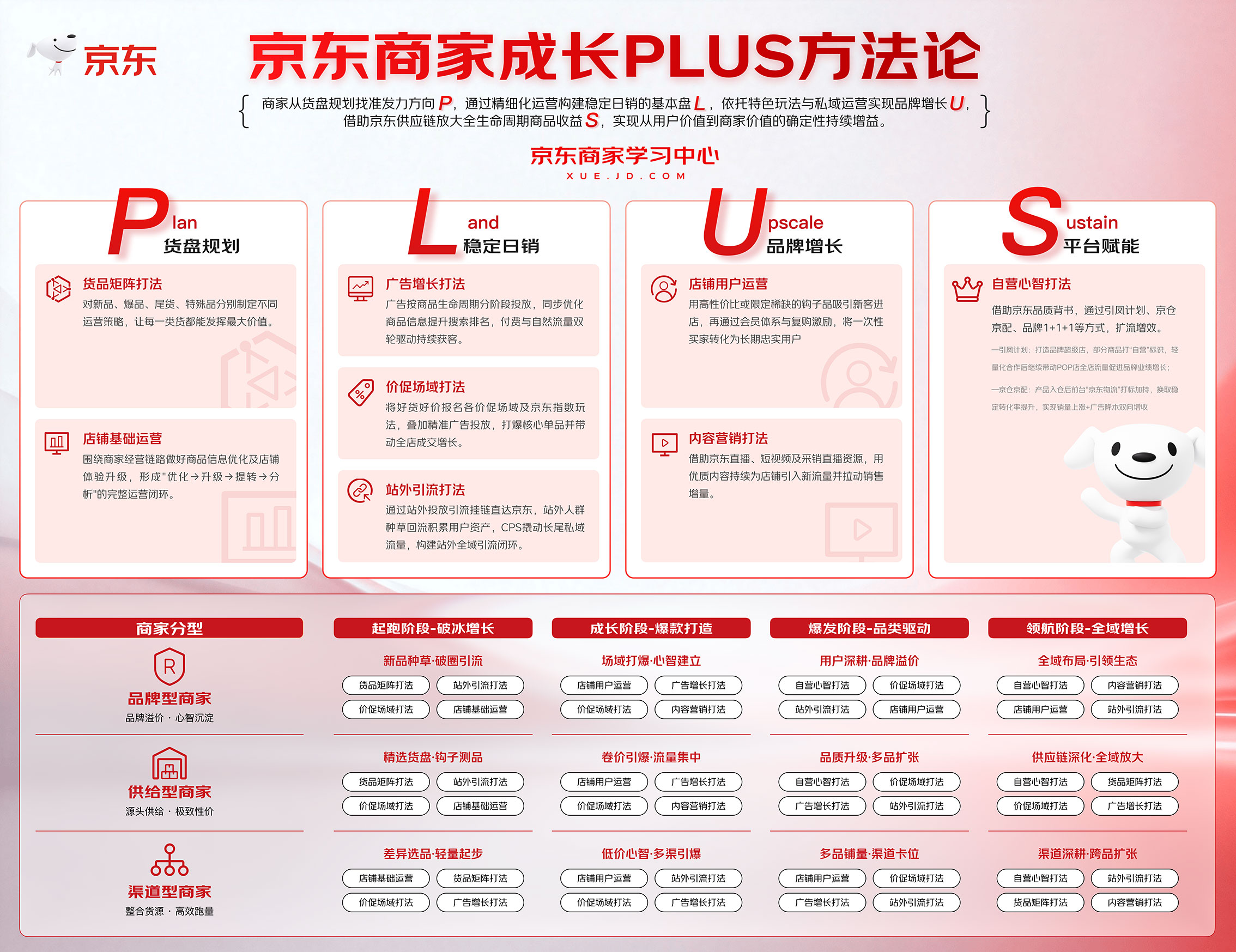
针对商家在新渠道面临的进阶困境及方法论落地难题,京东提炼出“商家成长PLUS方法论”。该方法论将商家经营全链路分为货盘规划(P)、稳定日销(L)、品牌增长(U)和平台赋能(S)四个阶段。针对这四个阶段,京东还梳理了货盘矩阵、广告增长等八大打法,为商家明确相对应的经营策略,将确定性增长路径转化为商家可实操的具体指南,助力其高效达成各阶段目标。

从用户视角来看,“商家成长PLUS方法论”与八大打法从产品、价格、服务三方面,帮助商家为用户创造价值,提高用户对品牌的信任与粘性。这相当于京东为商家的增长之路提供了新视角,而非陷入到无尽的内卷之中。

值得注意的是,“商家成长PLUS方法论”中还针对品牌型、供给型、渠道型三种不同类型的商家,分别规划了四个成长阶段,每个成长阶段内均有相应的可落地的实操打法。依托京东商家分型体系,商家在京东的经营便有了方向感和目标感,也更有耐心与信心深耕增长之道。

02

从起盘到放量,八大打法拆解增长路径

从底层逻辑来看,“商家成长PLUS方法论”遵循递进式增长路径:首先通过货品规划打造爆款,提升转化能力;其次在流量基础上,结合广告投放与站内活动稳定日销;最后依托用户资产沉淀与京东自营心智,进一步扩大经营规模。

亿邦动力发现,已经有多个品牌运用“商家成长PLUS方法论”的相关打法,获得了生意增长。

焦远哲通过优化货品矩阵与钩子品打法,有效解决了单爆品依赖及公域引流难题。目前,护舒宝旗舰店已梳理出拉新、主推及囤货爆发三档货盘。针对引流痛点,他表示:“我们选取低客单爆品作为钩子品,用高首购礼金展现极致性价比。当价格敏感型用户进店后,再通过关联推荐、搭配购引导浏览高客单主推品,实现‘低价引流、全店转化’。”

数据显示,护舒宝旗舰店内,近一年除液体卫生巾外的全系列实现1.5倍增长,其中裤系列实现3倍增长。今年618期间,弱势的裤品线实现近4倍增长,店铺货盘健康度大幅提升。钩子品打法落地后,店铺新客进店效率明显提升,前台自然流量占比提升10%,同时承接住了便宜包邮等场域的流量,带动了全店动销。

而在稳定日销阶段,像素品牌通过广告增长打法,使店铺从最初的新店冷启动阶段逐渐进入稳定增长阶段。据介绍,李旺龙在运用广告增长打法时,主要围绕“精准获取用户”和“提升转化效率”两个方向展开。

一方面,像素的运营团队会通过广告来测试不同产品、不同关键词以及不同人群的反馈,通过搜索习惯和购买需求等数据判断哪些产品更有市场潜力,进而明确了重点推广产品和目标受众,同时持续优化点击率、转化率以及投入产出比。

另一方面,像素通过站外引流方式,将品牌在其他渠道积累的用户资产引流至京东,实现全域流量联动。比如像素通过内容平台种草、达人合作等方式,把对品牌与产品感兴趣的消费者引导到京东成交,让京东成为品牌承接交易和用户沉淀的重要渠道,进而提升转化效率。

据悉,像素品牌入驻京东后,开店仅18天日销就突破万元大关,5个月闯进类目TOP6,市占率从0做到11.1%。

设计师饰品品牌盐岛,则是通过内容营销打法,在品牌增长阶段积累了大批忠实用户。

众所周知,饰品品牌需要通过一种介质向消费者表达设计理念、佩戴场景等关键信息,盐岛决定让“内容”承担起这个角色。在盐岛看来,每发布的一条内容,都是品牌与用户之间的一次对话,向用户讲述“一件饰品如何成为某个人日常生活里的点睛之笔”的故事。

据悉,盐岛的短视频内容主要以博主佩戴讲解为主,既能让用户感受饰品的细节,也能了解不同系列产品的佩戴场景与搭配要点。数据显示,盐岛曾在30天内发布128篇内容,获得249万次观看。值得注意的是,在高频高质量的内容营销下,店铺的内容销售占比达到了13.5%。盐岛用优质内容为店铺沉淀了真正认可品牌理念的高价值用户。

在平台赋能阶段,商家可通过自营心智打法扩大规模。其中,“品牌1+1+1”模式构建了“POP店+自营店+秒送店”矩阵,通过同页面展示促进不同产品协同增长;“引凤计划”则作为优质POP商家的成长加速器,通过轻量化合作自营与物流全托管入仓,助力商家精细化运营并快速打造爆品。

以雅萌为例,雅萌通过自营心智打法,使得单品转化提升45%、全店进店UV首月环比提升12.3%。

事实上,该方法论能精准解决各类商家痛点,助力运营进阶。正如焦远哲所言:“它覆盖了货品、流量、广告等全环节,相当于给商家搭好了一套完整的运营框架。”同时,方法论强调长期健康经营,重视自然流量造血与货品结构健康,助力商家实现可持续发展。

03

从一次增长到持续增长,京东重塑商家经营逻辑

对于商家而言,“商家成长PLUS方法论”不仅意味着可直接落地的经营打法,更是一条更加明确、更加可预期的成长路径。

据京东零售商家培训负责人透露,为了向商家提供更完备的培训体系,今年以来,京东零售商家培训团队的规模扩大了4倍。据介绍,除了京东商家学习中心推出了八大打法专项系列课程外,平台还会通过线上直播、线下商家培训活动,为商家做长期陪跑建设。

在亿邦动力看来,京东通过“商家成长PLUS方法论”结合线下培训,兼顾了商家成长的共性与个性化痛点。这彰显了京东对商家长效增长的持续关注与陪伴。

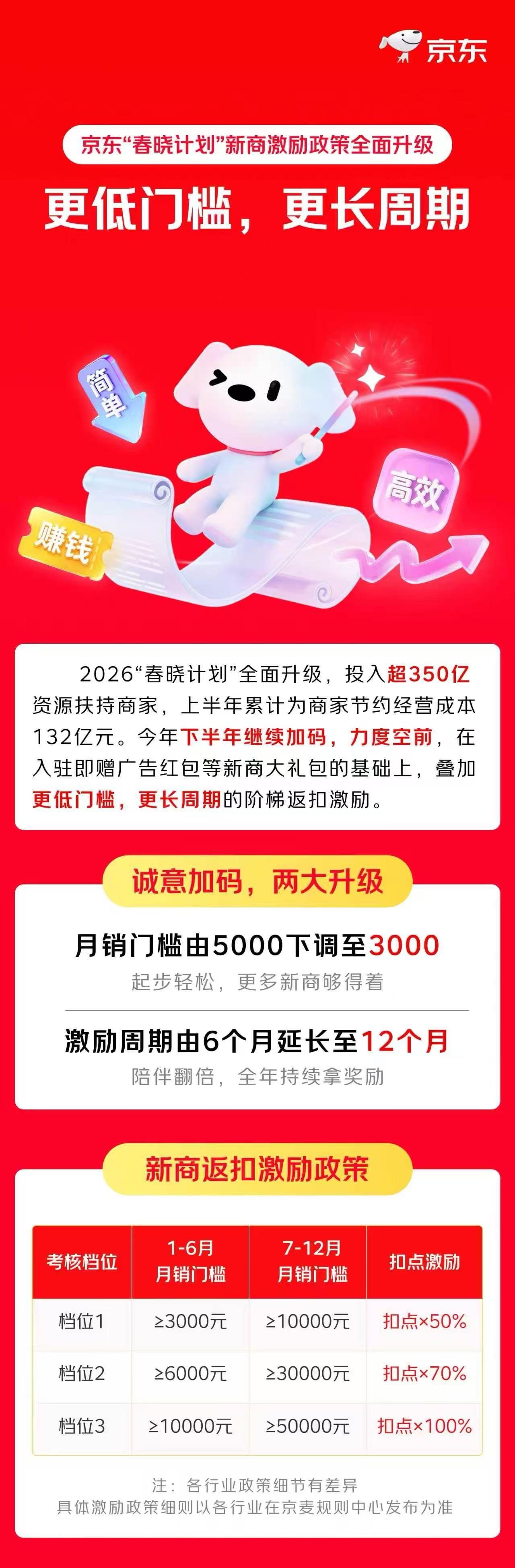
实际上,这也是京东持续扶持商家的缩影。今年京东全面升级“春晓计划”,投入350亿专项资源,下半年还将持续加码。通过下调返扣激励门槛、延长激励周期等举措,平台正切实帮助商家降本增效,陪伴其快速起步与成长。比如,和二季度相比,京东将返扣月销激励门槛从5000元下调至3000元,让更多的新商可以获得扶持。平台还将激励周期由6个月延长至12个月,对商家成长持续关注。

数据显示,今年上半年,京东新入驻商家数量同比增长超30%,其中有5223个新商家上半年销售额突破百万。同时期内,京东也已经为商家累计节约经营成本132亿元。

京东正在做的,是将沉淀多年的平台能力与行业经验转化为商家经营的加速器。而这个加速器并不只是帮助商家实现一次增长,而是帮助更多品牌建立持续增长的能力。当增长变得可以学习、可以复制、可以持续迭代,商家的经营信心、平台信任以及长期价值,也将在这样的正向循环中不断增强。

从更长远来看,随着电商竞争从“流量争夺”转向“经营能力建设”,平台输出系统化经营方法论,将成为新的竞争力。

真正的商业护城河,在于将增长规律内化为组织能力的确定性;当平台与商家在生态协同中彼此成就,增长的确定性便成为整个生态生生不息的必然。

文章来源:亿邦动力

广告
微信
朋友圈

FAQ回顾

京东商家成长PLUS方法论是什么?

是京东将多年沉淀的平台运营能力与行业经营经验系统梳理形成的商家实战成长体系,分为货盘规划、稳定日销、品牌增长、平台赋能4个阶段,配套八大可落地打法,针对不同类型商家给出分层增长路径,可复制性强。

京东商家成长PLUS方法论能解决商家哪些经营痛点?

可针对不同阶段商家的痛点给出解决方案,能帮助新商家快速完成冷启动起量,帮助成熟品牌优化货品结构、提升自然流量占比,助力商家建立品牌认知、获取精准流量、打造爆品,避免盲卷式经营。

京东针对新入驻商家有哪些扶持政策?

2024年京东全面升级春晓计划,投入350亿专项资源,将返扣月销激励门槛从5000元下调至3000元,激励周期从6个月延长至12个月,同时配套专属培训课程与陪跑服务,切实帮助商家降本增效。

运用京东商家成长PLUS方法论能获得什么增长效果?

已有多个品牌落地该方法论实现增长,比如护舒宝旗舰店非核心爆品线1年增长1.5倍,家居地毯品牌像素入驻5个月跻身类目TOP6,市占率达11.1%,雅萌运用相关打法后单品转化提升45%。

这么好看,分享一下?

朋友圈 分享

APP内打开

赞 +1
+1
微信好友 朋友圈 新浪微博 QQ空间
关闭
收藏成功
发送
/140 0