广告
加载中

DHL报告:从内容到购买 TikTok重塑全球消费路径

龚作仁 2026-07-13 19:20
龚作仁 2026/07/13 19:20

邦小白快读

EN
全文速览

本文核心是DHL发布的2026年全球电商趋势报告,核心结论是TikTok已经重塑全球消费路径,成为多个重点市场的主流社交购物渠道,核心干货整理如下

1. 核心数据显示,TikTok购物渗透率在多个国家已经远超Facebook和Instagram,马来西亚达到95%、泰国93%,巴西69%,沙特77%、英国72%,均领先竞争对手,在东南亚多国已经达到接近全民级别的渗透率。

2. TikTok的核心优势是打通了内容到交易的闭环,让用户在刷内容的过程中就能完成种草、下单全流程,契合当前消费者不喜欢生硬广告,偏好真实内容的购物习惯。

3. 未来普通消费者的网购路径会更短,越来越多的购买行为会直接发生在内容平台,购物选择也会更贴合个人兴趣。

本文基于DHL最新报告,揭示了全球社交电商的最新发展趋势,对品牌布局营销、渠道有重要参考价值,干货整理如下

1. 当前消费趋势和品牌投入存在错位:目前已经有63%的零售商在社交平台卖货,但只有45%的消费者会在社交平台完成购买,消费者越来越不信任生硬广告,更偏好真实体验、沉浸式内容带来的购物体验,更看重购物的真实感、信任感和即时下单的便利性。

2. 渠道格局已经发生变化:TikTok已经在东南亚、拉美、中东、欧洲等多个核心市场成为购物渗透率第一的社交平台,不仅占据Z世代的核心流量,还在向全年龄层渗透,优势已经拉开明显代差。

3. 品牌未来布局方向:社交电商的核心已经从投广告转向把兴趣高效转化为订单,品牌需要调整认知,把TikTok从营销阵地转为核心交易渠道布局。

本文基于DHL2026全球电商趋势报告,给跨境卖家揭示了全球社交电商的最新机会和方向,干货整理如下

1. 新的增长市场机会:TikTok已经在马来西亚、泰国、巴西、沙特、英国等多个全球核心出海市场拿下购物渗透率第一的位置,其中东南亚的马来西亚、泰国渗透率超过90%,接近全民网购,拉美、中东、欧洲市场渗透率也远高于传统社交平台,流量红利明显。

2. 消费需求变化:当前消费者已经厌倦生硬的硬广,更愿意为真实的达人体验、用户评价和沉浸式内容买单,偏好更短的购物转化链路,传统社交平台导流外链的模式转化率已经越来越低。

3. 实操提示:卖家可以优先布局TikTok的闭环电商,抓住Z世代以及正在外溢的全年龄层流量,同时调整内容策略,多做真实接地气的内容,匹配用户需求提升转化。

DHL报告揭示的全球社交电商新变化,给出海工厂的转型和业务拓展带来了重要启示,干货整理如下

1. 产品生产设计需求的新变化:当前全球电商已经进入内容驱动消费、兴趣推荐对接交易的新阶段,消费者更偏好基于真实使用体验的商品推荐,工厂在产品设计和生产端,需要更贴合不同兴趣圈层用户的个性化需求,突出能让消费者感知到真实体验的产品卖点。

2. 数字化和电商转型的新启示:TikTok打造的内容到交易的闭环模式,大幅降低了工厂直接触达终端消费者的门槛,工厂不需要完全依赖传统大渠道、大批发商,可以通过布局TikTok内容电商直接对接C端用户,缩短交易链路,提升自身利润空间。

3. 新商业机会:TikTok在全球多个核心市场都有极高的用户渗透率,并且用户群体正在从Z世代向全年龄层拓展,工厂做自有品牌出海,可以优先布局该平台抓住流量红利。

DHL的这份报告揭示了全球社交电商的最新发展趋势,给电商相关服务商指明了行业方向和新机会,干货整理如下

1. 行业发展新趋势:全球社交电商正迎来新一轮转型,已经从早期传统社交平台的导流外链模式,转向内容即交易的闭环模式,TikTok代表的新型社交电商已经在多个核心市场取代传统平台成为主流,整个行业都在向短转化链路、内容驱动交易的方向升级。

2. 客户普遍存在的痛点:当前很多品牌和卖家的认知还没有跟上变化,依然只把社交平台当成营销投放阵地,没有布局闭环交易,导致流量投入很多但转化率不高,品牌的投入热情和消费者实际购买行为存在明显落差,商家普遍有转型的需求。

3. 新的业务机会:服务商可以围绕TikTok的闭环电商生态,开发配套的相关服务,比如短视频内容制作、直播运营、闭环交易链路的履约对接等,帮助商家完成转型,匹配市场需求。

DHL报告披露的全球社交电商发展情况,给各类电商和社交平台的发展提供了重要参考,干货整理如下

1. 商家和消费者对平台的核心需求已经转变:当前市场需要的是能够打通内容种草到交易全流程的闭环平台,满足消费者对真实内容体验、即时下单的需求,只做导流赚广告费的传统模式已经跟不上需求。

2. TikTok的最新做法值得平台参考:TikTok把短视频、直播、达人内容和商品链接自然融合,打造了内容即交易的完整闭环,契合当前商家和消费者的需求,因此获得了远高于传统社交平台的渗透率,拉开了明显的代差优势。

3. 需要规避的发展风向:如果平台只依赖传统存量用户,停留在导流的旧模式,不推进交易闭环的建设,会逐渐跟不上新一代消费者和商家的需求,慢慢丧失市场竞争力,需要及时调整运营和发展方向。

本文基于DHL2026年全球电商趋势报告,披露了全球社交电商领域的最新产业动向,对产业研究有较高的参考价值,干货整理如下

1. 产业最新动向:全球社交电商正迎来新一轮转型,TikTok代表的视频内容驱动、兴趣推荐直接导向交易的新型社交电商模式,已经在全球多个核心市场取代传统社交平台成为主流购物渠道,渗透率和传统平台已经拉开明显代差,TikTok正在从内容平台逐步升级为全球电商交易体系的关键基础设施。

2. 产业新发现的问题:当前品牌端对社交电商的认知存在明显错位,统计显示63%的零售商已经布局社交平台销售,但只有45%的消费者会在社交平台完成购买,品牌投入和消费者实际需求之间存在明显落差。

3. 新型商业模式的特点:区别于传统社交平台依赖外链跳转导流的模式,新型社交电商打造了从内容种草、建立信任到即时下单的完整闭环,更契合当前消费者的行为习惯,目前用户群体正在从Z世代向全年龄层渗透,长期发展潜力巨大。

返回默认
声明:快读内容全程由AI生成,请注意甄别信息。如您发现问题,请发送邮件至 run@ebrun.com 。

我是 品牌商 卖家 工厂 服务商 平台商 研究者 帮我再读一遍。

Quick Summary

This article is centered on DHL's 2026 Global E-commerce Trends Report. Its core conclusion is that TikTok has reshaped global consumer journeys and become a mainstream social shopping channel in multiple key markets. Key takeaways are as follows:

1. Core data shows TikTok's shopping penetration rate has already far outpaced Facebook and Instagram in numerous countries: 95% in Malaysia, 93% in Thailand, 69% in Brazil, 77% in Saudi Arabia, and 72% in the UK. It leads all competitors and has reached near-universal penetration in multiple Southeast Asian markets.

2. TikTok's core advantage lies in its closed-loop integration of content and transaction, allowing users to complete the entire journey from product discovery to checkout while browsing content. This aligns with modern consumers' preference for authentic content over intrusive, hard-sell advertisements.

3. Going forward, the online consumer journey will become shorter, with a growing share of purchases completed directly on content platforms, and shopping choices will better align with individual interests.

This article draws on DHL's latest report to outline the latest development trends of global social commerce, offering key insights for brands planning their marketing and channel strategies. Key takeaways are as follows:

1. A mismatch currently exists between consumer trends and brands' resource allocation: 63% of retailers already sell via social platforms, but only 45% of consumers complete purchases on social media. Consumers increasingly distrust hard-sell ads, and instead prioritize authentic experience, immersive content shopping journeys, as well as trust and the convenience of immediate checkout.

2. The channel landscape has shifted: TikTok has become the social platform with the highest shopping penetration across core markets including Southeast Asia, Latin America, the Middle East, and Europe. It not only dominates core Gen Z traffic but is also expanding across all age groups, with a clear gap over its competitors.

3. Strategic direction for brands going forward: The core of social commerce has shifted from advertising to efficiently converting user interest into orders. Brands need to update their strategy and reposition TikTok from a pure marketing channel to a core transaction channel.

Based on DHL's 2026 Global E-commerce Trends Report, this article outlines the latest opportunities and directions for cross-border sellers in global social commerce. Key takeaways are as follows:

1. New growth market opportunities: TikTok has captured the top position in shopping penetration across multiple key export markets including Malaysia, Thailand, Brazil, Saudi Arabia, and the UK. Penetration exceeds 90% in Malaysia and Thailand (near-universal adoption for online shopping), and it is already far higher than traditional social platforms in Latin America, the Middle East, and Europe, creating significant traffic opportunities.

2. Shifts in consumer demand: Today's consumers are tired of intrusive hard-sell ads, and are more willing to purchase based on authentic influencer experiences, real user reviews, and immersive content. They prefer shorter conversion funnels, and the traditional external link redirect model used by legacy social platforms is seeing steadily declining conversion rates.

3. Practical recommendations: Sellers should prioritize building out TikTok's closed-loop e-commerce to capture Gen Z traffic and the fast-growing opportunity across all age groups. They should also adjust their content strategy to prioritize authentic, relatable content that matches user demand to drive higher conversion.

The new shifts in global social commerce outlined in DHL's report offer important insights for the transformation and business expansion of export-focused factories. Key takeaways are as follows:

1. New shifts in product design and manufacturing demand: Global e-commerce has entered a new stage of content-driven consumption and interest-based transaction matching, where consumers prefer product recommendations rooted in real usage experience. Factories need to adapt product design and manufacturing to the personalized needs of different interest-based user groups, and highlight product卖点 that let consumers experience authentic use cases.

2. New insights for digital and e-commerce transformation: TikTok's closed content-to-transaction model has significantly lowered the barrier for factories to reach end consumers directly. Factories no longer need to fully rely on traditional large channels and wholesalers; they can connect directly to end consumers via TikTok content e-commerce, shorten the transaction chain, and increase profit margins.

3. New business opportunities: TikTok has very high user penetration across multiple core global markets, and its user base is expanding from Gen Z to all age groups. Factories launching their own D2C brands globally can prioritize the platform to capture its traffic opportunities.

DHL's report outlines the latest development trends of global social commerce and points out new industry directions and opportunities for e-commerce service providers. Key takeaways are as follows:

1. New industry trends: Global social commerce is undergoing a new round of transformation, shifting from the legacy external link redirect model of early traditional social platforms to a "content is commerce" closed-loop model. The new generation of social commerce represented by TikTok has replaced traditional platforms as the mainstream in multiple core markets, and the entire industry is upgrading toward shorter conversion funnels and content-driven transactions.

2. Common pain points among clients: Many brands and sellers have not updated their strategy to match the new landscape, and still treat social platforms solely as marketing channels rather than building out closed-loop transactions. This leads to low conversion despite heavy marketing spending, creating a clear gap between brand investment and actual consumer purchasing behavior, and leaving widespread unmet demand for transformation support among merchants.

3. New business opportunities: Service providers can develop supporting products and services built around TikTok's closed-loop e-commerce ecosystem, such as short video content production, live stream operation, and fulfillment integration for closed transaction chains, to help merchants complete their transformation and match market demand.

The global social commerce data outlined in DHL's report offers important reference insights for the development of all types of e-commerce and social platforms. Key takeaways are as follows:

1. The core demand of merchants and consumers for platforms has changed: The market now demands closed-loop platforms that integrate the full journey from content discovery to transaction, to meet consumers' demand for authentic content experiences and immediate checkout. The legacy model of only driving traffic for advertising revenue can no longer meet current market needs.

2. TikTok's approach offers a valuable reference for platforms: TikTok seamlessly integrates short videos, live streams, influencer content and product links to build a complete "content is commerce" closed loop that matches the current needs of both merchants and consumers. This has allowed it to achieve far higher penetration than traditional social platforms, creating a clear generational advantage.

3. Key risks to avoid: Platforms that only rely on legacy existing users, stick to the outdated traffic redirect model, and delay building out transaction closed loops will gradually fall out of step with the needs of the new generation of consumers and merchants, eroding market competitiveness over time. They need to adjust their operation and development strategy promptly.

Based on DHL's 2026 Global E-commerce Trends Report, this article outlines the latest industry developments in global social commerce, offering high reference value for industry research. Key takeaways are as follows:

1. Latest industry developments: Global social commerce is undergoing a new round of transformation. The new social commerce model represented by TikTok—video content-driven, with interest-based recommendation directly connecting to transaction—has replaced traditional social platforms as the mainstream shopping channel in multiple core global markets. Its penetration rate has opened a clear generational gap with legacy platforms, and TikTok is gradually evolving from a content platform to a core infrastructure of the global e-commerce transaction system.

2. A key identified industry mismatch: There is a clear cognitive gap among brands regarding social commerce. Data shows 63% of retailers have already set up sales on social platforms, but only 45% of consumers complete purchases via social channels, creating a notable divergence between brand investment and actual consumer demand.

3. Characteristics of the new business model: Unlike traditional social platforms that rely on external link redirects, the new generation of social commerce builds a complete closed loop from content discovery and trust-building to immediate checkout, which aligns far better with current consumer behavior patterns. Its user base is expanding from Gen Z to all age groups, giving it enormous long-term growth potential.

Disclaimer: The "Quick Summary" content is entirely generated by AI. Please exercise discretion when interpreting the information. For issues or corrections, please email run@ebrun.com .

I am a Brand Seller Factory Service Provider Marketplace Seller Researcher Read it again.

近日,DHL发布了2026年全球电商趋势报告。报告显示,TikTok已在多个重点市场成为主流购物渠道。TikTok购物渗透率在马来西亚和泰国分别高达95%和93%;在巴西,69%的消费者有过TikTok购物经历,超过Instagram和Facebook。

这组数据背后,全球社交电商正迎来新一轮转型。越来越多品牌仍在把社交平台视作营销阵地,但消费者的购买行为已经给出了更清晰的答案:真正决定转化的,不只是广告触达和达人投放,而是谁更能建立真实感、信任感和即时下单的冲动。

报告指出,当前已有63%的零售商在社交平台上销售商品,但通过社交媒体完成购买的消费者只有45%,这意味着品牌端的投入热情与消费者端的实际购买行为之间,已经出现落差。正是在这样的背景下,TikTok的优势开始被进一步放大。

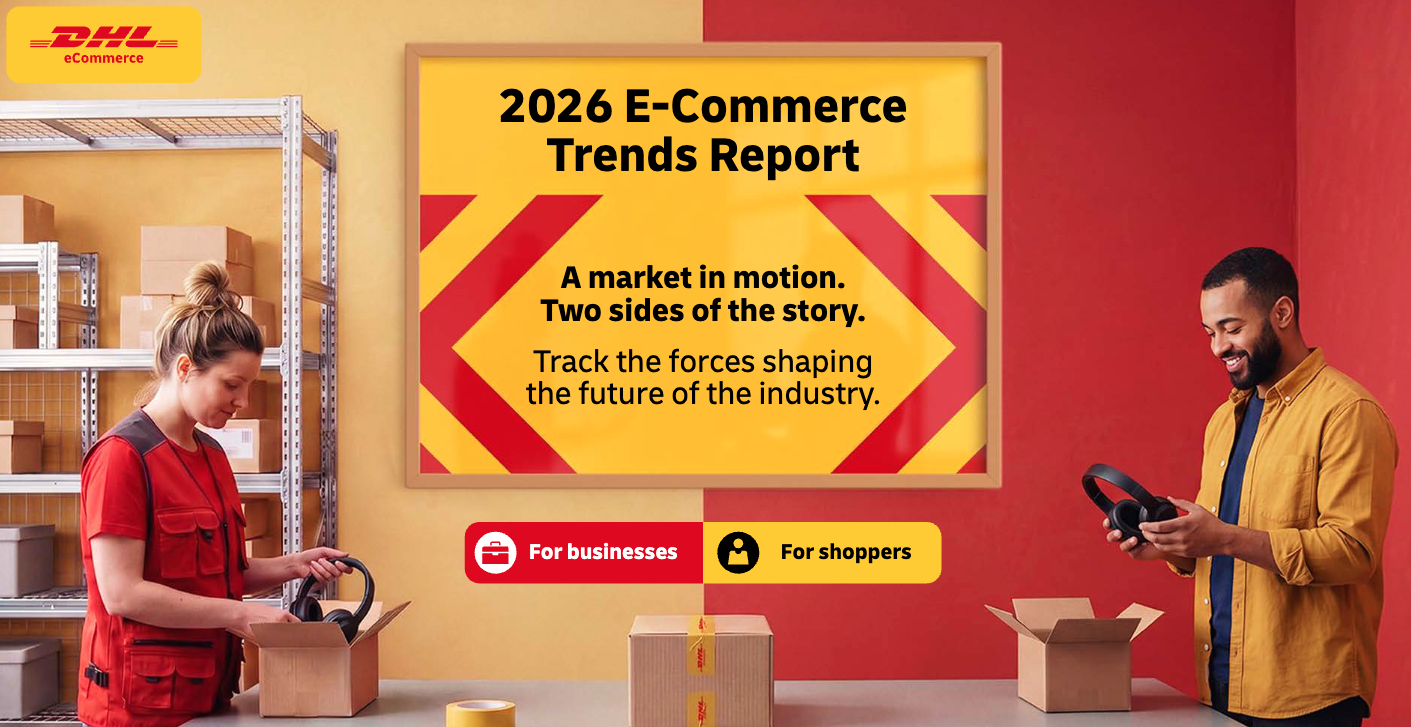
DHL报告

从全球市场表现来看,TikTok已不只是 “高增长平台”,在多个市场,TikTok正在成为消费者的首选社交购物渠道。在马来西亚、泰国、巴西、沙特阿拉伯、英国、德国、意大利、法国、西班牙等市场,TikTok的购物渗透率已同时超越Facebook和Instagram,成为当地消费者最常消费的社交平台。

更关键的是,TikTok在这些市场的优势并非"略高一筹",而是已经拉开了明显的代差。在马来西亚和泰国,TikTok的购物渗透率均超过90%,接近全民级别。马来西亚TikTok渗透率95%,远高于Facebook的50%和Instagram的33%;泰国则达到93%,相比Facebook的67%和Instagram的28% 同样形成压倒性领先。

在英国和沙特,TikTok也依然保持明显领先:在沙特,TikTok渗透率达到77%,不仅高于Instagram的58%,也大幅领先Facebook的38%;在英国,TikTok的购物渗透率为72%,高于Facebook的62% 和Instagram的41%。

相比之下,Facebook虽然在尼日利亚、摩洛哥和部分欧洲国家依然拥有用户基础,但更多体现的是传统社交网络的存量优势;TikTok所代表的,则是视频内容驱动消费、兴趣推荐直接导向交易的新型社交电商逻辑。

媒体报道:DHL最新电商报告称,AI和社交媒体重塑全球电商

TikTok真正的优势,还在于它比Facebook更接近 “内容即交易” 的电商闭环。Facebook时代,品牌更多依赖广告、社群和外链跳转来推动成交,平台的作用主要是导流;而TikTok把短视频、直播、达人内容与商品链接更自然地融为一体,让消费者在 “看内容” 的同时完成 “被种草”“被说服” 以及 “立即购买”。

这也是为什么在社交电商出现 “商家想卖、消费者未必愿买” 的情况下,TikTok依旧能持续跑出更高的购买渗透率。消费者越来越不相信生硬的广告,却越来越愿意为真实体验、用户评论和沉浸式内容买单,而这恰恰是TikTok最强的能力边界。

从代际结构来看,TikTok的潜力还在继续释放。DHL报告指出,千禧一代、X世代和婴儿潮一代整体更偏向Facebook,而Z世代的重心则明显放在TikTok上。值得注意的是,TikTok并没有停留在 “只吸引年轻人” 的阶段。在一些市场,它已经开始向更广泛的年龄层外溢,并以更高频、更强互动和更短转化链路,重塑社交平台的商业价值。

对品牌而言,这意味着未来社交电商的关键,不再只是 “在哪里投广告”,而是 “哪个平台最能把兴趣高效转化为订单”。从这个意义上说,TikTok正在从内容平台,逐步升级为全球电商交易体系中的关键基础设施。

注:文/龚作仁,文章来源:Laborer,本文为作者独立观点,不代表亿邦动力立场。

文章来源:Laborer

广告
微信
朋友圈

FAQ回顾

TikTok在全球社交电商领域的表现如何?

在马来西亚、泰国、巴西、沙特、英国等多个重点市场,TikTok购物渗透率已超越Facebook和Instagram,成为当地消费者最常消费的社交平台,其中马来西亚、泰国的TikTok购物渗透率分别高达95%、93%,接近全民级别。

TikTok社交电商的核心优势是什么?

TikTok将短视频、直播、达人内容与商品链接自然融合,打造了「内容即交易」的电商闭环,用户可在浏览内容的同时完成种草到下单的全链路,契合消费者对真实体验、沉浸式内容的消费偏好。

当前全球社交电商存在什么供需落差?

当前已有63%的零售商在社交平台布局销售业务,但通过社交媒体完成购买的消费者占比仅为45%,品牌端对社交电商的投入热情,与消费者端的实际购买行为之间已出现明显落差。

TikTok的用户群体覆盖有什么特点?

TikTok核心用户以Z世代为主,目前已打破「只吸引年轻人」的标签,开始向千禧一代、X世代等更广泛年龄层外溢,用户覆盖规模持续扩大,平台商业价值也在同步提升。

这么好看,分享一下?

朋友圈 分享

APP内打开

+1
+1
微信好友 朋友圈 新浪微博 QQ空间
关闭
收藏成功
发送
/140 0