广告
加载中

Vbot 维他动力推出旗舰级四足机器人开发平台

龚作仁 2026-07-13 13:00
龚作仁 2026/07/13 13:00

邦小白快读

EN
全文速览

本文核心是介绍Vbot维他动力最新发布的旗舰级四足机器人开发平台——大头EDU版,相关干货信息如下

1. 这款产品的核心价值是降低具身智能研发门槛,开发者不需要花费大量时间和成本从零搭建整机、调试基础功能,可直接在具备基础能力的机器狗上开发各类应用,适合极客爱好者、研发人员使用。

2. 产品核心配置拉满,标配128 TOPS端侧算力、深度双目摄像头与16线激光雷达,自带智能跟随、建图避障等基础能力,还做了圆角防夹安全设计,适配商场、医院、家庭等各类生活空间。

3. 产品支持各类拓展,开放五类开发接口,可接入机械臂完成各类精细化操作,能适配科研开发、商业服务等多种需求。

本文展现了Vbot维他动力在四足机器人赛道的产品布局,给同类品牌商提供了这些干货参考

1. 赛道方向判断:当前四足机器人正处于从技术验证转向规模化应用的关键节点,自主化是核心发展方向,具身智能落地生活空间是未来重要增长点,可瞄准商业服务、科研实验室、企业研发、极客爱好者四大核心群体布局产品。

2. 产品研发逻辑:明确生活空间机器人需要自然交互、全地形移动、通用操作三大能力底座,产品设计围绕该底座做适配,增加安全防护设计,适配生活场景使用需求。

3. 品牌生态玩法:通过开放开发平台、开放接口,携手开发者共建场景生态,将产品打造成场景开发的能力底座,拓展产品落地边界,提升品牌影响力。

针对四足机器人领域的卖家,本文整理出这些干货机会和信息

1. 赛道动向清晰:当前四足机器人正处于从技术验证到规模化应用的跨越期,自主化、具身智能是核心发展方向,落地场景从工业逐步拓展到家庭、公共服务、科研教育等生活空间,新的增长市场已经成型,存在大量蓝海机会。

2. 需求痛点明确:广大开发者研发具身智能应用,面临从零搭建成本高、调试周期长、本体与外设协同难度大的痛点,具备高性能、开放接口的成熟开发平台产品缺口大,需求旺盛。

3. 合作机会明确:Vbot正在开放生态,面向场景方案商、行业客户、开发者招募合作伙伴,卖家可对接参与生态建设,切入四足机器人新兴市场,获得增长机会。

四足机器人相关生产工厂可从本文获取这些干货启示和机会

1. 产品生产设计需求:当前市场偏好模块化、标准化设计的四足机器人产品,需要预留标准化通用拓展接口,支持硬件快拆,兼容各类外设,无需二次改造就能快速换装,这类设计更符合下游客户需求,工厂可调整设计生产思路。

2. 商业机会清晰:下游市场对四足机器人的需求已经不局限于单一移动产品,需要可拓展、能适配工业巡检、灾后救援、科研教学、家庭服务等多元场景的产品,工厂可针对性布局相关产品线,抓住增长机会。

3. 转型启示:四足机器人正走向规模化应用,开放化、模块化是核心趋势,工厂可推进数字化生产升级,适配模块化定制生产的需求,更好对接品牌商和开发者的定制化需求。

机器人领域相关服务商可从本文获取这些干货信息

1. 行业发展趋势:四足机器人行业已经进入从技术验证到规模化应用的关键阶段,自主化、具身智能是核心发展方向,落地场景正在从工业领域拓展到家庭、商场、物业、医院等生活空间,行业整体处于快速增长期,市场需求充足。

2. 核心客户痛点:当前广大开发者研发具身智能应用,普遍存在从零搭建整机成本高、基础功能调试周期长、四足本体与外部拓展硬件协同难度大的痛点,亟需成熟的现成开发平台降低入门门槛。

3. 业务发展方向:服务商可围绕开放开发平台,配套提供开发技术支持、外设适配对接、场景方案落地服务等,对接广大开发者和企业客户的需求,抓住行业增长红利,拓展自身业务边界。

机器人相关平台商可从本文获取这些干货参考

1. 市场核心需求:开发者群体对开放型开发平台需求强烈,需要软硬件一体化、提供标准化接口、完整开发支持的平台,帮助降低研发成本,缩短应用验证周期,平台可针对性优化自身服务。

2. 平台布局方向:可围绕四足机器人具身智能开发搭建生态,对接上游硬件厂商、下游开发者和场景方案商,搭建开发者社区促进生态协作,打造完整的开发服务链条。

3. 招商运营方向:当前四足机器人落地重心正在向生活空间场景转移,家庭服务、公共服务、科研教育等领域需求增长明显,平台可针对性调整招商方向,引入相关场景的方案商和硬件厂商,完善生态布局,适配市场需求变化。

对机器人产业研究者来说,本文透露了这些值得研究的产业干货

1. 产业新动向:当前四足机器人行业正处于从技术验证到规模化应用的关键跨越阶段,自主化已经成为行业共识和核心发展方向,具身智能是行业研发的核心热点,落地场景逐步从工业领域拓展到大众生活空间,产业形态正在发生新变化。

2. 技术研发新方向:行业已经明确,生活空间机器人需要具备自然交互能力、全地形移动能力、通用操作能力三大能力底座,机器狗加机械臂是当前实现“移动+交互+操作”能力的代表性技术路线,解决了具身智能进入生活空间的多个核心问题。

3. 商业模式新探索:行业正在探索开放开发平台的生态化商业模式,通过开放本体能力和开发接口,吸引多方开发者共建场景生态,拓展产品落地边界,这种新的商业模式值得深入研究。

返回默认
声明:快读内容全程由AI生成,请注意甄别信息。如您发现问题,请发送邮件至 run@ebrun.com 。

我是 品牌商 卖家 工厂 服务商 平台商 研究者 帮我再读一遍。

Quick Summary

This article centers on Datou EDU, the new flagship quadruped robot development platform recently released by Vbot Vital Power, with key takeaways as follows:

1. The core value of this product is lowering the barrier to embodied AI research and development. Instead of spending massive time and cost building a full robot from scratch and debugging basic functions, developers can build all types of applications directly on this dog robot with pre-built core capabilities. It is ideal for geek enthusiasts and R&D professionals.

2. The platform comes with top-tier core configurations: a standard 128 TOPS of edge computing power, a depth stereo camera, a 16-line LiDAR, and built-in basic functions including intelligent tracking, mapping and obstacle avoidance. It also features a rounded, pinch-proof safety design that adapts it for all types of living spaces such as shopping malls, hospitals, and residential homes.

3. The product supports extensive customization, with five categories of open development interfaces. It can integrate robotic arms to complete various fine-grained operations, and meets diverse requirements for scientific research development and commercial services.

This article outlines Vbot Vital Power’s product strategy in the quadruped robot track, offering key insights for peer brands:

1. Track direction: The quadruped robot industry is currently at a critical inflection point, shifting from technology validation to scaled deployment. Autonomy is the core development direction, and embedding embodied AI into everyday living spaces will be a key future growth driver. Brands can target four core customer groups: commercial service providers, research laboratories, corporate R&D teams, and hobbyist geeks.

2. Product R&D logic: The industry has clarified that robots designed for living spaces need three core capability pillars: natural interaction, all-terrain mobility, and general-purpose manipulation. Product design should align with this framework, add safety features, and adapt to the requirements of daily living scenarios.

3. Ecosystem strategy: By launching an open development platform with open interfaces, brands can collaborate with developers to co-build scenario-based ecosystems, position products as capability foundations for scenario development, expand deployment boundaries, and boost brand influence.

This article summarizes key opportunities and insights for sellers operating in the quadruped robot sector:

1. Clear industry trajectory: The quadruped robot industry is currently transitioning from technology validation to scaled deployment. Autonomy and embodied intelligence are core development directions, and deployment scenarios are gradually expanding from industrial settings to living spaces including homes, public services, and research and education. A new growth market has emerged, with plenty of blue ocean opportunities.

2. Well-defined pain points: Most developers building embodied AI applications face high costs for building systems from scratch, long debugging cycles, and difficulties in coordinating robot bodies with external peripherals. There is strong unmet demand for mature development platforms with high performance and open interfaces.

3. Clear partnership opportunities: Vbot is opening up its ecosystem and recruiting partners among scenario solution providers, industry clients, and developers. Sellers can collaborate in ecosystem building, enter this emerging quadruped robot market, and capture new growth opportunities.

Manufacturers working on quadruped robots can draw the following key insights and opportunities from this article:

1. Production design requirements: The current market favors quadruped robot products with modular, standardized design. Products need to reserve standardized universal expansion interfaces, support quick hardware disassembly, and be compatible with various peripherals to enable fast replacement without secondary modification. This design better meets downstream customer demand, so factories can adjust their design and production strategies accordingly.

2. Clear commercial opportunities: Downstream market demand for quadruped robots is no longer limited to single-function mobile products. Customers need expandable products that can adapt to diverse scenarios including industrial inspection, post-disaster rescue, research and education, and home services. Factories can build targeted product lines to capture these growth opportunities.

3. Transformation insights: As quadruped robots move toward scaled deployment, open architecture and modular design are core industry trends. Factories can advance digital production upgrades to adapt to the requirements of modular customized production, and better meet the customization needs of brands and developers.

Service providers in the robotics sector can draw the following key insights from this article:

1. Industry development trend: The quadruped robot industry has entered a critical phase of transitioning from technology validation to scaled deployment. Autonomy and embodied intelligence are core development directions, and deployment scenarios are expanding from industrial settings to living spaces including homes, shopping malls, properties, and hospitals. The overall industry is in a period of rapid growth with strong market demand.

2. Core customer pain points: Most developers building embodied AI applications currently face common pain points: high costs for building full systems from scratch, long debugging cycles for basic functions, and difficulties in coordinating the quadruped body with external expansion hardware. There is urgent demand for mature, ready-to-use development platforms to lower entry barriers.

3. Business development direction: Service providers can build offerings around open development platforms, provide supporting services including development technical support, peripheral adaptation and docking, and scenario solution deployment, meet the needs of a broad base of developers and corporate clients, capture industry growth dividends, and expand their own business boundaries.

Robot industry marketplace operators can draw the following key insights from this article:

1. Core market demand: Developer groups have strong demand for open development platforms that integrate software and hardware, provide standardized interfaces and complete development support to cut R&D costs and shorten application validation cycles. Platforms can optimize their services to target this demand.

2. Platform layout direction: Operators can build an ecosystem centered on quadruped robot-based embodied AI development, connect upstream hardware manufacturers with downstream developers and scenario solution providers, build developer communities to facilitate ecosystem collaboration, and create a complete development service chain.

3. Merchant recruitment and operation direction: The deployment focus of quadruped robots is now shifting toward living space scenarios, with demand growing notably in home services, public services, research and education. Platforms can adjust their recruitment strategy accordingly, bring in solution providers and hardware manufacturers focused on these scenarios, improve ecosystem layout, and adapt to changing market demand.

For robotics industry researchers, this article reveals the following industry insights worth in-depth study:

1. New industry trends: The quadruped robot industry is currently at a critical transition stage from technology validation to scaled deployment. Autonomy has become an industry consensus and core development direction; embodied intelligence is the central R&D focus of the industry. Deployment scenarios are gradually expanding from industrial settings to mass consumer living spaces, and the industry structure is undergoing new changes.

2. New technical R&D directions: The industry has reached a consensus that robots for living spaces require three core capability pillars: natural interaction, all-terrain mobility, and general-purpose manipulation. The "robot dog + robotic arm" configuration is currently the representative technical route to achieve "mobility + interaction + manipulation" capabilities, solving multiple core problems for embedding embodied intelligence into living spaces.

3. New business model exploration: The industry is exploring an ecosystem-based business model centered on open development platforms. By opening up robot body capabilities and development interfaces, platforms attract a wide range of developers to co-build scenario ecosystems and expand product deployment boundaries. This new business model is worthy of in-depth research.

Disclaimer: The "Quick Summary" content is entirely generated by AI. Please exercise discretion when interpreting the information. For issues or corrections, please email run@ebrun.com .

I am a Brand Seller Factory Service Provider Marketplace Seller Researcher Read it again.

7月 13日,Vbot维他动力发布超能机器狗「大头EDU版」。

四足机器人行业正经历从技术验证到规模化应用的关键跨越,自主化已成为四足机器人发展的核心方向。面向商业服务、机器人实验室、企业级研发和极客爱好者四大核心群体,Vbot维他动力发布超能机器狗「大头EDU版」。

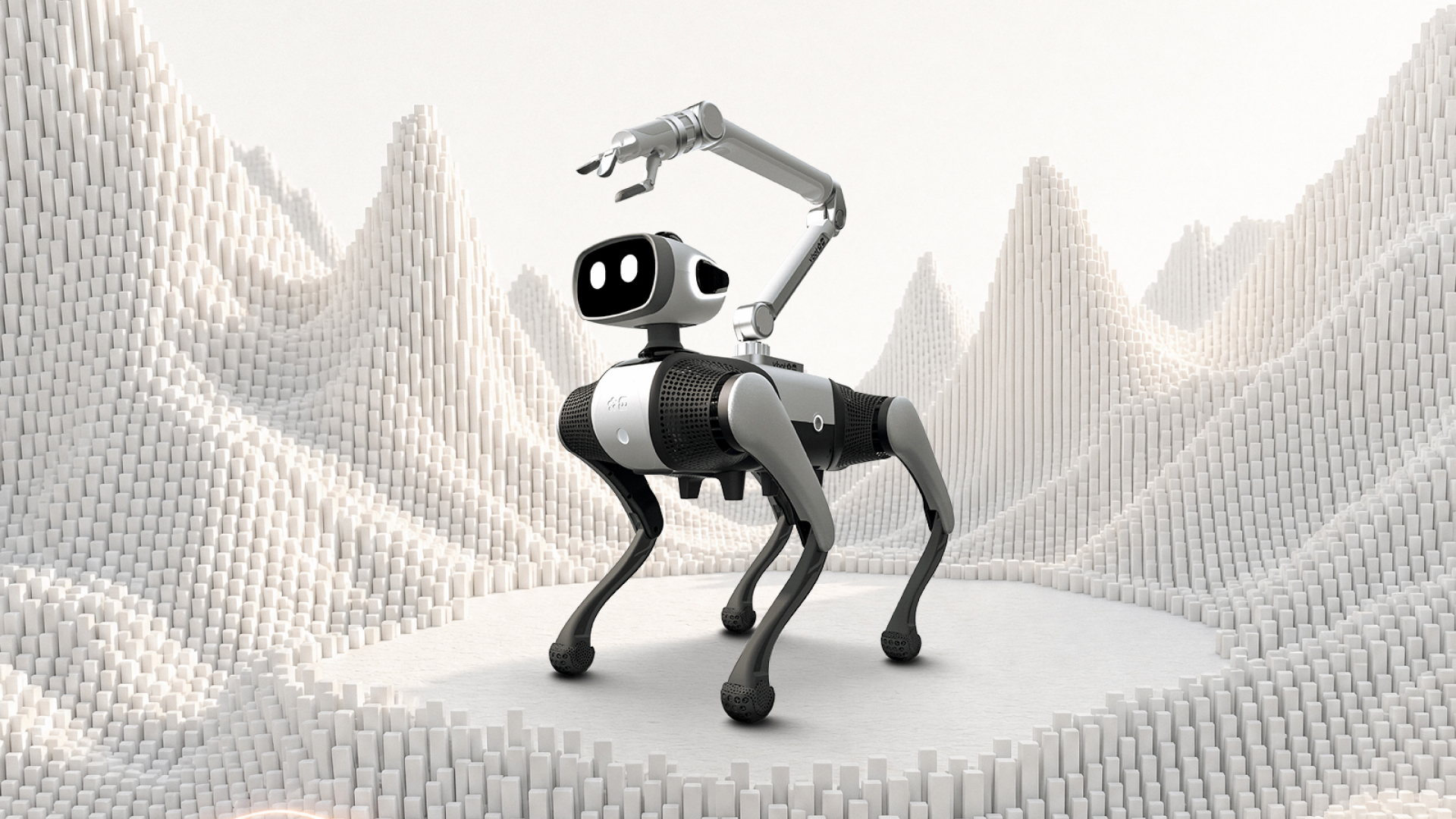
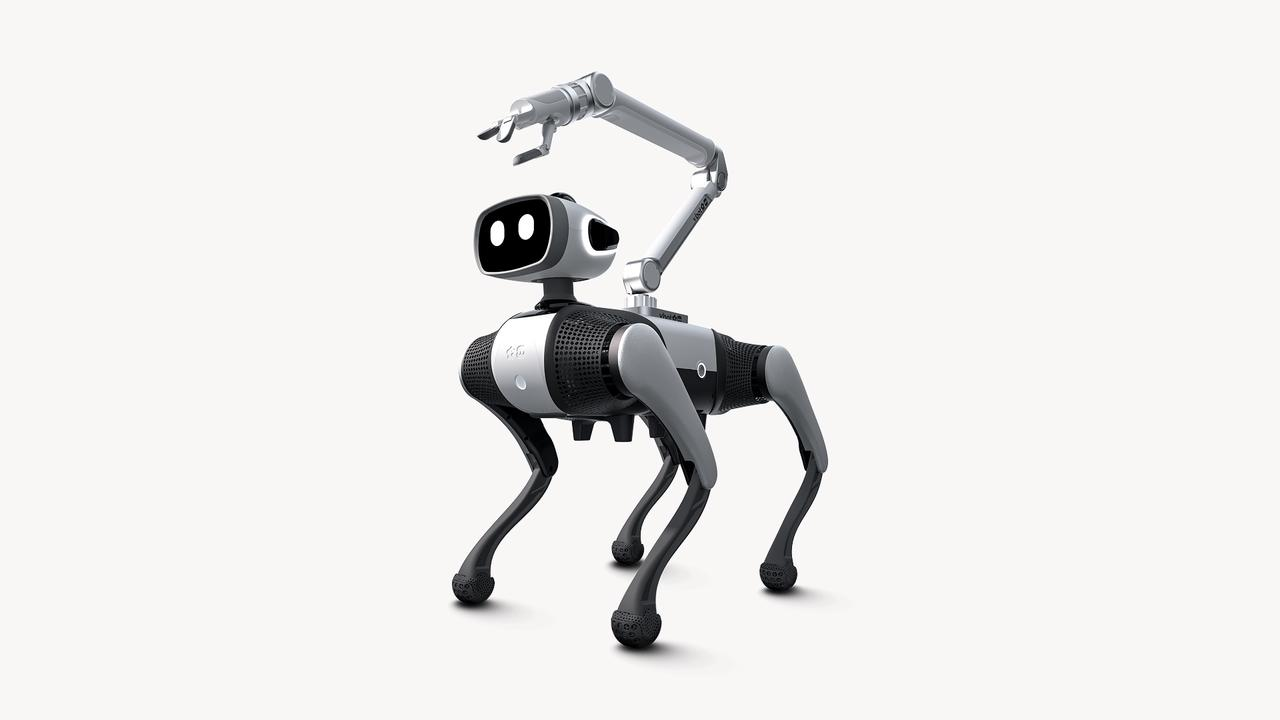
超能机器狗「大头EDU版」(机械臂为可自行拓展配件,非本品赠送)

我们希望把一台已经具备算力、感知、运动与Agent能力的四足机器人,开放为面向真实物理世界的具身智能开发平台。用户不再需要耗费大量成本与时间从零搭建整机本体、调试基础功能,而是在一只已经会看、会想、会走、会交流的四足机器人上创造应用,进而大幅降低具身智能入门与研发门槛。

Vbot超能机器狗「大头EDU版」:旗舰级性能,软硬一体

标配即顶配

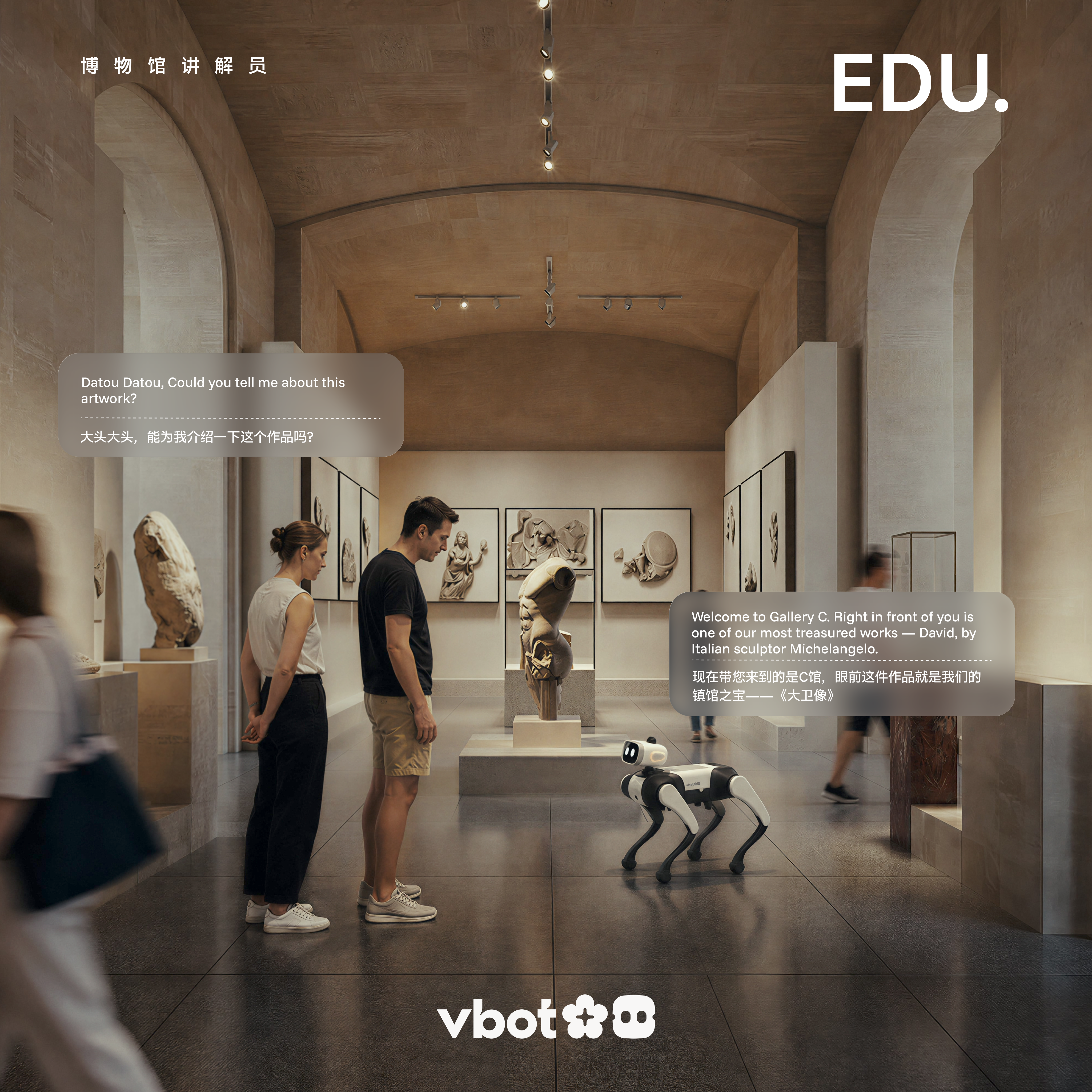
大头EDU版标配128 TOPS端侧算力,深度双目摄像头与16线激光雷达,具备智能跟随、探路、建图和避障能力。开发者可以基于机器狗已有的空间感知与自主移动能力,进一步开发巡检、导览、交互展示等应用。

大头EDU版可进行展厅导览及讲解

更适合生活空间

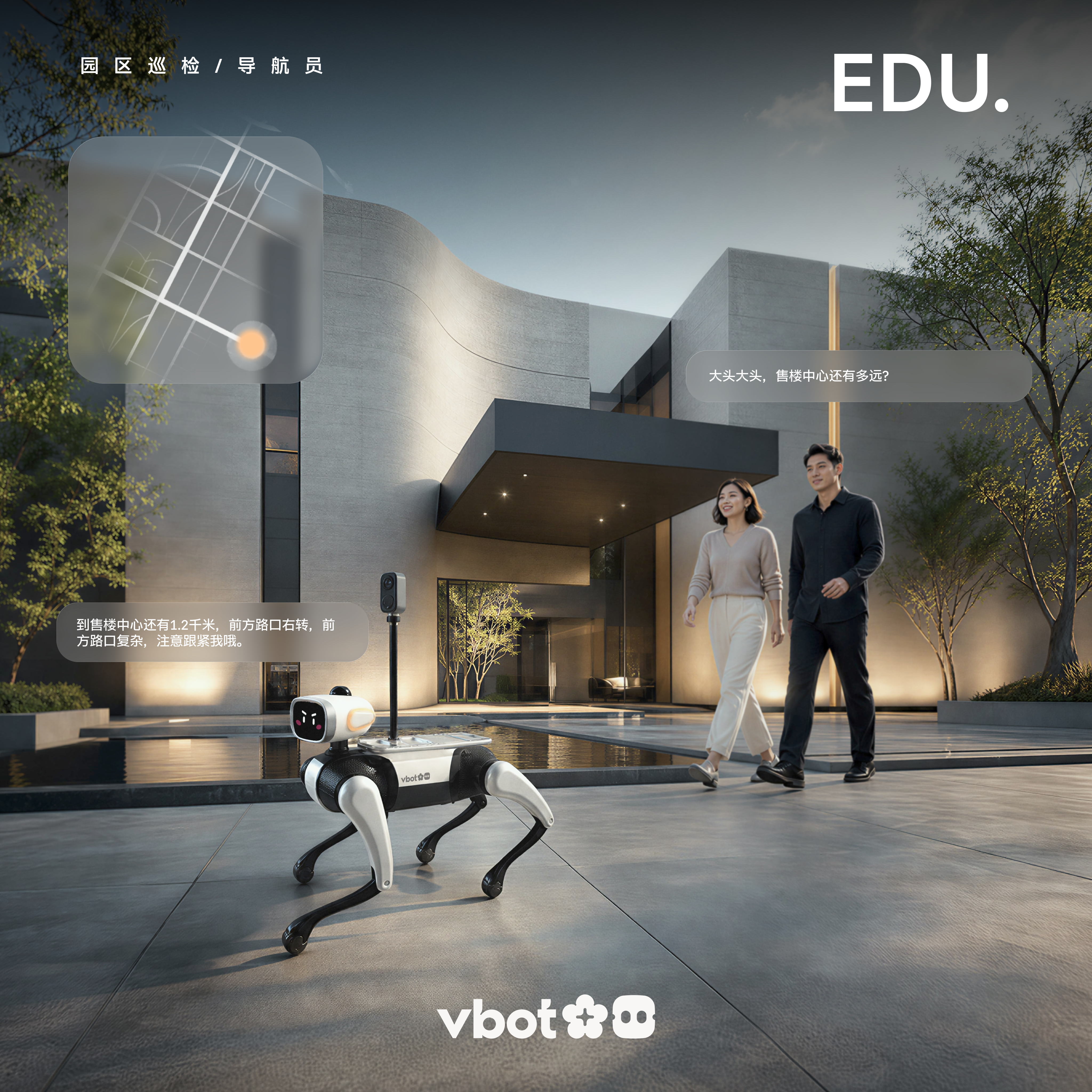
大头EDU版延续了Vbot超能机器狗的拟态头部、交互屏、情绪动作与多模态交互能力,同时采用圆角、防夹和接触保护设计,使其更适合在以公共服务、商场展厅、物业、医院、养老为主的生活空间内为用户提供服务。

大头EDU版可进行园区/物业的巡检、导航

完整开发平台与拓展支持

在开发支持上,大头EDU版开放ROS 2接口定义,并提供GitHub接入指南;同时标配USB-C、24V DC和 CAN接口,支持网络连接、供电通信及外设拓展,帮助用户以更低开发成本、更短验证周期,完成场景应用开发与交付。

支持机械臂等拓展硬件

支持市场主流的机械臂接入、控制、数据同步等,能够使用端侧的大算力来实现机械臂的操作、抓取、推拉等精细化动作。依托全面的机身本体能力,开发者可以构建全域传感融合与全身协同控制算法,使得四足本体可动态调整重心、步态姿态,在爬坡、碎石、台阶等非结构化复杂地形中保持作业稳定,行走过程中也能同步完成柔性交互操作,杜绝负重作业倾覆、机械臂抖动偏移问题。硬件层面采用标准化快拆接口与通用通信协议,兼容多自由度轻量化机械臂、灵巧夹爪、专用作业末端执行器,无需二次硬件改造即可快速换装;

模块化设计

整机采用全栈模块化硬件拓展架构,预留标准化通用拓展接口,可无缝加装额外的环境感知传感器、应急照明模组、远距离通信中继配件、测距云台等外设。依托软硬件一体化协同调度能力,四足机器人可由基础移动巡检载体,升级集移动行进、物理交互、现场自主处置、环境实时感知于一体的轻量化具身智能作业工作站,灵活适配工业安防巡检、灾后应急救援、智慧园区运维、高校科研教学、特种场景勘测等多元场景,极大拓展设备复用价值与落地应用边界。

大头 EDU版,支持五类开发接口

基于大头EDU版,共同探索具身智能Agent等更高阶应用

面向生活空间机器人的三项能力底座

Vbot致力于创造生活空间的机器人。我们认为,一台智能机器人要真正进入人类生活空间,需要逐步具备三项关键能力:自然交互能力、全地形移动能力和通用操作能力。这三项能力将构成生活空间机器人最重要的能力底座。

关键硬件原生配齐与五类开发接口,是大头EDU版支撑这一能力底座的基础。

基于本体,大头EDU版打通了算力、感知、运动、交互与外设拓展能力,并开放开发基础与系统服务、运动控制、感知与自主移动、智能交互、系统外设五类接口。

我们希望通过EDU版本,更多开发者能基于真实四足机器人本体,在真实生活空间中探索具身智能Agent等更高阶应用。

从“移动 + 交互”走向“移动 + 交互 + 操作”

在这一方向上,“机器狗 + 机械臂”是Vbot认为最具代表性的能力样本之一。它让四足机器人从“移动 + 交互”,进一步走向“移动 + 交互 + 操作”:既能在生活空间中自主移动、理解用户意图,也能通过机械臂完成取放、按压、拉动、投喂等真实物理操作。

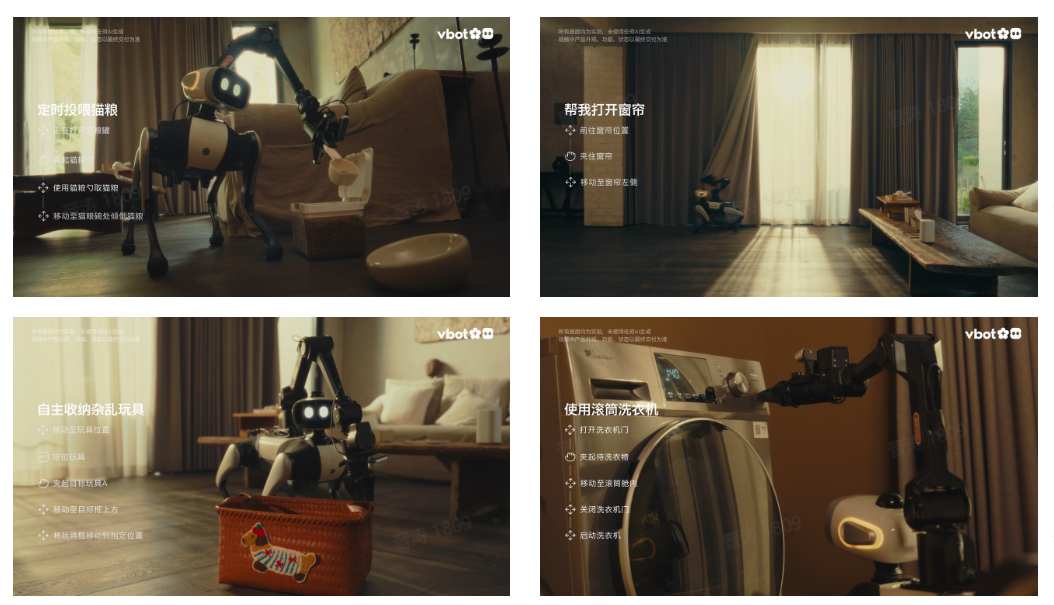
此次,维他动力的研发团队基于大头EDU版,打通了和机械臂之间的数据链路,控制链路和供电链路,通过机器狗自身的计算平台完成了机械臂的基本操作能力,展示四足机器人在生活空间中的移动操作潜力。基于大头EDU版本,开发者可以实现主流的VLA,WAM模型,完成比如给猫投喂猫粮、拉开窗帘、收纳地面玩具、操作滚筒洗衣机、定时浇花,以及自主调用智能音箱播放音乐等任务,让机器狗升级为走进家庭的机器人的第一个完备形态。

大头EDU版可基于机械臂完成投喂猫粮、打开窗帘、收纳玩具、按键等操作

这些任务看似日常,却覆盖了具身智能进入生活空间需要解决的关键问题:如何听懂人的指令,如何识别并记住物体位置,如何移动到合适的位置,如何让四足底盘和机械臂协同完成操作。

携手开发者,共建场景生态

Vbot希望通过这一能力演示,让更多开发伙伴看到:依托高算力、高稳定性的大头EDU版,以及完整的开发平台与拓展支持、关键硬件的原生配齐,大头EDU版将成为连接家庭、行业与商业场景的机器人能力底座,为更多场景解决方案提供开发起点。

面向未来,Vbot将持续开放机器人本体能力,完善SDK、开发接口与应用支持,我们也希望携手更多场景方案商、行业客户、开发者和教育科研伙伴共同建设开放生态,让机器人在真实生活空间中长出更多可能。


注:文/龚作仁,文章来源:Laborer,本文为作者独立观点,不代表亿邦动力立场。

文章来源:Laborer

广告
微信
朋友圈

FAQ回顾

大头EDU版四足机器人适合哪些用户和场景?

大头EDU版面向商业服务、机器人实验室、企业级研发、极客爱好者四大核心群体,可灵活适配工业安防巡检、灾后应急救援、智慧园区运维、高校科研教学、特种场景勘测等多元场景。

大头EDU版四足机器人的核心配置有哪些?

大头EDU版标配128 TOPS端侧算力、深度双目摄像头与16线激光雷达,具备智能跟随、探路、建图和避障能力,开放ROS 2接口,支持主流机械臂及各类环境感知、通信类外设拓展。

四足机器人进入人类生活空间需要具备哪些核心能力?

四足机器人要真正进入人类生活空间,需要具备三项核心能力底座,分别是自然交互能力、全地形移动能力和通用操作能力,可覆盖日常交互、移动及各类物理操作需求。

大头EDU版四足机器人能为开发者降低哪些研发成本?

开发者无需耗费大量成本与时间从零搭建整机本体、调试基础功能,可基于其已有的算力、感知、运动与Agent能力直接开发场景应用,大幅降低具身智能入门与研发门槛。

这么好看,分享一下?

朋友圈 分享

APP内打开

+1
+1
微信好友 朋友圈 新浪微博 QQ空间
关闭
收藏成功
发送
/140 0