广告
加载中

高考录取启动:千问接入EMS上线通知书实时追踪与提醒

龚作仁 2026-07-09 16:23
龚作仁 2026/07/09 16:23

邦小白快读

EN
全文速览

本文核心是千问高考接入中国邮政EMS,上线录取通知书实时追踪与提醒功能,可为高考考生提供全流程志愿报考及通知书查询服务,核心干货如下:

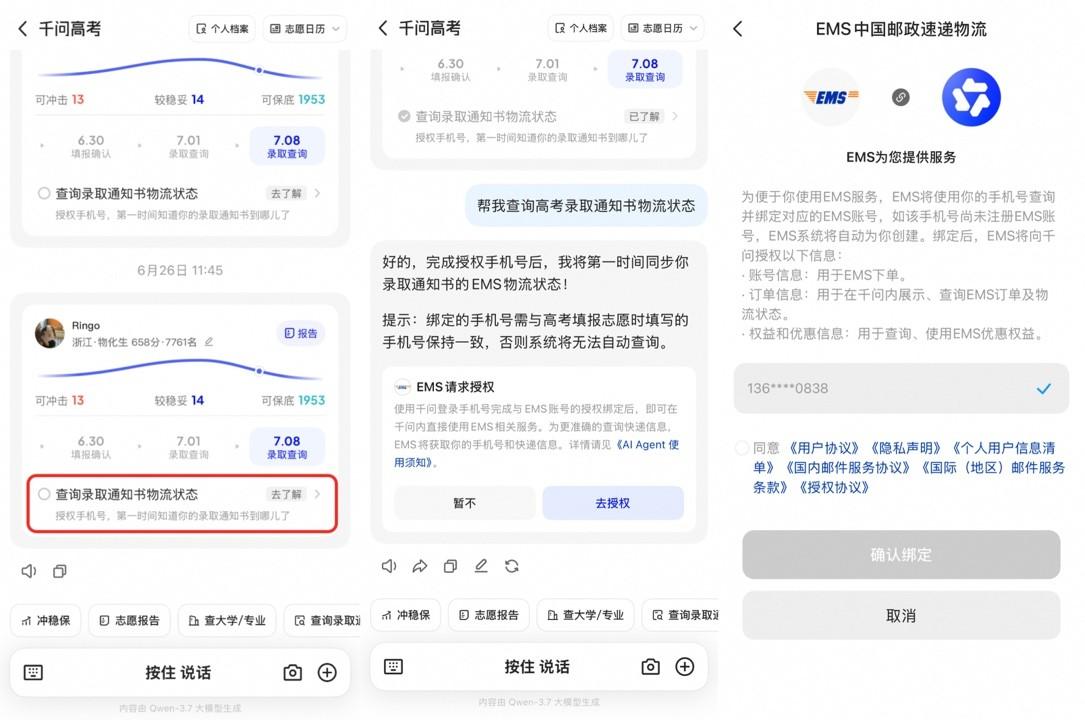
1. 新功能实操方法:千问高考志愿日历会主动向考生推送通知书物流查询提醒,考生提前完成授权后,通知书开始寄送、物流状态更新时都会收到主动提醒,还可查看实时物流轨迹;也支持手动输入单号查询,还可直接在页面调用EMS完成寄件。

2. 已有配套服务信息:除通知书查询外,千问高考可帮考生厘清填报规则与政策,把复杂的报考决策拆解为清晰待办步骤,生成个性化志愿报告和报考建议。截至7月8日,已有2300万用户领取免费志愿报告,超70%用户会连续多天高频使用该产品,河南考生案例验证其服务实用性较强。

本文展示了千问围绕高考节点做场景化品牌运营的完整案例,对品牌获客、用户运营有较多参考干货,内容如下:

1. 用户运营思路:千问抓住高考考生全链路需求,从前期志愿填报指导到后期录取通知书追踪,全流程覆盖用户核心痛点,有效提升用户粘性,数据显示超70%用户会连续多天高频使用产品,用户留存效果突出。

2. 获客与信任打造方法:采用基础服务免费开放的模式,短期就获得2300万份志愿报告的领取量,获客效率极高;同时主动对接中国邮政EMS这类权威第三方资源,解决考生等待通知书的焦虑痛点,也借助权威资源提升了自身品牌的可信度,这种借热点节点、结合第三方资源做场景化运营的思路值得品牌参考。

本文披露了升学服务赛道的市场反馈,给相关卖家提供了不少机会和运营参考,干货内容如下:

1. 市场机会提示:高考用户对升学辅助服务的需求非常旺盛,免费基础服务的模式认可度极高,本次活动累计有2300万用户领取免费志愿报告,说明该赛道仍有较大的市场空间,围绕考生全流程需求延伸服务还有很多增量机会。

2. 可学习的运营经验:卖家做升学相关服务时,要覆盖用户从报考到录取的全流程需求,把复杂的报考流程拆解为清晰的待办步骤,降低用户决策门槛;要结合考生的地域、性格、招录需求给出个性化建议,提升用户满意度;还可以对接权威第三方资源提升自身服务的可信度,免费开放基础服务快速吸引用户,再通过后续服务实现转化,这种模式可行性已经得到验证。

这个案例给工厂推进数字化转型、拓展面向C端的服务业务带来不少启示,干货内容如下:

1. 产品设计思路启示:工厂做数字化产品或拓展C端服务时,要围绕用户全流程需求设计产品,把复杂的流程拆解为一个个清晰的待办步骤,降低普通用户的使用门槛,符合大众用户的使用习惯,提升用户使用频次。

2. 获客与信任打造启示:工厂推出新的数字化服务,可以采用基础服务免费的模式快速积累用户,打开市场知名度;主动对接行业内权威的第三方资源合作,可以快速提升自身产品和服务的可信度,降低用户的决策顾虑。

3. 用户体验提升启示:要重视个性化服务,结合用户的差异化特征给出定制化的解决方案,就能有效提升用户满意度,积累好口碑,像千问结合考生的地域招录需求和性格给出建议就获得了用户的认可。

本文反映了AI升学服务赛道的用户痛点、行业新趋势和成熟解决方案,干货内容如下:

1. 用户核心痛点:高考考生一直存在报考信息不对称、志愿填报流程复杂混乱、等待录取通知书期间焦虑无处解决的痛点,传统服务无法全面满足这类需求,市场仍有未被满足的空间。

2. 成熟解决方案:AI大模型介入后,可以免费为用户提供个性化志愿填报服务,拆解复杂流程,主动给用户发送关键节点提醒,还能对接传统权威机构的资源,补全物流追踪这类需求,实现考生全周期服务覆盖,解决用户痛点。

3. 行业发展趋势:AI已经快速下沉到升学服务这类民生垂直场景,结合传统权威资源的AI服务模式已经获得了用户的认可,数据显示累计2300万用户领取免费报告,超70%用户高频使用,验证了模式的可行性,未来AI+民生服务还有很大的发展空间。

千问和EMS的合作为平台运营、服务拓展带来很多可参考的经验,干货内容如下:

1. 服务拓展思路:平台要围绕用户全生命周期的需求拓展服务,主动接入第三方互补资源补齐自身服务短板,千问本身做志愿填报服务,接入EMS的物流查询服务后,补全了考生从报考到收通知书的最后一环需求,有效提升了用户粘性和活跃度。

2. 用户运营经验:平台针对用户的复杂需求,可以将其拆解为一个个清晰的待办步骤,通过主动推送提醒的方式引导用户完成操作,既降低了用户的使用门槛,也能有效提升用户的打开率和使用频次,本次数据显示超70%用户会连续多天高频使用,就是这种运营方式的成果。

3. 获客模式参考:平台可以采用基础服务免费开放的模式快速拉新,积累大规模用户,本次活动千问累计送出2300万份免费志愿报告,短期就获得了海量用户,这种模式适合平台冷启动和拉新。

本文提供了AI大模型垂直落地的最新案例,反映了产业发展的新动向,对相关研究有较高参考价值,干货内容如下:

1. 产业新动向:AI大模型已经从通用技术落地到具体的垂直民生场景,高考志愿填报就是典型的落地场景,AI结合传统行业权威资源的落地模式已经跑通,千问和EMS的合作就是典型案例,AI解决信息整理和个性化推荐问题,传统机构提供权威的物流服务,双方互补实现了更好的用户体验。

2. 商业模式验证:基础服务免费获客,全流程覆盖需求提升用户粘性的商业模式,在AI+民生服务领域已经得到用户认可,截至7月8日的数据显示,累计有2300万用户领取免费志愿报告,超70%用户连续高频使用,说明用户对这种模式的接受度非常高。

3. 研究启示:AI落地垂直领域不一定从高端付费服务切入,免费基础服务结合用户需求延伸服务,更容易快速获得大规模用户,打开市场,和传统行业资源合作可以快速提升可信度,降低落地门槛,这为后续AI垂直落地研究提供了新的方向。

返回默认

声明:快读内容全程由AI生成,请注意甄别信息。如您发现问题,请发送邮件至 run@ebrun.com 。

我是 品牌商 卖家 工厂 服务商 平台商 研究者 帮我再读一遍。

Quick Summary

This article covers Qianwen Gaokao’s new integration with China Post EMS, which has launched real-time admission letter tracking and reminder services to provide gaokao (national college entrance examination) candidates with end-to-end support for college application and admission letter inquiry. Key takeaways are as follows:

1. How the new feature works: Qianwen Gaokao’s application calendar will actively push admission letter logistics reminder notifications to candidates. After users grant advance authorization, they will receive automatic alerts when their admission letter is shipped and when its tracking status updates, and can view real-time logistics trajectories. Users can also manually input tracking numbers to look up shipments, and book EMS delivery directly on the page.

2. Existing supporting services: In addition to admission letter tracking, Qianwen Gaokao helps candidates clarify application rules and policies, breaks down complex application decision-making into clear to-do steps, and generates personalized application reports and suggestions. As of July 8, 23 million users have claimed free application reports, and over 70% of users use the product heavily across multiple consecutive days. A case study of Henan candidates confirms the practical value of its services.

This article presents a complete case of scenario-based brand operation by Qianwen around the gaokao timeline, with valuable takeaways for customer acquisition and user management. Key insights include:

1. User operation strategy: Qianwen addresses the full spectrum of gaokao candidates’ needs, covering core pain points from early-stage application guidance to post-application admission letter tracking, which effectively boosts user engagement. Data shows over 70% of users use the product heavily over multiple consecutive days, delivering outstanding user retention results.

2. Customer acquisition and trust-building: By offering core basic services for free, Qianwen accumulated 23 million claimed application reports in a short period, achieving extremely high acquisition efficiency. It also addressed candidates’ anxiety while waiting for admission letters by partnering with a trusted third-party authority—China Post EMS, and leveraged the partner’s credibility to boost its own brand trust. This approach of scenario-based operation, centered on major seasonal events and integrated with third-party resources, is a valuable reference for other brands.

This article shares market insights on the college admission services sector, offering opportunity alerts and operational references for industry sellers. Key takeaways are as follows:

1. Market opportunity insight: Demand for college admission assistance services among gaokao candidates is very strong, and the free basic service model enjoys high market recognition. The 23 million total claims of free application reports from this campaign confirms that the sector still has substantial room for growth, and there are many incremental opportunities to expand services along candidates’ full application journey.

2. Actionable operational takeaways: Sellers offering college admission services should cover the full user journey from application to enrollment, break down complex application processes into clear to-do steps to lower users’ decision barriers, and deliver personalized recommendations based on candidates’ region, profile and admission needs to boost satisfaction. Partnering with authoritative third parties can also enhance service credibility, and offering free basic services to quickly attract users before monetizing through follow-up services is a model that has already been proven viable.

This case offers valuable insights for factories pursuing digital transformation and expanding direct-to-consumer service businesses. Key takeaways are as follows:

1. Product design insights: When developing digital products or expanding D2C services, factories should design offerings around the full user journey, break down complex processes into clear, step-by-step to-dos to lower the barrier to entry for mainstream users, align with general consumer habits, and boost usage frequency.

2. Customer acquisition and trust-building insights: When launching new digital services, factories can adopt a free basic service model to quickly accumulate users and build market awareness. Proactively partnering with established industry third-party authorities can rapidly boost the credibility of a factory’s products and services, and reduce users’ decision anxiety.

3. User experience improvement insights: Prioritizing personalized services and delivering customized solutions aligned with users’ differentiated characteristics can effectively boost user satisfaction and build positive word-of-mouth, just as Qianwen earned user recognition by tailoring recommendations to candidates’ regional admission requirements and personal profiles.

This article outlines user pain points, emerging industry trends and proven solutions in the AI-powered college admission services sector. Key insights are as follows:

1. Core user pain points: Gaokao candidates have long faced unaddressed pain points including asymmetric application information, confusing and complex application processes, and unresolvable anxiety while waiting for admission letters. Traditional services cannot fully meet these demands, leaving gaps in the market.

2. A proven mature solution: Large AI models can deliver free personalized application services, break down complex processes, and send active alerts for key timeline milestones. They can also integrate resources from traditional authoritative institutions to fill gaps in demand such as logistics tracking, enabling full-cycle service coverage for candidates that resolves core pain points.

3. Emerging industry trends: AI has rapidly penetrated vertical livelihood-focused scenarios such as college admission services, and the AI service model that integrates with traditional authoritative resources has already earned user acceptance. Data shows 23 million users have claimed free reports and over 70% are frequent users, confirming the model’s viability. AI-enabled livelihood services still hold enormous growth potential going forward.

The partnership between Qianwen and EMS offers valuable operational and service expansion references for platform businesses. Key insights are as follows:

1. Service expansion strategy: Platforms should expand services to cover the full user lifecycle, and proactively integrate complementary third-party resources to fill gaps in their own service offerings. Qianwen already offered college application services, and integrating EMS’ logistics tracking completed the last mile of service for candidates from application to admission letter delivery, effectively boosting user engagement and activity.

2. User operation lessons: For complex user needs, platforms can break down requirements into clear individual to-do steps and guide users through the process via active push reminders. This not only lowers the barrier to use, but also effectively boosts user open rates and usage frequency. The data showing over 70% of users return for frequent use across multiple days is a direct result of this operational approach.

3. Customer acquisition reference: Platforms can open basic services for free to achieve rapid user acquisition and accumulate large user bases. In this campaign, Qianwen distributed 23 million free application reports and gained massive traffic in a short time, making this model well-suited for platform cold starts and new user acquisition.

This article presents an updated case of vertical large language model deployment, reflecting new industry trends and offering high reference value for relevant research. Key insights are as follows:

1. New industry trends: Large AI models have moved beyond general-purpose applications to concrete vertical livelihood-focused scenarios, with college application services being a typical example. The deployment model that combines AI with traditional industry authoritative resources has already been proven viable, as demonstrated by the Qianwen and EMS partnership. AI handles information organization and personalized recommendation, while traditional institutions deliver authoritative logistics services, and complementary strengths deliver a superior user experience.

2. Business model validation: The business model of acquiring users via free basic services and boosting engagement through full-process demand coverage has been validated by users in the AI + livelihood services space. Data as of July 8 shows 23 million users have claimed free application reports, with over 70% returning for frequent consecutive use, indicating very high user acceptance of this model.

3. Research implications: AI deployment in vertical sectors does not need to start with high-end paid services. A model of free basic services paired with incremental offerings aligned with user demand makes it easier to acquire large-scale users and penetrate the market quickly. Partnering with existing traditional industry resources can also rapidly boost credibility and lower barriers to deployment, opening a new direction for future research on vertical AI deployment.

Disclaimer: The "Quick Summary" content is entirely generated by AI. Please exercise discretion when interpreting the information. For issues or corrections, please email run@ebrun.com .

I am a Brand Seller Factory Service Provider Marketplace Seller Researcher Read it again.

7月9日消息,高考志愿录取结果即将揭晓,为了让用户更方便了解录取通知书寄送进度,千问高考接入中国邮政EMS,上线实时追踪与提醒功能。

千问高考志愿日历会向每位高考用户推送“查询录取通知书物流状态”提醒,用户可点击提前完成授权。待录取通知书开始寄送以及物流状态变化时,千问都会主动向用户发送通知提醒。用户也可以在界面中查看实时物流轨迹。

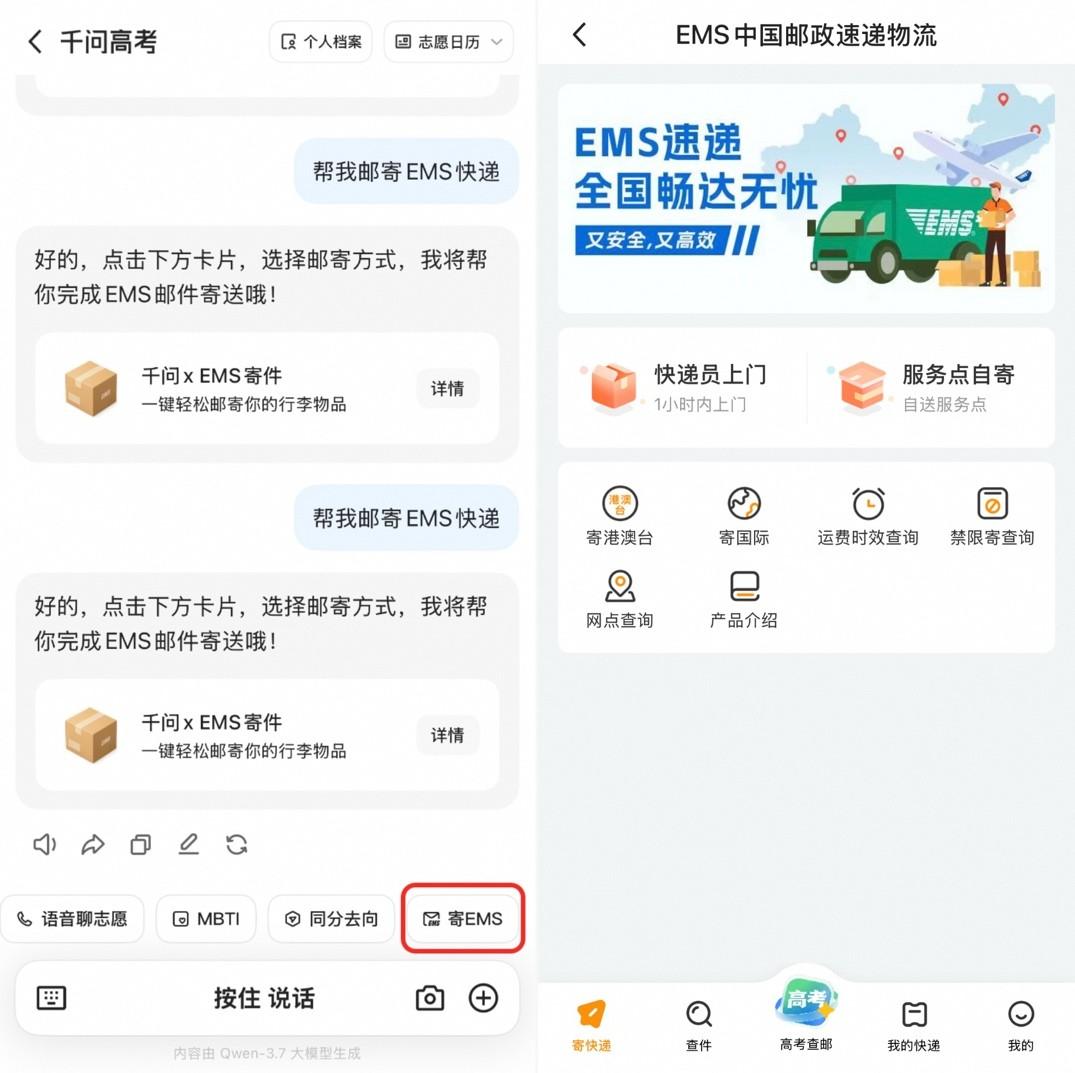
此外,用户也可在千问高考页面“查询录取通知”里手动输入单号查询,还能通过“寄EMS”直接寄件。

至此千问高考陪伴用户度过了志愿填报的每一个关键阶段。此前千问从引导考生明确自身需求出发,帮助用户厘清复杂填报规则与政策,直至最终生成个性化志愿报告。其中,志愿日历功能将原本一团乱麻的决策过程,精准拆解为一系列清晰的待办步骤。

截至7月8日的统计显示,在今年志愿填报期间,用户在千问上一共领取了2300万份免费志愿报告,超过70%的用户会连续多天高频使用志愿日历。

一位来自河南的考生坦言,自己起初对填志愿毫无头绪,但在千问的引导下快速明确了方向。他表示,千问不仅主动帮他横向对比了感兴趣的两门学科课程内容,还结合河南岗位招录需求与他的性格特征,给出了中肯报考建议,“就连很多我留意不到的细节,也被它清晰罗列出来,真正让我心里有了底。”

注:文/龚作仁,文章来源:Laborer,本文为作者独立观点,不代表亿邦动力立场。

文章来源:Laborer

广告
微信
朋友圈

FAQ回顾

高考录取通知书的物流进度可以怎么查询?

千问高考已接入中国邮政EMS,上线录取通知书实时追踪与提醒功能,用户可提前完成授权,待通知书寄送及物流状态变化时会收到主动通知,也可手动输入单号查询,还能查看实时物流轨迹。

千问高考能为考生志愿填报提供哪些帮助?

千问高考可帮助考生厘清复杂的志愿填报规则与政策,生成个性化志愿报告,还可结合考生感兴趣的学科内容、所在地岗位招录需求及性格特征给出中肯报考建议,2024年志愿填报期间累计发放2300万份免费志愿报告。

千问高考志愿日历功能有什么作用?

千问高考志愿日历可将复杂的志愿填报决策过程精准拆解为清晰的待办步骤,向考生推送各关键阶段的提醒,包括录取通知书物流状态查询提示,2024年志愿填报期间超70%的用户会连续多天高频使用该功能。

这么好看,分享一下?

朋友圈 分享

APP内打开

+1
+1
微信好友 朋友圈 新浪微博 QQ空间
关闭
收藏成功
发送
/140 0