广告
加载中

可计算开店完成4500万元天使轮 投后估值3亿元

龚作仁 2026-06-24 12:38
龚作仁 2026/06/24 12:38

邦小白快读

EN
全文速览

本文核心信息是国内快闪店平台邻汇吧孵化的可计算开店,刚完成4500万元天使轮融资,投后估值3亿元,由海愿资本和拱墅国投共同投资,是一家用数据技术帮品牌做线下开店决策的科技企业。

1.核心业务:和传统靠经验选商圈开店不同,它依托全国近亿POI、百万级AOI数据,通过AI模型匹配品牌和点位,能帮品牌做商圈推荐、竞争分析、客流价值测算,还能帮搭建运营评估体系,降本提效。

2.行业与进展:线下零售流量大盘是线上3倍,电商渗透率已经触顶,线下精细化运营需求爆发,这个项目就是对应需求诞生;项目商业化启动6个月,目前LTV/CAC达到3-6倍,已经有大批新锐品牌、8个万店品牌以及众多区域头部连锁在使用服务。

本文给布局线下的品牌带来了新的数字化工具信息和行业趋势,可帮助品牌优化线下渠道布局。

1.消费趋势:线下零售空间流量总规模是线上的3倍,2024年后电商渗透率开始触顶下降,线下渠道已经成为品牌新的增长机会,行业对线下精细化运营的需求快速提升。

2.工具价值:可计算开店能替代传统经验型开店决策,基于大数据为品牌推荐合适商圈、测算市场容量和竞争情况,计算具体点位的客流价值,还能帮品牌搭建运营AB测和知识沉淀体系,降低培训和运营成本,提升运营效率。

3.落地案例:目前已经有大批新锐品牌用它做慢闪店测试,实现线下高效起盘,还有8个万店品牌和大量区域头部连锁在用它的智能决策服务,模式已经得到市场验证。

本文给想要布局线下的卖家梳理了新的增长机会和可利用的行业资源,有不少实操参考价值。

1.市场机会:整体线下零售流量大盘是线上的3倍,电商渗透率已经触顶,线下开店精细化运营需求旺盛,是新的增量市场,哪怕在整体消费遇冷的背景下,消费科技这个赛道依然获得了大额融资,说明市场认可度较高。

2.可利用的工具支持:可计算开店能帮卖家解决线下开店经验决策误差大、成本高的问题,提供点位匹配、竞争分析、客流价值测算、运营知识沉淀全流程服务,帮助卖家降低开店风险。

3.合作机会:该项目商业化启动仅6个月,已经跑通商业模式,LTV/CAC达到3-6倍,目前正在加速拓张商业化场景,在慢闪测试、开店网规、运营等多个环节开放服务,想要布局线下的卖家可以对接这类工具提升开店成功率。

本文给想要拓展线下渠道、推进数字化的工厂带来了新的机会和启发。

1.商业机会:当前线下零售空间流量总规模是线上的3倍,电商渗透率已经触顶,线下渠道重新迎来增长红利,工厂做自有品牌线下拓展有很大的市场空间。

2.数字化转型启示:传统线下开店依赖团队经验,决策成本高、误差大,还很难沉淀运营经验,工厂拓展线下渠道时,可以借助可计算开店这类数字化工具,用大数据做点位匹配和竞争分析,降低决策失误风险,提升开店效率。

3.对生产设计的启发:工厂可以借助这类数字化工具快速测试不同市场的开店反应,更快验证产品的市场接受度,根据不同点位的运营数据反向调整产品生产和设计,让产品更贴合终端消费者的需求,提升产品市场竞争力。

本文给线下零售数字化领域的服务商带来了行业最新趋势、痛点和可借鉴的解决方案,参考价值较高。

1.行业发展趋势:线下零售流量规模是线上的3倍,电商渗透率触顶后,品牌对线下精细化运营的需求持续增长,线下位置智能服务属于线下消费的基础设施级赛道,市场空间很大,资本也十分看好这个方向。

2.行业核心痛点:真实世界位置智能建设普遍面临数据获取成本高、数据稀疏的问题,传统模式很容易陷入烧钱却做不出有效模型的困境,同时传统线下开店存在决策依赖经验、运营知识沉淀难、成本高的客户痛点。

3.可借鉴的解决方案:可计算开店通过构造数据应用和数据采集的正向UE飞轮,解决稀疏数据的问题,依托位置嵌入底座模型实现品牌和点位的匹配,目前已经验证商业化可行性,启动6个月LTV/CAC达到3-6倍,技术方向也值得同类服务商参考。

本文给线下零售相关平台梳理了行业新需求、可探索的新方向以及需要规避的风险,有较强的参考意义。

1.市场新需求:当前品牌已经不满足传统的线下空间租赁模式,对数据化的点位价值评估、开店决策支持的需求越来越强烈,传统经验式服务已经不能匹配品牌需求。

2.可探索的最新方向:可计算开店已经联合多个头部商业地产平台,启动零售空间流量程序化托管定价的测试探索,这个方向对标线上计算广告的发展路径,从传统合约租赁向数据化价值评估、竞价模式演进,是线下空间变现的新增长点。

3.风向规避:布局线下位置智能领域需要注意,该领域核心痛点是数据获取成本高、数据稀疏,如果没有合理的模式很容易陷入烧钱陷阱,可参考可计算开店的思路,构造数据应用和采集的正向飞轮,不烧钱也能打磨出优秀模型,规避资金风险。

本文给产业研究者提供了线下零售数字化领域的最新产业动向、新商业模式和待研究的新问题,有较高的研究价值。

1.产业新动向:随着电商渗透率触顶,线下零售流量价值重新被市场重视,线下位置智能领域诞生了可计算开店这个新项目,该项目由邻汇吧孵化,刚完成4500万元天使轮融资,投后估值3亿元,商业化启动6个月就实现LTV/CAC3-6倍,已经获得资本和市场的双重认可。

2.新商业模式:该项目对标线上计算广告的发展路径,为线下零售品牌提供点位匹配、价值计算、运营评估的智能化服务,替代传统经验决策,目前已经覆盖新锐品牌起盘、万店品牌拓展等多个场景,服务多类客户群体。

3.待研究的新问题:该领域当前普遍存在数据获取成本高、数据稀疏的痛点,如何构造数据应用和采集的正向飞轮是破局关键,项目后续还计划深化GNN等几何深度学习的应用,探索零售空间流量程序化定价,这些都是产业研究的新方向。

返回默认

声明:快读内容全程由AI生成,请注意甄别信息。如您发现问题,请发送邮件至 run@ebrun.com 。

我是 品牌商 卖家 工厂 服务商 平台商 研究者 帮我再读一遍。

Quick Summary

This article covers the latest update on Computable Store Opening, a startup incubated by Chinese pop-up store platform Linhuiba: the company has just closed a RMB 45 million angel funding round at a post-money valuation of RMB 300 million, led by Haiyuan Capital and Gongshu State-owned Investment. It is a tech firm that leverages data analytics to help brands make offline store expansion decisions.

1. Core Business: Unlike traditional experience-based site selection, it draws on nearly 100 million POI data and 1 million-level AOI data across China, and uses an AI model to match brands with suitable locations. Its services include business district recommendation, competitive analysis, footfall value calculation, and operational evaluation system building, helping brands cut costs and improve efficiency.

2. Industry Context & Traction: The overall scale of offline retail traffic is three times that of online, and e-commerce penetration has plateaued, triggering a surge in demand for refined offline operations, which is the pain point this startup addresses. Six months after launching commercialization, it has achieved an LTV/CAC ratio of 3 to 6, with a large client base including numerous emerging brands, 8 large chain brands with over 10,000 stores each, and many leading regional retail chains.

This article shares updates on a new digital tool and industry trends for brands looking to expand their offline footprint, helping brands optimize their offline channel layout.

1. Consumption Trend: The total scale of offline retail traffic is three times that of online. E-commerce penetration has plateaued and started declining after 2024, making offline channels the new growth engine for brands. Demand for refined offline operations is growing rapidly across the industry.

2. Tool Value: Computable Store Opening replaces traditional experience-based store expansion decisions with big data. It recommends suitable business districts, estimates market size and competitive landscape, calculates the footfall value of specific locations, and helps brands build A/B testing and operational knowledge systems, reducing training and operational costs while boosting efficiency.

3. Proven Traction: A large number of emerging brands already use the tool to test slow-pop-up stores and launch offline operations efficiently. Eight large chain brands with over 10,000 stores and many leading regional chains also use its intelligent decision-making service, proving the model works in the market.

This article outlines new growth opportunities and available industry resources for sellers looking to go offline, with plenty of practical takeaways.

1. Market Opportunity: The overall offline retail traffic market is three times the size of online, and e-commerce penetration has plateaued. Demand for refined offline store operations is booming, making it a new incremental growth market. Even amid the overall cooling consumption environment, this consumer tech track has secured large-scale funding, reflecting strong market recognition.

2. Accessible Tool Support: Computable Store Opening solves the common pain points of experience-based offline site selection: large decision error and high costs. It offers end-to-end services including location matching, competitive analysis, footfall value calculation, and operational knowledge accumulation, helping sellers reduce the risk of store expansion.

3. Partnership Opportunity: Only six months after launching commercialization, the startup has already validated its business model with an LTV/CAC ratio of 3 to 6. It is now rapidly expanding its commercial scenarios, opening up services across slow-pop-up testing, site planning and operations. Sellers targeting offline expansion can leverage this type of tool to improve their store opening success rate.

This article presents new opportunities and insights for factories looking to expand offline channels and advance digital transformation.

1. Business Opportunity: The total size of offline retail traffic is three times that of online, and e-commerce penetration has plateaued, bringing a new wave of growth dividends to offline channels. Factories looking to build their own brands have huge room for expansion in offline markets.

2. Digital Transformation Insights: Traditional offline store expansion relies on team experience, featuring high decision costs, large error margins, and difficulty in accumulating operational experience. When expanding offline channels, factories can adopt digital tools like Computable Store Opening, which leverages big data for location matching and competitive analysis, reducing the risk of decision errors and improving expansion efficiency.

3. Insights for Production and Design: Factories can use this type of digital tool to quickly test market response in different regions, validate product-market fit faster, and adjust product production and design based on operational data from different locations. This helps align products better with end consumer demand and improve product competitiveness.

This article shares the latest industry trends, core pain points and actionable solutions for service providers in the offline retail digitalization space, with high reference value.

1. Industry Development Trend: Offline retail traffic is three times the size of online. After e-commerce penetration plateaued, brands' demand for refined offline operations continues to grow. Offline location intelligence is an infrastructure-level track for offline consumption with huge market potential, and it is also highly favored by capital.

2. Core Industry Pain Points: Real-world location intelligence development generally faces challenges of high data acquisition costs and sparse data. Traditional models often fall into the trap of burning cash without building effective models. Meanwhile, traditional offline store expansion has client-side pain points: experience-dependent decision-making, difficulty accumulating operational knowledge, and high costs.

3. Referenceable Solution: Computable Store Opening addresses the sparse data problem by building a positive unit economic flywheel of data application and data collection. It matches brands with locations based on a location embedding base model. It has already validated commercial viability, achieving an LTV/CAC ratio of 3 to 6 just six months after launch, and its technical approach is a useful reference for peers.

This article sorts out new industry demands, explorable new directions and risks to avoid for offline retail-related platforms, with strong reference value.

1. New Market Demand: Brands are no longer satisfied with the traditional offline space leasing model. Demand for data-driven location value assessment and store opening decision support is growing rapidly, and traditional experience-based services can no longer meet brands' needs.

2. New Exploratory Direction: Computable Store Opening has partnered with multiple leading commercial real estate platforms to test programmatic托管 pricing for retail space traffic. This direction follows the development path of online computational advertising, evolving from traditional contract leasing to data-driven value assessment and auction-based pricing, becoming a new growth point for offline space monetization.

3. Risk Avoidance: When entering the offline location intelligence space, players should note that the core pain points of the track are high data acquisition costs and sparse data. Without a reasonable business model, it is easy to fall into a cash-burning trap. Players can learn from Computable Store Opening's approach: building a positive flywheel of data application and collection to refine high-quality models without burning cash, avoiding financial risks.

This article provides the latest industry developments, new business models and open research questions for industry researchers focused on offline retail digitalization, with high research value.

1. Latest Industry Development: As e-commerce penetration plateaus, the value of offline retail traffic is重新 gaining market attention. Computable Store Opening, a new project incubated by Linhuiba, has just closed a RMB 45 million angel round at a post-money valuation of RMB 300 million. It achieved an LTV/CAC ratio of 3 to 6 just six months after commercial launch, earning dual recognition from capital and the market.

2. New Business Model: Following the development path of online computational advertising, the project provides intelligent services including location matching, value calculation and operational evaluation for offline retail brands, replacing traditional experience-based decision-making. It already covers multiple scenarios including launch for emerging brands and expansion for large 10,000-store chains, serving a wide range of client groups.

3. Open Research Questions: The track currently faces widespread pain points of high data acquisition costs and sparse data, and building a positive flywheel of data application and collection is the key to breaking through. The project also plans to deepen the application of geometric deep learning such as GNN and explore programmatic pricing for retail space traffic, all of which are new directions for industry research.

Disclaimer: The "Quick Summary" content is entirely generated by AI. Please exercise discretion when interpreting the information. For issues or corrections, please email run@ebrun.com .

I am a Brand Seller Factory Service Provider Marketplace Seller Researcher Read it again.

围绕线下零售空间流量搭建Location intelligence的可计算开店科技获得了4500万元的天使轮融资。可计算开店由国内最大的快闪店场地交易平台邻汇吧孵化,此次融资由邻汇吧老股东海愿资本和拱墅国投共同投资。本轮融资后,可计算开店估值为3亿元。

可计算开店基于零售空间数据挖掘,为消费和连锁品牌提供线下消费者体验的分发推荐和价值计算评估服务。

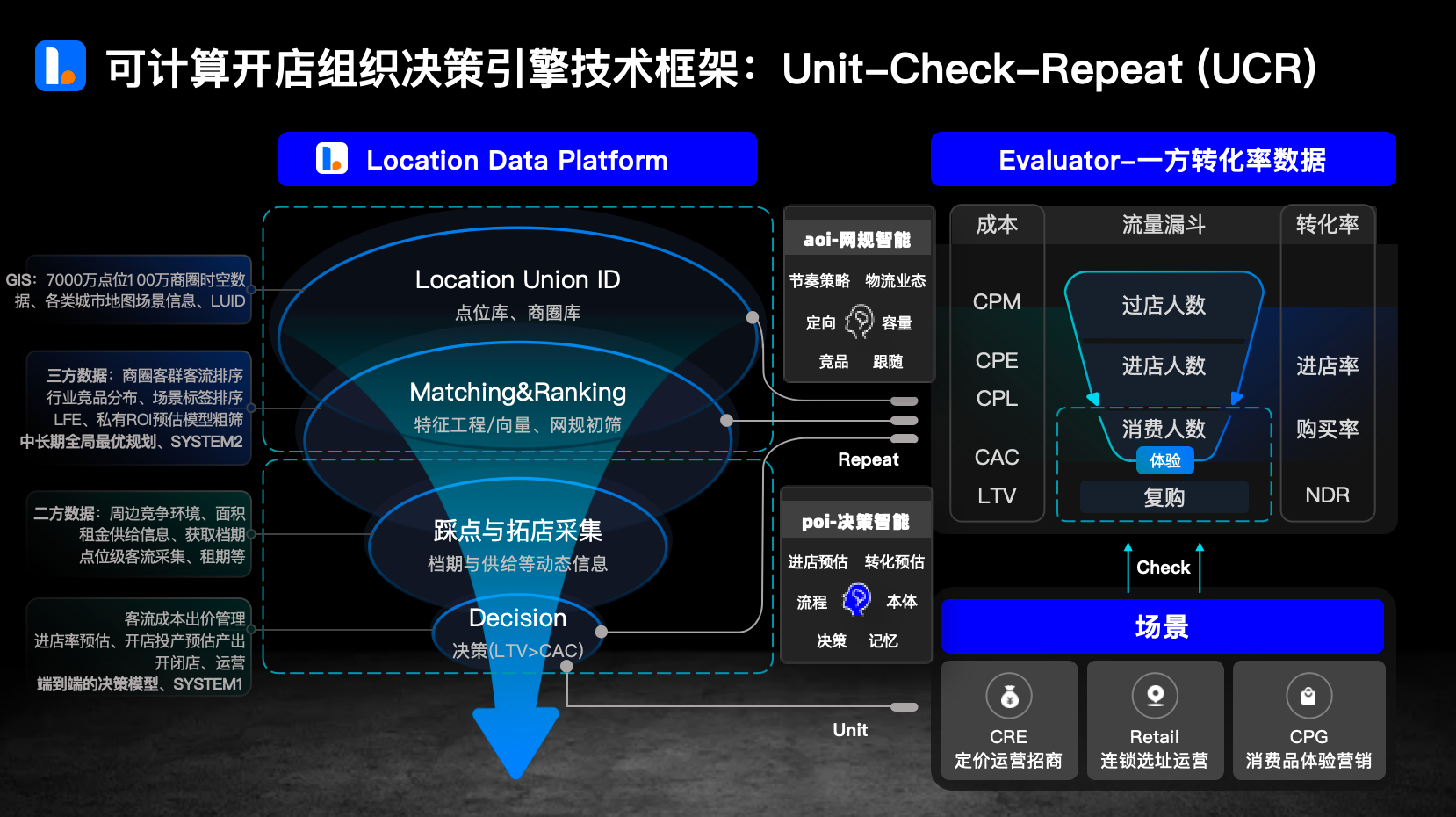
与传统品牌雇佣经验丰富的网规、开发、线下运营人员,根据经验选择商圈、决策开店不同,可计算开店基于全国所有城市近亿POI和百万级AOI数据进行数据挖掘,根据品牌的历史开关数据、结合位置的属性和周边品牌分布的图结构进行向量化计算,获取不同品牌内容和不同位置在高维空间的匹配度、以及不同品牌不同位置的相似性;同时结合品牌自身已开门店的转化率数据进行监督训练,通过Location embedding底座模型能力,帮助品牌网规部门推荐合适商圈、计算商圈城市的市场容量和竞争性蚕食分析,并帮助开店部门计算具体POI的客流进店率和单位进店客流价值;同时帮助零售类企业运营部门搭建商品、服务运营围绕不同门店位置的AB测建立运营动作的评估体系进而沉淀运营知识,降低零售类企业的知识沉淀和培训运营成本、提升运营效率。

目前,已有大批新锐品牌利用可计算开店开展灵活高效的慢闪店测试、实现线下高效起盘;同时已有8个万店品牌、大批各品类各个区域头部连锁企业,在使用可计算开店网规智能、决策智能、运营智能

可计算开店CEO白二把透露,真实世界的Location intelligence建设注定面临数据获取成本高、数据稀疏的问题,需要重视现实世界里位置和关系的因果结构和几何分形,如何发现构造出数据应用和数据采集的正UE飞轮,是在稀疏数据领域不烧钱做出优秀模型的关键。本轮融资后,会加速在各个行业和各个商业化场景,市场口的慢闪店、门店口的网规、拓展、运营,进行可计算开店的价值布道和商业化渗透,6个月前启动商业化,目前GTM效率6月LTV/CAC在3-6倍;同时,会在技术方面,围绕传统计算广告的属性二部图落地、几何深度学习领域的GNN或者HGNN的深化使用,增强系统的表示学习能力;另外,可计算开店已联合国内多个头部商业地产体系启动零售空间流量的程序化托管定价测试探索。

海愿资本董事长陈军博士说:

整个线下零售空间流量的社零大盘是线上的3倍,在2024年后电商渗透率开始触顶下降,这里蕴藏着机会。可计算开店很像过去线上经历过的计算广告领域,从按合约制、按位置、按月租赁,到随着数据采集技术成熟、成本下降开始进入按数据化评估价值、乃至基于CTR预测的价值竞价。随着整个消费领域对于精细化运营和体验种草的渴求,可计算开店应需求而生,这是个整个线下消费基础设施级的机遇。

在整体消费领域遇冷的当下,消费科技赛道竟然拿到4500万的天使轮,作为一个基于数据挖掘进行零售空间流量价值计算和分发的项目,随着服务客户的规模和品类增长,模型进化和因果知识沉淀将进一步强化可计算开店的价值。

注:文/龚作仁,文章来源:Laborer,本文为作者独立观点,不代表亿邦动力立场。

文章来源:Laborer

广告
微信
朋友圈

这么好看,分享一下?

朋友圈 分享

APP内打开

+1
+1
微信好友 朋友圈 新浪微博 QQ空间
关闭
收藏成功
发送
/140 0