广告
加载中

知乎发布行业首个品牌AI竞争力指数

亿邦动力 2026-03-11 14:51
亿邦动力 2026/03/11 14:51

邦小白快读

EN
全文速览

文章重点介绍了知乎发布的行业首个品牌AI竞争力指数,提供实操干货帮助理解AI时代品牌竞争。

1. 指数公式为AI可见度×综合提及排名×内容可信度,其中内容可信度由信源可信度和引用内容质量共同决定。

2. 品牌需提升在AI中的可见性和排位,例如通过高质量内容跨越信任门槛,避免缺失导致失效。

实操建议包括参考数据和行动指南。

1. 全球生成式AI渗透率达16.3%,市场规模近1万亿美元,显示AI深度介入消费决策。

2. 知乎专业内容被AI引用率29.9%,居内容社区之首,品牌可借此平台建设口碑。

3. 大会发布大家电、汽车等领域的AI竞争力榜单,提供具体行业参考。

品牌营销启示:AI正改变消费决策链,需布局AI竞争力以增强营销效果。

1. 通过提升AI可见度和综合提及排名,优化品牌在AI推荐中的显眼度。

2. 内容可信度是关键,需权威平台背书和高密度高质量内容,否则可能失效。

消费趋势和用户行为观察显示新机会。

1. 全球生成式AI渗透率16.3%,2035年市场规模近1万亿美元,预示AI Agent将主导用户决策。

2. 知乎内容被AI引用率29.9%,用户信任专业平台,品牌可借此渠道研发产品并观察行为。

3. 各领域AI竞争力榜单提供行动指南,帮助品牌应对价格竞争和渠道建设。

机会提示:AI竞争力指数揭示增长市场,品牌需抓住新竞争点应对消费需求变化。

1. 事件应对措施:学习指数公式,提升自身在AI中的可见性和排位,避免缺失可信度风险。

2. 正面影响:参考榜单如大家电、汽车领域,获取可学习点和行动指南。

风险提示和最新商业模式。

1. 任何维度缺失可能导致AI推荐失效,带来负面影响。

2. 合作方式:与知乎等平台合作,利用其高引用率内容建设口碑,探索扶持政策。

3. 全球AI渗透率数据支持市场机会,提示卖家需适应AI介入决策的新模式。

商业机会:工厂需推进数字化,设计产品以被AI识别并提升竞争力。

1. 产品生产启示:内容可信度公式强调信源可信度和引用内容质量,工厂应确保产品信息高质量。

2. 电商启示:参考各领域榜单如大家电、汽车,优化设计需求以在AI推荐中占位。

数字化推进机会。

1. 全球AI市场规模数据近1万亿美元,显示AI介入消费链,工厂可借此开拓新渠道。

2. 知乎内容被引用率29.9%,提供案例学习如何通过平台提升内容质量,避免失效风险。

行业发展趋势:AI市场规模快速增长,技术深度介入消费决策链。

1. 新技术:品牌AI竞争力指数将黑盒机制转化为可监测指标,提供解决方案。

2. 客户痛点:品牌如何被AI有效识别,提升可见性和可信度是核心问题。

解决方案和趋势数据。

1. 内容可信度公式(信源可信度×引用内容质量)可帮助服务商设计优化工具。

2. 全球生成式AI渗透率16.3%,知乎引用率29.9%居首,显示服务需聚焦高质量内容建设。

3. 各领域榜单提供行动参考,服务商可借此开发新服务模式。

平台最新做法:知乎发布AI竞争力指数和榜单,优化招商和运营管理。

1. 平台需求:品牌需权威背书和高质量内容,平台应强化可信度机制以吸引合作。

2. 运营管理:通过指数公式监测内容,规避风向风险如缺失可信度导致失效。

商业问题和启示。

1. 全球AI渗透率数据支持平台需适应AI介入决策,提供招商机会如发布各领域指南。

2. 知乎内容引用率29.9%案例显示平台作为可靠信源的价值,可借鉴提升运营效率。

3. 风险规避:确保内容质量以维持平台竞争力,避免负面影响。

产业新动向:首个品牌AI竞争力指数发布,揭示AI时代新问题和商业模式。

1. 新问题:AI信任门槛和黑盒机制,通过指数公式转化为可监测指标。

2. 商业模式启示:知乎构建营销阵地,内容引用率29.9%居首,显示平台作为可靠信源的价值。

政策法规建议和数据支持。

1. 公式强调信源可信度和内容质量,提供政策启示如如何规范AI推荐。

2. 全球生成式AI渗透率16.3%和市场规模数据,支持研究产业动向。

3. 各领域榜单提供案例,分析新商业模式如AI介入消费决策链的启示。

返回默认

声明:快读内容全程由AI生成,请注意甄别信息。如您发现问题,请发送邮件至 run@ebrun.com 。

我是 品牌商 卖家 工厂 服务商 平台商 研究者 帮我再读一遍。

Quick Summary

The article highlights Zhihu's launch of the industry's first Brand AI Competitiveness Index, offering practical insights to understand brand competition in the AI era.

1. The index formula is AI Visibility × Comprehensive Mention Ranking × Content Credibility, where Content Credibility is determined by source trustworthiness and reference content quality.

2. Brands need to enhance their visibility and ranking in AI systems, such as by producing high-quality content to cross the trust threshold and avoid being overlooked.

Practical suggestions include data references and action guides.

1. Global generative AI penetration has reached 16.3%, with a market size nearing $1 trillion, indicating AI's deep integration into consumer decision-making.

2. Zhihu's professional content has a 29.9% AI citation rate, the highest among content communities, making it a key platform for brand reputation building.

3. The conference released AI competitiveness rankings for sectors like home appliances and automobiles, providing industry-specific benchmarks.

Marketing Implications: AI is reshaping the consumer decision chain, requiring brands to build AI competitiveness for enhanced marketing effectiveness.

1. Improve AI visibility and comprehensive mention ranking to optimize brand prominence in AI recommendations.

2. Content credibility is critical; it requires authoritative platform endorsements and high-quality, dense content to avoid ineffectiveness.

Consumer trends and user behavior reveal new opportunities.

1. With 16.3% global generative AI penetration and a projected $1 trillion market by 2035, AI agents are set to dominate user decisions.

2. Zhihu's 29.9% AI citation rate and user trust in professional platforms offer brands a channel for product development and behavior observation.

3. Sector-specific AI competitiveness rankings provide actionable guidance to tackle price competition and channel development.

Opportunity Alert: The AI Competitiveness Index uncovers growth markets, urging brands to seize new competitive edges amid changing consumer demands.

1. Immediate actions: Learn the index formula to boost AI visibility and ranking, mitigating credibility gaps.

2. Positive impact: Refer to rankings in sectors like home appliances and automobiles for actionable insights and guidelines.

Risk warnings and emerging business models.

1. Deficiencies in any dimension may lead to AI recommendation failures, causing negative effects.

2. Collaboration: Partner with platforms like Zhihu to leverage high-citation content for reputation building and explore support policies.

3. Global AI penetration data underscores market opportunities, signaling the need to adapt to AI-driven decision models.

Business Opportunity: Factories must advance digitalization and design products for AI recognition to enhance competitiveness.

1. Production insights: The content credibility formula emphasizes source trustworthiness and reference quality, requiring high-quality product information.

2. E-commerce implications: Use sector rankings (e.g., home appliances, automobiles) to optimize design needs for AI recommendation placement.

Digitalization opportunities.

1. The near $1 trillion global AI market size shows AI's integration into consumer chains, opening new channels for factories.

2. Zhihu's 29.9% citation rate offers case studies on improving content quality via platforms to avoid inefficacy risks.

Industry Trends: The AI market is rapidly expanding, with technology deeply embedding into consumer decision chains.

1. Innovation: The Brand AI Competitiveness Index transforms black-box mechanisms into measurable metrics, offering solutions.

2. Client pain points: Core issues include how brands can be effectively recognized by AI, boosting visibility and credibility.

Solutions and trend data.

1. The content credibility formula (source trustworthiness × reference quality) aids in designing optimization tools.

2. With 16.3% global generative AI penetration and Zhihu's leading 29.9% citation rate, services must focus on high-quality content.

3. Sector rankings provide action references, enabling new service model development.

Platform Updates: Zhihu's AI Competitiveness Index and rankings optimize merchant acquisition and operations.

1. Platform needs: Brands seek authoritative endorsements and quality content; platforms should strengthen credibility mechanisms to attract partnerships.

2. Operations management: Use the index formula to monitor content, mitigating risks like credibility gaps causing failures.

Business insights and implications.

1. Global AI penetration data supports the need for platforms to adapt to AI-influenced decisions, offering opportunities like sector-specific guides.

2. Zhihu's 29.9% citation rate exemplifies platform value as a reliable source, enhancing operational efficiency.

3. Risk mitigation: Maintain content quality to sustain platform competitiveness and avoid negative impacts.

Industry Developments: The first Brand AI Competitiveness Index reveals new challenges and business models in the AI era.

1. New issues: AI trust thresholds and black-box mechanisms are translated into measurable metrics via the index formula.

2. Business model insights: Zhihu's marketing strategy, with a leading 29.9% content citation rate, demonstrates platforms' value as trusted sources.

Policy recommendations and data support.

1. The formula's emphasis on source credibility and content quality informs policies for regulating AI recommendations.

2. 16.3% global generative AI penetration and market size data support research on industry trends.

3. Sector rankings provide case studies for analyzing new models, such as AI's role in consumer decision chains.

Disclaimer: The "Quick Summary" content is entirely generated by AI. Please exercise discretion when interpreting the information. For issues or corrections, please email run@ebrun.com .

I am a Brand Seller Factory Service Provider Marketplace Seller Researcher Read it again.

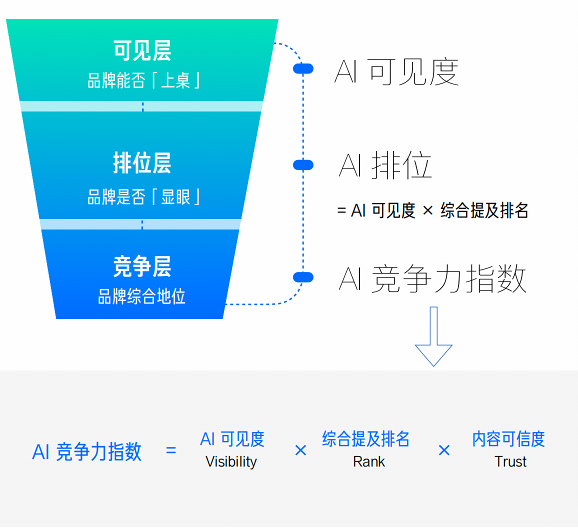
【亿邦原创】3月10日,知乎在上海举办“新答案2026品牌AI竞争力指数首发”大会,联合中国信息通信研究院人工智能研究所推出《2026品牌AI竞争力报告》,正式发布行业首个品牌AI竞争力指数,以及“品牌AI竞争力指数=AI可见度×综合提及排名×内容可信度”公式。

数据显示,截至2025年第四季度,全球生成式AI渗透率已达到总人口的16.3%,2035年生成式AI市场规模接近1万亿美元大关。随着全球科技巨头相继发布通用商业协议,预示着AI Agent将更深度介入消费决策链。如何让商品被AI有效识别并提升其可见性和AI回答中的排位,正成为品牌需要布局的关键领域。

为此,知乎联合中国信息通信研究院人工智能研究所发布《2026品牌AI竞争力报告》,首次提出“品牌AI竞争力指数=AI可见度×综合提及排名×内容可信度”的公式,将AI推荐的黑盒机制转化为可监测的核心指标。知乎营销研究院负责人桑田在现场发言中表示,“在品牌AI竞争力的三层递进框架中,可见层意味着品牌能否上桌,排位层决定品牌是否显眼,而竞争层则反映了品牌的综合地位。”

值得注意的是,该指数最大的特色是对内容可信度的引入。报告显示,内容可信度是由“信源可信度”与“引用内容质量”共同决定:“内容可信度=信源可信度×️引用内容质量”。这意味着,品牌必须同时满足权威的平台背书与高密度的高质量内容,才能跨越AI的信任门槛。任何维度的缺失都可能导致品牌在AI推荐机制中失效。

量子位智库报告显示,知乎专业内容被AI智能助手引用率达到29.9%,在内容社区中居首。这使得知乎一方面成为品牌方高度认可的内容营销与口碑建设阵地,另一方面也成为AI生成答案的可靠信源之一。

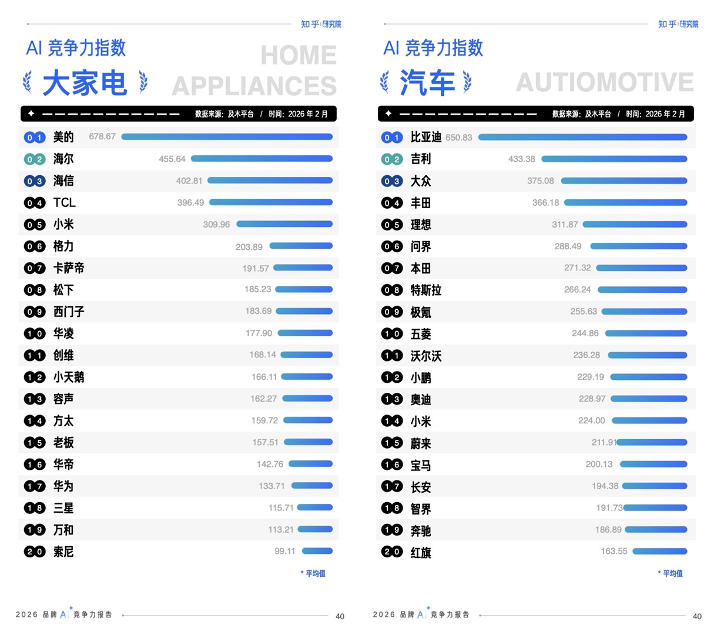
此外,大会还发布了大家电、汽车、手机、护肤、美妆等领域的AI竞争力指数榜单,为当下主要消费领域的AI营销提供了行动指南。


文章来源:亿邦动力

广告
微信
朋友圈

FAQ回顾

什么是品牌AI竞争力指数?

品牌AI竞争力指数是知乎联合中国信息通信研究院提出的衡量标准,其计算公式为AI可见度×综合提及排名×内容可信度,旨在将AI推荐机制转化为可监测的核心指标。

品牌AI竞争力指数中的内容可信度如何计算?

内容可信度由信源可信度与引用内容质量共同决定,公式为:内容可信度=信源可信度×引用内容质量,要求品牌同时具备权威平台背书和高密度高质量内容。

知乎在AI内容生态中的表现如何?

量子位智库报告显示,知乎专业内容被AI智能助手引用率达到29.9%,在内容社区中居首,成为AI生成答案的重要可靠信源。

这么好看,分享一下?

朋友圈 分享

APP内打开

赞 +1
+1
微信好友 朋友圈 新浪微博 QQ空间
关闭
收藏成功
发送
/140 0