广告
加载中

抖音即时零售收缩战线 下线多个高风险类目

姜琪 2026-02-03 14:16
姜琪 2026/02/03 14:16

邦小白快读

EN
全文速览

抖音即时零售近期收缩战线,下线多个高风险类目,直接影响商家经营和消费者购物。

1. 具体调整包括三类目“暂停招商”:黄金/彩宝/钻石/珍珠全类目、时尚饰品-银饰、保健食品,新商家无法入驻,存量商家需通过“定向邀约”经营,否则必须下架商品。

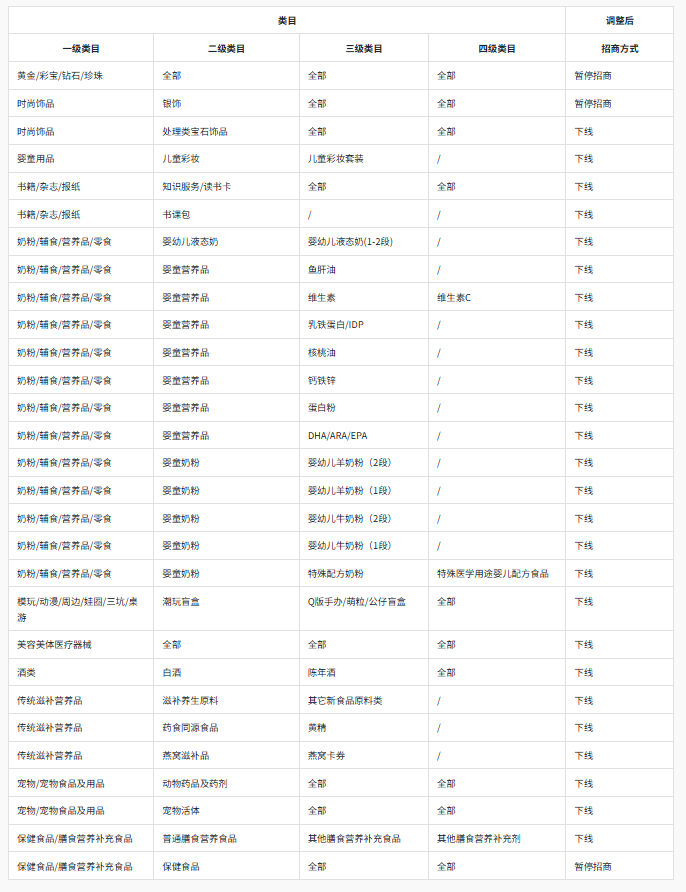
2. “下线”类目涵盖儿童彩妆套装、婴幼儿液态奶(1-2段)、部分婴童营养品、美容美体医疗器械、宠物活体、白酒陈年酒、燕窝卡券等,全面禁止新品上架,现有商品需下架处理。

3. 调整原因在于国家法规在婴幼儿食品、医疗器械等领域持续收紧,同时这些类目品控、物流、售后难度高、易引发纠纷,平台借此集中资源提升效率。

4. 短期可能给中小商家带来转型压力,但长期通过严格准入和优中选优机制,可净化市场、推动合规经营,实现共赢。

抖音平台类目调整影响品牌营销渠道和消费趋势,为品牌提供战略参考。

1. 品牌渠道建设方面,高风险类目如保健食品、黄金珠宝暂停招商,实施定向邀约,品牌需优先获取平台邀请才能入驻,避免低质竞争冲击渠道稳定性。

2. 消费趋势体现为国家法规在婴幼儿食品、保健等领域的收紧,反映用户对产品安全的需求增强,品牌应关注合规设计以契合趋势。

3. 产品研发机会上,下线类目如儿童彩妆和医疗器械,提醒品牌减少高风险研发,转向规范保健食品或安全品类,以利用平台资源集中机制。

4. 品牌定价和竞争方面,定向邀约策略强调优质商家,品牌可通过提升服务规范争取资源,防止低价竞争损害行业生态。

抖音规则收紧带来政策解读和经营应对需求,卖家需快速调整战略。

1. 政策解读:平台暂停高风险类目招商并下线敏感商品,直接呼应国家婴幼儿食品、医疗器械法规,卖家须遵守新规,避免违规风险。

2. 风险提示:下线类目如宠物活体、燕窝卡券的卖家需立即下架存量商品,否则面临平台处罚;中小商家短期转型压力大,需警惕市场波动。

3. 机会提示:合规经营可获“定向邀约”支持,长期资源向优质卖家集中,增长市场转向规范品类;消费需求变化显现在安全标准提升,卖家可开发新需求机会。

4. 事件应对措施:卖家应评估自身类目风险,及时调整库存,学习平台优中选优机制,提升资质和服务以赢得邀约。

5. 可学习点:平台通过收缩高风险类目减少纠纷,卖家可优化品控流程,实现高效运营。

抖音调整启示产品生产和电商机会,工厂应把握数字化方向。

1. 产品生产需求上,下线类目如婴幼儿液态奶、部分婴童营养品和医疗器械,显示工厂需减少高风险产品制造,转向合规标准生产以避免滞销。

2. 商业机会体现为保健食品、规范饰品等类目通过定向邀约保留,工厂可聚焦资质完备产品开发,利用平台资源集中机制拓展市场。

3. 推进数字化和电商启示:平台收缩高风险类目以提升效率,工厂应加强品控和物流数字化,适应电商合规趋势,减少运营成本。

4. 机会延伸:国家法规收紧推动产业升级,工厂可研发安全创新产品,抓住长期净化市场带来的稳定需求。

行业趋势和客户痛点凸显,服务商可提供针对性解决方案。

1. 行业发展趋势:抖音收缩高风险类目如宠物活体、白酒陈年酒,反映即时零售向合规化集中,服务商需关注电商平台资源优化动向。

2. 客户痛点:商家面临品控难、物流售后高成本问题,如医疗器械和燕窝卡券易引发纠纷,服务商可识别这些痛点提供支持。

3. 解决方案:平台通过下线类目减少治理难度,服务商可开发品控工具或合规咨询,帮助商家适应定向邀约机制,提升服务体验。

4. 趋势延伸:新技术应用在资源集中策略中,服务商可推动数字化治理方案,解决运营效率问题。

抖音最新做法优化招商和运营管理,为平台商提供风向规避参考。

1. 平台最新做法:暂停高风险类目招商并下线敏感商品如儿童彩妆、保健食品,实施定向邀约机制,优中选优筛选商家。

2. 平台招商:类目结构调整后,招商聚焦规范品类,减少新进风险,存量商家需邀约才能经营,确保资质完备。

3. 运营管理:通过收缩高风险类目,集中资源到规模性品类,提升整体效率和服务体验,减少品控、物流等治理成本。

4. 风向规避:主动下线社会敏感类目如婴幼儿食品和医疗器械,防范政策法律风险,避免低质竞争和信任危机,维护平台生态。

产业动向和政策启示揭示商业模式新问题,研究者可深入分析。

1. 产业新动向:抖音即时零售收缩高风险类目,如黄金珠宝和保健食品下线,显示平台主动响应法规,推动资源集中趋势。

2. 新问题:监管收紧带来中小商家转型压力,如何平衡短期冲击与长期市场净化成为研究焦点。

3. 政策法规启示:国家在婴幼儿食品、医疗器械领域法规持续收紧,直接影响平台决策,研究者可探讨政策对电商生态的塑造作用。

4. 商业模式:定向邀约机制作为筛选策略,促进资源向合规商家集中,研究者可分析其优中选优模式对行业共赢的贡献。

返回默认

声明:快读内容全程由AI生成,请注意甄别信息。如您发现问题,请发送邮件至 run@ebrun.com 。

我是 品牌商 卖家 工厂 服务商 平台商 研究者 帮我再读一遍。

Quick Summary

Douyin's instant retail sector is scaling back operations, removing multiple high-risk categories that directly impact merchant operations and consumer shopping.

1. Specific adjustments include "suspending new merchant recruitment" for three categories: Gold/Colored Gems/Diamonds/Pearls (all subcategories), Fashion Accessories - Silver Jewelry, and Health Foods. New merchants cannot enter these categories, while existing merchants must operate via "invitation-only" status or remove their products.

2. "Removed" categories include children's makeup sets, infant liquid milk (stages 1-2), certain infant and child nutritional products, medical aesthetic/body care devices, live pets, aged baijiu, and bird's nest vouchers. New product listings are completely banned, and existing products must be taken down.

3. The adjustments are driven by tightening national regulations in areas like infant food and medical devices, coupled with the high difficulty and dispute-prone nature of quality control, logistics, and after-sales for these categories. The platform is using this move to concentrate resources and improve efficiency.

4. While this may create short-term transition pressure for small and medium-sized merchants, the long-term effect, through stricter access and a 'best-of-the-best' selection mechanism, is expected to purify the market, promote compliant operations, and achieve a win-win outcome.

Douyin's category adjustments impact brand marketing channels and consumer trends, offering strategic insights for brands.

1. For channel development, high-risk categories like Health Foods and Gold/Jewelry have suspended open recruitment in favor of an invitation-only model. Brands must prioritize securing a platform invitation to ensure channel stability and avoid disruption from low-quality competition.

2. Consumer trends reflected in tightening national regulations for infant food and health products indicate heightened user demand for product safety. Brands should focus on compliance-driven design to align with this trend.

3. Regarding R&D opportunities, the removal of categories like children's makeup and medical devices signals a need to reduce high-risk product development. Brands should pivot towards standardized health foods or safer categories to leverage the platform's resource concentration.

4. For pricing and competition, the invitation-only strategy emphasizes high-quality merchants. Brands can secure resources by elevating service standards, preventing low-price competition from damaging the industry ecosystem.

Douyin's tightening rules necessitate policy interpretation and strategic adaptation for sellers.

1. Policy Interpretation: The suspension of high-risk category recruitment and removal of sensitive goods directly responds to national regulations on infant food and medical devices. Sellers must comply to avoid violation risks.

2. Risk Warning: Sellers with products in removed categories (e.g., live pets, bird's nest vouchers) must immediately delist existing stock to avoid platform penalties. SMBs face significant short-term transition pressure and should be wary of market volatility.

3. Opportunity Highlight: Compliant operations can lead to "invitation-only" support, with long-term resources concentrating on quality sellers. Growth markets are shifting to standardized categories, and sellers can capitalize on new demand driven by rising safety standards.

4. Action Plan: Sellers should assess their category risk, adjust inventory promptly, understand the platform's selection mechanism, and improve qualifications and services to qualify for invitations.

5. Key Takeaway: The platform's reduction of high-risk categories minimizes disputes; sellers can optimize quality control processes for more efficient operations.

Douyin's adjustments provide insights into product demand and e-commerce opportunities, guiding factories toward digitalization.

1. Product Demand: The removal of categories like infant liquid milk, certain child nutritionals, and medical devices indicates factories should reduce high-risk product manufacturing and shift to compliant, standardized production to avoid unsold inventory.

2. Business Opportunity: Categories retained via invitation-only, such as standardized health foods and accessories, represent opportunities. Factories can focus on developing well-certified products to leverage the platform's resource concentration for market expansion.

3. Digital & E-commerce Impetus: The platform's retreat from high-risk categories aims to boost efficiency. Factories should enhance digital quality control and logistics to align with e-commerce compliance trends and reduce operational costs.

4. Extended Opportunity: Tightening national regulations drive industry upgrades. Factories can R&D safe, innovative products to capture stable demand from a long-term purified market.

Industry trends and client pain points highlight opportunities for service providers to offer targeted solutions.

1. Industry Trend: Douyin's scaling back of high-risk categories like live pets and aged baijiu reflects instant retail's shift towards compliance and concentration. Service providers should monitor e-commerce platforms' resource optimization moves.

2. Client Pain Points: Merchants face challenges with difficult quality control and high-cost logistics/after-sales, especially for dispute-prone categories like medical devices and bird's nest vouchers. Service providers can identify these pain points to offer support.

3. Solutions: As the platform reduces governance complexity by removing categories, service providers can develop quality control tools or compliance consulting to help merchants adapt to the invitation-only mechanism and improve service experience.

4. Trend Extension: New technology applications within resource concentration strategies present opportunities. Service providers can promote digital governance solutions to address operational efficiency issues.

Douyin's latest approach optimizes merchant recruitment and operations management, offering risk-avoidance guidance for other platforms.

1. Platform Strategy: Suspending recruitment for high-risk categories and removing sensitive goods like children's makeup and health foods, while implementing an invitation-only mechanism to select the best merchants.

2. Merchant Recruitment: Post-adjustment, recruitment focuses on standardized categories to reduce newcomer risk. Existing merchants require invitations to operate, ensuring qualification completeness.

3. Operations Management: By scaling back high-risk categories, resources are concentrated on scalable categories, boosting overall efficiency and service experience while reducing governance costs for quality control and logistics.

4. Risk Mitigation: Proactively removing socially sensitive categories like infant food and medical devices helps prevent policy/legal risks, avoids low-quality competition and trust crises, and maintains platform ecosystem health.

Industry movements and policy implications reveal new questions about business models, inviting deeper analysis.

1. Industry Movement: Douyin's instant retail sector is contracting high-risk categories like gold/jewelry and health foods, indicating proactive regulatory response and a trend towards resource concentration.

2. New Questions: Regulatory tightening creates transition pressure for SMBs. Balancing short-term disruption with long-term market purification becomes a key research focus.

3. Policy Implications: Continuously tightening national regulations for infant food and medical devices directly influence platform decisions. Researchers can explore policy's role in shaping the e-commerce ecosystem.

4. Business Model: The invitation-only mechanism acts as a filtering strategy, concentrating resources towards compliant merchants. Researchers can analyze how this 'best-of-the-best' model contributes to industry-wide benefits.

Disclaimer: The "Quick Summary" content is entirely generated by AI. Please exercise discretion when interpreting the information. For issues or corrections, please email run@ebrun.com .

I am a Brand Seller Factory Service Provider Marketplace Seller Researcher Read it again.

【亿邦原创】近日,抖音即时零售对数十个二级、三级乃至四级类目进行结构调整。其中涉及医疗器械、婴童食品、滋补保健、黄金珠宝等多个类目暂停招商或类目下线。

具体来看,“黄金/彩宝/钻石/珍珠”全类目、“时尚饰品-银饰”以及“保健食品”三大类目“暂停招商”,这意味着平台不再接受此类目新商家入驻,并对存量商家实施“定向邀约”制经营,未获邀约的商家将无法发布新品且需下架已有商品。

与此同时,平台对一批高风险或社会敏感类目采取了“下线”处理,范围包括“儿童彩妆套装”、“婴幼儿液态奶(1-2段)”、“部分婴童营养品”、“美容美体医疗器械”、“宠物活体”、“白酒陈年酒”以及“燕窝卡券”等。相关类目已全面禁止新品上架,并对存量商品进行下架处理。

此次调整尤其集中在婴幼儿食品、医疗器械、保健食品、贵金属交易等强监管领域,这直接呼应了近年来国家在相关品类上持续收紧的法律法规与行业标准。平台主动收紧入口、下线高风险类目,也是从源头防范政策与法律风险的必然选择。

从运营视角看,宠物活体、白酒陈年酒、燕窝卡券等类目在品控、物流、售后等环节治理难度大、成本高,易滋生交易纠纷与信任危机。通过收缩或下线此类类目,平台能将有限的治理资源集中投入到更具规模与规范性的品类中,提升整体运营效率与服务体验。

同时,“定向邀约”机制在黄金珠宝、保健食品等品类的应用,也是一种“优中选优”的筛选策略,旨在引导资源向资质完备、服务规范的优质商家集中,避免低质低价竞争对行业生态的损害。

短期而言,规则的收紧必然会使部分商家,尤其是中小商家,面临经营调整甚至转型的压力。然而,从行业长期发展视角审视,建立更严格的准入与运营标准,有助于净化市场环境,推动资源向合规、优质的商家集中,最终实现消费者与合规经营者共赢。

亿邦持续追踪报道该情报,如想了解更多与本文相关信息,请扫码关注作者微信。

文章来源:亿邦动力

广告
微信
朋友圈

FAQ回顾

抖音即时零售暂停招商了哪些类目?

抖音即时零售暂停招商的类目包括“黄金/彩宝/钻石/珍珠”全类目、“时尚饰品-银饰”以及“保健食品”三大类目,新商家无法入驻,存量商家需通过定向邀约经营。

抖音下线了哪些高风险类目?

平台下线的类目包括儿童彩妆套装、婴幼儿液态奶(1-2段)、部分婴童营养品、美容美体医疗器械、宠物活体、白酒陈年酒及燕窝卡券,已禁止新品上架并处理存量商品。

抖音即时零售为何调整类目政策?

调整是为应对国家在婴幼儿食品、医疗器械等领域的强监管,从源头防范政策风险,同时优化平台治理资源,提升运营效率与服务体验。

这么好看,分享一下?

朋友圈 分享

APP内打开

赞 +1
+1
微信好友 朋友圈 新浪微博 QQ空间
关闭
收藏成功
发送
/140 0