广告
加载中

李彦宏过去一年关于AI的23个断言

胡镤心 2024-11-12 11:18
胡镤心 2024/11/12 11:18

邦小白快读

EN
全文速览

过去一年,李彦宏对AI领域的23个断言揭示了关键趋势和实用信息,为普通读者提供重点干货。

1. AI应用爆发点来临:智能体作为AI应用主流形态即将爆发,百度文心大模型日均调用量达15亿,一年增长30倍;无代码技术让每个人具备程序员能力,通过说话即可创建应用,大幅提升工作效率。

2. 实操应用方向:智能体门槛低、天花板高,可能替代公司官网成为第一用户界面;未来编程语言简化至英文和中文,便于上手。

3. 风险与机会提示:避免“超级应用陷阱”,不追求单一大型APP,而是打造数百万有用应用;AI替代工作需10-30年逐步实现,有时间准备。

李彦宏观点为品牌商提供营销与研发启示,聚焦消费趋势和产品创新。

1. 品牌营销和渠道建设:公司智能体可能替代官网成为直接面向消费者的第一界面,影响用户互动行为;搜索作为智能体分发最大入口,可优化品牌触达。

2. 消费趋势和产品研发:中国更注重应用驱动,关心产品与市场契合度(PMF);智能体作为AI原生应用方向门槛低,能创建复杂服务,适合品牌开发新载体。

3. 品牌定价与机会:AI带来生产力无限扩张,品牌可借力打造有用应用;AI泡沫后伪创新清洗,1%企业胜出,品牌需关注真实价值。

李彦宏断言解读市场机会和风险,为卖家提供应对策略和学习点。

1. 增长市场和消费需求变化:AI应用生态爆发,智能体作为主流形态带来机会;中国应用驱动趋势强调PMF,卖家可关注消费者行为迁移。

2. 机会提示和合作方式:百度帮助打造数百万应用,而非单一超级应用,提供合作空间;AI应用趋势如副驾驶到AI Worker阶段,卖家可借鉴自动化。

3. 风险提示和事件应对:AI泡沫后伪创新清洗,风险高;在竞争中商业模型最有效,卖家需力争领先6个月;工作替代需10-30年逐步准备,建议采取长期主义。

AI断言为工厂提供生产和数字化启示,挖掘商业机会。

1. 产品生产和设计需求:100大产业应用涵盖制造等领域,启示工厂推进数字化;大模型对ToB业务改造深刻,比互联网影响大,可优化生产流程。

2. 商业机会和电商启示:无代码技术提升效率,工厂员工可轻松开发应用;模型差距多维,包括成本与推理速度,工厂需聚焦降本增效。

3. 数字化推进:AI应用驱动创新,智能体门槛低易于实施;长期持续迭代模型,工厂可借AI扩展生产力。

AI趋势和解决方案为服务商揭示行业痛点和创新点。

1. 行业发展趋势和技术新动向:智能体作为AI应用主流形态即将爆发,中国应用驱动模式推动基础模型创新;搜索是智能体分发入口,重塑服务生态。

2. 客户痛点和新技术:大模型消除幻觉、提升准确性,解决AI可信赖问题;模型差距包括成本高、推理速度慢,服务商需优化解决方案。

3. 解决方案启示:智能体门槛低、天花板高,便于服务商创建应用;应用发展阶段从副驾驶到AI Worker,提供自动化工具应对需求。

李彦宏观点解读平台需求和管理策略,指导招商与运营。

1. 平台需求和最新做法:AI原生应用生态不可或缺,否则大模型无价值;百度推进帮助打造数百万有用应用,避免超级应用陷阱。

2. 平台招商和运营管理:搜索作为智能体最大入口,可优化分发;模型需快速迭代降本增效,平台应持续升级以领先6个月获胜。

3. 风向规避和合作启示:AI泡沫后伪创新清洗,1%企业胜出,平台需聚焦真实价值;合作方式如应用生态建设,提供招商机会管理风险。

断言揭示产业新动向和政策启示,为研究者提供研究框架。

1. 产业新动向和商业模式:AI应用群星闪耀时刻到来,智能体是主流发展方向;应用驱动加速互联网向AI时代转变,商业模式注重PMF。

2. 新问题和政策法规启示:模型差距多维,包括成本与速度,提出效率挑战;AI替代工作需10-30年逐步实现,建议政策为长期准备;泡沫清洗伪创新,法规需支持1%真实创新企业。

3. 研究启示:大模型是颠覆性技术革命,长期主义创业者胜出;技术创新如模型消除幻觉,提升可依赖性,值得深入研究。

返回默认

声明:快读内容全程由AI生成,请注意甄别信息。如您发现问题,请发送邮件至 run@ebrun.com 。

我是 品牌商 卖家 工厂 服务商 平台商 研究者 帮我再读一遍。

Quick Summary

Robin Li's 23 assertions on AI over the past year reveal key trends and practical insights, offering essential takeaways for general readers.

1. The tipping point for AI applications is here: AI agents are set to explode as the dominant form of AI applications. Baidu's ERNIE model now handles 15 billion daily calls, a 30-fold increase in a year. No-code technology empowers everyone with programming-like abilities, enabling app creation through speech and significantly boosting work efficiency.

2. Practical application directions: AI agents have a low barrier to entry but high potential, potentially replacing corporate websites as the primary user interface. Future programming languages may simplify to just English and Chinese, making them easier to learn.

3. Risks and opportunities: Avoid the 'super app trap'—focus on building millions of useful applications instead of a single mega-app. AI's displacement of jobs will be a gradual 10-30 year process, allowing time for preparation.

Robin Li's insights offer marketing and R&D guidance for brands, focusing on consumer trends and product innovation.

1. Brand marketing and channel development: Corporate AI agents may replace official websites as the primary consumer-facing interface, altering user interaction. Search, as the main distribution channel for agents, can be optimized for brand reach.

2. Consumer trends and product R&D: China emphasizes application-driven innovation with a focus on product-market fit (PMF). AI agents, as a direction for native AI applications, have low barriers and can create complex services, making them ideal for brands to develop new engagement vehicles.

3. Brand pricing and opportunities: AI enables infinite productivity expansion, allowing brands to build useful applications. After the AI bubble bursts, pseudo-innovation will be weeded out, with only 1% of companies succeeding—brands must focus on delivering real value.

Robin Li's assertions decode market opportunities and risks, providing coping strategies and learning points for sellers.

1. Growth markets and shifting consumer demand: The AI application ecosystem is booming, with agents as the mainstream form creating opportunities. China's application-driven trend underscores PMF; sellers should monitor shifts in consumer behavior.

2. Opportunity alerts and collaboration models: Baidu aims to help create millions of applications, not a single super app, opening collaboration avenues. AI application trends, evolving from copilots to AI Workers, offer automation lessons for sellers.

3. Risk warnings and response: Post-AI bubble, pseudo-innovation will be cleared, posing high risks. The most effective business models will win in competition; sellers must strive for a 6-month lead. Job displacement will unfold over 10-30 years, advising a long-term approach.

AI assertions provide production and digitalization insights for factories, uncovering commercial opportunities.

1. Product production and design needs: Top 100 industrial applications span manufacturing, guiding factories toward digitalization. Large models have a deeper impact on B2B than the internet, optimizing production processes.

2. Commercial opportunities and e-commerce insights: No-code tech boosts efficiency, enabling factory staff to easily develop apps. Model gaps are multidimensional (e.g., cost, inference speed); factories should focus on cost reduction and efficiency gains.

3. Digitalization advancement: AI application-driven innovation makes low-barrier agents easy to implement. Continuous long-term model iteration allows factories to expand productivity with AI.

AI trends and solutions reveal industry pain points and innovation avenues for service providers.

1. Industry trends and technical developments: AI agents are poised to explode as the mainstream application form. China's application-driven model spurs foundational model innovation; search serves as the distribution gateway for agents, reshaping service ecosystems.

2. Client pain points and new tech: Large models reduce hallucinations and improve accuracy, addressing AI reliability. Model gaps include high costs and slow inference speeds, requiring providers to optimize solutions.

3. Solution insights: AI agents' low barrier and high ceiling facilitate app creation. Application evolution—from copilots to AI Workers—provides automation tools to meet demand.

Robin Li's views interpret platform needs and management strategies, guiding merchant recruitment and operations.

1. Platform demands and latest practices: A native AI application ecosystem is indispensable; without it, large models hold little value. Baidu promotes building millions of useful apps, avoiding the super app trap.

2. Merchant recruitment and operations: Search, as the primary entry for agents, optimizes distribution. Models require rapid iteration for cost and efficiency gains; platforms must continuously upgrade to maintain a 6-month competitive lead.

3. Risk avoidance and collaboration insights: Post-bubble, pseudo-innovation will be cleansed, with 1% of firms succeeding—platforms should focus on real value. Collaboration models, like ecosystem building, offer merchant opportunities while managing risks.

Assertions uncover industry shifts and policy implications, providing a research framework for scholars.

1. Industry dynamics and business models: The 'star-studded' era of AI applications has arrived, with agents as the mainstream direction. Application-driven acceleration is shifting the internet to an AI era, emphasizing PMF in business models.

2. New challenges and policy implications: Multidimensional model gaps (e.g., cost, speed) pose efficiency challenges. AI job displacement will occur gradually over 10-30 years, suggesting policies for long-term preparedness. Bubble cleansing of pseudo-innovation requires regulations supporting the 1% of genuine innovators.

3. Research implications: Large models represent a disruptive technological revolution; long-term entrepreneurs will prevail. Technical innovations, like reducing model hallucinations to improve reliability, warrant in-depth study.

Disclaimer: The "Quick Summary" content is entirely generated by AI. Please exercise discretion when interpreting the information. For issues or corrections, please email run@ebrun.com .

I am a Brand Seller Factory Service Provider Marketplace Seller Researcher Read it again.

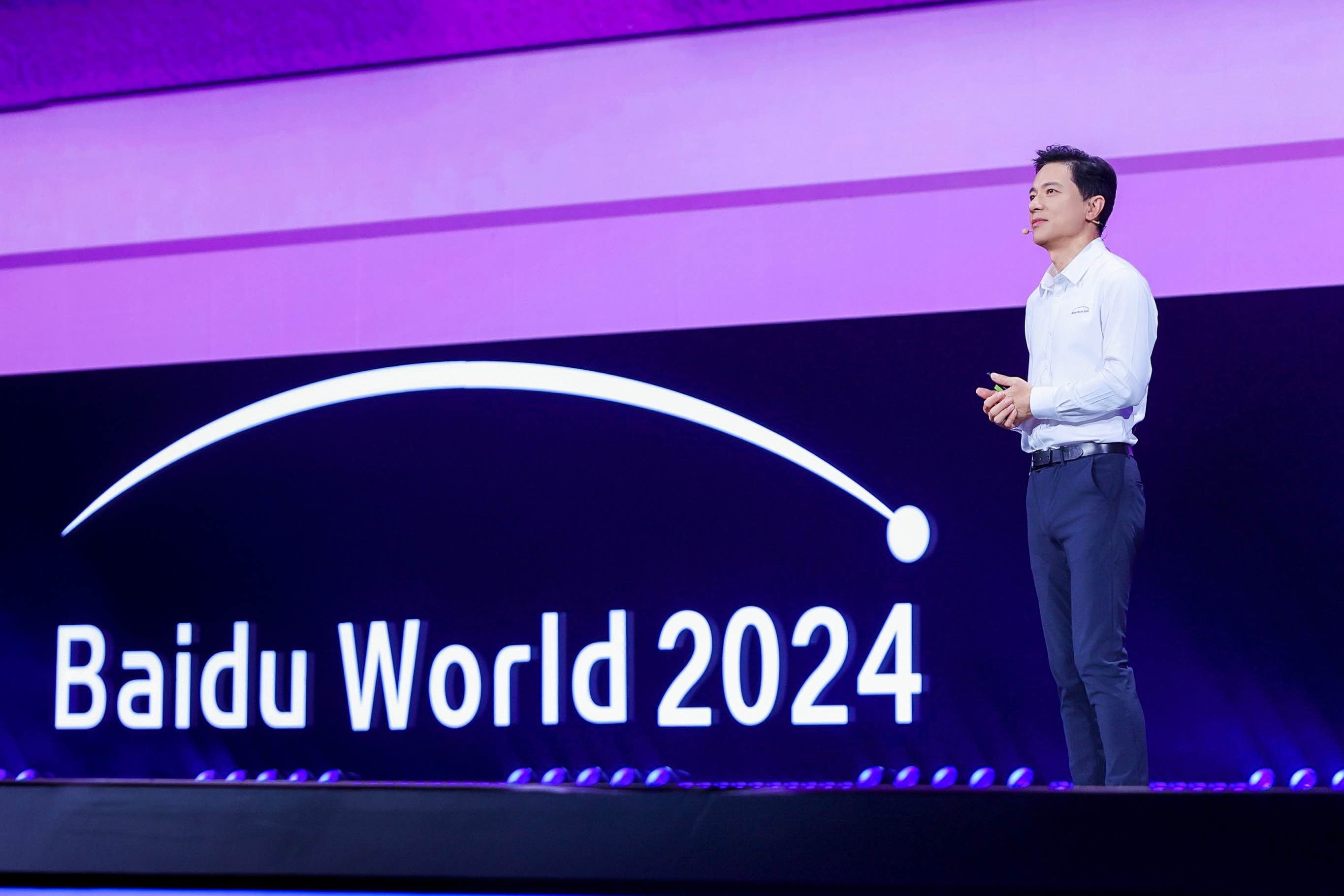
【亿邦原创】11月12日,百度世界2024在上海召开,百度创始人兼CEO李彦宏发表主题为《应用来了》的主题演讲。

李彦宏现场透露,百度文心大模型的日均调用量已经超过15亿,相较一年前首次披露的5000万次,增长约30倍。智能体是AI应用的最主流形态,即将迎来爆发点。发布了基于大模型的100大产业应用,涵盖了制造、能源、交通、政务、金融、汽车、教育、互联网等众多行业。

借此,我们回顾一下过去一年,李彦宏在AI领域作出的重要预判,这些预判涵盖模型层、应用层、商业化、生态与社会等多个层面:

1、过去这24个月,对AI行业而言,最大的变化是什么?我的回答一定是,大模型基本消除了幻觉,回答问题的准确性大幅提升了,这让AI从“一本正经的胡说八道”,变得可用、可被信赖。

2、今天,基础模型能力就绪,我们即将迎来AI应用的群星闪耀时刻。

3、智能体是AI应用的最主流形态,即将迎来它的爆发点。智能体可能会变成AI原生时代,内容、信息和服务的新载体。

4、未来,公司官方智能体很可能将替代官网,成为直接面向消费者的第一界面。

5、百度不是要推出一个“超级应用”,而是要不断地帮助更多人、更多企业打造出数百万“超级有用的应用。

6、AI之所以被称为产业革命级的机会,是因为它对于社会经济,带来了生产力的无限扩张。

7、秒哒(无代码)让每个人都具备程序员的能力,会说话就能做出应用,对工作效率的提升怎么说都不为过。

AI应用发展趋势

8、没有构建于基础模型之上的、丰富的AI原生应用生态,大模型就一文不值。

9、大模型对于ToB业务的改造,会是非常深刻和彻底的,比互联网对于ToB的影响力要大一个数量级。

10、我们要避免掉入“超级应用陷阱”,觉得一定要出现一个10亿DAU的APP才叫成功,这是移动时代的思维逻辑。

11、未来的编程语言只会剩下两种,一种叫做英文,一种叫做中文。

12、中国更注重应用驱动。尽管中国市场上有数百种基础大模型,但人们更关心产品与市场的契合度(PMF)。

13、应用驱动可以推动基础模型的创新,也有助于加速从互联网时代向人工智能时代的转变,最看好的AI应用方向:智能体

14、智能体是我最看好的Al原生应用发展方向。智能体相当于PC时代的网站和自媒体时代的账号,它最明显的特点是门槛足够低,谁都能上手,天花板又足够高,可以做出非常复杂,非常强大的应用。

15、搜索是智能体分发的最大入口。

16、大模型应用的发展阶段,一开始是副驾驶,然后是代理智能体,最主要的是它有了自主性,能自主使用工具、反思、自我净化。这种自动化程度再发展就会变成AlWorker,能够独立完成各方面的工作。

开源模型与商业化模型

17、当你处在激烈竞争的环境中,需要让业务效率比同行更高、成本比同行更低,这时,商业化模型是最能打的。

大模型技术创新

18、模型之间的差距是多维度的。行业往往更关注理解、生成、逻辑、记忆等能力的差距,但却忽视了成本、推理速度等维度,有些模型虽能达到同样效果,但成本高、推理速度慢,还是不如先进模型。

19、大模型的天花板很高,今天做到的和理想状况差得还非常远,所以模型要不断快速迭代、更新和升级。要能几年、十几年如一日地投入,不断满足用户需求,降本增效,模型之间的差距就会越来越大。

20、在一个完全竞争的市场环境中,不要觉得领先12到18个月是个很短的时间,只要能永远领先竞争对手6个月,你就赢了。

人工智能与人类社会的未来

21、替代旧工作、创造新工作,不是一夜之间就会发生的。这将需要10年、20年,甚至是30年才会逐步实现,人类会有时间为此做好准备。人工智能创新与长期主义

22、生成式Al的泡沫过后,那些无法满足市场需求的伪创新将会被清洗掉,在这之后,有1%的企业将脱颖而出,继续成长,为社会创造巨大价值。

23、大模型是一次颠覆式的技术革命,我对它的长期前景非常乐观。面对新的技术周期,坚持长期主义的创业者必将脱颖而出。

文章来源:亿邦动力

广告
微信
朋友圈

FAQ回顾

李彦宏认为AI应用最主流的发展形态是什么?

李彦宏断言智能体是AI应用最主流的形态,即将迎来爆发点,并可能成为AI原生时代内容、信息和服务的新载体,未来公司官方智能体或替代官网成为消费者第一界面。

百度文心大模型的调用量在过去一年有何变化?

百度文心大模型日均调用量已超过15亿次,相比一年前首次披露的5000万次,增长约30倍,显示出应用规模的快速扩张。

李彦宏如何看待大模型对ToB业务的影响?

李彦宏认为大模型对ToB业务的改造将非常深刻和彻底,其影响力比互联网时代大一个数量级,并强调在竞争环境中商业化模型更能提升业务效率和降低成本。

这么好看,分享一下?

朋友圈 分享

APP内打开

赞 +1
+1
微信好友 朋友圈 新浪微博 QQ空间
关闭
收藏成功
发送
/140 0