广告
加载中

出海企业传音控股在港交所上市 上年净利润同比增长46

亿邦动力 2026-10-17 10:07
亿邦动力 2026/10/17 10:07

邦小白快读

EN
全文速览

总:传音控股在港交所上市,完成A+H双重市场架构,近期业绩反弹,并明确了AI和多元化投入方向。

1. 上市发行价35.30港元,募集资金总额约30.59亿港元,净额29.68亿港元;其中40%用于AI相关技术研发,30%用于营销及品牌建设,20%投入移动互联网服务及物联网产品,10%作为营运资金。

2. 今年上半年实现营业收入354.31亿元,同比增长21.85%,归母净利润17.73亿元,同比增长46.22%,毛利率回升至22.63%;此前2025年归母净利润和经营活动现金流分别暴跌53.49%和56.58%,主因存储等元器件涨价。

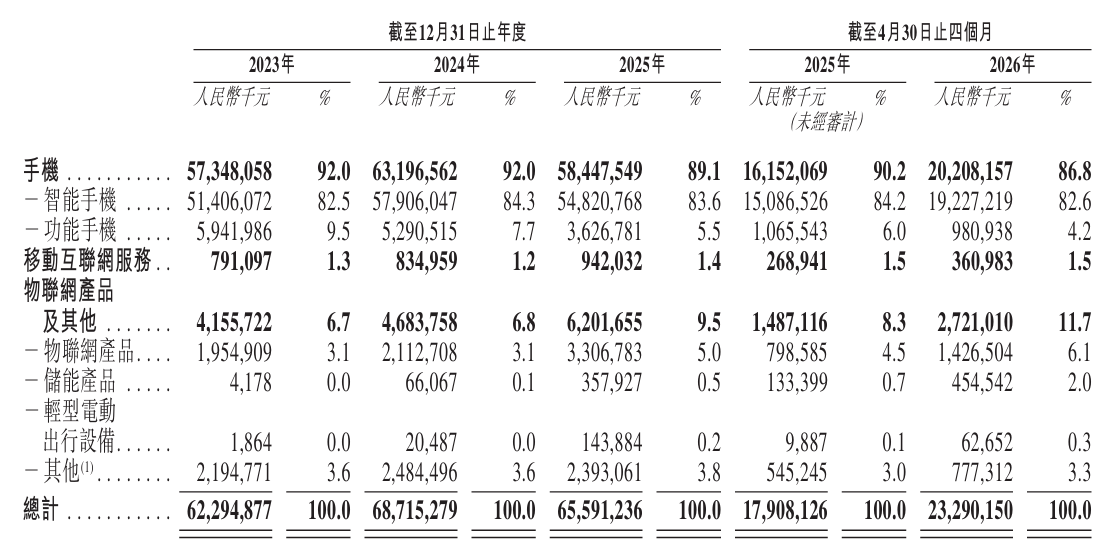
3. 手机仍是核心业务,占2025年营收89.1%,但销量下滑3240.4万台;物联网及其他产品营收占比突破10%,达到11.7%,储能产品今年前四个月营收已超去年全年。

4. 渠道和售后是护城河:全球经销商超2900家,海外服务网点超2500个,非洲市场份额第一。

总:传音控股用多品牌加性价比路线深耕非洲和新兴市场,当前正通过AI研发和品类扩张应对成本压力与竞争。

1. 品牌矩阵:旗下拥有TECNO、Infinix、itel三个手机品牌,分别定位中高端、年轻及大众市场,手机定价多在百元至三千元,走性价比路线;并已布局物联网品牌oraimo、家电品牌Syinix,储能及电动出行是开发不久的新业务。

2. 品牌渠道:全球合作经销商超2900家,海外服务网点超2500个,重视本土售后服务,这是其非洲市场份额第一的重要支撑。

3. 定价与成本:2025年因存储等元器件涨价,归母净利润下滑53.49%,今年上半年毛利率回升至22.63%,说明性价比品牌必须抓好成本管控。

4. 产品研发:募集资金的40%将用于AI相关技术研发,以实现产品和服务长期差异化;另有30%用于营销及品牌建设。

总:传音案例显示,非洲和新兴亚太仍是手机及智能硬件的增长市场,但成本上涨和竞争加剧迫使卖家调整策略。

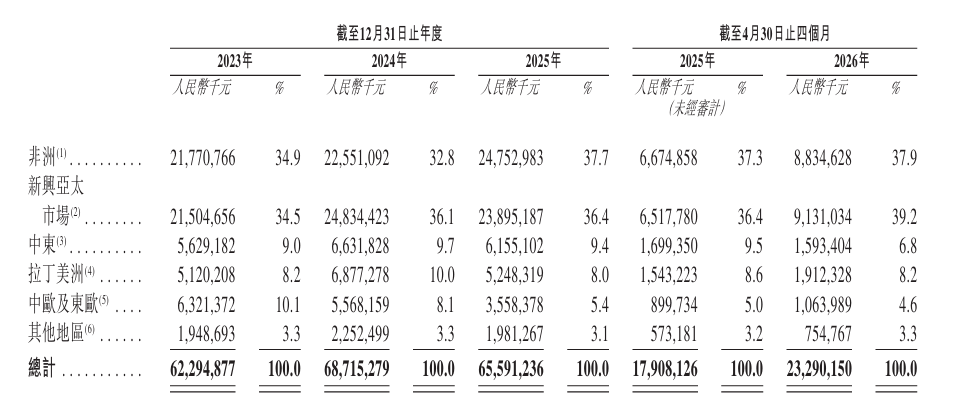
1. 增长市场:传音在非洲市场份额第一,在印尼、巴基斯坦等新兴亚太市场和中东市场份额第二;非洲贡献2025年97.7%营收,新兴亚太贡献36.4%,中东、拉美、中欧东欧则出现下滑。

2. 风险提示:2025年手机销量下滑3240.4万台,归母净利润暴跌53.49%,经营活动现金流下滑56.58%,主要受存储等元器件涨价和新兴市场竞争加剧影响。

3. 机会提示:物联网产品及其他业务营收占比突破10%,达到11.7%;储能产品今年前四个月营收超去年全年,但占总营收仅约2%,新品类空间大。

4. 应对措施:传音通过减少手机出货、推进多元化业务和布局AI研发来扭转局面,今年上半年营收增长21.85%,归母净利润增长46.22%。

总:传音的产品矩阵和市场布局为工厂带来更多潜在订单,但成本控制和本地化服务能力成为合作关键。

1. 生产需求:传音在手机之外已拥有物联网品牌oraimo、家电品牌Syinix,并开发储能和电动出行设备,对应产品线需要工厂配合生产。

2. 产品设计:手机品牌定位百元至三千元,覆盖中高端、年轻和大众市场,性价比路线要求供应链在保证品质的同时严控成本;2025年存储等元器件涨价直接冲击其利润。

3. 合作机会:传音全球经销商超2900家、服务网点超2500个,在非洲和新兴市场铺货量大,具备海外交付和售后能力的工厂有机会进入其供应链。

4. 数字化启示:募集资金40%用于AI技术研发,未来智能终端和物联网产品会更强调智能化差异化,工厂需要提升数字化制造和响应速度。

总:传音上市和转型揭示智能终端出海行业的新趋势:多品类、AI化和本地化服务,客户正面临成本压力与增长瓶颈。

1. 行业趋势:手机仍占2025年营收89.1%,但物联网及其他业务占比已经突破10%达到11.7%,储能和电动出行等新业务也在成长,终端企业不再只靠手机单打独斗。

2. 新技术:招股书战略中频繁提及AI,且募集资金的40%用于AI相关技术研发,AI成为产品和服务的长期差异化方向。

3. 客户痛点:2025年归母净利润和现金流分别下滑53.49%和56.58%,主因存储涨价和新兴市场竞争加剧,企业需要降本增效和开拓新增长点。

4. 解决方案:传音通过减少手机出货、扩展渠道网络(经销商超2900家,服务网点超2500个)、完善海外售后以及发展储能等多元业务来应对;服务商可围绕出海营销、渠道管理、本地化售后和供应链优化提供支持。

总:传音在非洲和新兴市场的渠道与售后实践值得平台参考,其区域收入波动和品类扩张也提醒平台注意风险与机会。

1. 平台招商:传音旗下有TECNO、Infinix、itel三大手机品牌和oraimo、Syinix等品牌,涉及手机、物联网、家电、储能和电动出行,平台可关注相关经销商和品类的招商机会。

2. 运营管理:全球经销商超2900家,服务网点超2500个,注重海外本土售后服务,说明海外运营必须建立本地化服务网络,平台可借鉴其经销商管理经验。

3. 风险规避:2025年手机销量下滑3240.4万台,中东、拉美、中欧东欧收入下滑,但非洲和新兴亚太仍是核心市场,平台应避免单一区域依赖,并警惕元器件涨价带来的供应波动。

4. 最新做法:传音将40%募资投入AI技术研发,30%用于营销和品牌建设,平台可结合AI工具帮助商家提升运营效率。

总:传音控股案例呈现了出海企业双重上市、成本冲击和战略转型的完整样本,适合研究产业新动向和商业模式。

1. 资本与产业动向:完成A+H双重市场架构,H股发行价35.30港元,募集资金净额29.68亿港元,40%投向AI技术研发。

2. 成本与财务问题:2023年至2025年收入分别为622.95亿、687.15亿和655.91亿元,毛利率从23.2%降至18.7%;2025年归母净利润和现金流腰斩,主因存储涨价;今年上半年净利润回升46.22%。

3. 商业模式:手机占2025年营收89.1%,多品牌覆盖性价比市场,非洲份额第一、新兴亚太和中东第二;同时发展物联网、家电、储能等多元业务,物联网占比突破10%。

4. 政策与启示:港交所募资约30.59亿港元,资金用于AI、营销、物联网和营运,可研究双重上市对全球化的支撑;非洲和新兴市场收入占比高,需关注区域和供应链风险。

返回默认
声明:快读内容全程由AI生成,请注意甄别信息。如您发现问题,请发送邮件至 run@ebrun.com 。

我是 品牌商 卖家 工厂 服务商 平台商 研究者 帮我再读一遍。

Quick Summary

Overview: Transsion Holdings listed on the Hong Kong Stock Exchange, completing an A+H dual listing structure. Recent performance has rebounded, and the company has clarified its investment direction toward AI and diversification.

1. The IPO price was HK$35.30, raising gross proceeds of approximately HK$3.059 billion and net proceeds of HK$2.968 billion. Of this, 40% is allocated to AI-related technology R&D, 30% to marketing and brand building, 20% to mobile internet services and IoT products, and 10% as working capital.

2. In the first half of this year, revenue reached RMB 35.431 billion, up 21.85% year over year; net profit attributable to shareholders reached RMB 1.773 billion, up 46.22%; gross margin recovered to 22.63%. Previously, in 2025, net profit and operating cash flow had plunged 53.49% and 56.58%, respectively, mainly due to rising prices for components such as memory.

3. Mobile phones remain the core business, accounting for 89.1% of 2025 revenue, but unit sales declined by 32.404 million. IoT and other products exceeded 10% of revenue, reaching 11.7%. In the first four months of this year, energy storage product revenue already surpassed the full-year figure for last year.

4. Distribution and after-sales service form a competitive moat: more than 2,900 distributors globally, over 2,500 overseas service points, and the No.1 market share in Africa.

Overview: Transsion has deepened its presence in Africa and emerging markets through a multi-brand, cost-effective strategy. It is now responding to cost pressure and competition via AI R&D and category expansion.

1. Brand portfolio: It operates three handset brands — TECNO for mid-to-high end, Infinix for younger consumers, and itel for the mass market. Prices range from around RMB100 to RMB3,000, emphasizing value for money. It has also introduced IoT brand oraimo and home appliance brand Syinix, with energy storage and electric mobility as recently developed businesses.

2. Brand channel: More than 2,900 partner distributors globally and more than 2,500 overseas service outlets, with strong emphasis on local after-sales service — a key pillar of its leading Africa market share.

3. Pricing and cost: In 2025, rising component prices such as memory cut net profit attributable to shareholders by 53.49%. In the first half of this year, gross margin recovered to 22.63%, showing that value-driven brands must have tight cost control.

4. Product R&D: 40% of the raised funds will be invested in AI-related technology R&D to drive long-term product and service differentiation; another 30% will go toward marketing and brand building.

Overview: Transsion's case shows that Africa and emerging Asia-Pacific remain growth markets for handsets and smart hardware, but rising costs and intensifying competition are forcing sellers to adjust strategies.

1. Growth markets: Transsion holds the No.1 share in Africa and the No.2 share in emerging Asia-Pacific markets such as Indonesia and Pakistan, as well as in the Middle East. In 2025, Africa contributed 97.7% and emerging Asia-Pacific contributed 36.4% to revenue, while the Middle East, Latin America, and Central & Eastern Europe declined.

2. Risks: In 2025, handset shipments fell by 32.404 million units, net profit attributable to shareholders plunged 53.49%, and operating cash flow declined 56.58%, driven mainly by rising component costs such as memory and intensifying competition in emerging markets.

3. Opportunities: IoT products and other businesses exceeded 10% of revenue, reaching 11.7%. In the first four months of this year, energy storage revenue already surpassed all of last year, although it represents only about 2% of total revenue, leaving ample room for expansion.

4. Response: Transsion has turned the situation around by reducing handset shipments, advancing diversification, and investing in AI R&D. In the first half of this year, revenue grew 21.85% and net profit attributable to shareholders rose 46.22%.

Overview: Transsion's product portfolio and market presence create more potential orders for factories, but cost control and localization capabilities have become key to partnerships.

1. Production demand: Beyond handsets, Transsion has IoT brand oraimo and home appliance brand Syinix, and is developing energy storage and electric mobility devices. These product lines require factory partners for manufacturing.

2. Product design: Handset brands are priced from around RMB100 to RMB3,000, serving mid-to-high-end, young, and mass-market segments. The value-for-money approach requires supply chains to maintain quality while tightly controlling costs. In 2025, rising prices for components such as memory directly squeezed profits.

3. Partnership opportunities: With more than 2,900 distributors and over 2,500 service outlets globally, Transsion ships large volumes across Africa and emerging markets. Factories with overseas delivery and after-sales capabilities can enter its supply chain.

4. Digital implications: 40% of raised funds go to AI R&D. Future smart devices and IoT products will emphasize intelligent differentiation, so factories must improve digital manufacturing and response speed.

Overview: Transsion's listing and transformation reveal new trends in the smart-device export industry: multi-category expansion, AI adoption, and localized services. Clients are facing cost pressures and growth bottlenecks.

1. Industry trends: Handsets still accounted for 89.1% of 2025 revenue, but IoT and other businesses have crossed 10%, reaching 11.7%. Energy storage and electric mobility are also growing, meaning device makers no longer rely solely on phones.

2. New technology: AI is frequently cited in the prospectus strategy, and 40% of raised funds are allocated to AI-related R&D, making AI a long-term differentiator for products and services.

3. Client pain points: In 2025, net profit attributable to shareholders and operating cash flow fell 53.49% and 56.58%, respectively, driven by memory price increases and intensified competition in emerging markets. Companies need to reduce costs, improve efficiency, and identify new growth areas.

4. Solutions: Transsion has responded by cutting handset shipments, expanding its channel network (over 2,900 distributors and more than 2,500 service outlets), strengthening overseas after-sales, and developing diversified businesses like energy storage. Service providers can support clients in export marketing, channel management, localized after-sales, and supply chain optimization.

Overview: Transsion's channel and after-sales practices in Africa and emerging markets offer lessons for platforms. Its regional revenue volatility and category expansion also signal both risks and opportunities.

1. Platform sourcing: Transsion operates three handset brands — TECNO, Infinix, and itel — along with oraimo, Syinix, and others across handsets, IoT, home appliances, energy storage, and electric mobility. Platforms should explore merchant recruitment opportunities with related distributors and categories.

2. Operations: With over 2,900 distributors and more than 2,500 service outlets worldwide, Transsion emphasizes localized after-sales service. This shows that overseas operations require a local service network, and platforms can learn from its distributor management.

3. Risk mitigation: In 2025, handset shipments dropped by 32.404 million units, and revenue declined in the Middle East, Latin America, and Central & Eastern Europe. Africa and emerging Asia-Pacific remain core markets. Platforms should avoid over-reliance on any single region and watch for supply volatility caused by component price hikes.

4. Latest moves: Transsion is allocating 40% of proceeds to AI R&D and 30% to marketing and brand building. Platforms can use AI tools to help merchants improve operational efficiency.

Overview: The Transsion case offers a complete sample of an overseas-focused company undergoing dual listing, cost shocks, and strategic transformation, making it useful for studying industry trends and business models.

1. Capital and industry dynamics: It completed an A+H dual listing. The H-share issue price was HK$35.30, with net proceeds of HK$2.968 billion, 40% allocated to AI R&D.

2. Cost and financial issues: Revenue from 2023 to 2025 was RMB 62.295 billion, RMB 68.715 billion, and RMB 65.591 billion, respectively, while gross margin fell from 23.2% to 18.7%. In 2025, net profit attributable to shareholders and operating cash flow were cut in half, mainly due to memory price increases. In the first half of this year, net profit attributable to shareholders rose 46.22%.

3. Business model: Handsets accounted for 89.1% of 2025 revenue. The multi-brand strategy covers value-for-money segments, with No.1 share in Africa and No.2 in emerging Asia-Pacific and the Middle East. It also develops diversified businesses such as IoT, home appliances, and energy storage, with IoT crossing 10% of revenue.

4. Policy and implications: The HKEX listing raised approximately HK$3.059 billion, with funds allocated to AI, marketing, IoT, and operations. This provides a case for studying how dual listing supports globalization. Given the high revenue share from Africa and emerging markets, regional and supply chain risks deserve attention.

Disclaimer: The "Quick Summary" content is entirely generated by AI. Please exercise discretion when interpreting the information. For issues or corrections, please email run@ebrun.com .

I am a Brand Seller Factory Service Provider Marketplace Seller Researcher Read it again.

【亿邦原创】日前,出海企业深圳传音控股股份有限公司于港交所上市,就此完成“A+H股”的双重市场架构。上市当日开盘价为34.96港元/股,至当日收盘跌至33.28港元/股,收盘时公司总市值为411.95亿元。

据悉,传音控股本次H股发行价为35.30港元,发行8664.83万股,募集资金总额约为30.59亿港元,募集资金净额为29.68亿港元。

作为一家智能终端产品和移动互联网服务提供商,传音控股旗下拥有TECNO、Infinix、itel三个手机品牌,产品定位虽覆盖中高端、年轻及大众市场,手机多是百元和不超过三千元的定价,主要走的还是性价比路线。此外,传音控股还在推进多元化业务布局,现有物联网产品品牌oraimo、家用电器品牌Syinix,储能产品与电动出行设备则是开发不久的新业务。

招股书显示,2023年至2025年,传音控股收入分别为622.95亿元、687.15亿元、655.91亿元,毛利率分别为23.2%、20.9%及18.7%。值得关注的是,相较于2024年,传音控股在2025年的营收、归母净利润和经营活动现金流表现并不乐观,均出现负增长,尤其是归母净利润和现金流腰斩,分别暴跌53.49%和56.58%,招股书称主要受到存储等元器件涨价较多影响。

但下滑状态在今年上半年有所扭转。上半年,公司实现营业收入354.31亿元,同比增长21.85%;归母净利润17.73亿元,同比增长46.22%,毛利率也回升至22.63%。

目前,手机仍是传音控股绝对的核心业务,2025年为传音控股创造了89.1%的营收,但受采购成本上升影响,传音控股在去年减少出货,叠加新兴市场竞争加剧,导致手机产品销量下滑3240.4万台。而物联网产品及其他业务正在逐渐增长,占据营收的比重,也在今年上半年突破10%,达到11.7%。

深耕非洲市场是传音控股的长期战略,销量方面,传音控股在非洲的市场份额已经位居第一,此外在包括印尼、巴基斯坦等国在内的新兴亚太市场和中东市场也有不错表现,市场份额则排名第二。其竞争力在于,传音控股搭建了广泛的渠道网络,全球合作的经销商超过2900家,并注重海外本土售后服务,有超过2500个服务网点。

具体到收入地域结构,非洲为传音控股提供了最大的营收来源,2025年营收占比达到97.7%。其次是新兴亚太市场,营收贡献稍次于非洲,为36.4%。不过近两年财务数据显示,传音控股在中东、拉丁美洲、中欧及东欧存在下滑之势。

面对核心业务下滑、行业竞争加剧的市场现状,传音控股也在试图寻找新的增长空间。多业务布局稍显成效,如储能产品2026年前四个月营收已超过去年全年水平,但占总营收比重仍较低,仅约2%。未来,持续技术研发可能将是传音控股的重点,在其招股书战略部分,“AI”被频频提及,而募集资金用途也印证这将是传音控股的发力重点,因为募集所得款项净额的40%都会用作AI相关技术研发,帮助其实现产品和服务的长期差异化。

此外,在剩下的所得款项净额中,30%用于营销及品牌建设,20%将投入移动互联网服务及物联网产品,剩下的10%作为营运资金及一般企业用途。


本文首发于 亿邦动力 官方网站

文章来源:亿邦动力

广告
微信
朋友圈

FAQ回顾

传音控股是做什么的?属于什么行业?

传音控股是一家智能终端产品和移动互联网服务提供商,主要属于智能手机出海行业。旗下拥有TECNO、Infinix、itel三个手机品牌,产品多定价在百元至三千元以内,主打性价比路线,同时布局物联网、家用电器、储能产品及电动出行设备等多元化业务。

传音控股为什么能在非洲市场占据第一?

传音控股深耕非洲市场,手机销量市场份额位居非洲第一。其竞争力来自广泛的渠道网络和本地化服务:全球合作经销商超过2900家,海外售后服务网点超过2500个。2025年非洲市场贡献了传音控股97.7%的营收,是其最大的收入来源。

传音控股2025年净利润为什么大幅下滑?

2025年传音控股归母净利润同比暴跌53.49%,主要因存储等元器件涨价导致采购成本上升,公司减少出货量,叠加新兴市场竞争加剧,手机产品销量下滑3240.4万台。2026年上半年业绩扭转,归母净利润同比增长46.22%,毛利率回升至22.63%。

传音控股港交所上市募集资金将用于哪些方面?

传音控股H股发行价为35.30港元,发行8664.83万股,募集资金净额约29.68亿港元。所得款项净额的40%用于AI相关技术研发,30%用于营销及品牌建设,20%投入移动互联网服务及物联网产品,10%作为营运资金及一般企业用途。

传音控股的手机品牌有哪些?分别定位什么市场?

传音控股旗下手机品牌包括TECNO、Infinix和itel:TECNO覆盖中高端市场,Infinix面向年轻市场,itel定位大众市场。手机价格多在百元至三千元以内,主要走性价比路线。

这么好看,分享一下?

朋友圈 分享

APP内打开

赞 +1
+1
微信好友 朋友圈 新浪微博 QQ空间
关闭
收藏成功
发送
/140 0