广告
加载中

阿里国际站Accio最新数据:完成全量电商任务AI成本较通用方案低超50%

亿邦动力 2026-09-10 10:05
亿邦动力 2026/09/10 10:05

邦小白快读

EN
全文速览

本文核心是阿里国际站发布商用电商AI工具Accio的最新成果,对普通电商创业者来说,核心干货如下

1. 核心性能信息:Accio完成全量电商任务总成本仅3.69美元,比OpenAI Codex、Anthropic Claude Code的成本低超50%,且任务完成质量相当,是目前中小商家可获得的成本优势最强的电商AI工具。

2. 实操可用功能:升级后的Accio是面向小企业的统一AI工作空间,可完成市场调研、产品机会识别、产品开发、供应商评估到全平台日常运营的全流程工作,还打通了亚马逊、TikTok Shop等多个主流跨境渠道,可一站式操作多店铺。

3. 成本控制逻辑:它不会默认调用高端模型,而是拆分需求为每个步骤匹配适配模型,加上缓存复用等机制减少冗余消耗,商家不用为不需要的算力付费,门槛很低。

对布局跨境业务的品牌商来说,本文核心干货集中在AI赋能方向和行业趋势两方面,具体如下

1. AI降本新方案:Accio这类场景化电商AI可以帮品牌把AI使用成本降低50%以上,同时覆盖从市场调研、产品研发到多渠道运营的全流程,能够帮助中小品牌降低AI技术投入门槛,实现轻量化运营。

2. 行业趋势判断:当前商用AI落地已经不再单纯追求单一通用大模型的高性能,转而走向场景化分层优化路线,不同任务匹配不同能力的AI模型,兼顾成本和质量,这个方向给品牌布局AI降本提效指明了方向。

3. 市场机会提示:现在中小商家对可负担的实用AI需求强烈,品牌可以结合这个需求变化,借助AI工具优化自身产品研发和多渠道布局,打通多个跨境平台降低运营成本,提升市场竞争力。

对跨境电商卖家来说,本文带来了新的工具机会和行业动向,核心干货如下

1. 高性价比工具机会:阿里国际站推出的Accio是专门面向中小商家的电商AI工具,成本比通用AI方案低超50%,完成质量相当,能够直接帮卖家降低运营的技术成本。

2. 全流程功能支持:Accio可以覆盖卖家从市场调研、选品开发、供应商评估到多平台店铺运营的全流程需求,还打通了亚马逊、eBay、TikTok Shop、沃尔玛等几乎所有主流跨境渠道,卖家可以一站式完成多平台操作,简化工作流程。

3. 方向提示:AI商用已经走向场景化分层方案,卖家不用盲目跟风追求最贵最强的通用大模型,选择适配电商场景的专用AI工具就可以满足需求,大幅降低运营成本,开源的测试集也给卖家测试AI工具提供了统一参考标准。

对做跨境供货的工厂来说,本文带来了新的商业机会和数字化转型启示,核心干货如下

1. 产品生产设计需求变化:现在AI工具已经可以高效完成产品机会识别、供应商评估等工作,下游卖家借助AI能够更快提炼市场需求,工厂需要更快对接卖家的精准需求,优化自身的产品设计和生产方向,更贴合市场真实需求。

2. 数字化转型启示:工厂推进电商化和数字化转型的时候,不用盲目投入高端通用大模型,可借鉴Accio的分层思路,针对不同任务匹配不同能力的工具,在满足需求的同时控制转型成本,提升转型效率。

3. 商业拓展机会:Accio这类AI平台整合了大量跨境卖家和多渠道资源,工厂可以依托这类平台对接更多下游精准卖家,获得更多订单需求,拓展自身的销路,降低获客成本。

对AI服务商、电商服务商来说,本文披露了行业最新的技术动向和客户痛点,核心干货如下

1. 核心客户痛点:当前中小电商商家的核心痛点是用不起高成本的通用AI方案,商家需要的是实用可负担的场景化AI工具,而非单纯追求高性能的通用大模型,这给服务商指明了产品开发的方向。

2. 技术路线启示:最优的商用电商AI方案不是打造单一超强通用模型,而是针对真实商业场景做全系统优化,走任务分层路由的路线,不同任务匹配不同能力的模型,平衡质量、速度、成本,还可通过缓存复用、上下文压缩等机制进一步降低冗余消耗。

3. 行业标准动向:阿里国际站开源了基于真实商家行为提炼的电商AI测试集,覆盖7大类107项真实端到端电商任务,为行业开发测试电商AI产品提供了统一的真实场景标准,能帮助服务商提升产品开发效率。

对电商平台来说,本文分享了面向中小商家服务的最新经验和行业风向,核心干货如下

1. 商家核心需求:中小商家对平台服务的核心需求是可负担、实用的商用AI工具,用来降低运营门槛和成本,单一高性能大模型成本过高,不符合中小商家的实际承受能力。

2. 可参考的最新做法:阿里国际站通过对AI做场景化分层优化,推出了Accio统一AI工作空间,覆盖商家从调研寻源到日常运营的全流程需求,还打通多个外部主流电商渠道提升使用便利性,同时开源测试集建立行业标准,能够有效吸引中小商家入驻。

3. 风向规避提示:平台布局AI服务不要盲目追逐单一通用大模型的风口,要贴合中小商家的实际成本需求和场景需求,做针对性的场景化优化,才能打造出有竞争力的商家服务,避免投入大量资源却得不到商家认可的风险。

对电商产业、AI产业研究者来说,本文披露了商用AI落地电商的最新动向和研究素材,核心干货如下

1. 产业新动向:当前商用AI落地中小电商场景,已经走出了一条不同于通用大模型的新路线,也就是场景化分层任务路由模式,针对电商专属场景做模型后训练,不同任务匹配不同能力的模型,平衡成本和效果,这是AI商业化落地的新方向。

2. 公开研究资源:阿里国际站开源了基于千万级活跃商家真实行为提炼的Commerce Agent Bench测试集,包含覆盖多类任务的107项真实端到端电商任务,为行业研究商用AI在电商场景的性能提供了标准统一的测试基准,方便开展相关研究。

3. 研究结论参考:本次测试用真实数据验证了“没有单一模型能在全品类电商任务中保持领先”的结论,印证了任务分层路由模式的合理性,同时也证明了商用AI的核心竞争力是可落地可负担,而非单纯的模型性能,对研究AI商业化方向有重要参考价值。

返回默认

声明:快读内容全程由AI生成,请注意甄别信息。如您发现问题,请发送邮件至 run@ebrun.com 。

我是 品牌商 卖家 工厂 服务商 平台商 研究者 帮我再读一遍。

Quick Summary

This article shares the latest update on Accio, the commercial e-commerce AI tool launched by Alibaba International Digital Business (Alibaba.com). Below are key takeaways for ordinary e-commerce entrepreneurs:

1. Core performance highlights: Accio completes end-to-end full-volume e-commerce tasks at a total cost of only $3.69, which is more than 50% lower than OpenAI Codex and Anthropic Claude Code, while delivering comparable task completion quality. It is currently the most cost-competitive e-commerce AI tool accessible to small and medium-sized merchants.

2. Production-ready end-to-end features: The upgraded Accio serves as a unified AI workspace for small businesses, covering the full workflow from market research, product opportunity identification, product development, supplier evaluation to cross-platform daily operations. It also integrates with major cross-border sales channels including Amazon and TikTok Shop, enabling one-stop multi-store management.

3. Built-in cost control mechanism: Instead of defaulting to high-end large models, Accio splits user demands and matches each step with a model of appropriate capability. Combined with mechanisms like cached result reuse, it cuts redundant consumption, so merchants never pay for unnecessary computing power, resulting in a very low adoption barrier.

Below are key takeaways for brands developing cross-border businesses, focusing on AI empowerment opportunities and industry trends:

1. New AI cost-reduction solution: Scenario-specific e-commerce AI tools like Accio can cut brands’ AI usage costs by more than 50%, while covering the full workflow from market research, product development to multi-channel operations. This lowers the AI adoption barrier for small and medium-sized brands and enables lightweight operations.

2. Emerging industry trend: Commercial AI deployment is no longer centered on chasing the high performance of a single general-purpose large model. The industry has shifted toward scenario-specific layered optimization, which matches each task with an AI model of appropriate capability to balance cost and quality. This direction clarifies the path for brands to adopt AI to cut costs and boost efficiency.

3. Untapped market opportunity: Small and medium-sized merchants currently have strong, unmet demand for affordable, practical AI tools. Brands can align their strategies with this shift in demand, leverage AI tools to optimize product development and multi-channel layout, integrate multiple cross-border platforms to cut operating costs, and enhance market competitiveness.

This article highlights new tool opportunities and industry shifts for cross-border e-commerce sellers, with core takeaways below:

1. High cost-performance tool opportunity: Accio, launched by Alibaba.com, is an e-commerce AI purpose-built for small and medium-sized merchants. It costs more than 50% less than general AI solutions while delivering comparable performance, directly cutting sellers’ operating technology costs.

2. Full workflow support: Accio meets sellers’ end-to-end needs from market research, product selection and development, supplier evaluation to multi-platform store operation. It integrates with almost all major cross-border channels including Amazon, eBay, TikTok Shop and Walmart, allowing sellers to complete multi-platform operations in one place and simplify workflows.

3. Strategic guidance: Commercial AI has shifted to scenario-specific layered solutions. Sellers do not need to blindly chase the most expensive and powerful general large models; purpose-built AI tools adapted for e-commerce scenarios can fully meet their needs and significantly cut operating costs. The open-source test set released alongside Accio also provides a unified reference standard for sellers to evaluate AI tools.

This article outlines new business opportunities and digital transformation insights for factories engaged in cross-border supply, with core takeaways below:

1. Shifts in product design demand: AI tools can now efficiently complete product opportunity identification, supplier assessment and other tasks, allowing downstream sellers to extract market demand faster. Factories need to speed up alignment with sellers’ precise demands, adjust product design and production direction, and better align with actual market needs.

2. Digital transformation guidance: When advancing e-commerce and digital transformation, factories do not need to blindly invest in high-end general large models. They can adopt Accio’s layered strategy: match different tasks with tools of appropriate capability, to meet needs while controlling transformation costs and improving transformation efficiency.

3. New business expansion opportunities: AI platforms like Accio aggregate large volumes of cross-border sellers and multi-channel resources. Factories can leverage these platforms to connect with more precise downstream sellers, secure more order demands, expand sales channels, and lower customer acquisition costs.

This article discloses the latest industry technology trends and core customer pain points for AI and e-commerce service providers, with core takeaways below:

1. Core customer pain point: The biggest pain point for small and medium-sized e-commerce merchants is that general AI solutions are too expensive to adopt. Merchants need practical, affordable scenario-specific AI tools rather than purely high-performance general large models, which clarifies the product development direction for service providers.

2. Technology route guidance: The optimal commercial e-commerce AI solution is not to build a single super general model, but to deliver end-to-end system optimization for real business scenarios through a task layered routing approach: matching different tasks with models of appropriate capability to balance quality, speed and cost. Additional mechanisms including cached result reuse and context compression can further cut redundant consumption.

3. New industry standard progress: Alibaba.com has open-sourced an e-commerce AI test set derived from real merchant behavior, covering 107 real end-to-end e-commerce tasks across 7 categories. This provides the industry with a unified real-scenario standard for developing and testing e-commerce AI products, helping service providers improve product development efficiency.

This article shares the latest insights on serving small and medium-sized merchants and emerging industry trends for e-commerce platforms, with core takeaways below:

1. Core merchant demand: The top demand from small and medium-sized merchants for platform services is affordable, practical commercial AI tools to lower operation barriers and costs. Single high-performance large models come with excessive costs that do not fit the actual affordability of small and medium-sized merchants.

2. Actionable best practice: Alibaba.com adopted scenario-specific layered optimization for AI and launched Accio, a unified AI workspace that covers merchants’ full workflow from research and sourcing to daily operations. It also integrates with major external e-commerce channels to improve usability, while open-sourcing a test set to establish an industry standard, effectively attracting small and medium-sized merchants to onboard.

3. Pitfall to avoid: When rolling out AI services, platforms should not blindly chase the trend of single general large models. Instead, they need to align with small and medium-sized merchants’ actual cost and scenario needs, and deliver targeted scenario-specific optimization to build competitive merchant services and avoid the risk of heavy investment failing to win merchant recognition.

This article discloses the latest progress in commercial AI deployment in e-commerce and provides new research resources for researchers in e-commerce and AI industries, with core takeaways below:

1. New industry trend: Commercial AI deployment for small and medium e-commerce scenarios has developed a new path distinct from general large models: the scenario-specific layered task routing model. This approach conducts post-training for e-commerce-exclusive scenarios and matches different tasks with models of appropriate capability to balance cost and performance, representing a new direction for AI commercialization.

2. New public research resource: Alibaba.com has open-sourced the Commerce Agent Bench test set, derived from the real behavior of tens of millions of active merchants. It includes 107 real end-to-end e-commerce tasks across multiple categories, providing a unified standard benchmark for testing the performance of commercial AI in e-commerce scenarios and facilitating related industry research.

3. Verifiable research conclusion: The test with real-world data validates the conclusion that "no single model can maintain leading performance across all categories of e-commerce tasks", confirming the rationality of the task layered routing approach. It also proves that the core competitiveness of commercial AI lies in deployability and affordability, rather than pure model performance, which provides important reference value for research on AI commercialization directions.

Disclaimer: The "Quick Summary" content is entirely generated by AI. Please exercise discretion when interpreting the information. For issues or corrections, please email run@ebrun.com .

I am a Brand Seller Factory Service Provider Marketplace Seller Researcher Read it again.

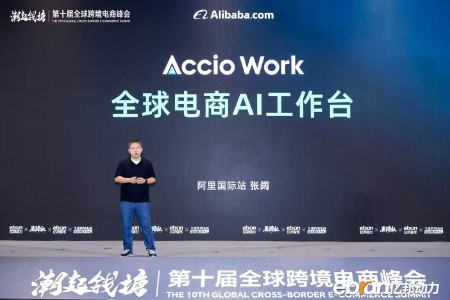
日前,阿里国际站在面向创业者及小企业的年度活动CoCreate上,公布旗下商用AI代理平台Accio的107项任务基准测试结果。数据显示,Accio完成全量电商任务的预估总成本为3.69美元,同期OpenAI Codex为9.27美元,Anthropic Claude Code为9.51美元,Accio成本较两者均低超50%,任务完成质量相当,是目前面向中小商家成本竞争力最强的电商AI工具。

阿里国际站总裁张阔称,对小企业来说负担不起的AI毫无用处,团队目标不是单纯提升AI性能,是让商用AI哪怕对单人公司也足够实用可负担。

据介绍,Accio的效率来源于针对真实商业场景的全系统优化。平台依托电商专属数据及工作流对轻量模型做针对性后训练,适配明确细分的任务,小型模型可高效处理常规工作,需要深度推理时再调用能力更强的模型。Accio不会单纯选择最便宜的模型,也不会默认调用最强模型,而是将复杂需求拆解为可执行步骤,为每个步骤平衡质量速度成本及数据要求,让商家无需为不需要的算力资源付费。缓存复用、上下文压缩及代理协同执行机制,还可减少重复处理、不必要的工具调用及冗余token消耗。

此次活动上,阿里国际站同时推出升级后的Accio,整合调研寻源及日常电商运营功能,形成面向小企业的统一AI工作空间。商家可通过Accio完成市场调研、产品机会识别、产品开发、供应商评估及日常运营管理,平台已打通亚马逊、Shopify、eBay、TikTok Shop、沃尔玛等渠道,商家可在同一界面完成上述平台支持的店铺操作。

另外,阿里国际站已在GitHub开源Commerce Agent Bench测试集。该测试集未采用合成训练题,而是从1000万活跃中小商家、160万次对话及20万条执行轨迹的真实商家行为中,提炼出覆盖7大类、4个自主等级的107项端到端电商任务,具体包括审阅数百封非结构化邮件、识别支付欺诈、计算落地成本、预订多承运人运输路线等。本次测试结果显示,没有任何单一模型可在全品类任务中保持领先,进一步印证任务层级路由的合理性,即不同任务由不同AI模型处理效果最优,无需依赖单一通用模型完成全部工作。

本文首发于 亿邦动力 官方网站

文章来源:亿邦动力

广告
微信
朋友圈

FAQ回顾

阿里国际站Accio是什么?

Accio是阿里国际站推出的商用AI代理平台,针对电商场景做全系统优化,完成全量电商任务预估总成本仅3.69美元,较OpenAI Codex、Anthropic Claude Code等通用方案成本低超50%,任务完成质量相当,适配中小商家商用AI需求。

Accio相比通用AI方案有哪些优势?

Accio针对真实电商商业场景做全系统优化,依托电商专属数据训练适配细分任务,采用任务层级路由机制平衡质量、速度、成本,搭配缓存复用、上下文压缩等技术减少冗余消耗,完成全量电商任务成本较通用AI方案低超50%,同时保证任务完成质量相当。

跨境电商中小商家可以用Accio做什么?

商家可通过Accio完成市场调研、产品机会识别、产品开发、供应商评估及日常运营管理等全链路电商工作,平台已打通亚马逊、Shopify、eBay、TikTok Shop、沃尔玛等主流跨境电商渠道,可在同一界面完成多平台店铺操作。

这么好看,分享一下?

朋友圈 分享

APP内打开

赞 +1
+1
微信好友 朋友圈 新浪微博 QQ空间
关闭
收藏成功
发送
/140 0