广告
加载中

95分发布声明:承认批量导入转转数据构成不正当竞争

龚作仁 2026-08-24 09:40
龚作仁 2026/08/24 09:40

邦小白快读

EN
全文速览

本文核心是二手闲置交易平台95分公开承认自身不正当竞争行为的事件,核心干货信息整理如下:

1. 事件核心:95分的运营主体上海置潮信息科技有限公司,为吸引商家入驻,在商家系统后台开发批量导入商品功能,非法抓取存储转转平台的商品数据,还篡改转转的防拆标掩盖数据来源,同时虚假宣传官方验机,上述行为已经被法院认定为不正当竞争。

2. 事件进展:该案件经过北京市海淀区人民法院一审、北京知识产权法院二审,已经走完司法程序,判决生效后,95分于8月21日在App首页发布公开声明认错。

3. 后续处理:95分表示愿意承担全部责任,已经对相关技术功能做了全面审视和优化,消除违规行为带来的影响。

本次事件对布局二手交易领域的品牌商,有多方面竞争合规层面的干货参考,具体如下:

1. 竞争合规边界:二手闲置交易领域,非法抓取盗用竞品平台数据已经被司法明确认定为不正当竞争,品牌商拓展市场、开发运营功能时,不能靠盗用竞品数据的方式快速拓品拉新,会直接面临法律风险。

2. 营销宣传合规:涉及服务资质的宣传,比如官方验机这类内容,必须保证真实,虚假宣传会被判定为不正当竞争,对品牌声誉和合规都会造成负面影响。

3. 风险防范提示:品牌商需要定期对自身的运营功能、宣传内容做合规审查,发现违规问题及时调整优化,避免出现影响品牌发展的合规事件,给竞争对手可乘之机。

本次事件对入驻二手交易平台的卖家,有明确的风险提示和经营参考,具体内容如下:

1. 经营风险提示:如果卖家之前使用过95分平台的批量导入转转商品功能,后续需要按照平台优化后的新规则调整自身操作,避免卷入违规事件,影响自身店铺经营。

2. 合规操作提示:二手交易行业对数据使用的合规要求已经越来越清晰,卖家自身采集、使用其他平台的商品信息时,也要遵守合规要求,不能非法盗用他人数据,避免承担相应的法律责任。

3. 选平台提示:当前二手交易行业正在逐步规范,合规经营的平台发展更稳定,卖家选择合作平台时,要优先考察平台的合规性,避开本身存在违规经营风险的平台,降低自身的经营不确定性。

本次事件反映出二手闲置交易行业的合规发展趋势,对布局二手赛道的生产、配套工厂有不少启示,具体如下:

1. 商业机会:二手交易行业的竞争规范度提升后,消费者的信任度会逐步提高,整个赛道的规模会持续扩大,做二手商品翻新、潮品供应链配套、二手商品加工的工厂,会迎来更稳定的发展空间,可以提前布局相关业务。

2. 合作合规提示:工厂如果和二手交易平台开展合作,需要提醒合作方遵守合规要求,同时自身也要做好对接环节的合规把控,避免牵连到平台的违规事件中,影响自身的正常生产经营。

3. 数字化发展启示:工厂对接二手交易平台做数字化升级时,要遵守数据合规相关要求,不能通过非法获取竞品数据的方式拓展市场,要走合法合规的市场拓展路径,降低自身发展风险。

本次事件透露出二手交易行业的最新需求,对服务该行业的服务商来说有很多干货参考,具体如下:

1. 客户痛点梳理:当前二手交易平台都有快速拓品、满足商家批量上架商品的需求,但大部分平台都缺乏合规的数据获取路径,这个痛点是服务商可以切入解决的方向。

2. 行业发展趋势:二手交易行业的合规要求越来越高,数据合规、宣传合规已经成为司法明确的硬性要求,服务商开发产品和服务要围绕合规需求打造,符合行业的最新发展方向。

3. 解决方案方向:服务商可以针对平台需求,开发合规的商品数据管理、批量上架工具,同时还可以拓展平台合规审查服务,帮助平台在满足商家运营需求的同时,避开不正当竞争的法律风险,切中行业最新需求。

本次司法案例对所有互联网交易平台的运营管理都有重要的启示,具体干货内容如下:

1. 合规风险提示:本次判决明确了三类不正当竞争行为,分别是非法抓取竞品平台商品数据、篡改标识掩盖数据来源、虚假宣传服务资质,所有平台运营过程中都要杜绝这类行为,避免触碰合规红线。

2. 运营管理要求:平台开发商家端功能时,必须提前做好合规审查,不能为了吸引商家入驻就开发违规的批量导入竞品数据功能,运营过程中也要定期对已有功能做合规审视,发现问题及时优化调整。

3. 宣传合规提示:平台做营销推广的时候,要保证所有宣传内容真实可信,涉及验机、质保这类服务资质的宣传不能弄虚作假,否则会引发法律纠纷,还会对平台声誉造成不可逆的负面影响。

本次事件是二手闲置交易领域最新的不正当竞争司法案例,对互联网产业研究者有较高的研究价值,具体内容如下:

1. 产业新动向:我国二手闲置交易行业已经从早期的跑马圈地、野蛮生长阶段,进入到合规竞争的成熟发展阶段,之前行业内默认存在的抓取竞品数据拓品的行为,已经被司法明确禁止,整个行业的竞争秩序正在逐步规范。

2. 法规研究启示:该案例进一步明确了互联网平台数据竞争的合规边界,为研究平台不正当竞争认定的学者提供了最新的司法判例参考,丰富了我国互联网领域数据不正当竞争认定的实践样本。

3. 商业模式研究:本次事件也反映出,主打官方验机是当前二手交易平台的主流商业模式,市场和司法都对验机服务的真实性提出了高要求,研究者可以围绕这个方向研究二手交易商业模式的进化方向。

返回默认

声明:快读内容全程由AI生成,请注意甄别信息。如您发现问题,请发送邮件至 run@ebrun.com 。

我是 品牌商 卖家 工厂 服务商 平台商 研究者 帮我再读一遍。

Quick Summary

This article centers on an event where 95fen, a Chinese secondhand goods trading platform, has publicly admitted to engaging in unfair competition. Key takeaways are as follows:

1. Core details: 95fen is operated by Shanghai Zhichao Information Technology Co., Ltd. To attract merchants to the platform, it built a bulk product import tool in its merchant backend, illegally scraped and stored product data from competitor Zhuanzhuan, tampered with Zhuanzhuan’s anti-tampering labels to conceal the data’s origin, and made false claims about its official product inspection service. All of these actions have been ruled unfair competition by the court.

2. Case progress: The case went through first instance at Haidian District People’s Court of Beijing and second instance at Beijing Intellectual Property Court, and all judicial procedures have been completed. After the ruling took effect, 95fen published a public apology and admission of wrongdoing on its App homepage on August 21.

3. Follow-up actions: 95fen stated it accepts full responsibility, has conducted a full review and optimization of relevant technical functions, and has eliminated the impacts of its violations.

This event offers valuable takeaways on competition compliance for brands expanding into the secondhand trading sector, as outlined below:

1. Boundaries of competition compliance: This judicial ruling explicitly confirms that illegally scraping and stealing competitor platform data constitutes unfair competition in the secondhand industry. When brands expand market share or develop operating functions, they cannot rely on stealing competitor data to quickly grow product selection and acquire new users, as this exposes them to direct legal risks.

2. Marketing and advertising compliance: All claims related to service qualifications, such as "official product inspection", must be factually accurate. False advertising will be ruled unfair competition, and causes lasting damage to both brand reputation and compliance standing.

3. Risk prevention guidance: Brands should conduct regular compliance audits of their operating functions and promotional content, adjust and optimize promptly when noncompliance is found. This helps avoid high-impact compliance incidents that open the door for competitors to gain advantage.

This event provides clear risk warnings and operational guidance for sellers on secondhand trading platforms, as detailed below:

1. Operational risk warning: Sellers who previously used 95fen’s bulk import tool to pull Zhuanzhuan product data need to adjust their operations to comply with the platform’s updated rules, to avoid being drawn into violation-related incidents that threaten their store operations.

2. Compliance guidance: Regulatory requirements for data usage in the secondhand trading industry are now increasingly clear. When sellers collect and use product information from other platforms themselves, they must also comply with data regulations, and cannot illegally misuse third-party data, to avoid bearing corresponding legal liability.

3. Platform selection guidance: As the secondhand trading industry gradually standardizes, compliant platforms offer more stable long-term development. When choosing partner platforms, sellers should prioritize evaluating platform compliance, avoid platforms with existing illegal operation risks, and reduce their own operational uncertainty.

This event reveals the compliance trend shaping the secondhand goods industry, and offers key insights for manufacturers and supporting factories looking to enter the secondhand sector, as outlined below:

1. Business opportunities: As competition standards in the secondhand industry improve, consumer trust will gradually rise, driving sustained growth of the overall market size. Factories specializing in secondhand product refurbishment, streetwear supply chain support, and secondhand product processing will gain more stable room for growth, and can prepare for this opportunity by laying out related operations in advance.

2. Partnership compliance guidance: When factories partner with secondhand trading platforms, they should remind their partners to comply with regulatory requirements, and maintain compliance control over their own end of the cooperation. This avoids being dragged into platform-related violation incidents that disrupt normal production and operations.

3. Insights for digital development: When factories upgrade their digital systems to partner with secondhand platforms, they must comply with data regulation requirements. They cannot expand market share by illegally acquiring competitor data, and should pursue legal, compliant market expansion paths to reduce development risks.

This event reveals the latest emerging demands in the secondhand trading industry, and offers valuable insights for service providers serving the sector, as detailed below:

1. Mapping customer pain points: Secondhand platforms today face widespread pressure to expand product selection quickly and meet merchants’ needs for bulk product listing, but most lack compliant channels to acquire product data. This pain point represents a major market opportunity for service providers to address.

2. Industry development trends: Compliance requirements for the secondhand industry are growing stricter, with data compliance and advertising compliance now explicitly mandated as hard requirements by the judiciary. Service providers should build their products and services around these compliance needs to align with the industry’s latest development direction.

3. Solution development direction: Service providers can build compliant product data management and bulk listing tools tailored to platform demand, and expand into compliance audit services for platforms. This helps platforms meet merchants’ operational needs while avoiding legal risks of unfair competition, addressing the industry’s most pressing current demands.

This judicial ruling offers important, actionable insights for operations and management across all online trading platforms, as outlined below:

1. Compliance risk warning: The ruling explicitly defines three types of unfair competition: illegal scraping of competitor product data, tampering with identifiers to conceal data origin, and false advertising of service qualifications. All platforms must eliminate these practices to avoid crossing compliance red lines.

2. Operational management requirements: When platforms develop merchant-facing features, they must conduct compliance reviews in advance. They cannot develop noncompliant bulk competitor data import tools just to attract new merchants, and should conduct regular compliance reviews of existing features, optimizing and adjusting promptly when issues are found.

3. Advertising compliance guidance: When platforms run marketing campaigns, all promotional content must be truthful and credible. Claims related to service qualifications such as product inspection and warranties cannot be falsified, as this will trigger legal disputes and cause irreversible damage to platform reputation.

This event is the latest judicial precedent on unfair competition in China’s secondhand goods sector, and carries high research value for internet industry analysts, as detailed below:

1. New industry trends: China’s secondhand trading industry has evolved from its early phase of rapid, unregulated expansion to a mature phase defined by compliant competition. The once-widely accepted practice of scraping competitor data to expand product selection is now explicitly prohibited by the judiciary, and the industry’s competitive order is gradually being standardized.

2. Insights for regulatory research: This case further clarifies the compliance boundaries for data competition among internet platforms, provides scholars studying unfair competition classification with an up-to-date judicial precedent, and enriches the practical sample base for defining data-related unfair competition in China’s internet sector.

3. Business model research: This event also highlights that official product inspection is a core value proposition of the dominant business model for today’s secondhand trading platforms. Both the market and judiciary place high demands on the authenticity of inspection services, and researchers can explore this direction to study the evolution of secondhand trading business models.

Disclaimer: The "Quick Summary" content is entirely generated by AI. Please exercise discretion when interpreting the information. For issues or corrections, please email run@ebrun.com .

I am a Brand Seller Factory Service Provider Marketplace Seller Researcher Read it again.

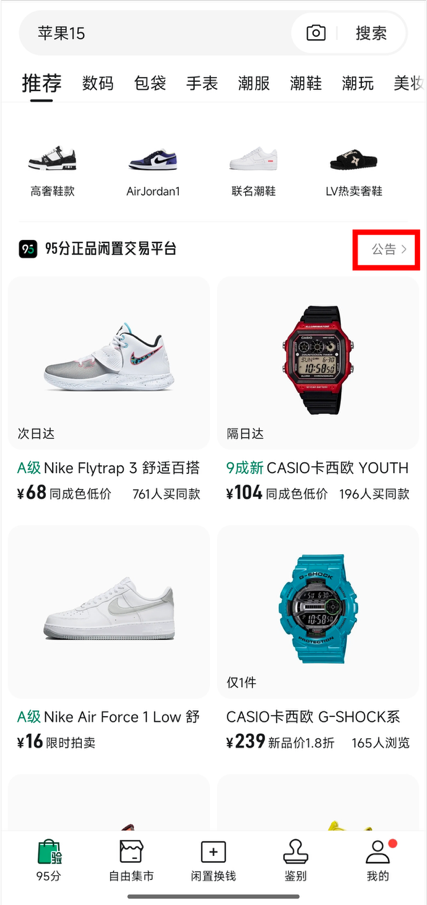
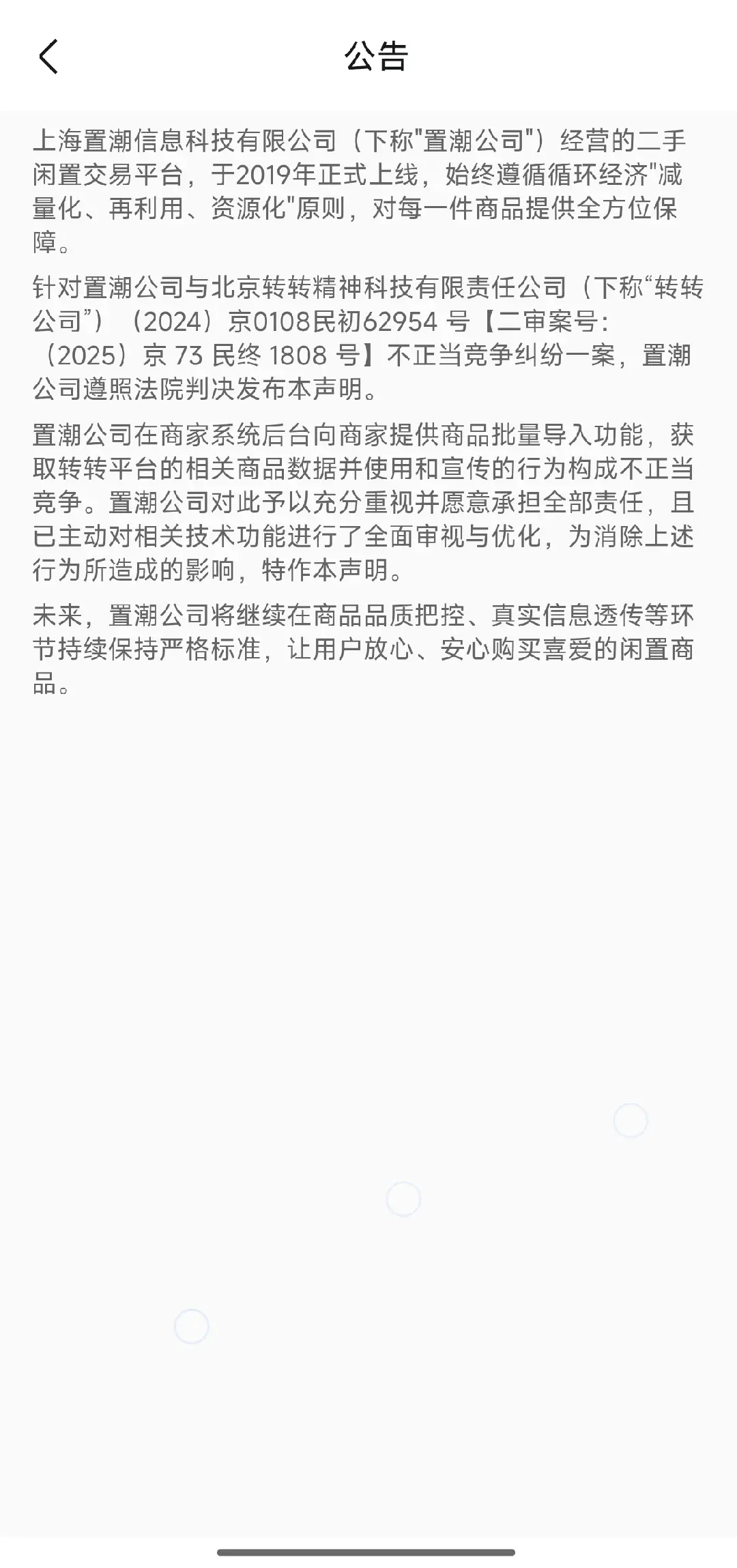
8月21日,二手闲置交易平台95分(运营主体:上海置潮信息科技有限公司)于App首页发布公告,承认其在商家系统后台向商家提供商品批量导入功能,获取转转平台相关商品数据并使用和宣传的行为构成不正当竞争。


公告披露,该案经北京市海淀区人民法院一审审理,案号为(2024)京0108民初62954号;后经北京知识产权法院二审审理,案号为(2025)京73民终1808号。法院最终认定,置潮公司在其运营的95分平台通过"批量导入商品"功能抓取、存储转转平台涉案数据、篡改转转防拆标掩盖数据来源、虚假宣传"官方验机"的行为,构成不正当竞争。

遵照法院判决,置潮公司决发布本声明,承认相关行为构成不正当竞争,并表示对此事予以充分重视、愿意承担全部责任。置潮公司称,已主动对相关技术功能进行全面审视与优化,以消除上述行为所造成的影响。


注:文/龚作仁,文章来源:Laborer,本文为作者独立观点,不代表亿邦动力立场。

文章来源:Laborer

广告
微信
朋友圈

FAQ回顾

95分平台为什么被判定构成不正当竞争?

95分运营主体上海置潮信息科技有限公司在商家后台设置“批量导入商品”功能,抓取、存储转转平台涉案商品数据,篡改转转防拆标掩盖数据来源,还虚假宣传“官方验机”,经法院审理认定该行为构成不正当竞争。

95分承认不正当竞争后采取了哪些措施?

95分遵照法院判决公开发布声明,承认批量导入转转数据的行为构成不正当竞争,愿意承担全部责任,同时已主动对相关技术功能进行全面审视与优化,消除相关不良影响。

95分与转转的不正当竞争案经过了哪些审理流程?

该案先由北京市海淀区人民法院一审,案号为(2024)京0108民初62954号,后经北京知识产权法院二审,案号为(2025)京73民终1808号,最终作出95分相关行为构成不正当竞争的认定。

这么好看,分享一下?

朋友圈 分享

APP内打开

赞 +1
+1
微信好友 朋友圈 新浪微博 QQ空间
关闭
收藏成功
发送
/140 0