广告
加载中

不等线下 先上天猫:100多个海外品牌改写入华顺序

石磊 2026-08-20 09:51
石磊 2026/08/20 09:51

邦小白快读

EN
全文速览

本文核心介绍了当下海外品牌入华的全新趋势,干货信息整理如下:

1. 核心变化:原本海外品牌入华大多遵循先线下布局再拓展线上的路径,当前已经有超过100个海外品牌改为“电商先行”,将天猫作为入华第一站,覆盖运动户外、奢侈品、科技等多个品类,多个品牌已经跑出了不错的成绩,比如美国品牌ALO开店1分钟成交额破千万,开店24小时粉丝量突破14万。

2. 对普通消费者的影响:大量原本只能通过代购、海淘购买的海外小众品牌、高端品牌,现在有了官方正品购买渠道,既解决了买到假货的风险,也能更及时地买到海外品牌的新品,普通消费者的消费选择更丰富,购买流程更放心。

本文披露了海外品牌入华的全新发展趋势,对计划布局中国市场的品牌有诸多参考价值,核心干货如下:

1. 当前消费趋势变化:中国消费者早已通过社交媒体、明星种草提前认知海外品牌,消费者的核心诉求已经转变为寻找有权威背书的官方正品购买渠道,官方电商旗舰店是天然的信任锚点。

2. 品牌渠道与运营启示:传统代理+线下先行的模式容易让品牌丧失运营主导权,“电商先行+直营”模式,可以帮助品牌牢牢掌握定价权、品牌话语权、用户数据所有权,长期沉淀自有用户资产。

3. 模式优势验证:该模式可以帮助不同体量的品牌,以极低的成本快速测试中国市场需求,触达全国各级城市的潜在消费者,已有上百个不同品类品牌验证了该模式的可行性。

海外品牌入华路径的变革,给相关领域卖家带来了新的机会与启示,核心干货整理如下:

1. 新增市场机会:当下超100个海外品牌选择“电商先行”入华,大量品牌不熟悉中国本土电商运营规则,需要本土服务商提供代运营、流量运营、仓储物流等配套支持,给熟悉平台规则的卖家带来了大量合作机会。

2. 可借鉴的运营经验:中小品牌可以学习该模式,用轻量化的方式依托电商平台低成本试错,快速摸准消费者对产品定价、款式的真实偏好,避免大规模投入线下带来的风险。

3. 风险提示:“电商先行”只是入华的第一步,初始流量红利退去后,只有做好精细化运营,将短期热度转化为长期用户资产才能站稳市场,卖家需要警惕只吃流量红利不做长期布局的风险。

海外品牌入华路径的变化,给对接海外业务的国内工厂带来了新的商业机会与转型启示,核心干货如下:

1. 生产设计需求更清晰:“电商先行”模式让海外品牌可以快速获取中国消费者对产品功能、款式、定价的真实反馈,这些需求会直接传递给上游生产端,工厂可以获得更精准的需求指令,减少生产设计的盲目性,降低库存风险。

2. 带来新的商业机会:“电商先行”大大降低了中小海外品牌入华的门槛,越来越多垂直小众领域的海外品牌进入中国市场,会催生更多定制生产、代加工的合作需求,给工厂带来新的订单增长空间。

3. 数字化转型启示:海外品牌依托中国数字基础设施实现低风险扩张,启示国内工厂可以加快数字化转型,依托电商平台的消费洞察反哺生产研发,提升自身对市场变化的响应速度,增强核心竞争力。

海外品牌入华的新趋势催生了新的行业需求,给相关服务商指明了新的发展方向,核心干货整理如下:

1. 行业发展新趋势:“电商先行”已经成为海外品牌入华的标准化新路径,2026年以来已有超过100个来自不同品类的海外品牌采用该模式,未来还会有更多品牌选择这种轻量化入华方式,市场需求空间广阔。

2. 客户核心痛点梳理:海外品牌选择该模式的核心诉求,是掌握品牌运营主导权,以低成本快速完成中国市场测试,获取精准消费洞察,解决消费者的正品信任问题,触达全国各级市场的潜在用户。

3. 业务拓展方向:服务商可以围绕海外品牌的直营电商需求,开发本土化运营、消费者洞察、内容营销、合规服务等配套解决方案,帮助海外品牌快速完成电商首店落地,沉淀自有用户资产,契合品牌长期发展的需求。

海外品牌入华的新趋势,给电商平台带来了新的增长机会,也指明了运营优化方向,核心干货如下:

1. 海外品牌对平台的核心需求:品牌入华最核心的需求是获得官方身份背书,获得覆盖全国市场的无界触达能力,获得数字化运营工具和消费洞察支持,方便品牌掌握运营自主权,沉淀自有用户资产。

2. 现有模式验证:当前天猫作为“电商先行”模式的核心承载方,已经通过提供官方旗舰店信任背书、全区域触达能力、数字化运营工具,验证了该模式的可行性,可满足从大众品牌到垂直小众品牌的多元需求。

3. 平台运营优化方向:平台可以进一步强化数字基础设施建设,针对不同体量不同品类的海外品牌优化招商政策与扶持服务,强化“品牌入华第一入口”的定位,同时做好后续运营服务支持,帮助品牌完成长期本土化落地,规避流量红利退去后品牌留存不足的风险。

本文披露了跨境零售领域的全新产业动向,对相关研究有较高的参考价值,核心内容整理如下:

1. 产业新动向:传统海外品牌入华普遍遵循先线下布局、代理运营的路径,当前已经形成“电商先行”的全新标准化路径,2026年以来已有超过100个来自多品类的海外品牌采用该模式,成为跨国品牌入华的主流新选择。

2. 新商业模式核心本质:该模式本质是海外品牌入华的战略重塑,将经营权前置,通过直营电商实现D2C直连消费者,品牌牢牢掌握定价权、品牌话语权、用户数据所有权,依托中国本土数字基础设施实现低成本敏捷试错,快速摸清中国市场脉搏。

3. 研究启示:该趋势的集中爆发,反映了中国数字基础设施的成熟以及消费者品牌认知路径的变化,入华门槛降低的同时,精细化运营的竞争才刚刚开始,该模式对跨境零售格局、全球品牌扩张路径的影响,值得后续持续深入研究。

返回默认
声明:快读内容全程由AI生成,请注意甄别信息。如您发现问题,请发送邮件至 run@ebrun.com 。

我是 品牌商 卖家 工厂 服务商 平台商 研究者 帮我再读一遍。

Quick Summary

This article outlines new trends for international brands entering China, with key takeaways below:

1. Core shift: Traditionally, most foreign brands entered China by establishing offline presences first before expanding online. Today, over 100 overseas brands have adopted an "e-commerce first" strategy, launching on Tmall as their first stop in China, spanning categories including sports and outdoor, luxury goods, and technology. Many brands have already posted strong results: for example, U.S. brand ALO recorded over 10 million yuan in transaction volume within 1 minute of opening its store, and gained 140,000 followers in the first 24 hours.

2. Impact on consumers: Many niche and premium overseas brands that previously were only available via daigou personal shoppers or cross-border shopping now have official, authorized sales channels in China. This eliminates the risk of purchasing counterfeit goods, allows consumers to access new product releases much faster, expands shoppers' options, and delivers a more secure and convenient purchasing experience.

This article outlines the new trend of overseas brands entering China, offering key insights for brands planning to enter the Chinese market:

1. Shifting consumer trends: Chinese consumers already discover and build awareness of overseas brands through social media and influencer recommendations. Today, their top priority is accessing official, authenticated channels to buy authentic products, and official e-commerce flagship stores act as a natural trust anchor.

2. Channel and operations insights: The traditional "代理商 + offline-first" model often causes brands to lose control over their operations. The "e-commerce first + direct operation" model allows brands to retain full control over pricing, brand narrative, and first-party user data, enabling long-term accumulation of owned user assets.

3. Proven model advantages: This model allows brands of all sizes to test Chinese market demand quickly at very low cost, and reach potential consumers across all tier cities in China. More than 100 brands across multiple categories have already validated the feasibility of this approach.

The shift in how overseas brands enter China has created new opportunities and insights for sellers in related sectors, with key takeaways below:

1. New market opportunities: More than 100 overseas brands have adopted the "e-commerce first" entry strategy. Most of these brands are unfamiliar with China's domestic e-commerce operating rules, and need local service providers for support including managed operations, traffic management, and warehousing and logistics, creating extensive collaboration opportunities for sellers already familiar with platform rules.

2. Actionable operational insights: Small and medium-sized brands can adopt this model to test the market lightly at low cost via e-commerce platforms, quickly learn consumers' real preferences for product pricing and styles, and avoid the risks that come with large upfront offline investments.

3. Risk warning: "E-commerce first" is only the first step of entering China. After the initial traffic boost fades, brands can only establish a stable foothold by implementing refined operations and converting short-term buzz into long-term owned user assets. Sellers should avoid the pitfall of relying solely on short-term traffic gains without building for long-term growth.

The shift in overseas brands' entry paths has created new business opportunities and transformation insights for Chinese factories that work with international clients, with key takeaways below:

1. More clear production and design requirements: The "e-commerce first" model allows overseas brands to quickly collect real feedback from Chinese consumers on product features, styles and pricing, and these requirements are passed directly to upstream manufacturers. This allows factories to receive more accurate demand instructions, reduce blind development and production, and lower inventory risk.

2. New business opportunities: The "e-commerce first" model significantly lowers the barrier for small and medium-sized overseas brands to enter China. As more niche international brands in vertical categories enter the market, this will drive greater demand for custom production and OEM partnerships, creating new room for order growth for factories.

3. Insights for digital transformation: Seeing how overseas brands achieve low-risk expansion leveraging China's digital infrastructure inspires domestic factories to accelerate their own digital transformation. Factories can leverage e-commerce platform consumer insights to inform product development and production, improve their response speed to market changes, and strengthen core competitiveness.

The new trend of overseas brands entering China has created new industry demand and pointed to new growth directions for relevant service providers, with key takeaways below:

1. New industry trends: "E-commerce first" has become the new standard path for overseas brands entering China. Since 2026, over 100 international brands across categories have adopted this model, and more brands will choose this lightweight entry approach going forward, creating vast market demand.

2. Core pain points of clients: The core priorities for brands adopting this model are retaining control over brand operations, testing the Chinese market quickly at low cost, gaining accurate consumer insights, building trust with consumers around product authenticity, and reaching potential customers across all tier cities in China.

3. Directions for business expansion: Service providers can develop localized solutions tailored to the direct e-commerce needs of overseas brands, including local operations, consumer insights, content marketing, and compliance services. These solutions help overseas brands quickly launch their first official e-commerce store in China, accumulate owned user assets, and align with brands' long-term development goals.

The new trend of overseas brands entering China has created new growth opportunities for e-commerce platforms and clarified directions for operational optimization, with key takeaways below:

1. Core needs of overseas brands from platforms: The top priorities for brands entering China are gaining official authentication and credibility, accessing nationwide reach, getting support for digital operation tools and consumer insights, to retain operational autonomy and accumulate owned user assets.

2. Validation of the current model: Tmall is currently the core platform enabling the "e-commerce first" model. It has validated the feasibility of this approach by providing official flagship store authentication, nationwide reach, and digital operation tools, meeting the diverse needs of brands ranging from mass-market labels to vertical niche players.

3. Directions for platform optimization: Platforms can further strengthen digital infrastructure, adjust investment attraction policies and support services to fit international brands of different sizes and categories, reinforce their positioning as "the first entry point for brands entering China", and provide ongoing operational support to help brands achieve long-term localization and avoid user retention risks after the initial traffic boost fades.

This article introduces new industry developments in cross-border retail that offer high reference value for related research, with key content below:

1. New industry development: Traditionally, most overseas brands entered China by building offline presences and working with third-party agents first. Today, a new standard "e-commerce first" path has emerged. Since 2026, more than 100 overseas brands across multiple categories have adopted this model, making it the mainstream new choice for multinational brands entering China.

2. Core nature of the new business model: This model is essentially a strategic restructuring of how overseas brands enter China. It shifts operational control forward, enabling D2C direct connection with consumers via direct-operated e-commerce, allowing brands to fully retain pricing power, brand control, and ownership of user data, conduct low-cost agile testing of the market leveraging China's domestic digital infrastructure, and quickly get a pulse on the Chinese market.

3. Research insights: The widespread adoption of this trend reflects the maturity of China's digital infrastructure and shifts in how consumers discover and perceive brands. While it has lowered the barrier to entry for China, competition based on refined operations is just beginning. The impact of this model on cross-border retail dynamics and global brand expansion paths warrants ongoing in-depth research.

Disclaimer: The "Quick Summary" content is entirely generated by AI. Please exercise discretion when interpreting the information. For issues or corrections, please email run@ebrun.com .

I am a Brand Seller Factory Service Provider Marketplace Seller Researcher Read it again.

【亿邦原创】开售仅仅1分钟,成交额便瞬间突破千万大关,官方旗舰店粉丝量在24小时内冲破14万。这是美国高端生活方式品牌ALO在天猫开出中国首店时交出的成绩单。

这种爆发式的线上开局,展示出海外品牌在探索中国市场时展现出的全新面貌。

ALO的这场开门红并非特例。

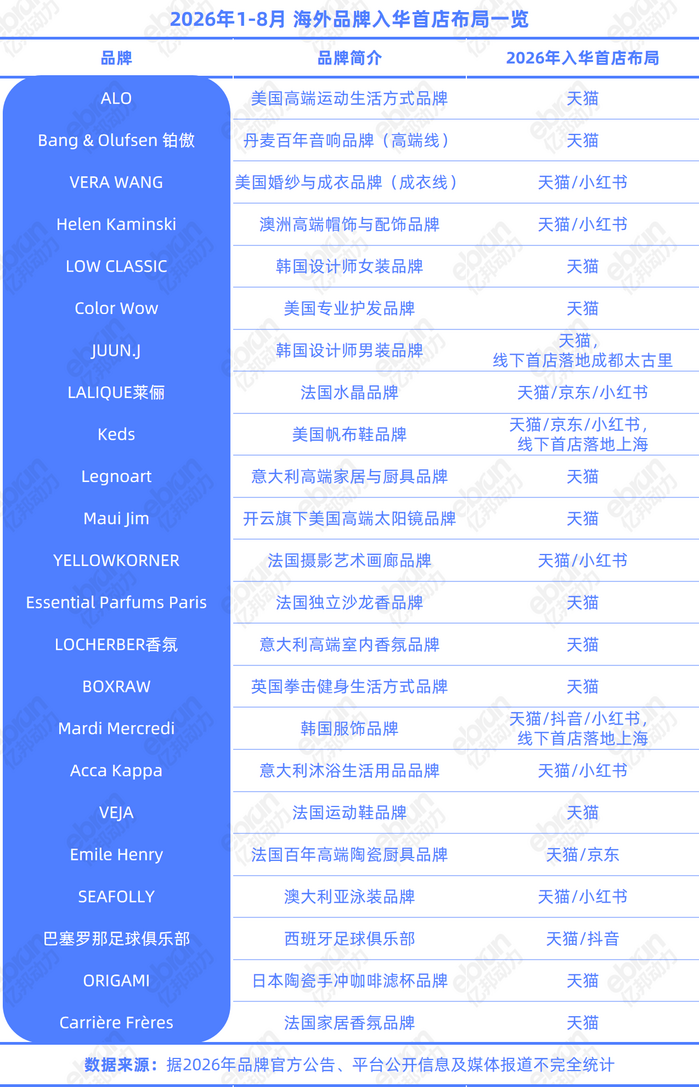
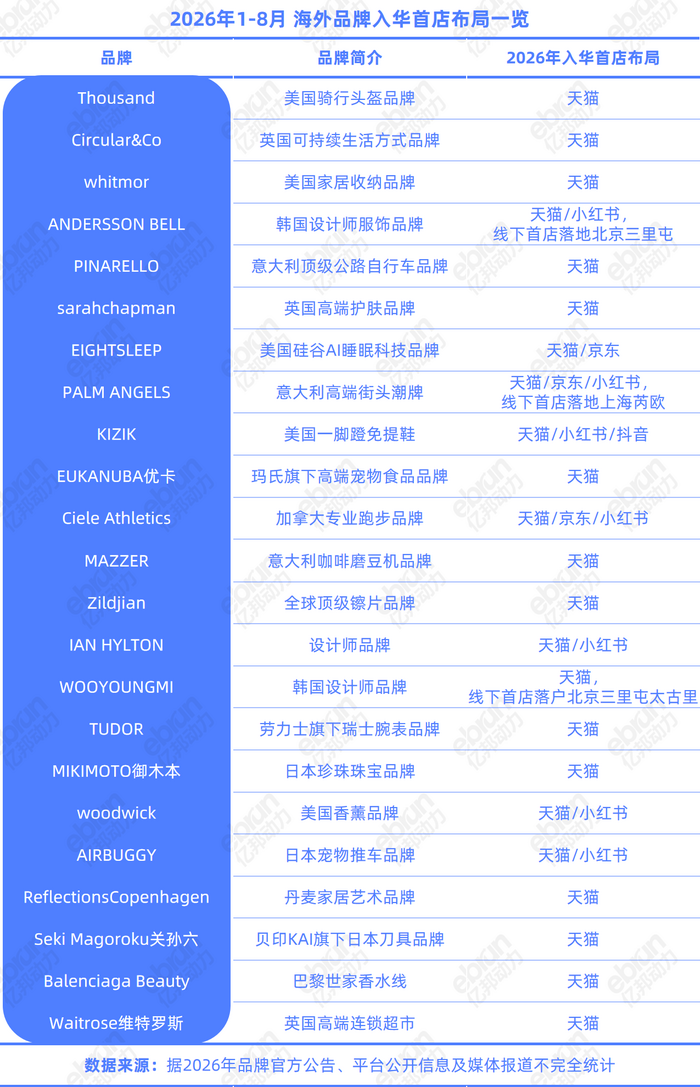
亿邦动力了解到,2026年以来,已有超过100个海外品牌采取类似策略进入中国,将天猫作为入华的第一站。这涵盖了运动户外、设计师时装、奢侈品、睡眠科技等多个品类,包括硅谷AI睡眠科技品牌Eight Sleep、法国小白鞋VEJA、韩国潮牌Mardi Mercredi等。

这种“电商先行”的商业现象,正在成为海外品牌进入中国市场的标准化新路径。

商业世界的进退哲学,往往藏在探索新市场的路径选择之中。越来越多的海外品牌开始选择将电商平台作为第一阵地。

这早已超越销售渠道微调的范畴,实质上指向一场入华战略重塑与经营主权让渡的深层博弈。

点击查看清晰大图

01

为什么“电商先行”正在成为新路径?

对于跨国品牌的全球化扩张而言,如何在一个全新的消费生态中精准摸清市场脉搏,始终是核心课题。

“电商先行”的兴起,恰恰为海外品牌提供了一种兼具敏捷性与确定性的入华探索机制。

以新兴运动品牌Vuori为例,其在2022年底率先上线天猫沉淀用户,凭借线上的高效运营积累了深厚的消费洞察。

ALO同样展现了这条轻量化路径的商业效率。依靠天猫首店迅速跑通商业闭环,品牌得以快速建立起本土市场的经营感知。

这种现象对于中小体量的灵巧型品牌,以及已经在社交媒体上积累了一定声量但尚未正式建立官方通道的品牌而言,尤为关键。

对于中小体量品牌来说,初期资源往往相对有限,通过电商旗舰店入场,能够以更为聚焦的投入借势本土数字化基础设施,快速测试消费者对产品定价、款式和品类的真实偏好。

正如标普全球评级副董事Maggie Xie所分析的那样,率先上线线上店铺,能够以极低的资本投入借势社交热度,精准测试本土消费者的实际需求。

类似的变化也发生在高端科技与垂直小众领域。受到马斯克与扎克伯格追捧的硅谷AI睡眠系统Eight Sleep,在4月官宣进入中国时,直言看中的是平台覆盖全国各线城市的无界触达能力,以及数字化运营和消费者洞察上的天然优势。

这种商业试验场的高效性在多品类中得到了广泛验证。从加拿大专业跑步品牌Ciele Athletics、法国百年高端陶瓷厨具Emile Henry,到英国拳击健身品牌BOXRAW、日本手冲滤杯品牌ORIGAMI,这些垂直领域的品牌都在第一时间完成了从零到一的全国消费市场触达。

事实上,电商已突破承接流量的销售末端定位,进化为品牌重塑中国市场节奏、实现低门槛敏捷摸底的“第一步”。

02

“电商先行”背后,品牌到底在改变什么?

在“电商先行”现象的背后,品牌对经营主权与官方表达的绝对掌控,是这一轮集体转向的核心动因。

许多海外品牌在进入新市场时,越来越看重品牌表达的一致性、价格体系的稳定以及用户资产的长期沉淀。

韩国热门服饰品牌Mardi Mercredi的轨迹极为典型。在2025年关闭此前由代理商运营的门店,近日以直营方式宣布重返中国。在上海直营首店开幕之前,品牌已率先在天猫等电商平台开设官方旗舰店。“希望以更成熟、更稳定的方式与中国消费者重新相遇。”品牌在回归公告中写道。

百年美国帆布鞋品牌Keds 2026年3月重回中国市场时,也选择将天猫作为重塑品牌形象的直营主阵地,重新握紧了品牌运营的主导权。

法国“小白鞋”VEJA在全球100多个国家靠买手店铺开,但在进入中国时,天猫成为其在中国的唯一官方电商渠道。

VEJA亚太区负责人Artaud Frenoy强调,直营是进入中国的核心策略,能够更好地掌控品牌形象,完整呈现产品系列与理念。

即使是独立设计师品牌与高定领域,也开始极力拥抱这种直连模式。韩国顶尖设计师女装LOW CLASSIC、男装品牌JUUN.J、以及著名婚纱品牌VERA WANG全新成衣线,今年均选择以官方直营首店的形式建立权威话语权。

建立直营电商渠道,本质上是品牌建立直连用户(D2C)官方通路的必然选择。

品牌不再满足于仅仅“找一个渠道把货卖出去”,而是迫切希望建立长期可持续的用户关系。这种“经营权前置”的本质,是海外品牌试图重新握紧品牌表达、定价权、用户数据以及消费关系的主导权。

03

数字基础设施重构:从“卖货渠道”到“品牌入口”

“电商先行”趋势之所以能够在这个时间节点集中爆发,归根结底在于底层消费心智与数字基础设施的成熟。

首先是消费者感知品牌路径的变化。对于许多已有声量但尚未正式入场的海外品牌而言,大众往往已经在社交媒体、海淘笔记和明星穿搭图中对其产生了认知。

当品牌声量跨越国界提前发酵,消费者对新品牌的核心诉求,迅速演变成寻找一个具有权威背书的官方购买入口。

在这种背景下,电商旗舰店的核心价值得到了重新定义。

首先,旗舰店扮演着“官方背书”与“品牌正品官网”的信任锚点角色,能够瞬间消解海外品牌初来乍到时的信任壁垒;其次,旗舰店具备极高的覆盖效率,无视地域限制,帮助品牌以极低的摩擦力一站式触达全国各线城市的潜在受众。

对于跨国品牌而言,天猫旗舰店如今充当着品牌官方身份的认知锚点。

无论是丹麦奢华音响品牌Bang&Olufsen将其Luxury奢品线中国首店交给天猫奢品,还是摩洛哥奢华咖啡Bacha Coffee(夿萐咖啡)以电商首店塑造“咖啡界爱马仕”的品牌形象,电商平台都在其中扮演了叙事承载者的角色。

英国服装品牌Studio Nicholson创始人Nick Wakeman曾表示,通过天猫奢品完整呈现品牌内核至关重要,这能为中国市场量身定制专属的电商体验。

天猫承载的功能早已超越了单纯的GMV数字。它正在完整复刻一个品牌落地新市场所需的生命周期:建立官方认知、覆盖全国市场、验证消费偏好,并最终沉淀为可复用的用户资产。

即便是像Zildjian这种过去极度依赖专业渠道的顶级镲片品牌,以及意大利专业咖啡磨豆机品牌MAZZER,也选择将中国首店开在天猫。

此外,这一趋势也吸引了更多品类的海外品牌加入。例如,全球顶级镲片品牌Zildjian、意大利咖啡磨豆机品牌MAZZER、意大利顶级公路自行车品牌PINARELLO、美国香薰品牌woodwick、丹麦家居艺术品牌ReflectionsCopenhagen、日本刀具品牌Seki Magoroku关孙六、巴黎世家香水线Balenciaga Beauty等,均选择通过电商平台开设中国首店,进一步印证了“电商先行”策略的广泛适用性。

这也表明,数字平台的辐射能力与专业沉淀,已经能够满足极其垂直、极致小众的圈层商业叙事。

结语

“电商先行”作为一种全新的商业现象,正在重新定义海外品牌进入中国的节奏与形态。

这种模式展现出了惊人的商业效率,为不同体量的海外品牌提供了一条平滑、敏捷且富有确定性的扩张通道。

随着越来越多像ALO、Eight Sleep和 VEJA这样的先行者验证了这条路径,跨国零售的中国故事,正在被彻底重新书写。

然而,将“电商先行”作为入华的第一步,并不意味着品牌可以一劳永逸。线上首店所带来的瞬时爆发与高光时刻,仅仅是撬动庞大中国消费生态的一杠支点。

当第一波声量红利退去,海外品牌依然要面对更深层次的本土化大考:如何将短期的线上成交热度,转化为长期的品牌护城河?如何将数字管道沉淀的消费数据,反哺到产品研发与长期品牌建设之中?

在全球品牌加速拥抱中国数字基础设施的今天,入华的门槛虽然降低了,但精细化经营的竞争才刚刚开始。

那些懂得利用数字基础设施精准定位、同时又能以敏捷姿态完成全域无缝衔接的品牌,才能在这场跨国零售的新周期里,真正留下来并扎下根去。

亿邦持续追踪报道该情报,如想了解更多与本文相关信息,请扫码关注作者微信。

文章来源:亿邦动力

广告
微信
朋友圈

FAQ回顾

海外品牌入华的电商先行策略是什么?

电商先行是当前海外品牌入华的标准化新路径,指品牌将天猫等电商平台作为入华第一站,以较低资本投入快速测试本土消费者需求,触达全国各线城市用户,同时掌握品牌运营主导权,沉淀用户资产。

电商先行策略适合哪些海外品牌使用?

该策略适合各品类、不同体量的海外品牌,尤其适合初期资源有限的中小灵巧型品牌、已在社交媒体积累一定声量但未搭建官方通道的品牌,以及高端科技、垂直小众领域的品牌,均可借此快速跑通入华商业闭环。

海外品牌选择天猫作为入华第一站有哪些优势?

天猫可作为海外品牌官方身份的认知锚点,提供官方背书消解信任壁垒,具备覆盖全国各线城市的无界触达能力,能帮助品牌高效测试消费偏好,沉淀用户资产,支持品牌直营以掌控品牌形象、定价权与用户数据。

海外品牌入华采用电商先行策略的核心动因是什么?

核心动因是海外品牌可通过直营电商渠道掌握经营主导权,保障品牌表达一致性、价格体系稳定,建立直连用户的D2C官方通路,沉淀长期用户资产,避免传统代理商运营带来的品牌管控权缺失问题。

这么好看,分享一下?

朋友圈 分享

APP内打开

赞 +1
+1
微信好友 朋友圈 新浪微博 QQ空间
关闭
收藏成功
发送
/140 0