广告
加载中

智平方郭彦东:机器人竞争正在从模型能力走向系统能力

主编24小时在线 2026-06-25 11:24
主编24小时在线 2026/06/25 11:24

邦小白快读

EN
全文速览

本文是智平方创始人郭彦东在第八届北京智源大会的分享,核心点明机器人竞争正从模型能力走向系统能力,通用智能机器人将成为第四代智能终端,核心干货如下:

1. 通用智能机器人成为终端的核心前提是能在真实场景持续工作,需要具备三大核心能力:能理解环境任务的强大大脑、灵巧的双臂协同操作能力、真实环境自主移动能力。

2. 机器人大脑的技术发展方向是类脑架构,智平方推出的NeuroVLA架构仿照人类神经系统,分为皮层、小脑、脊髓三层,分别负责任务规划、动作修正、快速反射,还具备记忆、自我修复、主动感知三大能力。

3. 产业化层面,智平方已建成2000台级半自动化产线,计划下半年扩产至年产能2-3万台,确定了工业服务-公共服务-家庭服务的渐进发展路径。

本次分享明确了通用智能机器人行业的发展趋势与产品研发方向,对布局机器人赛道的品牌商有较高参考价值,核心内容如下:

1. 消费与产业趋势判断:通用智能机器人将成为下一代普及型智能终端,长期家庭市场空间广阔,但当前家庭场景环境复杂、标准化程度低,不适合商业化落地,优先布局工业服务、公共服务场景更稳妥。

2. 产品研发方向:不要单纯堆算力、模型规模,要优先做系统架构创新,走类脑分层架构路线,融合世界模型与VLA提升机器人认知与响应能力,同时要重视硬件的工业级可靠性,推动大模型端侧运行保障数据安全与响应速度。

3. 产业优势依托:中国成熟完整的智能硬件供应链,可支撑机器人规模化生产,核心零部件复用度高,能有效降低产业化成本,适合品牌商快速落地。

本次分享清晰指明了通用智能机器人赛道的市场机会、风险与发展经验,适合布局赛道的卖家参考,核心内容如下:

1. 市场机会:通用智能机器人是继PC、智能手机、智能汽车之后的第四代智能终端,赛道增长空间极大,当前阶段优先切入工业服务尤其是柔性制造领域,该场景任务明确、商业价值清晰,适合积累技术与运营能力;其次可布局公共服务场景,作为向家庭场景过渡的桥梁。

2. 风险提示:当前技术条件下,家庭场景环境复杂、长尾任务多、标准化程度低,不适合开展商业化,不要盲目提前投入家庭场景赛道,避免资源浪费。

3. 可学习经验:要重视系统能力建设而非单纯堆模型规模,可依托中国供应链优势实现规模化落地,同时借助开源生态降低自身研发成本。

本次分享为布局机器人相关业务的工厂明确了产品需求、商业机会与发展方向,核心干货如下:

1. 产品生产与设计需求:机器人对硬件的工业级可靠性要求很高,大量核心零部件与智能手机、新能源汽车、智能硬件复用度很高,现有成熟供应链可直接复用,降低生产门槛。机器人需要支持大模型端侧运行,对硬件的实时性、稳定性要求更高,生产设计需要匹配这些新需求。

2. 商业机会:中国智能硬件供应链是机器人产业化的核心优势,随着机器人产业加速落地,机器人零部件生产、本体制造的需求会快速增长,工厂可依托现有产能切入相关领域获得新增长曲线。

3. 发展启示:工厂推进机器人相关业务,可优先对接工业服务场景积累经验,还可以借助开源公开的架构与工具链降低自身研发投入,提升研发效率。

本次分享明确了具身智能机器人行业的发展趋势、新技术方向与客户痛点,对To B的服务商有较高参考价值,核心内容如下:

1. 行业发展趋势:通用机器人产业竞争已经从模型能力竞争转向系统能力竞争,未来会成为普及型第四代智能终端,产业化落地进程加速,开源生态是推动行业规模化发展的核心动力,行业对全链路开发服务的需求快速增长。

2. 核心新技术方向:行业已经突破单一模型路线,推出融合世界模型与VLA的NeuroVLA类脑分层架构,解决了机器人认知与实时响应的矛盾,指明了架构创新而非单纯扩规模的技术发展方向。

3. 客户痛点与机会:当前行业开发者普遍面临仅有模型权重、缺少全流程开发能力的痛点,服务商可围绕开源生态,为开发者提供数据处理、场景适配、部署落地等配套服务,挖掘新的业务增长点。

本次分享明确了具身智能行业对开发平台的需求,给出了平台生态建设的方向与风险提示,核心内容如下:

1. 行业对平台的核心需求:早期开源项目仅开放模型权重,无法满足开发者落地需求,开发者需要覆盖数据处理、模型训练、效果评测、场景适配的全链路开发能力,平台需要提供一整套工具链支撑,降低开发者入场门槛。

2. 平台建设的可行路径:可以参考智平方的做法,一方面参与行业开源数据集建设,推动行业数据共享,提升行业整体研发效率;另一方面推出全链路开放开发平台,开放基础模型、工具链与评测体系,支持开发者快速完成场景定制开发,汇聚生态开发者。

3. 风向规避:平台要引导行业走架构创新路线,避免行业陷入单纯堆算力、堆资金的恶性竞争,同时要引导从业者按渐进路径落地,避免盲目超前布局导致资源浪费。

本次分享提出了通用智能机器人领域的多项产业新动向、技术新观点与商业化路径,对产业研究者有很高的研究价值,核心内容如下:

1. 产业新动向:当前机器人产业竞争已经从模型能力竞争转向系统能力竞争,通用智能机器人已经进入产业化起步阶段,头部创业公司已经实现千台级产能,即将扩产至年产能2-3万台,开源生态成为行业共识,全行业共同参与建设生态成为新的发展方向。

2. 技术新观点:明确世界模型与VLA是融合而非替代关系,世界模型负责物理世界预测,VLA负责转化为行动,二者融合才能提升机器人能力;进一步提出NeuroVLA类脑分层架构,指明未来机器人大脑的发展方向是架构创新,而非单纯扩大模型规模。

3. 商业化路径创新:提出“工业服务-公共服务-家庭服务”的渐进式商业化路径,主张在真实场景边工作边学习,依靠真实场景反馈形成可复制的商业闭环,推动模型迭代与能力提升的正向循环。

返回默认

声明:快读内容全程由AI生成,请注意甄别信息。如您发现问题,请发送邮件至 run@ebrun.com 。

我是 品牌商 卖家 工厂 服务商 平台商 研究者 帮我再读一遍。

Quick Summary

This article summarizes a presentation given by Yan Dong Guo, founder of Cubric, at the 8th Beijing智源 Conference. Guo highlighted that the competition in the robotics industry is shifting from a focus on model capability to system capability, and general-purpose intelligent robots will emerge as the fourth generation of smart terminals. Key takeaways are as follows:

1. The core prerequisite for general-purpose intelligent robots to become mainstream terminals is the ability to operate continuously in real-world environments, which requires three core capabilities: a powerful "brain" capable of understanding environmental tasks, dexterous dual-arm collaborative operation, and autonomous navigation in unstructured environments.

2. The brain of intelligent robots is evolving toward a brain-inspired architecture. Cubric's newly launched NeuroVLA architecture mimics the human nervous system, divided into three layers: cortex (in charge of task planning), cerebellum (motion correction), and spinal cord (rapid reflexes). It also comes with three core capabilities: memory, self-repair, and active perception.

3. On the industrialization front, Cubric has built a semi-automated production line with an annual capacity of 2,000 units, and plans to expand output to 20,000–30,000 units per year in the second half of 2024. The company has outlined a gradual development path: industrial services first, followed by public services, and finally household services.

This presentation clarifies the development trends and product R&D directions of the general-purpose intelligent robot industry, offering high reference value for brands laying out in the robotics track. Key insights are as follows:

1. Consumer and industry trend outlook: General-purpose intelligent robots will become the next generation of mass-market smart terminals, with huge long-term growth potential in the household market. However, current household environments are complex and low in standardization, making them unsuitable for commercial deployment. It is more prudent to prioritize布局 in industrial service and public service scenarios first.

2. Product R&D direction: Instead of simply stacking computing power and expanding model size, brands should prioritize system architecture innovation, adopt the brain-inspired layered architecture route, and integrate world models and VLA to improve robots' cognition and response capabilities. Brands should also attach importance to industrial-grade hardware reliability, and promote on-device large model operation to guarantee data security and response speed.

3. Leveraging industrial advantages: China's mature, complete intelligent hardware supply chain can support large-scale production of robots, with high reusability of core components that effectively reduces industrialization costs, enabling brands to achieve rapid commercial deployment.

This presentation clearly outlines the market opportunities, risks and development experience for players entering the general-purpose intelligent robot track, making it highly valuable for sellers布局 the sector. Key takeaways are as follows:

1. Market opportunities: General-purpose intelligent robots are the fourth generation of smart terminals, following PCs, smartphones, and smart cars, with enormous room for growth. At the current stage, sellers should prioritize entering industrial services, especially flexible manufacturing, where tasks are well-defined and commercial value is clear, making it an ideal space to accumulate technical and operational capabilities. Next, sellers can布局 public service scenarios as a bridge to the household market.

2. Risk warning: Under current technical conditions, household scenarios are complex, filled with long-tail tasks and low standardization, making them unsuitable for commercialization. Sellers should avoid盲目 premature investment in the household robot track to prevent resource waste.

3. Actionable insights: Sellers should focus on building system capability rather than merely scaling model size. They can leverage China's supply chain advantages to achieve large-scale deployment and reduce R&D costs by tapping into open source ecosystems.

This presentation clarifies product requirements, business opportunities and development directions for factories looking to enter robotics-related businesses. Key insights are as follows:

1. Product design and manufacturing requirements: Robots require industrial-grade hardware reliability, and most core components are highly reusable with those for smartphones, new energy vehicles and other intelligent hardware. Existing mature supply chains can be directly leveraged to lower production barriers. Robots need to support on-device large model operation, which raises higher requirements for hardware real-time performance and stability, so production and design must be adjusted to meet these new demands.

2. Business opportunities: China's intelligent hardware supply chain is a core advantage for robot industrialization. As the robot industry accelerates its deployment, demand for robot components and body manufacturing will grow rapidly. Factories can leverage existing production capacity to enter these related fields and open up new growth curves.

3. Development insights: When expanding robotics-related businesses, factories can first accumulate experience by serving industrial service scenarios, and reduce R&D investment while improving efficiency by leveraging open source architectures and toolchains.

This presentation clarifies the development trends, new technical directions and customer pain points of the embodied intelligent robot industry, offering high reference value for B2B service providers. Key insights are as follows:

1. Industry development trends: Competition in the general-purpose robot industry has shifted from competing on model capability to competing on system capability. General-purpose robots will eventually become the fourth generation of mass-market smart terminals, and industrial deployment is accelerating. Open source ecosystems are a core driver of industry-wide large-scale development, and demand for full-stack development services is growing rapidly.

2. Core new technical direction: The industry has moved beyond the single-model approach. Cubric has launched NeuroVLA, a brain-inspired layered architecture that integrates world models and VLA to resolve the contradiction between robot cognition and real-time response. The presentation clarifies that the technical path forward lies in architecture innovation rather than simply expanding model scale.

3. Customer pain points and opportunities: Most industry developers currently only have access to model weights and lack end-to-end development capabilities. Service providers can build offerings around the open source ecosystem, providing supporting services such as data processing, scenario adaptation, and deployment for developers, to unlock new business growth points.

This presentation clarifies the demand for development platforms from the embodied intelligence industry, and outlines directions and risk warnings for platform ecosystem building. Key insights are as follows:

1. Core industry demand for platforms: Early open source projects only released model weights, which cannot meet developers' deployment needs. Developers require end-to-end development capabilities covering data processing, model training, performance evaluation, and scenario adaptation. Platforms need to provide a complete toolchain to lower the entry barrier for developers.

2. Feasible path for platform building: Players can follow Cubric's approach: on the one hand, participate in the construction of industry open source datasets to promote industry-wide data sharing and improve overall R&D efficiency; on the other hand, launch an end-to-end open development platform that opens up base models, toolchains and evaluation systems, allowing developers to quickly complete scenario-specific customized development and gather ecosystem participants.

3. Risk mitigation: Platforms should guide the industry toward the architecture innovation route, avoid letting the industry fall into a vicious competition of simply stacking computing power and capital, and guide practitioners to follow the gradual deployment path to avoid resource waste caused by盲目 premature布局.

This presentation puts forward multiple new industry trends, technical insights and commercialization paths in the field of general-purpose intelligent robots, offering high research value for industry researchers. Key insights are as follows:

1. New industry trends: Competition in the current robot industry has shifted from model capability to system capability. General-purpose intelligent robots have entered the initial stage of industrialization: leading startups have already achieved annual production capacity of 1,000 units and will soon expand to 20,000–30,000 units per year. Open source ecosystems have become an industry consensus, and joint industry-wide ecosystem building has emerged as a new development direction.

2. New technical insights: The presentation clarifies that world models and VLA are complementary rather than substitutive: world models are responsible for physical world prediction, while VLA converts predictions into actionable commands. Only integrating the two can improve robot capability. It further proposes the NeuroVLA brain-inspired layered architecture, pointing out that the future development direction of robot brains lies in architecture innovation rather than simply expanding model size.

3. Commercialization path innovation: It proposes a gradual commercialization path of "industrial services → public services → household services", arguing that robots should learn while working in real scenarios, build replicable commercial closed loops via real-world feedback, and drive a positive cycle of model iteration and capability improvement.

Disclaimer: The "Quick Summary" content is entirely generated by AI. Please exercise discretion when interpreting the information. For issues or corrections, please email run@ebrun.com .

I am a Brand Seller Factory Service Provider Marketplace Seller Researcher Read it again.

作者:SY

出品:明亮公司

在2026年的第八届北京智源大会具身智能论坛上,智平方创始人兼CEO郭彦东以《AI迈向物理世界:通用智能机器人开启第四代智能终端时代》为题,分享了智平方在具身智能、机器人本体以及开源生态方面的最新进展。

在郭彦东看来,通用智能机器人有望成为继PC、智能手机和智能汽车之后的第四代智能终端。“但机器人产业的发展不仅仅取决于模型能力的提升,更取决于机器人是否能够真正进入物理世界,在真实场景中持续工作、持续学习,并形成可复制的商业闭环。”

“世界模型与VLA并非替代关系,而是融合关系。”郭彦东解释称,世界模型最重要的价值并不在于生成,而在于帮助机器人理解和预测物理世界状态变化。对于机器人而言,对三维空间结构以及时间维度变化的理解能力,比单纯的视频生成能力更具价值。

在此基础上,郭彦东进一步介绍了智平方提出的NeuroVLA类脑架构。该架构借鉴人类神经系统,将机器人智能划分为皮层、小脑和脊髓三个层级。其中,皮层负责理解世界和任务规划,小脑负责动作协调与修正,脊髓负责快速执行与反射。

在硬件产业化方面,郭彦东表示,中国成熟的智能硬件供应链体系为机器人规模化制造提供了重要基础。目前,智平方已建成首条2000台级半自动化产线,并计划于今年下半年启动第二条产线建设,目标产能达到2万至3万台级别。

同时,智平方提出了“工业服务—公共服务—家庭服务”的发展路径。其中,工业服务是机器人商业化和能力积累的起点,公共服务是机器人进入开放环境的重要桥梁,而家庭服务则是长期目标。

以下为「明亮公司」基于现场速记、演示文稿整理的演讲内容:

通用智能机器人将成为第四代智能终端

智平方对于通用智能机器人的一个核心判断是通用智能机器人将成为继PC、智能手机、智能汽车之后的第四代智能终端。在我们看来,通用智能机器人不仅仅是一种设备,更是一种全新的智能终端形态。

以智能手机的发展历程为例。手机最初的功能非常简单,只能完成通话。但随着拍照、支付、多媒体、社交等功能不断加入,手机逐渐成为人们每天都离不开的设备。今天,手机已经从单一工具演变为连接人与数字世界的核心终端。

机器人也将经历类似的发展过程。未来的机器人不应该只服务于单一任务,而应该具备跨场景、跨任务工作的能力。它能够通过自然语言与人进行交互,理解环境、理解需求,并完成各种不同类型的工作。正因为如此,我们认为机器人有机会成为下一代革命性的智能终端。

但这里有一个前提。只有真正能够工作的机器人,才有资格成为下一代智能终端。如果机器人只能完成单一任务,或者只能在实验室环境中运行,它依然只是一个设备,而不是终端。那么,什么样的机器人才能真正像人一样工作?

在我们看来,需要具备几个核心能力:首先,需要拥有强大的大脑。机器人必须能够像人一样理解环境、理解语言、理解任务。

其次,需要具备灵巧操作能力。机器人需要能够像人一样完成双臂协同操作,在不同环境中使用不同工具、操作不同设备。

最后,需要具备自主移动能力。移动方式可以是多种多样的,但机器人必须能够在真实环境中自主完成移动和任务执行。

这些能力共同构成了机器人成为下一代智能终端的基础。

世界模型与VLA如何构建机器人大脑

如何构建一个真正能够理解世界、执行任务,并持续工作的机器人大脑?从第一性原理来看,机器人大脑需要完成两件事情:第一,理解世界。第二,控制行动。

对于机器人而言,它首先需要能够感知环境中的各种信息,对周围世界进行全方位、多维度的理解;同时还需要能够理解人的意图和指令。在人机交互中,语言始终是最自然、最高效的方式。因此,一个真正实用的机器人大脑不仅要能够看懂世界,还要能够听懂人类语言,并将理解结果转化为实际行动。

基于这样的思考,我们提出了“物理世界大模型”的概念。在这一体系中,机器人大脑主要包含三个核心组成部分:感知、推理、行为控制,三者之间可以采用不同的连接方式和耦合方式,但缺一不可。

世界模型和VLA究竟是什么关系?

如果观察人类大脑,会发现人本身就具备内建的世界模型。它帮助我们理解环境、预测未来,并对即将发生的变化做出判断。在我们看来,世界模型本质上是机器人理解和预测物理世界的重要能力,而VLA则承担着将认知转化为行动的职责。

世界模型解决的是对物理环境进行稠密、包含时间维度的4D预测,它是一个非常好的空间基础模型,是VLA空间感知的一部分,能帮助机器人大脑越来越好。把世界模型和VLA融合,机器人才既能做短程物理预测,又能做长程任务规划。

基于这一判断,智平方很早便开始推动世界模型与VLA的融合研究。2025年11月,智平方联合北京大学率先推出融合世界模型的新一代架构Video2Act,首次实现“先预测、后执行”的机器人模型范式。

从世界模型到NeuroVLA——构建下一代机器人大脑

当然,世界模型与VLA的融合仍然不是机器人大脑的终局。它解决的是看得懂和想得明白的问题,但机器人真正进入现实世界,还必须解决另一个同样重要的问题:动得快。机器人不仅需要认知能力,还需要实时响应能力。

基于这一思考,2025年智平方率先提出了快慢双系统架构。在这一架构中,我们将机器人的推理系统划分为快系统与慢系统,并实现深度耦合。通过这样的设计,我们显著提升了系统控制频率,同时在未见任务上的成功率也获得了明显提升。

因为无论是VLA、世界模型,还是快慢双系统,本质上仍然是在构建一个越来越复杂的“大脑”。如果观察人类神经系统,会发现一个有趣的现象。很多时候,当杯子即将从桌面掉落时,人会下意识地伸手去接。当手碰到热水时,人会下意识地缩回。这些动作往往发生在大脑完成复杂思考之前。在生物系统中,大脑、小脑与脊髓共同构成了完整的智能体系。这给了我们一个重要启发:机器人的智能架构,也应该越来越接近人类神经系统。

因此,我们提出了NeuroVLA类脑具身智能架构。在这一架构中,我们首次将机器人大脑划分为三个层次:

大脑皮层:负责理解世界、任务规划与长期推理。这一层融合了世界模型能力,使机器人能够理解环境状态、预测未来变化,并制定行动策略。

小脑:负责动作协调与运动控制。在执行过程中,小脑能够根据实时反馈不断修正动作轨迹,提升操作稳定性与成功率。

脊髓:负责快速执行与本能反射。当机器人遭遇突发情况时,脊髓层无需等待复杂推理即可完成快速响应。

通过这样的设计,机器人首次拥有了类似人类神经系统的分层智能结构。我们认为:未来机器人大脑的发展方向,不是单纯做更大的模型,而是构建更接近生物智能的系统架构。

NeuroVLA带来了几项重要能力:首先是记忆能力。机器人即使暂时失去目标物体的视觉信息,仍然能够基于记忆继续完成任务;其次是自我修复能力。当操作过程中出现偏差或失败时,机器人能够主动调整策略,完成任务修正;第三是主动感知能力。机器人不再只是被动接收信息,而能够主动获取完成任务所需的信息。

人类神经系统仍然是具身智能最重要的灵感来源之一。我也希望行业能够在模型架构创新方面投入更多精力,不要把具身智能简单地变成一个堆算力、堆数据、堆资金的赛道。因为真正的突破,往往来自新的架构,而不仅仅来自更大的规模。

机器人如何进入真实世界:工业级硬件、商业闭环与持续学习

无论机器人大脑多么先进,如果缺少稳定可靠的硬件载体,就无法真正解决物理世界中的实际问题。对于机器人而言,大脑决定上限,硬件决定落地。

工业级和可靠性是机器人产业化的关键。从全球范围来看,中国在具身智能产业化方面拥有独特优势。但这种优势并不仅仅来自于算法或者模型。

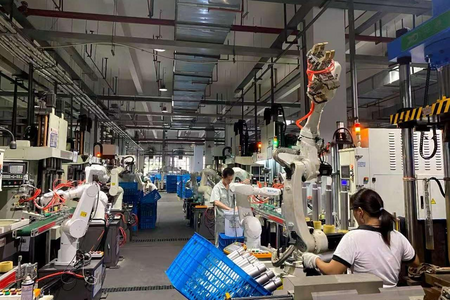
做出一个机器人并不难,但是做出一个能够长期稳定工作、具备工业级可靠性的机器人,本身就是一个巨大的挑战。机器人最终要进入工厂、进入商业场景、进入真实环境。这些场景不会因为机器人偶尔出错而降低要求。

工业级可靠性将成为未来机器人竞争的重要门槛,而中国供应链是机器人产业化的最大优势之一。事实上,机器人产业的发展与过去智能手机、新能源汽车的发展有很多相似之处。机器人大量核心零部件与智能手机、新能源汽车、各类智能硬件,具有很高的复用度。

正因为如此,中国完整且成熟的智能硬件供应链体系,为机器人产业的发展提供了极好的土壤。基于这样的产业基础,智平方在去年建设完成了首条具备2000台以上产能的半自动化生产线。今年下半年,我们还将启动第二条产线建设,目标产能将达到2万至3万台级别。随着硬件能力不断成熟,我们希望让机器人具备更长时间的稳定运行能力。

与此同时,我们也在推动大模型更多地运行在端侧。这样做有两个重要价值:第一,用户数据更加安全;第二,响应速度更快。对于机器人而言,实时性与可靠性往往比绝对智能水平更加重要。

当机器人拥有了可靠硬件和先进大脑之后,新的问题出现了,机器人如何持续成长?智平方的答案非常明确:必须在真实环境中边工作、边学习,而不是为了采集数据而采集数据。

机器人需要建立一个可规模复制的商业闭环。只有真实场景中的任务、用户和反馈,才能持续产生高价值数据。这些数据再反过来推动模型迭代。最终形成能力提升与场景扩张的正向循环。

从公司创立第一天开始,我们就坚持一个判断:工业服务是具身智能最好的起点,尤其是在柔性制造领域。原因很简单,工业环境拥有明确任务、清晰目标、可衡量结果和稳定商业价值,非常适合作为机器人学习与成长的起点。

除了工业场景之外,我们认为公共服务场景同样具有重要价值。它能够帮助机器人从相对结构化环境逐步进入更加开放的环境。因此,我们将公共服务视为连接工业服务与家庭服务的重要桥梁。

家庭服务一直是机器人行业的重要愿景。但在现阶段,我们认为,家庭更适合作为数据采集场景,而不是商业化服务场景。原因在于家庭空间狭小、环境变化频繁、长尾任务极其丰富、标准化程度较低,对于当前阶段的机器人而言,家庭环境仍然过于复杂。

因此,我们更倾向于从工业服务到公共服务,再到家庭服务这样的发展路径。

开源生态与通用机器人的未来

过去几年,我们看到大模型行业的发展离不开开源生态的推动,具身智能也是如此。机器人产业的发展不应该只是少数公司之间的竞争,更需要整个行业共同参与和建设。因此,我们一直积极参与具身智能开源生态的发展。

目前,智平方正在参与智源研究院主导的RoboCOIN开源数据集建设。这是当前具身智能领域具有广泛影响力的重要开源项目之一。在这一项目中,我们贡献了两款机器人平台的大规模真实数据。我们也希望通过这样的方式,推动行业数据共享,提升整个具身智能社区的数据开放程度。

除了参与行业开源项目之外,智平方也推出了自己的具身智能开发平台——AlphaBrain Platform。在这个平台上,我们开放了NeuroVLA等基础模型、多款生态合作模型、持续学习工具链、模型评测体系、下游任务适配能力。

我们希望开发者获得的不仅仅是一个模型,更重要的是获得一整套从训练、适配到部署的开发能力。过去很多开源项目只是开放模型权重,但对于具身智能而言,仅有模型是不够的,开发者还需要数据处理能力、训练能力、评测能力、场景适配能力。因此,我们希望进一步开放工具链,让开发者能够基于已有模型,快速完成面向自身场景的定制化开发。同时,我们也将常见Benchmark能力集成到平台之中,开发者可以方便地测试和验证模型表现。

在我们看来,未来具身智能的发展不应该建立在少数团队掌握复杂系统能力的基础上。我们更希望将原本属于少数团队的复杂系统能力,转化为整个行业都能够共享的公共能力。只有这样,行业才能真正形成规模化创新,这也是AlphaBrain平台最核心的价值所在。

最后,我想分享一个个人感受。我的第一份工作是在微软。那时微软一直坚持一个愿景:让每个家庭的书桌上都有一台个人电脑。多年以后,当我开始创业做通用智能机器人时,我也有一个类似的愿望:希望未来每一个家庭里,至少拥有一台通用智能机器人。就像今天的智能手机和智能汽车一样,它们不再是少数人的工具,而是成为人人可用的普及化智能终端。

注:文/主编24小时在线,文章来源:明亮公司(公众号ID:suchbright ),本文为作者独立观点,不代表亿邦动力立场。

文章来源:明亮公司

广告
微信
朋友圈

这么好看,分享一下?

朋友圈 分享

APP内打开

+1
+1
微信好友 朋友圈 新浪微博 QQ空间
关闭
收藏成功
发送
/140 0