广告
加载中

仅次于亚马逊主站:Temu跻身为全球访问量第二大的电商网站

王昱 2026-05-20 11:09
王昱 2026/05/20 11:09

邦小白快读

EN
全文速览

本文公布了2025年12月到2026年2月最新的全球电商网站流量排名,核心干货信息整理如下:

1. 排名核心变化:Temu已经攀升至全球电商网站访问量第二位,仅次于亚马逊主站,亚马逊主站、Temu、速卖通占据前三甲,中国或华人资本背景电商占据Top20中的四个席位。

2. 核心规模对比:亚马逊主站月访问量27亿次,Temu月访问量13.4亿次,亚马逊主站月访问量仍是Temu的两倍多,加上亚马逊多个区域站点分流流量,二者整体体量差距依然十分明显。

3. 行业趋势看点:外媒分析认为Temu靠激进价格策略和物流能力,已经具备冲击传统电商多年竞争壁垒的可能,榜单同时显现俄罗斯、印度、巴西等区域新兴电商力量崛起,阿里巴巴是榜单中唯一以B2B业务为主的入榜平台。

本文为出海品牌提供了最新全球电商格局参考,可提炼的干货内容如下:

1. 渠道布局参考:当前Temu已经成为全球第二大流量电商平台,中国及华人背景电商已经占据Top20四席,品牌出海可选择的新兴优质流量渠道更多,除了传统亚马逊之外,可布局Temu等新兴平台获取增量流量。

2. 竞争策略参考:Temu凭借激进低价策略加高效物流就能冲击传统平台壁垒,说明当前全球跨境消费市场中,高性价比商品加高效物流仍然是打动用户的核心竞争力,品牌在定价、供应链打造上可以参考这一逻辑。

3. 增量机会提示:俄罗斯Ozon、印度Flipkart、巴西本土平台都进入流量Top20,说明区域新兴市场电商增长快速,品牌可以提前布局这些新兴区域市场,同时亚马逊多站点布局仍然保有绝对优势,成熟市场核心渠道仍需重视。

本文为跨境卖家梳理了最新全球电商流量格局,可参考的干货内容如下:

1. 最新行业格局:Temu已经跃居全球第二大电商网站,月访问量达到13.4亿次,流量增长速度惊人,给跨境卖家提供了新的大规模流量入口,卖家可以考虑对接Temu获取新增长。

2. 新增量机会提示:多个区域本土新兴电商平台进入流量Top20,包括俄罗斯Ozon、印度Flipkart、巴西的美客多和Shopee巴西站,说明区域新兴市场电商增长动能充足,卖家可以提前布局这些区域挖掘增量。

3. 风险与竞争参考:目前亚马逊整体体量仍远大于Temu,多区域站点布局夯实了竞争优势,头部平台格局没有被彻底颠覆,卖家布局新渠道的同时,不能放弃成熟的亚马逊渠道;Temu的低价策略也提示卖家,需要控制好供应链成本才能在当前市场竞争中存活。

本文给做跨境供货的工厂提供了新的商业方向与转型启示,干货整理如下:

1. 新合作机会:Temu流量跃居全球第二,增长势头十分强劲,Temu这类新兴跨境平台对高性价比的源头供应链货源有大量需求,工厂可以主动对接Temu等新兴跨境平台,获得更多稳定订单。

2. 生产需求启示:Temu靠低价加高效物流就能快速崛起,说明当前海外市场对高性价比平价商品的需求仍然十分旺盛,工厂在生产端可以侧重成本控制,打造适配大众需求的高性价比爆款产品,契合当前市场需求方向。

3. 转型发展启示:中国背景电商已经占据全球流量Top20中的四个席位,说明中国供应链依托跨境电商已经获得全球流量优势,工厂可以加快数字化与电商转型,直接对接跨境平台,减少中间环节,获取更高的利润空间。

本文给跨境电商相关服务商透露出最新行业发展趋势,可提炼的干货如下:

1. 行业发展新趋势:全球跨境电商格局正在发生明显变化,Temu这类新兴中国背景平台快速崛起,流量已经冲到全球第二,同时各区域本土新兴平台也在快速增长,服务商的服务需求逐渐从传统头部亚马逊,向新兴平台、区域本土平台扩散。

2. 新客户需求与机会:新兴平台快速增长,大量卖家、工厂要入驻新平台、开拓新兴市场,需要适配新平台规则的物流、支付、运营、供应链等配套服务,这给服务商带来了新的业务增长机会。

3. 服务优化方向:低价和物流是当前跨境电商竞争的核心壁垒,相关物流服务商、供应链服务商可以针对性优化自身服务能力,打造更高效低成本的物流和供应链解决方案,更好契合当前市场的核心需求。

本文给全球各类电商平台梳理了最新行业竞争格局,可参考的干货内容如下:

1. 竞争格局新变化:Temu凭借激进价格策略和物流能力,短时间内做到全球流量第二,说明新平台仍然有机会撼动传统平台积累多年的竞争壁垒,只要抓住供应链和物流优势,新平台仍有突围颠覆现有格局的可能。

2. 成熟平台竞争启示:亚马逊靠多区域站点布局,即便流量分散到多个站点,仍然保持整体的绝对优势,说明多区域、多站点的生态布局能够有效巩固平台竞争优势,平台想要长期发展,需要做好核心市场的区域下沉布局。

3. 风险提示:传统头部平台如果不能维持性价比和物流优势,很可能被新兴平台冲击市场份额,需要警惕中国系新兴平台的竞争,同时也要关注各个区域本土新兴平台崛起带来的流量分流压力。

本文披露了最新全球跨境电商产业流量数据,为产业研究提供了最新的事实依据,干货整理如下:

1. 产业发展新动向:全球电商流量格局已经发生重大变化,来自中国的Temu短时间内跃居全球第二,中国及华人背景电商已经占据全球Top20流量榜单中的四席,说明中国跨境电商已经在全球范围内形成足够竞争力,改变了原本亚马逊单极主导的格局。

2. 新商业模式验证:Temu的低价加中国直发的模式,被验证可以成功撬动全球市场,能够撼动传统电商多年筑起的竞争壁垒,为研究跨境电商新商业模式提供了成熟的成功案例。

3. 值得深入研究的新趋势:区域本土电商平台在俄罗斯、印度、巴西等市场快速崛起,全球电商呈现出头部集中加区域分化的新特征,B2B平台阿里巴巴也进入榜单,说明B2B电商也有稳定的全球流量规模,这些都是值得后续深入研究的新方向。

返回默认

声明:快读内容全程由AI生成,请注意甄别信息。如您发现问题,请发送邮件至 run@ebrun.com 。

我是 品牌商 卖家 工厂 服务商 平台商 研究者 帮我再读一遍。

Quick Summary

This article releases the latest global e-commerce website traffic ranking for the period from December 2025 to February 2026, with key takeaways summarized below:

1. Core ranking changes: Temu has risen to become the second most-visited e-commerce website globally, ranking only behind Amazon’s main site. Amazon main site, Temu and AliExpress take the top three spots, and e-commerce platforms with Chinese or Chinese diaspora capital hold four of the top 20 positions.

2. Scale comparison: Amazon’s main site records 2.7 billion monthly visits, while Temu has 1.34 billion. Amazon’s monthly traffic is still more than double that of Temu. When adding traffic from Amazon’s multiple regional sites, the overall size gap between the two platforms remains very large.

3. Key industry trends: Foreign media analysis notes that Temu, relying on its aggressive pricing strategy and logistics capabilities, now has the potential to break the long-standing competitive barriers of traditional e-commerce. The ranking also highlights the rise of regional emerging e-commerce players in markets including Russia, India and Brazil, and Alibaba is the only B2B-focused platform to enter the top 20.

This article provides the latest global e-commerce landscape reference for cross-border brands, with key insights as follows:

1. Channel layout reference: Temu is now the second largest e-commerce platform by global traffic, and e-commerce platforms with Chinese or Chinese diaspora background hold four of the top 20 positions, meaning brands have more high-quality emerging traffic channels for global expansion. In addition to the traditional incumbent Amazon, brands can expand onto emerging platforms such as Temu to capture incremental traffic.

2. Competitive strategy reference: Temu’s ability to challenge traditional platform barriers with aggressive low pricing and efficient logistics proves that cost-effective products paired with efficient delivery remain the core competitiveness to win consumers in the global cross-border consumer market. Brands can draw on this logic when setting pricing and building supply chains.

3. Incremental opportunity note: Regional players including Russia’s Ozon, India’s Flipkart and local Brazilian platforms have all entered the top 20 by traffic, indicating rapid e-commerce growth in emerging regional markets. Brands can prepare for expansion in these markets early, while Amazon’s multi-site layout still maintains an absolute advantage, so core channels in mature markets cannot be neglected.

This article sorts out the latest global e-commerce traffic landscape for cross-border sellers, with key takeaways as follows:

1. Latest industry landscape: Temu has jumped to become the second largest e-commerce website globally, with 1.34 billion monthly visits and astonishing traffic growth, opening a new large-scale traffic entrance for cross-border sellers. Sellers can consider partnering with Temu to unlock new growth.

2. Incremental opportunity note: Multiple regional local emerging e-commerce platforms have entered the top 20 traffic ranking, including Russia’s Ozon, India’s Flipkart, Mercado Libre Brazil and Shopee Brazil. This indicates sufficient growth momentum for e-commerce in emerging regional markets, and sellers can expand into these regions early to tap into incremental business.

3. Risk and competition reference: Amazon’s overall scale is still far larger than Temu, and its multi-regional site layout has consolidated its competitive advantage, so the top platform landscape has not been completely upended. Sellers should not abandon their mature Amazon channels while expanding into new platforms. Temu’s low-price strategy also reminds sellers that controlling supply chain costs is essential to survive in current market competition.

This article provides new business directions and transformation insights for factories engaged in cross-border supply, with key takeaways summarized below:

1. New cooperation opportunities: Temu’s traffic has jumped to second place globally with very strong growth momentum. Emerging cross-border platforms like Temu have massive demand for cost-effective source supply from manufacturers. Factories can proactively partner with Temu and other emerging cross-border platforms to secure more stable orders.

2. Production demand insights: Temu’s rapid rise through low pricing and efficient logistics proves that demand for affordable, cost-effective goods remains very strong in overseas markets. Factories can prioritize cost control on the production end, build cost-effective hit products that fit mass demand, and align with current market demand trends.

3. Transformation and development insights: Chinese-backed e-commerce platforms hold four of the top 20 positions in global traffic, proving that Chinese supply chains have gained global traffic advantages through cross-border e-commerce. Factories can accelerate digital and e-commerce transformation to connect directly with cross-border platforms, cut out intermediate links and capture higher profit margins.

This article reveals the latest industry development trends for cross-border e-commerce service providers, with key insights as follows:

1. New industry development trends: The global cross-border e-commerce landscape is undergoing notable changes. Emerging Chinese-backed platforms like Temu have risen rapidly to claim the second place in global traffic, while regional local platforms are also growing quickly. Service demand is gradually shifting from the traditional incumbent Amazon to emerging platforms and regional local players.

2. New customer demand and opportunities: The rapid growth of emerging platforms has driven a large number of sellers and factories to enter new platforms and expand into emerging markets, creating demand for supporting services adapted to new platform rules, including logistics, payment, operation and supply chain services. This brings new business growth opportunities for service providers.

3. Service optimization direction: Low pricing and logistics are the core competitive barriers in current cross-border e-commerce. Logistics and supply chain service providers can optimize their capabilities targeting this need, build more efficient and low-cost logistics and supply chain solutions, and better align with the core demands of the current market.

This article sorts out the latest industry competitive landscape for global e-commerce platforms, with key reference insights as follows:

1. New changes in competitive landscape: Temu reached second place in global traffic in a short time relying on aggressive pricing and logistics capabilities, proving that new platforms still have the opportunity to shake the competitive barriers built by traditional platforms over many years. As long as new platforms capture supply chain and logistics advantages, they can still break out and upend the existing landscape.

2. Competitive insights for mature platforms: Amazon’s multi-regional site layout allows it to maintain an overall absolute advantage even when traffic is dispersed across multiple sites, proving that multi-region, multi-site ecosystem layout can effectively consolidate a platform’s competitive advantage. For long-term development, platforms need to build out deep regional layouts in core markets.

3. Risk warning: If traditional leading platforms fail to maintain advantages in cost performance and logistics, their market share is very likely to be eroded by emerging platforms. They need to stay alert to competition from emerging Chinese platforms, and also pay attention to traffic diversion pressure brought by the rise of regional local emerging platforms.

This article discloses the latest traffic data of the global cross-border e-commerce industry, providing updated factual basis for industry research, with key takeaways as follows:

1. New industry development trends: Major shifts have occurred in the global e-commerce traffic landscape. China-originated Temu has jumped to second place globally in a short period, and Chinese or Chinese diaspora-backed e-commerce platforms hold four of the top 20 spots by traffic. This proves that Chinese cross-border e-commerce has built sufficient global competitiveness and reshaped the original Amazon-dominated unipolar landscape.

2. Validation of a new business model: Temu’s model of low pricing paired with direct shipping from China has been proven to successfully unlock the global market and shake the competitive barriers built by traditional e-commerce over decades, providing a mature successful case for research on new cross-border e-commerce business models.

3. New trends worthy of in-depth research: Regional local e-commerce platforms have risen rapidly in markets including Russia, India and Brazil, and global e-commerce now features a new pattern of concentrated head players paired with regional fragmentation. B2B platform Alibaba also entered the ranking, proving that B2B e-commerce also has a stable global traffic scale. All of these are new directions that deserve further in-depth research.

Disclaimer: The "Quick Summary" content is entirely generated by AI. Please exercise discretion when interpreting the information. For issues or corrections, please email run@ebrun.com .

I am a Brand Seller Factory Service Provider Marketplace Seller Researcher Read it again.

【亿邦原创】5月19日消息,日前,海外数据机构We Are Social发布了2025年12月至2026年2月全球电商网站流量报告。根据其数据,Temu如今已成为全球访问量第二高的电商网站,仅次于亚马逊主站。

据悉,目前Amazon.com、Temu.com和 Aliexpress.com占据全球访问量最高的电子商务网站前三甲。而来自中国、或有华人资本背景的电商平台,则占据四席——这仍低于亚马逊旗下站点所贡献的6个网站域名。

对此,外媒分析称,“通过激进的价格策略和物流手段,完全有可能撼动传统电商平台多年来筑起的竞争壁垒”。

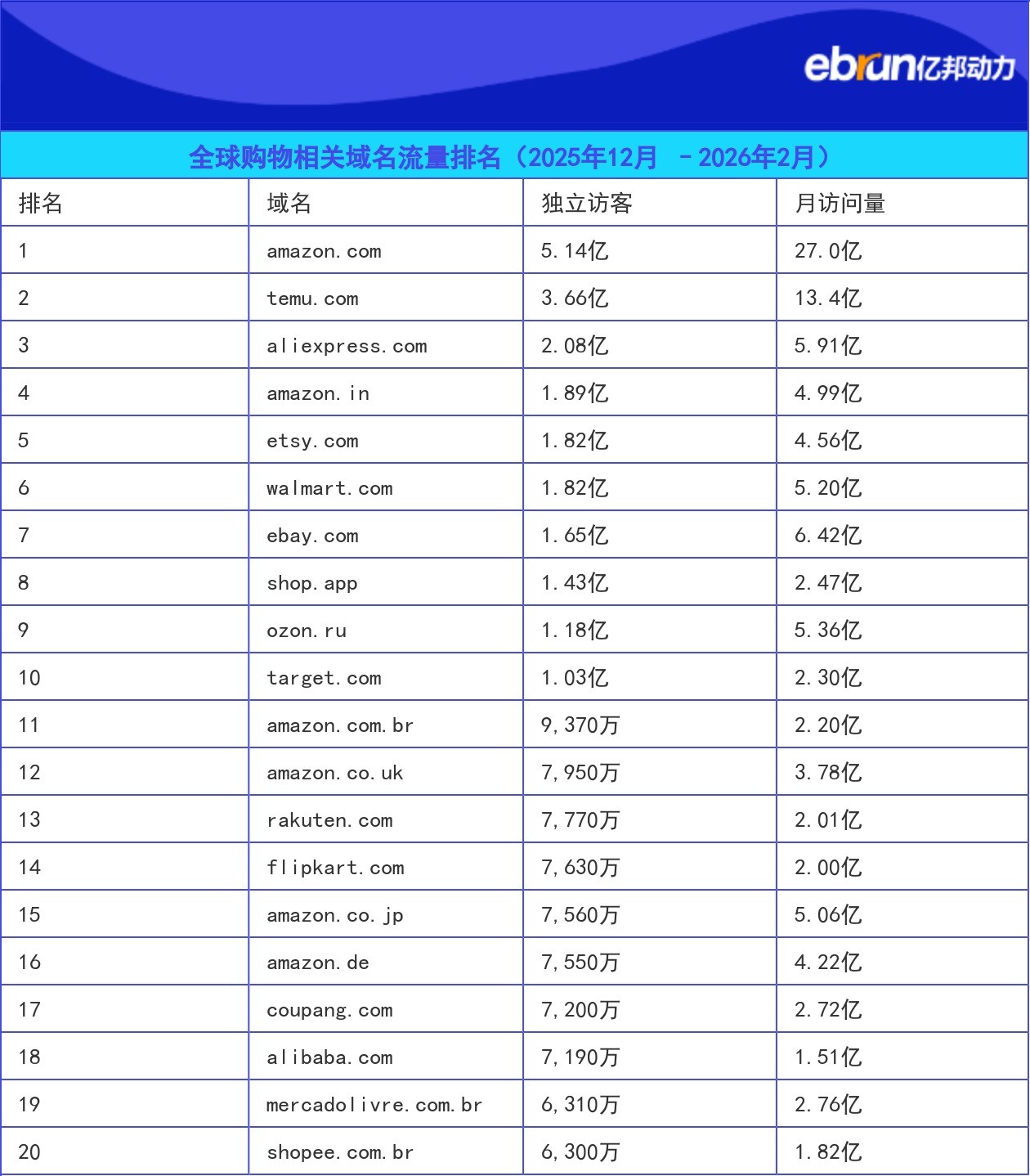
以下为全球购物相关域名中流量表现的排名,数据统计周期为2025年12月至2026年2月。


全球购物相关域名流量排名(2025年12月 –2026年2月)
排名 域名 独立访客 月访问量
1 amazon.com 5.14亿 27.0亿
2 temu.com 3.66亿 13.4亿
3 aliexpress.com 2.08亿 5.91亿
4 amazon.in 1.89亿 4.99亿
5 etsy.com 1.82亿 4.56亿
6 walmart.com 1.82亿 5.20亿
7 ebay.com 1.65亿 6.42亿
8 shop.app 1.43亿 2.47亿
9 ozon.ru 1.18亿 5.36亿
10 target.com 1.03亿 2.30亿
11 amazon.com.br 9,370万 2.20亿
12 amazon.co.uk 7,950万 3.78亿
13 rakuten.com 7,770万 2.01亿
14 flipkart.com 7,630万 2.00亿
15 amazon.co.jp 7,560万 5.06亿
16 amazon.de 7,550万 4.22亿
17 coupang.com 7,200万 2.72亿
18 alibaba.com 7,190万 1.51亿
19 mercadolivre.com.br 6,310万 2.76亿
20 shopee.com.br 6,300万 1.82亿

尽管Temu表现出了惊人的成长能力,但就绝对体量而言,其与亚马逊的差距依然十分巨大——尤其要考虑到亚马逊还将流量分散到了旗下各个区域站点。

即便如此,亚马逊仍然通过其主域名(.com)保持着无可争议的主导地位,月访问量是Temu的两倍多。此外,它在印度(.in)、巴西(.br)、日本(.jp)和德国(.de)等庞大市场的布局,也进一步夯实了其全球生态系统。

此外,榜单中还有一些特别值得关注的新变化,例如Ozon.ru、flipkart.com、mercadolivre.com.br、shopee.com.br分别代表着俄罗斯、印度和巴西的新兴电商力量。而alibaba.com,或许是这份榜单中唯一以B2B业务为主轴的电商平台。


亿邦持续追踪报道该情报,如想了解更多与本文相关信息,请扫码关注作者微信。

文章来源:亿邦动力

广告
微信
朋友圈

FAQ回顾

Temu在全球电商网站中的访问量排名如何?

根据We Are Social发布的2025年12月至2026年2月全球电商网站流量报告,Temu(Temu.com)以3.66亿独立访客和13.4亿月访问量,成为全球访问量第二高的电商网站,仅次于亚马逊主站(Amazon.com)。

Temu等新兴电商平台通过什么策略挑战传统巨头?

外媒分析指出,Temu等平台通过激进的价格策略和高效的物流手段,成功挑战了传统电商平台长期建立的竞争壁垒,从而快速获得市场份额。

全球电商流量榜单中还有哪些值得关注的变化?

榜单显示,俄罗斯的Ozon.ru、印度的Flipkart.com、巴西的Mercadolivre.com.br和Shopee.com.br等新兴市场电商平台表现突出。Alibaba.com则是榜单中主要专注于B2B业务的电商平台。

这么好看,分享一下?

朋友圈 分享

APP内打开

赞 +1
+1
微信好友 朋友圈 新浪微博 QQ空间
关闭
收藏成功
发送
/140 0