广告
加载中

一万台机器人同时上班是什么画面?智元给出了答案

胡镤心 2026-03-30 14:50
胡镤心 2026/03/30 14:50

邦小白快读

EN
全文速览

总:文章讲述了智元机器人实现第10000台量产里程碑,15个月内高速增长,突出供应链和市场需求变化。

1.量产速度惊人:从2025年1月到12月完成从1000台到5000台的跨越,之后仅用不到4个月达到10000台,刷新全球人形机器人量产记录。

2.供应链能力是关键:智元通过粉末冶金技术应用于机器人关节和传动系统,实现复杂结构一体化和成本下降;建立标准化供应链体系,形成“半小时供应链圈”,确保核心部件高质量交付。

3.市场需求拐点来临:机器人应用于工业场景,如龙旗科技的平板产线和高难度汽车零部件装配,成功率超过99%,成为核心生产力而非辅助工具。

4.数据飞轮效应启动:万台部署驱动“本体、数据、模型、场景”全栈布局,实时数据反哺模型迭代,加速智能化发展。

总:智元通过规模量产和品牌创新,展现市场领导力,聚焦产品研发和消费趋势。

1.品牌营销以速度和成本优势为核心:15个月万台量产凸显“智元标准”,提升品牌可信度;制造环节从瓶颈转为核心竞争力,实现“做得多又好又便宜”。

2.产品研发强调技术创新:粉末冶金技术应用在关键部件,降低复杂结构成本,提升质量;全栈布局结合场景反馈,推动本体优化和算法突破。

3.消费趋势观察显示工业需求兴起:机器人深度嵌入生产流程,如龙旗科技和均胜电子订单,用户行为转向高效生产,标志着从实验室到千行百业的转型。

4.用户行为驱动的增长:万台部署形成大规模训练集,反哺模型迭代,消费趋势指向规模量产的Scaling Law时刻。

总:智元案例揭示增长市场和机会提示,强调需求变化和商业模式创新。

1.增长市场机遇:工业需求旺盛,如龙旗科技订单和应用场景拓展,机器人从辅助工具变为核心生产力,提升效率至99%成功率。

2.消费需求变化:市场逻辑拐点出现,部署规模带来数据飞轮效应,推动低成本和高智能的行业竞争;机会提示包括规模量产带来成本下降和合作潜力。

3.事件应对措施:供应链能力跃升应对交付挑战,如半小时供应链圈确保可控;正面影响是速度和效率提升,负面影响未被提及,机会在于学习“规模量产+商用部署”模式。

4.最新商业模式和合作方式:全栈飞轮逻辑(本体-数据-模型-场景)驱动自加速;扶持政策通过联合研发和专线供应实现协同,为卖家提供低门槛合作启示。

总:智元在供应链和生产设计上的突破提供数字化启示和商业机会。

1.产品生产和设计需求:粉末冶金技术实现一体化成型,降低生产成本;标准化供应链体系确保质量可控和交付短周期,启示高效制造模式。

2.商业机会凸显:机器人应用于工业场景,如平板产线和汽车装配,提升节拍至12.97秒,为工厂提供效率升级机会;万台部署带动市场需求,开放生产合作潜力。

3.推进数字化启示:半小时供应链圈和联合研发模式,示范了供应链协同和核心部件自主可控;电商启示在于快速响应和成本控制,推动工厂向智能化转型。

4.整体启示:制造环节从瓶颈转为核心竞争力,强调“造得好、造得便宜、造得快”的实战经验。

总:机器人行业进入规模部署新阶段,聚焦新技术和解决方案。

1.行业发展趋势:从技术参数比拼转向“规模量产+商用部署”的较量,智元万台里程碑标志拐点;需求增长,机器人深度嵌入生产流程,重构作业方式。

2.新技术应用:粉末冶金技术降低关键部件成本;数据飞轮模型(本体-数据-模型-场景)驱动实时迭代,解决算法突破难题。

3.客户痛点解决:生产线效率需求,如高难度装配环节的成功率超过99%;解决方案通过标准化供应链和质量体系,实现高质量交付和快速响应。

4.整体方案启示:全栈布局形成自加速飞轮,提供从核心部件到操作系统的端到端服务参考。

总:智元实践启示平台需求和运营管理,强调风险规避和招商机会。

1.商业对平台需求和问题:稳定供应链和快速交付是关键需求,如半小时供应链圈解决可控问题;平台需支持规模部署和高质量交付,避免瓶颈。

2.平台最新做法:通过联合研发和专线供应模式,实现协同创新;标准化体系降低进入门槛,吸引合作伙伴,示范招商策略。

3.运营管理优化:数据飞轮驱动模型迭代,提升智能高度;风向规避强调核心部件自主可控和质量控制,减少风险。

4.整体启示:万台部署为平台提供规模效应机会,推动从开发态到部署态的转型。

总:智元案例展示产业新动向和商业模式创新,提供研究启示。

1.产业新动向:规模量产+商用部署成为竞争焦点,15个月万台速度刷新记录;制造know-how作为技术壁垒,比算法更需时间沉淀。

2.新问题探讨:供应链能力跃升揭示硬件制造的重要性;数据飞轮效应(本体-数据-模型-场景)提出如何平衡规模与智能的挑战。

3.商业模式分析:全栈飞轮逻辑形成自加速循环,部署规模提升智能高度;政策法规启示可推演自“中国速度”,强调标准化和自主可控。

4.研究价值:案例证明从专用场景到通用智能的跨越,为产业提供实战参考。

返回默认

声明:快读内容全程由AI生成,请注意甄别信息。如您发现问题,请发送邮件至 run@ebrun.com 。

我是 品牌商 卖家 工厂 服务商 平台商 研究者 帮我再读一遍。

Quick Summary

Zhiyuan Robotics has achieved a milestone of 10,000 units in mass production within 15 months, highlighting rapid growth, supply chain capabilities, and shifting market demand.

1. Impressive production speed: The company scaled from 1,000 to 5,000 units between January and December 2025, then reached 10,000 units in under four months—setting a new global record for humanoid robot mass production.

2. Supply chain as a key advantage: By applying powder metallurgy to robot joints and transmission systems, Zhiyuan achieved integrated complex structures and cost reduction. A standardized supply chain system and a "30-minute supply chain circle" ensure high-quality delivery of core components.

3. Market inflection point: Robots are now deployed in industrial settings, such as Longqi Technology's tablet production lines and complex automotive parts assembly, with success rates exceeding 99%, positioning them as core productivity tools rather than auxiliary aids.

4. Data flywheel effect: Deployment of 10,000 units drives a full-stack layout spanning hardware, data, models, and scenarios, with real-time data feeding back into model iteration and accelerating intelligent development.

Zhiyuan demonstrates market leadership through mass production and brand innovation, focusing on product R&D and consumer trends.

1. Brand marketing centers on speed and cost advantages: The 15-month, 10,000-unit milestone establishes the "Zhiyuan Standard," boosting brand credibility. Manufacturing has evolved from a bottleneck to a core competitive edge, enabling high-volume, high-quality, low-cost production.

2. Product R&D emphasizes technological innovation: Powder metallurgy lowers costs and improves quality in key components. A full-stack approach, combined with scenario feedback, drives hardware optimization and algorithm breakthroughs.

3. Consumer trends indicate rising industrial demand: Robots are deeply embedded in production processes, as seen in orders from Longqi Technology and Junsheng Electronics. User behavior shifts toward efficiency, marking a transition from lab prototypes to industry-wide adoption.

4. User-driven growth: Large-scale deployment generates massive training datasets, fueling model iteration and signaling a Scaling Law moment for mass production.

The Zhiyuan case reveals growth market opportunities and highlights demand shifts and business model innovation.

1. Growth market potential: Strong industrial demand, exemplified by Longqi Technology's orders and expanding applications, positions robots as core productivity tools—achieving over 99% success rates in efficiency.

2. Shifting consumer demand: A market inflection point is emerging, where deployment scale creates a data flywheel effect, driving low-cost, high-intelligence competition. Opportunities include cost reduction from mass production and partnership potential.

3. Strategic responses: Supply chain capabilities have leapfrogged to address delivery challenges, such as the 30-minute supply chain circle ensuring control. Positive impacts include speed and efficiency gains; negatives are unmentioned. The key opportunity lies in adopting the "mass production + commercial deployment" model.

4. New business models and collaborations: A full-stack flywheel (hardware-data-model-scenario) enables self-acceleration. Support policies, like joint R&D and dedicated supply lines, foster synergy, offering low-barrier partnership insights for sellers.

Zhiyuan's breakthroughs in supply chain and production design offer digitalization insights and commercial opportunities for factories.

1. Production and design needs: Powder metallurgy enables integrated molding, reducing production costs. A standardized supply chain system ensures quality control and short delivery cycles, illustrating an efficient manufacturing model.

2. Commercial opportunities: Robot applications in industrial settings—such as tablet production lines and automotive assembly—boost cycle times to 12.97 seconds, offering factories efficiency upgrades. Large-scale deployment stimulates market demand and opens production collaboration potential.

3. Digitalization insights: The 30-minute supply chain circle and joint R&D models demonstrate supply chain synergy and core component autonomy. E-commerce lessons emphasize rapid response and cost control, driving factories toward smart transformation.

4. Overall insight: Manufacturing has transformed from a bottleneck into a core competency, emphasizing practical experience in producing high-quality, low-cost, fast-delivery goods.

The robotics industry is entering a new phase of scaled deployment, focusing on new technologies and solutions.

1. Industry trends: Competition is shifting from technical specs to "mass production + commercial deployment." Zhiyuan's 10,000-unit milestone marks an inflection point. Growing demand sees robots deeply embedded in production workflows, redefining operational methods.

2. New technology applications: Powder metallurgy lowers costs for key components. The data flywheel model (hardware-data-model-scenario) drives real-time iteration, addressing algorithm breakthrough challenges.

3. Solving customer pain points: Production line efficiency needs, such as achieving over 99% success rates in complex assembly, are met through standardized supply chains and quality systems, enabling high-quality delivery and rapid response.

4. Holistic solution insights: A full-stack layout creates a self-accelerating flywheel, offering end-to-end service references from core components to operating systems.

Zhiyuan's practices offer insights into platform requirements and operations management, emphasizing risk mitigation and partnership opportunities.

1. Platform needs and challenges: Stable supply chains and fast delivery are critical, as addressed by the 30-minute supply chain circle. Platforms must support scaled deployment and high-quality delivery to avoid bottlenecks.

2. Latest platform strategies: Joint R&D and dedicated supply lines enable collaborative innovation. Standardized systems lower entry barriers, attracting partners and demonstrating effective recruitment strategies.

3. Operations optimization: The data flywheel drives model iteration, enhancing intelligence. Risk mitigation emphasizes core component autonomy and quality control to reduce vulnerabilities.

4. Overall insight: Deployment of 10,000 units offers platforms scale effects, accelerating the transition from development to deployment phases.

The Zhiyuan case showcases new industry dynamics and business model innovation, providing research insights.

1. Industry trends: Mass production + commercial deployment is now the competitive focus, with the 15-month, 10,000-unit speed setting records. Manufacturing know-how serves as a technical barrier, requiring more time to accumulate than algorithms.

2. New research questions: Supply chain leaps highlight the importance of hardware manufacturing. The data flywheel effect (hardware-data-model-scenario) raises challenges in balancing scale and intelligence.

3. Business model analysis: The full-stack flywheel logic creates a self-accelerating cycle, where deployment scale enhances intelligence. Policy implications, inferred from "China speed," stress standardization and autonomy.

4. Research value: The case demonstrates a leap from specialized scenarios to general intelligence, offering practical references for the industry.

Disclaimer: The "Quick Summary" content is entirely generated by AI. Please exercise discretion when interpreting the information. For issues or corrections, please email run@ebrun.com .

I am a Brand Seller Factory Service Provider Marketplace Seller Researcher Read it again.

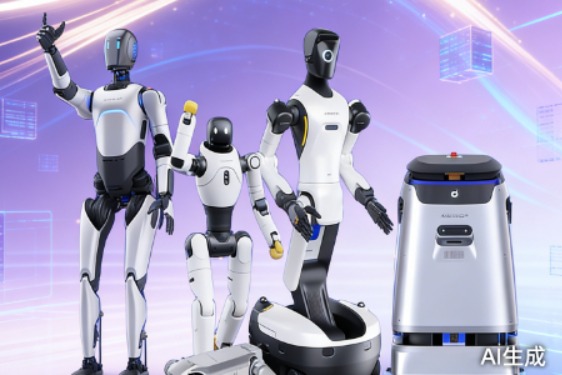
【亿邦原创】3月28日,智元机器人的第10000台通用具身机器人,在产线上走完了最后一道工序。彭志辉站在发布会现场,说了一句听起来有点“反常识”的话:“对于人形机器人而言,规模化本身,便是最难攻克的技术课题之一。”

一万台,意味着供应链要稳定,质量要可控,成本要能降下来,交付周期要短,售后要跟得上……智元用15个月走完了这条路:从2025年1月到12月,完成了第一个5000台;而从5000台到10000台,只用了不到4个月。曲线越来越陡,速度越来越快。

彭志辉说,制造已经不再是智元的发展瓶颈,而是“真正构筑起的一项核心竞争力”。这句话如果翻译得直白一点,大概就是:在别人还在琢磨怎么把机器人做出来的时候,智元已经在琢磨怎么把它做得又多又好又便宜。

1、从1000到10000

智元的量产曲线是一条陡峭的指数线:2025年1月到12月,用近12个月完成从1000台到5000台的跨越;而从5000台到10000台,只用了不到4个月。15个月内完成十倍级跨越,刷新了全球人形机器人量产速度。

但数字背后更值得关注的,是智元如何做到这一点。彭志辉透露,制造环节本身已经成为智元的一项核心竞争力——这意味着,“能不能造出来”的瓶颈已经被突破,“造得好、造得便宜、造得快”正在成为新的护城河。

这背后是供应链能力的系统性跃升。智元与合作伙伴共同创新的粉末冶金技术,被应用在机器人关节、传动系统等关键部件上,实现了复杂结构的一体化成型与规模化成本下降。更重要的是,智元建立了全球首个具身智能机器人的标准化供应链体系,通过联合研发、专线供应等协同模式,织就了“半小时供应链圈”,实现了核心部件的自主可控与高质量交付。

智元合伙人王闯对此的总结很到位:“从千台到万台,核心不在于产线,而在于供应链能力的整体跃升与质量体系的全面成熟。”这句话揭示了一个被很多人忽略的真相:在具身智能领域,硬件制造的know-how同样是难以复制的技术壁垒,甚至比算法更需要时间沉淀和实战打磨。

2、市场需求也来到转折点

如果说供应链成熟是供给端的突破,那么市场端的需求拐点同样在发生。

去年10月,智元拿下龙旗科技的订单——这是当时国内工业具身智能领域最大订单之一。智元精灵G2被应用于平板产线的MMIT工站,从高速流水线上精准抓取待测平板,穿越复杂空间,完成精密上下料。

在宁波均胜电子的汽车零部件工厂,同样的机器人在高难度三销定位的柔性装配环节,实现了最快12.97秒的节拍、超过99%的成功率。

这似乎预示着,机器人不再是产线上可有可无的辅助工具,而是正在深度嵌入生产流程、重构作业方式的核心生产力。

彭志辉将万台定义为“从开发态加速走向部署态”的里程碑。当数千台机器人在不同场景中夜以继日地工作时,它们构成了大规模的具身智能训练集,实时反哺大模型的迭代。

智元在“本体、数据、模型、场景”上的全栈布局,形成了相互驱动的飞轮逻辑:优质本体产生高质量数据——海量高质量数据支撑算法持续突破——算法结合场景真实反馈——又为本体优化和数据采集提供新的指引。

这正是“大脑”公司们疯狂融资所等待的Scaling Law时刻,智元的路径更“重”——它需要先有万台级别的部署规模,才能驱动真正意义上的数据飞轮;而一旦飞轮启动,量产速度带动进化速度,部署规模提升智能高度,这个正向循环就会自我加速。

3、中国供应链的新叙事

第10000台机器人下线,是智元围绕“一体三智”饱和式研发取得的成果,智元打通了从核心零部件到操作系统的全链路,构建起自主可控的软硬件基座。

智元的故事似乎证明具身智能的竞争已不再是单纯的技术参数比拼,而是“规模量产+商用部署”的全方位较量。

正如彭志辉所说:“我们将秉持中国速度与智元标准,持续推动人形机器人从实验室走向千行百业,最终实现从专用场景到通用智能的全面跨越。”

万台,只是开始。

文章来源:亿邦动力

广告
微信
朋友圈

FAQ回顾

智元机器人如何实现15个月内完成10000台量产?

智元通过粉末冶金技术创新、建立标准化供应链体系和半小时供应链圈,实现核心部件自主可控,前5000台用时12个月,后5000台仅用不到4个月。

具身智能机器人的主要应用场景有哪些?

应用于平板产线MMIT工站精密上下料和汽车零部件三销定位装配,节拍最快12.97秒,成功率超99%,正从实验室走向千行百业。

智元机器人的核心竞争力是什么?

制造能力已成为核心竞争力,通过全栈布局形成数据飞轮效应:优质本体产生数据反哺算法迭代,规模化部署驱动智能进化。

这么好看,分享一下?

朋友圈 分享

APP内打开

赞 +1
+1
微信好友 朋友圈 新浪微博 QQ空间
关闭
收藏成功
发送
/140 0