广告
加载中

丝路电商日姜宗遇演讲:聚焦电商未来与跨境合作

缪悦 2024-09-27 15:14
缪悦 2024/09/27 15:14

邦小白快读

EN
全文速览

本次内容是2024年9月杭州数贸会丝路电商日上,亚洲开发银行区域和一体化部主任姜宗遇的演讲核心干货,梳理了全球电商发展现状、机遇与挑战,核心重点信息如下

1. 发展现状:目前全球电子商务占经济比重持续上升,B2B有望在2025年占全球GDP的64%,亚太地区是全球电商领先区域,中国电商发展全球领先,2024年电商渗透率达78.8%,未来5年复合年增长率预计9.95%,2025年跨境B2B规模预计达五千亿美元,行业发展前景广阔。

2. 可关注的实操内容:本次丝路电商新增了主宾国产品专区、金砖国家专区,还会和泰国国际直播电商博览会云互动推介全球好物,普通消费者可关注相关活动挑选好物;日常也可配合商家做好包装回收,选择可持续包装商品,助力电商行业碳减排。

本次演讲披露了全球电商多个区域的发展趋势、消费变化与合作机会,可供品牌商布局跨境业务参考,核心干货如下

1. 消费与行业趋势:疫情解封后,亚洲电商市场中食品、个护是增长最快的品类,女性时尚单品在2024年也实现强劲增长,占电商份额较大,消费者偏好越来越多元化,品牌可重点布局这些高增长赛道。

2. 渠道拓展机会:丝路电商当前举办多场合作资源对接会,还开辟了中亚对接、主宾国、金砖国家专区等新渠道,推动电商和全球中小企业对接,品牌可借助该平台拓展跨境渠道,对接海外资源打开新市场。

3. 需要布局的方向:电商碳排放量是传统商户模式的1.5倍,包装环节占总排放的50%,低碳是行业未来的必然要求,品牌需要提前在产品包装、物流配送环节落实低碳方案,布局可持续包装,迎合绿色发展趋势。

本次演讲为跨境电商卖家梳理了全球市场的机会、风险与可对接资源,核心干货如下

1. 市场与选品机会:当前亚太地区电商全球领先,电子支付普及率达58.4%,宽带基础设施完善,中亚、太平洋岛国等区域基础设施薄弱但互联网普及率在不断提升,是待开发的增量市场;食品、个护、女性时尚单品是亚洲当前增长最快的品类,消费者需求多元,卖家可针对性选品布局。

2. 可对接的资源:当前丝路电商举办多场合作资源对接会,开辟了多个特色产品专区,官方推动电商和海外中小企业对接,卖家可借助对接会拓展跨境合作,拿到更多资源与订单。

3. 需要注意的风险与方向:行业监管正在逐步完善,当前消费者保护、隐私数据保护领域法规正在加快建设,卖家需要提前做好合规准备;同时要响应低碳要求,优化包装和配送环节,减少碳排放,符合行业发展方向。

本次演讲为布局电商的工厂梳理了市场需求、商业机会与数字化转型方向,核心干货如下

1. 产品生产设计需求:当前电商市场高增长品类为食品、个护、女性时尚单品,消费者偏好多元化;同时行业越来越关注低碳发展,包装环节占到电商碳排放的50%,工厂可针对性开发高增长品类的产品,同时研发环保包装材料、设计简约低碳的包装,匹配市场绿色需求,打造差异化竞争力。

2. 商业机会:当前丝路电商推动跨境电商与全球中小企业对接,还开辟了中亚、金砖国家、主宾国等多个对接渠道,据估测2025年跨境B2B电商规模会达到五千亿美元,工厂可借助各类对接会拓展B2B跨境订单,开辟海外增量市场。

3. 数字化转型启示:电商发展高度依赖互联网基础设施和电子支付,工厂可加快数字化布局,接入拼多多、阿里巴巴等国内成熟电商平台的出海业务,依托平台资源拓展海外渠道,抓住丝路电商的发展红利。

本次演讲梳理了当前全球电商行业的发展趋势和核心痛点,为电商服务商指明了业务方向,核心干货如下

1. 行业发展趋势:全球电商占GDP比重持续上升,2025年B2B将占全球GDP的64%,跨境B2B规模预计达五千亿美元,亚太地区是全球电商增长核心区域,行业整体发展空间大,对各类服务商的需求十分旺盛。

2. 行业核心痛点:不同区域之间存在明显数字鸿沟,中亚、太平洋岛国等低收入区域宽带速度远低于全球平均水平;消费者保护、隐私数据保护领域法规建设滞后;AI自动化决策存在数字歧视、性别鸿沟问题;电商碳排放远高于传统模式,亟待减排。

3. 可拓展的业务方向:可围绕低碳电商开发解决方案,帮助企业设计可持续包装、搭建共享仓库调度系统、创新最后一公里配送方案;也可围绕欠发达区域的数字建设,对接国际合作资源提供基础设施建设服务,还可开发合规服务帮助企业适配即将完善的消费者和数据保护法规。

本次演讲为布局跨境丝路电商的平台商指明了发展方向,梳理了需求与风险,核心干货如下

1. 招商与发展机会:当前丝路电商大力推动跨境合作,开辟了主宾国、金砖国家、中亚对接等多个特色专区,市场对跨境电商对接的需求旺盛,平台可依托丝路电商的各类对接会,吸引全球中小企业入驻,拓展招商渠道,丰富平台品类,做大市场规模。

2. 运营优化方向:平台可推动共享仓库的运营模式,整合行业仓储资源,既提升整体运营效率,又减少仓储物流环节的碳排放;还可推出激励措施,鼓励商家使用可持续包装,引导消费者参与包装回收,落实低碳发展要求,打造绿色平台形象。

3. 合规与风险规避:当前行业在消费者保护、隐私数据保护领域法规正在逐步完善,平台需要提前完善相关规则,加强用户数据和隐私保护,优化AI算法,避免出现数字歧视、不公平算法决策的问题,提前规避合规风险。

本次演讲披露了全球电商发展的最新动向,提出了行业发展的新问题,对产业研究和政策制定有较高参考价值,核心内容如下

1. 产业最新动向:当前全球电子商务占全球经济比重持续上升,B2B占比提升迅速,预计2025年占到全球GDP的64%,亚太地区电商发展全球领先,电子支付渗透率达到58.4%,远超其他区域;中国电商发展领先,2024年渗透率达到78.8%,丝路电商成为跨境电商合作的新平台,2025年跨境B2B规模预计达到五千亿美元,产业整体向跨境一体化方向发展。

2. 行业新问题:当前全球电商发展存在数字鸿沟,不同收入国家互联网普及率、宽带速度差距较大,同时存在性别鸿沟、AI决策带来的数字歧视等问题;电商碳排放远高于传统商业模式,达到传统模式的1.5倍,包装环节占总排放的一半;消费者保护、隐私数据保护领域法规建设明显滞后。

3. 研究与政策启示:未来政策需要重点加强消费者保护和隐私数据保护领域的法规建设,推动国际合作缩小数字鸿沟;研究可重点关注低碳电商发展模式、欠发达区域电商基础设施建设、算法公平性等方向,中国企业帮助不发达国家建设数字基础设施的商业模式也值得深入研究。

返回默认

声明:快读内容全程由AI生成,请注意甄别信息。如您发现问题,请发送邮件至 run@ebrun.com 。

我是 品牌商 卖家 工厂 服务商 平台商 研究者 帮我再读一遍。

Quick Summary

This article summarizes key takeaways from a September 2024 speech by Jiang Zongyu, Director of the Asian Development Bank’s Regional and Sustainable Development Department, delivered at the Silk Road E-Commerce Day during the China Digital Trade Expo in Hangzhou. Jiang outlined the current state, opportunities and challenges of global e-commerce, as follows:

1. Current industry landscape: E-commerce’s share of the global economy continues to grow. B2B e-commerce is projected to account for 64% of global GDP by 2025, with the Asia-Pacific region leading global growth. China stands out as a global leader in e-commerce development, with a 78.8% e-commerce penetration rate in 2024 and a projected 9.95% compound annual growth rate over the next five years. Cross-border B2B e-commerce is expected to reach $500 billion by 2025, indicating strong growth prospects for the sector.

2. Actionable takeaways for consumers: The 2024 Silk Road E-Commerce initiative has added new Country of Honor and BRICS product pavilions, and will host a cloud-based interactive promotion event with Thailand’s International Live Streaming E-Commerce Expo to showcase global products. Consumers can follow these events to discover new goods, and support the industry’s carbon reduction goals by participating in packaging recycling and choosing products with sustainable packaging in daily purchases.

This speech outlines global e-commerce trends, shifting consumer behavior and cross-border cooperation opportunities for brands planning to expand internationally, with key insights as follows:

1. Consumer and industry trends: Following the end of global pandemic restrictions, food and personal care are the fastest-growing categories in Asian e-commerce markets. Women’s fashion has also seen strong growth in 2024 and claims a large share of total e-commerce sales, while consumer preferences are becoming increasingly diversified. Brands should prioritize these high-growth segments in their expansion plans.

2. Channel expansion opportunities: Silk Road E-Commerce is hosting multiple business matching events and has launched new channels including Central Asia matching, the Country of Honor pavilion, and the BRICS pavilion, to connect e-commerce players with small and medium-sized enterprises (SMEs) worldwide. Brands can leverage this platform to expand cross-border channels, connect with overseas resources, and enter new markets.

3. Strategic priority: E-commerce generates 1.5 times more carbon emissions than traditional brick-and-mortar retail, with packaging accounting for 50% of total emissions. Low-carbon operations will be a mandatory requirement for the industry in the future. Brands should implement low-carbon solutions in product packaging and logistics delivery in advance, and adopt sustainable packaging to align with the green development trend.

This speech outlines global market opportunities, risks and accessible resources for cross-border e-commerce sellers, with key takeaways as follows:

1. Market and product selection opportunities: The Asia-Pacific region leads global e-commerce development, with 58.4% electronic payment penetration and well-developed broadband infrastructure. Regions including Central Asia and Pacific island nations have less developed infrastructure but growing internet penetration, making them untapped incremental markets. Food, personal care, and women’s fashion are currently the fastest-growing categories in Asia, with diversified consumer demand, so sellers can tailor their product selection to these opportunities.

2. Accessible resources: Silk Road E-Commerce is hosting multiple business matching events and launching several specialized product pavilions, with official support to connect e-commerce sellers with overseas SMEs. Sellers can use these matching events to expand cross-border partnerships and secure more resources and orders.

3. Risks and strategic priorities: Industry regulation is gradually tightening, with new rules for consumer protection and data privacy under accelerated development. Sellers should prepare for compliance in advance. They also need to meet low-carbon requirements by optimizing packaging and delivery processes to cut carbon emissions and align with industry development trends.

This speech outlines market demand, business opportunities and digital transformation directions for factories entering e-commerce, with key insights as follows:

1. Product development and design requirements: Food, personal care, and women’s fashion are currently the highest-growth categories in e-commerce markets, with increasingly diversified consumer preferences. The industry is also prioritizing low-carbon development, with packaging accounting for 50% of e-commerce’s total carbon emissions. Factories can develop products for these high-growth segments, while researching environmentally friendly packaging materials and designing simple, low-carbon packaging to match market demand for green products and build differentiated competitiveness.

2. Business opportunities: Silk Road E-Commerce facilitates connections between cross-border e-commerce players and global SMEs, and has launched multiple matching channels for Central Asia, BRICS countries, and the Country of Honor program. Cross-border B2B e-commerce is projected to reach $500 billion by 2025, so factories can leverage these matching events to secure cross-border B2B orders and open up new incremental overseas markets.

3. Digital transformation insights: E-commerce development relies heavily on internet infrastructure and electronic payments. Factories can accelerate their digital layout by joining the cross-border businesses of established domestic e-commerce platforms such as Pinduoduo and Alibaba, and leverage platform resources to expand overseas channels and capture the growth dividends from Silk Road E-Commerce development.

This speech outlines current global e-commerce development trends and core industry pain points, and clarifies business directions for e-commerce service providers, with key insights as follows:

1. Industry development trends: E-commerce’s share of global GDP continues to rise, with B2B e-commerce projected to account for 64% of global GDP by 2025. Cross-border B2B e-commerce will reach an estimated $500 billion by 2025, with the Asia-Pacific region as the core growth engine for global e-commerce. The industry as a whole has large room for growth, and demand for all types of e-commerce services remains strong.

2. Core industry pain points: A clear digital divide exists between regions: broadband speeds in low-income regions such as Central Asia and Pacific island nations are far lower than the global average. Regulation for consumer protection and data privacy remains underdeveloped. AI-driven automated decision-making has created problems of digital discrimination and a gender digital divide. E-commerce also generates far higher carbon emissions than traditional retail models, creating an urgent need for emission reductions.

3. Expandable business directions: Service providers can develop solutions for low-carbon e-commerce, helping enterprises design sustainable packaging, build shared warehouse scheduling systems, and innovate last-mile delivery solutions. They can also provide infrastructure construction services by connecting with international cooperation resources to support digital development in less developed regions, and develop compliance services to help enterprises adapt to upcoming consumer protection and data privacy regulations.

This speech clarifies development directions, demand and risks for marketplace operators expanding into Silk Road cross-border e-commerce, with key insights as follows:

1. Merchant recruitment and growth opportunities: Silk Road E-Commerce is actively promoting cross-border cooperation and has launched multiple specialized pavilions including the Country of Honor, BRICS, and Central Asia matching pavilion, with strong market demand for cross-border e-commerce connections. Platforms can leverage Silk Road E-Commerce’s matching events to attract global SMEs to join, expand recruitment channels, enrich platform product categories, and scale up market size.

2. Operational optimization directions: Platforms can promote shared warehouse operation models to integrate industry warehousing resources, which improves overall operational efficiency and reduces carbon emissions from the warehousing and logistics环节. They can also launch incentive programs to encourage sellers to use sustainable packaging, and guide consumers to participate in packaging recycling, to implement low-carbon development requirements and build a green platform brand image.

3. Compliance and risk mitigation: Regulation for consumer protection and data privacy is gradually being improved across the industry. Platforms need to update relevant rules in advance, strengthen user data and privacy protection, optimize AI algorithms to avoid digital discrimination and unfair algorithmic decision-making, and mitigate compliance risks proactively.

This speech discloses the latest developments in global e-commerce and raises new issues for the industry, offering high reference value for industrial research and policy-making, with key content as follows:

1. Latest industry developments: E-commerce’s share of the global economy continues to rise, with B2B e-commerce growing rapidly to reach a projected 64% of global GDP by 2025. The Asia-Pacific region leads global e-commerce development, with 58.4% electronic payment penetration, far exceeding other regions. China leads global e-commerce development, with a 78.8% penetration rate in 2024. Silk Road E-Commerce has emerged as a new platform for cross-border e-commerce cooperation, with cross-border B2B e-commerce projected to reach $500 billion by 2025, and the overall industry developing toward cross-border integration.

2. New industry challenges: A global digital divide persists in e-commerce development, with large gaps in internet penetration and broadband speed between high-income and low-income countries. The industry also faces challenges including the gender digital divide and digital discrimination caused by AI decision-making. E-commerce generates 1.5 times more carbon emissions than traditional business models, with packaging accounting for half of total emissions. Regulation for consumer protection and data privacy remains significantly underdeveloped.

3. Implications for research and policy: Future policy should prioritize strengthening regulatory frameworks for consumer protection and data privacy, and promote international cooperation to narrow the digital divide. Research can focus on low-carbon e-commerce development models, e-commerce infrastructure construction in less developed regions, and algorithmic fairness. The business model of Chinese enterprises helping less developed countries build digital infrastructure is also worthy of in-depth research.

Disclaimer: The "Quick Summary" content is entirely generated by AI. Please exercise discretion when interpreting the information. For issues or corrections, please email run@ebrun.com .

I am a Brand Seller Factory Service Provider Marketplace Seller Researcher Read it again.

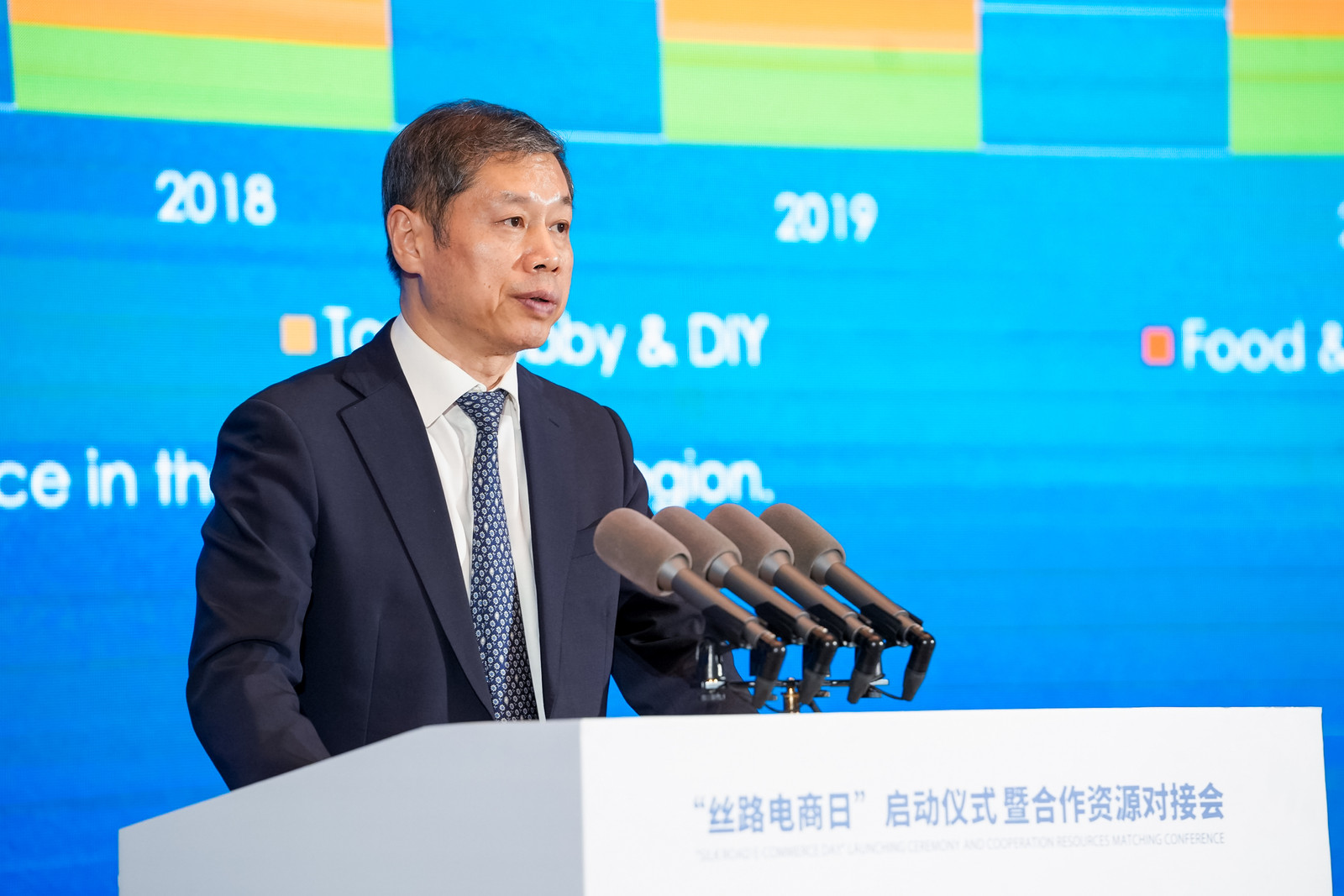
9月25日,2024“丝路电商日”启动仪式暨“丝路电商”合作资源对接会在杭州数贸会期间举行。会上,亚洲开发银行区域和一体化部主任姜宗遇发表了《“一带一路”共建国家代表合作推介》的演讲。

他指出,电子商务在全球经济中占比不断上升,尤其在亚洲和北美表现强劲。同时,电子商务的发展离不开互联网可访问性和宽带质量的提升,但数字鸿沟、性别鸿沟和数字歧视等问题仍需关注。此外,电子商务也带来了环境问题,如温室气体排放,需要采取措施减少碳排放。最后,姜宗遇强调了中国在电子商务领域的重要地位,并展望了跨境电商的发展前景,希望各方共同努力,促进电商与中小企业对接,实现共赢。


以下为嘉宾的演讲内容整理:

非常感谢能够参加这样一个盛会。我的名字叫姜宗遇,这是我中文的名字。今天我将探讨一下电子商务的演变、机遇与挑战。

事实上,2022年全球电子商务销售额中,B2B已经占到了全球GDP的一个非常大的份额,并有望在2025年占到64%。在这方面,亚洲是首屈一指的。大家可以看到左边的这张图,亚太地区在2020年已经达到了240亿美元的生产总额,因此在全球范围内都是领先的。

其次,在北美地区,电子商务也非常强劲。近几年来,在疫情解封之后,我们看到食品和个护产品是亚洲增长最快的电子商务市场,相信这也是非常自然的结果。但是,其他的一些品类也取得了非常强劲的增长,比如女性时尚单品,也在2024年获得了非常强劲的增长,在电子商务中占到了很大的份额。

我们再回顾一下电子商务的发展历程,这当然离不开互联网可访问性的增长。总体来看,就我们的互联网基础设施而言,移动基础设施的发展是最重要的,而在这方面,我们也有了强劲的增长。但是,大家可以看到,不同收入国家的互联网可访问性还是有比较明显的鸿沟:高收入国家比较高,低收入国家比较低。但令人欣喜的是,低收入国家的互联网普及率也在不断增长,这离不开像南南合作等国际合作的支持。

除此之外,宽带的质量和速度也是非常重要的,对于电子商务交易来说是必不可少的一环,因为需要有非常快的宽带速度才能下载图片、商品信息等内容。比如说,要在5秒之内下载图片,就需要很快的宽带速度。诚如这张图所示,亚太地区很多国家,包括中国以及东南亚、南亚的国家,他们的宽带速度其实是远高于全球平均水平的。而在其他的一些国家,诚如这张图所示,很多中亚的国家以及太平洋岛国,他们的宽带速度显著更低,远远低于全球平均水平。黄色的这根柱子是全球平均宽带速度,各地区的宽带速度相差很大。

另外一点,我们也要考虑在内的就是电子支付的发展。在亚太地区,一个重要的特征就是电子支付的普及。现在,电子支付已经占到亚太地区支付的58.4%,其次是使用信用卡。这个趋势在北美就不是那么明显,在北美,大家还是喜欢用信用卡支付。

我们看到,这些非现金的数字支付在亚太地区已经达到了58.4%,而在拉美是13.8%。我们现在还有一些像赊账卡和延期借记卡在亚太地区占比大约1.3%,还是比较低的数额。

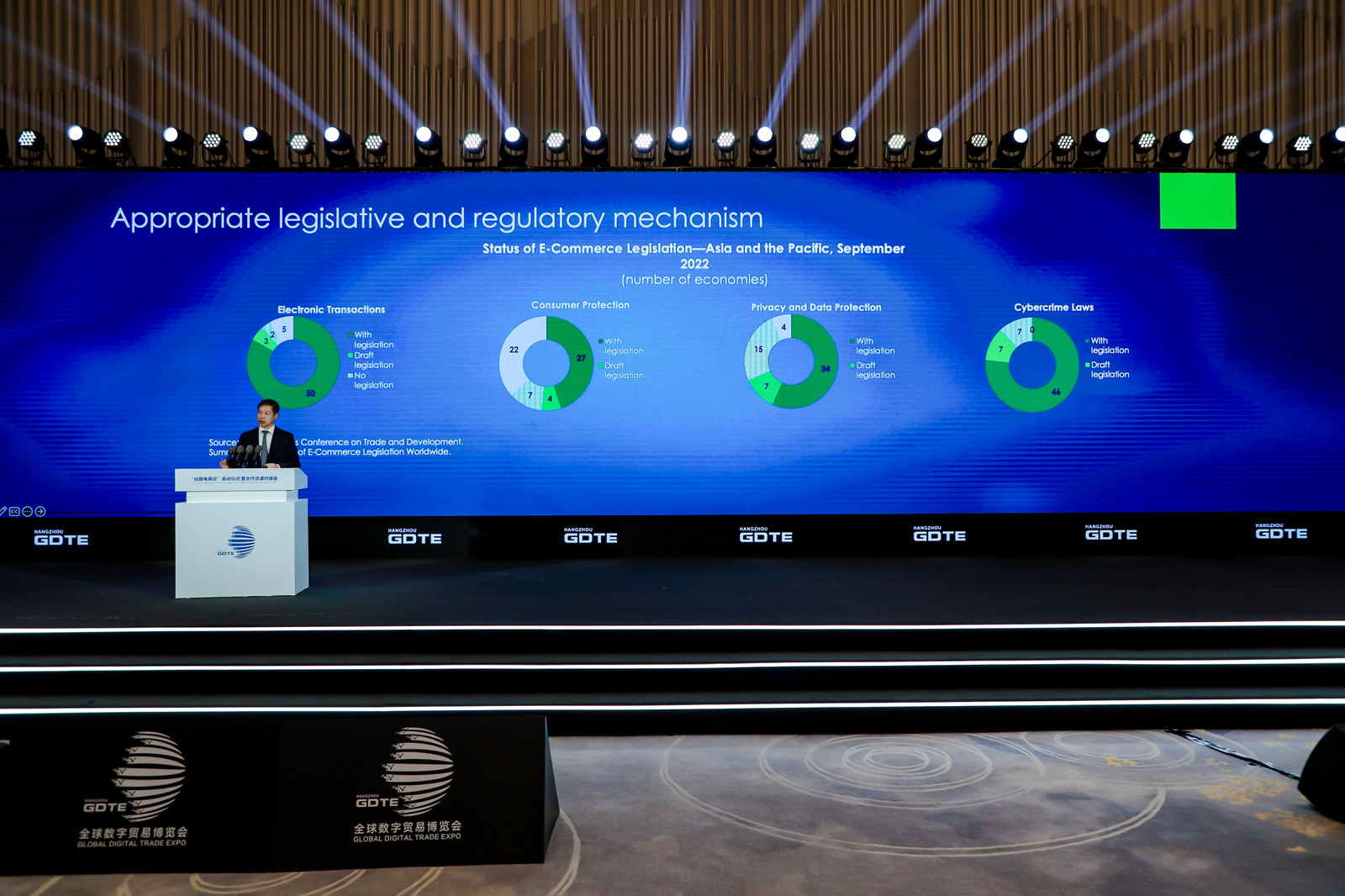
除此之外,我们也看到了在电商领域,立法和监管机制也在不断加强。

说到立法和监管机制的环境,我们要看四个方面:

首先是电子交易。电子交易这方面的立法包括了一些像电子账单、电子贸易支付转换等相关的法律法规。

第二个是消费者的保护。

第三是隐私和数据的保护,比如我们的政府是如何保护电子消费者的福利,保护他们免遭网络攻击的侵害。

第四个就是网络犯罪法。大家可以看到,在这方面有显著的特点:对于电子交易,在亚太地区,其实已经有超过一半以上的国家都相继推出了电子交易的相关法律法规,这也远超过全球平均水平。在消费者保护和隐私数据保护方面,我们相对来说还是比较落后的。网络犯罪法是做得比较好的地方,法律法规比较到位。所以我们需要去进一步建设我们的能力,来加强消费者保护和隐私数据保护。在这方面,我们应该在这两个领域重点发力,建设更多的法律法规。

另外,大家关注的一个点是数字鸿沟的不断扩大。诚如我刚才所示,在发达国家和低收入国家之间有一个显著的特点,就是他们的宽带速度有很大的差距,这就导致了数字鸿沟在不断扩大。在这方面,其实中国做好了非常好的典范作用。比如说,阿里巴巴也是帮助很多不发达国家构建他们的数据电子基础设施,并推出了很多相关的、非常先进的商业模式。

在数字鸿沟方面,我们看到存在性别鸿沟,女性处于比较弱势的地位,特别是在农村市场的女性。另外,有数字歧视现象的发生。这个方面,我们现在用很多的自动化技术、AI技术来做决策,在这些决策过程中,可能会有些不公平的现象。有些不公平的决策可能会忽视一些弱势群体,比如女性或者学历比较低的群体,可能会在数字决策中受到忽视。

就环境而言,电子商务也会有一些问题。比如说,它会排放大量的温室气体。如果仔细探讨一下这个问题的话,其实我们需要去推出更多的举措。其实,电子商务的温室气体排放量也是不容小觑的,甚至是现在传统商户模式的1.5倍。这源于很多的原因,比如电子商务有很多的包裹需要去包装,这就产生了很多的碳足迹。诚如大家图上所看到的,电子商务生态系统中,50%的排放量都是源于这些包裹的包装,20%是因为仓储、运输以及物流过程中所产生的温室气体。最后,也有一些像是在上门配送的过程中,其实也会产生一些温室气体。

我们如何减少电子商务的碳排放呢?以下有几个解决方案供大家参考:

首先,我们可以替代和创新我们的输送系统;

其次,我们可以使用更多的创新的、可持续的交付方式,比如说最后一公里的交付方式;

第三,可以使用共同的仓库。比如一些大的平台,他们的仓库其实可以共享,来减少电子商务的碳排放。这样的话也可以提高效率,同时也可以帮助更好地保护环境,进行碳减排;

最后,应该提倡回收和可持续包装的使用,用这种方式鼓励我们的消费者也能够去进行减排。我们还要推出一些环保的包装,并对此采取激励措施来减少整个过程的碳足迹。

在电子商务领域,中国发挥着不可小觑的作用。2023年中国电子商务达到了1469亿美元,未来5年的复合年增长率预计达到9.95%。2024年,中国电商的渗透率已经达到78.8%。而所有这些大的平台,如阿里巴巴、天猫、京东和拼多多等等,都发挥着非常重要的作用。

2025年,跨境B2B电子商务规模也会达到五千亿美元,这是根据汇丰银行的估测。

对于海外的电商,当然要关注拼多多、阿里巴巴等平台的出海情况。比如说,拼多多在海外的平台Temu,阿里巴巴的海外业务、短视频平台TikTok等等。

这就是今天演讲的内容。对于电商来说,消费者的偏好是非常多元化的。我们特别是希望将电商和国外的中小企业能够有更多的对接。我们各方都需要做更多的努力,促进跨境电商的发展,这样能够让这个区域中的各方都能从电商发展中受益。

关于会议:

2024“丝路电商日”保留了去年的“一展、两活动”,“一展”就是丝路电商展,“两活动”是丝路电商走进杭城、丝路云品推荐周。在此基础上,还将举办两场对接会,一个是“丝路电商”合作资源对接会,另一个是中亚国际创新数字贸易对接会。此外,还将首次在“丝路云品”推荐周设立主宾国产品专区和金砖国家专区,届时还将与泰国国际直播电商博览会云互动,共同推介“丝路云品”好物。

文章来源:亿邦动力

广告
微信
朋友圈

FAQ回顾

2024年全球电子商务的发展趋势有哪些?

2022年全球B2B电商销售额已占GDP很大份额,预计2025年占比达64%。亚太地区是电商增长主力,2020年生产总额达240亿美元。食品、个护产品和女性时尚是增长最快的品类。

电子商务面临的主要挑战有哪些?

电子商务面临数字鸿沟、宽带质量差异、性别鸿沟和数字歧视等挑战。环境方面,电商碳排放是传统模式的1.5倍,其中50%排放来自包裹包装,20%来自仓储物流。

如何减少电子商务的碳排放?

可通过创新输送系统、采用可持续最后一公里交付、共享仓库以及推广回收和可持续包装来减少碳排放。这些措施能有效降低包装、仓储和物流环节的碳足迹。

这么好看,分享一下?

朋友圈 分享

APP内打开

赞 +1
+1
微信好友 朋友圈 新浪微博 QQ空间
关闭
收藏成功
发送
/140 0