广告
加载中

锁定三年长期合作 顺丰同城与顺丰控股持续深化网络融通

龚作仁 2026-10-28 15:53
龚作仁 2026/10/28 15:53

邦小白快读

EN
全文速览

总1 合作核心信息

1.顺丰同城与顺丰控股续签2027—2029年同城即时配送服务框架协议,合作期三年,覆盖同城配送及最后一公里配送。

2.最后一公里配送关联交易额由2024年63.69亿元增至2025年95.8亿元,2026年前九个月72.136亿元;2027—2029年最后一公里年度上限分别为145亿元、170亿元、195亿元。

总2 运营与降本干货

1.双方共建仓储-转运-同城即时配送一体化方案,服务数码、服饰、美妆、奢侈品等品类,2026年上半年共同服务月结客户带来2.63亿元外部增量收入,同比增长26.4%。

2.顺丰同城以CLS系统做订单与运力动态匹配,2026年上半年3公里内平均配送22分钟,时效达成率约95%;无人车覆盖124个城市、运营超1000台、月均活跃行程超6万趟,可与骑手协同分工。

总1 品牌渠道与客户拓展

1.顺丰同城可依托顺丰控股渠道扩大用户群,借力品牌效应做大客户基数与收入;双方共建解决方案强化客户服务能力。

2.双方共同服务月结客户,2026年上半年带来2.63亿元外部增量收入,同比增长26.4%,显示联合渠道对品牌客户拓展有增量价值。

总2 产品服务与消费场景

1.一体化履约方案覆盖数码、服饰、美妆、奢侈品等品类,提供仓到仓、仓到店、仓店到消费者一站式配送;面向连锁商超、百货提供仓店小时达、长距离接驳、送货上门、门店退换货等定制服务。

2.电商大促期间以弹性运力保障履约,外部客户可拓展冷链、大件、四轮配送;在万物到家、供应链前置趋势下,即时配送与快递网络融合可优化品牌末端体验。

3.AI调度与无人车、楼宇机器人用于夜间、极端天气、重货、固定线路等场景,有助于稳定时效和成本。

总1 政策与协议解读

1.顺丰同城与顺丰控股续签2027—2029年同城即时配送服务框架协议,为期三年,服务包括同城配送及最后一公里配送;公告给出2027—2029年同城配送上限7.5亿元、9.5亿元、12亿元,最后一公里上限145亿元、170亿元、195亿元。

2.最后一公里关联交易额2024年63.69亿元、2025年95.8亿元、2026年前九个月72.136亿元,显示合作盘子在扩大,但年度上限也构成业务规模约束。

总2 市场机会与可学习点

1.电商大促需求保持韧性,弹性运力可保障履约;外部客户可拓展冷链、大件、四轮配送,连锁商超百货有仓店小时达、送货上门、退换货等需求。

2.双方共同服务月结客户带来2.63亿元外部增量收入,同比增长26.4%;医院接力送、园区复制、仓储-转运-同城即时配送一体化是可学习模式。

3.AI调度和无人车在夜间、极端天气、重货、固定线路降本,可关注其对外部订单与履约效率的正面影响。

总1 产品与供应链设计需求

1.文章显示一体化履约方案覆盖数码、服饰、美妆、奢侈品等品类,提供仓到仓、仓到店、仓店到消费者一站式配送,工厂可据此理解客户对仓储、转运、末端配送衔接的设计需求。

2.连锁商超、百货需要仓店小时达、长距离接驳、送货上门、门店退换货;外部客户还有冷链、大件、四轮配送等定制需求,说明产品设计需适配多品类、多场景。

总2 数字化与商业机会

1.顺丰同城以CLS系统基于大数据和AI预测订单波动,融合商圈、骑手行为与实时市场动态做订单运力匹配,2026年上半年3公里内平均22分钟、时效达成率约95%,可作为数字化履约参考。

2.无人车、楼宇机器人已用于网点集散、社区、写字楼等场景,截至2026年上半年覆盖124个城市、运营超1000台、月均活跃行程超6万趟;工厂可关注无人配送对固定线路、重货、夜间场景的配套机会。

3.双方打造标杆城市、承接经济网络建设、复制医院接力送至园区,带来仓配协同和场景化服务机会。

总1 行业趋势与客户痛点

1.供应链与末端物流加速融合,快递干线网络与同城即时配送网络打通,行业向仓储-转运-同城即时配送一体化和万物到家、供应链前置演进。

2.客户痛点包括大促峰值履约、医院院内配送和外卖上楼、夜间与极端天气配送、重货和固定线路高人力成本、骑手利用率与履约成本优化。

总2 新技术与解决方案

1.顺丰同城以CLS城市物流系统为核心,用大数据和AI预测订单波动,结合商圈特性、骑手行为和实时市场动态做拼单与运力动态匹配,2026年上半年3公里内平均22分钟、时效达成率约95%,节假日和恶劣天气波动不超过3个百分点。

2.无人车、楼宇机器人覆盖124个城市、运营超1000台、月均活跃行程超6万趟,优先落地夜间、极端天气、重货、固定线路;骑手承接灵活非标订单,无人车承担标准化、长距离、大载重任务,由AI统一调度。

3.医院接力送分段配送、仓店小时达、冷链大件四轮定制、仓到仓/店/消费者一站式方案,可作为服务商方案设计参考。

总1 平台运营与生态协同

1.顺丰同城续签三年框架协议,依托顺丰控股渠道扩大用户群、借力品牌效应做大客户基数,同时优化骑手利用率、发挥规模效应降低履约成本、扩充运力网络;平台可用联合解决方案增强客户服务能力。

2.平台做法包括共建仓储-转运-同城即时配送一体化履约方案,服务数码、服饰、美妆、奢侈品,提供仓到仓、仓到店、仓店到消费者一站式配送;2026年上半年共同服务月结客户带来2.63亿元外部增量收入,同比增长26.4%。

总2 招商场景与风向规避

1.可关注连锁商超百货的仓店小时达、长距离接驳、送货上门、退换货,外部客户的冷链、大件、四轮配送,以及医院接力送向园区复制的场景机会。

2.运营上以CLS和AI做订单运力动态匹配,3公里内平均22分钟、时效达成率约95%;无人车覆盖124个城市、超1000台、月均活跃超6万趟。需注意年度交易上限对规模的约束,以及无人车固定成本需靠高频使用摊薄。

总1 产业新动向与商业模式

1.快递干线网络与同城即时配送网络加速打通,双方以三年框架协议稳定协同底盘,共建仓储-转运-同城即时配送一体化方案,覆盖数码、服饰、美妆、奢侈品,并向连锁商超、百货、医院、园区等场景延伸,体现供应链前置和万物到家趋势。

2.商业模式上,顺丰同城借顺丰控股渠道和品牌扩大客户基数,顺丰控股借弹性运力提升供应链效率;2026年上半年共同服务月结客户带来2.63亿元外部增量收入,同比增长26.4%,说明协同可产生外部增量。

总2 新问题与治理启示

1.公告披露2027—2029年同城配送年度上限7.5亿元、9.5亿元、12亿元,最后一公里上限145亿元、170亿元、195亿元,关联交易规模与上限约束值得研究。

2.AI与无人配送形成骑手、无人车、算法统一履约体系:骑手做灵活非标订单,无人车做标准化、长距离、大载重任务;无人车是固定成本资产,需高频使用摊薄成本。

3.医院接力送联合美团、医院、卫健部门和街道,提供跨主体协同案例;网络融合可形成区别于纯本地即时配送平台的差异化竞争力。

返回默认
声明:快读内容全程由AI生成,请注意甄别信息。如您发现问题,请发送邮件至 run@ebrun.com 。

我是 品牌商 卖家 工厂 服务商 平台商 研究者 帮我再读一遍。

Quick Summary

Summary 1: Core cooperation information

1. SF Intra-city and SF Holding have renewed the 2027-2029 intra-city on-demand delivery service framework agreement for a three-year term, covering intra-city delivery and last-mile delivery.

2. The last-mile related-party transaction amount rose from RMB 6.369 billion in 2024 to RMB 9.58 billion in 2025, and reached RMB 7.2136 billion in the first nine months of 2026. The annual caps for last-mile delivery in 2027-2029 are RMB 14.5 billion, RMB 17.0 billion, and RMB 19.5 billion, respectively.

Summary 2: Operations and cost reduction

1. The two parties are jointly building an integrated warehousing-transfer-intra-city on-demand delivery solution for digital products, apparel, beauty, and luxury goods. In 1H 2026, serving monthly settlement customers jointly generated RMB 263 million in incremental external revenue, up 26.4% year on year.

2. SF Intra-city uses its CLS system for dynamic order-capacity matching. In 1H 2026, average delivery within 3 km took 22 minutes, with an on-time delivery rate of about 95%. Autonomous delivery vehicles cover 124 cities, with more than 1,000 units in operation and over 60,000 active trips per month on average, and can work in coordination with riders.

Summary 1: Brand channels and customer expansion

1. SF Intra-city can leverage SF Holding's channels to expand its user base, use brand effects to enlarge its customer base and revenue, and jointly build solutions to strengthen customer service capabilities.

2. The two parties jointly serve monthly settlement customers. In 1H 2026, this brought RMB 263 million in incremental external revenue, up 26.4% year on year, showing that the combined channel has incremental value for expanding brand customers.

Summary 2: Products, services, and consumer scenarios

1. The integrated fulfillment solution covers digital products, apparel, beauty, and luxury goods, providing one-stop delivery from warehouse to warehouse, warehouse to store, and warehouse/store to consumers. For chain supermarkets and department stores, it offers customized services such as hour-level delivery from warehouses and stores, long-distance shuttle transfer, doorstep delivery, and in-store returns and exchanges.

2. During e-commerce promotions, flexible capacity supports fulfillment. External customers can expand into cold-chain, bulky-item, and four-wheel delivery. Amid the everything-to-home and forward-deployed supply chain trends, integrating on-demand delivery with express networks can improve brands' last-mile experience.

3. AI scheduling, autonomous delivery vehicles, and in-building robots are used for nighttime, extreme-weather, heavy-goods, and fixed-route scenarios, helping stabilize timeliness and costs.

Summary 1: Policy and agreement interpretation

1. SF Intra-city and SF Holding have renewed the 2027-2029 intra-city on-demand delivery service framework agreement for three years. The services include intra-city delivery and last-mile delivery. The announcement sets intra-city delivery caps of RMB 750 million, RMB 950 million, and RMB 1.2 billion for 2027-2029, and last-mile caps of RMB 14.5 billion, RMB 17.0 billion, and RMB 19.5 billion.

2. Last-mile related-party transaction amounts were RMB 6.369 billion in 2024, RMB 9.58 billion in 2025, and RMB 7.2136 billion in the first nine months of 2026, indicating that the cooperation base is expanding, though the annual caps also constrain business scale.

Summary 2: Market opportunities and lessons

1. Demand during e-commerce promotions remains resilient, and flexible capacity can support fulfillment. External customers can expand into cold-chain, bulky-item, and four-wheel delivery. Chain supermarkets and department stores have demand for hour-level warehouse and store delivery, doorstep delivery, and returns and exchanges.

2. Jointly serving monthly settlement customers generated RMB 263 million in incremental external revenue, up 26.4% year on year. Hospital relay delivery, replication in industrial parks, and integrated warehousing-transfer-intra-city on-demand delivery are replicable models worth learning from.

3. AI scheduling and autonomous delivery vehicles reduce costs at night, in extreme weather, for heavy goods, and on fixed routes. Their positive impact on external orders and fulfillment efficiency is worth monitoring.

Summary 1: Product and supply chain design needs

1. The article shows that the integrated fulfillment solution covers digital products, apparel, beauty, and luxury goods, and provides one-stop delivery from warehouse to warehouse, warehouse to store, and warehouse/store to consumers. Factories can use this to understand customers' design needs for integrating warehousing, transfer, and last-mile delivery.

2. Chain supermarkets and department stores need hour-level warehouse and store delivery, long-distance shuttle transfer, doorstep delivery, and in-store returns and exchanges. External customers also have customized needs such as cold-chain, bulky-item, and four-wheel delivery, indicating that product design must adapt to multiple categories and scenarios.

Summary 2: Digitalization and business opportunities

1. SF Intra-city uses its CLS system, based on big data and AI, to forecast order fluctuations and match orders with capacity by integrating business-district characteristics, rider behavior, and real-time market dynamics. In 1H 2026, average delivery within 3 km was 22 minutes, with an on-time delivery rate of about 95%, providing a reference for digital fulfillment.

2. Autonomous delivery vehicles and in-building robots have been used in outlet consolidation and distribution, communities, office buildings, and other scenarios. As of 1H 2026, they cover 124 cities, with more than 1,000 units in operation and over 60,000 active trips per month on average. Factories can watch for supporting opportunities in autonomous delivery for fixed routes, heavy goods, and nighttime scenarios.

3. The two parties are building benchmark cities, undertaking economic network development, and replicating hospital relay delivery to industrial parks, creating opportunities for warehouse-delivery coordination and scenario-based services.

Summary 1: Industry trends and customer pain points

1. Supply chains and last-mile logistics are accelerating their integration. Express trunk-line networks and intra-city on-demand delivery networks are being connected, with the industry moving toward integrated warehousing-transfer-intra-city on-demand delivery and toward everything-to-home and forward-deployed supply chains.

2. Customer pain points include peak fulfillment during promotions, in-hospital delivery and food delivery upstairs, nighttime and extreme-weather delivery, high labor costs for heavy goods and fixed routes, and optimization of rider utilization and fulfillment costs.

Summary 2: New technologies and solutions

1. With its CLS city logistics system at the core, SF Intra-city uses big data and AI to forecast order fluctuations and combines business-district characteristics, rider behavior, and real-time market dynamics to dynamically match order pooling and capacity. In 1H 2026, average delivery within 3 km was 22 minutes, with an on-time delivery rate of about 95%; fluctuations during holidays and severe weather stayed within 3 percentage points.

2. Autonomous delivery vehicles and in-building robots cover 124 cities, with more than 1,000 units in operation and over 60,000 active trips per month on average. They are prioritized for nighttime, extreme weather, heavy goods, and fixed routes. Riders handle flexible, non-standard orders, while autonomous vehicles handle standardized, long-distance, heavy-load tasks, all coordinated by AI.

3. Hospital relay delivery with segmented delivery, hour-level warehouse and store delivery, customized cold-chain and bulky four-wheel delivery, and one-stop warehouse-to-warehouse, warehouse-to-store, and warehouse/store-to-consumer solutions can serve as references for service providers' solution design.

Summary 1: Platform operations and ecosystem collaboration

1. SF Intra-city has renewed a three-year framework agreement. It can leverage SF Holding's channels to expand its user base and brand effects to enlarge its customer base, while optimizing rider utilization, exploiting economies of scale to lower fulfillment costs, and expanding its capacity network. The platform can use joint solutions to strengthen customer service capabilities.

2. Platform practices include jointly building an integrated warehousing-transfer-intra-city on-demand delivery fulfillment solution for digital products, apparel, beauty, and luxury goods, offering one-stop delivery from warehouse to warehouse, warehouse to store, and warehouse/store to consumers. In 1H 2026, jointly serving monthly settlement customers generated RMB 263 million in incremental external revenue, up 26.4% year on year.

Summary 2: Merchant acquisition scenarios and risk avoidance

1. Opportunities to watch include hour-level warehouse and store delivery, long-distance shuttle transfer, doorstep delivery, and returns and exchanges for chain supermarkets and department stores; cold-chain, bulky-item, and four-wheel delivery for external customers; and replication of hospital relay delivery in industrial parks.

2. Operationally, CLS and AI are used for dynamic order-capacity matching, with average delivery within 3 km at 22 minutes and an on-time delivery rate of about 95%. Autonomous delivery vehicles cover 124 cities, with more than 1,000 units and over 60,000 active trips per month. Note that annual transaction caps constrain scale, and the fixed costs of autonomous vehicles need to be amortized through high-frequency use.

Summary 1: New industry developments and business models

1. Express trunk-line networks and intra-city on-demand delivery networks are accelerating their integration. The two parties use a three-year framework agreement to stabilize the collaborative foundation and jointly build an integrated warehousing-transfer-intra-city on-demand delivery solution covering digital products, apparel, beauty, and luxury goods, while extending to chain supermarkets, department stores, hospitals, and industrial parks. This reflects the trends of forward-deployed supply chains and everything-to-home.

2. In terms of business model, SF Intra-city uses SF Holding's channels and brand to expand its customer base, while SF Holding uses flexible capacity to improve supply chain efficiency. In 1H 2026, jointly serving monthly settlement customers generated RMB 263 million in incremental external revenue, up 26.4% year on year, indicating that collaboration can generate external increments.

Summary 2: New issues and governance implications

1. The announcement discloses annual intra-city delivery caps for 2027-2029 of RMB 750 million, RMB 950 million, and RMB 1.2 billion, and last-mile caps of RMB 14.5 billion, RMB 17.0 billion, and RMB 19.5 billion. The scale of related-party transactions and the cap constraints are worth studying.

2. AI and autonomous delivery form a unified fulfillment system of riders, autonomous vehicles, and algorithms: riders handle flexible, non-standard orders, while autonomous vehicles handle standardized, long-distance, heavy-load tasks. Autonomous vehicles are fixed-cost assets and require high-frequency use to amortize costs.

3. Hospital relay delivery, in partnership with Meituan, hospitals, health authorities, and sub-district offices, provides a case of cross-party collaboration. Network integration can create differentiated competitiveness versus pure local on-demand delivery platforms.

Disclaimer: The "Quick Summary" content is entirely generated by AI. Please exercise discretion when interpreting the information. For issues or corrections, please email run@ebrun.com .

I am a Brand Seller Factory Service Provider Marketplace Seller Researcher Read it again.

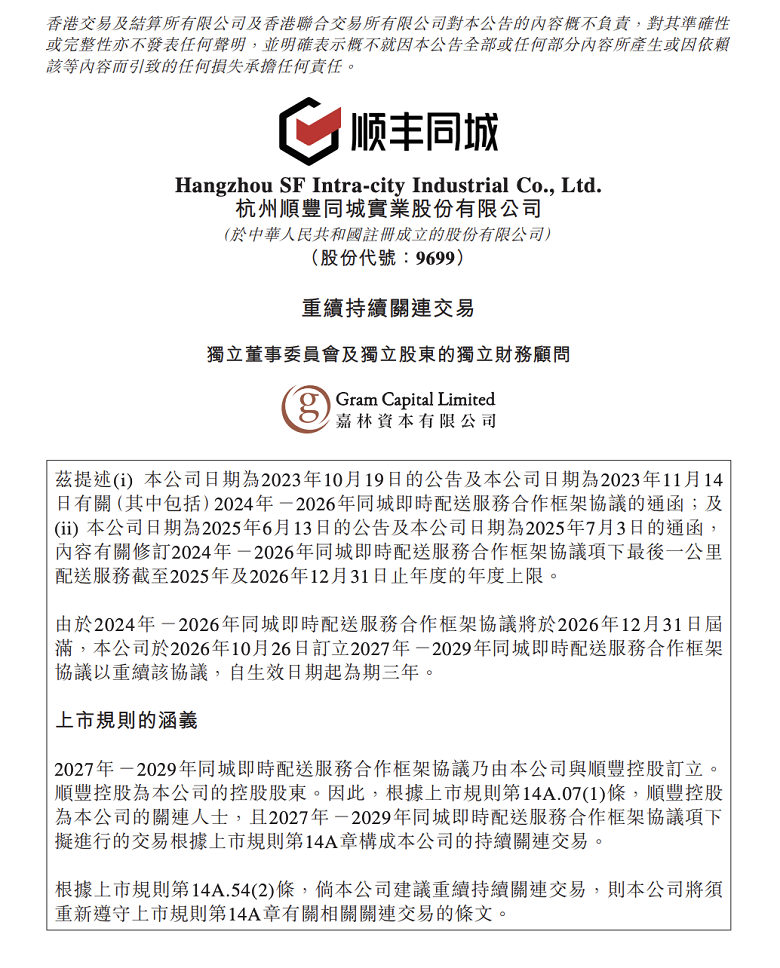
10月26日,顺丰同城(9699.HK)发布公告,宣布与顺丰控股订立2027—2029年同城即时配送服务合作框架协议,重续2024—2026年同城即时配送服务合作框架协议,新协议自生效日期起为期三年。公告同时披露双方“最后一公里”配送服务关联交易额由2024年的63.69亿元增至2025年的95.8亿元,2026年前九个月已达72.136亿元,业务规模保持稳健发展态势。

根据协议约定,截至2029年12月31日止三个年度的交易金额年度上限为:通过顺丰控股及或其联系人提供同城配送服务2027年、2028年及2029年分别不得超过7.5亿元、9.5亿元及12亿元;向顺丰控股及或其联系人提供最后一公里配送服务2027年、2028年及2029年分别不得超过145亿元、170亿元及195亿元。

此次续签进一步释放协同价值:顺丰同城可依托顺丰控股渠道扩大用户群,借力品牌效应做大客户基数与收入;同时优化骑手利用率,发挥规模效应,降低履约成本、扩充运力网络。顺丰控股可依托双方共建的解决方案强化客户服务能力,借助顺丰同城弹性运力网络提升供应链效率、降低运营成本。双方优势互补、系统兼容,合作互利共赢。

拓宽末端服务边界,推动网络生态协同

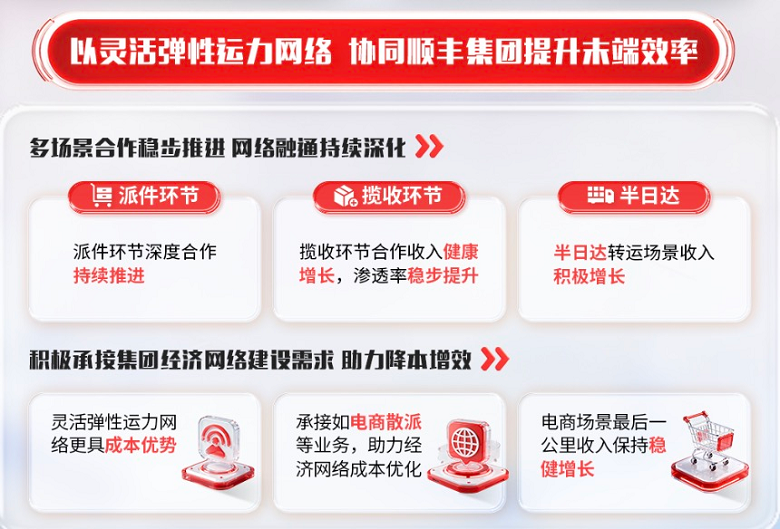
在供应链与末端物流加速融合的背景下,顺丰同城以灵活弹性的“最后一公里”配送运力,嵌入物流服务各环节,与快递干线网络形成互补,多维度契合客户供应链能力提升需求。

2026年上半年,顺丰同城持续深化与顺丰集团多场景合作,揽收、同城转运支持服务收入实现健康增长,揽收渗透率稳步提升;积极承接顺丰集团经济网络建设需求,以灵活弹性运力网络助力客户降本增效,通过打造标杆城市,为全国范围内经济网搭建打下坚实基础。电商场景需求保持韧性,在大促期间,顺丰同城的弹性运力有效保障履约,电商场景最后一公里收入稳健增长;同时面向外部客户拓展冷链、大件、四轮配送等定制服务,挖掘新增量。

在供应链协同层面,双方共建“仓储-转运-同城即时配送”一体化履约方案,服务数码、服饰、美妆、奢侈品等品类,提供仓到仓、仓到店、仓/店到消费者一站式配送。2026年上半年,使用同城即时配送服务下单的月结客户数量保持良好增长,顺丰同城与顺丰集团共同服务的月结客户带来人民币2.63亿元的外部增量收入,同比增长26.4%。同时,顺丰同城持续深耕垂直场景,携手全国连锁商超、百货品牌,提供仓店小时达、长距离接驳、送货上门、门店退换货等定制服务。

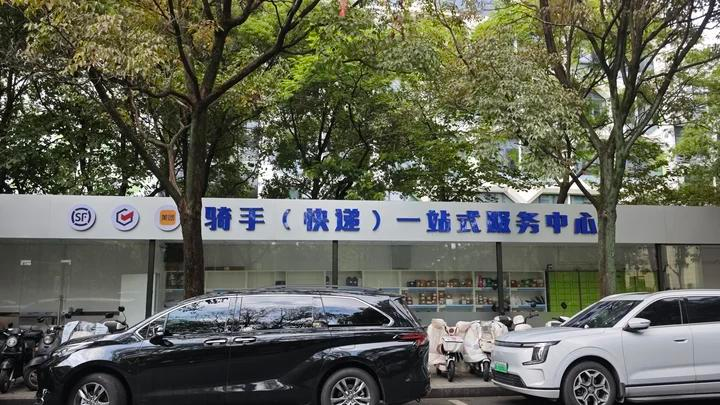
在封闭、半封闭等场景中,双方持续探索创新运力协同模式。近期,顺丰速运、顺丰同城携手美团,联合医院、卫健部门及属地街道,在杭州多家医院打造一站式服务中心,推出“接力送”分段配送方案,破解院内配送、外卖上楼难题,兼顾用户收餐体验与骑手配送效率。

顺丰同城与快递网络的协同持续深化,将不同网络中的运力资源重组整合,在规模持续扩大的同时提升履约体系效率,生态价值持续释放。

“AI+无人”双轮驱动,打开长期增长空间

在夯实规模优势的同时,顺丰同城依托AI与规模化无人配送,为“最后一公里”业务打开长效降本增效路径,拓宽盈利空间。

顺丰同城以城市物流系统(CLS)为核心,基于大数据与AI算法提前预测订单波动,融合商圈特性、骑手行为与实时市场动态,通过拼单策略优化和模型创新,在复杂网络中实现订单与运力的动态匹配。2026年上半年,3公里以内订单平均配送时长22分钟,时效达成率约95%;即使在节假日和恶劣天气下,时效达成率波动也不超过3个百分点。

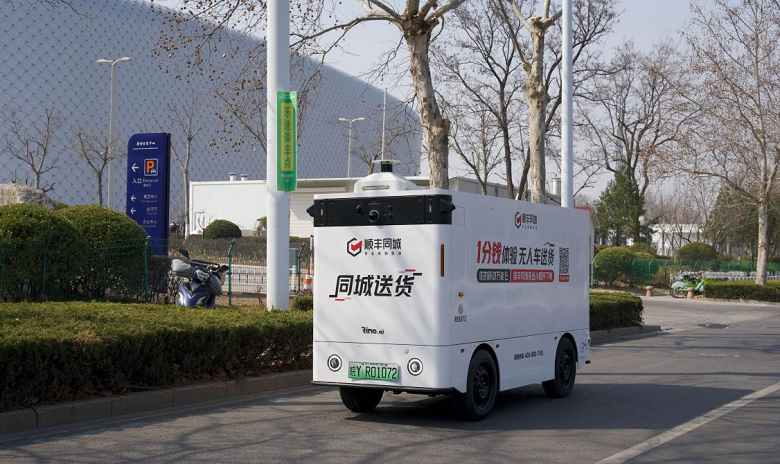
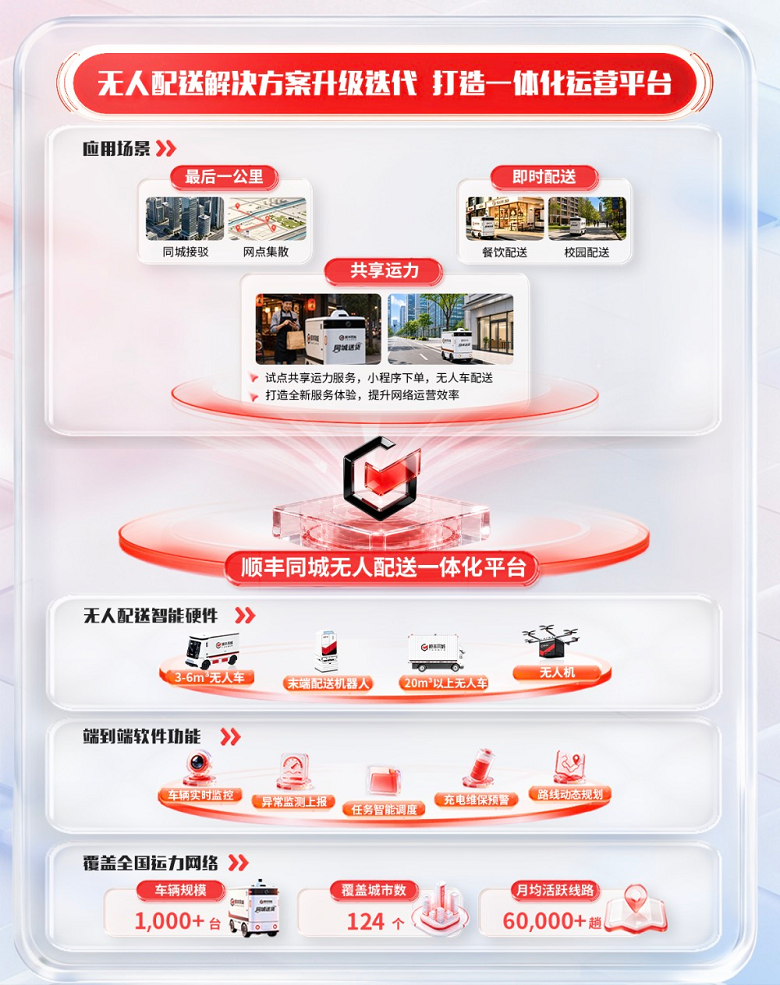
与此同时,无人配送持续向末端场景渗透,无人车、楼宇机器人已广泛应用于网点集散、社区、写字楼等场景。截至2026年上半年,顺丰同城无人车网络覆盖124个城市,运营车辆超1000台,月均活跃行程超6万趟。618大促期间,弹性无人运力在快递高峰发挥“削峰填谷”作用,在稳定履约的同时支撑电商末端收入增长。不同于骑手变动成本模式,无人车属于固定成本资产,使用频次越高,单位成本越低。无人运力优先落地夜间、极端天气、重货、固定线路等高人力成本、履约难度大的场景,随着订单规模提升持续摊薄成本,从特定场景补充运力,转变为优化整体成本结构的关键抓手。

骑手、无人设备、算法统一纳入同一履约体系:骑手承接灵活、非标订单,无人车承担标准化、长距离、大载重任务,由AI调度系统统一统筹分配,实现多类运力协同分工,持续推动末端履约降本提效。

本次三年框架协议落地,为双方长期协同筑牢稳定底盘,合作迈向更深层次的生态共建。展望未来,干线快递网络与同城即时配送网络进一步打通,扩大“仓储—转运—同城即时配送”一体化供应链方案覆盖,深耕数码、美妆、服饰、奢侈品等优势品类,合力拓展外部月结客户,扩大协同带来的外部增量收入。双方还将持续创新运力组合模式,把医院“接力送”等标杆方案复制到园区等更多场景,拓宽末端服务边界。

AI与无人配送也将更深融入协同网络。依托稳定的业务底盘,无人车、楼宇机器人持续规模化铺开,在夜间、极端天气、重货、固定线路场景渗透;骑手与无人运力协同搭配,由CLS系统统一调度,持续优化成本结构,强化履约韧性。

长期来看,稳定的协同基础盘,能够为顺丰同城的技术投入、运力建设提供持续支撑,形成业务规模与技术迭代互相正向带动的循环。一方面,两张网络的融合,构建起区别于其他纯本地即时配送平台的差异化竞争力;另一方面,在万物到家、供应链前置的趋势下,双方持续释放生态协同价值,探索快递与即时配送融合的成熟范式,打开可持续的盈利空间。

注:文/龚作仁,文章来源:Laborer,本文为作者独立观点,不代表亿邦动力立场。

文章来源:Laborer

广告
微信
朋友圈

FAQ回顾

顺丰同城与顺丰控股续签的合作协议覆盖哪些业务?

双方续签2027—2029年同城即时配送服务合作框架协议,顺丰同城向顺丰控股及/或其联系人提供同城配送服务和最后一公里配送服务。协议为期三年,并设定了2027—2029年相关交易金额年度上限。

顺丰同城“最后一公里”配送业务规模有多大?

公告披露,双方最后一公里配送服务关联交易额由2024年的63.69亿元增至2025年的95.8亿元,2026年前九个月为72.136亿元;2027—2029年最后一公里配送服务年度交易上限分别为145亿元、170亿元、195亿元。

顺丰同城如何用AI和无人配送优化最后一公里履约成本?

顺丰同城以城市物流系统CLS为核心,用大数据和AI预测订单波动,通过拼单和模型优化动态匹配订单与运力;无人车作为固定成本资产,优先用于夜间、极端天气、重货、固定线路等场景,使用频次越高单位成本越低,并与骑手统一调度。

同城即时配送与快递网络协同能带来哪些业务价值?

双方共建“仓储—转运—同城即时配送”一体化履约方案,服务数码、服饰、美妆、奢侈品等品类,提供仓到仓、仓到店、仓/店到消费者一站式配送;2026年上半年共同服务的月结客户带来2.63亿元外部增量收入,同比增长26.4%。

顺丰同城无人配送已覆盖哪些城市和场景?

截至2026年上半年,顺丰同城无人车网络覆盖124个城市,运营车辆超1000台,月均活跃行程超6万趟;无人车、楼宇机器人已应用于网点集散、社区、写字楼等末端场景,并在618大促期间发挥弹性运力作用。

这么好看,分享一下?

朋友圈 分享

APP内打开

赞 +1
+1
微信好友 朋友圈 新浪微博 QQ空间
关闭
收藏成功
发送
/140 0