广告
加载中

蚂蚁灵光2.0发布:升级为能管事的个人Agent

亿邦动力 2026-10-27 17:34
亿邦动力 2026/10/27 17:34

邦小白快读

EN
全文速览

总:灵光2.0把AI从等指令的单次工具升级为能主动管理事务的个人Agent。

1. 发布信息:10月27日蚂蚁集团发布灵光2.0;灵光App于2025年11月18日上线,上线6天下载量突破200万。

2. 核心能力:获用户授权后,AI可结合已接入信息与服务主动识别需求,发起分析、监测和跟进,并在关键节点提醒;依托独立云主机,用户退出对话后任务仍可继续运行。

总:可直接感知的实操场景。

1. 消费:授权接入支付宝后梳理账单、发现可能遗忘的自动续费订阅、分析消费习惯并给省钱建议。

2. 出行:机票酒店订完后持续盯价格,发现降价及时通知。

3. 家庭:授权后关注钉钉班级群老师通知,整理重要信息、提取待办并做文档排版。

4. 长期事务:宠物照护、儿童疫苗接种、家人纪念日、车辆年检等可主动识别节点并安排跟进。

总:文章为品牌商呈现AI助手从功能竞争转向长期事务管理的产品与用户趋势。

1. 产品研发:灵光2.0升级跨会话记忆、长程任务调度和工具连接,依托独立云主机突破单次对话限制,用户退出后仍继续运行并动态跟进。

2. 用户行为:过去用户先发现问题再提需求,如今在授权后AI主动识别潜在需求、分析监测和提醒,消费账单、自动续费、出行盯价、班级群通知等成为切入场景。

总:渠道与竞争启示集中在生态接入和信任机制。

1. 渠道生态:打通支付宝生态数据与服务,支持开放环境调用MCP、CLI,内置支付宝账单、会员、出行及钉钉、飞书、邮箱、米家等能力,管理范围延伸至跨平台工作流和智能家居。

2. 竞争维度:文章提出衡量智能体的新维度是能否理解长期需求、在恰当时间主动介入并持续管理好事情。

3. 市场信号:灵光App上线6天下载量突破200万;品牌需关注授权、隐私和可信执行对用户接受度的影响,APASS将身份认证、意图安全和隐私保护纳入流程,用户可查看调整撤销授权。

总:对卖家而言,文章提示消费需求正从人找服务转向AI主动发现并管理事务。

1. 需求变化:用户过去要自己发现、记住和安排生活琐事,现在授权后可由AI识别潜在需求,发起分析、监测和跟进,并在关键节点提醒。

2. 场景机会:消费账单梳理、自动续费识别、省钱建议;机票酒店订后24小时盯价;班级群通知整理和待办提取;宠物照护、儿童疫苗、纪念日、车辆年检等长期跟进。

总:商业模式、合作与风险提示值得卖家关注。

1. 可学习模式:AI Agent从任务执行者转向事务管理者,竞争不只看回答和指令,更看长期需求理解、恰当介入和持续管理。

2. 合作方式:灵光打通支付宝生态,支持开放环境调用MCP、CLI,内置支付宝账单、会员、出行及钉钉、飞书、邮箱、米家等服务,可形成跨平台工作流和智能家居控制入口。

3. 风险与应对:权限边界、数据安全和执行可信度是新挑战;APASS把身份认证、意图安全和隐私保护纳入执行流程,授权密钥与Agent分离托管,用户可随时查看调整撤销授权。

总:文章虽未直接谈工厂,但灵光2.0的能力升级为产品设计与数字化接入提供参考。

1. 产品设计需求:AI要从单次任务走向长期事务管理,需要跨会话记忆、长程任务调度、工具连接,以及独立云主机支撑用户退出后继续运行和动态跟进。

2. 设备与场景:灵光内置米家等服务,管理范围从个人信息与线上事务延伸至跨平台工作流和智能家居设备控制,说明设备联动和长期场景是能力落点。

总:商业机会与数字化启示集中在工具接入和安全可信。

1. 商业机会:开放环境支持调用MCP、CLI,内置支付宝账单、会员、出行及钉钉、飞书、邮箱、米家等服务,工厂可关注自身产品或服务如何进入这类跨平台工作流。

2. 数字化启示:仅有模型理解和推理不够,还需跨应用信息获取、工具调用和长时间稳定运行基础设施;APASS将身份认证、意图安全和隐私保护纳入Agent执行流程,通过授权密钥与Agent分离托管,用户可查看调整撤销授权。

3. 可学习点:AI介入任务起点前移,在授权范围内主动识别关键节点、安排后续跟进,减少用户反复查询提醒跟进。

总:文章给出AI助手行业从任务执行走向事务管理的趋势,以及服务商可关注的技术与场景方案。

1. 行业趋势:灵光2.0推动AI助理从被动响应指令、完成单次任务,向主动发现需求、持续管理事务演进;个人Agent开始拥有时间维度,处理跨越数小时、数天乃至更长周期的事情。

2. 新技术:跨会话记忆、长程任务调度、工具连接、独立云主机支撑退出对话后继续运行;开放环境支持调用MCP、CLI;APASS提供跨智能体、跨设备、跨应用与服务的统一账号和安全管理。

总:客户痛点与解决方案在具体生活场景中较清晰。

1. 痛点:用户需要自己发现、记住和安排生活琐事,反复查询、提醒和跟进;账单续费、机票酒店价格变化、班级群通知、宠物照护、儿童疫苗、纪念日、车辆年检等均需长期记忆和持续跟进。

2. 解决方案:获授权后结合已接入信息与服务主动识别潜在需求,发起分析、监测和跟进,并在需要用户关注的节点提醒;消费账单梳理与省钱建议、出行盯价、家庭通知整理和待办提取、文档排版等。

总:文章显示AI助手平台正把竞争焦点放在持续事务管理和生态连接上。

1. 平台做法:灵光2.0升级跨会话记忆、长程任务调度和工具连接,依托独立云主机让任务在用户退出对话后继续运行并动态跟进;AI介入起点前移,获授权后主动识别需求、分析监测和提醒。

2. 生态连接:打通支付宝生态内的数据与服务,开放环境支持调用MCP、CLI,内置支付宝账单、会员、出行及钉钉、飞书、邮箱、米家等服务,管理范围延伸至跨平台工作流和智能家居设备控制。

总:平台需求、运营管理与风向规避值得关注。

1. 平台需求:实现事务管理不仅需要模型理解推理,还需要跨应用信息获取、工具调用和长时间稳定运行基础设施。

2. 运营管理:APASS作为跨智能体、跨设备、跨应用与服务场景的统一账号和安全管理基础设施,将身份认证、意图安全和隐私保护纳入执行流程,授权密钥与Agent分离托管,用户可查看调整撤销授权。

3. 风向规避:智能体走向事务管理后,权限边界、数据安全和执行可信度成为新挑战,平台需在授权范围内办事。

总:文章呈现个人Agent产业的新动向:AI从任务执行者转向事务管理者。

1. 新动向:灵光2.0将AI介入任务起点前移,从用户先发现问题再提需求,转为授权后AI主动识别潜在需求、分析监测跟进;个人Agent开始拥有时间维度,处理跨越数小时、数天乃至更长周期的事情。

2. 竞争维度:比起能回答多少问题、完成多少指令,能否理解长期需求、在恰当时机主动介入并持续管理好事情,正成为衡量智能体走进真实生活场景的新维度。

总:新问题与治理启示集中在授权、安全和可信执行。

1. 新问题:智能体走向事务管理后,权限边界、数据安全和执行可信度成为挑战。

2. 治理启示:APASS将身份认证、意图安全和隐私保护纳入Agent执行流程,通过授权密钥与Agent分离托管,让智能体不直接接触授权密钥,用户可查看调整撤销授权,为授权范围和隐私保护提供机制参考。

3. 商业模式与案例:灵光打通支付宝生态并支持MCP、CLI等工具调用,内置支付宝账单、会员、出行及钉钉、飞书、邮箱、米家等服务,管理范围延伸至跨平台工作流和智能家居;灵光App于2025年11月18日上线,6天下载量突破200万,10月27日发布2.0,蚂蚁集团为代表企业。

返回默认
声明:快读内容全程由AI生成,请注意甄别信息。如您发现问题,请发送邮件至 run@ebrun.com 。

我是 品牌商 卖家 工厂 服务商 平台商 研究者 帮我再读一遍。

Quick Summary

Overall: Lingguang 2.0 upgrades AI from a single-use tool that waits for instructions into a personal agent that can proactively manage affairs.

1. Launch details: Ant Group released Lingguang 2.0 on October 27; the Lingguang app launched on November 18, 2025, surpassing 2 million downloads within six days.

2. Core capabilities: With user authorization, the AI can combine connected information and services to proactively identify needs, initiate analysis, monitoring, and follow-up, and remind users at key milestones; backed by an independent cloud host, tasks can continue running after the user exits the conversation.

Overall: Practical scenarios that can be directly perceived.

1. Consumption: After authorization and connection to Alipay, it sorts bills, identifies auto-renewal subscriptions users may have forgotten, analyzes spending habits, and offers money-saving suggestions.

2. Travel: After flights and hotels are booked, it continuously monitors prices and notifies users promptly of price drops.

3. Family: With authorization, it tracks teacher notices in DingTalk class groups, organizes important information, extracts to-dos, and formats documents.

4. Long-term affairs: Pet care, childhood vaccinations, family anniversaries, vehicle inspections, etc., can be proactively identified and scheduled for follow-up.

Overall: For brands, the article presents a product and user trend in which AI assistants shift from feature competition to long-term affairs management.

1. Product development: Lingguang 2.0 upgrades cross-session memory, long-horizon task scheduling, and tool connectivity. Backed by an independent cloud host, it breaks the limits of a single conversation, continuing to run and dynamically follow up after the user exits.

2. User behavior: In the past, users first identified problems and then raised requests; now, after authorization, AI proactively identifies latent needs, analyzes, monitors, and reminds. Consumption bills, auto-renewals, travel price tracking, and class-group notices have become entry scenarios.

Overall: Channel and competitive implications center on ecosystem access and trust mechanisms.

1. Channel ecosystem: It connects data and services within the Alipay ecosystem, supports MCP and CLI calls in open environments, and has built-in capabilities including Alipay bills, membership, travel, DingTalk, Feishu, email, and Mijia. Its management scope extends to cross-platform workflows and smart home.

2. Competitive dimension: The article proposes a new metric for agents: whether they can understand long-term needs, intervene proactively at the right time, and continuously manage matters well.

3. Market signal: The Lingguang app surpassed 2 million downloads within six days of launch; brands need to watch how authorization, privacy, and trusted execution affect user acceptance. APASS incorporates identity authentication, intent security, and privacy protection into the process, and users can view, adjust, or revoke authorization.

Overall: For sellers, the article suggests that consumer demand is shifting from people finding services to AI proactively discovering and managing affairs.

1. Demand shift: In the past, users had to discover, remember, and arrange life's trivial matters themselves; now, with authorization, AI can identify latent needs, initiate analysis, monitoring, and follow-up, and remind users at key milestones.

2. Scenario opportunities: Consumption bill sorting, auto-renewal identification, and money-saving advice; price monitoring for 24 hours after flight and hotel bookings; class-group notice organization and to-do extraction; long-term follow-up for pet care, childhood vaccinations, anniversaries, vehicle inspections, etc.

Overall: Business models, partnerships, and risk implications merit seller attention.

1. Learnable model: AI agents are shifting from task executors to affairs managers. Competition is no longer only about answers and instructions, but about understanding long-term needs, intervening at the right time, and continuously managing matters.

2. Partnership approach: Lingguang connects the Alipay ecosystem, supports MCP and CLI calls in open environments, and has built-in services including Alipay bills, membership, travel, DingTalk, Feishu, email, and Mijia, enabling cross-platform workflows and an entry point for smart home control.

3. Risks and responses: Permission boundaries, data security, and execution trustworthiness are new challenges. APASS incorporates identity authentication, intent security, and privacy protection into the execution process, with authorization keys hosted separately from the agent, and users can view, adjust, or revoke authorization at any time.

Overall: Although the article does not directly discuss factories, the capability upgrades in Lingguang 2.0 offer references for product design and digital integration.

1. Product design requirements: For AI to move from single tasks to long-term affairs management, it needs cross-session memory, long-horizon task scheduling, tool connectivity, and an independent cloud host that supports continued operation and dynamic follow-up after users exit.

2. Devices and scenarios: Lingguang has built-in services such as Mijia, and its management scope extends from personal information and online affairs to cross-platform workflows and smart home device control, indicating that device linkage and long-term scenarios are where capabilities land.

Overall: Business opportunities and digitalization implications center on tool access, security, and trust.

1. Business opportunities: Open environments support MCP and CLI calls, and built-in services include Alipay bills, membership, travel, DingTalk, Feishu, email, and Mijia. Factories can examine how their products or services can enter such cross-platform workflows.

2. Digitalization implications: Model understanding and reasoning alone are not enough; cross-application information access, tool invocation, and long-term stable operating infrastructure are also required. APASS incorporates identity authentication, intent security, and privacy protection into the agent execution process, with authorization keys hosted separately from the agent, and users can view, adjust, or revoke authorization.

3. Learning point: AI intervention moves earlier to the start of tasks, proactively identifying key milestones within the authorized scope and arranging follow-up, reducing users' repeated queries, reminders, and follow-ups.

Overall: The article outlines the trend of AI assistants moving from task execution to affairs management, and the technical and scenario solutions service providers can watch.

1. Industry trend: Lingguang 2.0 pushes AI assistants to evolve from passively responding to instructions and completing single tasks toward proactively identifying needs and continuously managing affairs. Personal agents are beginning to have a time dimension, handling matters that span hours, days, or even longer periods.

2. New technologies: Cross-session memory, long-horizon task scheduling, tool connectivity, and an independent cloud host support continued operation after users exit conversations; open environments support MCP and CLI calls; APASS provides unified account and security management across agents, devices, applications, and services.

Overall: Customer pain points and solutions are relatively clear in specific life scenarios.

1. Pain points: Users need to discover, remember, and arrange life's trivial matters themselves, repeatedly querying, reminding, and following up. Bill renewals, flight and hotel price changes, class-group notices, pet care, childhood vaccinations, anniversaries, and vehicle inspections all require long-term memory and continuous follow-up.

2. Solutions: After authorization, the AI combines connected information and services to proactively identify latent needs, initiate analysis, monitoring, and follow-up, and remind users at milestones requiring attention. Examples include consumption bill sorting and money-saving advice, travel price monitoring, family notice organization and to-do extraction, and document formatting.

Overall: The article shows that AI assistant platforms are focusing competition on continuous affairs management and ecosystem connectivity.

1. Platform approach: Lingguang 2.0 upgrades cross-session memory, long-horizon task scheduling, and tool connectivity. Backed by an independent cloud host, tasks continue running and dynamically follow up after users exit conversations. AI intervention moves earlier, proactively identifying needs, analyzing, monitoring, and reminding after authorization.

2. Ecosystem connectivity: It connects data and services within the Alipay ecosystem, supports MCP and CLI calls in open environments, and has built-in services including Alipay bills, membership, travel, DingTalk, Feishu, email, and Mijia. Its management scope extends to cross-platform workflows and smart home device control.

Overall: Platform requirements, operational management, and risk avoidance warrant attention.

1. Platform requirements: Achieving affairs management requires not only model understanding and reasoning but also cross-application information access, tool invocation, and long-term stable operating infrastructure.

2. Operational management: APASS serves as unified account and security management infrastructure across agents, devices, applications, and service scenarios. It incorporates identity authentication, intent security, and privacy protection into the execution process, with authorization keys hosted separately from the agent, and users can view, adjust, or revoke authorization.

3. Risk avoidance: As agents move toward affairs management, permission boundaries, data security, and execution trustworthiness become new challenges, and platforms must operate within the authorized scope.

Overall: The article presents a new development in the personal agent industry: AI is shifting from task executor to affairs manager.

1. New development: Lingguang 2.0 moves AI intervention earlier to the start of tasks, shifting from users first identifying problems and then raising requests to AI proactively identifying latent needs, analyzing, monitoring, and following up after authorization. Personal agents are beginning to have a time dimension, handling matters that span hours, days, or even longer periods.

2. Competitive dimension: Rather than how many questions it can answer or how many instructions it can complete, whether an agent can understand long-term needs, intervene proactively at the right moment, and continuously manage matters well is becoming a new dimension for measuring whether agents can enter real-life scenarios.

Overall: New issues and governance implications center on authorization, security, and trusted execution.

1. New issues: As agents move toward affairs management, permission boundaries, data security, and execution trustworthiness become challenges.

2. Governance implications: APASS incorporates identity authentication, intent security, and privacy protection into the agent execution process. By hosting authorization keys separately from the agent, it prevents agents from directly accessing authorization keys, and users can view, adjust, or revoke authorization, providing a mechanism reference for authorization scope and privacy protection.

3. Business models and cases: Lingguang connects the Alipay ecosystem and supports tool calls such as MCP and CLI, with built-in services including Alipay bills, membership, travel, DingTalk, Feishu, email, and Mijia; its management scope extends to cross-platform workflows and smart homes. The Lingguang app launched on November 18, 2025, surpassed 2 million downloads in six days, and released version 2.0 on October 27. Ant Group is a representative company.

Disclaimer: The "Quick Summary" content is entirely generated by AI. Please exercise discretion when interpreting the information. For issues or corrections, please email run@ebrun.com .

I am a Brand Seller Factory Service Provider Marketplace Seller Researcher Read it again.

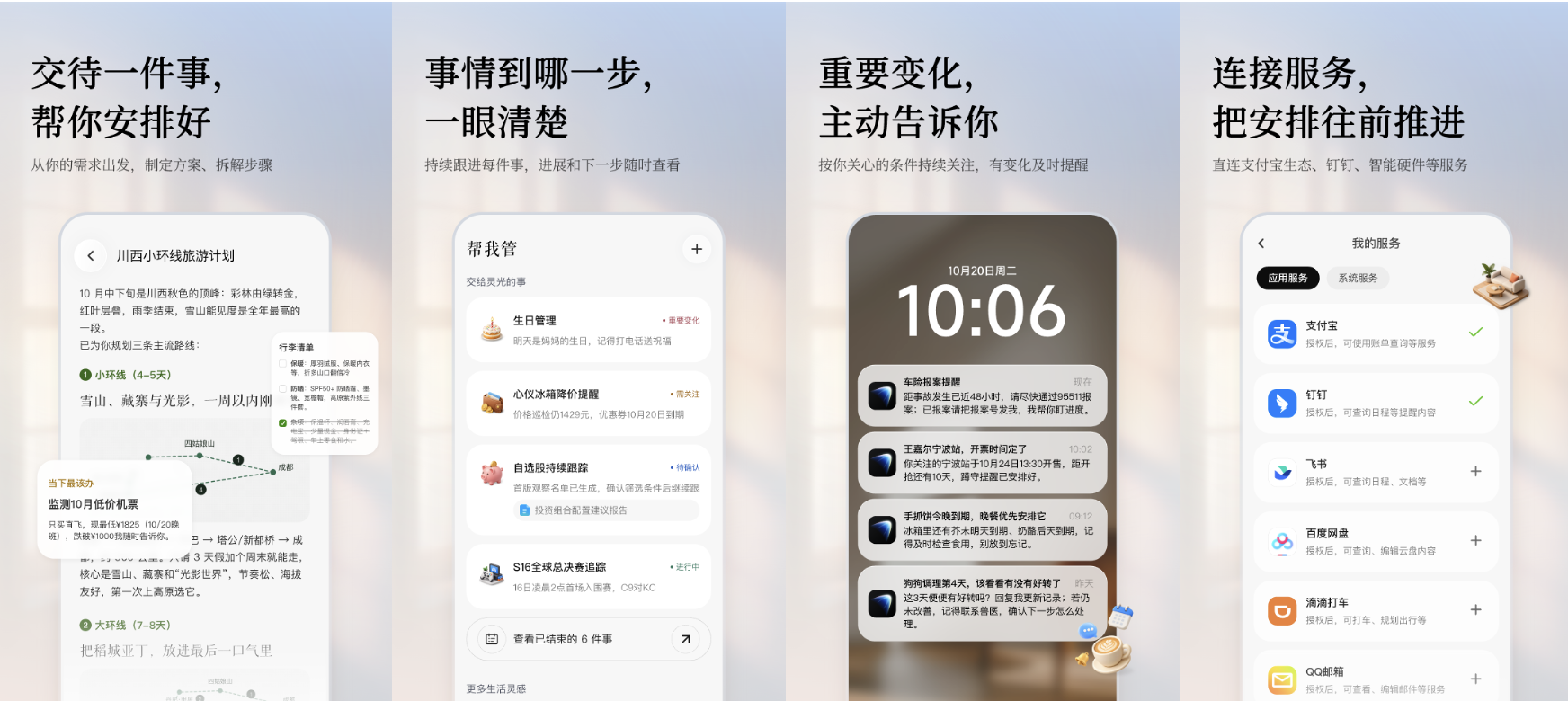
机票订完后,AI 24小时盯价,发现降价及时提醒;翻看日常账单,AI识别可能闲置的续费订阅,帮你省钱;家长顾不上查看班级群,AI也能梳理老师通知、提取待办事项……这些过去需要用户自己发现、记住和安排的生活琐事,如今正开始由AI主动接手。

10月27日,蚂蚁集团发布灵光2.0,推动AI助理从被动响应指令、完成单次任务,向主动发现需求、持续管理事务的演进。

与传统对话式AI及任务型Agent相比,灵光2.0的一大变化,是将AI介入任务的起点进一步前移。 过去,用户需要先发现问题、提出需求,再由AI执行;如今,在获得用户授权后,灵光能够结合已接入的信息与服务,主动识别潜在需求,并发起分析、监测和跟进,并在需要用户关注的节点及时提醒。AI不再只是等待指令的工具,而开始成为能够持续管理事务的助手。

这一变化背后,是灵光2.0对跨会话记忆、长程任务调度和工具连接能力的全面升级。依托独立云主机,灵光能够突破单次对话的限制,在用户退出对话后继续运行任务,并根据新的信息和状态变化动态跟进,让AI从一次性的任务执行转向长期、持续的事务管理。

灵光管理事务的能力正在进入具体的生活场景。

在消费领域,用户授权接入支付宝后,灵光可以梳理消费账单记录,发现可能被遗忘的自动续费订阅,分析消费习惯并提供省钱建议等;在出行领域,机票、酒店预订完成并不意味着AI服务结束,灵光能够持续关注后续价格变化,发现降价机会并及时通知用户;在家庭场景,灵光在授权后可以关注钉钉班级群中的老师通知,整理重要信息、提取待办事项,并完成文档排版等后续工作。

此外,从宠物照护、儿童疫苗接种,到家人纪念日、车辆年检等需要长期记忆和持续跟进的事务,灵光也能够在授权范围内主动识别关键节点、安排后续跟进,减少用户反复查询、提醒和跟进负担。

从单次完成任务,到主动理解并持续推进,意味着AI Agent正在从“任务执行者”向“事务管理者”转变。 要实现这一能力,仅有模型的理解和推理能力还不够,还需要跨应用的信息获取、工具调用以及长时间稳定运行的基础设施支撑。

据介绍,灵光2.0不仅打通了支付宝生态内的数据与服务,还支持在开放环境中调用MCP、CLI等工具,拓展跨平台协同能力。目前,灵光已内置支付宝账单、会员、出行,以及钉钉、飞书、邮箱、米家等服务能力,管理范围正从个人信息与线上事务,延伸至跨平台工作流和智能家居设备控制。

随着智能体走向“事务管理”,其权限边界、数据安全和执行可信度也成为新的挑战。灵光2.0接入了蚂蚁APASS,作为AI时代跨智能体、跨设备、跨应用与服务场景的统一账号和安全管理基础设施,APASS将身份认证、意图安全和隐私保护纳入Agent执行流程,通过授权密钥与Agent分离托管等机制,让智能体在不直接接触授权密钥的情况下执行任务。用户可随时查看、调整或撤销授权,让智能体在授权范围内办事。

据了解,灵光App是蚂蚁集团推出的全模态通用AI助手,于2025年11月18日正式上线,上线6天下载量突破200万。此前,灵光凭借“一句话生成闪应用”、“生成你的世界”等功能,将自然语言交互拓展至应用生成和多模态内容创作,引领了AI助手的全新交互模式。

个人Agent的真正突破,是AI开始拥有时间维度。Chatbot(聊天AI)主要解决当下的问题,而个人Agent需要处理跨越数小时、数天乃至更长周期的事情。它必须记住上下文、感知变化、推进任务,并在必要时重新请求人的判断。

灵光的此次升级也折射出AI助手的下一阶段竞争方向:比起能回答多少问题、完成多少指令,AI能否理解用户的长期需求,在恰当的时机主动介入,并持续把事情管理好,正在成为衡量智能体走进真实生活场景的新维度。

本文首发于 亿邦动力 官方网站

文章来源:亿邦动力

广告
微信
朋友圈

FAQ回顾

个人Agent和传统对话式AI有什么区别?

传统对话式AI主要被动响应指令、完成单次任务;个人Agent则可在用户授权后主动识别潜在需求,持续进行分析、监测和跟进。蚂蚁灵光2.0依托跨会话记忆、长程任务调度和工具连接能力,能在用户退出对话后继续运行任务,并根据新信息动态跟进。

蚂蚁灵光2.0能帮用户管理哪些生活事务?

蚂蚁灵光2.0可管理消费账单、识别可能闲置的自动续费订阅并提供省钱建议,持续关注机票酒店价格变化并及时提醒降价;还能整理钉钉班级群通知、提取待办事项,并跟进宠物照护、儿童疫苗接种、家人纪念日、车辆年检等事务。

蚂蚁灵光2.0如何保障个人Agent的授权和数据安全?

蚂蚁灵光2.0接入蚂蚁APASS作为统一账号和安全管理基础设施,将身份认证、意图安全和隐私保护纳入Agent执行流程,并通过授权密钥与Agent分离托管等机制,让智能体不直接接触授权密钥。用户可随时查看、调整或撤销授权。

蚂蚁灵光2.0支持连接哪些平台和工具?

蚂蚁灵光2.0打通支付宝生态内的数据与服务,支持在开放环境中调用MCP、CLI等工具,并内置支付宝账单、会员、出行,以及钉钉、飞书、邮箱、米家等服务能力,管理范围从个人信息与线上事务延伸至跨平台工作流和智能家居设备控制。

蚂蚁灵光App是什么产品?

蚂蚁灵光App是蚂蚁集团推出的全模态通用AI助手,于2025年11月18日正式上线,上线6天下载量突破200万。此前,灵光凭借“一句话生成闪应用”“生成你的世界”等功能,将自然语言交互拓展至应用生成和多模态内容创作。

这么好看,分享一下?

朋友圈 分享

APP内打开

赞 +1
+1
微信好友 朋友圈 新浪微博 QQ空间
关闭
收藏成功
发送
/140 0