广告
加载中

小红书“大城小聚”活动官宣落地北京首钢园 10月24日起聚一周

龚作仁 2026-10-19 17:16
龚作仁 2026/10/19 17:16

邦小白快读

EN
全文速览

总1:活动时间和地点

1. 10月24日起,大城小聚在北京首钢园及周边举办一周,首钢园三高炉、一高炉南广场和户外中心草坪是主要场地。

2. 10月24日至25日集中有互动展、市集、音乐节,10月26日至30日则有城市会客厅交流会。

总2:值得体验的重点内容

1. 三高炉主题互动展更像逛一座城,可看小红书用户生活灵感,还能在文学酒吧、手搓美术馆、黑客玩具工厂、民间小赛场、宝藏评论区等展区参与互动。

2. 一高炉南广场市集汇聚近100个摊位,近一半摊主是小红书站内中小微商家,全聚德推出小红薯进京赶烤联名摊位,还有北京绒花非遗、果实种子标本画等特色内容。

3. 10月24日晚音乐节有汪峰、陈婧霏等音乐人,60人素人合唱团北京升C开场。

总3:线上关注和参与线索

1. 小红书站内预热曝光已近1千万,登上3个站内热点,可提前在站内搜索大城小聚获取动态和互动信息。

总1:品牌营销和渠道建设

1. 小红书首次在北京办大型城市主题活动,品牌可借城市地标和平台IP进入线下场景。

2. 全聚德与小红书联名推出小红薯进京赶烤主题摊位和惊喜菜单,是老字号年轻化、制造话题的参考案例。

3. 活动分为互动展、市集、音乐节、交流会四大板块,品牌可组合使用展览、摊位、演出和对话,而不只做单一场地曝光。

总2:定价与产品研发

1. 全聚德用联名摊位和惊喜菜单吸引用户,说明品牌可用限定套餐、文化故事和平台IP做差异化定价,减少直接价格竞争。

2. 互动展强调参与感,新品研发可倾向高颜值、可体验、适合分享和产生UGC的产品。

总3:消费趋势和用户行为

1. 近一半市集摊主是站内原生中小微商家,说明平台内新品牌已形成线下供给,渠道合作可关注此类商家。

2. 绒花非遗、秋天果实种子标本画走红,显示传统工艺、自然美学和季节限定是消费关注点。

3. 素人合唱团北京升C和日常街拍体现用户更看重真实生活感,品牌传播要弱化硬广、强化普通人故事。

总1:增长市场和平台机会

1. 小红书首次在北京办大型城市主题活动,线上预热曝光近1千万并登上3个站内热点,说明平台城市活动能带来集中流量,卖家可关注同类活动的话题借势和摊位合作。

2. 市集近100个摊位中近一半是站内原生中小微商家,显示平台在线下市集中扶持中小微供给,卖家可争取成为摊主或与摊主合作。

3. 全聚德联名摊位验证老字号与平台IP联名模式,中小卖家也可用平台热门概念做主题产品和活动。

总2:消费需求变化和应对

1. 互动展强调生活灵感、手搓美术馆、宝藏评论区等,用户需求从功能转向内容和体验,选品和笔记要突出故事、参与感和可晒性。

2. 绒花非遗、秋天果实种子标本画和素人合唱团等反映特色文化与普通人故事有流量,可布局非遗文创、季节限定和情感向内容。

3. 活动持续一周且集中在首钢园,适合围绕北京、秋天、周末聚会等场景做关联促销;也要注意短期热度消退,需把流量沉淀为粉丝和复购。

总1:产品设计和生产需求

1. 市集上北京绒花非遗传承人将传统工艺和现代审美结合,说明文化感和现代设计并存的小众手作有市场,可开发非遗文创和衍生品。

2. 博物博主带来秋天主题果实、种子标本画,反映自然美学和季节限定受关注,可设计秋季装饰画、标本礼盒等展示型产品。

3. 互动展里的手搓美术馆、黑客玩具工厂、民间小赛场与动手创作有关,提示DIY材料包、手工工具和创意装置类产品有机会。

总2:数字化与电商启示

1. 小红书把用户生活内容和趋势落地为线下活动,说明产品要能激发用户拍照和分享,工厂应注重使用场景和出片效果。

2. 市集近一半摊主是站内原生中小微商家,这些商家上新快、需求碎片化,工厂可用小批量、柔性定制和快速返单匹配。

3. 活动让线上相遇变成线下相聚,工厂对接电商客户时可支持线下体验、主题市集和小型快闪店,以线下反哺线上复购。

总1:行业趋势和平台打法

1. 小红书成立13年来首次在北京举办大型城市主题活动,显示内容平台从线上社区走向城市级线下运营,服务商可参与整合营销、活动策划和落地执行。

2. 活动将主题互动展、市集、音乐节和线下交流会结合,说明社区内容策展化成为新方向,服务商要能把流量话题转成线下体验。

3. 线上预热曝光近1千万并登3个站内热点,说明线下活动的流量入口在站内,做方案需将笔记种草、热点话题和线下事件联动。

总2:客户痛点和解决方案

1. 品牌客户缺少与年轻人沟通的场景,可参考全聚德与小红书联名推出小红薯进京赶烤摊位,用平台IP加限定菜单制造惊喜和传播点。

2. 中小微商家缺曝光和信任背书,市集近一半摊位给站内原生商家,服务商可提供选品、摊位设计、现场互动和线上内容同步的一站式服务。

3. 传统品牌和非遗需要现代审美转换,绒花和标本画案例说明可把文化元素转化为高颜值产品和内容故事。

4. 活动效果可看站内曝光和热点,服务商应建立从线上曝光到线下参与再回到线上二次传播的数据监测闭环。

总1:平台最新做法和运营样板

1. 小红书大城小聚是成立13年来首次在北京举办的大型城市主题活动,用首钢园和四大板块打造平台级线下IP,可作为内容平台联动城市地标的参考。

2. 活动纳入大戏看北京2026首钢园国际戏剧艺术汇,说明平台正与城市文旅项目合作,平台方可对接政府、园区和文艺资源。

3. 线上预热曝光近1千万并登3个站内热点,证明站内内容加热线下活动的模式可复制,运营应提前布局话题和种草内容。

总2:招商运营和风险规避

1. 市集近100个摊位中近一半是站内原生中小微商家,平台可用线下市集招募中小商家,丰富供给并增强商家粘性。

2. 全聚德联名、非遗绒花、博主标本画和素人合唱团说明平台需兼顾老字号、非遗、博主和普通用户,避免品类单一和过度商业化。

3. 互动展设置多种社区特色展区,平台可把UGC内容产品化,但首次举办大型活动要管控内容审核、线下安全和现场动线,防止负面事件影响口碑。

总1:产业新动向和商业模式

1. 小红书成立13年来首次在北京举办大型城市主题活动,代表内容社区平台从线上内容聚合向线下城市生活IP延伸,形成线上种草、线下体验、二次传播的商业模式。

2. 活动与首钢园工业遗存和大戏看北京2026首钢园国际戏剧艺术汇联动,说明平台经济正与城市更新和文旅演艺产业融合。

3. 市集近一半摊主是站内原生中小微商家,平台将站内商业资源导入线下集市,可视为小微商家孵化渠道的新探索。

总2:新问题与政策启示

1. 互动展把文学酒吧、手搓美术馆、黑客玩具工厂、宝藏评论区等内容实体化,反映UGC社区的内容策展和版权授权机制值得研究。

2. 全聚德、绒花非遗与平台联名提供传统文化商业利用案例,但需关注非遗技艺知识产权保护、手工量产和供应链可持续性。

3. 大型城市活动涉及公共空间使用、人流管理和内容合规,建议在审批、数据监测和活动评估上建立规范;线上近千万曝光如何转化为线下留存也需后续研究。

返回默认
声明:快读内容全程由AI生成,请注意甄别信息。如您发现问题,请发送邮件至 run@ebrun.com 。

我是 品牌商 卖家 工厂 服务商 平台商 研究者 帮我再读一遍。

Quick Summary

Overall 1: Event dates and venue

1. Starting October 24, Dacheng Xiaoju will run for one week at and around Shougang Park in Beijing. The main venues are the No. 3 Blast Furnace, the No. 1 Blast Furnace South Plaza, and the outdoor central lawn.

2. On October 24-25, the event will feature an interactive exhibition, a market, and a music festival; from October 26 to 30, it will hold City Lounge exchange sessions.

Overall 2: Highlights worth experiencing

1. The themed interactive exhibition at the No. 3 Blast Furnace feels more like walking through a city: you can browse Xiaohongshu users' life inspiration and join interactive zones such as a literary bar, a handmade art gallery, a hacker toy factory, a folk mini-stadium, and a treasure comment section.

2. The market at the No. 1 Blast Furnace South Plaza brings together nearly 100 booths; about half of the booth owners are small and micro merchants from Xiaohongshu. Quanjude has launched a co-branded booth with Xiaohongshu called 'Little Sweet Potato Goes to Beijing for Roast Duck,' alongside special content such as Beijing velvet-flower intangible heritage crafts and autumn fruit-and-seed specimen art.

3. The music festival on the evening of October 24 will feature performers including Wang Feng and Chen Jingfei, opening with a 60-person amateur choir named Beijing Rise C.

Overall 3: How to follow and engage online

1. Pre-event exposure on Xiaohongshu has already reached nearly 10 million views and has made it onto three trending topics on the platform. You can search for Dacheng Xiaoju in advance to get updates and interactive information.

Overall 1: Brand marketing and channel building

1. This is Xiaohongshu's first large-scale city-themed event in Beijing, giving brands a route into offline scenarios through city landmarks and the platform's IP.

2. Quanjude's co-branded 'Little Sweet Potato Goes to Beijing for Roast Duck' booth and surprise menu with Xiaohongshu is a reference case for making a heritage brand younger and generating conversation.

3. The event is divided into four sections - interactive exhibition, market, music festival, and exchange sessions - so brands can combine exhibitions, booths, performances, and dialogue instead of relying on a single venue presence.

Overall 2: Pricing and product development

1. Quanjude used a co-branded booth and surprise menu to attract users, showing that brands can use limited-edition packages, cultural stories, and platform IP for differentiated pricing and avoid direct price competition.

2. The interactive exhibition emphasizes participation; new product development should favor products that are highly visual, experiential, easy to share, and able to generate UGC.

Overall 3: Consumer trends and user behavior

1. Nearly half of the market vendors are native small and micro merchants from the platform, showing that new brands within the ecosystem now have offline supply; channel collaboration should pay attention to this type of merchant.

2. The popularity of velvet-flower intangible heritage crafts and autumn fruit-and-seed specimen art shows that traditional craftsmanship, natural aesthetics, and seasonal limited editions are consumption focal points.

3. The amateur choir Beijing Rise C and everyday street-style content show that users value authentic life; brand communications should downplay hard-sell advertising and amplify stories of ordinary people.

Overall 1: Growth markets and platform opportunities

1. Xiaohongshu's first large-scale city-themed event in Beijing has generated nearly 10 million pre-event views and three in-app trending topics, showing that platform city events can create concentrated traffic; sellers should watch for opportunities to ride the topic wave or collaborate on booths in similar events.

2. Nearly half of the almost 100 market booths are native small and micro merchants, showing the platform supports small and micro supply in offline markets; sellers can try to become vendors or partner with existing vendors.

3. The Quanjude co-branded booth validates the heritage-brand-plus-platform-IP model; smaller sellers can also use popular platform concepts for themed products and activities.

Overall 2: Changing consumer demand and responses

1. The interactive exhibition emphasizes life inspiration, handmade art galleries, and treasure comment sections; user needs are shifting from function to content and experience. Product selection and posts should highlight storytelling, participation, and shareability.

2. Velvet-flower intangible heritage, autumn fruit-and-seed specimen art, and amateur choirs indicate that distinctive culture and ordinary people's stories have traffic; sellers can build a presence in cultural creative products, seasonal limited editions, and emotion-driven content.

3. The event lasts a week and is concentrated in Shougang Park, making it suitable for associated promotions around Beijing, autumn, and weekend gatherings. Sellers should also remember that this short-term buzz will fade, so they need to convert the traffic into followers and repeat purchases.

Overall 1: Product design and production needs

1. The presence of Beijing velvet-flower intangible heritage inheritors at the market shows how traditional craftsmanship can be combined with modern aesthetics; niche handmade products with both cultural meaning and contemporary design have market potential, and factories can develop cultural creative goods and derivatives.

2. Natural-history bloggers are bringing autumn-themed fruit and seed specimen art, reflecting demand for natural aesthetics and seasonal limited editions; factories can design display-oriented products such as autumn decorative paintings and specimen gift boxes.

3. Interactive zones such as the handmade art gallery, hacker toy factory, and folk mini-stadium all involve hands-on creation, pointing to opportunities for DIY material kits, crafting tools, and creative installation products.

Overall 2: Digital and e-commerce implications

1. Xiaohongshu turns user life content and trends into offline events, meaning products must inspire photo-taking and sharing; factories should focus on usage scenarios and how well products look in photos.

2. Nearly half of the market vendors are native small and micro merchants from the platform. These merchants move quickly and have fragmented needs, so factories can match them with small-batch production, flexible customization, and quick reorders.

3. The event makes online encounters into offline gatherings; when working with e-commerce clients, factories can support offline experiences, themed markets, and small pop-up stores, using the offline side to reinforce repeat online purchases.

Overall 1: Industry trends and platform playbooks

1. Xiaohongshu, 13 years after its founding, is holding its first large-scale city-themed event in Beijing, showing that content platforms are moving from online communities to city-level offline operations; service providers can participate in integrated marketing, event planning, and execution.

2. The event combines a themed interactive exhibition, a market, a music festival, and offline exchange sessions, indicating that content curation of community content is becoming a new direction; service providers need to turn topical traffic into offline experiences.

3. With pre-event exposure near 10 million and three in-app trending topics, the traffic entry point for offline events is inside the platform; proposals must link content seeding, hot topics, and offline events.

Overall 2: Client pain points and solutions

1. Brand clients lack scenarios for communicating with young people. The Quanjude and Xiaohongshu co-branded 'Little Sweet Potato Goes to Beijing for Roast Duck' booth is a reference: use platform IP plus limited menus to create surprise and talking points.

2. Small and micro merchants need exposure and trust endorsement. Nearly half of the market booths are given to native platform merchants, so service providers can offer one-stop services covering product selection, booth design, on-site interaction, and synced online content.

3. Traditional brands and intangible heritage need modern aesthetic conversion; the velvet-flower and specimen art examples show how cultural elements can be turned into visually appealing products and stories.

4. Event impact can be measured through in-platform exposure and trending topics; service providers should build a closed-loop data monitoring system from online exposure to offline participation and back to online secondary sharing.

Overall 1: Latest platform moves and operating models

1. Xiaohongshu's Dacheng Xiaoju is the first large-scale city-themed event in Beijing since its founding 13 years ago. By using Shougang Park and four major sections to create a platform-level offline IP, it offers a template for content platforms to partner with city landmarks.

2. The event has been incorporated into the 'Drama in Beijing 2026 Shougang Park International Theatre and Arts Festival,' showing that the platform is working with urban cultural-tourism projects; platform operators can connect with government, parks, and arts resources.

3. Pre-event exposure near 10 million and three in-app trending topics prove that heating up offline events with in-platform content is replicable; operations teams should arrange topics and seeding content in advance.

Overall 2: Merchant recruitment, operations, and risk mitigation

1. Nearly half of the close to 100 market booths are native small and micro merchants. The platform can use offline markets to recruit smaller merchants, enrich supply, and strengthen merchant stickiness.

2. Quanjude co-branding, intangible heritage velvet flowers, blogger specimen art, and amateur choirs show that the platform needs to balance heritage brands, intangible heritage, bloggers, and ordinary users, avoiding single-category supply and over-commercialization.

3. The interactive exhibition sets up multiple community-based zones, so the platform can productize UGC content. However, as a first large-scale event, content moderation, offline safety, and visitor flow must be managed to prevent negative incidents from hurting reputation.

Overall 1: New industry trends and business models

1. Xiaohongshu's first large-scale city-themed event in Beijing since its founding 13 years ago marks a shift for content community platforms from online content aggregation to offline city-life IP, creating a business model of online seeding, offline experience, and secondary sharing.

2. The event's link with Shougang Park's industrial heritage and the 'Drama in Beijing 2026 Shougang Park International Theatre and Arts Festival' shows that platform economics are becoming integrated with urban renewal and cultural-tourism entertainment.

3. Nearly half of the market vendors are native small and micro merchants from the platform; channeling in-platform commercial resources into an offline market can be seen as a new experiment in incubating micro and small merchants.

Overall 2: Emerging issues and policy implications

1. The interactive exhibition materializes content such as the literary bar, handmade art gallery, hacker toy factory, and treasure comment section, highlighting the need to research content curation and copyright-licensing mechanisms in UGC communities.

2. Quanjude and velvet-flower intangible heritage co-branding with Xiaohongshu provides cases of commercializing traditional culture, but attention is needed on IP protection for traditional craft knowledge, the relationship between handmade work and mass production, and supply-chain sustainability.

3. Large city events involve public space use, crowd management, and content compliance; it is advisable to establish standards for approval, data monitoring, and event evaluation. How nearly 10 million online exposures translate into offline retention also deserves follow-up research.

Disclaimer: The "Quick Summary" content is entirely generated by AI. Please exercise discretion when interpreting the information. For issues or corrections, please email run@ebrun.com .

I am a Brand Seller Factory Service Provider Marketplace Seller Researcher Read it again.

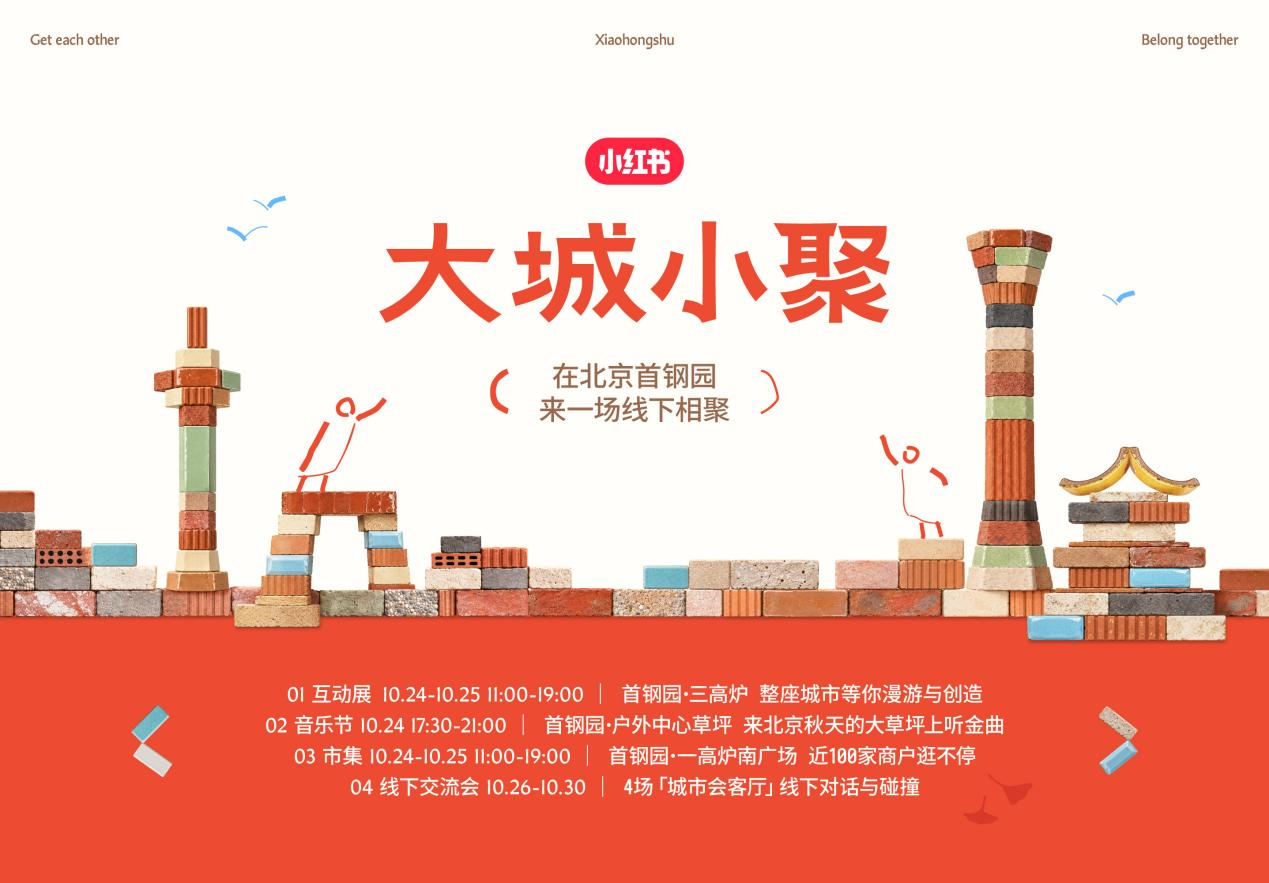
近日,小红书正式官宣“大城小聚”活动日程,这是小红书成立13年来首次在北京举办的大型城市主题活动。10月24日起,为期一周的“大城小聚”将在北京首钢园及周边展开,涵盖主题互动展、市集、音乐节与线下交流会四大板块。

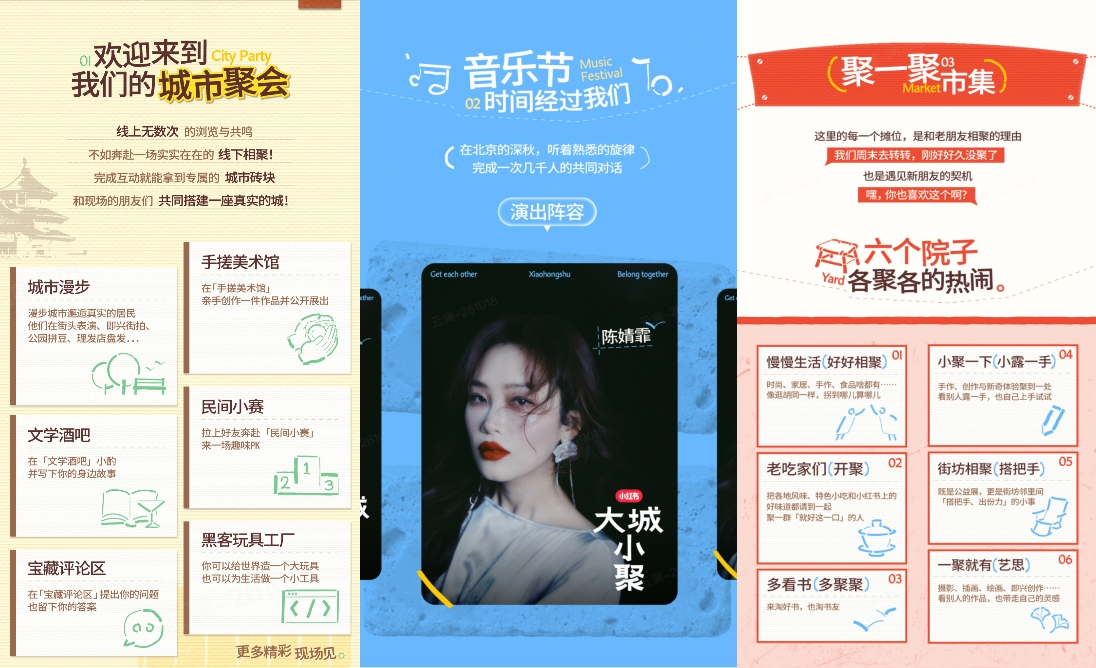
10月24日-25日,“我们的城市聚会”主题互动展、“聚一聚”市集和“时间经过我们”音乐节将于本周末落地首钢园。

“我们的城市聚会”主题互动展在首钢园三高炉举行。相比传统的“看展”,看互动展更像是“逛一座城”:除了可以看到来自小红书用户丰富的生活灵感,还可以在文学酒吧、手搓美术馆、黑客玩具工厂、民间小赛场、宝藏评论区等展区参与互动,与参展的博主一起“玩起来”。逛展的同时,即兴街拍、逛独立书店、在理发店盘发这些城市居民的日常也会穿插在整座“城”里,边走边撞见。

首钢园一高炉南广场举办的“聚一聚”市集是最热闹的部分,将汇聚近100个摊位。其中近一半摊主来自小红书站内原生的中小微商家:百年老字号全聚德和小红书将联合推出“小红薯进京赶烤”主题摊位,并有惊喜菜单;北京绒花非遗传承人将带来传统工艺和现代审美并存的绒花;博物博主将带来以秋天为主题的果实、种子标本画……

10月24日晚,音乐节“时间经过我们”将在首钢园户外中心草坪拉开帷幕。这场音乐节也是“大戏看北京2026首钢园国际戏剧艺术汇”的组成部分。除了汪峰、陈婧霏等音乐人和明星,一支60人的素人合唱团“北京升C”也被邀请参加,这些白天写代码、做设计的年轻人,多年来一直在晚上凑在一起唱歌,他们将为这场北京秋天的音乐节开场献唱。

在小红书,用户分享日常、交流经验,这些不断涌现的生活内容和趋势,正激发出更多生活体验与创造。10月26日至30日,“大城小聚”还将举办四场“城市会客厅”线下交流会,邀请城市、文化、经济、教育等领域的专业人士,通过分享、对谈、研讨等形式展开交流。来自不同领域的观察和经验将在现场碰撞,让关于城市与生活的讨论从小红书延伸到线下。

“大城小聚”的线上预热活动也得了用户的热情关注,在小红书社区,活动预热曝光已近1千万,登上3个站内热点。“大城小聚”活动负责人表示,一直以来,小红书都鼓励用户发现和分享生活中的美好。这次希望更多市民与用户能在秋天来到首钢园,在体验和感受生活之美的同时,也“让线上的相遇,变成线下的相聚”。

注:文/龚作仁,文章来源:Laborer,本文为作者独立观点,不代表亿邦动力立场。

文章来源:Laborer

广告
微信
朋友圈

FAQ回顾

小红书“大城小聚”是什么活动?

“大城小聚”是小红书成立13年来首次在北京举办的大型城市主题活动,于2026年10月24日至30日在首钢园及周边举行,涵盖主题互动展、市集、音乐节与线下交流会四大板块,目标是让线上的相遇变成线下的相聚。

小红书“大城小聚”市集有哪些特色?

“聚一聚”市集在首钢园一高炉南广场举办,汇聚近100个摊位,近一半摊主来自小红书站内原生中小微商家。包括全聚德与小红书联名的“小红薯进京赶烤”主题摊位、北京绒花非遗传承人的绒花作品、博物博主的秋天果实种子标本画等。

小红书“大城小聚”音乐节有什么看点?

“时间经过我们”音乐节于10月24日晚在首钢园户外中心草坪开幕,是“大戏看北京2026首钢园国际戏剧艺术汇”的组成部分。汪峰、陈婧霏等音乐人和明星参演,还有一支60人的素人合唱团“北京升C”开场献唱。

小红书为什么要办“大城小聚”线下活动?

小红书希望鼓励用户发现和分享生活中的美好,让更多市民与用户在秋天来到首钢园,体验生活之美,也让线上社区中的相遇延伸到线下相聚。活动线上预热曝光已近1千万,登上3个站内热点。

小红书“大城小聚”有哪些线下交流活动?

10月26日至30日,“大城小聚”举办四场“城市会客厅”线下交流会,邀请城市、文化、经济、教育等领域专业人士,通过分享、对谈、研讨等形式,让关于城市与生活的讨论从小红书延伸到线下。

这么好看,分享一下?

朋友圈 分享

APP内打开

赞 +1
+1
微信好友 朋友圈 新浪微博 QQ空间
关闭
收藏成功
发送
/140 0