广告
加载中

聚焦商品条码应用与供应商能力建设专题研讨会在厦门举办

亿邦智库 2026-10-16 17:14
亿邦智库 2026/10/16 17:14

邦小白快读

EN
全文速览

本次研讨会的核心干货是商品条码应用与供应商能力建设,主题围绕央国企电子商城采购数字化。会议明确了供应商能力建设框架,分为合规、运营、质量管控、可持续发展四大维度,并区分了制造型、流通型、平台型供应商的不同要求。

1. 商品条码方面,重点介绍了GS1商品条码体系和源数据核验服务,这是给商品一个唯一身份标识,能解决一物多码、数据不统一的问题。

2. 采购数字化方面,铁建商城、中广核商城、中交招采网、陕煤物资商城等平台分享了供应商全生命周期管理经验,并讨论了MRO工业品中非标物资的处置方法。

3. 对普通读者来说,可以学习的是:如果企业想参与央国企采购,需要提前做好商品条码赋码改造,并建立规范的供应商管理体系。实际难点在于供应商分级考核退出机制、条码规模化推广以及非标物资如何管控。

对品牌商而言,本次研讨会透露了工业品采购供应链中的品牌合规与数字化新要求。会议提出供应商能力建设框架,品牌商需要关注其中合规和质量管理维度,尤其在商品条码应用上,品牌产品必须确保条码准确、源数据真实,才能进入央国企电子商城采购体系。

1. 品牌渠道建设:央国企电商平台正在推进基于商品条码的供应商全生命周期管理,品牌商提前完成产品赋码和源数据核验,有助于获得更多采购渠道机会。

2. 产品研发与消费趋势:会议聚焦MRO工业品,指出一物多码和非标物资处理是行业痛点,这提示品牌商在产品设计时应考虑条码标准化和物资分类规范化,降低后续采购对接成本。

3. 价格竞争与合作:会上重点磋商了央国企电子商城基于商品条码共建工业品价格指数的协同路径,品牌商的商品价格数据通过条码统一归集后,价格竞争将更透明,品牌商需提前适应这种透明的定价环境。

本次研讨会为工业品卖家带来了明确的政策与市场信号:央国企电子商城正在加速推进供应商与商品条码合规建设,卖家若想进入这一采购市场,需要提前布局条码应用和供应商能力升级。

1. 政策解读与机会:会议以推进供应商与商品合规、共筑采购数字化底座为主题,意味着条码应用将成为央国企采购的准入门槛,尽早完成GS1条码注册和源数据核验的卖家有先发优势。

2. 增长市场与消费需求:研讨会上铁建商城、中广核商城等平台分享了供应商全生命周期管理案例,释放出它们对供应商合规能力和数据管理能力的新需求,卖家可以针对这些需求调整服务。

3. 风险与措施:行业面临一物多码、非标物资管控、供应商分级考核退出机制等难点,卖家应完善内部商品编码体系,避免因条码混乱丢失订单。学习点在于,重点磋商的基于商品条码共建工业品价格指数,未来价格竞争将更透明,卖家需强化成本控制。

工厂作为供应商的重要类型,本次研讨会干货集中在生产与产品层面。会议区分了制造型、流通型、平台型供应商能力框架,制造型工厂需要对照合规、运营、质量管控、可持续发展四大维度补齐短板。

1. 产品生产与设计需求:商品条码体系是核心,工厂生产的产品必须遵循GS1标准,确保每个商品有唯一编码,条码应用落地技术路径需要提前了解并执行。同时源数据核验服务强调产品信息的真实性,工厂要建立规范的商品数据管理机制。

2. 商业机会:央国企电商平台正在推进供应商全生命周期管理,且会上重点磋商共建工业品价格指数,这意味着产品数据规范、条码完整的工厂更容易进入铁建商城、中广核商城等采购体系。

3. 数字化与电商启示:会议指出MRO工业品存在一物多码、非标物资处置难点,工厂需要思考如何在生产源头减少非标乱象,同时在供应商赋码改造等实操环节投入资源,为对接数字化采购打好数据底座基础。

本次研讨会透露了工业品采购数字化服务的趋势与客户痛点。行业正在围绕供应商能力建设、商品条码应用和价格指数协同展开深度实践,服务商可从中找到服务切口。

1. 行业趋势:会议聚焦合规、运营、质量管控、可持续发展四大维度,并提出制造型、流通型、平台型供应商能力建设框架,这预示着供应商治理标准化服务需求会持续上升。

2. 新技术与解决方案:中国物品编码中心介绍了GS1商品条码体系和源数据核验服务,这是技术输出的核心内容。服务商可围绕条码赋码改造、源数据核验、一物多码治理提供技术工具和咨询方案。

3. 客户痛点:与会平台反映的实操难点包括非标物资处置、供应商赋码改造、分级考核退出机制、条码规模化推广等。针对这些痛点,服务商可以开发非标物资识别算法、供应商评估系统、条码数据清洗工具,并帮助企业实现与央国企商城的系统对接与数据互通。

本次研讨会为平台商提供了采销数字化升级的最新做法与合作方向。会议中,铁建商城、中广核商城、中交招采网、陕煤物资商城等平台分享了实践案例,重点介绍了供应商全生命周期管理和商品条码应用落地的成效。

1. 平台最新做法:这些平台已经在推进商品条码应用,并尝试构建统一的供应商分级考核与退出机制,这是平台运营管理的重要参考。通过条码实现商品唯一标识,能大幅提高采购合规和数据透明度。

2. 商业对平台的需求与问题:会议针对MRO工业品一物多码、非标物资处置等现实难点展开了研讨,平台商需要识别这些问题,并考虑与供应商合作进行赋码改造,同时完善非标物资管控策略。

3. 风控与协同:重点磋商的是基于商品条码共建工业品价格指数的协同路径,平台商可参与共建价格指数,借此掌握定价话语权。同时要注意,供应商能力建设是平台招商和运营管理的关键,应结合制造型、流通型、平台型供应商的特点设置不同准入和管理规则,以降低采购风险。

本次研讨会集中展示了央国企采购数字化在商品条码应用和供应商能力建设方面的产业新动向。会议提出了供应商能力建设框架,涵盖合规、运营、质量管控、可持续发展四大维度,并为制造型、流通型、平台型供应商提供了分类治理思路,这为研究工业品电商供应链治理模式提供了新案例。

1. 产业新动向与问题:当前MRO工业品存在一物多码、非标物资处置难、供应商赋码改造压力大等现实问题,会议还关注到供应商分级考核退出机制以及条码规模化推广的痛点,这些是采购数字化亟需解决的关键问题。

2. 政策法规建议与启示:会议协办方中国物品编码中心介绍了GS1商品条码体系和源数据核验服务,并探讨了国家标准推广实施路径。对研究者而言,可关注如何通过统一条码标准来推动央国企采购供应链合规化,以及源数据核验机制在政策层面如何落地。

3. 商业模式:参会平台代表分享了供应商全生命周期管理和条码应用落地的实践成效,重点磋商了基于商品条码共建工业品价格指数的协同路径,这为研究者提供了平台间协同共建价格基础设施的商业模式参考。

返回默认

声明:快读内容全程由AI生成,请注意甄别信息。如您发现问题,请发送邮件至 run@ebrun.com 。

我是 品牌商 卖家 工厂 服务商 平台商 研究者 帮我再读一遍。

Quick Summary

The core takeaways of this seminar were product barcode applications and supplier capability building, centered on the digitalization of procurement in central and state-owned enterprise (SOE) e-marketplaces. The meeting defined a supplier capability-building framework across four dimensions—compliance, operations, quality control, and sustainable development—and set out differentiated requirements for manufacturing, distribution, and platform-based suppliers.

1. On product barcodes, the GS1 barcode system and source data verification services were highlighted, giving each product a unique identity and addressing problems such as multiple codes for the same item and inconsistent data.

2. On procurement digitalization, platforms including CRCC Mall, CGN Mall, CCCC Procurement and Bidding Network, and Shaanxi Coal Materials Mall shared experience in supplier lifecycle management and discussed how to handle non-standard materials among MRO industrial products.

3. For general readers, the key takeaway is that companies seeking to participate in SOE procurement should complete barcode assignment and system upgrades in advance and build a standardized supplier management system. The real difficulties lie in tiered supplier assessment and exit mechanisms, large-scale barcode rollout, and governance of non-standard materials.

For brand owners, the seminar signaled new requirements for brand compliance and digitalization in the industrial procurement supply chain. It proposed a supplier capability-building framework in which brand owners need to focus on the compliance and quality management dimensions. In particular, for product barcode applications, branded products must have accurate barcodes and authentic source data before they can enter the procurement systems of SOE e-marketplaces.

1. Brand channel development: SOE e-commerce platforms are advancing barcode-based supplier lifecycle management. Brand owners that complete product coding and source data verification early will gain more procurement channel opportunities.

2. Product development and consumption trends: The meeting focused on MRO industrial products and identified multiple-codes-for-one-product and non-standard material handling as industry pain points. This suggests brand owners should consider barcode standardization and material classification norms at the product design stage to reduce downstream procurement integration costs.

3. Price competition and cooperation: A key topic was the collaborative path for SOE e-marketplaces to build an industrial product price index based on product barcodes. Once price data are aggregated by barcode, price competition will become more transparent, and brand owners should adapt to this transparent pricing environment in advance.

The seminar sent clear policy and market signals to industrial product sellers: SOE e-marketplaces are moving faster on supplier compliance and product barcode compliance. Sellers that want to enter this procurement market need to plan barcode adoption and upgrade supplier capabilities early.

1. Policy reading and opportunities: With the theme of advancing supplier and product compliance and building a shared digital procurement foundation, the meeting indicated that barcode application will become an entry threshold for SOE procurement. Sellers that complete GS1 barcode registration and source data verification early will have a first-mover advantage.

2. Growth markets and demand: At the seminar, platforms such as CRCC Mall and CGN Mall shared supplier lifecycle management cases, signaling new demand for supplier compliance and data management capabilities. Sellers can adjust their services accordingly.

3. Risks and responses: The industry still faces challenges such as multiple codes for one product, non-standard material governance, and tiered supplier assessment and exit mechanisms. Sellers should improve internal product coding systems to avoid losing orders due to chaotic barcode management. The key lesson is that a major topic was the collaborative building of an industrial price index based on product barcodes; with price competition becoming more transparent, sellers need to strengthen cost control.

For factories, a key supplier category, the seminar's practical value was concentrated on production and product issues. It differentiated capability frameworks for manufacturing, distribution, and platform-based suppliers; manufacturing factories need to close gaps across compliance, operations, quality control, and sustainable development.

1. Product production and design requirements: The product barcode system is central. Factory-produced products must follow GS1 standards to ensure every item has a unique code, and factories need to understand and implement the technical path for barcode deployment in advance. The source data verification service also emphasizes authenticity, so factories should establish formal product data management mechanisms.

2. Commercial opportunities: SOE e-commerce platforms are advancing supplier lifecycle management, and a key discussion covered jointly building an industrial product price index. This means factories with standardized product data and complete barcodes can more easily enter procurement systems such as CRCC Mall and CGN Mall.

3. Digital and e-commerce implications: The meeting noted that MRO industrial products suffer from multiple codes for one product and difficult non-standard material disposal. Factories should consider how to reduce non-standard chaos at the production source and invest in practical areas such as barcode retrofit to build the data foundation for digital procurement integration.

The seminar revealed the direction of digital procurement services for industrial products and the pain points of clients. The industry is moving into deeper practice around supplier capability building, product barcode application, and price-index collaboration, and service providers can identify entry points from these developments.

1. Industry trends: The meeting focused on compliance, operations, quality control, and sustainable development, and proposed a capability-building framework for manufacturing, distribution, and platform-based suppliers. This signals sustained growth in demand for standardized supplier governance services.

2. New technologies and solutions: GS1 China introduced the GS1 barcode system and source data verification services as the core technical output. Service providers can offer tools and consulting for barcode retrofit, source data verification, and remediation of multiple-codes-for-one-product issues.

3. Client pain points: Participating platforms reported operational difficulties including non-standard material disposal, supplier barcode retrofit, tiered assessment and exit mechanisms, and large-scale barcode rollout. In response, service providers can develop algorithms for identifying non-standard materials, supplier evaluation systems, barcode data cleansing tools, and help enterprises connect and share data with SOE e-marketplace systems.

The seminar provided platform operators with the latest practices and collaboration directions for upgrading their procurement and sales digitalization. Platforms such as CRCC Mall, CGN Mall, CCCC Procurement and Bidding Network, and Shaanxi Coal Materials Mall shared implementation cases, highlighting results in supplier lifecycle management and the adoption of product barcodes.

1. Latest platform practices: These platforms have been promoting product barcode adoption and trying to build a unified supplier tiered assessment and exit mechanism, offering important references for platform operations and management. Using barcodes to uniquely identify products can significantly improve procurement compliance and data transparency.

2. Business needs and issues for platforms: The meeting discussed practical challenges such as multiple codes for one product and disposal of non-standard materials among MRO industrial products. Platform operators need to recognize these issues, consider working with suppliers on barcode retrofit, and improve controls for non-standard materials.

3. Risk control and collaboration: A key topic was the collaborative path to build an industrial product price index based on product barcodes. Platform operators can participate in building the index and thereby gain pricing influence. At the same time, supplier capability building is central to merchant recruitment and operations; platforms should set different admission and management rules based on the characteristics of manufacturing, distribution, and platform-based suppliers to reduce procurement risk.

This seminar showcased the latest industrial trends in SOE procurement digitalization, specifically in product barcode application and supplier capability building. It proposed a supplier capability-building framework covering compliance, operations, quality control, and sustainable development, and offered differentiated governance ideas for manufacturing, distribution, and platform-based suppliers. This provides a new case study for research on governance models of industrial e-commerce supply chains.

1. New industry trends and issues: MRO industrial products currently face realistic problems such as multiple codes for one product, difficult disposal of non-standard materials, and heavy pressure on suppliers to retrofit barcodes. The meeting also focused on tiered supplier assessment and exit mechanisms and pain points in scaling up barcodes—key issues that procurement digitalization needs to solve.

2. Policy and regulatory implications: Co-organizer GS1 China introduced the GS1 barcode system and source data verification service and discussed the path for promoting national standards. For researchers, it is worth examining how unified barcode standards can drive compliance in SOE procurement supply chains and how source data verification mechanisms can be implemented at the policy level.

3. Business models: Platform representatives shared practical results in supplier lifecycle management and barcode deployment, and a key topic was the collaborative path to build an industrial price index based on product barcodes. This gives researchers a reference for a business model in which platforms collaboratively build price-based infrastructure.

Disclaimer: The "Quick Summary" content is entirely generated by AI. Please exercise discretion when interpreting the information. For issues or corrections, please email run@ebrun.com .

I am a Brand Seller Factory Service Provider Marketplace Seller Researcher Read it again.

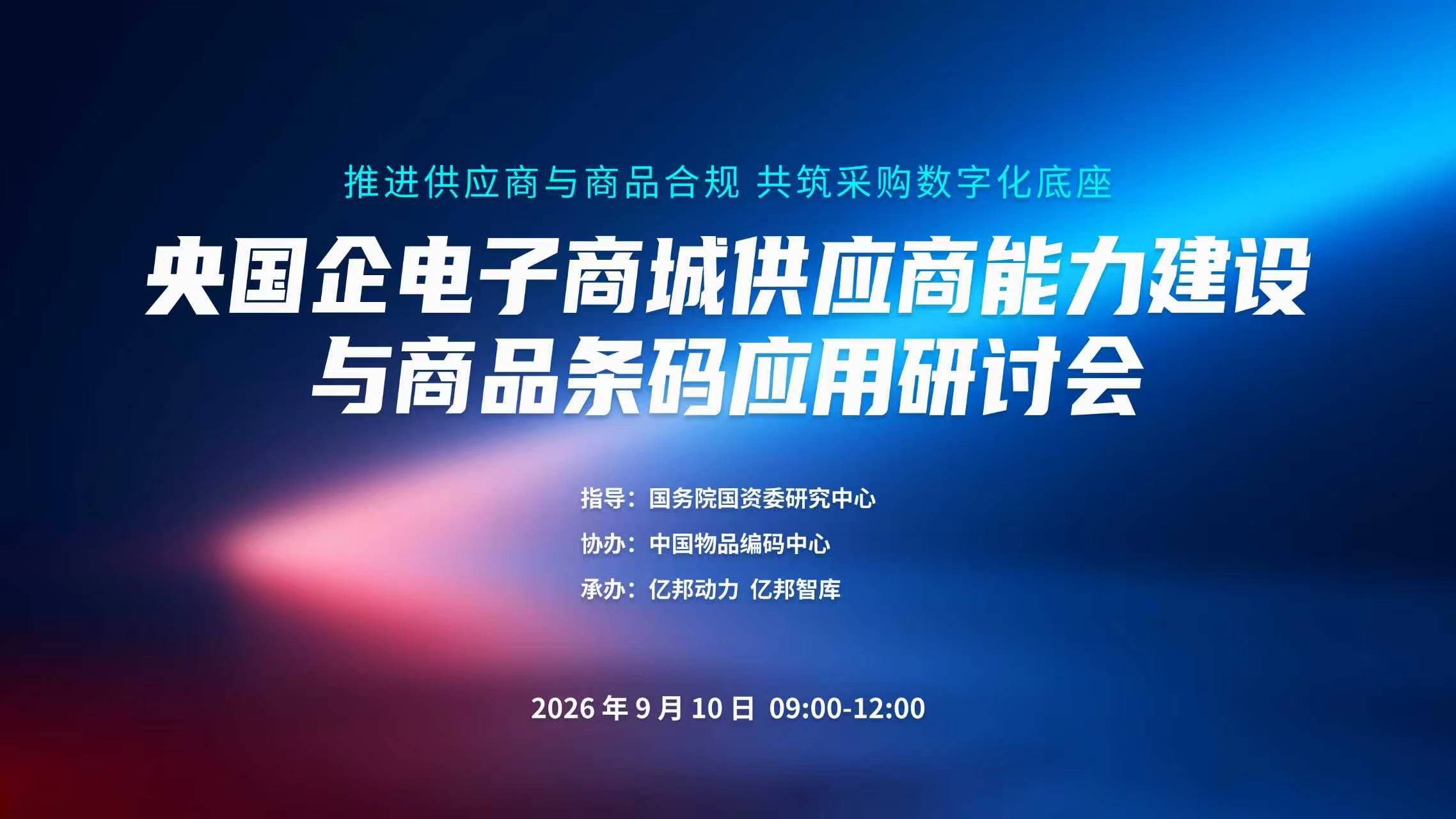
【亿邦原创】9月10日,央国企电子商城供应商能力建设与商品条码应用内部研讨会于厦门召开。本次会议由中国物品编码中心协办,亿邦动力、亿邦智库承办,以 “推进供应商与商品合规,共筑采购数字化底座” 为主题,集结行业专家、央企电商平台负责人,联合中国物品编码中心等机构,共探工业品采购供应链规范化、数智化发展路径。

会上,与会专家围绕合规、运营、质量管控、可持续发展四大维度,厘清制造型、流通型、平台型供应商能力建设框架,为工业品电商供应商体系治理提供统一指引。中国物品编码中心代表介绍GS1商品条码体系、源数据核验服务,分享条码在央国企采购场景落地的技术路径与实践经验。

铁建商城、中广核商城、中交招采网、陕煤物资商城等平台代表分享实践案例,重点介绍各自在供应商全生命周期管理、商品条码应用落地的实践成效,针对MRO工业品一物多码、非标物资处置、供应商赋码改造等现实难点交流实操经验。

在互动研讨环节,参会嘉宾围绕供应商分级考核退出机制、商品条码规模化推广痛点、非标物资管控对策开展深度研讨,重点磋商央国企电子商城基于商品条码共建工业品价格指数的协同路径。

本次研讨会汇集各平台一线实践,凝聚行业发展共识,为破解MRO物资数据底座薄弱、采购合规管控难题提供实践参考,将有力推动商品条码落地普及与国家标准的推广实施,助力央国企数智化采购供应链高质量发展。

本文首发于 亿邦动力 官方网站

文章来源:亿邦动力

广告
微信
朋友圈

FAQ回顾

GS1商品条码体系是什么?

GS1商品条码体系是用于商品编码与标识的全球标准体系。中国物品编码中心在厦门研讨会上介绍了该体系及源数据核验服务,并分享了条码在央国企采购场景落地的技术路径与实践经验,帮助电子商城实现供应商与商品合规管理。

央国企电子商城供应商能力建设包括哪些维度?

央国企电子商城供应商能力建设围绕合规、运营、质量管控、可持续发展四大维度展开,并区分制造型、流通型、平台型供应商,形成统一的能力建设框架,为工业品电商供应商体系治理提供指引。

MRO工业品“一物多码”问题如何解决?

在厦门研讨会上,铁建商城、中广核商城、中交招采网、陕煤物资商城等平台围绕MRO工业品一物多码、非标物资处置、供应商赋码改造等难点交流了实操经验,并重点磋商基于商品条码共建工业品价格指数的协同路径,以推动商品条码规模化应用。

商品条码在央国企采购中有什么作用?

商品条码在央国企采购中主要用于供应商与商品合规管理,通过GS1条码体系和源数据核验服务实现商品身份识别,破解MRO物资数据底座薄弱、采购合规管控等难题,也为工业品价格指数共建和采购数字化提供基础支撑。

哪些央国企电商平台在推进商品条码应用?

铁建商城、中广核商城、中交招采网、陕煤物资商城等央国企电子商城平台已在供应商全生命周期管理和商品条码应用方面形成实践,并在厦门研讨会上分享了各自的应用案例与落地成效。

这么好看,分享一下?

朋友圈 分享

APP内打开

赞 +1
+1
微信好友 朋友圈 新浪微博 QQ空间
关闭
收藏成功
发送
/140 0