





广告
加载中

乐奇Rokid携手腾讯出行服务上线行业首个AI眼镜原生打车服务

龚作仁 2026-10-16 16:07
龚作仁 2026/10/16 16:07

邦小白快读

EN
全文速览

总:这篇文章介绍了乐奇Rokid与腾讯出行服务合作推出的AI眼镜原生打车服务,对普通读者来说,核心干货是这项新功能如何让出行更便捷。

1. 解放双手:在机场拖行李、雨天撑伞或手提物品时,无需掏手机,直接说一句“帮我叫车去机场”即可完成叫车。

2. 减少视线转移:车辆位置、车牌和预计到达时间会持续显示在眼镜视野中,不用反复低头看手机,在复杂环境中更容易找到车。

3. 降低使用门槛:老人、儿童或不熟悉手机操作的人,只需说出目的地,眼镜就能自动识别并完成打车流程,不用学习复杂界面。

4. 支付与确认有兜底:涉及支付、改目的地或取消订单时,手机仍是更稳妥的后备入口,不必担心误操作。

总:这篇文章对品牌商的启示在于AI眼镜与出行服务的跨界合作如何提升品牌体验和用户粘性,以及消费趋势的变化。

1. 品牌营销新场景:通过AI眼镜原生打车服务,品牌可以在用户出行的高频场景中自然触达,强化“智能生活”的品牌形象,而不是生硬推送广告。

2. 用户体验升级:品牌可以通过类似A2A协议合作,将服务封装成标准化能力,让用户“只动口、不动手”,这种交互体验能显著提升品牌好感度。

3. 消费趋势洞察:文章反映出用户对“所说即所达”和解放双手的需求增长,品牌在产品研发时应关注语音交互和减少屏幕依赖的消费偏好。

4. 生态合作价值:乐奇Rokid与腾讯出行服务的合作表明,品牌通过与其他服务商协作,能扩展产品功能边界,形成更完整的用户体验闭环。

总:对卖家而言,这篇文章揭示了AI眼镜与出行服务结合带来的新市场机会和商业模式,值得关注。

1. 增长市场:AI眼镜从娱乐工具转向生活服务工具,打车只是起点,未来导航、停车、支付和共享单车都可能成为新入口,卖家可提前布局相关配件或服务。

2. 需求变化机会:用户对“解放双手”“减少视线转移”的需求增强,尤其是老人、儿童等细分人群,语音叫车降低使用门槛,可针对这些人群开发配套服务或产品。

3. 合作模式启发:乐奇Rokid与腾讯通过A2A标准协议实现智能体直连,卖家可以学习这种与平台方合作的方式,将自身服务封装成标准能力接入新设备。

4. 风险提示:眼镜打车仍依赖手机处理支付和异常情况,说明新设备尚未完全独立,卖家在投入时需评估技术成熟度和用户接受度。

总:这篇文章对工厂在产品生产和设计上的启示是,AI眼镜硬件需要适配更复杂的出行服务场景,并可能带动相关配件需求。

1. 产品设计需求:眼镜需支持长时间显示车辆信息、预计到达时间等,这对显示模块、续航和佩戴舒适度提出更高要求,工厂可关注相关零部件的升级方向。

2. 使用场景拓展:打车场景涉及户外、机场、雨天等环境,硬件需要具备防尘防水、抗强光等特性,工厂在设计制造时可考虑增加这些功能。

3. 生态整合趋势:眼镜不再是单一播放设备,而是与腾讯出行服务等软件平台协同,工厂需要预留与外部服务对接的传感器和通信模块。

4. 商业机会:随着导航、停车、支付等更多服务接入,可能衍生出面向眼镜的专用配件,工厂可提前研发相关周边产品以抢占市场。

总:这篇文章对服务商而言,展示了AI眼镜智能体与出行服务智能体协作的技术路径和解决方案,具有参考价值。

1. 行业趋势:AI眼镜正从娱乐工具转向生活服务入口,出行服务是高频刚需场景,服务商可关注类似的穿戴设备交互服务需求。

2. 新技术应用:文章中的A2A(Agent-to-Agent)标准协议实现了智能体直连协作,服务商可学习如何将自身能力封装为标准API,供其他设备调用。

3. 客户痛点:用户痛点是掏手机麻烦和视线转移,眼镜打车通过解放双手、减少低头来缓解,服务商在设计解决方案时可重点解决这类场景化痛点。

4. 解决方案参考:通过理解需求、感知交互与全流程打车服务分离,由不同智能体分工协作,这种模块化方案能提高开发效率和服务可靠性。

总:对平台商来说,这篇文章提供了平台与硬件厂商合作的新模式,以及平台在开放服务时的运营管理经验。

1. 平台最新做法:腾讯出行服务开放全栈AI打车能力,封装为标准化服务供眼镜端调用,展示了平台如何通过Agent服务拓展穿戴设备场景。

2. 招商与生态:平台商可以借鉴这种与智能硬件合作的模式,吸引更多硬件厂商接入,扩大服务覆盖面,形成生态闭环。

3. 运营管理要点:涉及支付、改目的地和取消订单时,平台保留手机作为后备入口,说明平台在设计流程时应考虑异常处理和用户安全。

4. 风向规避:眼镜打车仍需手机兜底,平台商需注意新设备交互的可靠性,防止因识别不准或确认缺失导致用户纠纷,应设置清晰的确认和可逆操作机制。

总:这篇文章对研究者的价值在于呈现了AI眼镜与出行服务融合的产业新动向,以及智能体协作模式引发的商业和治理问题。

1. 产业新动向:AI眼镜首次实现原生打车服务,标志着智能穿戴设备从信息展示向服务执行演进,可能改变出行交互范式。

2. 智能体协作模式:通过A2A标准协议实现两个智能体直连,将地点推荐、比价、下单、支付等能力标准化输出,这种协作机制值得深入探讨。

3. 用户行为与门槛:研究指出语音叫车能降低老人、儿童等群体的使用门槛,但支付和异常处理仍依赖手机,说明人机责任分配和信任边界是一个新课题。

4. 政策与法规启示:涉及支付、订单取消和用户隐私,当服务由眼镜智能体发起但由手机兜底时,责任归属和消费者权益保护需要进一步明确,平台和硬件厂商的合作协议如何规范值得研究。

返回默认
声明:快读内容全程由AI生成,请注意甄别信息。如您发现问题,请发送邮件至 run@ebrun.com 。

我是 品牌商 卖家 工厂 服务商 平台商 研究者 帮我再读一遍。

Quick Summary

Overall: This article introduces the AI glasses native ride-hailing service launched by Rokid in partnership with Tencent Travel Services. For general readers, the key takeaway is how this feature makes travel more convenient.

1. Hands-free convenience: When dragging luggage at the airport, holding an umbrella in the rain, or carrying items, users no longer need to take out their phones—simply say “Get me a taxi to the airport” to complete the ride request.

2. Less visual distraction: The vehicle location, license plate, and estimated arrival time are continuously displayed in the glasses’ field of view, eliminating the need to repeatedly look down at the phone and making it easier to find the car in complex environments.

3. Lower usage barrier: Older adults, children, or those unfamiliar with smartphone operation only need to speak their destination; the glasses automatically recognize it and complete the ride-hailing process without learning a complicated interface.

4. Payment and confirmation safeguards: When it comes to payment, changing the destination, or canceling the order, the phone remains a more reliable fallback, reducing the risk of misoperation.

Overall: For brands, the article highlights how cross-industry collaboration between AI glasses and travel services can enhance brand experience, user stickiness, and reveals changing consumption trends.

1. New brand marketing scenario: Through native ride-hailing on AI glasses, brands can naturally reach users in high-frequency travel scenarios and reinforce a “smart living” brand image, rather than pushing intrusive ads.

2. Improved user experience: Brands can adopt similar A2A protocol collaboration to package services into standardized capabilities, enabling an “only speak, no hands” interaction that significantly boosts brand favorability.

3. Consumer trend insight: The article reflects growing user demand for “say and it’s done” and hands-free convenience. Brands should pay attention to voice interaction and reduced screen dependence in product development.

4. Value of ecosystem partnerships: The Rokid–Tencent Travel Services collaboration shows that brands can expand product boundaries and create a more complete user experience loop by working with other service providers.

Overall: For sellers, this article reveals new market opportunities and business models from combining AI glasses with ride-hailing services, worth attention.

1. Growth market: AI glasses are shifting from entertainment tools to life-service tools. Ride-hailing is just the starting point; navigation, parking, payment, and bike-sharing could become new entry points in the future. Sellers can prepare related accessories or services in advance.

2. Demand-shift opportunity: User demand for “hands-free” and “less visual distraction” is growing, especially among niche segments such as older adults and children. Voice-activated ride-hailing lowers the usage threshold, making it possible to develop supporting services or products for these groups.

3. Collaboration model inspiration: Rokid and Tencent used the A2A standard protocol to enable direct agent-to-agent connection. Sellers can learn from this platform collaboration approach by packaging their own services as standardized capabilities and connecting to new devices.

4. Risk alert: Glasses-based ride-hailing still relies on the phone for payment and exceptions, meaning the new device is not fully independent. Sellers should assess technology maturity and user acceptance before investing.

Overall: For factories, the article suggests that AI glasses hardware needs to adapt to more complex travel-service scenarios, and may drive demand for related components.

1. Product design requirements: Glasses need to support prolonged display of vehicle information, ETA, etc., raising the bar for display modules, battery life, and wearing comfort. Factories can focus on upgrading these components.

2. Expanded usage scenarios: Ride-hailing covers outdoor, airport, and rainy environments. Hardware should feature dust/water resistance and strong-light tolerance. Factories can consider adding these functions in design and manufacturing.

3. Ecosystem integration trend: Glasses are no longer standalone playback devices but work with software platforms like Tencent Travel Services. Factories need to reserve sensors and communication modules for external service integration.

4. Business opportunity: As navigation, parking, payment, and more services connect, dedicated glasses accessories may emerge. Factories can develop related peripheral products in advance to capture the market.

Overall: For service providers, the article demonstrates the technical path and solution for collaboration between an AI glasses agent and a travel-service agent, offering useful reference.

1. Industry trend: AI glasses are shifting from entertainment tools to life-service entry points. Travel services are a high-frequency, essential scenario, so providers should watch for similar interaction-service demand on wearable devices.

2. New technology application: The A2A (Agent-to-Agent) standard protocol in the article enables direct agent collaboration. Service providers can learn to package their capabilities as standard APIs for other devices to call.

3. Customer pain points: The pain point is the hassle of taking out the phone and visual distraction. Glasses-based ride-hailing relieves this by freeing hands and reducing head-down glances. Solution designers should focus on such scenario-specific pain points.

4. Solution reference: By separating intention understanding, perception/interaction, and end-to-end ride-hailing processes, different agents can collaborate. This modular approach improves development efficiency and service reliability.

Overall: For platform operators, this article offers a new collaboration model between platforms and hardware vendors, as well as operational management insights when opening services.

1. Latest platform approach: Tencent Travel Services opened its full-stack AI ride-hailing capability, packaged as a standardized service for glasses to call. This shows how platforms can expand wearable-device scenarios through Agent services.

2. Ecosystem and partnering: Platform operators can borrow this model of collaborating with smart hardware, attract more hardware vendors, broaden service coverage, and form an ecosystem loop.

3. Operational management essentials: By retaining the phone as a fallback for payment, destination changes, and cancellation, the platform shows that exception handling and user safety should be considered in process design.

4. Risk avoidance: Glasses-based ride-hailing still needs the phone as backup. Platform operators should ensure reliability of new-device interaction, prevent disputes caused by misrecognition or missing confirmation, and set clear confirmation and reversible operation mechanisms.

Overall: For researchers, the article presents an industry trend of integrating AI glasses with travel services, and raises business and governance issues from agent collaboration models.

1. New industry direction: The first native ride-hailing service on AI glasses marks the evolution of smart wearables from information display to service execution, potentially reshaping mobility interaction paradigms.

2. Agent collaboration model: The A2A standard protocol enables direct connection between two agents, standardizing capabilities such as location recommendation, price comparison, ordering, and payment. This collaboration mechanism deserves further study.

3. User behavior and accessibility: The research notes that voice-based ride-hailing lowers usage barriers for older adults and children, but payment and exception handling still rely on phones, making human-machine responsibility allocation and trust boundaries a new topic.

4. Policy and regulatory implications: Involving payment, order cancellation, and user privacy, when the service is initiated by a glasses agent but backed by a phone, responsibility attribution and consumer protection need further clarification. How to regulate collaboration agreements between platforms and hardware vendors is worth studying.

Disclaimer: The "Quick Summary" content is entirely generated by AI. Please exercise discretion when interpreting the information. For issues or corrections, please email run@ebrun.com .

I am a Brand Seller Factory Service Provider Marketplace Seller Researcher Read it again.

以前说到智能眼镜,大家想到的可能是拍照、听歌、翻译和导航。如今,它正在进入一个更高频的生活场景:打车。

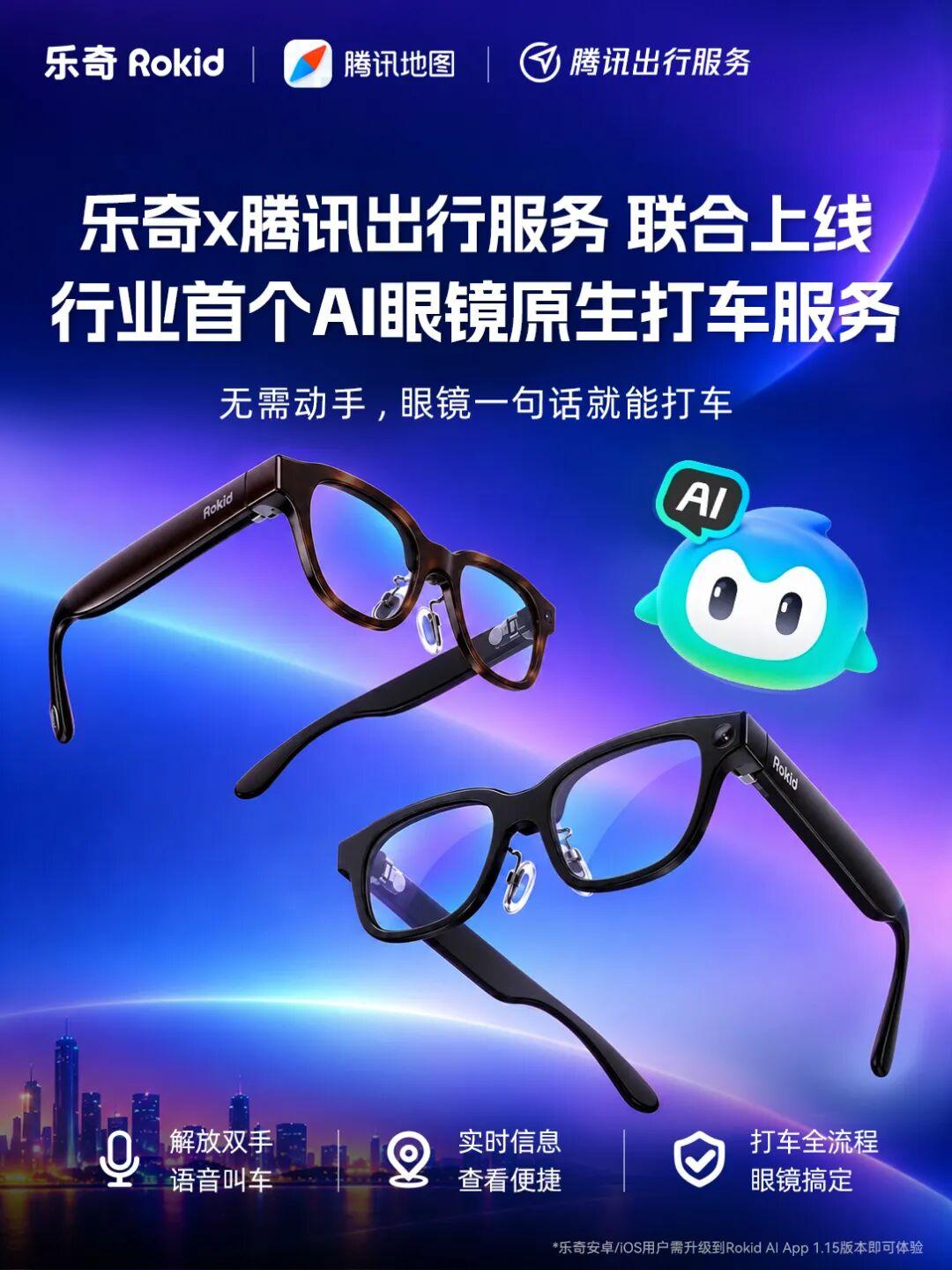
乐奇Rokid与腾讯出行服务合作,上线行业首个AI眼镜原生打车服务,可以通过眼镜完成打车。

图片

接入腾讯出行服务Agent后,用户只需说出目的地,眼镜便可完成从识别需求、发起叫车,到选择下单、支付车费等打车全流程,并可提示车辆信息和预计到达时间。

它的价值,不只是少打开一次手机,而是改变出行交互。

第一,解放双手。机场拖着行李、下雨天撑着伞,或手里拎着东西时,掏手机、打开应用、输入地址并不方便。一句“帮我叫车去机场”,更轻松从容。

第二,减少视线转移。过去等车时,用户需要反复低头查看车辆位置、车牌和预计到达时间。如果这些信息能持续出现在视野中,就不必频繁掏出手机,在车站、商场和路边等复杂环境里,也更容易找到车辆。

第三,做到“所说即所达”。用户可以直接说“送我去这里”,让眼镜自动启动位置服务确认目的地。相比手动搜索,这种交互更符合真实出行习惯。

对老人、儿童以及不熟悉手机操作的人来说,语音叫车也能降低使用门槛。设备不再要求用户熟悉复杂界面,而是把“我想去哪儿”直接转化为“帮我完成什么”。

这背后,是乐奇眼镜Agent与腾讯出行服务Agent的共同协作:由乐奇Rokid负责理解需求和感知交互,腾讯出行服务Agent负责提供覆盖打车全流程的AI一站式打车服务。

双方通过A2A(Agent-to-Agent)标准协议实现智能体直连协作——腾讯出行服务开放的面向各类智能穿戴设备的全栈AI打车能力,将地点推荐、上下车点选择、附近车辆查询、预估价格与多车型比价、一键下单、订单状态实时同步、免密支付等能力封装为标准化服务,供乐奇Rokid眼镜端按需调用,让用户全程「只动口、不动手」。

当然,眼镜打车要真正好用,关键不在于能不能叫到车,而在于是否可靠。目的地识别要准确,订单提交前要有清晰确认,车辆信息和费用也要及时展示。涉及支付、改目的地和取消订单时,手机仍是更稳妥的后备入口。

因此,眼镜打车的理想形态,不是替代手机,而是让眼镜负责发起需求、实时提醒和环境交互,让手机负责复杂确认、支付和异常处理。

乐奇Rokid与腾讯出行服务的合作,意义不只是增加一个功能,而是在回答:AI眼镜能不能从“看起来很酷”,变成“出门真的用得上”。如果叫车只是开始,导航、停车、支付和共享单车等服务,也可能成为眼镜连接现实世界的新入口。

注:文/龚作仁,文章来源:Laborer,本文为作者独立观点,不代表亿邦动力立场。

文章来源:Laborer

广告
微信
朋友圈

FAQ回顾

AI眼镜原生打车服务是什么?如何使用?

乐奇Rokid与腾讯出行服务合作上线了行业首个AI眼镜原生打车服务。用户只需说出目的地,眼镜即可完成从识别需求、发起叫车,到选择下单、支付车费的全流程,并提示车辆信息和预计到达时间,实现“只动口、不动手”的出行体验。

用AI眼镜打车有哪些优势?

AI眼镜打车有三大优势:解放双手(如机场拖行李、雨天撑伞时无需掏手机);减少视线转移(车辆位置、车牌等信息持续出现在视野中);做到“所说即所达”(直接说出目的地,眼镜自动启动位置服务确认)。同时降低了老人、儿童及不熟悉手机操作人群的使用门槛。

AI眼镜打车如何保证可靠性?

乐奇Rokid与腾讯出行服务通过A2A(Agent-to-Agent)标准协议实现智能体直连协作。腾讯出行服务将地点推荐、上下车点选择、车辆查询、预估价格与比价、一键下单、订单状态同步、免密支付等能力封装为标准化服务供眼镜调用;涉及支付、改目的地和取消订单时,手机仍是更稳妥的后备入口。

AI眼镜打车服务对出行行业有什么影响?

这是行业首个AI眼镜原生打车服务,改变了出行交互方式,让AI眼镜从“看起来很酷”变成“出门真的用得上”。如果叫车只是开始,导航、停车、支付和共享单车等服务也可能成为眼镜连接现实世界的新入口,推动智能穿戴设备在出行场景的进一步落地。

乐奇Rokid和腾讯出行服务在打车服务中分别负责什么?

乐奇Rokid负责理解需求和感知交互,腾讯出行服务Agent负责提供覆盖打车全流程的AI一站式打车服务。双方通过A2A标准协议协作,腾讯出行服务将全栈AI打车能力封装为标准化服务,供乐奇Rokid眼镜端按需调用,让用户全程“只动口、不动手”。

这么好看,分享一下?

朋友圈 分享

APP内打开

赞 +1
+1
微信好友 朋友圈 新浪微博 QQ空间
关闭
收藏成功
发送
/140 0

